The Authenticity Illusion: Why Forced Poses Always Fail
The Stiffness Problem
You want to look natural in photos because you’re terrified of looking ridiculous, and a stiff pose is the fastest way to confirm that fear. The real mechanism: tension locks your joints. When you overthink positioning, your nervous system treats it as threat, tightening your shoulders, neck, and jaw. Your body reads “hold still and look perfect” as “freeze.” Photographers call this “locked energy.” It shows instantly in the frame.
Most couples are told to “relax” or “just be natural,” which is useless advice because those words don’t trigger any physical action. The stiffness comes from holding a pose statically for too long. Your muscles fatigue. Your face goes slack or rigid. The photographer keeps shooting while you’re burning out. Instead, move between poses every three to five seconds. Don’t hold the final frame. Shift your weight, adjust your chin, rotate your shoulders slightly. Movement keeps your nervous system from locking down.
Real Movement Over Fake Stillness
Candid moments win not because they’re spontaneous, but because they contain micro-adjustments your body makes naturally. In psychology, this is called “behavioral authenticity”—the gap between posed and unprompted states. When you’re genuinely interacting with your partner, your muscles micro-contract and release in real time. Your face moves through multiple expressions. Your posture shifts with your attention. A camera captures these transitions better than it captures static positions.
The photographer’s job is not to arrange you like furniture and wait. It’s to set you in proximity to your partner, give you a simple task (walk toward each other, hold hands and look down, laugh at something one of you says), then shoot through the action. The best wedding photos happen in the frames between the “official” poses. Stop thinking about how you look in a single frozen moment. Think about what you do together when nobody’s watching, then do that while the photographer shoots.
Deconstructing “Awkward”: Pinpointing The Real Problem
Your Brain Is Lying About What’s Actually Happening
You want to look comfortable in wedding photos because uncomfortable people look bad in photos, and bad photos feel like a permanent record of failure. But here’s the mechanism: self-consciousness and genuine discomfort are not the same thing, and treating them as identical wastes the entire posing session. Self-consciousness is narrative. Your body has no real problem. Your mind invented one by watching yourself perform rather than just performing. Genuine discomfort is physical. Your posture strains. Your muscles fatigue. Your weight distributes wrong. The photographer sees the narrative. The camera sees the physical. You need to kill the narrative first.

Most posing advice tells you to “relax” or “be yourself,” which is useless because you’re already trying to do that and failing. The real work is simple: separate the two problems. If your shoulders hurt after three minutes in a pose, that’s a positioning problem, not a confidence problem. Fix the geometry. If you feel self-aware while holding a pose that doesn’t hurt, that’s a mental problem, and it vanishes the moment you stop watching yourself and start following the photographer’s direction mechanically. Treat posing like a choreography. Your job is execution, not judgment.
The Pressure You Feel Versus The Pressure That Actually Matters
Psychology borrows a term from thermodynamics called “signal versus noise” to describe what captures attention in a system. In posing, external pressure is noise. Internal confidence is signal. You feel watched because people are watching, yes, but their attention creates no actual constraint on your body. The constraint comes from you believing their attention means something about your worth. That belief changes nothing about the photo. It changes everything about how your face reads and your frame settles. Stop treating the audience as judges and treat them as irrelevant data.
The real pressure that matters is technical pressure: the photographer’s deadline, the light window, the number of setups left to shoot. This pressure forces you to move, which kills self-consciousness. Waiting and thinking amplifies it. When the photographer gives you a clear direction and you execute it immediately, your brain has no time to narrate. It just obeys. The best wedding posing happens when you abandon the idea that you’re being evaluated and accept that you’re following a technical instruction. Ask the photographer what they want before the shot. Then do it without rehearsal.
The “Un Pose” Method: Capturing Natural Wedding Photo Ideas Couple
Give Directions, Not Positions
You’re afraid the photos will expose you as stiff or fake. Here’s what actually happens: your brain freezes when someone says “stand here and smile.” The mechanism is simple—conscious control kills naturalness. The moment you think about your body, your body betrays you. Instead, photographers should direct action, not anatomy. Tell the couple to walk toward each other, not to “angle their shoulders left.” Tell them to whisper something that makes her laugh, not to “tilt your head.” Action bypasses the self-monitoring that destroys authenticity. When the brain focuses on a task rather than a pose, the face and body follow without interference. The couple moves, reacts, and exists within the frame instead of performing for it.

The shift moves wedding photography closer to documentary filmmaking—capturing moments rather than constructing them. A photographer narrating movement creates permission to be unselfconscious. “Walk back toward the light” triggers genuine motion. “Tell him about your first date” triggers genuine emotion. The posture corrects itself because it serves a purpose beyond looking good. The smile arrives because something is actually happening. This is why candid-appearing photos feel alive while traditional posed shots often feel frozen in time.
Build Scenarios, Not Assignments
The common advice says “give them something to do.” That’s incomplete. You need scenarios that demand authentic response, not busy work disguised as direction. Build a mini-narrative: “You’re waiting for the valet, talking about the honeymoon.” Now the couple inhabits a moment instead of hitting a mark. Their bodies settle into natural alignment because they’re mentally elsewhere. The photographer becomes an observer of behavior rather than an architect of limbs.
Scenarios work because they lower the stakes psychologically. Posing feels evaluated. Acting in a scene feels collaborative. The nervous system relaxes when given context instead of commands. The couple leans into each other naturally during a scenario because they’re reinforcing a story, not following instructions. Their hands find places that make sense within the narrative. Their eye contact deepens because they’re engaging with each other, not the camera. The photographer triggers the scenario, then documents the response—which is where the real photograph lives.
The Observer Effect Protocol: Minimizing Performance Anxiety For Wedding Photo Shoot Poses
When The Camera Changes What You Do
You’re worried the camera will expose something false about you. Here’s the mechanism: in physics, the observer effect states that measurement itself alters the system being measured. In wedding photography, your awareness of being observed changes your posture, your breathing, and your facial muscles in real time. The lens doesn’t capture fakeness—it captures the physiological shift that happens when you know you’re being watched. Your body tenses because your nervous system treats the camera as a threat to your status.

The solution isn’t confidence or pretending the camera doesn’t exist. It’s understanding that tension is the actual problem, not the pose itself. A relaxed body in an awkward position reads authentic. A tense body in a technically perfect position reads like performance. Before shooting starts, do five minutes of deliberate breathing or light movement. This lowers your baseline arousal so the camera’s presence doesn’t spike it further. Your nervous system will still react, but it won’t hijack your muscles.
Redirect Your Attention To A Point Beyond The Lens
Most advice tells you to ignore the camera. That’s incomplete. Your brain can’t ignore a thing by being told to ignore it—that’s not how attention works. Instead, give your attention somewhere else with actual weight. Pick a specific point in the room behind the photographer: a corner of the ceiling, a doorframe, a window. Focus on that point as if you’re looking through the camera, not at it. This uses your attention’s capacity instead of fighting it.
The photographer should know this is happening and shoot while your gaze settles on that point. Your face relaxes because your eyes have a job. Your jaw unclenches. Your shoulders drop slightly. This isn’t about looking natural—it’s about your parasympathetic nervous system engaging because you have a concrete task. The pose holds because you’re not managing it anymore. You’re managing your focal point instead.
Mastering Micro Expressions: Your Unseen Wedding Photos Advantage
The Smallest Shift Changes Everything
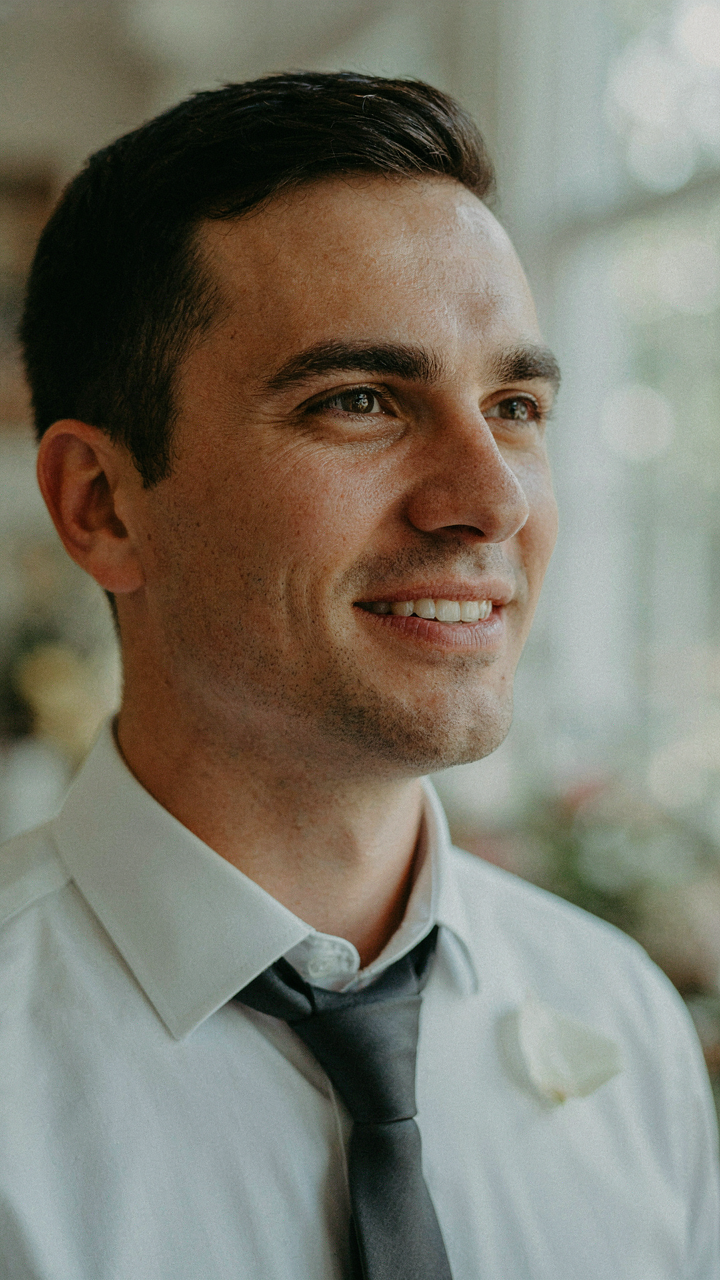
You care about this because you’re terrified of looking frozen or fake in photos that will exist forever. The real mechanism comes from facial coding: photographers train their eye to spot the microsecond shift between a posed smile and genuine engagement. A micro-expression lasts 1/25th of a second. Most people never notice. Your photographer does. The difference between stiff and natural comes down to one technical move: the eyes must move before the mouth. When your eyes narrow or soften first, the smile follows naturally instead of appearing pasted on. This sequencing is what separates candid-looking images from ones that scream “I’m performing.”

The jaw, cheekbones, and eye area hold the information your photographer needs. Tension in the jaw kills every pose. Loosen it by dropping your tongue flat against the bottom of your mouth instead of clenching. Your cheekbones rise when you think of something genuinely funny, not when you arrange them. Tell yourself a specific joke fifteen seconds before the shot. Let that residual feeling land in your face. The photographer captures the decay of that authentic expression, not the peak. That’s where the magic lives.
Reading Your Partner In Real Time
Don’t wait for your photographer to direct the moment. You direct it by watching your partner’s baseline first. In the thirty seconds before photos start, observe what their resting face does. Do their eyes crinkle when they relax? Do they naturally tilt their head left? That’s their honest tell. When the camera is live, mirror that baseline slightly. If they soften their gaze toward you, your eyes should respond a half-beat later. This creates conversation in the frame instead of two people holding positions. The photographer captures the dialogue, not the poses.
The protocol is simple: lock eyes with your partner for one full breath before any direction comes. Don’t smile yet. Just look. Let them see you seeing them. Then give one small permission to laugh or soften. That permission transfers through eye contact faster than any verbal cue. The photographer shoots during that transfer, not after. You’ve now created a moment that reads as shared rather than simultaneous.
The Environment As Your Ally: Dynamic Wedding Pose Ideas Photography
Setting Informs Your Body Position
You want to look natural in photos because you’re afraid of looking stiff or fake. The real mechanism: your body will telegraph authenticity only when it responds to something external. Think of it like physics—objects in motion stay in motion. A pose without environmental input is static. A pose anchored to the space around you generates genuine micro-movements that read as comfortable.

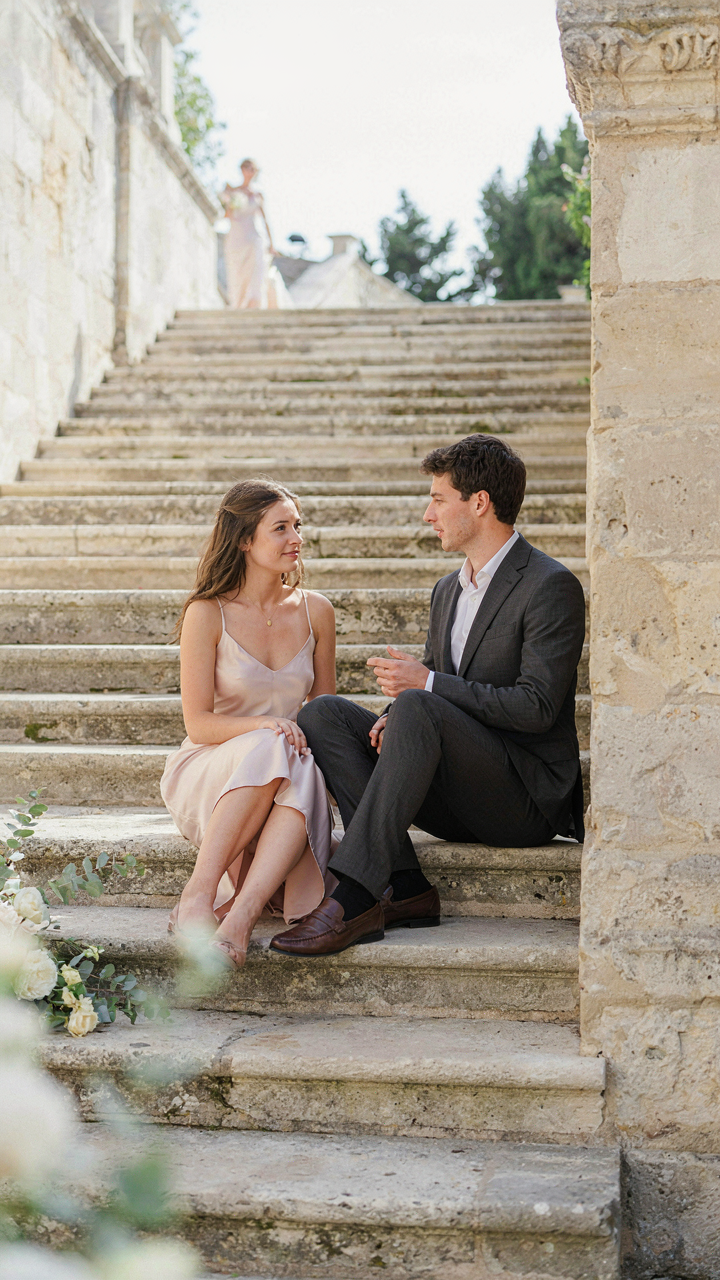
The venue isn’t backdrop decoration. It’s instruction. If you’re standing near a column, your weight shifts differently than standing in open space. If a staircase exists, your legs have a reason to position differently. A garden wall gives your shoulders a natural lean angle. Your photographer doesn’t need to direct you into a wooden smile if the architecture is already directing your skeleton into a functional position.
Interact With What’s Actually There
Most wedding pose advice ignores the fundamental problem: you’re told to pose “naturally” while standing nowhere in particular. That’s contradictory. The real answer is interaction. Use the railing. Lean on the doorframe. Walk through the space instead of stopping in it. Sit on the bench instead of standing near it. Touch the stone wall. These aren’t tricks—they’re problems your body solves, which means your posture organizes itself around purpose.
The photographer captures you mid-action, not mid-hold. When you interact with the environment, your hands have jobs. Your weight distributes naturally. Your face angles toward something real instead of toward the camera. Assign yourself one environmental element per pose setup. Don’t stand beside the archway—walk under it. Don’t sit near the steps—sit on them. The environment stops being scenery and becomes your co-actor.
Beyond The Shot List: Must Do Wedding Photos You Actually Want
What Actually Matters To You
You want permission to skip the poses that feel hollow. The real mechanism here is simple: your nervous system knows the difference between performing a role and documenting something true. Generic poses feel awkward because they contradict what your body knows about the moment. Your discomfort isn’t a failure. It’s data telling you the pose doesn’t match your actual relationship to this person or this day.

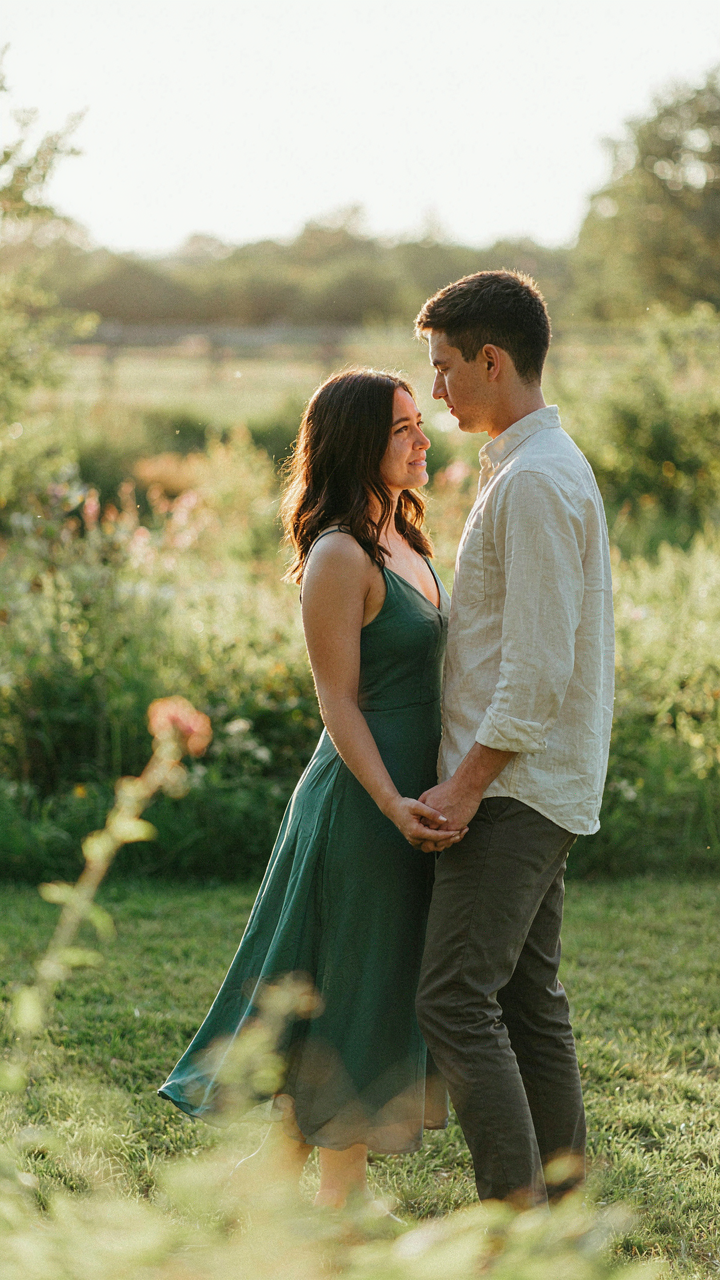
Start by naming three specific interactions that define your relationship. Not abstract feelings, but concrete behaviors: how you two laugh together, how you stand when you’re thinking about something serious, where your hands naturally go when you’re comfortable around each other. These aren’t poses. They’re patterns your body already knows. The photographer’s job becomes capturing those patterns, not imposing foreign shapes onto your frame.
Moments That Read, Not Poses That Perform
The difference between a moment and a pose is whether the camera catches you mid-action or mid-stillness. Moments have velocity. Poses are static holds. Most wedding photographers default to poses because they’re predictable and easy to direct. That’s the wrong foundation. You don’t need more poses. You need sequences where something is actually happening between you and your partner.
Ask your photographer to shoot while you’re talking, walking, or reacting, not while you’re holding a smile. Capture the breath before the laugh, not the smile itself. Capture the turn of your head as you look at each other, not the stare. These moments register as genuine because they contain the microexpressions and body language your brain reads as real. The photo will look alive because something was actually alive when it was taken.
Pre Wedding Prep: Cultivating Comfort For Photography Poses Wedding
Exercises That Build Real Familiarity
You want to feel natural in front of the camera because cameras expose hesitation, and hesitation reads as discomfort in every frame. The mechanism is simple: your body relaxes only when it knows what to expect. Unfamiliar situations trigger tension. The photographer isn’t a stranger you need to impress after the ceremony starts—you need to train that familiarity before the wedding day arrives.
- Mock session with your partner: Spend 20 minutes before the wedding having someone else (friend, family member, phone on tripod) photograph you in your actual venue or similar lighting. Repeat poses you’ve discussed. Your nervous system adapts through repetition, not explanation.
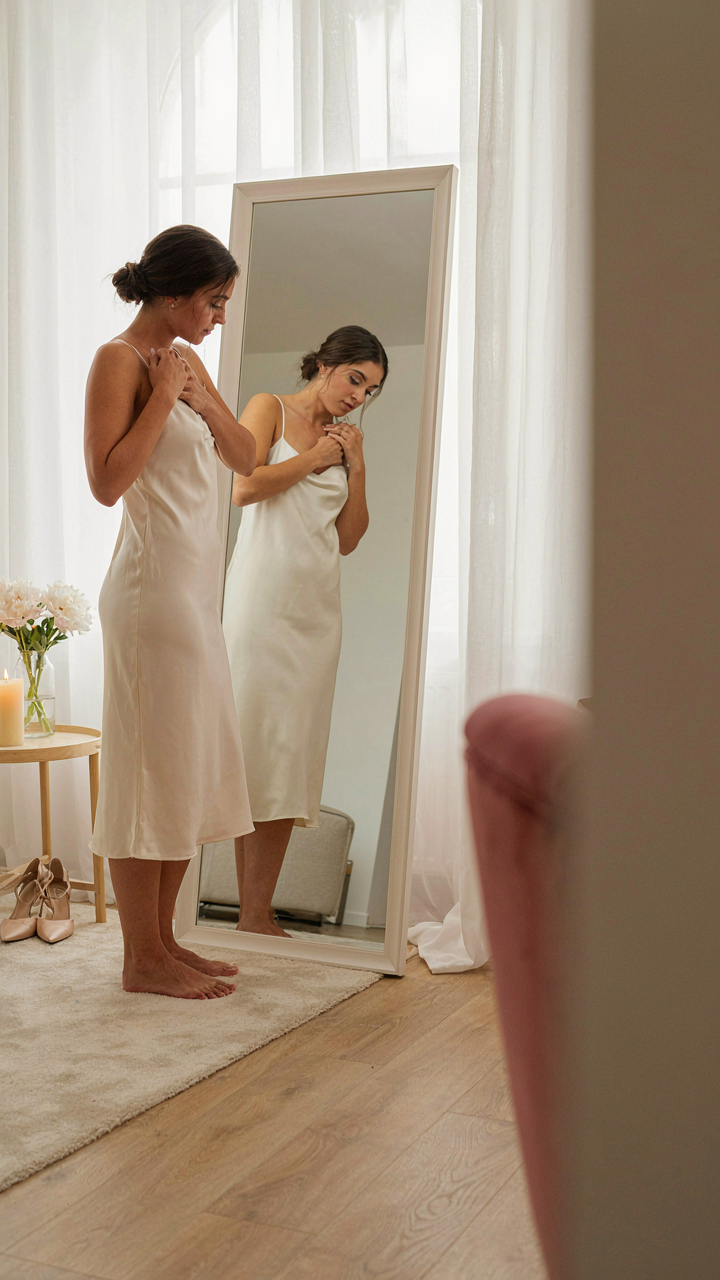
- Solo practice in a mirror: Stand in front of a mirror for five minutes daily for one week before the wedding. Practice the poses your photographer showed you. Watch how your face changes with head angle, shoulder position, and chin placement. Self-awareness kills awkwardness faster than anything else.
- Record a two minute video of yourself: Film yourself walking, standing still, laughing naturally. Watch it back. Most people have never seen themselves move. This kills the fantasy version of how you think you look and grounds you in reality.
- Practice with the actual photographer if possible: A 15 minute pre wedding consultation shoot (even 10 photos) removes the “first time meeting under pressure” dynamic. You know their direction style, voice tone, and what they actually want from you.
- Rehearsal with your partner in full attire: Wear your actual wedding outfit and practice poses together in the clothes you’ll wear. Fabric moves differently than practice clothes. Shoes change your balance. Jewelry catches light. Train in the exact conditions you’ll face.

The repetition works because it shifts posing from conscious effort to muscle memory. Your brain stops narrating and your body just performs. You show up on the day already knowing how your shoulders should sit, where your chin should be, and why the photographer asked for it.
Speaking Up About What Doesn’t Work
Most people never tell the photographer what bothers them because they think voicing a preference might slow things down or seem difficult. That’s backwards. The photographer has no access to your internal experience. They can’t see the angle that makes you uncomfortable or the pose that pinches your shoulder. Silence guarantees bad photos and wasted time.
Communication isn’t negotiation—it’s data transfer. Tell your photographer before the shoot: which side of your face photographs better, whether you prefer being touched during posing or prefer verbal direction only, if certain positions cause you pain, what you’re self conscious about. This isn’t emotional venting. It’s operational information that makes the session efficient. A good photographer will adjust immediately. A bad one will push back, and then you know the real problem isn’t posing—it’s hiring someone who doesn’t respect your comfort as part of their job.
The Post Production Power Up Enhancing Authentic Poses For Wedding Pictures

Editing To Amplify Genuine Emotion
You want post-production to fix the awkwardness because you’re afraid the pose itself failed. Here’s the mechanism: editing doesn’t create emotion, it removes the noise blocking what’s already there. Think of it like signal-to-noise ratio from electrical engineering. Your genuine expression exists in the frame. The photographer’s job during capture is isolation. Your job in post is subtraction.

Contrast, saturation, and skin tone adjustments don’t manufacture feeling. They strip away camera artifacts, harsh light, and color casts that muddy the real moment. A bride’s laugh reads differently when you lift shadows from her eyes. A groom’s relief at the ceremony’s end shows when you crush blacks slightly to define his jawline. The pose was honest. The edit just lets you see it.
Strategic Cropping And Framing
Cropping isn’t about hiding mistakes. It’s about reframing the spatial relationship between your body and the viewer. Tighter crops isolate the story. A full-length pose that reads uncertain becomes powerful when you frame from the waist up. Distance creates ambiguity. Proximity forces clarity. This is why awkward poses vanish in tighter crops—you’re not seeing the parts that felt stiff.
The real protocol is this: identify which portions of the pose carry actual intention, then crop to eliminate dead space. If your hands work but your feet feel planted, frame above the hips. If your expression hits but your shoulders seem tense, tighten horizontally. Never crop to hide. Crop to emphasize what already works. The photographer should capture multiple framings in-camera. Your job is selecting which framing tells the clearest version of what happened.
The Only Awkwardness Is Believing You Need A Script To Be Yourself
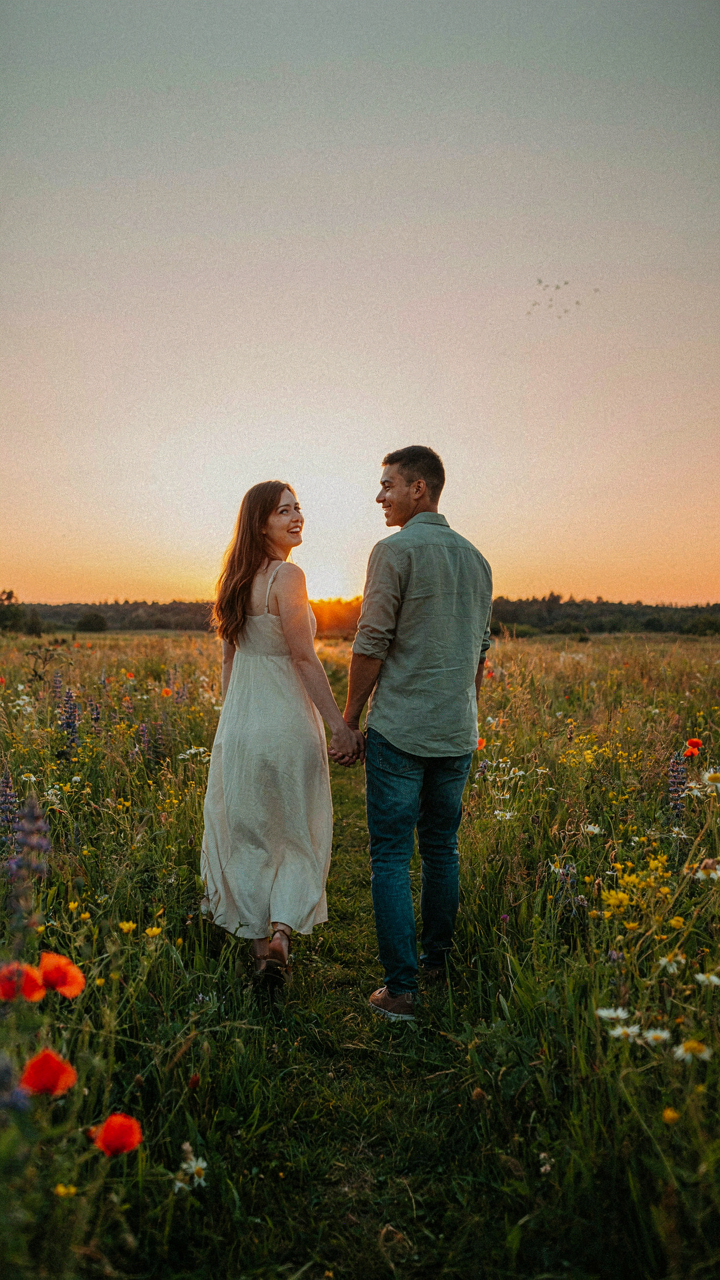
Stop treating your wedding photos like a performance you’re bombing. The couples who look natural aren’t following invisible rules. They’re trusting their photographer and moving instead of freezing. Before your wedding, spend one afternoon having your partner take candid shots of you laughing, walking, existing. Not posing. This trains your body to move authentically in front of a lens. Your photographer captures magic when you stop trying to manufacture it.