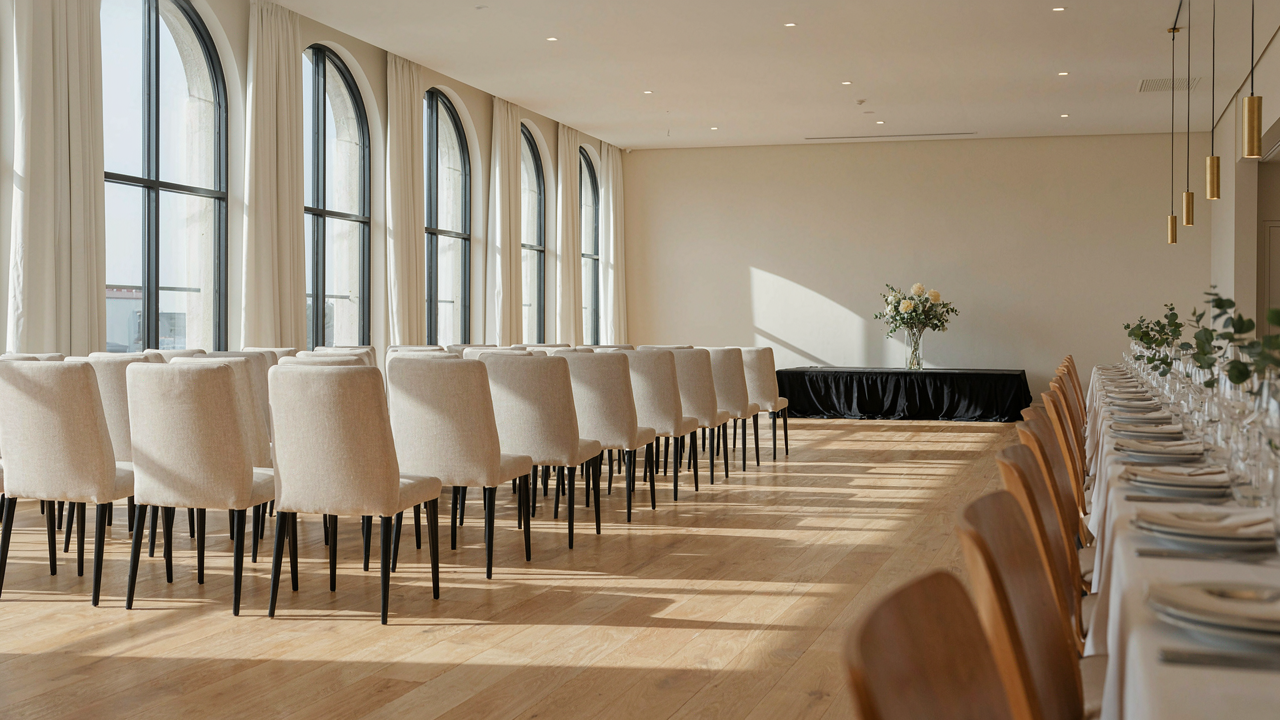
The Scarcity Inversion Protocol: Exploiting Off Peak Void

When Venues Actually Have Empty Chairs
You want the discount because you’re scared you’re overpaying while everyone else knows the trick. The real mechanism is simple: venues operate on fixed costs that don’t disappear on Tuesday. Rent, staff, utilities, insurance—these expenses exist whether the space sits empty or hosts fifty people. A venue with zero bookings midweek is hemorrhaging money. This is economics in its plainest form. The gap between what a venue must spend and what it actually earns is where your leverage lives.
Most venues won’t advertise their downtime metrics because admitting the problem feels like weakness to their market positioning. But the data is accessible if you ask the right questions during initial conversations. A venue manager knows exactly which days produce revenue and which ones create anxiety. When you ask about their typical week, a booking manager will tell you. They’ll mention slower seasons. They’ll reference their “shoulder periods.” What you’re hearing is where their scarcity flips. That’s where you negotiate.
The Revenue Gap They Won’t Mention
Lost revenue potential for a midweek booking isn’t theoretical—it’s a specific dollar amount the venue calculates every time they see an empty calendar slot. If a Saturday generates eight thousand dollars in total spend and a Tuesday generates two thousand, the venue sees that Tuesday as a five hundred percent discount opportunity if it prevents total loss. This is pure game theory applied to bookings. The venue would rather capture thirty percent of normal revenue on a dead day than capture zero percent. Your job is quantifying what that gap looks like for their specific situation.
Start by determining what they actually charge for a prime day: Saturday evening, spring or fall, established rate. Then ask what percentage of their weekly revenue comes from weekend versus weekday events. The math reveals the multiplier on their desperation. A venue pulling eighty percent revenue from Friday-Sunday has massive pressure to fill Tuesday-Thursday. Once you know this number, you have a factual basis for negotiation. You’re not asking for a favor. You’re offering to fill a void they’d otherwise leave empty. Request fifty percent off weekday rates as your opening position based on this gap. That becomes your starting point for actual discussion.
Beyond Rack Rate: Deconstructing Venue Pricing Models

The Fixed Cost Trap
You think a venue’s price is what it costs to run. It’s not. You’re actually afraid that paying less means you’re getting inferior service, when the truth is simpler: venues price based on what they can extract, not what it costs to deliver. Economics calls this the difference between fixed costs and marginal costs. A venue’s fixed costs—rent, insurance, staff salary—stay the same whether you book Monday or Saturday. The marginal cost of your event is nearly zero once those systems exist.

A Saturday wedding pays premium rates because demand is high and capacity is limited. A Tuesday corporate dinner uses the same chairs, lights, kitchen, and staff. The venue loses nothing by discounting Tuesday except the fantasy of Saturday pricing. This is why weekday rates collapse so hard: venues aren’t pricing based on actual resource scarcity on weekdays. They’re pricing based on what they can charge on weekends, then discounting backwards. Recognizing this gap is the entry point to negotiation.
Separating Service Bundles From Real Value
Most venue pricing advice tells you to ask for discounts. That’s incomplete. What actually works is unbundling—breaking the package into components and paying only for what you need. Venues bundle bar minimums, table setup, linens, and catering into one price to make negotiation invisible. You accept or reject the whole thing. On weekdays, this bundling works against them because their default Saturday package overshoots your actual needs.
Ask the venue to separate: room rental, staffing, setup time, and ancillary services. Then eliminate what you don’t use. You don’t need premium linens if your event is casual. You don’t need four bartenders on a Tuesday. You don’t need hourly staffing for a three-hour lunch. When you strip the bundle down to actual requirements, the price drops again. This is the second lever: you’re not just negotiating rate, you’re negotiating scope. Request an itemized quote before discussing total cost.
The ‘Celebrities’ Leverage: Social Media Capital As Currency

When Your Audience Becomes Your Negotiating Power
You want to believe your follower count matters because it feels like you’ve already won. The real mechanism comes from economics: venues discount weekday rates because they have unused capacity. Your audience solves their scarcity problem by filling that empty room. Position yourself as a direct solution to their revenue problem, not as a favor seeker.

A venue manager doesn’t care about your Instagram aesthetic. They care whether bringing your audience through their doors on a Tuesday generates enough revenue to justify staffing and operating costs. If you have demonstrable audience reach, you become a demand generator. That shifts negotiation leverage entirely. You stop being a customer asking for a discount and start being a partner solving their occupancy gap.
Structuring The Exchange
The common advice says pitch your “brand partnership potential.” That’s vague and gets ignored. Instead, show the venue exactly what they gain: foot traffic, bar sales, social media exposure with quantified reach, and repeat bookings from your audience. Build a one-page proposal that leads with their problem, not your need.
Include concrete numbers: your follower count across platforms, average engagement rate on event-related posts, estimated attendance you’ll drive, and what percentage of your audience lives within the venue’s geography. Add a clause specifying what you’ll deliver in return for the discount: tagged posts during the event, Stories, a reel post-event, and audience cross-promotion. Make the exchange explicit and measurable. Submit this as an attachment to your booking inquiry, not as casual conversation.
The Hidden Corporate Events Economy: Unadvertised Inventory

Where Corporate Buyers Actually Shop
You want to know if there’s a secret tier of pricing nobody talks about. There is. The mechanism is simple: venues price based on who’s asking. Corporate event planners operate in channels venues advertise to them directly, bypassing public rate cards entirely. Your job is finding those channels before you call.

B2B event platforms like Cvent, Eventbrite Pro, and Splash exist to move corporate volume. Venues post reduced weekday rates there specifically because corporate planners expect negotiation and bulk bookings. You don’t need to be a corporation, but you need to operate like one: create a business email, research events in your space, and book through these platforms under a company name. The rates drop because the friction drops.
The Direct Relationship Math
Everyone says build relationships with venues. That’s incomplete. Build relationships with the specific person who sets pricing, not the event coordinator. That person is the venue’s director of sales or events manager. They control the discount lever. You reach them by calling directly during business hours, stating your event size and date clearly, then asking what rates they offer for weekday bookings specifically.
The conversation changes when you ask about weekday pricing before mentioning your budget. Venues will quote their weekday rate immediately because they want the booking more than they want full price. Once quoted, you have the floor rate. At this point, ask about additional discounts for multi-hour bookings or package deals. Document every rate you hear from every venue manager you speak with so you can reference their own pricing against competitors when negotiating.
Pre Emptive Strike: Booking Window Optimization (Military Strategy)

Move Before The Competition Moves
You want to know this because you’re terrified of losing your date to someone with more money. Here’s the mechanism: venues operate on scarcity of weekday inventory, not scarcity of weekend slots. In military strategy, this is called positional advantage—controlling terrain before your opponent arrives. The weekday venue market applies this directly. You move first, you control the negotiating space. Most people wait until they’re desperate and the venue knows it. By then, the price floor has risen.

Contact venues 8 to 12 weeks out for weekday events, not the standard 6 to 8 weeks people default to. This window matters because venue sales staff still have unsold weekday blocks they need to move. They haven’t yet dropped prices out of panic or raised them because demand picked up. You arrive when they’re still thinking strategically about their calendar, not reacting to it. This is when your negotiating position is strongest and when a 40 to 50 percent discount becomes realistic rather than optimistic.
Pressure Points In The Sales Cycle
Venues follow a predictable cash flow pressure cycle, just like any other business. The leverage point isn’t arbitrary—it’s built into how they forecast revenue. Contact venues on Tuesday through Thursday mornings, specifically between 9 and 11 AM. This is when venue managers review their weekly bookings and feel the weight of empty slots most acutely. Monday is chaos recovery. Friday forward, they’ve mentally checked out on the week. Mid-week mornings are when they’re problem-solving.
State your event date clearly and ask for their weekday rate in the first inquiry. Don’t ask about availability first. Venues anchor to their default pricing when forced to think about inventory before thinking about filling it. By leading with a date and rate question, you force them to pull up their calendar and see the actual gap you’re filling. When a manager realizes you’re willing to take a dead Tuesday or Wednesday, the negotiation has already shifted in your favor. That’s when you ask what they can do on price.
Negotiation As Judo: Using Their Weight Against Them

The Walk Away Offer
You want to feel smart during negotiation. The real mechanism is this: venues have fixed overhead that doesn’t change whether they book you or not. Judo uses opponent momentum against them. Here, their desperation to fill weekday slots is the force you redirect. A walk-away offer forces them to decide between holding firm and losing revenue entirely.
- State your number first, not theirs: Opens negotiation from a lower anchor. They rarely counter lower than your ask, they counter to reclaim perceived value.
- Give a genuine deadline: “I’m booking by Friday” matters because venues track booking patterns. An arbitrary deadline signals you’re serious, not shopping.
- Name the weekday constraint explicitly: Say “Tuesday availability means lower demand, so my budget is X.” Removes the pretense they’re doing you a favor.
- Prepare a real alternative venue: Mention you have another option at your price. Venues know weekday rates are negotiable; hearing competition forces recalibration.
- Document the offer in writing immediately: Sends it via email with “awaiting confirmation by EOD Friday.” Creates urgency and accountability on their end.

The walk-away works because you’re not negotiating against the venue owner’s ego. You’re negotiating against their balance sheet. A Tuesday with 40% revenue beats a Tuesday with zero revenue. Once they understand you’ll actually leave, their resistance collapses. The offer expires when you stop presenting it as negotiable.
Comparative Pricing As Leverage
Generic advice says “get three quotes and compare.” That’s incomplete. What actually works is showing venues the market rate they’re competing against, not asking them to explain their premium.
Venues price based on perceived scarcity and historical booking patterns. When you reference two other venues at lower weekday rates, you’re not haggling. You’re presenting market data that contradicts their pricing assumption. Most venues haven’t audited their weekday rates in years. They inherit them from previous management or inflate them out of habit. Comparable pricing forces recalibration in real time. When a venue knows another space nearby books Tuesdays at 50% off, they can’t justify staying at 70% without losing deals. Reference specific venues, not generic “industry rates.” Specific undermines their negotiating position more than vague does. Mention names, dates, and what you saw. This pins them to competitive reality instead of letting them retreat into “our rates are our rates.”
Wedding Venue Social Media: Public Pressure Tactics

Competitor Weekday Packages On Display
You want venues to feel like they’re losing business to someone else. That’s the real mechanism here—venues operate on scarcity psychology, not actual scarcity. When you publicly surface what competitors charge for weekday events, you create perceived loss in their decision-making process. Venues don’t lower prices because costs dropped. They lower prices because inaction feels like failure.

Post screenshots of competitor weekday packages on your venue’s Instagram story or tag them in comments on their posts. Don’t be aggressive. Be factual. “XYZ Venue offers 30% off Tuesdays through Thursdays. Worth checking their packages.” Venues monitor social mentions constantly. They see this. When other venues move inventory on off-peak days at lower rates, your target venue’s leadership feels pressure from ownership or management to match or explain why they’re not competitive.
Direct Engagement For Custom Terms
The generic advice says “email the coordinator.” Wrong. Coordinators execute policy—they don’t set it. Public engagement forces policy makers to notice. Comment on their posts asking specific questions about weekday availability and pricing. Tag the venue’s owner or marketing manager if their handle is public. Send a direct message offering to book a weekday date if pricing moves.
Venues respond differently to public inquiry than private inquiry. A comment visible to their audience creates accountability. Ownership sees it. Other prospects see it. The venue either answers transparently or stays silent, both of which damage their perceived flexibility. Follow up the public engagement with a direct message within 24 hours referencing your comment and expressing genuine interest in a specific weekday. This creates the mechanism for negotiation: public visibility plus private follow-through equals decision-maker involvement.
The Event Space Rental Arbitrage: Unconventional Uses

When A Ballroom Becomes A Workshop
You want to feel smart about negotiating down a venue price, but what you really want is permission to use a space nobody else wants on that day. That’s the real mechanism. Hotels and event spaces build their weekday rates around corporate meetings and small conferences. When you repurpose a ballroom as a film production set, recording studio, or corporate retreat space, you’re solving a different problem for them than the standard event. You’re not competing against other weddings or galas. You eliminate their empty calendar risk entirely. A hotel ballroom on Tuesday has zero value until someone books it. You’re the only bidder in that arena.

Venues designed for traditional events have built-in infrastructure that works for non-traditional uses. A ballroom’s lighting, acoustics, and power capacity serve film shoots and product launches as well as dinners. The loading dock, green room setup, and climate control matter equally. When you pitch the space for its actual capabilities rather than its intended purpose, you reframe the negotiation entirely. You’re not asking for a discount. You’re showing them exactly why their unused Tuesday asset solves your operational needs better than the competitors you actually considered.
Stacking Multiple Revenue Streams Into One Booking
Economics calls this capacity utilization. A venue with one revenue stream on a weekday loses money. A venue with three revenue streams on the same weekday becomes profitable. You don’t get the half price by being nice. You get it by becoming their solution to fill multiple gaps at once. Book the main space for your event, then layer in room rental for a client hospitality suite, then add catering from their preferred vendor with markup, then book their in-house AV package. Suddenly that discounted rate makes sense because you’ve compressed their normal three-day revenue into Tuesday.
Structure your contract to lock in the base space at fifty percent, then negotiate line items separately as additions. This lets venues show their management that weekday revenue came from volume and bundling, not desperation pricing. The protocol: secure the main space rate first with a thirty-day commitment, then propose the auxiliary revenue layers within forty-eight hours. This timing matters because they’ve already mentally accepted the booking and are now thinking about upsell, not discount erosion. Most event planners ask for everything at once and sound like they’re shopping for a deal instead of building a deal.
Events Place Alchemy: Transforming “No” Into “Discount”

The Real Problem Venues Won’t Name
You want the discount without looking desperate. That’s the real motive here. Venues operate on supply and demand, the same economic principle that governs pricing in every market. On weekdays, their demand curve collapses. They have inventory they cannot sell. Your job is to become the solution to their inventory problem, not a customer asking for a favor.

Most venues post fixed rates and expect you to pay them. What they actually fear is unused capacity. A Wednesday with zero bookings costs them money in overhead while generating zero revenue. They would rather have 60 percent of their Friday rate than zero. The mechanism is simple: show them you fill their dead time, and the discount materializes automatically because you’re solving their core problem, not asking them to absorb a loss.
Structuring The Trade That Works
The common advice is to negotiate harder. Wrong. Negotiation implies haggling over price when the real leverage sits elsewhere. You’re not trading money for space. You’re trading certainty and operational ease for rate reduction. A venue cares about three things: confirmed bookings that show up, minimal setup demands, and no customer service headaches.
Build your proposal around what they need, not what you want. Offer to book the same weekday slot recurring, provide your own basic setup help, or commit to a minimum headcount that moves their bar revenue. One proven approach: lock in a six-month commitment at 40 to 50 percent of peak rates instead of negotiating a one-off event. Venues have cash flow cycles and budget gaps. Predictable weekday revenue solves both. Present this as a package, not a request, and let them calculate the math themselves.
The Real Obstacle Isn’t The Venue’s Price; It’s Your Negotiation Incompetence

Venues discount weekdays because they’re empty. You don’t get half price because you ask nicely. You get it because you understand their problem and position yourself as the solution. Stop treating negotiation like a favor they’re doing you. Call three venues today. Tell them your date, your headcount, and ask what they’d charge if you booked right now. Don’t haggle yet. Just listen. The person who understands the venue’s calendar better than the venue does controls the conversation.