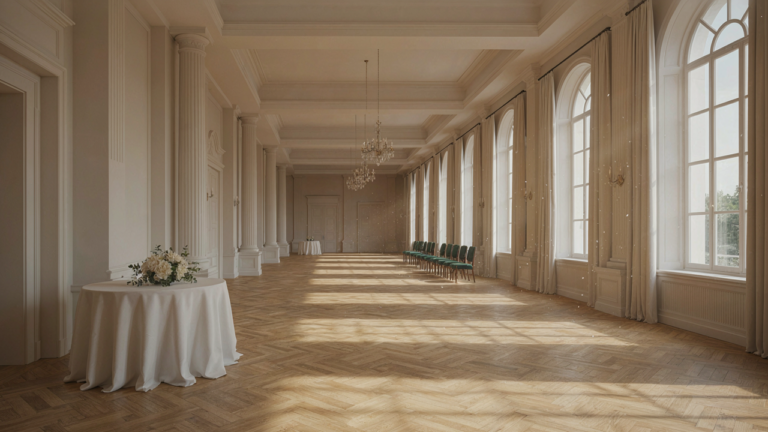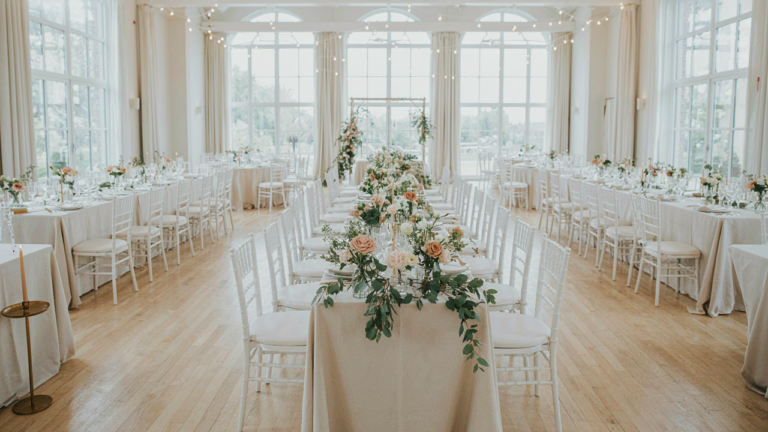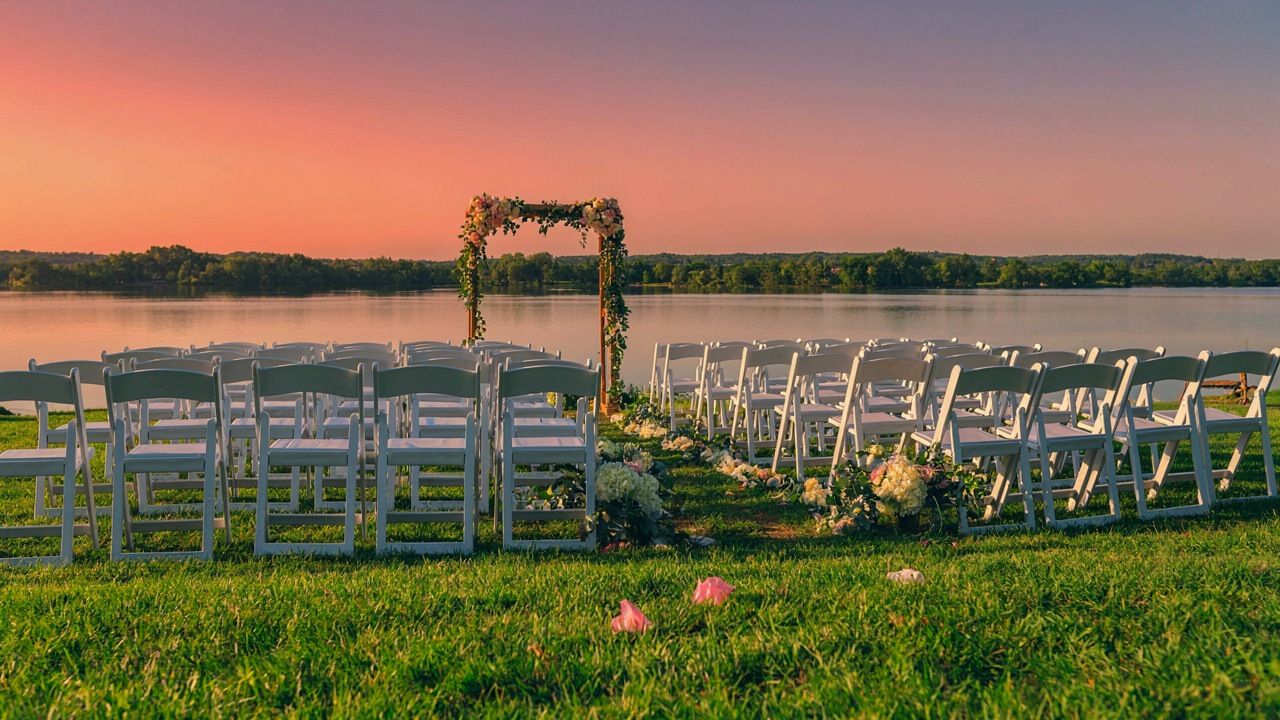
The Illusion Of Affordable Lakeside Venues
What The Venue Quote Actually Hides
You want to believe the $3,000 lakeside venue is a steal, so you’re not looking hard enough at what’s missing. Lakeside venues operate like loss leaders in retail economics: they anchor you with a low base price, knowing you’ll hemorrhage money on mandatory add-ons before you sign anything. The booking fee is the entry drug. Everything else is the business model.
Most lakeside venues quote only the space rental. They exclude parking infrastructure, water access permits, liability insurance surcharges for waterfront events, and site preparation labor. A venue on a slope needs grading work. A venue with no electrical hookups requires temporary power installation, which runs $800 to $2,000 minimum. You discover these costs in phase two, when you’re already emotionally committed and can’t easily walk.
Why Venues Bundle What You Don’t Need
The standard pitch is that packages simplify planning and save money through volume discounts. That’s backwards. Venues bundle because it lets them charge markup on services you could source cheaper elsewhere, and it removes price transparency so you can’t comparison shop. This is pure margin capture, not convenience.
A lakeside venue offering catering, rentals, and day-of coordination as a package isn’t doing you a favor. It’s closing off your ability to hire a caterer who specializes in outdoor events for less, or to use your own rental company with better inventory. Venues know their bundled pricing works because most couples never price the components separately. Get itemized quotes. Request the venue fee standalone, then ask what’s actually required versus optional.
Backyard Lake Wedding Ideas: Leveraging Personal Networks
Scouting Private Lakefront Properties For Rent
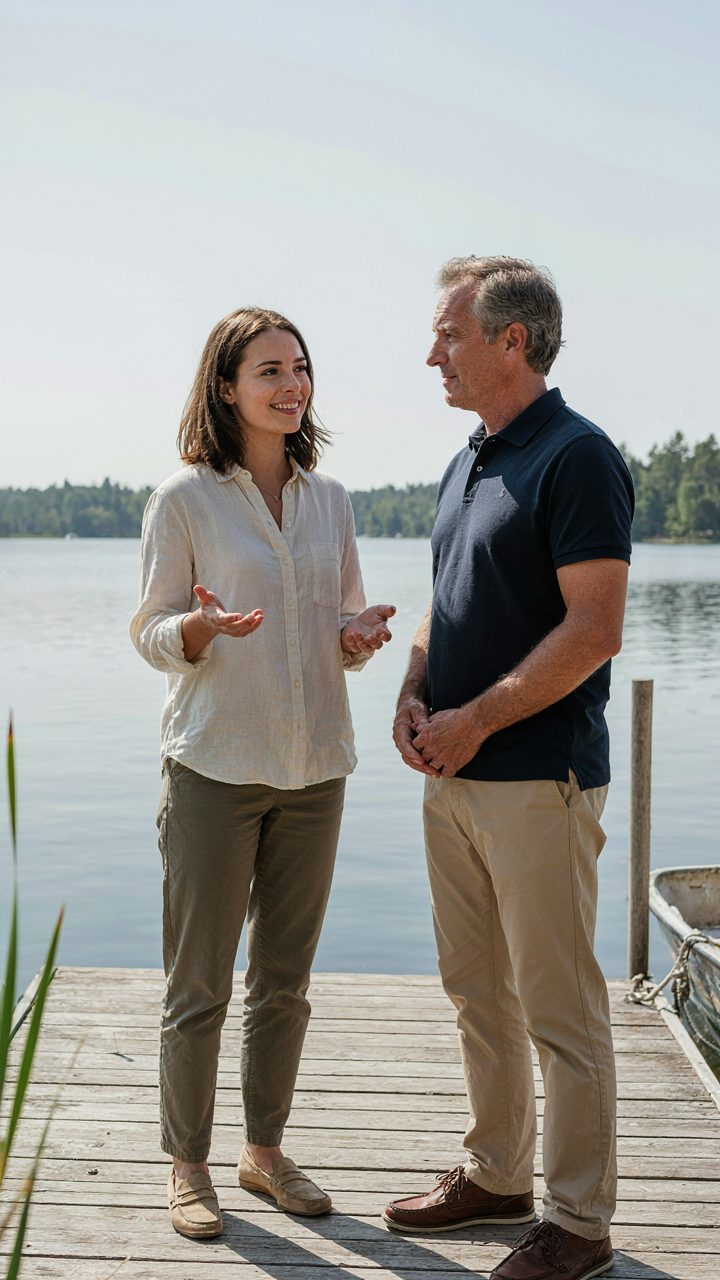
You want to believe a lakeside wedding is cheaper than a venue because you’re avoiding the middleman markup. That’s partially true, but the real mechanism is scarcity arbitrage: private property owners don’t price their land like businesses do because they’re solving a problem (liability, maintenance, cash flow), not running a profit center. This changes what you’re actually shopping for.

Start by mapping properties within your network first. Ask your parents, their friends, your partner’s extended family, coworkers, and people from your hometown if they own or have access to lakefront land. Most private lakefront owners never list their property for events because they don’t know it’s valuable. A conversation beats a Google search here because the owner’s willingness to rent hinges on trust, not price.
Negotiating Usage With Property Owners Directly
The common advice says to “build relationships and be respectful.” That’s not wrong, but it misses the actual leverage point: owners fear uncertainty more than they chase profit. Their real concern is damage, liability, and losing control of their property during an event, not whether you’ll pay market rate or discount rate.
Present a risk mitigation framework before discussing price. Offer to carry event liability insurance naming them as additional insured. Propose guest limits, parking zones, and a walkthrough inspection. Show you’ve thought about their problems, not just your budget. This positioning lets you negotiate from strength because you’re not asking for a favor, you’re offering a solution. Once liability disappears from their mental calculus, price becomes negotiable. Close by proposing a specific date and a refundable deposit amount to lock availability without pressure.
The Unconventional Lakeside Wedding Aesthetic Protocol
Let The Landscape Do The Work
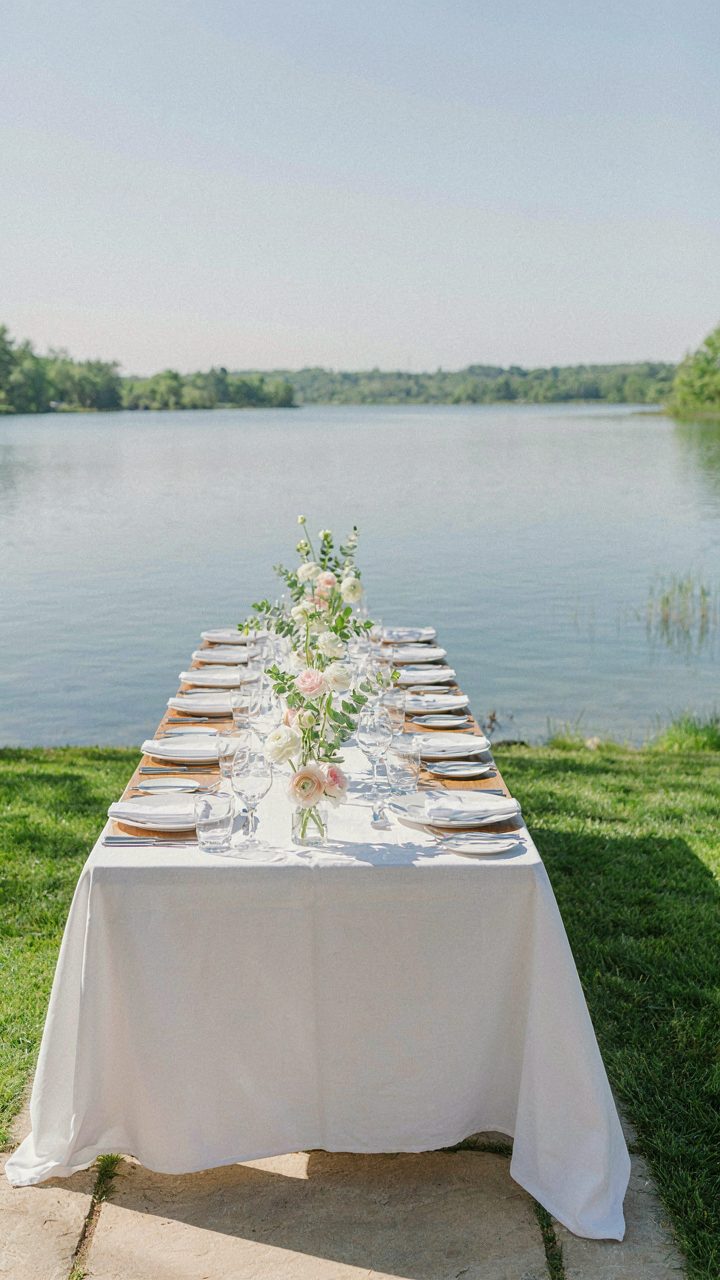
You want to feel like you’re throwing a high-end wedding without the price tag. That’s the real fear here. The mechanism is this: most couples buy decor to cover up a venue’s weaknesses. A lakeside setting already has the visual anchor. Adding more stuff competes with what’s already there and trains your eye to notice the clutter instead of the water.

Restraint reads as intentional design. A single long table parallel to the shoreline, minimal centerpieces, no uplighting competing with sunset reflections. The cost advantage is direct. You remove line items entirely instead of negotiating them down. White linens, natural wood chairs, and a cleared sightline to water cost less than elaborate floral installations and themed decor. The lake becomes your production design.
Existing Structures As Revenue Reframes
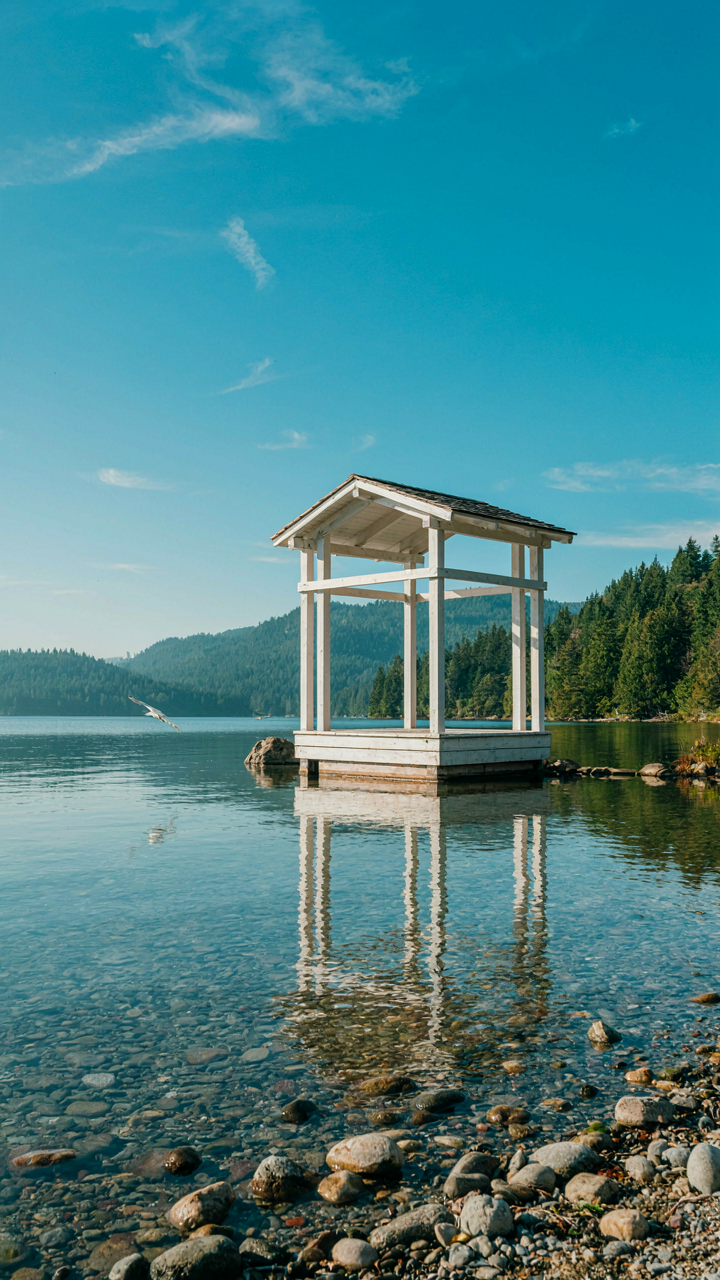
Economics calls this asset utilization. You have a warehouse. The wedding industry calls it a “blank canvas.” Both descriptions describe the same thing: you’re shifting cost from renting climate-controlled event spaces to converting what already stands. Public parks often have picnic pavilions, boat launches with covered shelters, or parking structures with covered areas. Private properties may have old boathouses, storage buildings, or covered docks. The building costs nothing to occupy because it exists.
- Boat Launch Shelters: Most state parks own covered structures at water access points. They rent hourly or daily for a fraction of dedicated event venue pricing, and the lakeside location is already built in.
- Boathouses: Defunct or underused boathouses convert to ceremony and cocktail spaces. Owners often rent at lower rates because the structure sits unused most of the year.
- Picnic Pavilions: Public recreation areas feature pavilions with electrical hookups and parking. Rental fees run 50-75% lower than event venues in the same geographic area.
- Covered Docks: Floating or stationary dock structures with roofs provide weather protection without walls. These suit ceremony setups and cocktail receptions in informal settings.
- Agricultural Buildings: Barns, grain storage, or equipment sheds on lakefront properties rent cheaply when owners need seasonal income. Concrete floors and open frames require minimal conversion work.
The real cost move happens in permitting and insurance. Existing structures often have established liability coverage through their owners. You add your event to their policy instead of requiring a standalone venue bond. Call the property owner or parks department directly. Ask what coverage already exists. That single conversation eliminates thousands in insurance overhead that dedicated venues build into their quotes.
DIY Lake Wedding Ideas: Strategic Resource Allocation

Where Money Actually Moves The Needle
You want to feel in control of your wedding budget because the real fear is invisible waste—money evaporating into decisions that don’t matter. Here’s the mechanism: lakeside venues have hard costs and soft costs. Hard costs are fixed (rental fee, permits, insurance). Soft costs are variable (flowers, lighting, music). Most couples reverse-engineer their budget by cutting soft costs first because they’re visible and feel controllable. That’s backwards. A lakeside wedding’s visual impact lives or dies on two things: the water as backdrop and the ceremony sightlines. Invest there. Everything else compounds off those two anchors.

Catering typically consumes 30 to 40 percent of a lakeside wedding budget, followed by venue rental. The venue cost is non-negotiable, but you control what you do inside that space. Flowers and linens are negotiable. A lakeside setting already has a view—you don’t need to buy a view. Spend on what amplifies the water, not what competes with it. A professional sound system that carries across water acoustics costs real money and delivers measurable return. Generic florals do neither. Pick your spending hierarchy before you hunt for vendors, or you’ll negotiate backwards from whatever quote lands first.
Talent You Already Know, Plus Strategic Outsourcing
The conventional advice is to use friends and family to save money. That’s incomplete. It saves money, but it often creates chaos because unpaid labor has no accountability structure. The real mechanism is comparative advantage from economics—some tasks require skill you don’t have in your network, and paying for those tasks frees your friends to do things they’re actually good at. Assign work based on proven competence, not availability. Your friend who’s a photographer should shoot. Your friend who’s disorganized should not coordinate logistics, even if they volunteer. Delegation fails when you assign based on who owes you a favor instead of who executes well.
Local talent costs less than destination talent because they don’t bill travel time. A lakeside caterer based near the venue charges differently than one traveling two hours. A local musician or DJ understands the water’s acoustic challenges already. A landscape designer familiar with lakeside soil drainage saves you thousands in failed plantings. Build your vendor list from people who work lakeside regularly, not from the cheapest option online. Then recruit friends for tasks like guest coordination, setup, and breakdown—work that doesn’t require specialized skill. Create a single point person (usually not the couple) who owns the day-of timeline and has authority to make calls.
The Dock Wedding Ceremony: Engineering Memorable Moments
Why Docks Fail And How To Fix It
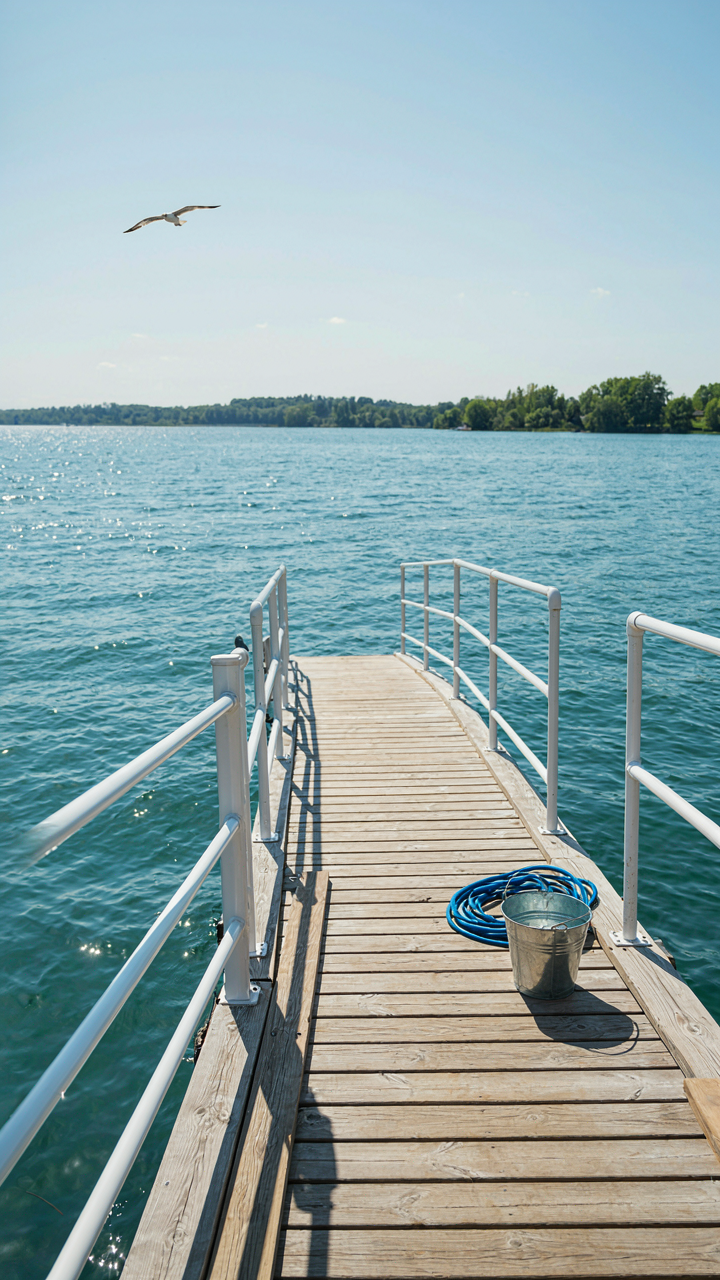
You want a dock wedding because it looks cheap but feels expensive. The real mechanism is structural load capacity, and most couples ignore it until they’re standing on rotting wood with 80 people. Physics calls this “distributed load”—the total weight spread across a surface. A dock designed for fishing equipment moves differently under 100 dressed humans than it does empty. Engineers calculate 100 pounds per person minimum, plus equipment weight. Most residential docks hold 50 people safely. Verify the actual dock’s load rating before booking, not after.

The focal point problem is simpler but just as ignored. A dock is linear. People stand in a line. Your ceremony needs people facing you, not sideways. Build a small platform perpendicular to the dock’s length, or angle the seating to create depth. This costs $300 to $600 in materials. Stability requires railings too—they’re not optional when guests are in heels on wet surfaces. Install temporary railings rated for 200-pound lateral force if the venue doesn’t have them. This single addition prevents liability and the awkward moment when someone grabs for balance during vows.
Contingency Creates The Budget
Military logistics uses the concept of “redundancy under constraint”—backup systems when resources are limited. Your dock wedding needs a weather pivot and a water-contingency plan that doesn’t break the budget. Rain turns a dock slippery and dangerous. Have a clear-roof tent or pavilion within 50 feet, pre-rented before the wedding date. This runs $400 to $800 for a weekend rental. Do not assume you’ll reschedule or move indoors. The cost is built into your dock wedding budget from day one, not added as panic.
The water-level variable kills most dock budgets invisibly. Lakes and rivers fluctuate. A dock ten feet high in summer might be six feet high in spring. Confirm water depth and dock height during your venue tour in the exact season you’re marrying. Bring the actual wedding date forecast to that meeting. If wind or water level makes the dock unsafe that day, you need a backup ceremony location on the property already scouted and approved. This removes the scramble factor and keeps costs from exploding. Contingency planning isn’t backup thinking. It’s the difference between a $3,000 dock wedding and a $6,000 emergency pivot.
Lake Front Wedding Catering: The Smart Approach
Food Trucks Beat Traditional Catering
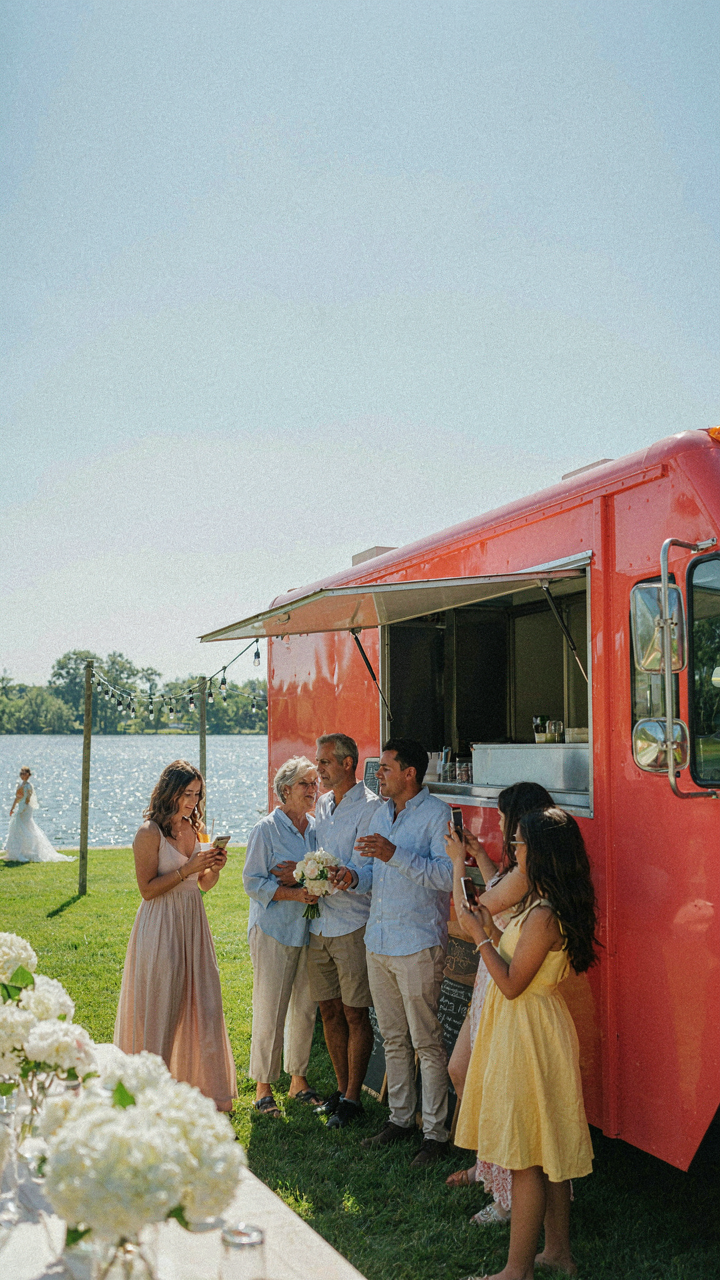
You want to look like you didn’t cut corners on food, but traditional catering at a lakeside venue costs 40 to 60 percent more than the same meal elsewhere. The markup exists because catering companies assume they’re solving a logistics problem for you. They’re not. Food trucks solve the actual problem: they show up, they cook on-site, guests see the operation, and the cost structure stays honest because competition among food truck operators is real.

The mechanism is simple economics—price discovery. When you call a traditional caterer, they quote based on what they think lakeside weddings cost, not what the food costs. Food trucks price based on what other food trucks charge. You get quality protein and sides at a markup that reflects actual labor and materials. Most couples never test this option because they assume weddings require a certain catering format. That assumption costs thousands.
Potluck Structure With Hired Coordination
Everyone knows potlucks work, but everyone also thinks they look cheap at a wedding. They don’t, if you architect them correctly. Hire one person—a day-of coordinator or kitchen manager—to collect dishes from guests, plate them thoughtfully, and manage the table. This person costs 300 to 800 dollars. Your food cost drops to almost nothing. Guests contribute what they’d spend on a gift anyway, you get genuine variety, and the lakeside setting makes it feel intentional rather than budget-constrained.
The coordination hire transforms perception from “broke couple” to “thoughtful couple who values community.” You need that person to set arrival times, manage temperature, prevent duplicate dishes, and handle plating so everything looks composed. Without them, a potluck reads as chaotic. With them, it reads as curated. Assign one trusted guest as backup, provide a simple form listing what they’ll bring a month prior, and confirm twice. The coordinator’s job is execution, not planning.
Outdoor Lake Wedding Ideas: Weatherproofing Your Plan
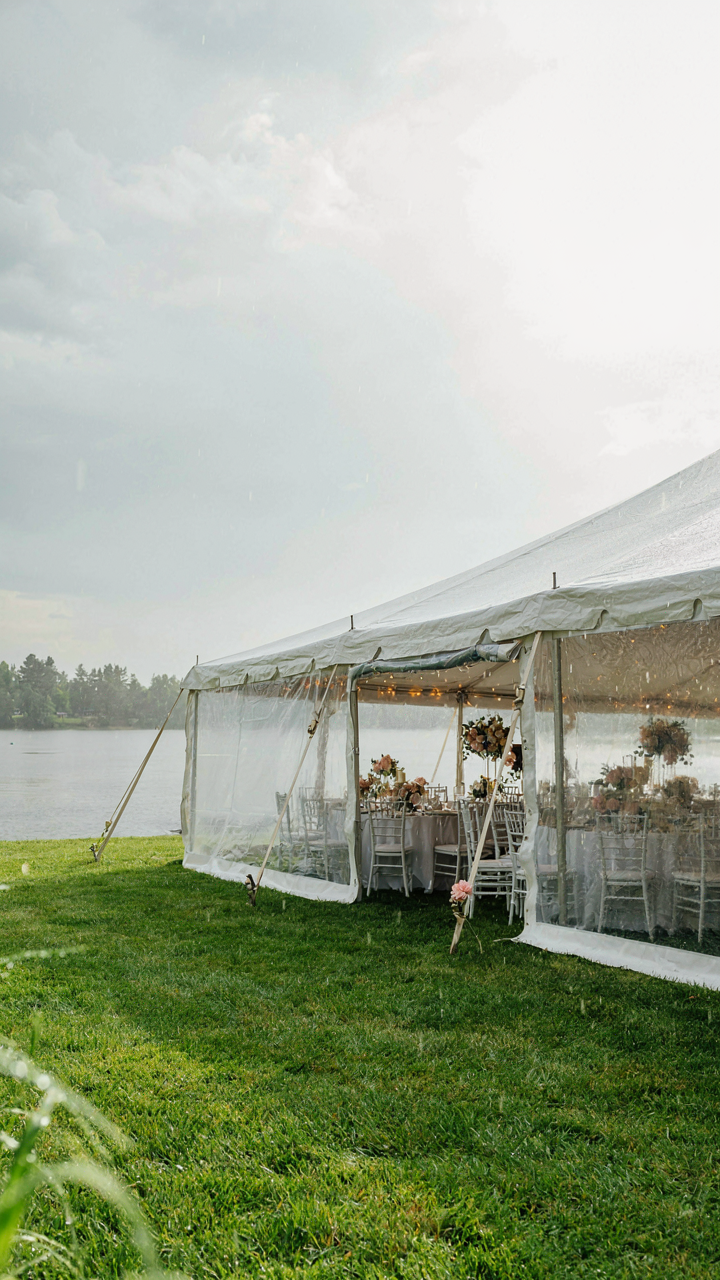
When Rain Arrives, Your Budget Disappears
You’re worried about looking foolish if weather ruins the day. That’s the real fear underneath all this. Here’s the mechanism: rain contingency isn’t about having a backup plan, it’s about designing the primary plan to absorb water without losing money. The difference between a lakeside wedding that survives a downpour and one that hemorrhages cash is where you place your shelter before guests arrive, not after.

Tent rental costs spike the moment you book last-minute. A 40-by-60 frame tent runs 2,000 to 4,000 dollars for a single day. If you budget for it upfront as part of your venue cost, you negotiate better rates and lock pricing months earlier. Permanent or semi-permanent structures on the property—gazebos, pavilions, covered boathouses—eliminate this problem entirely. Before signing any venue contract, ask what shelter exists on the grounds. If nothing exists, ask the venue owner if you can install a modest structure that stays year-round.
Temperature Control Without The Markup
Lakeside air temperature drops faster than inland areas because water reflects heat differently. This isn’t optional planning, it’s thermodynamics. What most wedding guides miss: heating and cooling costs blow up your budget if you treat them as afterthoughts instead of architectural decisions. The real lever is positioning your ceremony and reception zones to use existing wind breaks and shade naturally, then layering controlled heating or cooling only where guests spend money.
Position the ceremony upwind of the lake to avoid direct wind chill during vows. Use the tree line or existing structures to buffer reception areas. For heat, rent outdoor heaters strategically rather than covering the entire space—guests cluster anyway, so two to three propane heaters near seating areas cost 300 to 600 dollars total, not 2,000. For cooling in summer, time your reception for early evening when lakeside temperatures naturally drop, and skip air conditioning rentals entirely.
Photography At A Lake Venue Wedding: Capturing Authenticity
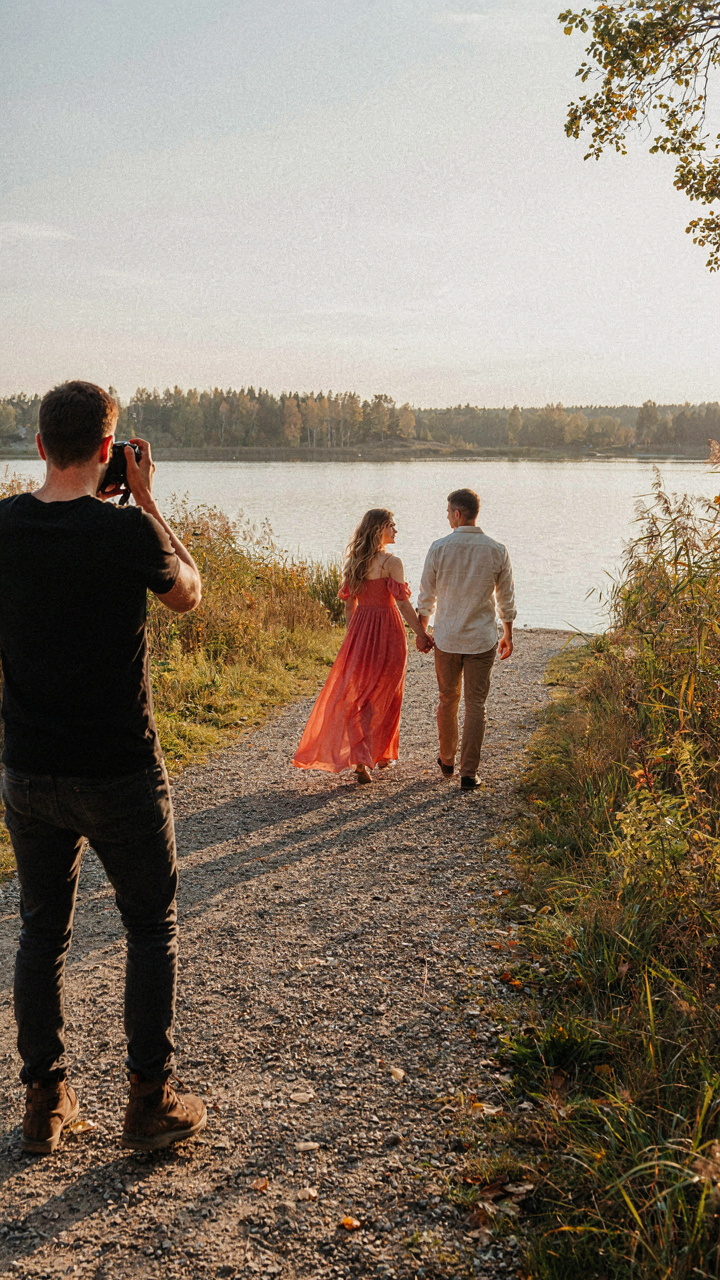
How Water Changes Your Lighting Economics
You want your photos to look expensive without paying for expensive photography. That’s the real motive here. Water reflects light like a mirror reflects an image in optics—it doubles your available illumination and softens shadows naturally, which means your photographer needs less technical skill to produce clean images. A lake venue gives you free fill light all day.

The trade is unpredictability. Water reflection intensifies glare on faces during midday shoots. Overcast days eliminate the shadow problem but flatten contrast. Golden hour—sunrise and sunset—works here because water amplifies warmth without creating harsh contrast zones. Budget photographers struggle at lakes not because of the setting but because they don’t meter for reflection. Your photographer needs to understand this mechanism or your budget savings evaporate.
Candid Moments Over Posed Perfection
The consensus says hire a second shooter for candid coverage. Wrong framing. You don’t need a second shooter—you need a photographer who understands that candid shots at lakes cost less to produce because people relax near water. Authenticity isn’t harder to capture; it’s the default state when your venue doesn’t feel like a studio.
Staged photos require setup time, wardrobe changes, and directional adjustments. Those multiplications add labor cost to your bill. Candid work—guests laughing, the couple walking the dock, details of the water behind conversations—happens without intervention. Tell your photographer upfront that you’re prioritizing candid capture over formal portraits. This shifts their workflow to observation mode, reduces shooting time, and directly lowers your photography budget without sacrificing image quality.
The Post Wedding Lakeside Experience: Beyond The Day
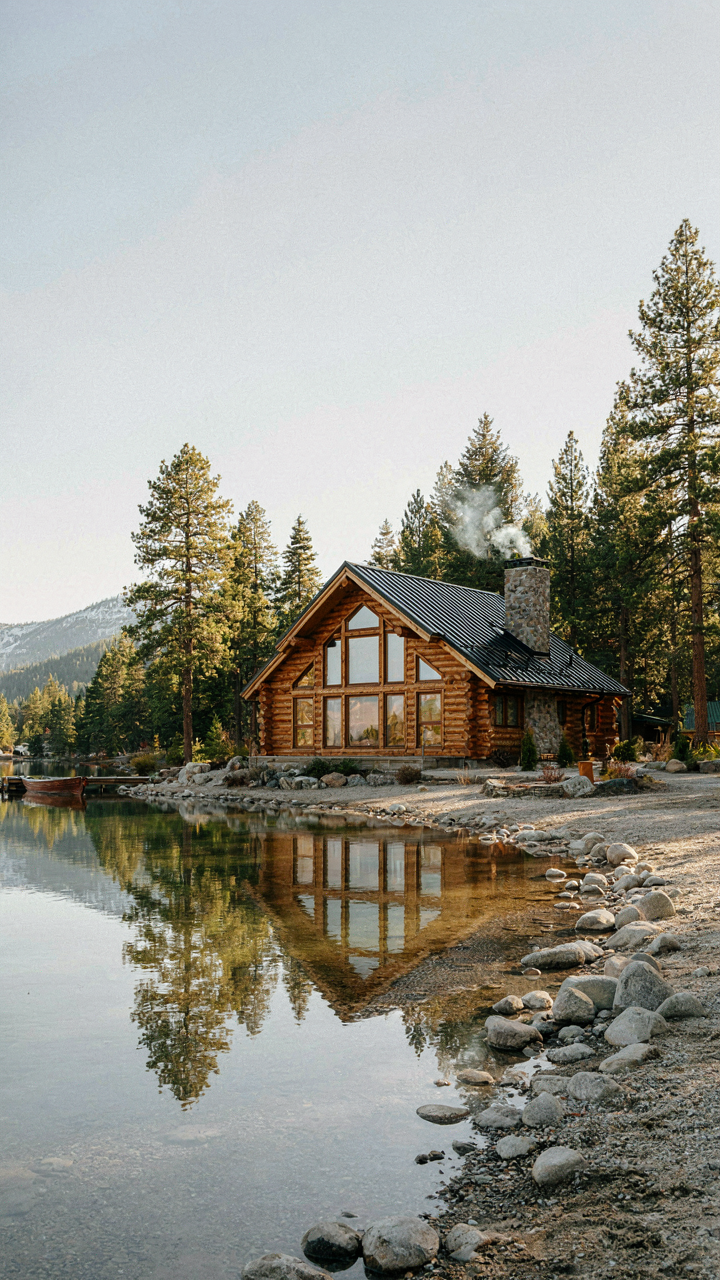
Mini Moon Destinations Near Your Lake Venue
You want the wedding to feel like it wasn’t just a single event, but the start of something. The mechanism here is psychological anchoring: your guests remember the location more vividly if the couple extends their presence there, which makes the venue feel intentional rather than transactional. Staying nearby for a mini-moon also signals you didn’t blow the budget on one day, which changes how people perceive the entire event.
- State or national parks within 90 minutes: Most lake regions sit near protected land. Hiking, camping, or cabin rentals cost a fraction of hotel rates and give you genuine downtime after the event.
- Small towns on the same water system: Different lakeside towns offer restaurants, shops, and lodging options without travel friction. You stay in the landscape guests already associate with celebration.
- Cabin rentals on quieter sections of the lake: Many budget venues are on populated areas. Renting a private cabin 20 minutes away gives you isolation at lower cost than destination travel.
- Waterfront Airbnbs in neighboring counties: Regional platforms often list properties cheaper than commercial resorts, with kitchen access to reduce meal costs post-wedding.
- Working farms or orchards offering agritourism: Seasonal activities like picking, winemaking tours, or farm dinners are positioned as experiences but cost less than typical tourist attractions.
The math is simple: a two-night hotel stay 90 minutes away costs what a one-night stay at a resort destination does. You extend the wedding narrative without extending the budget. Book your mini-moon accommodation before finalizing the venue contract, because proximity affects what you actually use post-event.
Maximizing The Lakeside Ambiance For Guests
The common advice is that ambiance comes from lighting and decor. Wrong. Ambiance is inventory: your guests have only a finite number of senses and attention cycles available during the event. Economics calls this scarcity. You’re not creating atmosphere, you’re allocating guest attention toward the lakeside setting itself, which costs nothing, then removing distractions that compete for that attention.
The mechanism is subtraction. Eliminate music volume peaks that force guests indoors. Skip the uplighting that turns the water into a light show instead of letting it be the light show. Remove barriers between guests and the shore whenever safety permits. Ambient noise from the water actually suppresses conversation better than any playlist will, which means guests naturally lower their voices and look outward. Position seating to face the water during dinner, not the stage. The lake becomes the entertainment because you stopped charging entertainment to do that job.
Why “Budget” Is A Marketing Term For Mediocrity
The Price Signal Nobody Admits They’re Reading
You want a cheap lakeside wedding because you’re terrified you’ll waste money on something nobody remembers. Here’s what actually happens: you confuse low cost with low value, then build your entire decision tree around that false equivalence. Economics calls this the signaling problem. In venue selection, a low price signals either desperation or mediocrity to guests before they even arrive. The mechanism works backwards from what you think. People don’t judge your wedding by what you spent. They judge it by what the space communicates about your taste and intentionality.
A lakeside venue at half market rate doesn’t feel like a steal. It feels like you settled. Guests sense this immediately. The real move isn’t finding the cheapest option. It’s finding the venue where the owner actually cares about execution, then negotiating on terms that matter—timing, staffing, flexibility—not on the base rate. When you lead with budget, you’ve already lost the negotiation.
The Difference Between Saving Money And Building Atmosphere
Cultivating an experience means you stop treating the venue as a checkbox and start treating it as a context for how people will actually feel. Most couples fixate on head count capacity and parking because those are easy to quantify. They’re also useless for determining whether a space works. What matters is whether the venue’s owner understands flow, sight lines, weather contingency, and guest comfort during transitions. These aren’t expensive to execute. They’re expensive to ignore.
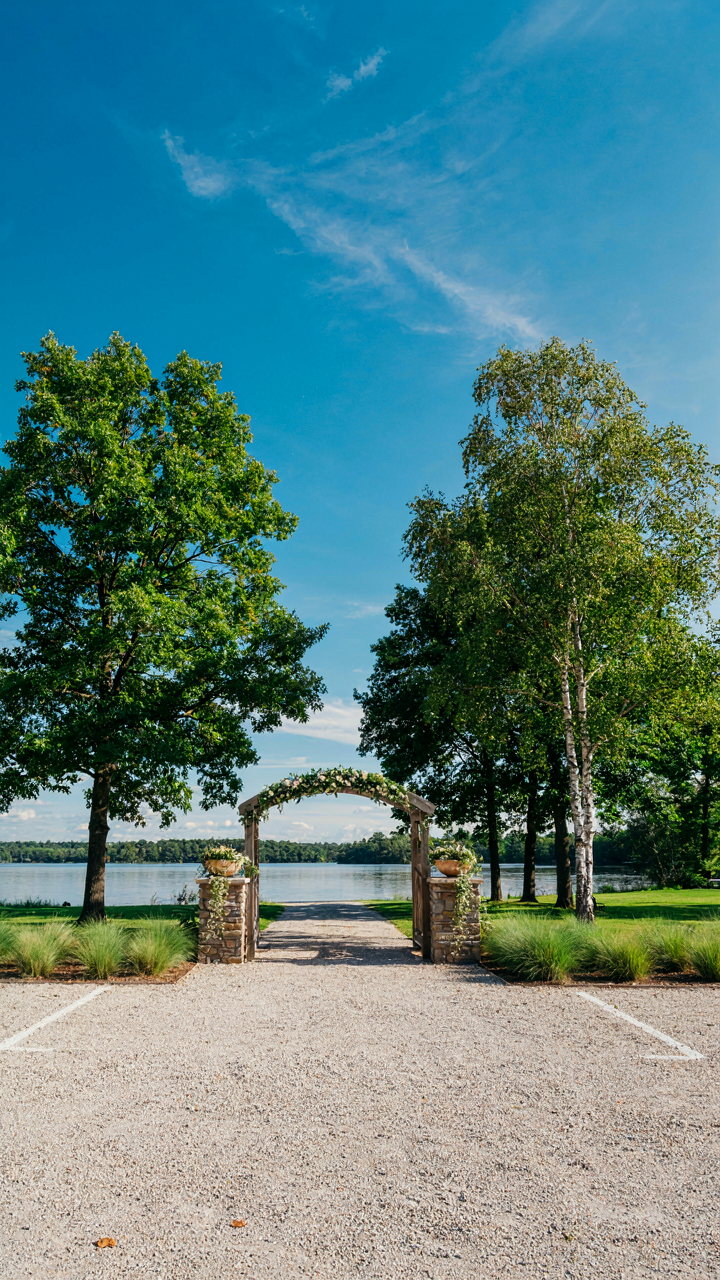
A mediocre lakeside venue with poor drainage flooding during rain, no wind protection, and confused parking creates a transaction where guests feel the discomfort. A thoughtfully operated budget venue with gravel that drains fast, strategic tree placement, and clear signage creates an experience. The second costs marginally more to set up but generates five times the perceived value. Your job is identifying which operators think in terms of operations, not just occupancy. Start by asking venues how they handle the three most common failures on their property. The answers tell you everything.
The Real Obstacle Isn’t Your Budget; It’s Your Fear Of Embracing Unconventional Elegance
Most couples reject lakeside venues because they expect them to look cheap. They don’t. You’re afraid of what your relatives will think. Stop. Call three venues in your area today and ask one specific question: what does the raw space look like without their default decorations? You’ll find that elegance lives in constraint, not excess. Your budget isn’t the problem. Your willingness to trust it is.