The Unseen Value: Repurposing Abandoned Farmsteads
Scouting For Raw Untouched Potential
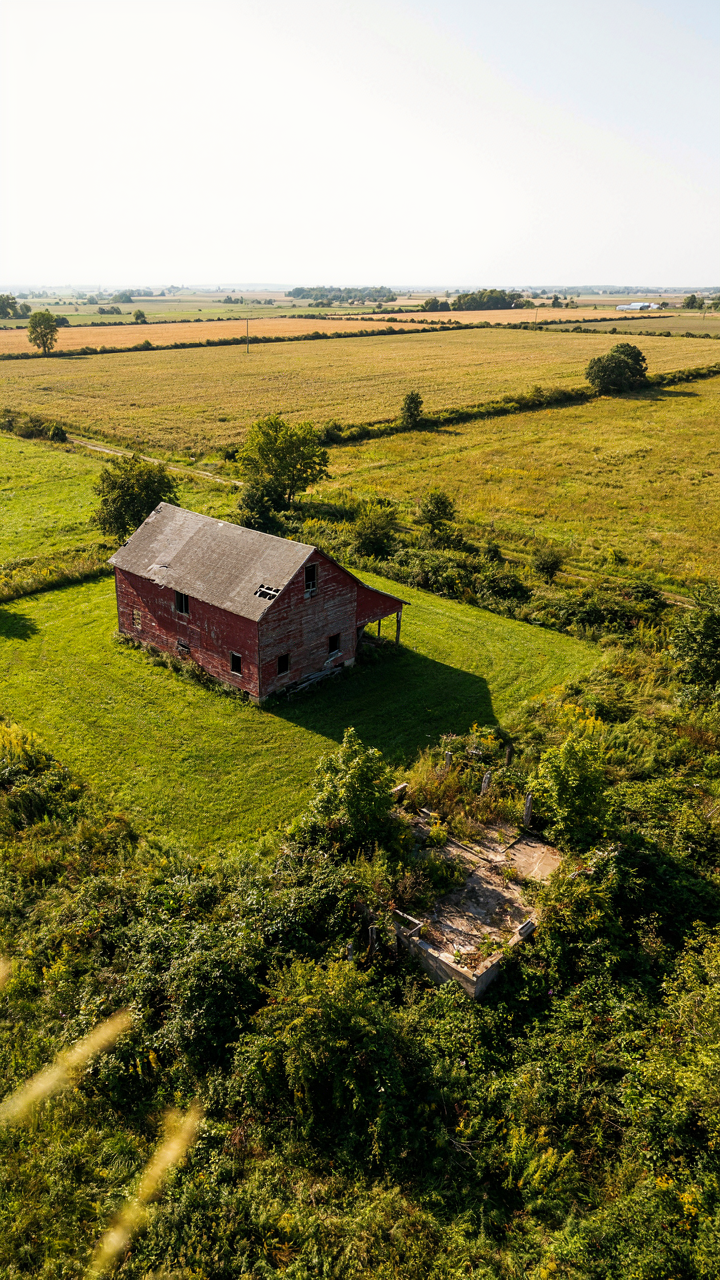
You want to feel like you discovered something nobody else saw. That’s the real draw here. But the mechanism is simpler: abandoned farmsteads exist in dead zones between rural land value and development potential, which means owners abandoned maintenance years ago and now carry carrying costs with zero revenue. They’ll negotiate. The properties sit because they’re not attractive enough for developers, not deteriorated enough for demolition, and too far from town for residential buyers. That limbo is where your budget lives.
Scout within a thirty-minute radius of your target guest base, not forty or fifty. Closer travel time means higher attendance, which justifies the venue choice to skeptics. Drive county roads on weekend mornings when property owners work their land or sit on porches. Look for cleared acreage with existing structures—a barn, equipment shed, or house foundation—that signal water and electrical access already present. Abandon the idea that you need pristine. You need bones: level ground, tree coverage for shade, and structures that won’t require full reconstruction before guests arrive.
Negotiating Access With Property Owners
Stop assuming owners want maximum dollars. Most rural property holders who don’t farm commercially view their land as generational storage, not an asset to monetize. They worry about liability, trespassing, and cleanup costs more than rental rates. Position yourself as a one-day tenant who handles insurance, leaves everything better than you found it, and solves their problem: they get cash with zero ongoing hassle. Insurance requirements protect them legally, which removes their primary objection.
Start with a direct written offer, not a conversation. Include the date, guest count, insurance certificate amount, and your cleanup protocol. Property owners respond to specifics, not enthusiasm. Offer 40 to 60 percent of what a commercial venue charges in your region, which still pays them far more than they’d earn leaving the land empty. Close access through a short-term rental agreement that specifies your liability coverage, deposit amount, and exact usage hours. The deposit removes their financial risk; the agreement removes their legal risk. Both get you the property.
The “Field Wedding” Protocol: Minimalism As Design
Use Natural Backdrops As Your Constraint
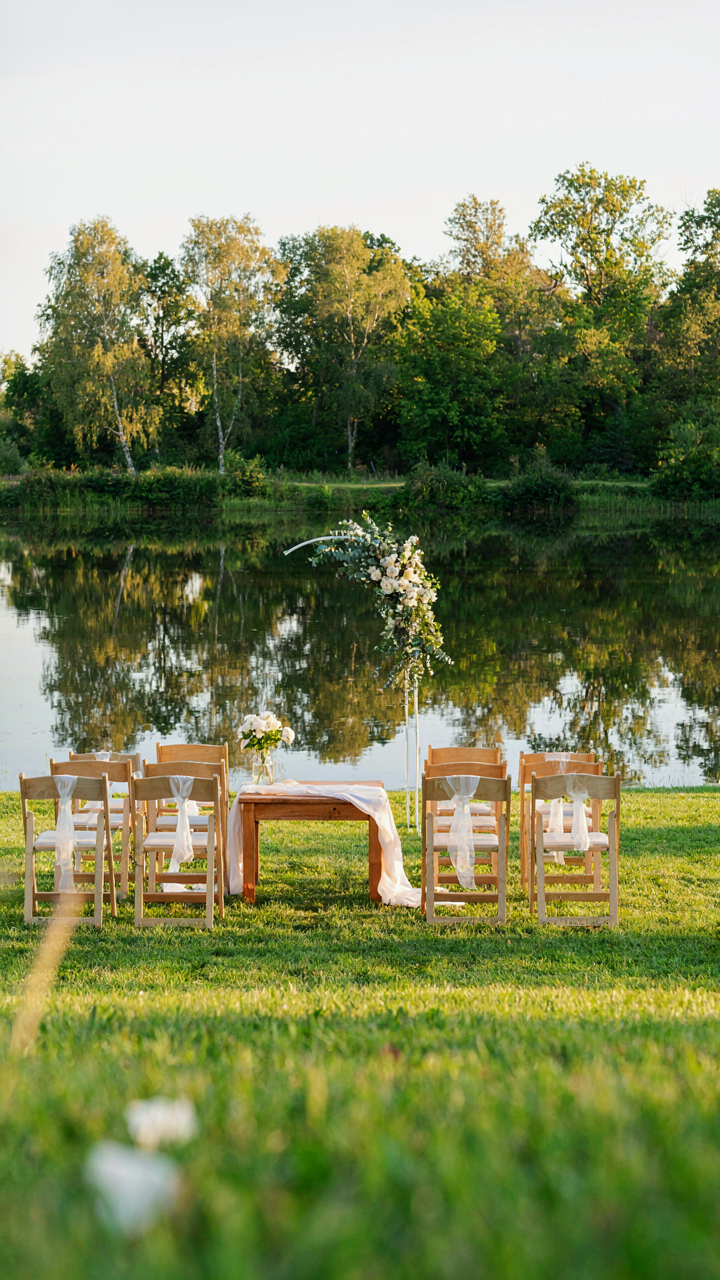
You want permission to spend less money while still looking intentional. That’s the real reason this section matters. Here’s the mechanism: in economics, constraints force efficiency. A treeline, pond, or hillside becomes your frame. It stops you from filling dead space with rentals you don’t need. The venue’s existing topology does the compositional work. You pay nothing for it. Your photographer frames shots inside those natural edges, and the cost per visual impact drops dramatically.
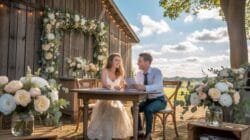
A mature tree line reads as “deliberate backdrop” to guests. An open field reads as “empty unless you fill it with stuff.” The difference in what you’ll spend to make one feel finished versus the other is not small. Position ceremony seating to face the best natural feature. Position cocktail areas where existing vegetation creates natural room division. This isn’t decoration. This is working with what the land already provides to eliminate the need for expensive rental infrastructure.
Essential Decorations Only, Nothing More
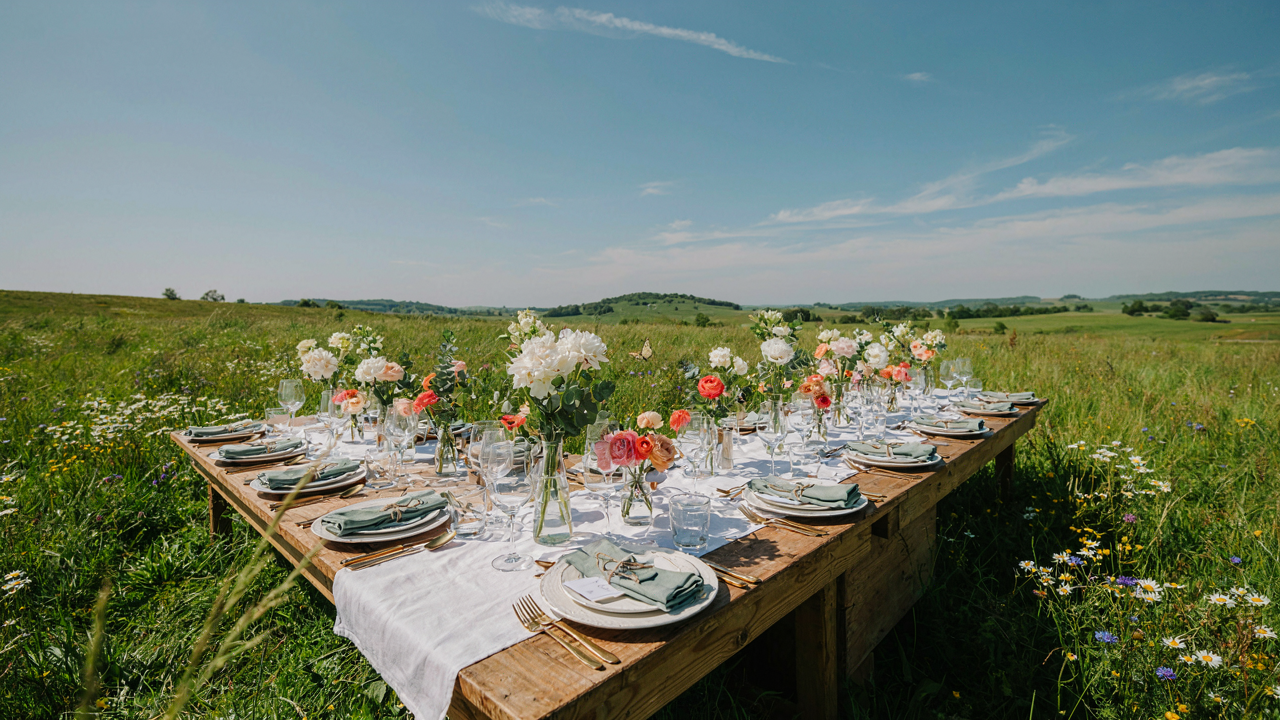
Most advice says “minimal means boring.” That’s incomplete. Minimal means you’ve identified which single elements actually move the visual needle and cut everything else. Field weddings fail when couples add decoration to fill silence. String lights strung randomly across open space feel corporate. Flowers scattered on tables feel like afterthought. One statement piece works. A single long harvest table arrangement. Lanterns placed only at the ceremony. Fabric draped on the existing structure you’re using, not floating in air.
The protocol is simple: ask what visual problem each decoration solves. If the answer is “just adds something,” remove it. Bare wood tables with linen cost less than decorated tables with centerpieces. A simple arch at the ceremony focal point costs less than decorating a ceremony space with multiple elements. Every decoration you don’t rent is budget you keep. Start with zero and add only what changes how the space reads to a guest walking in. This discipline separates a cheap wedding from a designed one.
Backyard Reception Redefined: Leveraging Home Turf
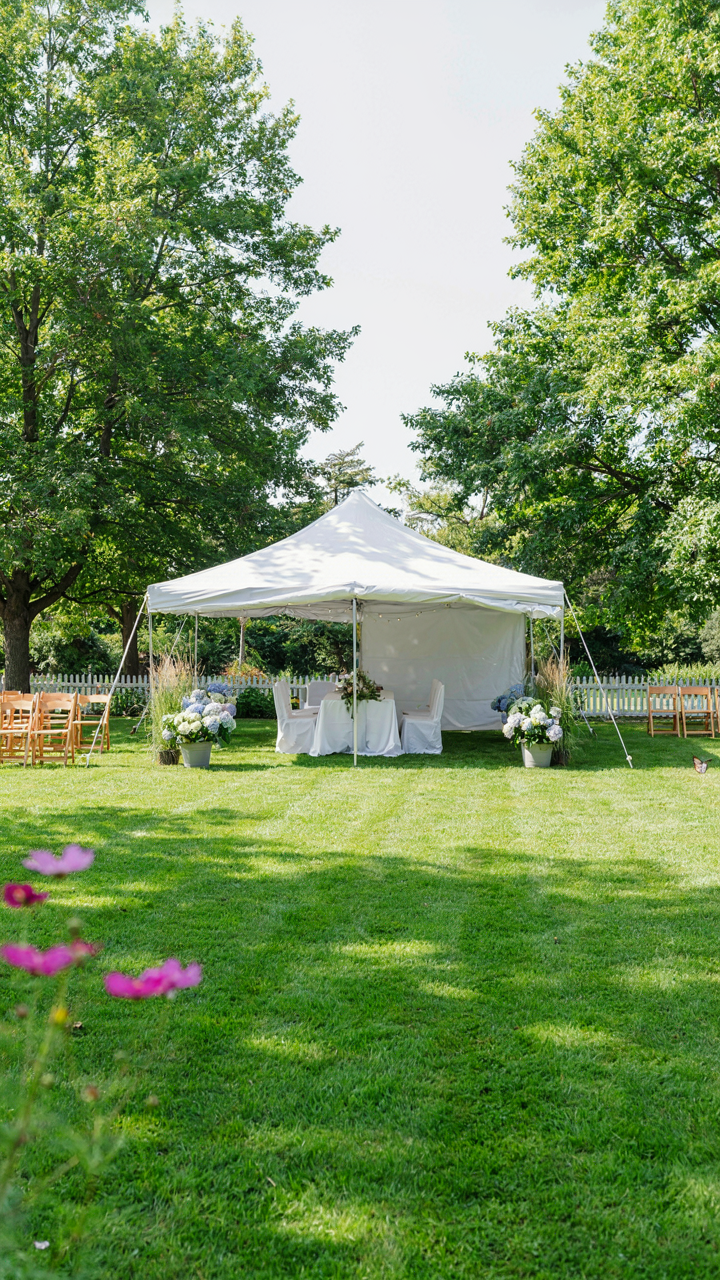
Your Land Already Owns The Venue Cost
You want to feel like you’re getting a deal without admitting the real reason: you’re terrified of looking cheap in front of your guests. Here’s the mechanism that changes everything. In real estate economics, you own an asset with latent utility. Your backyard isn’t a blank canvas—it’s already paid for. The venue markup at a commercial farm space is 40 to 60 percent pure profit extraction. You eliminate that entire layer by hosting on property you control. The math is basic: rental cost vanishes, leaving only setup, catering, and logistics.

Most backyard weddings fail because people treat them like downsized commercial events instead of proprietary operations. Your advantage isn’t that things are cheaper—it’s that you make decisions on your own timeline without vendor gatekeeping. You control load-in times, setup dates, cleanup schedules, and access to the land itself. A commercial venue charges you for the privilege of following their rules. At home, you set the rules. This shifts what you actually spend money on: parking solutions, weather contingencies, and guest comfort infrastructure become your real budget items instead of arbitrary venue fees.
Local Codes Trump Good Intentions
Permits and setback requirements exist in every county, and they’re not suggestions. Most people skip this step because it feels like bureaucratic theater, then hire a contractor who cuts corners because they didn’t validate code compliance upfront. Call your local zoning office and ask three specific questions: event occupancy limits for residential property, distance requirements from property lines for structures or amplified sound, and whether temporary event permits exist. Write down the answers. Some counties allow up to 50 guests without a permit; others require one at 25. This determines whether your wedding happens legally or becomes a neighbor’s noise complaint waiting to happen.
Setback rules and deed restrictions matter more than you think. A tent placed two feet too close to the property line or amplified music audible beyond 100 feet can trigger code violations that stop your event mid-ceremony. Get the requirements in writing before you commit to the date or hire anyone. Run them by your homeowner’s insurance carrier—some policies exclude events entirely, others require written approval for gatherings over a certain size. Document everything and notify immediate neighbors 48 hours before setup begins. This isn’t defensive; it’s the protocol that prevents cancellations.
The Local Farm Alliance: Barter & Community Exchange
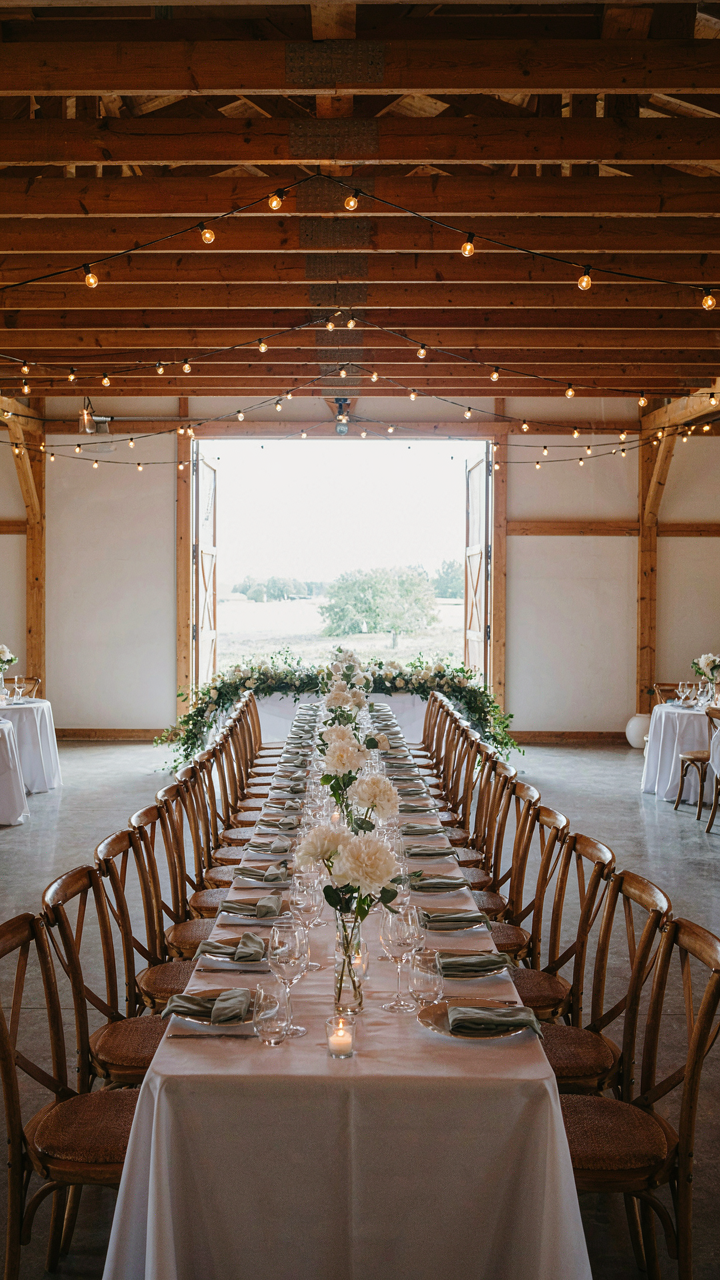
Farms With Infrastructure Already Built
You’re reading this section because you want permission to skip paying full price. Here’s the mechanism: farms with existing infrastructure have sunk costs they’ve already paid. Your job is finding those farms and extracting value from their past investment instead of funding new construction.

Most wedding planners search for “pretty farms” without asking what’s already there. You need the opposite approach. Target farms that host events, run agritourism operations, or rent land for corporate retreats. These farms already have electrical hookups, parking areas, restroom facilities, and weather protection. The owner isn’t building from scratch, which means negotiating room exists.
- Farms with existing event barns: Look for operations that already host farm dinners, corporate events, or seasonal festivals. They’ve invested in structure, lighting, and basic amenities.
- Agritourism destinations: Farms running pick-your-own operations, pumpkin patches, or hayride businesses need revenue year-round. Your wedding fills off-season gaps at lower rates.
- Working farms with rental cottages: Properties that rent guest housing already maintain driveways, landscaping, and parking. These systems scale to wedding guest loads without new installation.
- Equestrian facilities and boarding operations: Arenas, covered structures, and tack buildings provide ready-made event spaces. Many owners seek additional income streams.
- Organic farms with CSA operations: Farms with established customer bases and community connections often have gathering spaces and existing utilities positioned for groups.
Call farms directly and ask one question: “What infrastructure do you have now?” Skip the website. Website photos lie. The farm that claims “rustic charm” might mean “no bathroom within fifty yards.” Farms with infrastructure answer quickly because they know their setup has value.
Trading Expertise For Venue Access
Economics teaches opportunity cost: what you give up to get something else. In farm wedding venue negotiation, your opportunity cost is cash. The owner’s opportunity cost is labor or professional services they’d otherwise hire. Swap one for the other and both sides win.
This isn’t bartering—bartering assumes equal-value trades. This is solving the farm owner’s problem in exchange for venue access at reduced cost. The farm owner needs marketing photos, website updates, legal consulting, carpentry work, equipment repair, graphic design, or bookkeeping. You likely have one of those skills or access to someone who does. Offer it first, ask about pricing second.
Structure the deal like this: identify one specific problem the farm faces that your skill solves. Quantify what that service costs if they hire it out. Then propose this: farm provides venue at X dollars, you provide service valued at Y dollars, final cost to you is X minus Y. Get it in writing. Handshake deals on venue swaps create disputes when the wedding date arrives and expectations shift.

The mechanics require clarity on both sides before signatures. Document what you’re providing, when it’s due, and what happens if either party doesn’t deliver. A photographer might trade ten hours of editing and fifty prints for venue access. A lawyer might trade lease review and liability assessment. A social media manager might trade three months of Instagram content. The farm owner gets tangible value today, not a vague promise.
Acreage Wedding Ideas: Renting Raw Land, Not Venues

The Actual Cost Difference When You Skip The Venue Markup
You want permission to spend less without feeling cheap. That’s the real reason this section matters to you. Here’s the mechanism: venue operators price based on what they own, not what the space costs to use. They own the building, liability insurance, maintenance crew, liquor license. You don’t need any of that. Renting raw acreage from a farmer or landowner costs 60 to 80 percent less than booking an established venue because you’re not paying for their overhead infrastructure. Economics calls this the difference between marginal cost and marked-up retail price. You’re accessing marginal cost.
A working farm rents acreage for 300 to 800 dollars for a day. The same square footage at a branded venue costs 2,000 to 5,000 dollars. The land hasn’t changed. The experience doesn’t diminish. What vanished is the middleman’s cut. You need liability insurance, which costs 200 to 500 dollars per event through a short-term policy. You still come out ahead. The trade is simple: you handle the setup, they handle the lease.
Planning The Physical Work Without Burning Yourself Out
Setup and breakdown aren’t problems—they’re just work that needs sequencing. Most couples underestimate the labor because they’ve never managed a space without staff. Rented acreage requires you to coordinate tent delivery, table placement, electrical hookups, parking, and waste management yourself. This takes 15 to 20 hours spread across three days before and one day after. The common mistake is thinking you’ll do it yourselves. Don’t. Hire a small crew through TaskRabbit or local day labor. Cost runs 600 to 1,200 dollars. Add it to your budget now.

The logistics blueprint works like this: confirm the land access one month prior, coordinate all vendor arrival times two weeks out, create a physical map showing tent placement and utilities, assign one person as day-of site manager, and schedule breakdown for the following morning when minds are fresh. The site manager isn’t your best friend or your mother. It’s someone you pay to make decisions and solve problems without consulting anyone. This single hire prevents chaos that costs far more than their fee.
Beyond The Barn: Unexpected Country Wedding Idea Locales
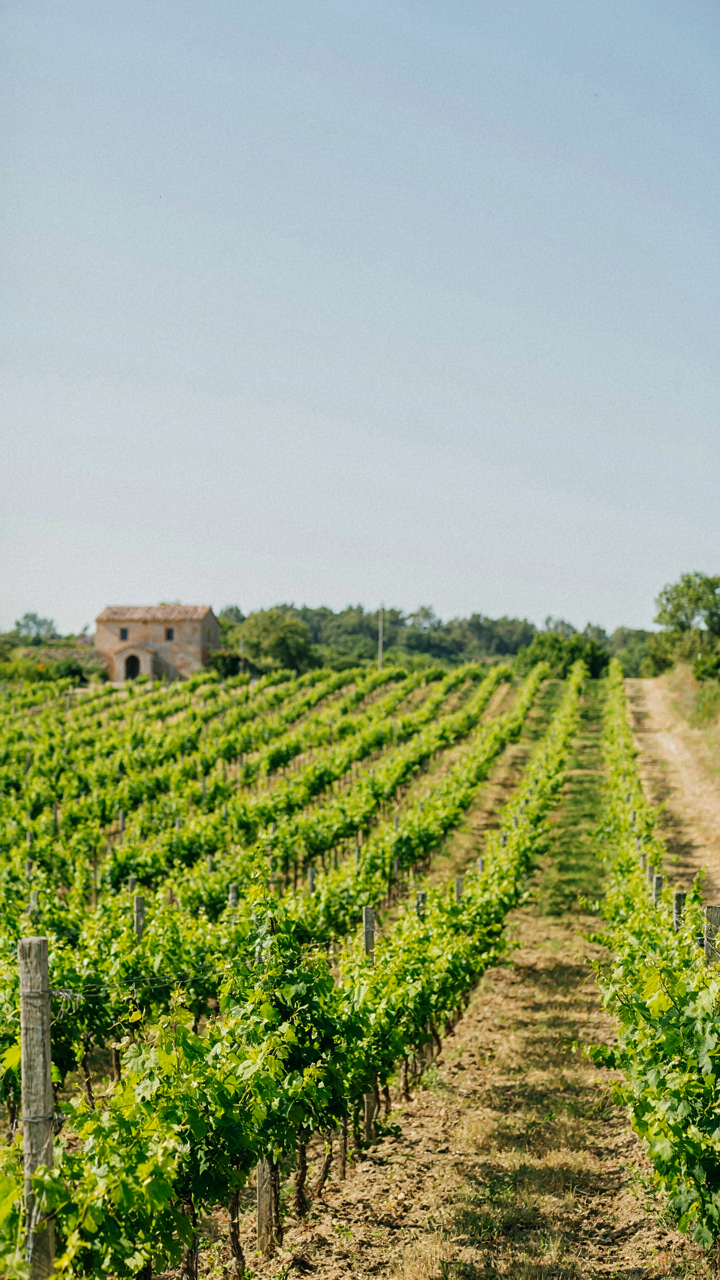
Orchards, Vineyards, And Open Fields
You want to look like you discovered somewhere nobody else thought of. Here’s the mechanism: these venues exist on operating farms, which means their pricing scales with actual land value and seasonal labor, not wedding markup. Orchards work because trees provide natural overhead and ground texture without construction cost. Vineyards operate on the same principle but charge more because the branded experience sells itself. Open pastures are cheapest because they demand the most from you in terms of infrastructure, but that trade-off is where budget control happens.
The real advantage isn’t aesthetic. These locations force vendors to adapt to your site instead of the reverse. A vineyard’s existing infrastructure (parking, restrooms, power access) already exists because the operation runs year-round. Orchards often lack these amenities, which drives rental costs down but demands you rent or install them yourself. Pastures offer zero infrastructure, meaning you pay for everything, but you negotiate directly with a landowner who has no wedding industry experience and won’t inflate pricing because they don’t know the market rate.
When To Book And Why Timing Costs You
Economics teaches input scarcity. In weddings, availability is the scarce input, and you’re paying for it whether you acknowledge it or not. Spring and fall have captive demand because weather is predictable, so orchards and vineyards book solid by January for May through October events. Summer sounds appealing until you factor in heat management and guest comfort, which pushes your budget into rental cooling equipment. Winter at a vineyard costs less, but frost damages vines, so owners restrict access or charge premium rates to offset liability risk.

The counter-intuitive move: book shoulder season in regions with longer growing cycles. Late April or early November costs thirty to forty percent less than peak months, and the actual weather risk is minimal if you’re in a temperate zone. Pastures don’t care about season except for mud and drainage, which means your real cost variable is ground condition, not venue pricing. Call the landowner in October if you’re planning an April wedding. They’ll give you honest numbers because they’re not juggling multiple events in their head. Early booking on a pasture gets you the best pricing and gives you time to plan the infrastructure you’ll need.
The Budget Garden Wedding: Intimacy Over Extravagance

Plants Already Growing On Site Do The Work For You
You want permission to spend less and still look intentional. Here’s the mechanism: every plant already rooted on the farm is inventory you’re not paying florists to truck in and arrange. Borrow from landscape architecture’s concept of “existing conditions”—the baseline you build from, not against. Most farms have mature trees, hedgerows, native shrubs, or seasonal growth that florists charge thousands to replicate artificially.
Walk the property six weeks before the wedding. Photograph every flowering tree, climbing vine, perennial bed, and structural plant in bloom or peak form. Identify which areas photograph well as backdrops or ceremony focal points. Trees provide natural framing without renting arbors. Hedgerows create depth without rental linens. Existing plants anchor your layout and eliminate the false choice between bare field and overdone floristry.
Cut Floral Budget By Reducing Order Complexity
The standard advice says “use seasonal flowers and go local.” That’s incomplete. Florists charge premium rates for mixed arrangements, multiple color palettes, and delivery to rural sites. The real cost driver is variety and complexity, not season. One flower type—white roses, garden roses, ranunculus, or sunflowers depending on season—costs 40 to 60 percent less than mixed bouquets because florists skip the design work and labor of combining multiple stems.

Commit to a single flower or two-flower maximum for bouquets, centerpieces, and ceremony arrangements. Pair your chosen flower with greenery from the property or a local grower who bundles bulk. Contact farms with u-pick operations or wholesale nurseries directly instead of retail florists. They sell volume at wholesale rates and don’t charge delivery fees for local pickup. This removes three pricing layers in one move.
Wedding In Field Ideas: The Logistics Of “Nothing”

Power Water And Restroom Solutions
You’re drawn to this section because you think a field wedding means fewer logistics to manage. It doesn’t. The opposite happens. Removing buildings removes infrastructure, so you inherit the entire cost of replacing it. Utilities work like supply chains in logistics: the farther you push the endpoint from the source, the more expensive the extension becomes. A quarter-mile from the farm’s main power line isn’t a minor inconvenience—it’s a generator rental, fuel costs, and potential overload risk during peak usage.
Power needs split into two categories: tent lighting and catering equipment. A 200-person wedding burns 5-10 kilowatts during service. Generators capable of this run 50-75 dollars per day at minimum, and most farms sit far enough from the nearest pole that running temporary lines costs 1500-3000 dollars one-time. Restrooms follow the same logic. Portable units rent for 150-300 dollars each, but placement matters: you need them on level ground, within 100 feet of guests, and accessible to pumping trucks. Water sourcing is the least discussed cost. Catering trucks need clean water hookups. Most farms have agricultural wells or outdoor spigots insufficient for an event. This forces you to either rent a 2000-3000 gallon water supply truck or pay to have temporary lines run. Do not assume the farm has what you need. Call the property owner and ask for exact utility locations and capacities before budgeting.
Contingency Planning For The Elements
Weather contingency isn’t about optimism. It’s about physics. Wind, rain, and temperature swings create liability exposure that compounds costs faster than venue rental itself. When you move an event outdoors, you assume responsibility for guest safety in ways indoor venues legally don’t. A tent becomes mandatory—not optional. Rentals for 200 people run 2000-4000 dollars depending on walls, flooring, and heating. Without the tent, rain cancels the event or forces a scramble to relocate indoors, which costs more than renting upfront.
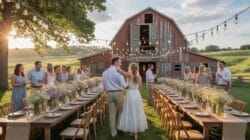
Heat and cold require separate solutions. Open fields have no shade or insulation. Summer events need fans or misters to prevent heat stress. Winter events need radiant heaters or enclosed tent heating, pushing rental costs up another 500-1500 dollars. The real expense hides in the backup plan: a contingency venue reserved as insurance. Most farms don’t have indoor backup space. You pay a second venue deposit to hold a rain date location, or you gamble and lose. Weather insurance exists but runs 300-800 dollars for medium-risk events. Ground conditions matter too. Heavy rain days before the event turn fields into mud. Parking becomes impassable. You rent wooden flooring or temporary gravel roads to maintain access. Calculate these costs before signing. Tent anchoring in soft ground requires more support stakes and sometimes concrete footings, adding 200-400 dollars to setup.
The Real Obstacle Isn’t Your Budget; It’s Your Addiction To External Validation
You’re scrolling Instagram photos of venues you can’t afford while ignoring the barn three miles away that costs half the price. Stop. Your guests came for you, not the backdrop. Pick up the phone today and call three affordable venues in your area without checking their Instagram first. Interview them blind. You’ll find that the cheapest option often looks better in person than it does online, and that’s the only validation that matters.