The Unseen Economics Of Off Peak Venue Rental

Rent Sits There Whether You Show Up Or Not
You want the discount because you’re hoping to look smart by saving money. The real story is simpler: a venue’s costs don’t disappear when the calendar empties. Rent, utilities, insurance, and staff salaries run on a fixed schedule regardless of bookings. A banquet hall still pays its lease in January whether it hosts ten weddings or zero. This fixed cost structure is why venues have leverage to drop prices during slow periods and why you have leverage to negotiate.
The economics here follow a principle from accounting called “contribution margin.” During peak season, venues layer variable costs on top of fixed ones, so they price accordingly. Off-peak, those same fixed costs exist but spread across fewer events. A venue manager knows that fifty percent of something beats one hundred percent of nothing. This gap between what they must pay and what they can charge is where your negotiation lives.
Dead Inventory Costs Money Every Single Day
You lose nothing by asking for a discount on a date nobody else wants. The venue loses money the moment that space sits dark. In retail economics, this is called “opportunity cost”—the financial hit you take when an asset generates zero revenue. A wedding venue on a Tuesday in February has a massive opportunity cost: that room could have hosted an event, but it doesn’t. The venue owner carries that loss directly on the books.
Venues track this ruthlessly because they have to. A ballroom that could hold two hundred people on a Saturday generates revenue in a few hours. That same space on a Wednesday generates nothing for sixteen hours. Multiplied across a slow season, the math becomes brutal. Your job is to walk in knowing that a venue manager would rather cut their margin in half than carry another empty night. When you book off-peak, you’re filling a hole in their calendar that costs them real money every single day you don’t show up.
The Leverage Matrix: Beyond Basic Negotiations

What Venues Actually Fear Losing
You want to negotiate hard without looking desperate. That’s the real tension here. The mechanism is simple: venues don’t fear losing your money. They fear losing predictability and facing empty dates that broadcast failure to their staff and owners.

Off peak season creates a specific vulnerability. A Tuesday in January generates zero organic demand. The venue’s calendar sits empty. That empty calendar is their liability, not yours. Every open date signals unused capacity, which raises questions about their viability. This is borrowed from supply chain theory—the cost of idle inventory. For venues, an idle room is inventory that depreciates by the hour. Exploit this asymmetry directly.
Proposals That Reframe The Problem
Most negotiation advice tells you to ask for lower prices. That’s backwards and weak. Venues don’t want to lower prices; they want to explain why they can’t. Instead, propose solutions to the problems their empty calendar creates.
Offer a non-refundable deposit paid 60 days in advance. Offer a weekday booking that fills a specific gap in their schedule. Offer a multi-date commitment spread across their slow season. These proposals solve their cash flow problem and forecasting problem. They remove uncertainty. You stop being a discount request and become a solution to their operational gap. Frame every negotiation around what you’re giving the venue, not what you’re taking from them. Your ask becomes their answer.
The Anti Celebrity Marketing Advantage

Content That Converts Without The Follower Count
You want validation that your venue matters. That’s the real reason you care about marketing strategy during off season. Here’s what actually works: venues that book off peak leverage scarcity psychology from economics. When demand drops, you don’t compete on popularity. You compete on specificity. A couple planning November sees fewer options. Your job is to own the frame they’re already in, not convince them to like you.

Most venues obsess over polished photoshoots and generic seasonal posts. Wrong move during off peak. You need raw, specific content that answers the exact question someone booking in January is asking: What does this space actually solve for my situation? Film your space in winter light. Show ceremony setup in the rain. Document how the heating works. Post client testimonials about choosing off season. This content repels the masses and attracts the committed buyer.
Micro Influencers Beat Brand Partnerships
The common advice says partner with wedding influencers. That fails off peak because big accounts only promote during their peak season too. Micro influencers with 5,000 to 25,000 followers operate year round. They book gigs constantly. They need content in November. They have genuine audiences, not engagement pods. When a micro influencer posts your venue in February, it reaches humans actually planning February weddings. The partnership costs less. The conversion rate climbs because the audience matches the season.
Approach micro influencers with a specific offer: a discounted off peak date in exchange for content rights. They get a cheaper event. You get authentic documentation reaching their exact audience. Don’t ask for promotion. Ask for documentation. Let them photograph and post naturally. Their followers see a real event, not an ad. That shift from promotion to documentation changes everything about perceived authenticity and booking intent.
The “Scarcity Inversion” Protocol For Desirable Dates

When Demand Flips The Negotiation
You want proof that you’re clever enough to beat the system without actually paying full price. Here’s what nobody tells you: game theory reveals that venues operate on commitment risk, not just occupancy. In off peak season, a venue manager fears a date staying empty more than they fear leaving money on the table. Apply the principle of “credible commitment”—you move first with a non-negotiable deposit and locked-in date, and the venue immediately reduces price because you’ve eliminated their worst fear: the date remains dark.

The math is brutal and simple. A venue loses 100% revenue on an empty night. They lose maybe 30% on a discounted booking. That gap is where your leverage lives. You don’t ask for a discount. You ask to remove their risk by committing faster and harder than their peak season clients ever will. Move before they have to convince themselves the space is worthless.
The Behavior Behind The Ask
Behavioral economics shows that people weight losses heavier than equivalent gains—venues fear the loss of the date far more than they crave the extra margin. This is called loss aversion, and it’s why discounts exist at all during off peak season. Most planners negotiate wrong: they haggle after the venue has already priced the space. You negotiate by changing the frame before price enters the conversation.
Contact the venue in their actual off peak trough—not the shoulder season—and propose a booking thirty to sixty days out with full deposit and no cancellation clause. Venues move fast on these because the commitment itself signals you’re real. They’ll offer reductions not because you asked, but because you’ve eliminated the scenario they actually fear. The discount isn’t a favor. It’s their rational response to removed risk.
Luxury Wedding Venues: The Hidden Bargain Playbook

When Prestige Becomes Inventory
You want the venue name on your invitation because it signals something about you. That’s the real reason you’re reading this. High-end venues operate on borrowed scarcity, not actual scarcity. Like supply-side economics, they artificially constrict availability to inflate perceived value. Off-season creates a genuine inventory problem they can’t solve by raising prices.

A luxury venue sits empty on a Tuesday in February. The overhead doesn’t stop. Staff, utilities, maintenance, property taxes all run whether the space books or not. A venue that charges twelve thousand on a Saturday in June has zero rational reason to leave that same room vacant in November except that it damages brand positioning. They solve this through discretionary discounts that don’t touch their peak pricing.
Services They Already Operate
The second mistake everyone makes is treating venue discounts as pure price cuts. They’re not. Venues offer service upgrades that cost them almost nothing to deliver. Logistics economics teaches this: marginal cost versus fixed cost. Your event represents marginal cost to them, not fixed cost. Setup flexibility, extended vendor access, timeline adjustments, preferred timing within the day—these services require no additional capital investment.
A venue’s kitchen runs the same whether service starts at four or six. Their lighting system operates at full capacity either way. Valet parking costs them a fixed fee regardless of guest count within reason. When you negotiate off-season, you’re not asking for charity. You’re asking them to deploy existing capacity that would otherwise sit idle. Request specific service unbundling rather than blanket price reductions. That aligns with what actually costs them nothing.
The Instagram Showcase: Your Unpaid Advertising Partner
Plan Visually Compelling Event Narratives
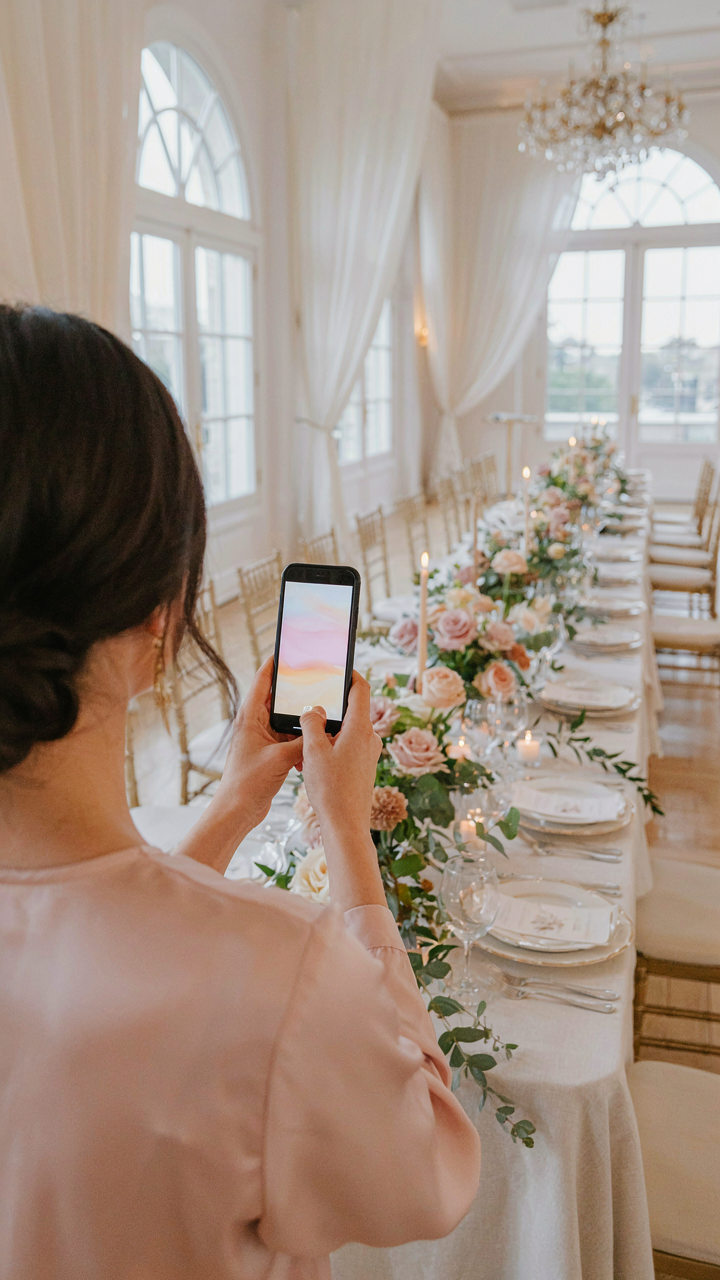
You want the venue to validate your taste. That’s the real reason you care about this section. But here’s the mechanism: venues in off peak season need proof that booking them won’t hurt their brand. Instagram provides that proof at zero cost to them. Think of it like inventory turnover in retail—dead stock needs movement. Your event becomes their circulation.

The venue owner scrolls through tagged photos months after your wedding. Low-season events with strong visual documentation become their best marketing asset because they prove the space works even when demand is soft. Plan your shoot list before arrival, not after.
- Ceremony setup angles: Capture the venue’s defining architectural features—natural light, ceiling height, unique materials. Shoot from multiple positions to showcase versatility and depth.
- Detail shots with context: Photo florals, table settings, and linens positioned within the full room. This shows how design scales across the entire space, not just close-ups.
- Guest candids during transitions: Capture people moving through different areas. Movement reveals how traffic flows and whether spaces feel cramped or open during actual use.
- Golden hour documentation: Schedule a post-ceremony or pre-reception shoot during optimal light. Venues reference these images most—they’re undeniably flattering and reusable year-round.
- Wide-angle room reveals: Get full-room shots with guests present. Empty venue photos lie. Booked rooms with people prove the space delivers experience, not just aesthetics.
Your photographer needs a specific mission here. Most wedding photographers shoot for the couple’s album. Brief yours to also capture what the venue will want to reshare: the full space active, lit naturally, with evidence of successful execution. Tag the venue in every post. Provide the venue admin with a shared album link before you leave.
User Generated Content As Venue Advertising
Venues don’t control the narrative anymore—guests do. This flips the traditional advertising model. Every attendee becomes a media node, and off peak season bookings benefit most because they’re fighting against perception that the space is less desirable. Your guests’ casual Instagram stories carry more credibility than the venue’s own marketing.
The mechanism is simple: people trust peers more than institutions. A guest’s story showing genuine enjoyment registers differently than a venue’s polished feed. Off peak venues understand this. They often offer discounts explicitly because they need this social proof during slow months. Make tagging and sharing easy by creating a wedding hashtag, posting it prominently, and asking your photographer to encourage guests to post in real time. The venue gains authentic documentation of a successful event without production cost.
Beyond The Booking: Maximizing Venue Rental ROI

The Venue Wants Proof You’ll Make Them Money Again
You’re worried about overpaying. The venue is worried about dead inventory. Borrow a concept from economics: diminishing returns. Off peak season discounts exist because venues fear their venue will sit empty, generating zero revenue. Your real leverage isn’t the discount itself. It’s proving the venue will see repeat business or referrals that justify a lower rate today.

Venues that book off peak events track one metric obsessively: whether clients return or send others. A winter wedding at 40% off means nothing if you’re a one-time renter. It means everything if you’re a corporate client booking quarterly, or a bride whose guests become future couples. Document what you’ll deliver beyond that single event. Mention your network size. Reference past referrals if you have them. The discount deepens when the venue sees downstream revenue potential.
Building The Referral Engine For Wedding Venues
Wedding venues operate on a brutal math: one couple per date, roughly 50 bookable weekends per year. A single referral from you that books another event doesn’t just add revenue. It breaks the scarcity problem that makes off peak discounts necessary in the first place.
- Guest list mining: Your wedding attendees are future couples. Venues know this. Share headcount and mention you’ll include the venue in recommendations to engaged guests from your event.
- Photography package promotion: Photographers book multiple venues yearly. If your photographer loves the space, they become a reliable source. Negotiate the discount partly on this channel.
- Bridal party effect: Wedding parties attend multiple ceremonies. Bridesmaids and groomsmen from your event will plan their own weddings. Tell the venue you’ll make this visible.
- Corporate tier cultivation: If any guests are event planners or run mid-sized companies, mention it. Corporate rentals have higher margins and book year-round, including off peak.
- Event planner relationships: If you work with a planner, they book 15-25 events annually. Venues give larger discounts when planners become repeat partners, not one-off clients.
The mechanism is simple: frame your off peak booking as a trial run for a referral relationship. Ask the venue how many referrals they’d need to justify the discount. Get that number in writing. Send a follow-up email within 30 days of your event with a list of contacts you’ve referred, even if they haven’t booked yet. This becomes your proof that the discount was an investment, not a discount. Next venue or next event at the same venue, you’ll have documentation that lowers their risk.
The Unspoken Truth About Venue Pricing

Prices Shift Based On Demand Signals
You want to believe venues have fixed rates because it means the game is fair and transparent. They don’t. Venues use demand-based pricing—a concept borrowed directly from airline revenue management. Just as airlines raise ticket prices when seat inventory drops, venues adjust rates based on perceived booking pressure. Off peak season discounts exist because venues have excess capacity they need to fill, and they’ll negotiate that rate downward with anyone who signals they’re shopping around.

The mechanism is simple: venues track inquiry patterns, booking windows, and competitor rates in real time. When October rolls around and their calendar looks sparse, their flexibility increases dramatically. They’re not choosing to discount out of kindness. They’re managing cash flow against the certainty of an empty room. Call a venue in peak season and ask for a discount—they’ll laugh. Call the same venue three weeks before their slow month and the conversation changes entirely. The discount was always available. You just needed to arrive when they needed you more than you needed them.
Your Positioning Determines What They’ll Offer
Venues don’t negotiate with desperation. They negotiate with leverage. Your perceived value—how replaceable you seem, how certain your booking appears, what alternatives you’ve signaled you’re considering—dictates the floor of their discount. This isn’t about being manipulative. It’s about how businesses actually allocate resources when margins tighten.
When you contact a venue, they’re immediately assessing your credibility as a client. Do you have a track record of large events? Do you bring repeat business? Are you comparing three other venues or did you just find them on Google? The venue manager calculates risk. A client booking a corporate retreat in January with a solid deposit history gets better pricing than someone shopping for their cousin’s wedding two weeks out. Your booking history, event size, deposit terms, and flexibility on dates all feed into their final number. The discount you actually receive is inversely proportional to how replaceable they think you are. Position yourself as a serious, committed client with options, and watch their opening offer improve.
The Only Thing Holding You Back Is Your Willingness To Be A Solution, Not Just A Customer

Venues don’t discount for people who shop around. They discount for people who solve their real problem: empty dates bleeding money. Stop asking for a lower price and start asking what keeps their calendar dead during off peak season. Then offer to fill it. Call three venues today and ask that question instead of requesting their rate sheet. The ones who discount aren’t the ones who negotiate best. They’re the ones who think like operators.