The “Free” Illusion: Unmasking Venue Package Pricing

What “Free” Really Means
You want to believe tables and chairs are free because it feels like you’re getting a deal. You’re not. The venue built the cost into the rental rate, then labeled it “complimentary” to make you feel ahead. This is basic economics: nothing moves without a price tag. The venue either absorbs the cost or passes it forward. They always pass it forward.
When a venue advertises tables and chairs as free, they’ve already calculated what those items cost to acquire, maintain, and replace. That number sits inside the base rental fee you negotiate. The word “free” doesn’t reduce your actual spend—it obscures it. You pay the same total amount either way, but one pricing structure hides the breakdown and makes comparison shopping impossible.
Isolate The Line Items, Not The Package
The common advice says to ask what’s included in the package price. That’s incomplete. You need to demand the venue separate their charges into discrete line items before you discuss the total. Without this, you’re negotiating against invisible costs.
Request a breakdown that lists venue space, tables, chairs, labor for setup, breakdown, and any other services as separate charges. Most venues resist this because the split reveals their markup on consumables. Tables cost them forty to eighty dollars each wholesale. If they charge you thirty per table in a bundled package, you’d notice the markup is thin. Keep pressing until they show actual numbers on each category.
Once you have the itemized breakdown, you can compare venues on the same metric. One venue might charge five hundred for space plus two hundred for tables and chairs. Another charges seven hundred for space with tables and chairs included. These look identical until you separate them. The second venue is actually charging more per table but hiding it in a lump sum. The breakdown exposes the strategy.

Beyond The Brochure: Scrutinizing Vendor Contracts For Event Venue Design

The Language Nobody Questions
You’re worried about getting screwed on hidden fees because you’ve already been screwed before. The mechanism is simple: venues bury inclusions and exclusions in subsections using conditional language. A table might be “included” only if you book catering through them, or chairs are “complimentary” but only in quantities below a threshold. Read every clause that contains “only,” “if,” “provided,” or “upon.” These words are where venues trap you.
Most event planners skip the contract details because contracts feel boring and they trust the sales conversation. That trust is the problem. The verbal agreement means nothing when the signed document says something else. Scan every page for tables and chairs specifically. If the contract mentions them, highlight where. If it doesn’t mention them, that’s your first red flag to ask why they’re omitted from what should be a complete inventory.
Stacking Terms In Your Favor
Negotiation is economics applied to paper. You hold leverage only when you’re willing to walk, and venues know this. Most planners negotiate price and forget to lock down inclusions, which is backward. Start by requesting a written list of what’s included as a separate document attached to the main contract, not buried inside it. This forces the venue to be explicit and gives you something to point at later if they claim tables or chairs weren’t part of the deal.
Specify quantity, condition, and setup details in writing. Don’t settle for “tables and chairs included.” Write “forty eight-foot tables, sixty side chairs, and twenty high-top tables, all functional and less than five years old, setup and breakdown included.” Get the venue to initial next to this line. The specificity kills their ability to substitute worn inventory or charge extra for delivery. Make the contract require them to provide written confirmation of exact inventory type seven days before your event.

The Leverage Protocol: Securing Value In Wedding Venues
When Demand Shifts Your Negotiating Position
You’re reading this because you want to avoid overpaying, but the real fear is looking cheap or getting a bad deal while others negotiate better. Here’s the mechanism: venues operate on seasonal demand curves borrowed from economics. When demand drops, their negotiating power collapses. A venue that charges full price in June has inventory sitting empty in January. Empty inventory generates zero revenue. You’re not asking for a discount when demand is high—you’re leveraging their desperation when it’s low.
Most couples book during peak season without checking what venues actually need during their off-months. The venue has already quoted you based on when you want the event, not based on their real scarcity. If you shift your date by eight weeks, the same tables and chairs they quoted at full price suddenly come bundled free because they need the booking volume to meet annual targets. Demand doesn’t just affect price—it changes what they’re willing to include as standard.
Moving Your Date To Own The Deal
Timeline is not about “planning ahead.” It’s about repositioning yourself from buyer to solution. A venue facing an open Saturday in February isn’t thinking about margin—they’re thinking about cash flow and occupancy rate. You call in November asking about that February date, and suddenly complimentary tables and chairs aren’t an upsell, they’re part of the base offer to close the deal.
The mistake couples make is thinking flexibility means accepting whatever date opens up. Wrong. Flexibility means identifying which dates the venue actually struggles to fill, then anchoring your negotiation there. Check their Instagram posting frequency, ask directly when their slowest months are, call back the same venue twice a month apart and listen to how their tone changes. When you book during their crisis period, you don’t negotiate for free tables and chairs—you accept them as the entry condition.

DIY Vs. Done For You: The Event Space Decor Dilemma

The Math Behind Included Versus Rented
You’re worried about looking cheap if you don’t upgrade the furniture, but the real issue is that most planners can’t do basic math on what they’re actually paying. This is an economics problem: you’re comparing two different cost structures, not just two prices. A venue that includes tables and chairs has baked those costs into the rental fee. A bare venue lets you see the line items, which feels cheaper until you add rentals.
Here’s the breakdown that matters:
- Included Setup: Venue rental price already contains furniture, delivery, and standard setup. No additional invoices. Know your final number before signing.
- Rental Company Route: You pay venue rental plus separate invoices for tables, chairs, linens, delivery fees, setup labor, and damage deposits. Total often exceeds included pricing by 30-50 percent.
- Hidden Rental Costs: Damage fees, late returns, minimum order quantities, fuel surcharges, and gratuity for delivery crews compound fast. These don’t appear until you’re committed.
- Included Quality Trade-off: Venue-provided furniture meets basic standards. Upgrades cost extra. Rental companies offer variety but charge per piece and per day.
- Volume Advantage: Venues negotiate directly with manufacturers because they order continuously. Rental companies mark up 40-60 percent to cover fleet maintenance and turnover.
- Cancellation Risk: Rental contracts often charge cancellation fees. Included furniture has no separate penalty beyond venue terms.
Most event planners quote the venue fee and ignore what comes next. By the time rentals are added, the “cheaper” bare space costs 20-40 percent more than the venue that included everything. Request full rental quotes from external companies before deciding the included option looks expensive.
The Quality Control Reality Of External Rentals
The advice you hear is that external rentals give you more control. That’s incomplete. You control selection, not condition or delivery timing. When furniture arrives from a third-party rental company, you inherit their maintenance standards, not yours. Scratched chairs, wobbly tables, mismatched pieces, and stains happen because rental inventory cycles fast and profit margins demand minimal refurbishment.

Your venue has reputational risk on every rental that shows up damaged. Their furniture gets used maybe forty times a year on their property. Third-party rental inventory gets used two hundred times a year across dozens of venues. The degradation compounds. Inspect rental items forty-eight hours before your event, have a written condition report from the rental company, and build penalty clauses into your contract for damage that wasn’t documented. Request a final walkthrough with photos if your event involves high-traffic areas or guest interaction with furniture. The venue handles their own stock; the rental company handles yours only if you force documentation.
Strategic Venue Selection: A Game Theory Approach To Future Wedding Plans

What Your Competitors Are Actually Paying
You’re checking venue pricing because you’re terrified you’ll overpay while others negotiate better deals, and that gap will expose you as naive. Here’s the mechanism: venue pricing isn’t transparent because opacity protects margin. Most couples see the base rental fee and stop looking. They never ask what’s bundled versus what’s an add-on. Venues exploit this by listing tables and chairs as “included” when they’re actually cost-neutral inventory they’d stage anyway.
The real competitive advantage isn’t finding the cheapest venue. It’s identifying which venues over-bundle to appear cheaper while which venues price à la carte and let you see the actual cost structure. Call five venues in your market. Ask one specific question: “What’s your cost if I bring my own tables and chairs?” Their answer reveals whether they’re pricing on transparency or theater. Venues that drop price significantly have been inflating the “free” claim all along.
The Incentive Hidden In How Venues Price
Economics teaches that incentives shape behavior. In venue pricing, the incentive structure works like this: venue operators make money on volume and margin per event, not on tables and chairs specifically. When a venue claims tables and chairs are free, they’re not being generous. They’re front-loading perceived value into the rental fee so you feel you’re getting a deal while they capture profit elsewhere: service charges, staffing minimums, beverage markups, or space rental itself.

The operator’s real incentive is lock-in. By bundling items, they reduce your comparison shopping. You can’t easily price a venue against another if one includes tables and one doesn’t. This asymmetry of information favors the venue. Your counter-move is simple: ask for an itemized breakdown of what free actually means. Demand to know depreciation cost, storage, setup labor, and whether tables and chairs can be declined for a price reduction. Most venues won’t answer directly because they can’t justify the bundling once visibility exists.
The Opportunity Cost Of Saving: Time Vs. Money In Event Center Planning
What You’re Really Protecting
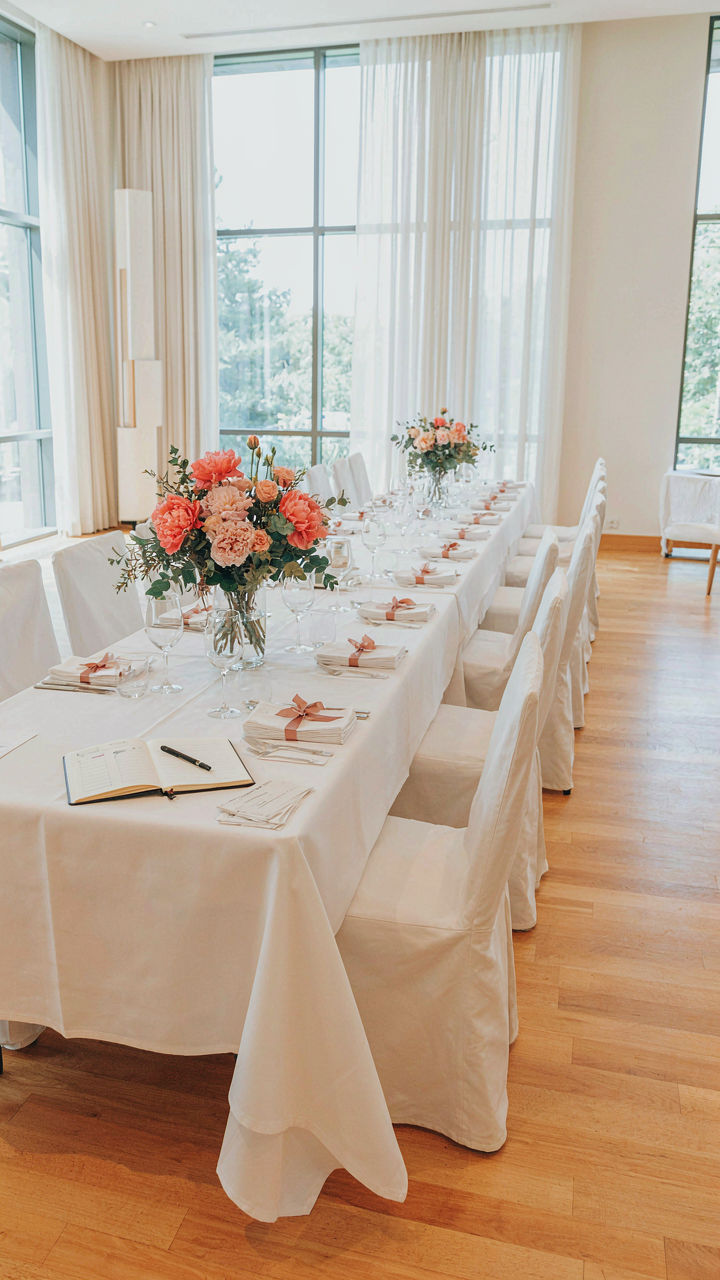
You think you’re saving money by sourcing tables and chairs yourself. You’re actually afraid of looking stupid for overpaying. Economics calls this sunk cost fallacy. In venue planning, it means spending eight hours researching rental rates to avoid a $200 markup you’ll never recover in time. Your hourly rate matters more than your ego here.
When you DIY logistics, you’re trading hourly value for the illusion of control. You negotiate with three rental companies, coordinate delivery windows, verify inventory counts, and handle setup problems on event day. Meanwhile, a venue that includes tables and chairs free absorbs those friction points into their operation. Calculate what your time costs per hour. If you earn sixty dollars an hour and spend ten hours on furniture logistics, you’ve burned six hundred dollars to save two hundred. The math doesn’t require a calculator; it requires honesty.
The Real Cost Of Outsourcing Competence
The common advice says outsourcing is always expensive. That’s incomplete. You’re not just paying for tables and chairs when a venue includes them free. You’re paying for someone else’s supply chain, their delivery infrastructure, their insurance, and their accountability if something fails. A venue operator who’s managed fifty events absorbs risks you’d face alone on your first one.

Your venue partner has already negotiated better rates with suppliers than you ever will. They have standing contracts. They know which chairs break under pressure and which tables wobble on uneven flooring. They’ve handled the vendor relationships so you don’t have to. The efficiency gain isn’t abstract. When you delegate furniture to a venue that includes it free, you redirect your energy to elements only you can control: guest experience, content flow, and decision-making. That’s where your leverage lives. Request an itemized breakdown of what’s included and verify setup protocols before signing the contract.
Design Thinking For Event Venue Spaces: Rethinking Inclusions
What Your Venue Already Owns
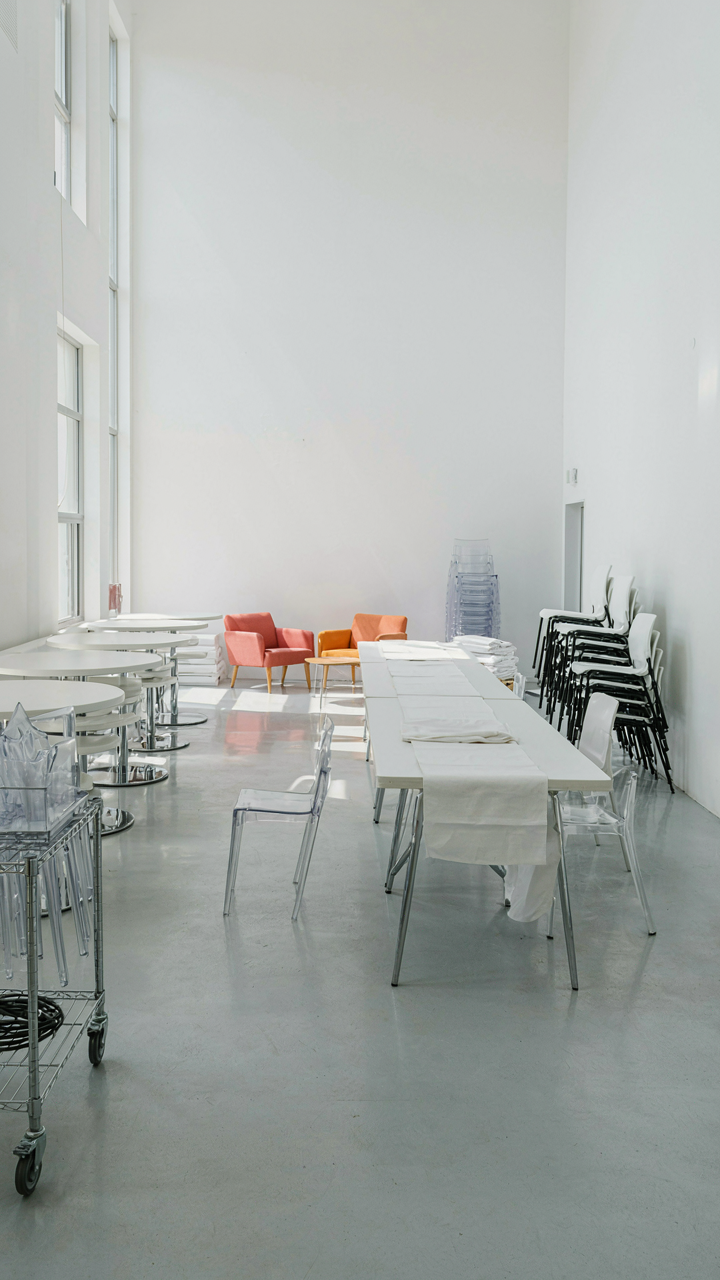
You’re hunting for free tables and chairs because you’re terrified of being nickeled to death by hidden fees—but the real mechanism is simpler: most venues have existing furniture they’ve already paid for and will let you use if you ask the right way. Think of venue economics like supply chain logistics. Venues accumulate assets over time. Tables and chairs are sunk costs. Once purchased, their marginal cost to you is nearly zero. Venue managers know this. They just don’t advertise it unless you frame the question correctly.
The difference between “Do you charge for tables?” and “What furniture comes standard with the space rental?” generates opposite answers. One triggers a fee mindset. The other uncovers what they already own. Walk the venue. Count what sits in back storage. Ask whether they’ve hosted similar events before and what they used then. Most venues rent the same setup repeatedly—they have the inventory to support it without up-charging. Your job is to identify which existing assets map to your event’s actual needs, not to assume blank space means blank invoice.
Rethinking The Furniture Problem Itself
The standard advice here is garbage: “Rent from a third-party vendor” assumes you have no other option. You do. Co-working spaces, corporate offices, nonprofits, and churches in your area own tables and chairs they use one or two days weekly. Idle assets generate zero value. Facility managers at these organizations will loan or rent furniture at a fraction of vendor rates because their alternative is depreciation. Contact five organizations within a ten-mile radius. Pitch it as a one-time use. Offer to pick up and return. Specify exact dimensions and quantities upfront so they know whether the request fits their inventory.

The protocol: Make a furniture inventory list now. Measure your space. Calculate exact table and chair counts needed. Then contact venues and alternative asset holders with a specific ask, not a generic one. A manager hearing “I need tables” decides whether to charge. A manager hearing “I need four six-foot tables and sixteen chairs, Friday 6 PM to 10 PM” usually says yes because you’ve removed their uncertainty and labor. Specificity kills negotiation friction.
Mastering The Future Wedding Budget: A Value Driven Approach

Where Your Money Actually Moves The Needle
You want to feel like you made a smart financial choice, not like you left money on the table. Here’s the mechanism: most couples spend on visibility items (flowers, lighting, décor) while the infrastructure that determines guest comfort and logistics remains invisible. A venue that includes tables and chairs free shifts your spending power to what guests actually experience and remember. You’re not paying twice for the same function.
Economics calls this resource allocation. In venue selection, chairs and tables are your fixed assets—they either cost you separately or they don’t. When a venue bundles them free, you’ve eliminated a line item that typically runs 15 to 25 percent of rental costs. This creates capital to redirect toward catering quality, sound systems, or photography. The math is simple: fewer vendor invoices means more control over where impact happens.
Building Durability Into Your Event Spending
Long-term event wisdom isn’t about spending less. It’s about spending once on things that compound in memory and don’t need replacement. Venues that include tables and chairs free often signal operational maturity—they’ve absorbed these costs into their model because they understand guest flow and durability. You benefit from their infrastructure investment without carrying the depreciation burden yourself.

When you book with a venue that includes these items, you inherit their maintenance standards and replacement cycles. Quality chairs and tables that accommodate your guest count are already vetted and ready. You don’t negotiate with three separate rental companies or worry about mismatched inventory. One contract, one liability, one point of accountability. That clarity reduces stress and hidden costs across the planning timeline.
Your Real Obstacle Isn’t Finding Free Inclusions; It’s Your Inability To Quantify True Value

Most people hunt for free tables and chairs because they’re broke, not strategic. They confuse “included” with “good deal.” Here’s what actually matters: call three venues today and ask one question: what do you cut when I negotiate these items into your package? Their answer reveals everything. You’ll find that free tables and chairs often mean inflated catering costs or hidden setup fees. The venue that seems generous is usually just moving money around. Stop looking for what’s free and start negotiating what actually costs less than everywhere else.