The Analog Trap: Why Traditional Guest Books Fail

The Page Problem
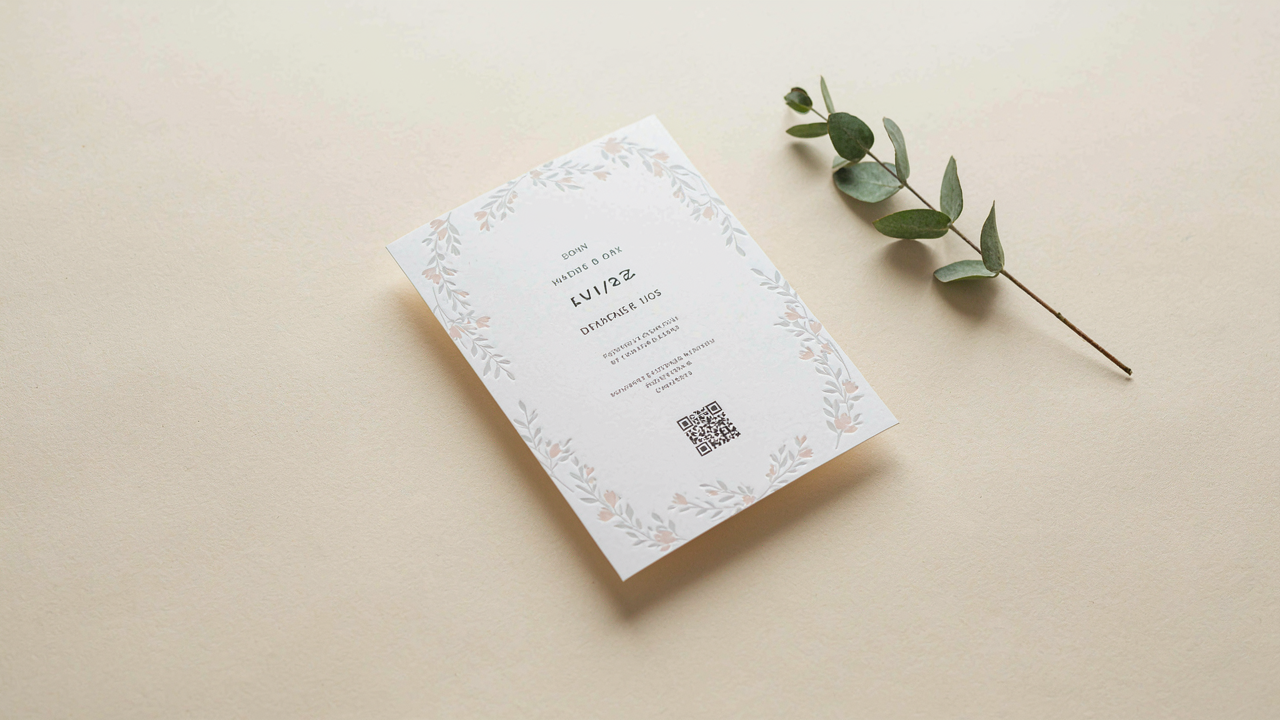
You want proof that people care about your wedding. A filled guest book feels like evidence. Here’s what actually happens: a standard guest book captures maybe 40 to 60 signatures before people stop bothering. The mechanism is friction. Each entry requires pen, legible handwriting, finding an open page, and deciding what to write. Most guests skip it entirely. You end up with half-empty pages and names you can’t read.
The data evaporates the moment the wedding ends. You store a physical book. Years pass. You open it once, maybe twice. The names blur together. You remember the feeling of the day, not the specific people who attended. A guest book documents attendance, not connection. It’s a compliance tool disguised as a keepsake.
Static Capture, No Retrieval
Memory doesn’t work like a photograph. Psychology calls this encoding specificity: you retrieve information best when the context of retrieval matches the context of encoding. A guest book violates this entirely. You capture a name on paper in a loud room at 7 PM. Later, you try to recall that person or reference the entry while planning a thank you or coordinating future events. The context is gone. The entry sits frozen.
A physical book also creates a single point of failure. It gets lost in a move. Coffee spills on it. Humidity warps the pages. You can’t search it. You can’t sort it. You can’t export the data to match guests against your invite list or segment them for future communication. QR code guest books solve this by capturing data in a format you can actually use later.
The Digital Leap: Unlocking Richer Wedding Qr Code Guest Book Data
Capture Beyond Words
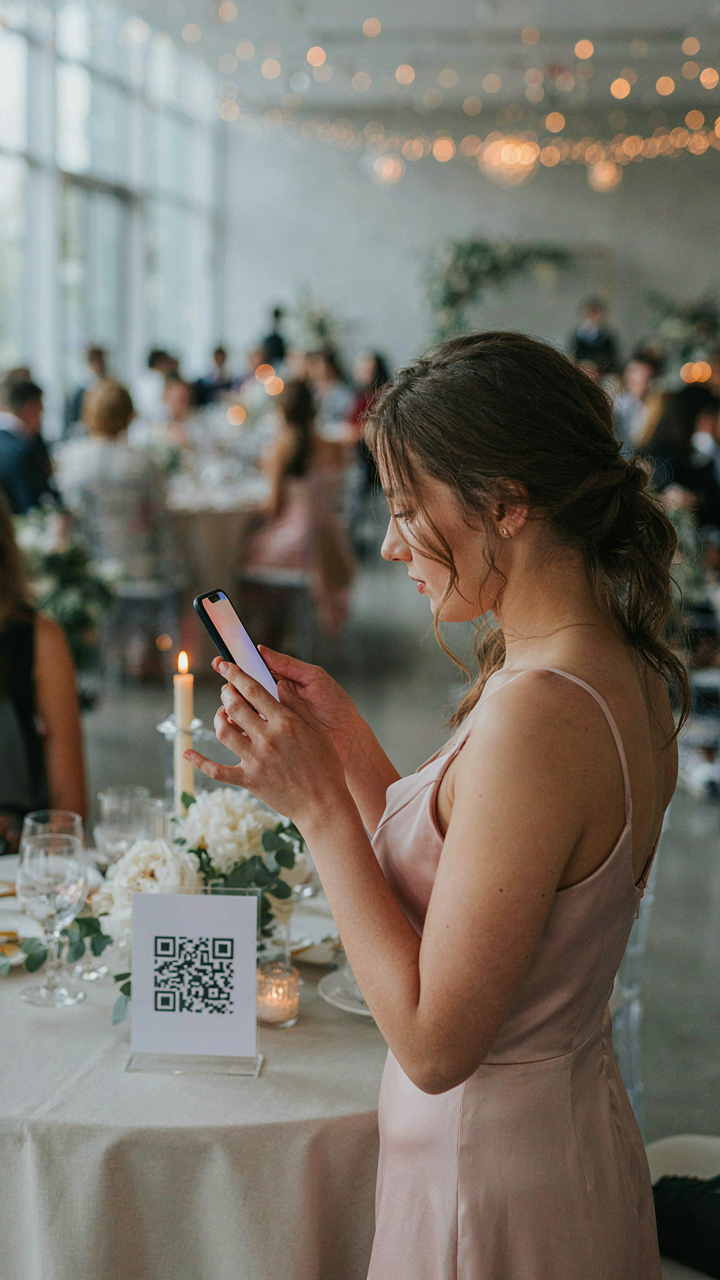
You want proof people actually showed up and cared enough to do more than scribble a name. That’s the real driver here. A QR code guest book isn’t just text anymore—it’s a container for photos, video clips, and audio messages that guests record in real time. The mechanism is simple: each guest scans the code, lands on a form, and can upload media instead of writing. The platform stores everything in one searchable database tied to that single QR code.

This shifts what a guest book actually captures. Text entries fade into noise. Video messages create artifacts—proof of voice, emotion, actual presence. A guest filming a 15-second message has invested more than someone signing their name. The system records timestamps, so you know when each person contributed. You can organize by guest, by time, or by media type. That data density changes how you experience the wedding afterward.
Access Anywhere, Build Endlessly
The old guest book sat in a drawer. A digital QR code guest book lives everywhere—on your phone, backed up in cloud storage, shareable with family who missed the wedding. You don’t lose it. You don’t forget where you put it. Every entry syncs automatically the moment a guest uploads it.
The capacity advantage matters more than most couples realize. A physical book fills up. A digital guest book doesn’t. Guests can keep adding messages days after the wedding if the QR code stays active. You set the rules: close it after the event or leave it open. You can download all data in bulk, share specific videos with parents, or create a password-protected link for your wedding party. The infrastructure handles scale with zero friction.
The Memory Multiplier Protocol For Wedding QR Code Photos
Remove Friction From The Submission Path
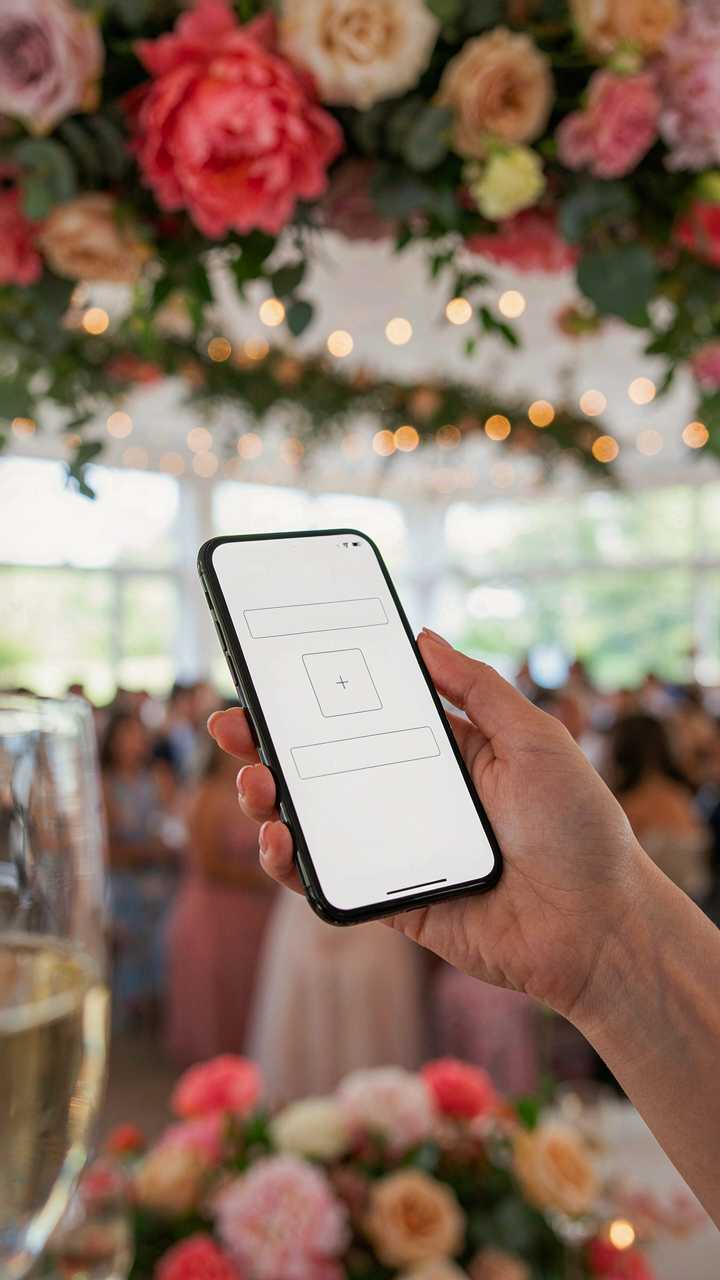
You want guests to actually use this thing instead of ignoring it like every other wedding gimmick. The real barrier isn’t laziness—it’s cognitive load. Every extra step between “I want to submit” and “submission complete” kills participation exponentially. Make the QR code large enough to scan from three feet away without squinting. Place it at eye level on a physical stand, not buried in a program. Test the link on five different phones before the event to catch dead URLs, broken redirects, or pages that load slow.

The submission form itself needs to collapse to three fields maximum: name, photo upload, and optional message. Remove every other question. Most wedding guest book platforms default to asking for email, phone, relationship status, and advice. Strip it down. The faster someone completes the action, the higher your submission rate climbs. Time from scan to completed upload should take under ninety seconds on a standard mobile connection.
Rewards That Actually Drive Submissions
Common advice here is garbage. Telling guests “your photo might be in a slideshow” changes nothing. You need a mechanism borrowed from behavioral economics called variable reward scheduling—the same principle that makes slot machines work. Announce before the reception that one random photo submitted gets printed as an 8×10 and mailed to the couple with a note from the guest. That’s concrete. That’s specific. That’s worth the effort.
- Printed photo reward: Random selected guest photo gets professional printing and mailing, creating tangible stake in participation beyond the abstract idea of “memories”
- Instant social proof display: Project submitted photos on a screen in real time so guests see submissions appearing, triggering FOMO and normalizing the action for others
- Frame-specific prompts: Instead of generic “share a memory,” request specific content like “photo with the bride,” “dancing moment,” or “favorite meal,” making content more useful and varied
- Access-tier bonus content: Guest photos go into a shared digital album link sent only to wedding guests after the event, creating exclusivity and post-event engagement
- Hashtag integration bonus: If a guest tags their submission with a custom wedding hashtag before uploading, their name enters a second drawing for a small gift card or thank you item
The second paragraph should make clear the mechanism: guests don’t submit because they feel obligated to you. They submit because they want to win, see themselves socially validated, or feel part of an exclusive group. Stack multiple micro-rewards and you move participation from 15% of guests to 60% or higher. The QR code becomes a tool for engagement, not an afterthought archive.
Crafting The QR: Beyond Basic QR Code Wedding Pictures
Which Generator Actually Works
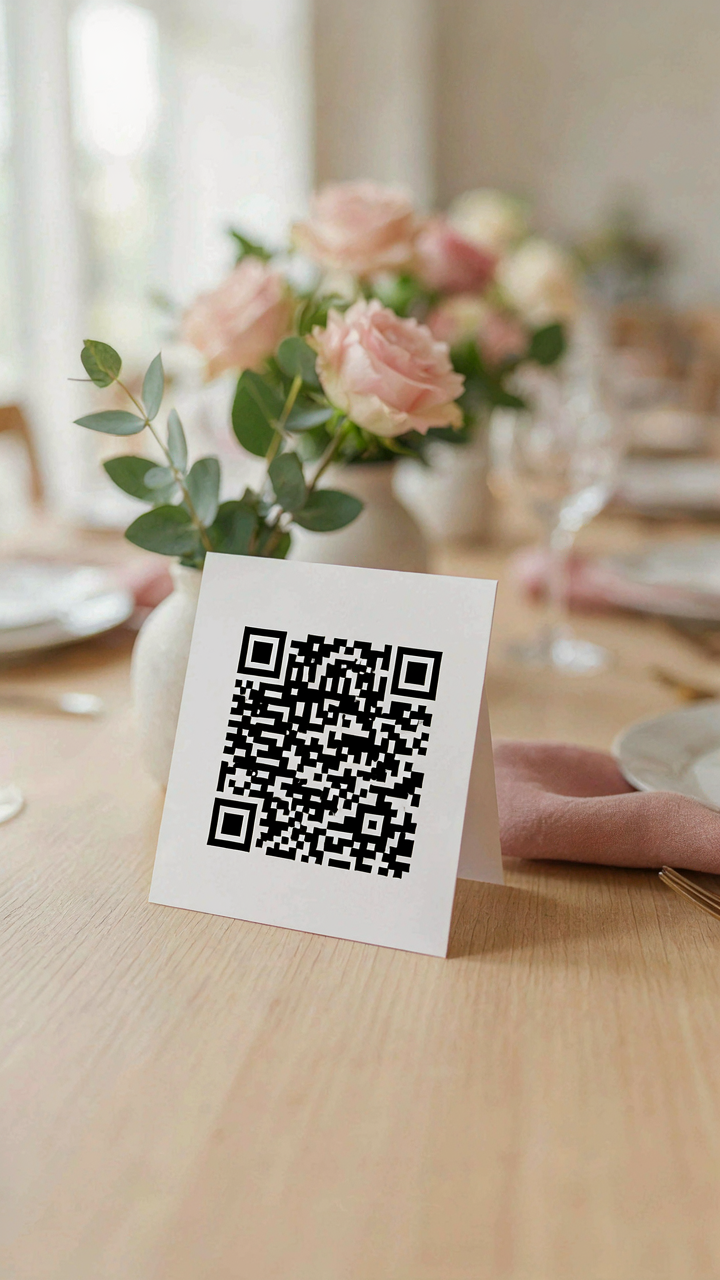
You want the generator that makes you look tech-savvy without the cost. That’s the real driver here. But most wedding QR generators are identical under the hood because QR code generation follows ISO standards, not marketing genius. The mechanism is simple: error correction level determines how much of the code can degrade before it fails to scan. Higher error correction means a prettier design without losing function. Pick a generator with adjustable error correction and logo placement, then test it on five phones before the wedding.

The generator you choose matters only for customization speed and interface simplicity. Free tools like QR Code Generator and Unitag handle wedding applications fine. The paid versions add design controls but don’t improve scan reliability. Test your final QR code by printing it at actual size, placing it where guests will encounter it, and scanning from two feet away and ten feet away. If both work, your choice was correct.
Position Determines Your Scan Rate
Think like a conversion funnel. In marketing, placement determines whether someone sees your offer. Your QR code placement determines whether a guest actually scans it instead of walking past. The common advice is to “make it visible and accessible.” That’s lazy. Actual positioning requires understanding guest flow and attention patterns at your reception. Place the QR code at table height on the guest book stand, not at eye level where it competes with décor. Guests stop and engage at table height by default.
Print your QR code large. At least three by three inches minimum. Smaller codes force guests to guess if it’s worth the effort, and most won’t bother. Position it directly above or beside a printed instruction line that reads “Scan to sign the guest book” or “Add your message here.” Skip the decorative flourishes around the code itself. They reduce scan accuracy and add nothing but friction. The scanning process ends when the QR code opens directly to your guest book form without requiring additional steps.
Integration As Strategy: Wedding Photo Sharing & Wedding Apps
Connect Your QR Code To Existing Wedding Platforms
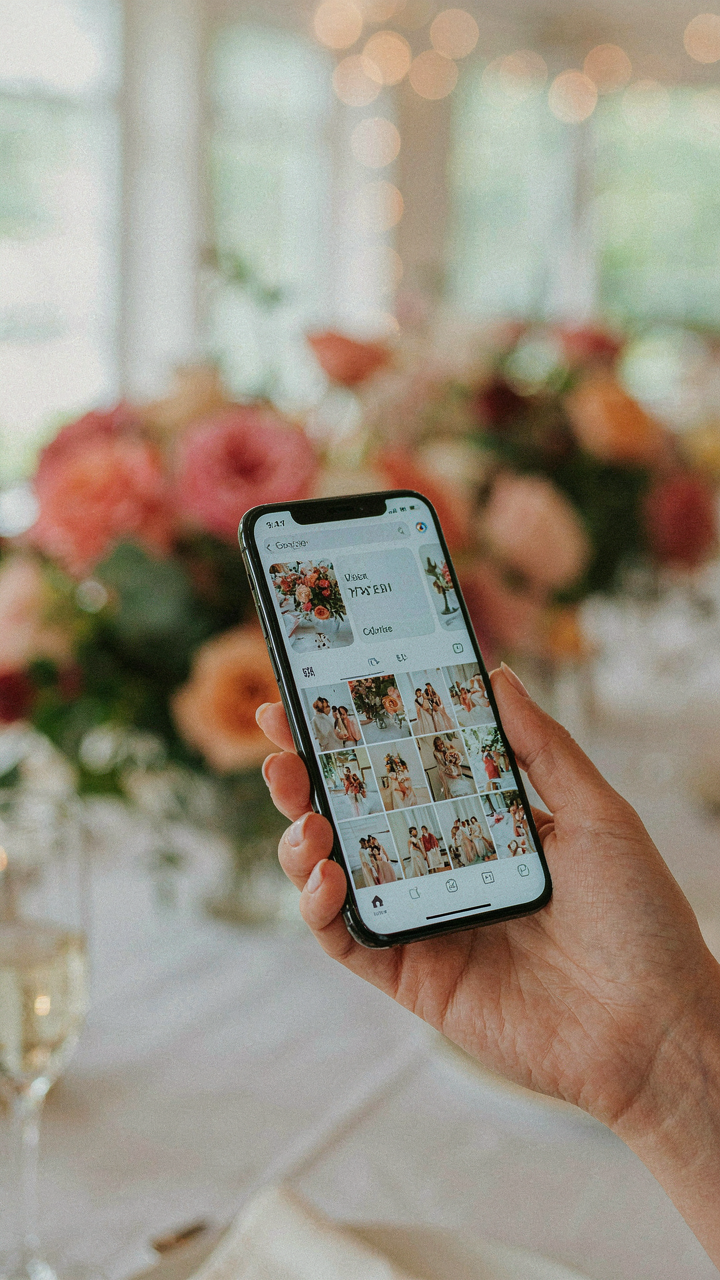
You want your guest book to feel seamless because friction kills participation. That’s the real reason you care about integration. The mechanism is simple: your QR code guest book works best when it feeds data into a platform your guests already trust or expect to use on wedding day.

Most couples treat their QR code as a standalone artifact. Wrong move. Your QR code should route directly to a shared album on Google Photos, Amazon Photos, or a dedicated wedding app like The Knot or Minted. This eliminates the decision fatigue guests face when deciding where to submit content. One tap, one destination, one unified stream of photos and messages.
Shared Albums As The Collection Point
The old advice says to set up separate systems for video, photos, and messages. That fragments your guest book data across platforms you’ll never consolidate. Use one shared album as your collection hub instead.
Create a shared Google Photos or iCloud album before the wedding and embed that album’s link in your QR code. Guests scan, authenticate once, then upload directly. The album aggregates everything in chronological order with timestamps and contributor names visible. After the event, you download all content at once instead of manually harvesting photos from three different apps. The protocol is straightforward: generate the shareable link from your album settings, encode it into your QR code generator, test it on three devices, then print.
The “Network Effect” For Digital Guest Book Engagement
Why People Actually Participate In Your Digital Guest Book
You want your guests to care about submitting messages because it feels like proof that your wedding mattered. That’s the real driver. But here’s the mechanism from evolutionary biology: virality spreads through social proof, not through features. In biology, organisms copy behaviors they observe in their peer group because copying successful patterns increases survival odds. Your QR code guest book works the same way. When guests see others submitting messages, they submit. When they see nothing, they skip it.

The first five submissions determine everything that follows. These aren’t random entries. They’re the social proof signal that tells the room whether this thing is worth their time. Most couples waste this by not seeding their guest book with a submitted message before the reception starts. You need at least two genuine entries visible before anyone arrives. This primes the pump. Guests stop scrolling past an empty interface the moment they see momentum already exists.
The Self Sustaining Feedback Loop
A guest book that grows itself stops requiring your active management. This happens when each new entry makes the next entry more likely, not because the messages are heartwarming, but because visible participation signals legitimacy. People don’t submit to empty spaces. They submit to full ones. The mechanism is pure social dynamics, not sentiment.
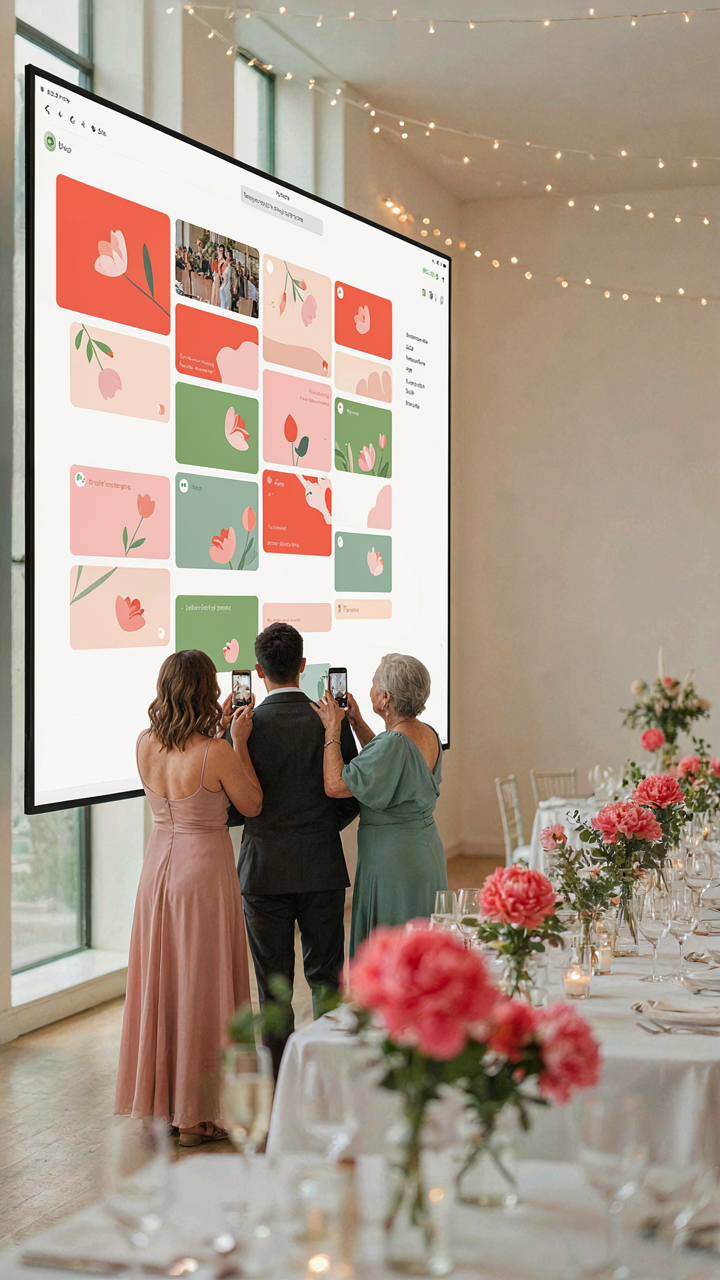
Set your QR code guest book to display entries in real time on a screen at your reception. This creates a visible feedback loop. Guest sees entries appearing. Guest feels the social pressure to add their own. Their entry appears. Next guest sees more entries and feels the same pressure. The engagement compounds without you intervening. Stop treating it as a keepsake device and start treating it as a public ledger of attendance and approval.
Audio Guest Book: The Unused Dimension

Voice Notes Through The QR Code
You want this because it feels like you’re capturing something real, something the written guestbook misses. You’re right. The mechanism is simple: audio stores emotional data that text erases. A QR code linked to a voice recording service lets guests tap their phone and speak a 30 to 60 second message directly into your wedding database. No forms. No typing. Just speech.

Most platforms that handle QR codes for weddings treat audio as an afterthought, if they include it at all. Don’t use a generic QR code generator and bolt on a voice app. Use a service like Voicemail, Speeko, or a custom Typeform with audio upload capability that generates one QR code pointing to one intake funnel. Guests scan once, record once, done. The infrastructure matters because friction kills participation.
Capturing The Tone, Not Just The Words
Emotion lives in frequency and pacing, not vocabulary. Borrowing from audio engineering, every voice carries what’s called signal-to-noise ratio: the strength of intentional content against unwanted background. Your goal is to preserve the signal. A guest laughing mid-sentence, a pause before they get serious, the crack in someone’s voice when they mention your future together, these are the data points text never holds.
Set your audio recording to capture at minimum 128 kbps bitrate and ask guests to record in the quietest room available, not the dance floor. Store the files in lossless or high-quality lossy format like AAC rather than compressed MP3. Create a simple one-page instruction card near the QR code: “Tap here. Speak your message. Keep it between 30 and 60 seconds.” Link every audio file to the guest’s name and date recorded so you can pair voice to identity later. This pairing is what transforms scattered recordings into a navigable archive.
Post Event Aggregation: Curating Your Photo Guest Book Legacy

Sorting Submissions Into Usable Data
You want to feel like you captured something meaningful without actually having to do the work. Here’s the mechanism: every photo submission arrives with metadata you’re ignoring. Most QR code guest book platforms log timestamps, device info, and submission order automatically. Sort by timestamp first, not by aesthetics. This creates a chronological narrative of your event that you can’t fake or recreate later. Your photos now have structure instead of chaos.

Next, separate submissions by quality tier within your aggregation tool. Use your platform’s tagging or folder features to mark which images are sharp, well-lit, and usable for prints or albums. Tag duplicate angles separately so you don’t waste time editing the same moment twice. This takes fifteen minutes and saves hours during post-production. The friction of sorting upfront vanishes when you’re actually building the final product.
Building Archives That Don’t Decay
Archival science teaches the concept of “information decay,” where data becomes inaccessible or corrupted over time. Your wedding QR code guest book faces the same threat. Cloud storage alone isn’t an archive. Create multiple copies across different platforms: store originals in Google Drive or Dropbox, back up to an external hard drive, and keep a secondary copy on a different service entirely. One platform fails or deletes your account, you still have three other copies intact.
Organize your folder structure the way you’d search for photos in five years. Use clear naming conventions like “Wedding_2024_Venue_Morning_Preparations” instead of generic “Photos_1” folders. Create a simple index document listing what each folder contains and when those moments occurred. This protocol prevents you from inheriting a folder called “Wedding Stuff” that contains seven subfolders of mystery images. Your future self retrieves memories in seconds, not hours of digging.
Beyond The Fad: Real Guest Book Alternatives

Why QR Code Guest Books Aren’t Going Anywhere
You’re worried this is a trend that’ll look dated in five years, and you want permission to feel smart about skipping it. Here’s the mechanism: QR codes aren’t a fad because they solve a structural problem that doesn’t disappear. In economics, this is called addressing inelastic demand—a need that exists regardless of what technology wraps it. Guests need a way to leave wishes. You need to capture contact data. A QR code eliminates friction between those two needs. The format itself is neutral; it’s just the fastest bridge.

People conflate format with fad. Instagram Stories felt like a trend until they became infrastructure. QR codes did the same. The wedding industry adopted them not because they’re trendy but because they work at scale without requiring printed cards, pens that run out of ink, or a legible signature. The real question isn’t whether QR codes will stick around. It’s whether your specific implementation will feel thoughtful or lazy in 2027.
Digital Artifacts Against Physical Decay
A printed guest book sits on a shelf. Paper yellows. Ink fades. Spills happen. Physical guest books deteriorate in real time; digital ones compound in value. Think of it as entropy versus curation. The physical book degrades the moment it’s completed. The digital record can be organized, backed up, duplicated, and searched. You can extract phone numbers from a digital guest book in seconds. You cannot do that with handwriting.
Here’s what people don’t say: a physical guest book is sentimental theater that serves almost no functional purpose after the wedding. A digital guest book with attached contact data is a functional record that generates sentimental value when you revisit it. If you want guests to remember they attended, digital wins. If you want proof they were there for thank-you notes and future invitations, digital wins. Set up automated backup to cloud storage immediately after the wedding ends, then verify the backup completed before you break down the QR code display.
The Real Obstacle Isn’t The Cost Of The Guest Book, It’s Your Willingness To Embrace A Truly Dynamic, Interactive Archive

Most couples treat their wedding QR code guest book like a checkbox. They set it up, collect messages, archive them somewhere, and never look back. The real shift happens when you flip the script: stop treating it as a keepsake and start treating it as an ongoing conversation you actually revisit. Your guests gave you something rare that day. Open your phone right now and set a calendar reminder to read through those messages in six months. Most people skip this step entirely, which means they paid for a guest book and never extracted its actual value. Don’t be most people.