The Frugal Escape: Redefining “Small” For Maximum Impact
Who Actually Needs To Be There
You’re worried that a small guest list looks cheap or means you’re unpopular. Here’s the mechanism: you’re confusing audience size with impact. In signal processing, noise is anything that doesn’t carry information. Your wedding guests function the same way. Everyone beyond your core circle dilutes the signal of what this day actually means.
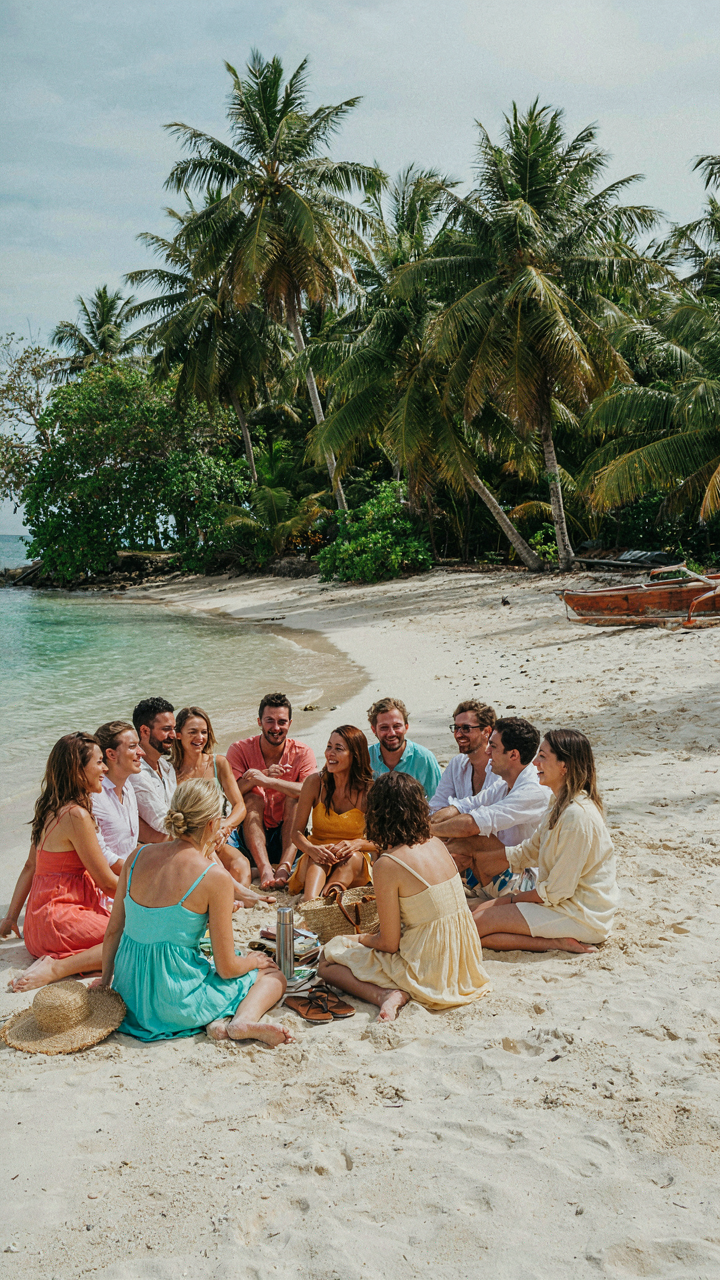
A tight group of ten to twenty people who matter creates intimacy that fifty strangers never will. You stop performing for a crowd and start experiencing something real. The cost per person drops. The logistics simplify. You remember actual conversations instead of working a room.
Where The Economics Flip
The common advice is “pick anywhere with cheap flights and accommodation.” Wrong. You’re thinking tourism pricing, not leverage. In economics, arbitrage is exploiting price differences between markets. Island elopements work because you’re buying a complete package in a market where ceremony, venue, and celebration all cost 60 to 70 percent less than mainland destinations, but only if you pick deliberately.
Fiji, Bali, or the Philippines offer government marriage licenses, English-speaking coordinators, and all-in packages under five thousand dollars for two people. Book during shoulder season, not peak holidays. A Tuesday in September costs half what a Saturday in December does. The arbitrage window closes fast, so commit early and lock rates.
Beyond The Brochure: Uncovering Real Island Value

Where The Ceremony Actually Happens
You want your photos to look untouched and exclusive, which means you’re terrified of generic backdrops that scream “package deal.” Here’s the mechanism: island pricing inflates with foot traffic. The beachfront resort pavilion costs triple what an unmarked cove fifty yards away costs, despite identical aesthetics. You’re not paying for location—you’re paying for permission and the resort’s markup.

Scout non-resort beaches on the island before committing. Public beaches, private property with owner permission, and lesser-known coves exist outside tourist infrastructure. A local real estate agent or property manager knows which beaches permit ceremonies without vendor gatekeeping. The actual ceremony needs water, sand, and light. Everything else is the island charging you for the illusion of scarcity.
Vendors Who Don’t Price For Tourists
Everyone tells you to “hire local,” which is true but incomplete. The real divide isn’t local versus foreign—it’s whether the vendor’s primary market is tourists or residents. A florist who sells arrangements to hotel concierges charges resort rates. A florist who arranges for local events charges forty percent less for the same work.
Find vendors by asking residents, not tourism websites. Check Instagram for island creators who aren’t wedding focused. Ask the Airbnb host, the restaurant owner, the dive shop staff. They know who actually lives there versus who only works during peak season. This single protocol shift cuts your vendor costs in half without sacrificing quality.
The Un Wedding Protocol: Stripping Down To Significance

Vows Over Venue Rental
You care about this section because you’re afraid a small ceremony looks cheap instead of intentional. The real mechanism is scarcity. Economics teaches us that constraint forces prioritization. On an island elopement, a bare-bones ceremony doesn’t signal poverty—it signals you’ve eliminated everything except what matters. A twenty-minute vow exchange on a beach generates more emotional weight than two hours of choreographed events and hired witnesses.

The ceremony itself costs nothing. You show up, speak your commitments, and leave. Rent a simple pavilion if weather demands it, or skip it entirely. A photographer captures thirty minutes of raw footage. No processional music. No programs. No seating arrangements. The stripped-down format actually intensifies meaning because nothing dilutes attention. Your words become the entire event.
Meaning Beats Decoration
Common advice says personalized touches require budget. Wrong. Personalization means removing everything generic, not adding custom details. A handwritten vow card costs paper and your time. A playlist of songs that shaped your relationship beats a hired DJ. A single meaningful ritual—exchanging something that belonged to a deceased family member, or planting a tree, or reading a passage that resonated during a difficult year—anchors the ceremony to your actual life instead of a template.
The mechanism is substitution. You replace expensive production elements with elements that only you can provide. A sunset on the right beach at the right time costs nothing. Your grandmother’s recipe for the post-ceremony meal costs ingredients. The specific island you chose for a reason beats any decoration that signals “fancy wedding location.” Execution happens at the vow exchange itself. You decide what gets said. You decide what gets shown. That decision is your only real job.
Strategic Simplicity: Applying Military Logistics To Your Elope Destination
Deployment Planning: Optimize Travel, Accommodation, Ceremony Flow
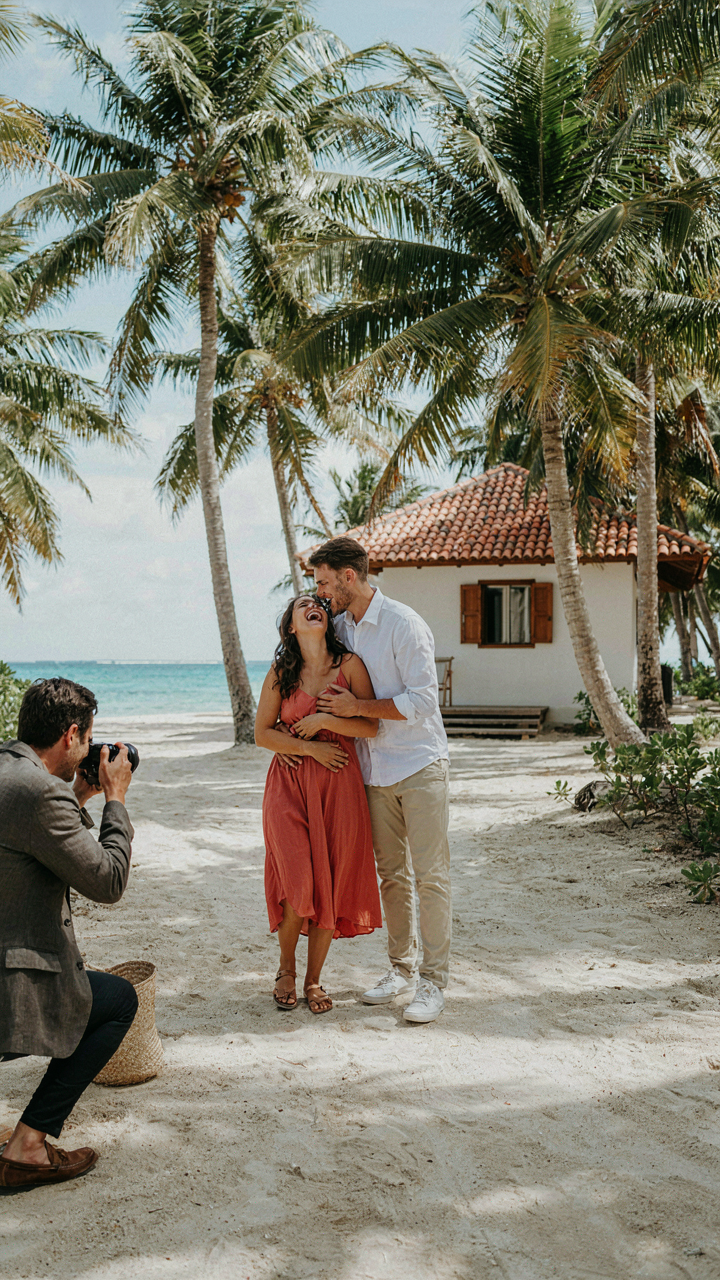
You want to feel like you’re getting a deal without actually planning like you are. That’s the real tension. Military logistics has a concept called “forward positioning”—placing resources close to where you’ll use them to eliminate dead time and excess movement. On an island, this means your accommodation, ceremony site, and reception happen within walking distance or a five-minute boat ride, not scattered across the island requiring shuttles and coordination.

Most couples book lodging first, then search for ceremony venues afterward, creating logistical hell. Reverse this. Choose your ceremony location based on existing infrastructure: proximity to natural fresh water, protected from wind, accessible by foot or simple transport. Then book accommodation within that zone. A beachfront resort nearby costs more per night but eliminates transportation, saves hours of coordination, and reduces the variables that kill small budgets. The math shifts when you factor in hidden costs like extra guides, boat rentals, or missed timing.
Resource Allocation: Maximize High Impact Elements, Minimize Waste
Most advice tells you to “cut corners” without naming what matters. That’s incomplete. Economics teaches resource scarcity forces trade-offs. In a small island elopement, your scarcity is time and headcount, not money per se. You have maybe twelve to twenty people total. Invest heavily in one photographer or videographer who shoots both simultaneously. Minimize everything else.
Ceremony flowers, decorations, rental linens—all waste on small groups. Nobody remembers them. People remember how you treated them, whether food arrived hot, and if the light was good in photos. Spend sixty percent of your budget on the photographer, ten percent on food, ten percent on lodging, and five percent on ceremony logistics. The remaining fifteen percent covers permits, transportation, and contingency. This allocation maximizes what your audience actually perceives and remembers.
The Budget Black Box: Where Your Money Really Goes

The Real Cost Of Getting Married On A Beach
You want the number because you’re scared it’ll be higher than you think, and you’re right to be. Island governments tax weddings the same way they tax everything else: aggressively. Most couples see permits, fees, and local taxes only after committing to a date, which means you negotiate from a position of zero leverage. Think of it like supply chain economics: you’re the end buyer with no alternative vendor. The island knows you’ve already told people the date.

Permits alone run 200 to 800 dollars depending on the territory. Beach use fees exist in most jurisdictions and stack on top. Then come government marriage licenses, which require processing time you rarely budget for. Some islands charge different rates for residents versus tourists, and some require proof of residency or work permits just to file paperwork. The real trap: these fees don’t include the officiant, the paperwork courier, or the mandatory notarizations that certain territories demand before you leave. You find out about layer three only after layer two is paid.
What You Actually Need Versus What You Can Skip
Not all DIY saves money, and pretending otherwise is how people hemorrhage cash on failed experiments. The cost-benefit split is clean: hire for legal and technical execution, DIY the aesthetic and logistical management. An officiant costs 300 to 600 dollars, but they handle the legal machinery that keeps your marriage recognized when you return home. Skip this and you’ve got an unsanctioned event, not a marriage. Photographer, catering, transportation, and florals are where most couples waste discretionary budget by trying to solve them alone.
- Officiant: Non-negotiable. They navigate local marriage law and ensure your license is valid in your home country. Costs justify themselves through legal certainty.
- Catering: Hire locally. Island restaurants have supply chains and refrigeration already built in. Your DIY cooler will fail and cost more to recover from.
- Transportation: Book ahead or hire a local driver. Last-minute taxis and confused Uber drivers eat time and budget simultaneously on small islands.
- Permits And Licensing: Handle through a local coordinator or wedding planner, not solo. The paperwork friction is real and the cost of mistakes exceeds the coordinator fee by 10x.
- Photography: Either hire one photographer for 4-6 hours or shoot it yourself with a phone and tripod. The middle ground of amateur videography with professional ambitions fails consistently.
The mechanism is ruthless: your time on an island costs money per hour in a way it doesn’t at home. Every administrative friction point you create extends your stay or forces paid expediting. A local coordinator removes friction for 500 to 1200 dollars, which sounds expensive until you realize you were paying 150 dollars per hour just existing there while solving problems alone.
The “Small Hawaii Wedding” Fallacy: Why Location Isn’t Everything

Overlooked Islands Beat Expensive Marquee Names
You want Hawaii because it signals something to people back home. That’s the real driver. But the mechanism that actually controls your budget is supply and demand, not geography. Popular islands like Oahu and Maui have inflated vendor pricing because demand is constant. Lesser-known islands like Molokai, Lanai, and Kauai’s north shore have identical natural beauty with 40-60% lower costs because fewer tourists compete for services.

The gap exists because vendors on high-traffic islands price based on tourist willingness to pay, not actual operating costs. Molokai has one traffic light and attracts serious adventurers, not Instagram couples. That filtering mechanism alone drops your catering, photography, and accommodation costs measurably. You’re not sacrificing experience. You’re exploiting the market’s failure to price these locations rationally.
Make The Experience The Venue
The mistake most couples make is treating the location as décor and the activities as extras. Flip it. The activities are your core offering, the location is just where they happen. Think like an events strategist. Your constraint is budget. Your asset is time. You swap money for experience by designing around what the island offers free: hiking, snorkeling, tide pools, local food markets, sunrise spots.
A $300 venue rental on a quiet beach becomes redundant if you’re spending four hours kayaking through mangroves or learning to fish with locals. The memory compounds. You’re not paying for a staged photoshoot against a generic sunset. You’re paying for a coordinated set of activities that create natural moments worth photographing. Book one strong photographer for four hours, let them follow your actual day, and you’ve cut venue theater costs to zero while doubling the content quality.
Post Nuptial Profit: Maximizing The Elopement Afterglow

Turn Moments Into Lasting Assets
You want proof the day mattered. You want something to show people that justifies the trip, the expense, the choice to do this differently. That’s the real motive here. Photography on a budget island elopement works like an investment portfolio: you’re not maximizing volume, you’re maximizing yield per dollar spent. One skilled photographer capturing eight hours produces more usable assets than two mediocre ones shooting the same timeline. Hire for technical competence, not Instagram follower count. A photographer who understands natural light and post-processing workflow will deliver sharper ROI than one who relies on gear.

The mechanics are simple: shoot in formats that repurpose. Raw files convert to print, web, social, and merchandise without degradation. A couple photos become the announcement, the thank you card, the printed album, the framed wall piece. Many couples shoot with one camera operator and one videographer, but budget-conscious elopers get more from one person who does both stills and short video clips. This person then licenses the best shots to stock sites or sells prints later. The day funds itself incrementally if the photography infrastructure is built for secondary revenue, not just memory preservation.
Simple Moments Compound Into Experience Capital
What most advice misses: the elopement itself isn’t the product. The story you tell afterward is. Return on experience doesn’t mean you recoup money directly. It means the experience generates social capital, strengthens relationships, and creates content that positions you differently than people who did conventional weddings. A small island elopement with intentional documentation becomes a narrative asset. You’re not just married; you’re the couple who did something distinct and documented it well.
Build this by planning documentation moments into the day itself. Not poses, but decision points: the vow exchange, the first solo walk on the beach after, the meal moment. Direct your photographer to capture you actually being present, not performing. These genuine moments convert to shareable content that outlasts the event by months or years. Friends and family engage more with authenticity than polish. The compounding return appears when people reference your wedding as the template for their own choices, or when the photos spark conversations that deepen relationships you didn’t expect to strengthen. That’s how a small elopement becomes bigger than the day itself: its documented truth keeps working.
Simple Beach Weddings: The True Cost Of Complexity

What You’re Actually Paying For
You want proof that your wedding matters, and you think spending proves it. Here’s the mechanism: every vendor you hire becomes a decision point that inflates your budget and shrinks your control. A traditional wedding forces you into a linear supply chain. You book a planner, who books a florist, who coordinates with a caterer, who syncs with a photographer. Each middleman adds markup and timeline dependency. An island elopement on a budget dismantles this chain entirely. You eliminate layers by choosing what you actually need versus what the industry expects you to want.

Most advice tells you to “cut the guest list” or “go simple.” That’s incomplete. The real cost driver isn’t the guest count, it’s the infrastructure you build to serve them. A beach ceremony needs nothing structural. No rentals, no parking logistics, no weather backup venue. Remove the system, and costs collapse. The mechanism is subtraction, not optimization. You don’t negotiate vendor rates downward; you stop hiring vendors. A marriage license, two people, an island, and a phone to call someone to officiate costs less than 500 dollars in most jurisdictions. Everything above that is chosen, not required.
Money For What Comes After
Economists call this “opportunity cost,” and island elopement budgets prove it better than any textbook. Every dollar you spend on a wedding day is a dollar you don’t invest in the life you’re building with that person. A lavish ceremony followed by financial strain is a debt disguised as a memory. You’re funding one afternoon while mortgage rates climb and your emergency fund sits empty.
The strategic move is to reverse-engineer from outcomes. Ask what you want your marriage to enable five years from now: travel, property, children, stability, freedom to take risks. Budget backward from there. If your goal is financial autonomy, a 3000 dollar beach elopement plus 7000 dollars toward a property down payment is a different calculation than a 10000 dollar wedding that generates Instagram validation for three days. The protocol is simple: define the outcome, calculate what that outcome costs, subtract that from your total available capital, then spend what remains on the wedding. Everything else is noise.
The Real Cost Isn’t The Budget; It’s Your Freedom
Most people sabotage their elopement before it starts by asking permission from people who weren’t invited. Stop that today. Pick a date this week, book the flight, and tell people after. The budget doesn’t matter if you spend two years planning something that makes you miserable. A small island wedding costs less because you eliminated the performance. Stop performing, and everything gets cheaper.