The Rental Arbitrage: Maximizing Bling For Minimal Capital

Why Wedding Jewelry Rental Stays Underpriced
You want the look without the buyer’s remorse, but here’s what really bothers you: you’re terrified of overpaying for something you wear once. That’s the real mechanism at work. Wedding jewelry rental exists in a market gap because most couples don’t know the arbitrage exists. Retailers have trained you to buy. Rental platforms operate at scale inefficiency because demand clusters around specific dates, leaving inventory idle most of the year. This friction keeps prices artificially low.
The wedding jewelry market splits into two tiers that rarely compete directly. Retail buyers anchor their expectations to retail prices, which embed markup for permanent ownership, insurance, and storage costs. Rental operators can undercut those prices by 60 to 80 percent because they distribute the asset cost across multiple wearers annually. You pay for temporary access, not perpetual depreciation. The inefficiency persists because wedding rental hasn’t achieved cultural saturation yet. Most couples still default to buying because their parents did, not because the economics actually favor it.
Where Your Capital Actually Works
Economics teaches us about opportunity cost: the real value of a choice is measured against your best alternative. In wedding jewelry, your alternative isn’t just “buy versus rent.” It’s what you do with capital you don’t spend. A four-carat diamond ring costs between 8,000 and 15,000 dollars retail. Renting equivalent carat weight and quality runs 200 to 600 dollars for the weekend. The delta is real money.
That 7,400 dollar difference moves to investments that actually appreciate or experiences that build your life. You compound returns in index funds, pay down higher-interest debt, or fund a honeymoon that creates memories instead of sitting in a safe deposit box for forty years. The rental decision only makes sense if you redirect that capital consciously. Without a plan for the money saved, you haven’t made a financial decision at all. Create a specific allocation before you book the rental. Write down the exact account or goal that receives those savings.
Beyond The Price Tag: The True Cost Of Ownership
Depreciation And Hidden Upkeep Expenses
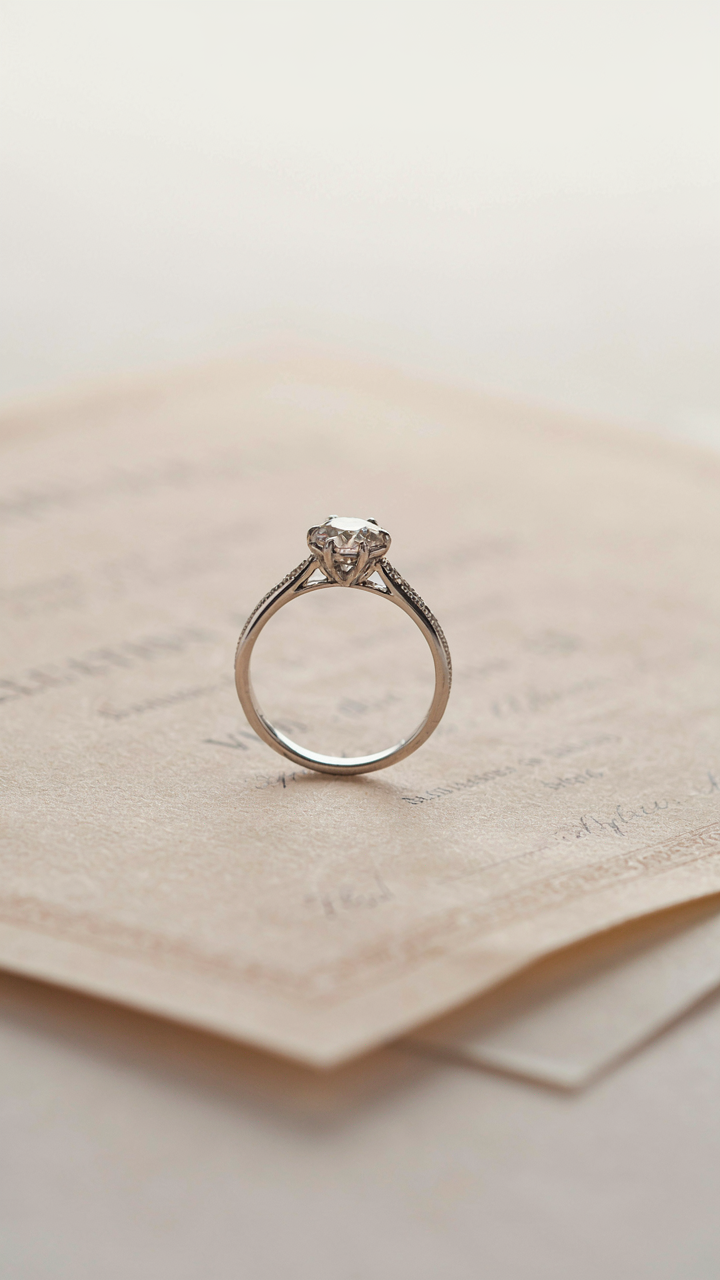
You’re not actually worried about the price of the ring. You’re worried you’re making the wrong permanent choice. That fear is rational, and it’s exactly why ownership costs more than the sticker suggests. Economics calls this “depreciation”—the gap between what you pay and what you recover. Wedding jewelry depreciates fastest in its first year, then continues bleeding value as market conditions shift and styles date.

New diamond rings lose 25 to 40 percent of retail value the moment you leave the store. That’s not random—it’s the markup structure. Lab-created stones hold value better than mined diamonds, but both fall when you resell. Beyond the hit itself, you absorb insurance costs, professional cleaning and maintenance every few years, potential repairs from wear, and storage security measures. These expenses stack quietly and never recover.
Locked Capital With No Exit
Renting doesn’t require you to predict what will feel right in five years. Buying forces you to. Economics distinguishes between liquid and illiquid assets—jewelry is illiquid, meaning converting it to cash is slow and costly. When you buy a ring, you’ve locked capital that could work elsewhere, and you’ll accept a 30 to 50 percent loss if you need it back before the resale market cooperates.
The real mechanism is this: your money sits in physical form, depreciating, while generating zero returns. Rental fees run roughly 10 to 15 percent of retail value annually—significant, but you don’t own the deterioration. If your life changes, you return it. If you stay married, you keep paying. The decision shifts from “Am I buying forever?” to “Do I want to pay for this specific year?” That’s permission to be honest about what you actually need.
The Curated Collection Protocol: Accessing Elite Pieces
Who Actually Curates High End Rental Inventories
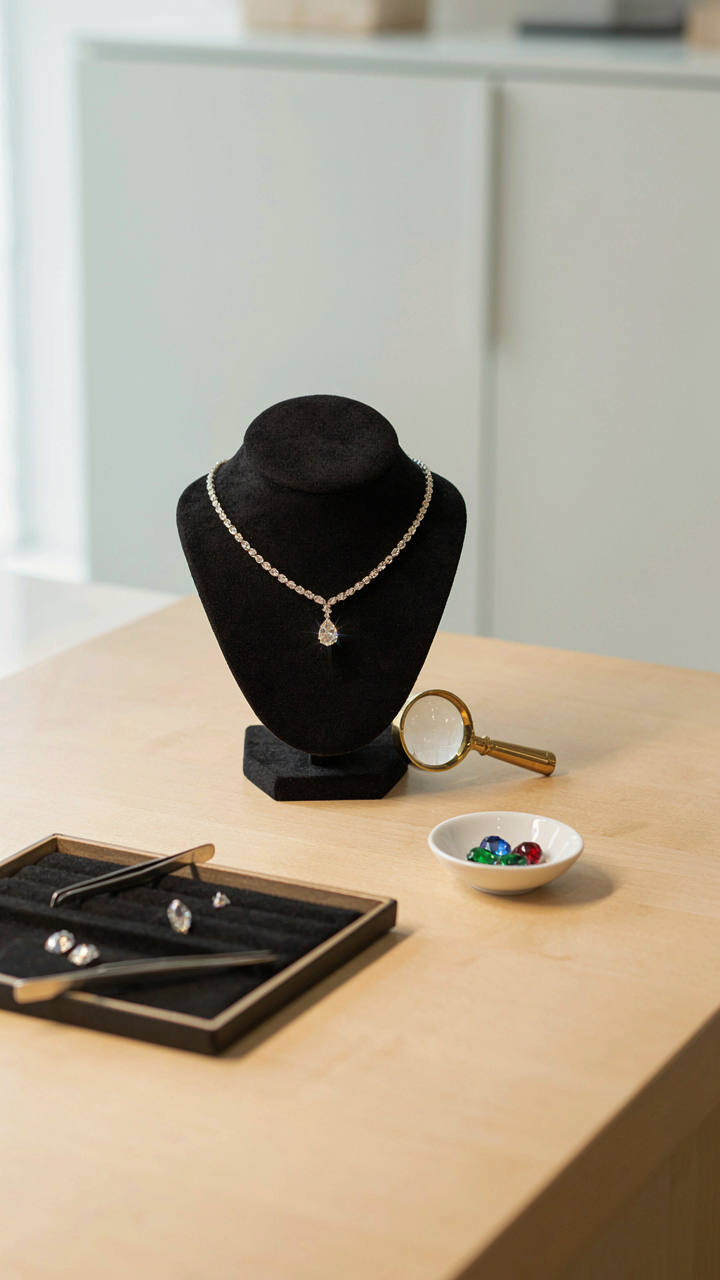
You want access to pieces you couldn’t justify buying, and you’re afraid renting means settling for mass-produced garbage. The real mechanism is inventory curation: high-end rental companies function like private museums with one job—maintain pieces that survive repeated use without degradation. They source from estate liquidators, discontinued designer lines, and commission custom pieces because rental economics reward durability over novelty. A diamond loses nothing through wear. Neither does a well-made setting if the rental operator understands metallurgy and maintenance protocols.

The vetting process isn’t about reading reviews. It’s about understanding how the business survives. Call and ask their head jeweler directly: How long do pieces stay in rotation? What’s their insurance policy for damage versus normal wear? Do they resize or reset, or do they rotate standardized sizes? A company that won’t answer these questions doesn’t have a head jeweler—they have inventory management software. Legitimate operators can tell you the sourcing story of specific pieces because they’ve actually evaluated what they carry.
Selecting A Classic Crystal Bridal Necklace For Wedding
Crystal as a material choice reveals everything about a rental company’s real tier. Lab-created crystals and genuine crystals behave differently under repeated cleaning cycles, heat exposure, and setting stress. High-end operators use genuine crystal in limited quantities because the durability math works: Swarovski crystals hold their refractive properties and resist clouding better than cheaper alternatives through multiple deep cleans. They also cost more upfront, which is why mid-tier rentals push cubic zirconia as “identical to the eye.” It isn’t. The optical degradation happens fast under jewelry store lighting.
When you’re evaluating a classic crystal necklace, don’t ask if it’s “real.” Ask the specific crystal grade, the metal composition of the setting, and how many rentals the piece has completed. If they don’t track this, move on. The rental operator who knows their inventory by rental count instead of just aesthetic category will have pieces that actually look new after your wedding day. Request photos of the piece returned from the last three rentals. Cloudiness, discoloration, or loose stones signal a piece running at end-of-life. That’s not your problem—until it is, on your wedding day.
Strategic Glamour: Why Disposable Doesn’t Mean Lesser
The Jeweled Necklace For Reception Impact
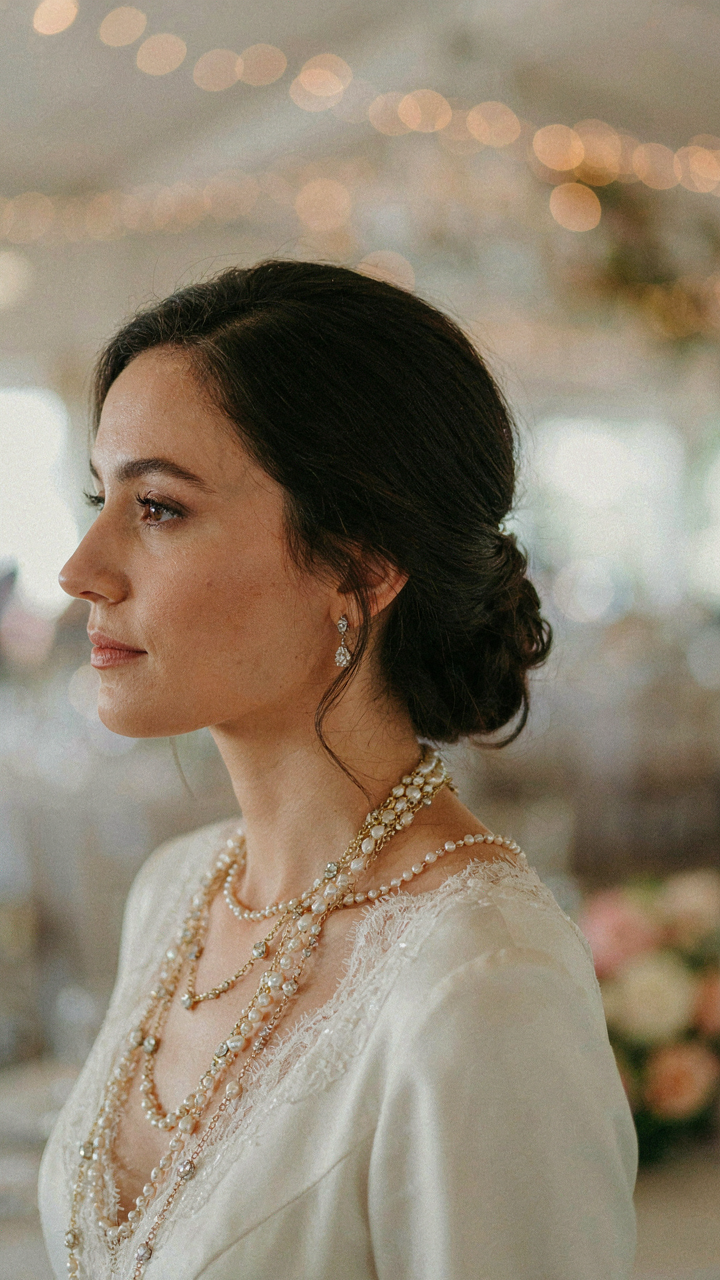
You’re worried renting feels cheap. Here’s what actually matters: photography captures jewelry for roughly 8 to 12 seconds per shot during key moments, then moves on. The mechanism is attention scarcity. You’re not wearing a necklace for a month. You’re wearing it during cocktail hour, first dance, and the receiving line. A rented statement piece performs identically to an owned one in those frames because the camera doesn’t know provenance.

The real cost isn’t the object. It’s visual hierarchy in your photos. A reception necklace anchors the frame when you stand still. Rental companies stock pieces specifically designed for this—bold proportions, light reflection, defined silhouettes. These work harder in low reception lighting than delicate everyday jewelry ever would. You select for performance in that specific context, not for emotional ownership afterward.
Where To Concentrate Your Budget
The mistake most people make is spreading budget evenly across all jewelry. That’s wrong. Photography and video document your face, neck, and hands. Your ring is on camera constantly. Your earrings frame your face in every still. Your necklace shows in full-body shots and during seated moments. Your bracelet matters only if you use your hands expressively during vows or toasts.
Allocate 60 percent of your rental budget to ring and earrings. These two pieces are non-negotiable visual elements in every shot. Place 30 percent toward the necklace for reception impact and dramatic full-body frames. Reserve 10 percent for bracelets, anklets, or backup options. This concentration ensures your peak visual moments—the ones people actually enlarge and frame later—have premium jewelry doing the work they were designed to do.
The Diamond Jewelry Paradox: Perceived Value Vs. Utility
What Your Jewelry Actually Communicates
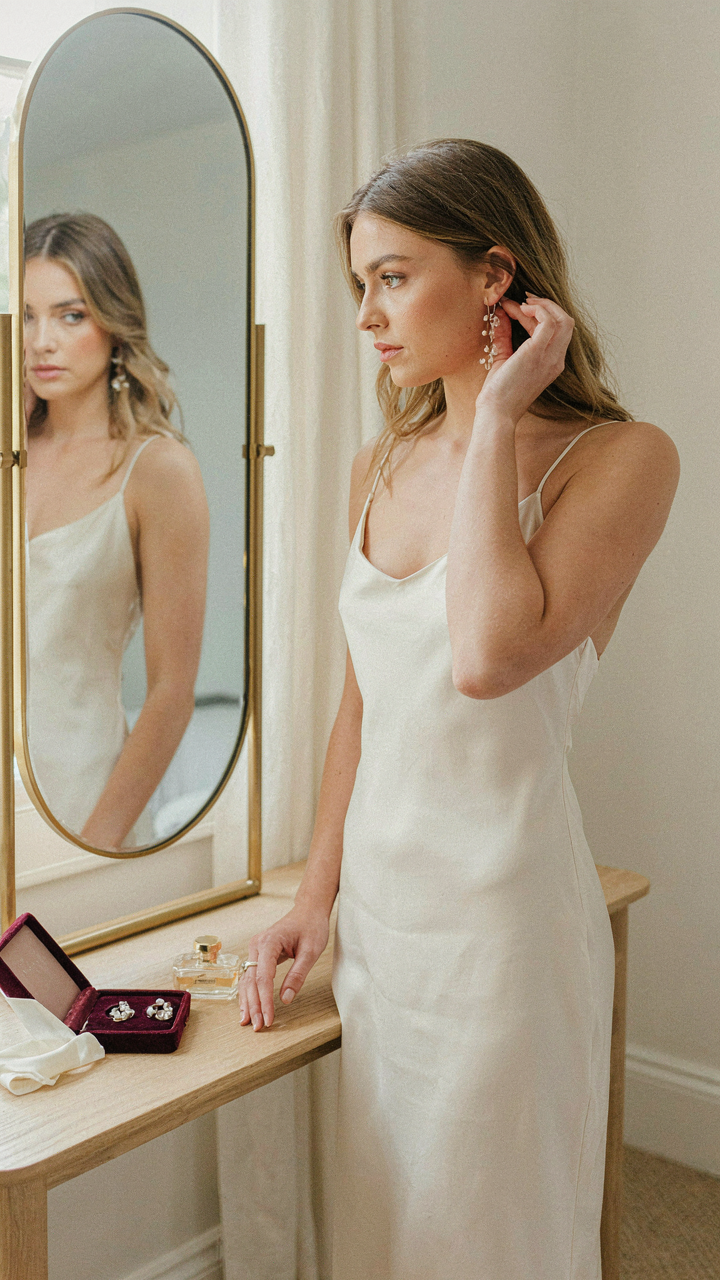
You care about this section because you’re worried people will judge you for not owning. That fear is the entire mechanism at work. Signaling theory, borrowed from economics, explains how we use visible purchases to broadcast status. In jewelry, the signal you send isn’t about the object itself—it’s about what you claim to value enough to keep forever. Renting disrupts that signal, which is exactly why it threatens people invested in the ownership story.

The wedding industry built its profit on conflating jewelry with commitment. A diamond ring “proves” your devotion because you spent irreplaceable money on it. Renting jewelry sends a different signal: you value the experience and appearance on your wedding day over the permanent asset. This actually communicates financial literacy to people who understand it, but triggers discomfort in those who’ve internalized the “forever” narrative. The real communication happening isn’t about the jewelry—it’s about whether you believe a permanent object validates a temporary event.
The Actual Return You Should Track
Emotional return on investment for bridal jewelry sets doesn’t work the way the industry frames it. Common advice tells you to “treasure it forever” and “wear it on anniversaries,” but most rented jewelry gets worn once and forgotten anyway. The real emotional return sits in one specific moment: confidence during the event itself. You wear it for four to eight hours. That’s your entire ROI window.
When you rent, you eliminate the guilt of overspending, the anxiety about scratches and loss, and the obligation to justify keeping something you never touch. That psychological relief is worth more than the false sentiment of ownership. The mechanism is simple: rent premium pieces that make you feel sharp during the wedding, then redirect the money you saved into experiences or assets that actually compound in value over time. Track this by comparing what you spent versus what you’d have paid to buy and then store permanently unused jewelry.
The Logistics Of Luxury: A Frictionless Experience

What Your Rental Agreement Actually Protects
You’re worried about losing money on someone else’s heirloom. That fear is the only reason rental agreements exist—they’re liability containers, not feel-good paperwork. Think of rental agreements like insurance contracts in economics: both parties trade certainty for protection. The renter gets to wear the piece knowing costs are capped. The jeweler gets recourse if damage happens.
- Damage Clauses: Defines what counts as damage versus normal wear. Most agreements allow minor scratches but exclude broken stones or bent settings. Know the threshold before signing.
- Security Deposits: Typically 25-50% of rental cost, held until return inspection. This incentivizes you to protect the piece and gives the jeweler funds to repair accidental damage.
- Insurance Requirements: Some renters require you to carry renters or event insurance naming the jeweler. Others self-insure. Confirm which applies to avoid unexpected liability after the wedding.
- Return Timeline: Usually 48-72 hours post-event. Late returns incur daily penalties or full replacement charges. Build buffer time into your schedule.
- Inspection Protocol: Jeweler photographs condition before and after. You’ll likely be present for return inspection. Document any pre-existing marks in writing immediately.
Most couples skip the fine print and get blindsided by damage charges later. Read what you sign. The agreement isn’t designed to trap you—it’s designed to clarify what happens when real wear occurs during a real event.
Fitting And Styling Your Classic Hand Set Crystal Bridal Necklace
The rental necklace won’t fit like your everyday jewelry because it was made for someone else’s neck and collarbone. Bridal necklaces specifically—especially crystal hand-set pieces with delicate chains—need a fitting appointment before the wedding day. This isn’t optional if you want the piece to sit correctly in photos.
Most rental shops offer fitting 2-4 weeks before your event. During that appointment, the jeweler adjusts chain length, checks clasp function, and confirms the stone positioning aligns with your neckline. If alterations are needed, they happen then. On wedding day, you’ll know exactly how the necklace hangs and whether it needs any repositioning during hair and makeup.
The Anti Hoarder Mindset: Freedom From Accumulation
Why Ownership Feels Like Control
You’re worried that renting means you don’t truly have something. Here’s the mechanism: ownership is a psychological anchor that creates the illusion of security, not actual security. Evolutionary biology calls this resource fluidity, the principle that organisms thrive by accessing resources temporarily rather than storing them indefinitely. Your ancestors didn’t hoard grain year-round; they accessed it when needed. Wedding jewelry functions identically. You need it for one event. Renting gives you access without the false comfort of permanent storage.

The real cost of ownership isn’t the purchase price. It’s the mental load of possession, the storage space, the insurance policy you debate renewing, the piece you never wear again but can’t discard. Renting eliminates that friction entirely. You wear the piece for eight hours, return it, and move on. No justification needed. No guilt about waste.
The Weight Of Things You Don’t Use
The advice to buy jewelry as an “investment” is incomplete. It assumes you’ll wear it repeatedly or resell it easily. Most wedding jewelry doesn’t. A bride buys earrings for her wedding day. Ten years later, those earrings sit in a drawer because the style shifted or she simply doesn’t reach for them. That’s dead capital in your home, not an asset.
Decluttering your desire for permanent ownership starts with naming the real game: you don’t want the jewelry. You want the appearance and confidence on one specific day. Renting delivers that exactly. The protocol is simple: identify the specific event date, determine the look you need, rent pieces that match that aesthetic, and return them the next business day. You own nothing. You own everything that matters.
Beyond The Wedding Day: Reimagining Your Jewelry Portfolio
The Rental Lens For Future Events
You’re afraid spending two thousand dollars on a necklace you’ll wear once means you’ve wasted money. The real mechanism is portfolio allocation: treating rental and ownership as separate asset classes with different risk profiles. Rental handles one-time events with unpredictable aesthetics. Ownership handles pieces you actually wear repeatedly across years.

Think like a venture capitalist managing capital deployment. A rented statement piece for your sister’s wedding requires zero ongoing maintenance, insurance, or storage. You pay for access, not liability. That capital stays liquid for pieces you genuinely integrate into your life. The math shifts when you stop conflating ownership with value.
Building A Rotation That Works
Rental companies aren’t selling you a fantasy. They’re solving logistics. Bridal jewelry rental thrives because brides rotate through seasonal collections, trend cycles, and specific event types. You can own your core pieces—everyday studs, a simple white gold band—while renting the rest. This isn’t compromise. It’s operational clarity.
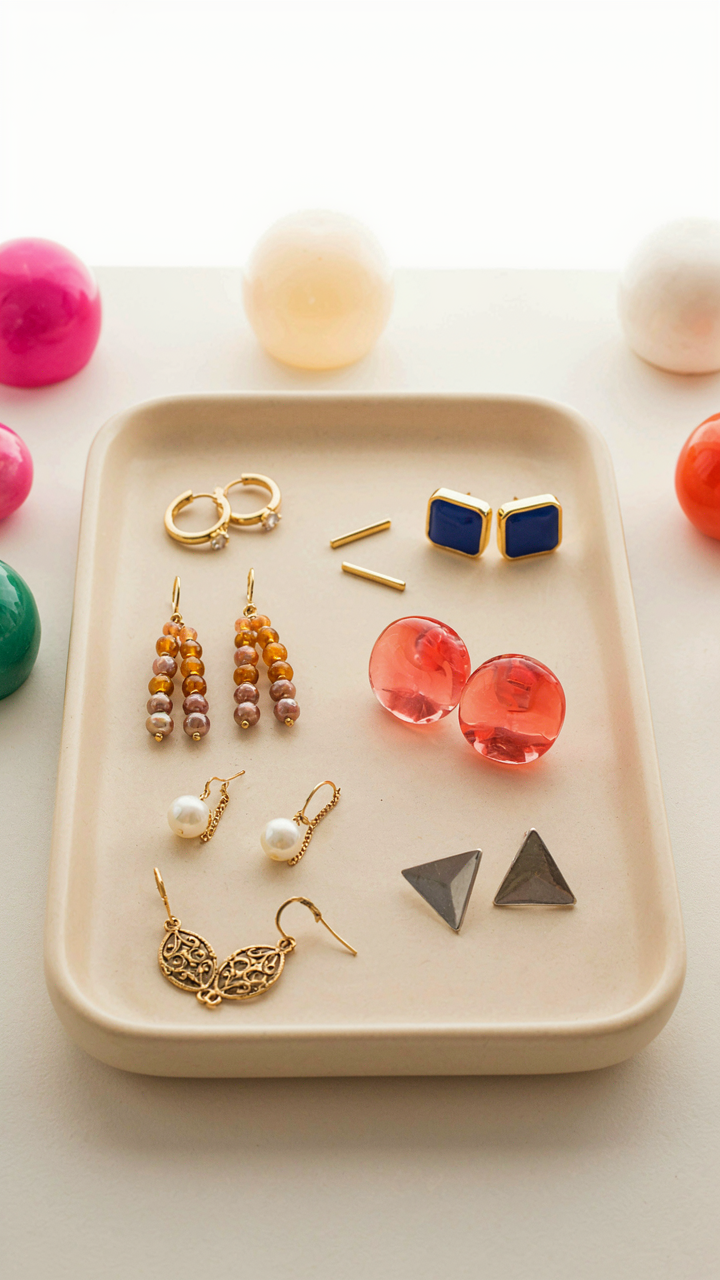
The versatile collection approach means owning pieces that fit multiple contexts. Classic gold hoops work for weddings, dinners, and weekends. A simple pendant necklace pairs with formal and casual. Then you rent boldface pieces for specific moments. You’re not building a museum. You’re building a functional system that makes sense across time.
The Real Obstacle Isn’t Cost; It’s Your Attachment To Ownership Over Impact

You don’t rent wedding jewelry because you’re broke. You rent it because you’re building something bigger than a closet full of things you wear once. The shift from ownership to access is the same one that killed video rental stores and created Netflix. Stop asking “what can I own” and start asking “what do I need right now.” Pull up three rental sites today, bookmark them, and price out your vision. The couples spending smart aren’t the ones who buy less—they’re the ones who stopped confusing money with meaning.