Beyond Basic: The Anti Generic Cufflink Protocol

Materials Most Grooms Overlook
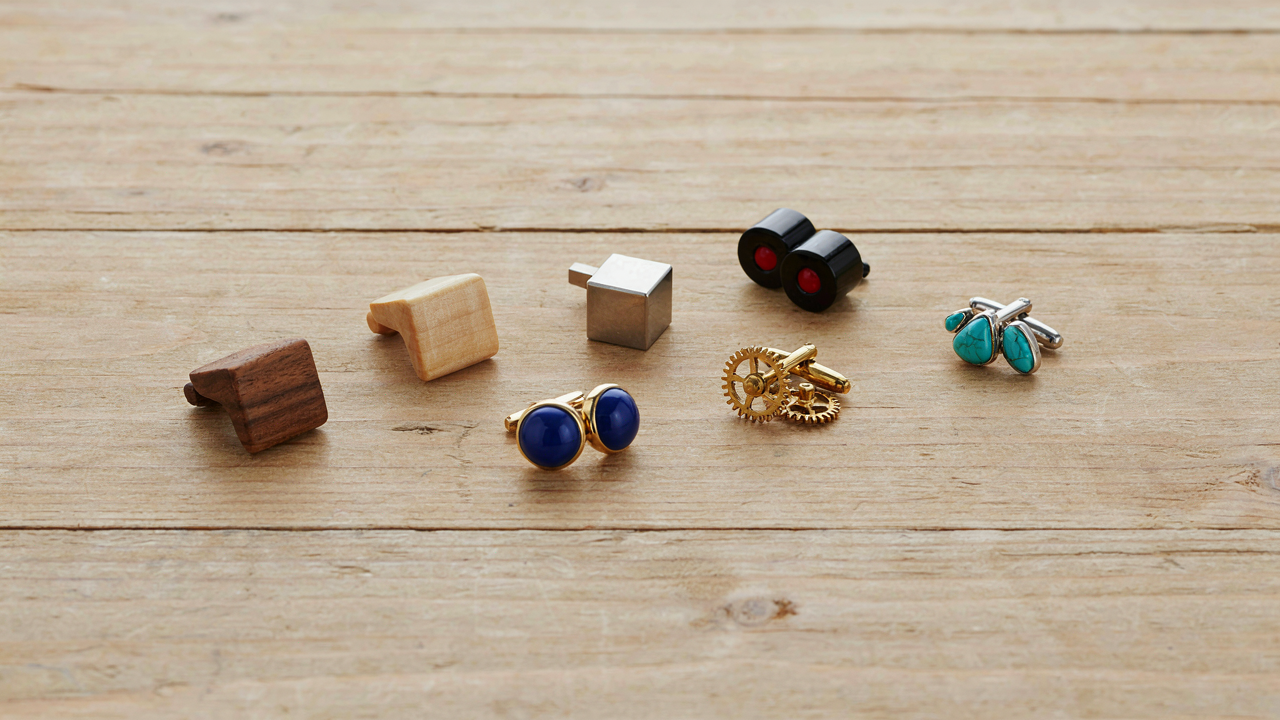
You want cufflinks that signal taste without signaling bankruptcy. The real mechanism is scarcity perception: people register materials they don’t expect before they register price. Common advice says stick to silver or gold. That’s incomplete. Stainless steel, when finished properly, reads as intentional rather than cheap. Brass develops patina over time, giving the piece a narrative. Wood paired with metal creates immediate differentiation because most men never consider it.
The design world learned this from the Arts and Crafts movement: honest materials beat expensive ones when the craftsmanship is visible. A pair of walnut wood cufflinks with stainless steel posts costs thirty dollars and outperforms a generic rhodium plating at twice the price. Stone materials like onyx or agate work at budget prices because the stone itself carries weight, literally and perceptually. Search for semi-precious stones rather than gemstones. The visual impact stays the same; your cost drops seventy percent.
Repurposing Items You Already Own
This isn’t recycling sentiment. This is economics applied directly: you already own materials with zero marginal cost. An old watch face, a family coin, military insignia from a relative, or a broken piece of jewelry contains the raw material for a custom cufflink. The labor to convert it matters more than the source material. A jeweler or metalsmith charges fifty to one hundred fifty dollars to mount an existing item into functional cufflinks. You supply the meaningful component at zero cost.
The mechanism is straightforward: emotional weight increases perceived value more than material cost does. A cufflink made from your grandfather’s watch carries information no new purchase can replicate. Etsy metalworkers and local jewelers offer this service regularly. Upload a photo, discuss the mounting style, pay the labor fee. You get a piece that looks intentional and costs less than a retail set while containing something no other groom will wear.
The Law Of Intentional Inconspicuousness: Cufflinks As A Statement

Minimalist Design, Maximum Personal Meaning
You’re worried people will judge you for spending thirty dollars on cufflinks instead of three hundred. That fear is the real problem, not the budget. What actually matters is that cufflinks function as a signal of restraint, not excess. Restraint reads as confidence. A man who wears simple cufflinks—sterling silver bars, mother of pearl studs, matte brass—demonstrates he has nothing to prove. The mechanism is inverse: less ornament signals more authority.

The best budget cufflinks leverage materials that age visibly. Sterling silver oxidizes and develops patina. Brass patinas over time. These aren’t flaws—they’re documentation. A pair of forty-dollar brass cufflinks worn for five years tells a truer story than unused luxury pieces. Your cufflinks should look like they’ve been to something. Simplicity forces intentionality. When you own one pair of understated cufflinks instead of six pairs of ornate ones, you’ve already won the game the other guy doesn’t know he’s playing.
Focus On Narrative, Not Material Cost
Everyone says buy quality materials to justify the price. They’re wrong. The narrative matters more than the substance. A groom wearing cufflinks his grandfather wore—even if they’re base metal—outperforms a groom in virgin titanium he bought the week before. Economics teaches us that perceived value depends entirely on scarcity and provenance. Apply that directly: cufflinks with history cost nothing but mean everything.
The mechanism is simple. Ask your father, grandfather, or an uncle if they have cufflinks you can borrow or inherit. If they do, wear them. If they don’t, commission a jeweler to engrave a date or initials into a plain pair you buy for twenty to fifty dollars. That engraving costs five to fifteen dollars and transforms a generic object into an artifact. On your wedding day, you’re not wearing jewelry. You’re wearing a story. The person standing next to you will notice the difference, even if they can’t name it.
Deconstructing “Value”: Where To Find Real Cufflink Gems

The Thrift And Estate Route
You want to feel smart about spending less. That’s the real motive here. The mechanism is simple: cufflinks sit in estate sales because older men die and their families liquidate everything without knowing what they have. You’re buying from people who priced the item to move, not to maximize profit.

Thrift stores and antique shops move inventory differently than retailers. A pair of vintage silver cufflinks might sit on a shelf for six months at fifty dollars because the shop owner paid five dollars for an entire box of men’s accessories. Estate sales compress this timeline even more. Auctions create urgency, but the real deals are private sales where the executor just wants the closet empty.
Artisans Versus The Machine
Economics calls this the difference between scale and specialization. Big box retailers achieve volume by standardizing production. An artisan on Etsy or a maker platform competes on differentiation, which means they price closer to actual material cost plus labor, not brand markup.
The common advice says artisans cost more. That’s incomplete. They cost more than fast fashion retailers, but their per-unit economics differ from luxury brands padding 300 percent margins. A metalworker making cufflinks in small batches can undercut department stores because they skip the middleman markup, advertising spend, and inventory risk. Check production methods directly: ask if they source materials themselves and finish pieces by hand. That transparency signals lower structural overhead, which translates to better pricing on the finished product.
The “Scarcity Mindset” Fallacy: Abundance In Budget Cufflinks Men

Unexpected Materials Open The Real Design Space
You’re worried that cheap cufflinks scream cheap. That’s the fear driving this section. But here’s the mechanism: design operates on constraint, not budget. In economics, scarcity creates value through limitation. With cufflinks, scarcity works backwards. The groom who uses uncommon materials stands out precisely because most grooms don’t. Limitation forces creativity. Budget forces you to think like a designer instead of a shopper.
- Wood with metal accents: Walnut, maple, or bamboo paired with silver-plated findings creates texture contrast. Costs $8-15 per pair wholesale, sands smooth, takes engraving well for personalization.
- Leather wrapping: Genuine leather strips wrapped around simple metal bases create tactile interest. Source leather scraps locally, wrap tight, seal with epoxy. Runs $5-12 per pair.
- Resin casting with inclusions: Clear or tinted resin embedded with photos, vintage coins, or meaningful objects. DIY resin kits available under $30. Per-pair material cost drops to $3-8.
- Brass and patina: Raw brass oxidizes naturally into dark greens and blues. Polish or leave patinated. Blank brass blanks cost $2-6 per pair from jewelry suppliers.
- Textile integration: Woven fabric, silk from ties, or even denim inlaid into metal frames. Fabric backing stabilizes with thin epoxy. Material cost stays under $6 per pair.

These materials work because they signal intention, not price. A groom wearing wood cufflinks didn’t cheap out. He made a choice. That shift in perception happens at the material level, not the cost level.
Building Custom Pairs Without Factory Markup
Forget the advice that custom means expensive. Most of that cost is markup and labor arbitrage, not materials. You build custom cufflinks by owning the assembly step. Standard cufflink blanks exist as two-part kits: the face and the toggle mechanism. You source the faces separately, modify them, and assemble.
Start with blank cufflink backs from jewelry supply sites like Studs or Rio Grande. Cost runs $3-8 per pair. Next, create or source the decorative faces. Engrave them yourself using a local makerspace laser cutter, commission a metalsmith for $15-30 instead of $80 retail markup, or hand-assemble found objects like vintage buttons or carved stone. Assemble the pieces with epoxy rated for metal bonds. The final cost per pair lands between $12-25 depending on complexity, while retail equivalents run $60-150. Your time investment is the only real cost. You gain a story about construction, not consumption.
Cufflinks Wedding: The Asymmetry Of Information Advantage

Where Vintage Markets Hide Real Value
You’re worried someone will notice your cufflinks aren’t expensive. That fear is the entire mechanism at work. In economics, arbitrage means exploiting price differences for the same asset across markets. Vintage cufflink markets operate on information asymmetry: most buyers don’t know where to look, so sellers price accordingly. This creates a gap between what you pay and what the object signals.

Estate sales, pawn shops, and specialized vintage dealers price cufflinks based on material content and condition, not brand name. A 1960s pair in solid gold or silver costs a fraction of a new designer equivalent because no one’s paying for the logo. You’re buying the actual object’s value, not its retail markup. This is the only budget strategy that actually works because you’re not compromising on material or appearance.
Understated Elegance Wins Every Signal
Game theory explains why nobody notices budget cufflinks: observers judge status through contrast and specificity, not expense. A simple, well-made cufflink signals competence. An ornate, novelty cufflink signals desperation. The groom in plain silver or brushed gold reads as confident. The groom in something flashy reads as trying.
Restraint in design creates plausible deniability about cost, which is the actual advantage you’re after. Nobody asks “how much did those cost” when the answer seems obvious: they look like they’ve been worn for decades because they have. Buy vintage, wear timeless. The mechanism is this: your guests’ brains cannot assign a price to something that looks established, so they default to assuming quality over cost.
Groom Gift: Engineering An Emotional Connection

The Heirloom Play
You want these cufflinks to matter because you’re afraid cheap accessories will broadcast that you cut corners on your own wedding day. Here’s the mechanism: heirlooms work because they compress time. A cufflink worn by your grandfather carries decades of history in a two-inch object. Budget cufflinks achieve the same effect through intentional connection, not price tag. You’re not buying sentiment. You’re buying the frame to hold it.

Family pieces don’t require explanation. A grandfather’s cufflinks need no justification at the altar because the story precedes the object. If you lack an actual heirloom, commission a replica of one using budget materials. Brass or stainless steel can replicate vintage designs at a fraction of the cost. The visual continuity with family photographs matters more than the metal. That recognizable shape signals inheritance, whether it is literally passed down or strategically recreated.
The Story You Wear
Narrative design borrows from marketing: your cufflinks should communicate a single clear truth about who you are or who you’re becoming. Not vague sentimentality. One specific detail. A groom who met his wife rock climbing chooses cufflinks with climbing carabiners etched or welded on. A groom whose family built its business on sailboats picks boat-themed cufflinks. Budget options exist for nearly every niche interest because the story does the heavy lifting, not the material cost.
The mechanism is specificity. Generic “elegant” cufflinks fade into background noise. A pair tied to a real moment or shared passion becomes a conversation piece and a memory anchor. Budget manufacturers produce themed cufflinks across thousands of categories: music, sports, professions, hobbies. Your job is matching the design to a truth about your relationship. Select the pair that tells the story nobody else at your wedding would tell about you, then wear that story on your wrists.
The Craft Of The Curated: Personalized Cufflinks Without The Price Tag

Engraving Existing Cufflinks For Personal Touch
You want people to know you put thought into this, not just grabbed something off a shelf. Engraving works like signal amplification in communications theory—you take a base product and increase its information density without increasing its cost. A plain brass or silver-plated cufflink becomes a custom artifact the moment you add initials, a date, or a meaningful symbol.

Most jewelers charge between ten and thirty dollars per cufflink for basic engraving. You can source budget cufflinks from online retailers for five to fifteen dollars per pair, then route them to a local engraver. The math is simple: a thirty-dollar pair becomes a fifty-dollar personalized asset. Compare that to buying pre-engraved designer cufflinks at one hundred fifty dollars or more. The mechanism is swapping labor (yours, in research and coordination) for capital you don’t have to spend.
Monogrammed Cufflinks: DIY Or Low Cost Services
Monogramming isn’t optional framing—it’s the difference between a gift and a possession. You can DIY with metal stamping tools if you own or can borrow them, which takes about an hour of practice and costs nothing beyond the initial cufflink purchase. The stamping method is direct and permanent, no third party needed.
If DIY feels risky, online engraving services undercut local jewelers significantly. Etsy sellers and budget engravers charge five to fifteen dollars total for monogramming a pair. You mail the cufflinks, wait seven to ten days, and receive them back marked with your initials. This removes coordination friction and delivers a finished product that reads as intentional. The tradeoff is lead time, not money.
Initial Cufflinks & Beyond: The Art Of Subtraction

Minimalist Design Maximizes Impact
You’re worried people will judge you for not spending enough. Here’s what actually happens: restraint reads as confidence. Design borrows from signal processing, where noise obscures the message. Budget cufflinks fail because they try to announce themselves. They add detail to compensate for cheap materials. The mechanism is inversion. Expensive cufflinks work because they remove everything unnecessary, trusting the material and geometry to speak alone. Solid brass, simple bar construction, clean edge. That’s the pattern that scales across price points.

The minimalist approach works because it exposes flaws or proves quality. A $40 cufflink with ornate filigree hides mediocre metal under visual clutter. A $40 cufflink with a single geometric form wins or loses on execution. Choose materials that age visibly but improve with it: brushed silver, matte gold, anodized aluminum. Skip plating on budget pieces. Plating peels and reveals cheaper metal underneath, destroying credibility the moment it happens. Subtraction is the only reliable way to compete when your budget won’t match the price tag.
Strip Away Ornament, Keep Function
Most budget advice says “add style to compensate.” This is wrong. You’re not compensating. You’re being strategic. Ornament on cheap cufflinks always reveals the poverty of the piece. Every etched detail, engraved initial, or faux-mother-of-pearl inlay is a confession that the base material can’t stand alone. The real move is functional simplicity. Swivel backing instead of chains. Clean geometry instead of embossing. Bar or T-back styles that rely on proportion rather than decoration. The form becomes the entire statement.
Reduced surface area also means fewer failure points. Fewer places for plating to chip. Fewer joints where wear becomes visible as damage rather than patina. A solid brass bar cufflink with a brushed finish will look better at year five than an ornate silver-plated piece will look at year one. Function and durability merge under simplification. This is how you buy once instead of replacing twice. Select your template: bar, knot, or simple T-back. One style. No variation. Consistency reads as intentionality, which reads as taste.
The Unseen Value: Why A “Budget” Choice Outperforms

Authenticity Beats Status Signaling Every Time
You’re worried people will judge you for not wearing expensive cufflinks. That’s the real issue here. The mechanism is this: people don’t remember price tags. They remember whether your choice feels intentional. A groom wearing budget cufflinks that match his wedding’s aesthetic—his groomsmen’s ties, his venue’s era, his own taste—projects control. Expensive cufflinks chosen by someone else’s standard signal the opposite.

Economics has a term for this: signaling. In markets, true signals require costly sacrifice. But with cufflinks, the signal isn’t the cost to your wallet. It’s the cost to your attention. You spent time selecting something that fits your story, not your credit card. Guests register this difference instantly, even if they can’t name it. Budget cufflinks chosen with purpose outperform luxury cufflinks chosen by default.
The Lasting Impression Of Deliberate Choice
Forget the myth that people care about thread count or material cost. They care about coherence. A groom in fifteen-dollar mother-of-pearl cufflinks that match his grandfather’s pocket watch creates a narrative. A groom in five-hundred-dollar designer cufflinks that clash with everything else creates confusion. Memory attaches to stories, not to price points. Your guests will forget what your cufflinks cost within weeks. They’ll remember whether you looked like you knew exactly what you were doing.
The mechanism is retention through narrative. Budget cufflinks force you to choose based on meaning instead of brand weight. That constraint is what makes them memorable. When someone asks about your cufflinks, the answer should come from a real reason: they belonged to your father, they match your mother’s jewelry, they’re vintage from the year you were born. Those stories stick. Spend your energy there, not on proving you could afford more.
The Real Obstacle Is Not Your Budget, But Your Imagination And Willingness To Defy Convention

Most grooms settle for cookie-cutter cufflinks because they think that’s what weddings demand. They don’t. Your wrist tells a story about who you actually are, not who you think you should be. Stop scrolling Pinterest and start asking yourself what matters to you. Then buy cufflinks that prove it. Open your browser right now and search for one unexpected material or design that makes you feel something. Your wedding day doesn’t need expensive cufflinks. It needs honest ones.