The Folly Of Luxury: Why Expensive Bridal Robes Often Fall Flat

Price Tag Doesn’t Equal Frame Value
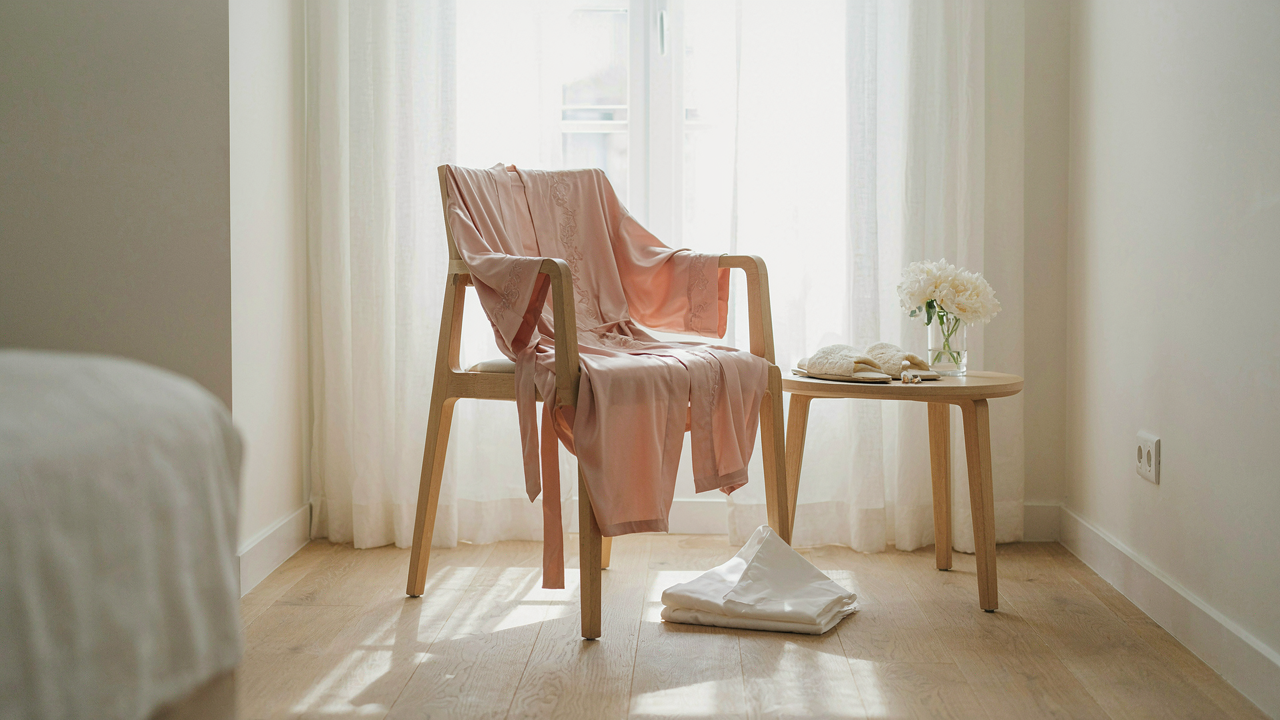
You’re worried that a cheap robe will broadcast that you cut corners. Here’s the mechanism: the camera captures fabric behavior, not the invoice price. Silk moves differently than polyester under light. Cotton wrinkles faster than a blend. But the price point itself is invisible to the lens. What matters is how the material performs in the specific frame your photographer is shooting. A 200-dollar robe that drapes poorly reads as cheap. A 40-dollar robe with the right weight and hand reads as intentional.
The disconnect happens because you’re buying based on brand positioning and margin markup, not fabric engineering. High-end bridal robes profit from status association, not superior construction for getting-ready shots. Many luxury robes use the same base fabrics as mid-range options but charge triple because the label carries weight at weddings. The camera doesn’t see the label. It sees wrinkles, shine, how the material catches light, and whether it stays in frame position without constant adjustment during a 30-minute shot sequence.
The Angle Problem Most Overlook
Photography operates on framing, not presence. Your photographer will shoot getting-ready moments from three angles: overhead detail work, medium shots of your face and shoulders, and full-length mirror or standing shots. The robe’s visibility changes completely across these angles. An expensive silk robe that costs 300 dollars photographs identically to a 60-dollar satin alternative when the camera is tight on your face. But when the shot widens to show the robe’s full length, construction quality and fabric weight become the deciding factor.
The mistake is treating the robe as a standalone garment instead of a prop within a frame. Professional photographers know this: they’re not capturing your robe, they’re capturing the moment the robe occupies. An affordable robe in a well-lit frame with clean composition outperforms an expensive robe shot at a bad angle with poor contrast. The robe’s job is to stay out of the way while the light and composition do the heavy lifting. Choose based on how it holds position and reflects light in the specific shots your photographer plans to take.
The “Visual Economy” Protocol: Maximizing Impact With Affordable Bridal Robe Ideas
Aesthetics Over Price Tag
You want the photos to suggest you spent more than you did. That’s the real lever here. Visual economy borrows from design thinking: the principle that constraint forces hierarchy. With an affordable robe, you cannot compete on material cost. You compete on intentional composition. This means every element in the frame earns its place or disappears. A ten-dollar robe styled with precision reads richer than a five-hundred-dollar robe styled carelessly.
The mistake most people make is treating the robe as the centerpiece. It isn’t. The robe is a base layer. Everything around it—lighting, background, adjacent objects, the photographer’s angle—determines whether viewers perceive value or see a budget choice. Neutral robes in blush, champagne, or ivory actually perform better in photos than ornate ones because they don’t compete with your face, the flowers, or the morning light. Simplicity forces the viewer’s eye where you want it.
Props As Framing Devices
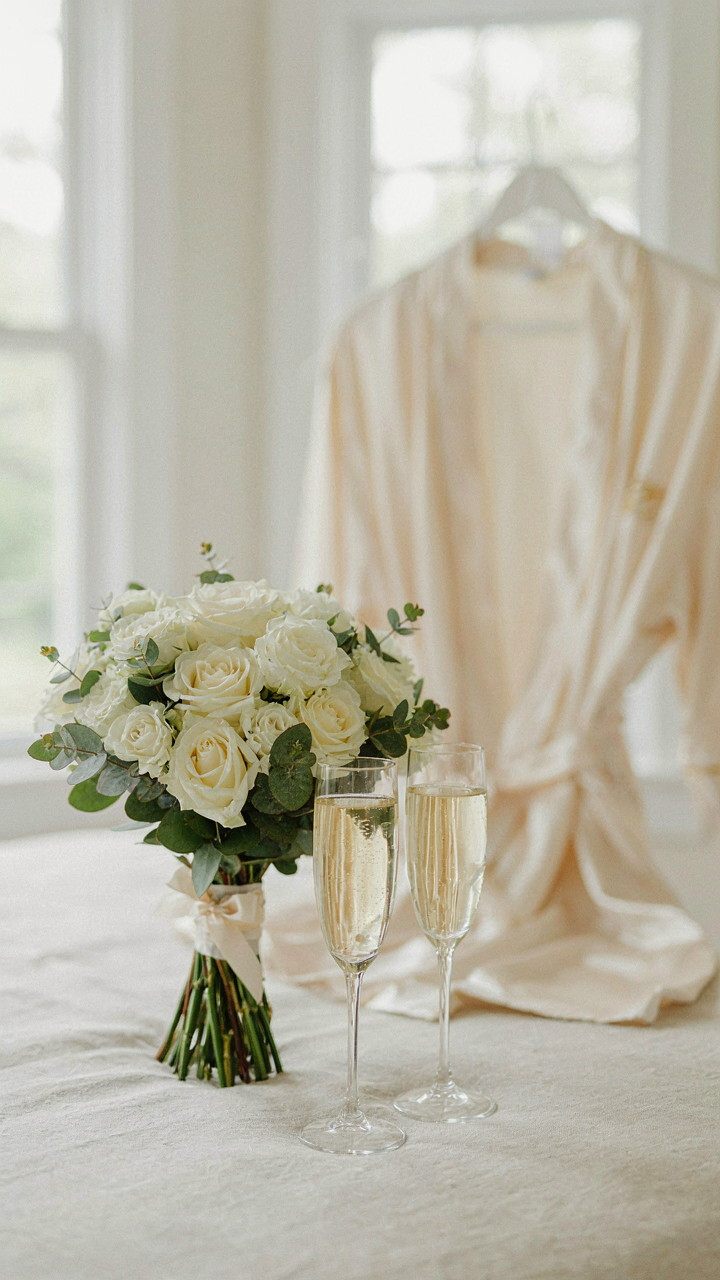
Accessories don’t decorate getting ready photos. They redirect attention and create visual weight. A cup of coffee held in frame, silk slippers on the bed, a pearl necklace draped over the robe, a clutch positioned at the edge of the shot—these are tactical placements, not decorations. They fragment the composition so the eye doesn’t land solely on the robe. Budget robes benefit most from strategic framing because prop placement can neutralize the visual impact of lower-cost fabrics.
The photographer’s job is to shoot angles where props occupy the foreground or midground while the robe fills the background softly. A bridal robe positioned behind a champagne glass or a bouquet loses visual scrutiny. The viewer absorbs the total scene, not a close inspection of the fabric weave. This is why getting ready photos from expensive brands work: they’re not showcasing the robe alone. They’re building a narrative where the robe is one element in a staged economy of objects.
Beyond White Bridal Robe: Unconventional Colors, Unforgettable Photos
When Tradition Becomes A Liability
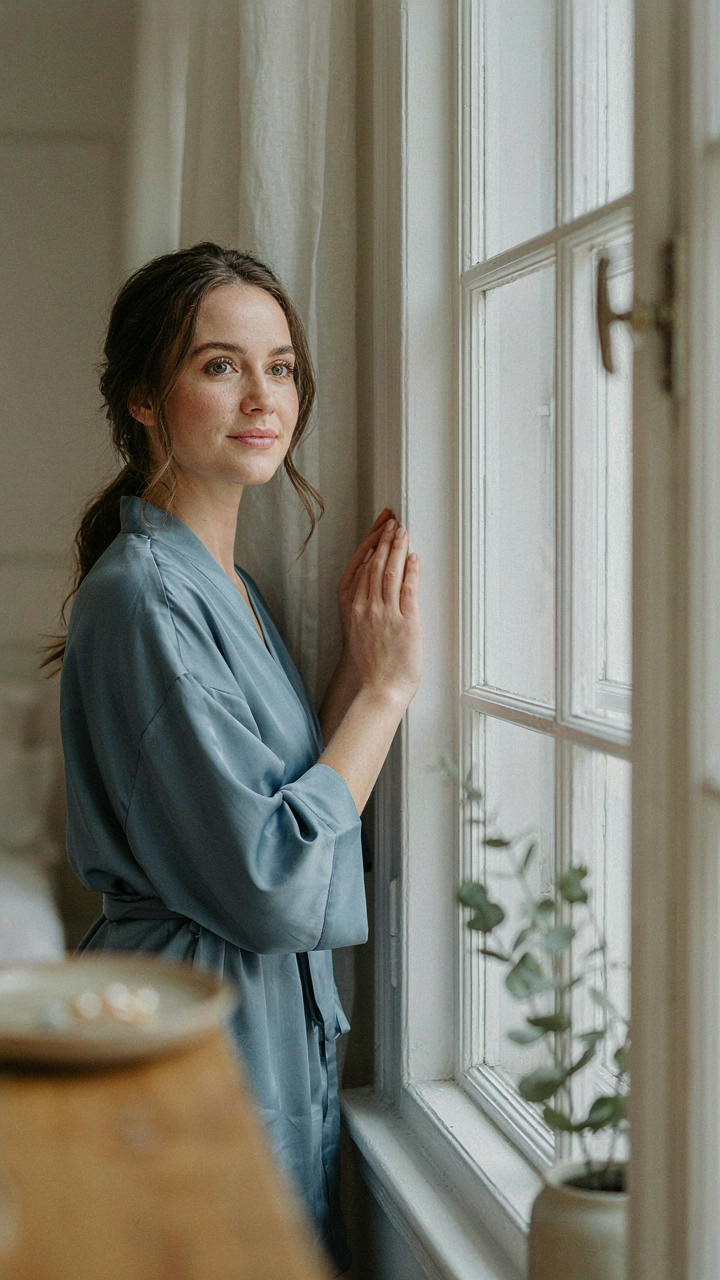
You want the getting ready photos to look different because you’re afraid they’ll blend into the thousand other weddings documented this year. The mechanism is simple: color creates contrast in photographs, and contrast is what makes an image stop scrolling. White robes flatten into white walls, white bedding, and white light. Colored robes create visual separation. This isn’t aesthetic preference. It’s physics applied to getting ready photography.

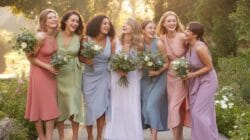
The shift away from white robes isn’t new. Fashion moved past monochrome bridal wear decades ago. Blush, champagne, and gray robes became standard because photographers and brides realized neutral tones looked better on camera than stark white under natural light. Going further into actual color—dusty blue, sage, charcoal, even black—follows the same logic but with stronger results. The robe becomes the anchor point of the frame instead of disappearing into the background.
Mood Determines Every Other Decision
Once you pick a color, it determines what works in your photos and what doesn’t. This isn’t subjective taste. A deep burgundy robe demands warm lighting and rich tones in the surrounding space. A pale blue robe needs cooler light and minimal competing colors. The color you choose creates constraints that actually simplify decision-making instead of expanding it.
Match the robe color to the emotional tone of your getting ready sequence, not to your wedding dress or wedding colors. If your photos should feel intimate and moody, pick deeper tones. If they should feel light and energetic, pick soft midtones. This alignment happens before you book your photographer or plan the getting ready location. The robe color is your first move. Everything else follows from it.
The “Morning Wedding” Myth: How ‘Bride Getting Ready’ Starts Before Dawn
The Window Nobody Talks About
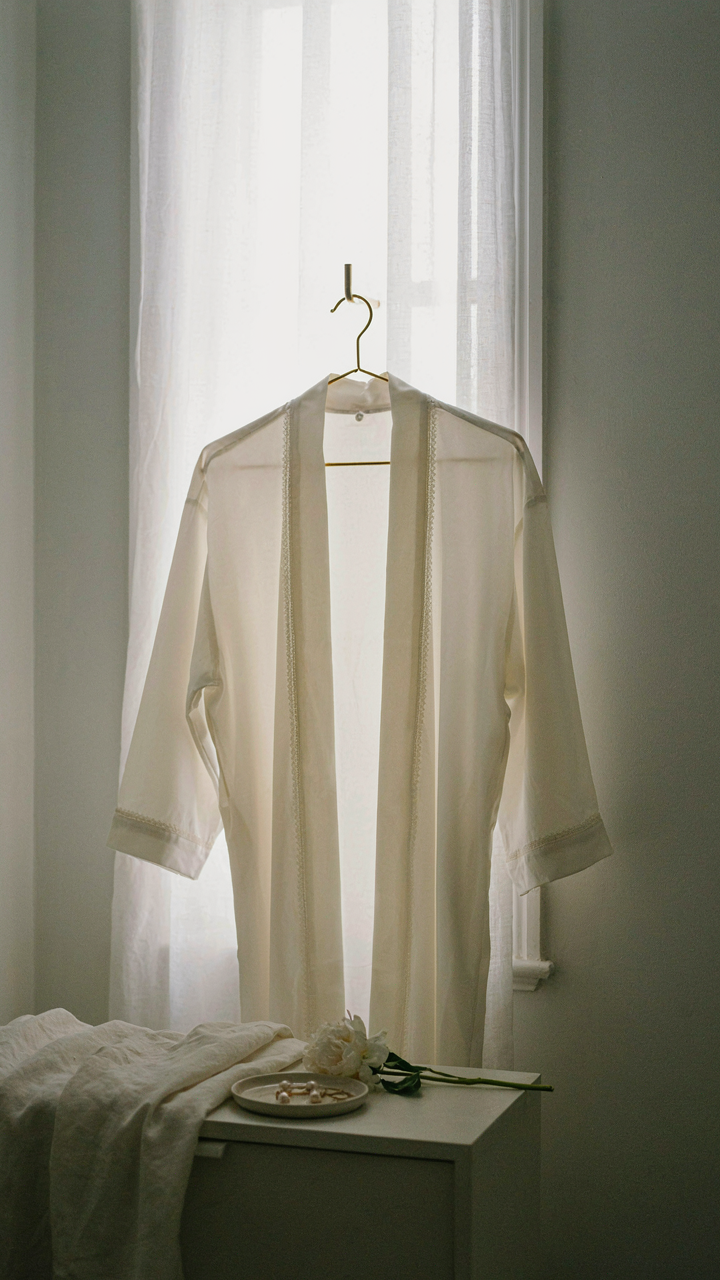
You want getting-ready photos that don’t look like everyone else’s because you’re afraid your robe choice will read as cheap in the final images. Here’s the mechanism: light quality changes every fifteen minutes before sunrise, and most photographers don’t start shooting until 7 AM when the sun is already too high and harsh. Pre-dawn prep means you’re working during the golden hour’s lesser-known cousin—soft, directional, forgiving light that makes any affordable robe look intentional instead of budget-conscious.
The getting-ready session typically runs 90 to 120 minutes. If your ceremony starts at 11 AM, most planners schedule hair and makeup to finish by 10:15 AM, leaving a compressed window for photos. Start at 6 AM instead, and you’ve captured forty minutes of premium light before the sun breaks the horizon. Your photographer gets actual depth and dimension in the fabric. An affordable polyester blend suddenly reads as deliberate minimalism under pre-dawn light, not as compromise.
Controlling What The Camera Actually Sees
Light behaves like a tool in cinematography—you choose its angle, intensity, and color temperature to shape how viewers perceive an object. In bridal robe selection, pre-dawn and early-morning light acts as your primary filter, determining whether texture reads as luxury or synthetic. Harsh midday sun exposes every flaw in cheaper fabrics. Soft, angled morning light obscures texture variation and creates intentional shadow play that feels editorial rather than documentary.
The robe’s color matters more under these conditions than the fabric’s actual quality. Cream, ivory, and dusty rose photograph cleaner in warm pre-dawn tones because the light itself adds richness. Darker robes risk looking flat. Lighter robes with simple silhouettes become the visual anchor in frame while the background glows. Schedule your getting-ready session start time with your photographer first, then choose your robe based on that light window, not the other way around.
Fabric Selection As A Force Multiplier: Applying Material Science To Bridal Robes
Heat Retention And Movement Quality
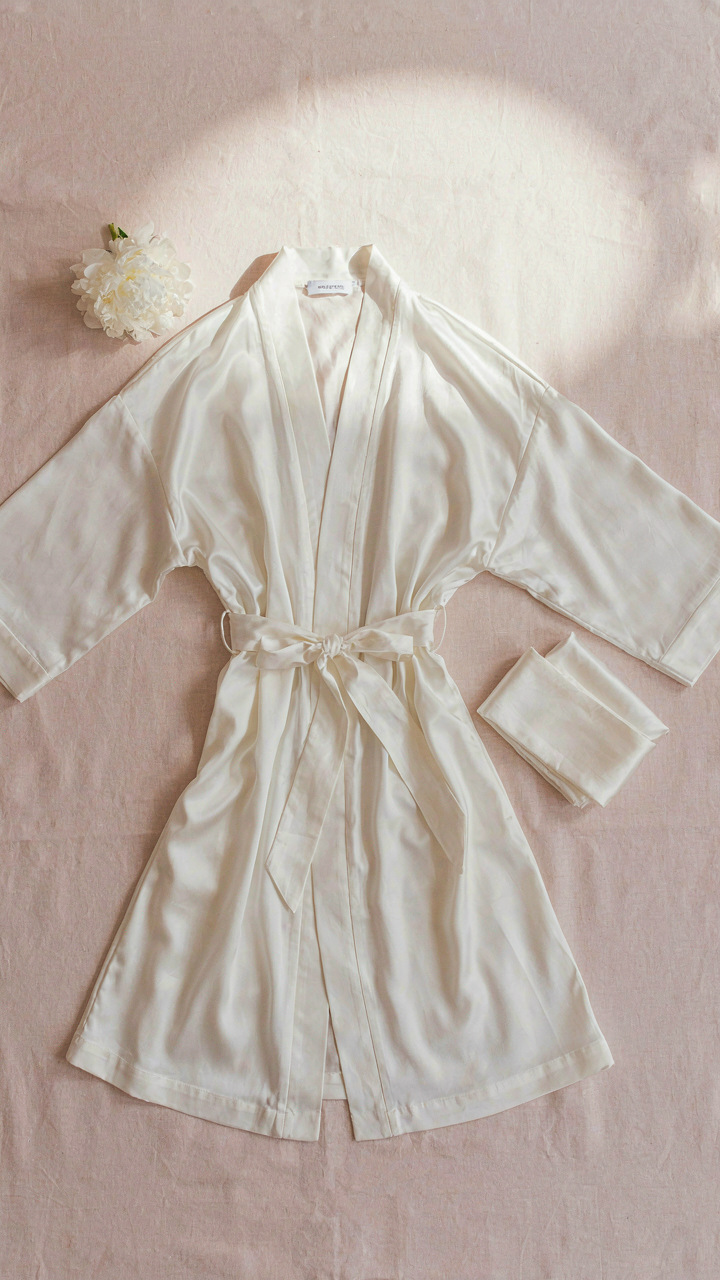
You want to look calm in photos, not panicked. That requires a robe that doesn’t trap heat or restrict movement, because discomfort reads on camera before you notice it consciously. Thermal dynamics from physics governs this: fabric density, fiber type, and weave structure determine how fast heat escapes your body and how freely the material moves with you.
Polyester blends and cotton-poly mixes dominate affordable robes because they regulate temperature better than pure silk or pure cotton alone. Polyester wicks moisture away from skin. Cotton breathes but absorbs sweat and holds it. A 65/35 or 80/20 polyester-cotton blend does both jobs. Avoid heavy velour or terrycloth for getting-ready photos unless the room is cold. The robe will cling to sweat patterns and bunch awkwardly during movement, killing the aesthetic you paid for.
How Light Actually Behaves On Fabric
This is where most bridal shopping advice fails: people choose robes by color alone and ignore how different weaves scatter light. Optics matters. Matte fabrics scatter light diffusely, making them forgiving in photos because they hide texture and skin tone variations. Satin and silk charmeuse reflect light directionally, which creates shine and contrast that photographs sharp but requires perfect lighting angles to avoid looking cheap or washed out.
For getting-ready photos shot indoors with standard lighting, matte crepe or matte satin performs better than glossy satin because it reads as intentional rather than reflective. Linen and linen blends offer natural texture that photographs well but wrinkle aggressively unless steamed right before photos. Cotton sateen splits the difference: enough sheen to look intentional, matte enough to hide imperfections. Check the robe in your actual lighting before committing. One test photo under your bedroom light reveals more than a hundred pixels on an e-commerce site.
The ‘Bridal Pajamas’ Revolution: Comfort, Style, And Photo Readiness
Pajama Sets: An Underrated Alternative
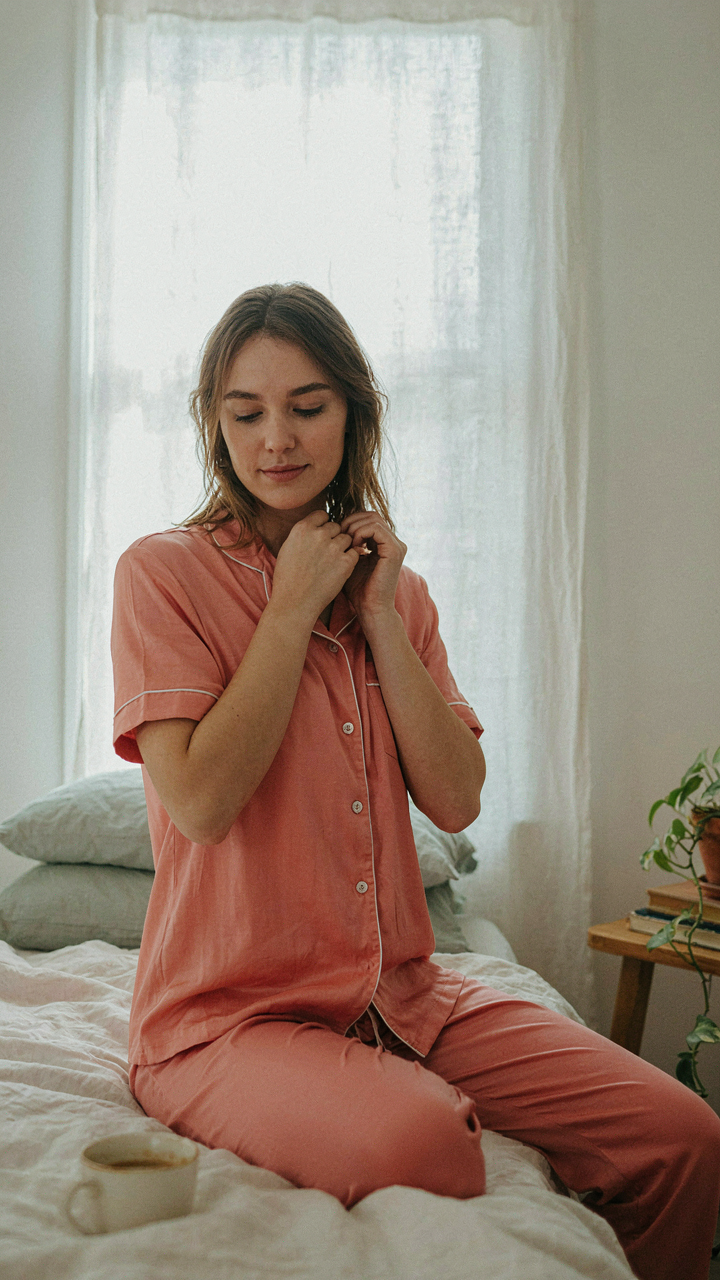
You want to look expensive without spending money. That’s the real calculation here. The mechanism most people miss is that pajama sets already solve the core problem: they’re designed to photograph well because they’re worn in intimate settings where lighting is controlled and posture matters. A quality pajama set costs 30 to 60 dollars and delivers the same silhouette as a 200-dollar robe.
Pajama sets work because they feature structured fabrics like cotton blends or lightweight silk that hold shape in photos. The button front creates clean lines. Contrast piping adds visual interest without extra cost. You’re not buying sleepwear; you’re buying a garment category engineered for close-range photography. Department stores stock these year-round, meaning zero hunt time and immediate availability.
Posing Advantages When Comfort Comes First
The physics term is “baseline cognitive load.” Lower your physical discomfort and your brain allocates more processing power to posture, expression, and presence. A stiff, restrictive robe forces shallow breathing and defensive body language. A soft pajama set lets you sit naturally, lean toward the makeup artist, and hold genuine expressions for the full duration of getting-ready shots.
- Sitting stability: Structured waistbands keep fabric from bunching when you settle into chairs, creating clean lines across your torso in every frame.
- Arm mobility: Traditional robes restrict shoulder movement; pajama tops allow natural gestures and camera-ready hand placement without visible strain.
- Neckline clarity: Collar designs on pajama sets frame the face and neck in ways that flatter close-up photography without appearing stiff or formal.
- Button accessibility: Front closures let you open the top partially for shoulder and collarbone shots, then button back up without disrupting your hair or makeup.
- Fabric drape: Cotton-blend pajama sets create soft, intentional folds that catch light better than thin silks, adding dimension to static poses.
The real advantage isn’t comfort for its own sake. When your body isn’t fighting the garment, your photographer captures transitions naturally. You move between poses instead of repositioning stiffly. That movement reads as confidence and relaxation in the final images.
Borrowed Magnificence: Leveraging Context For High Value Wedding Robe Photos
The Room Does Half The Work
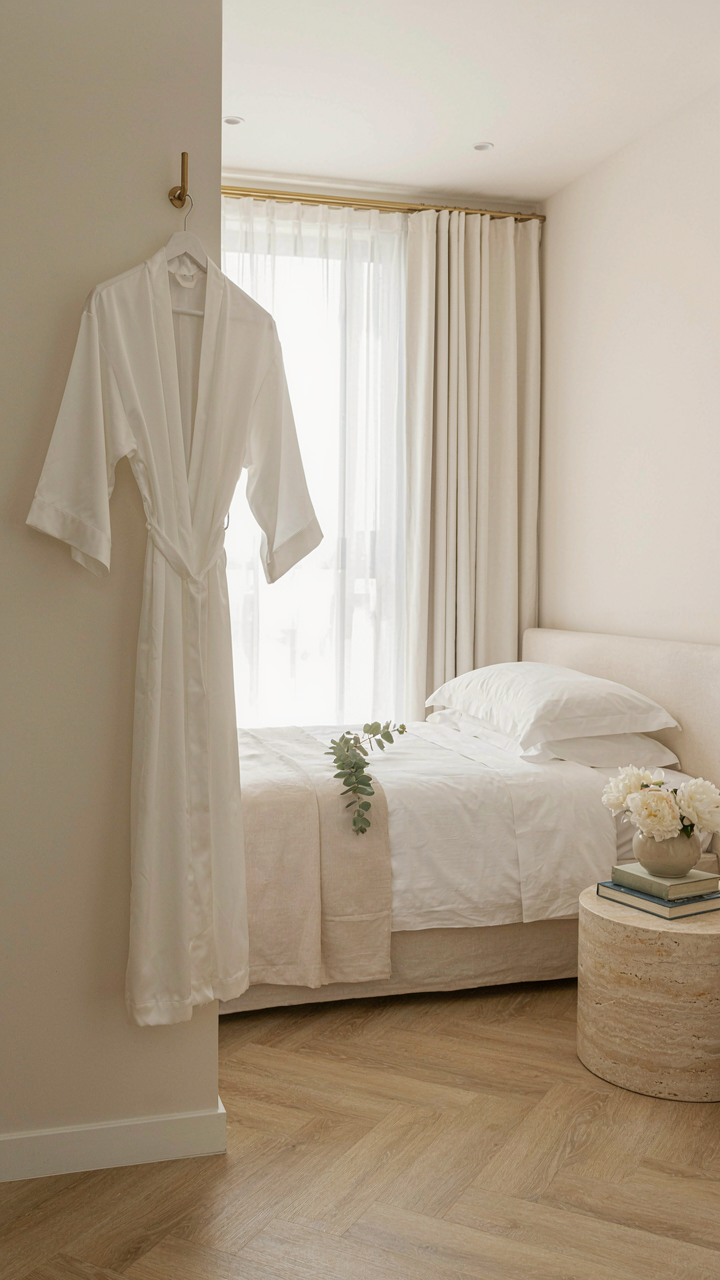
You want the robe to look expensive without paying for expensive. That’s the real goal here. Environmental psychology proves this: observers attribute quality to subjects based on surroundings before they evaluate the object itself. A fifteen dollar robe in a hotel suite reads differently than the same robe in a cluttered bedroom. The context generates perceived value instantly. Most getting ready advice ignores this because it focuses on the robe alone instead of the system.

The mechanism is simple. Your eye lands on the frame first, then the subject. If the background signals care and intention, your brain assumes the foreground matches. Soft morning light from a window, neutral walls, minimal competing objects, a clean floor. These cost nothing. They create the visual weight that makes an affordable robe photograph like a luxury garment. Shoot near windows. Avoid patterned wallpaper and visible clutter. Frame tight enough that your robe dominates the photograph.
Less Surfaces Hold More Attention
Minimalist staging is not empty rooms and sad vibes. It’s deliberate removal of everything that competes with your robe. Every object in frame either enhances the garment or weakens it. There is no neutral middle. A busy dresser, a pile of shoes, hanging clothes in the background, an unmade bed. These fragments pull focus and signal chaos. Your brain processes them as noise even if you don’t consciously see them.
Arrange one small detail only. A coffee cup on the nightstand. A single piece of jewelry on a clean surface. A subtle prop that belongs in a getting ready moment. Everything else disappears. The robe becomes the primary information your eye processes. Shoot from angles that show the robe and one element of context. Crop tightly. The background should feel intentional, not forgotten.
Beyond The Robe: Orchestrating The Entire Bride Robe Narrative
Hair And Makeup Integration Seamless Flow
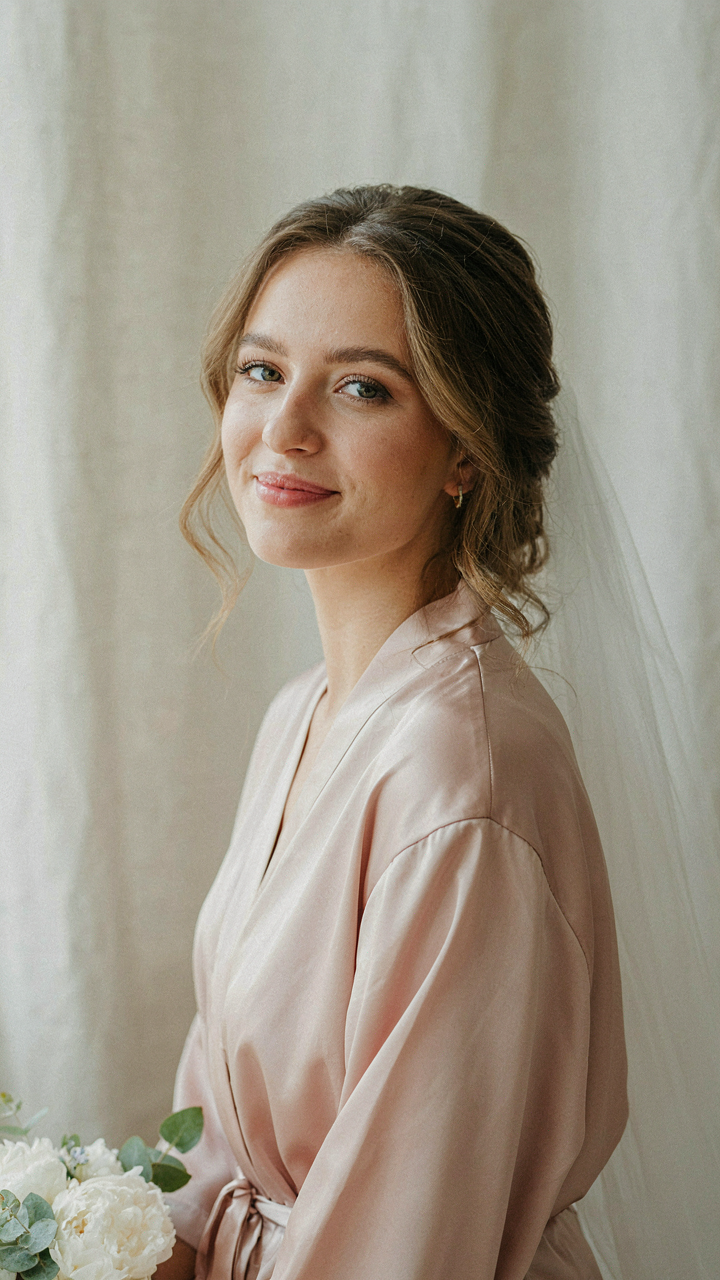
You’re worried the robe won’t matter if your hair looks flat or your makeup photographs poorly. Here’s what actually happens: the robe becomes the visual anchor that either compounds or cancels out every other choice in the frame. Think of it like signal-to-noise ratio in engineering. A cheap robe with intentional texture or sheen can redirect attention upward to your face. A premium robe in a flat fabric with mediocre hair becomes visual clutter. The robe isn’t separate from hair and makeup. It’s the baseline contrast they sit against.
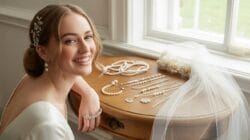
Schedule hair and makeup timing around the robe’s weight and neckline. A lightweight satin robe photographs better after makeup is set because it won’t trap heat and cause shine. A heavier cotton blend gives you buffer time because it sits away from your face and neck. The photographer should see your robe during the makeup trial. The makeup artist should know the robe’s color temperature before starting. This prevents the common mistake of warm peachy tones clashing with a cool-toned affordable robe. Coordination isn’t optional if you want the robe to serve its actual purpose in the frame.
Emotional Authenticity Unfiltered Moments
The common advice here is to “be yourself” and “let genuine moments happen.” That’s useless. Genuine moments don’t just happen when a camera is pointed at you and you’re wearing something you’ve never worn before. What actually works is removing the friction between what you feel and what the camera sees. Most affordable robes feel stiff the first time you wear them. Synthetic fabrics don’t move like your body expects. The robe reads as costume in your posture before the photographer even clicks. Wear your robe for at least an hour before the shoot. Sit in it. Move in it. Let your nervous system calibrate.
The second layer is knowing what emotion the photographer is actually hunting for. They’re not capturing “happiness.” They’re capturing the microsecond when you stop performing and your face goes neutral, then softens. That’s where authenticity lives. An affordable robe in a style that feels like you, worn until it’s comfortable, creates the conditions for that shift. Your body language changes. Your face settles. The robe disappears from your awareness and becomes part of you instead of an accessory you’re managing. This is when getting ready photos shift from documentation to narrative.
The Real Obstacle Isn’t Your Budget; It’s Your Inability To See Beyond Marketing And Manipulate Perception Itself
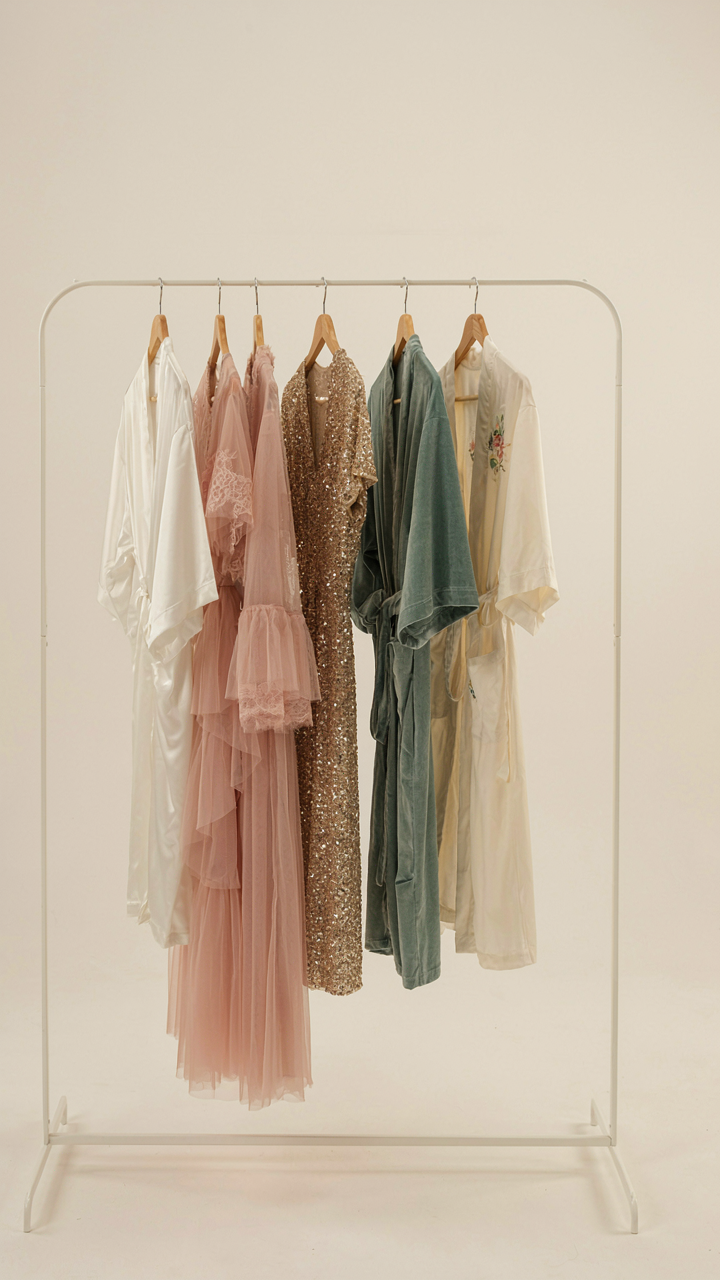
You don’t need a five hundred dollar robe. You need to stop believing that price equals quality in your photos. Bridal brands built an entire industry on making you feel poor. A silk robe from a thrift store photographs identical to designer garbage. Today, stop scrolling designer sites and hit up Etsy or local vintage shops instead. Find three robes under fifty dollars, buy them, and shoot test photos. Your eye will shift. You’ll stop chasing logos and start chasing light. The robe that makes you look rich isn’t expensive; it’s the one that makes you forget you’re wearing one at all.