The “Budget” Myth: Why Your Savings Are An Illusion
Where The Real Costs Hide
You want to feel smart about your money. That’s why you’re here looking for budget tips instead of just dropping three grand on a dress. But here’s what nobody says plainly: most brides spend more on a dress they tried to save on than they would have spent buying right the first time. The mechanism is simple economics applied to emotional purchases. You set a number, find a dress below it, feel relief, then spend the savings on alterations, rush fees, fixes for poor fabric quality, and a replacement dress because the first one didn’t work. The budget wasn’t the problem. The decision-making process was.
Hidden costs compound because brides optimize for the wrong variable. You’re looking at the price tag when you should be looking at total cost of ownership. A 300 dollar dress that needs 400 dollars in alterations because the seams are cheap and the fit is off costs more than a 500 dollar dress that fits well and needs minimal work. Most brides never track the second number, so they repeat the cycle. They think they saved money because they compare only the initial purchase price.
Affordable Isn’t The Same As Value
The word “affordable” is marketing noise. It doesn’t mean what you think it means. Affordable means the price doesn’t shock you when you see it. Value means you get utility and durability relative to what you paid. These almost never align in budget wedding dress shopping. A dress marketed as affordable might use polyester blends that won’t hold shape, seams that pucker under tension, or construction shortcuts that show up the moment a tailor touches it. You’re not getting a deal. You’re getting a dress that costs less upfront and more overall.
The real distinction comes down to fabric and construction standards. Mass produced dresses built for volume prioritize hitting a price point over material quality. A 400 dollar dress from a bridal chain might use the same generic satin as a 150 dollar dress from a fast fashion retailer, just cut better and lined properly. You’re paying for fit templates and basic tailoring, not better materials. Value happens when you find a dress within your budget where the construction quality matches or exceeds the price. That requires inspecting seams, testing fabric recovery, checking lining integrity, and understanding which shortcuts matter and which don’t. Start by examining five dresses in person in the same price range and comparing construction details directly, not descriptions.
The Strategic Sourcing Protocol: Beyond The Bridal Boutique
Where Else To Actually Buy
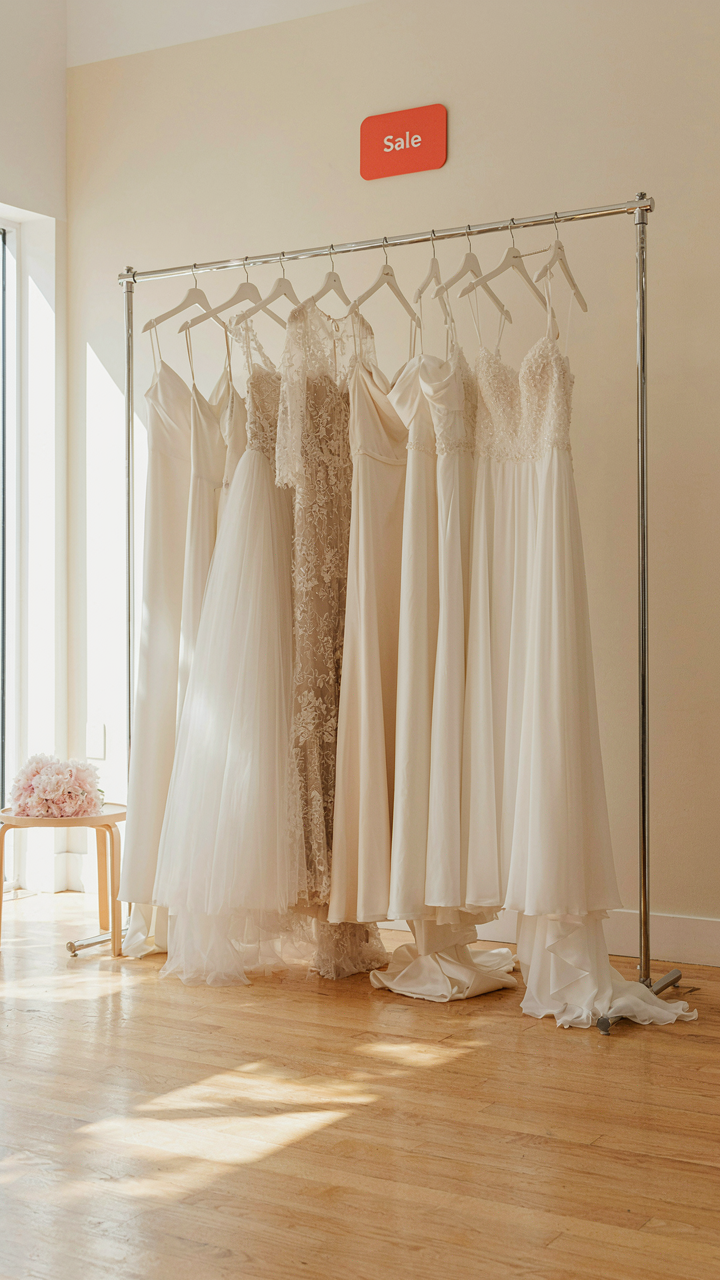
You want permission to skip the boutique without feeling like you’re settling. That’s the real tension here. The mechanism is simple: bridal boutiques mark up 100 to 200 percent because they bundle fitting services, exclusivity, and emotional labor into the price. You pay for the experience, not the dress. That overhead vanishes elsewhere.
- Consignment shops: Resold dresses from real weddings, typically marked 40 to 60 percent below retail. Inventory rotates constantly, so timing matters more than selection.
- Sample sales: Designers and retailers liquidate floor samples and showroom inventory multiple times yearly. Dresses are unworn but may show minor imperfections or have limited size runs.
- Online retailers: No showroom overhead means 30 to 50 percent lower prices than boutiques. Return policies vary wildly, so read them before ordering.
- Trunk shows: Designers hold limited-time events where you order directly at lower prices than boutique markup, though lead times stretch eight to twelve weeks.
- Wedding dress rental services: Wear once, return it. Eliminates storage costs and upfront capital for dresses you’ll never wear again.

Each channel trades something for the savings. Consignment requires flexibility on color and size. Online removes the fitting room. Rental eliminates ownership. The trade-off is the price lever. Know what you’re sacrificing before you commit to the savings.
Buying Season Determines Your Negotiating Position
Bridal retail operates on seasonal demand curves borrowed from economics. When supply exceeds demand, your bargaining power spikes. The mechanism: inventory carrying costs force retailers to clear stock, and they’d rather move volume at a discount than pay to warehouse it.
Off-season buying is December through February. Most brides shop in spring and summer. Boutiques have overstock, sample sales run frequently, and consignment dresses pile up from holiday returns. Sales staff have time to work with you instead of rushing between appointments. You move from a scarcity mindset to a surplus one. The dress doesn’t disappear if you don’t buy it today. That psychological flip is where the real leverage lives. Book consultations in January, not June.
What To Take Wedding Dress Shopping: Your Non Negotiable Kit

Undergarments And Shoes Change Everything
You’re worried you’ll look stupid in front of the consultant, so you show up unprepared and end up making decisions based on how the dress hangs on your body in the wrong context. The dress doesn’t fit your actual shape. Undergarments matter because they’re the baseline. Wear the bra and shapewear you plan to use on the wedding day, or bring them. Shoes create the silhouette’s foundation. The heel height shifts where hemlines land and how the dress drapes at your feet. A dress that looks right on flats will sit wrong on three-inch heels.

Most brides skip this step because it feels awkward. Don’t. Consultants expect it and work around it. Bring shoes close to your wedding height and a plain bra that matches your skin tone. If you’re unsure about shapewear, bring two options. The consultant will position you correctly only if your body’s actual structure is visible. Everything else compounds from this single decision.
Mental Clarity Comes Before The Mirrors
Decision-making works like an immune system: expose yourself to too many stimuli at once and your judgment collapses. A wedding dress shop floods you with options, mirrors, lighting, and opinions. Preparedness doesn’t prevent overwhelm. It prevents decision paralysis that disguises itself as indecision. When you arrive knowing your budget, your silhouette preferences, and your non-negotiables, you filter information instead of absorbing all of it.
Bring a one-page reference sheet with your dress code (formal, semiformal), preferred necklines, and sleeve options. Write down whether you want structured or fluid fabric. Show the consultant this sheet first. You’ve just eliminated 60 percent of the inventory from consideration. You’ll spend your energy evaluating the dresses that actually fit your constraints instead of cycling through 50 options that contradict each other. Your brain stays sharp enough to notice when something works.
Choosing A Wedding Dress Salon: Skip The Fairytale, Seek The Edge
What Sales Tactics Look Like When You See Them
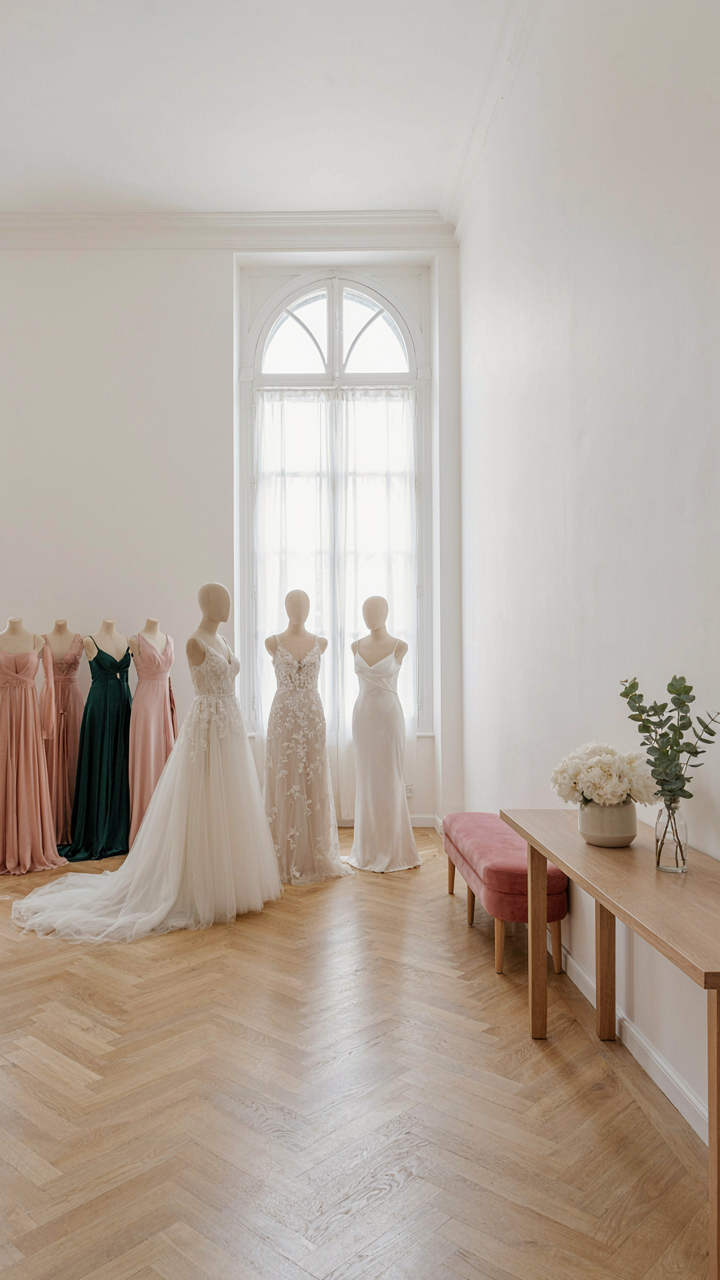
You’re afraid you’ll get taken advantage of because you don’t know the game yet. Here’s what actually happens: salons use scarcity and social proof to create artificial urgency. A consultant tells you only three appointments remain that month. Another mentions how many brides booked dresses this week. These aren’t accidents. They’re designed to bypass rational evaluation and push you toward fast decisions.
The mechanism is simple. When you feel rushed or see others moving ahead, your brain stops comparing prices and options. You anchor on the first number you hear, defend it emotionally, and buy. Real talk: salons that operate this way don’t need to. They’re banking on your uncertainty. Walk into a salon that explains pricing clearly, doesn’t mention other customers’ purchases, and never suggests your slot might disappear. That’s your baseline.
Reading Between The Lines On Review Platforms
Most brides treat Yelp like decoration. They read star ratings and skip the actual text. That’s the opposite of how market intelligence works. In economics, you look for signal versus noise. A two-star review that says “dress fit weird” is noise. A four-star review complaining about pressure to buy add-ons reveals the salon’s actual revenue model.
Search for specific phrases across reviews: “pushy,” “charged extra,” “fitting fees,” “rushed.” Patterns emerge faster than you think. Count how many reviewers mention the consultant’s name positively versus complaints about staff turnover. High turnover signals poor working conditions and inconsistent service. Look for reviews mentioning transparent pricing or surprise costs. A salon worth your time will have multiple reviews citing straightforward transactions.
What To Wear Wedding Dress Shopping: Dress For Success, Not Stress
Clothes That Actually Work For Changing
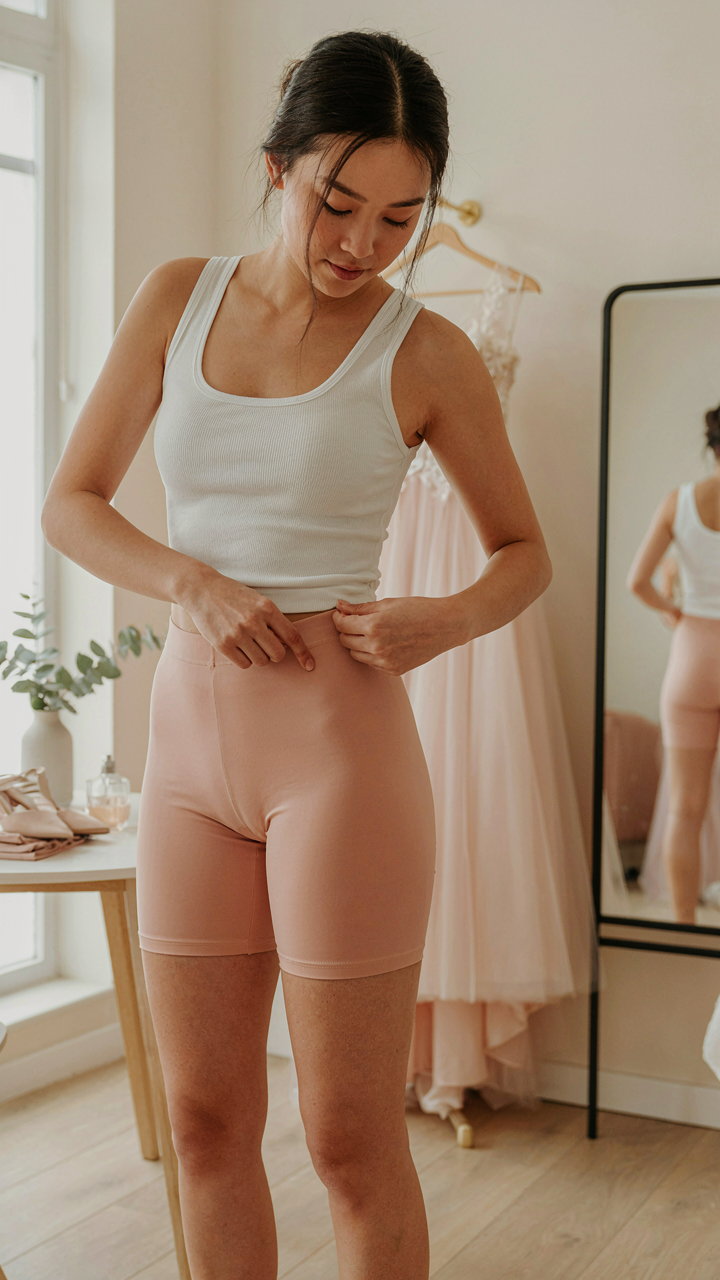
You think what you wear matters because you want to look put-together in front of the consultant. The real mechanism is time efficiency. Every second wasted fighting with your outfit is a second you’re not actually evaluating dresses. Wear slip-on shoes, not laced boots. Wear a seamless bra or strapless option that comes off in seconds, not a complicated clasp situation. Wear pants or a skirt with a zipper or elastic waist, not buttons or complex fastenings. Avoid patterns that compete with dress fabrics visually. You’re optimizing for rapid transitions, not impressions.

Most brides show up in jeans and a nice top. The problem: denim doesn’t drape like a slip layer, and structured fabrics create bulk under wedding gowns. Wear a thin, fitted tank or camisole you can strip fast. Bring nude or black bike shorts to wear under sheers or thigh-high slits if that’s on your list. The goal is zero friction between you and the fitting room. Every ten seconds you save on clothing changes compounds across a three-hour appointment.
Mental Clarity Beats Appearance Fatigue
Decision-making degrades under physical stress. Your body gets tired from standing, changing, and the sensory load of fabric and mirrors. Wear flat shoes with cushioning, not heels you’ll suffer in for hours. Wear layers you can shed because bridal boutiques run warm from the lights. The consultant might suggest heels to see how a dress moves, but show up in flats and change into a heel sample only for final evaluation. Your job is thinking clearly about which dress serves your life, not looking polished while your feet scream.
This is applied physiology: fatigue tanks judgment accuracy. Wear something breathable like cotton or a breathable blend, not synthetics that trap heat and sweat. Wear your hair up or in a way you can quickly tie back without frustration. You’re protecting your capacity to evaluate, not creating a aesthetic statement. The bride who dresses practically makes better decisions than the bride who dressed to impress the staff. That’s the only metric that matters.
The Law Of Diminishing Returns In Bridal Gown Shopping Ideas
Where Budget Dollars Stop Working
You’re hoping that seeing more dresses means a better decision. It doesn’t. Economics calls this the law of diminishing returns, and it applies directly to bridal shopping: each additional dress you try on yields less marginal value than the one before it. After dress five or six, your brain stops processing new information and starts recycling preferences you already know. You’re no longer evaluating. You’re just accumulating fatigue and second-guessing.

Most brides ignore this and shop until they’ve exhausted themselves, mistaking exhaustion for thoroughness. Set a hard cap on tries: five to seven dresses per appointment, maximum two appointments per venue. Your first clear yes matters more than your fifteenth maybe. Stop when you’ve found a strong contender, not when you’ve found everything. The decision sharpens when you know when to quit.
Every Yes Forecloses Another Option
Opportunity cost isn’t abstract here. Every dollar spent on fabric upgrades, custom alterations, or rush fees is a dollar you don’t spend on alterations at a better tailor, or a second dress option, or coverage for unexpected costs. Every hour trying on heavily beaded gowns is an hour you don’t spend understanding simpler silhouettes that might suit you better. Every “yes” to a sample sale dress is a “no” to waiting for a trunk show with more options in your size range.
The real constraint isn’t money alone. It’s time, mental energy, and decision-making capacity. Most budget brides spend these resources poorly by treating them as infinite. They are not. Decide what matters first: price, fit, customization speed, or designer name. Optimize for one primary metric, then build constraints around it. Everything else becomes a secondary consideration, not a competing priority.
Beyond The Gown: The True Cost Of Wedding Dress On A Budget
Alterations: The Hidden Budget Killer
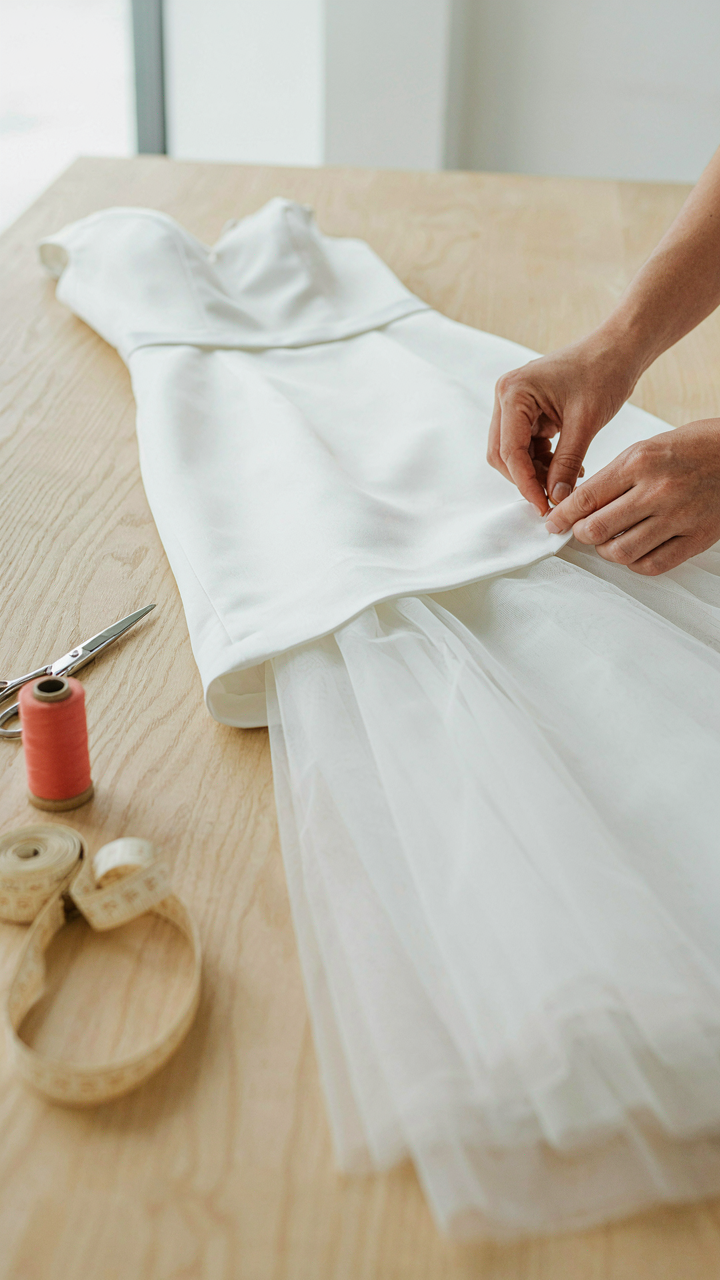
You’re terrified you’ll buy the wrong size and waste money. That fear is exactly why alterations destroy budget shoppers. Think of tailoring like compound interest in economics: small initial errors compound into exponential costs. A dress that fits poorly at purchase requires multiple alteration rounds, each one adding 15 to 30 percent onto your original spend.

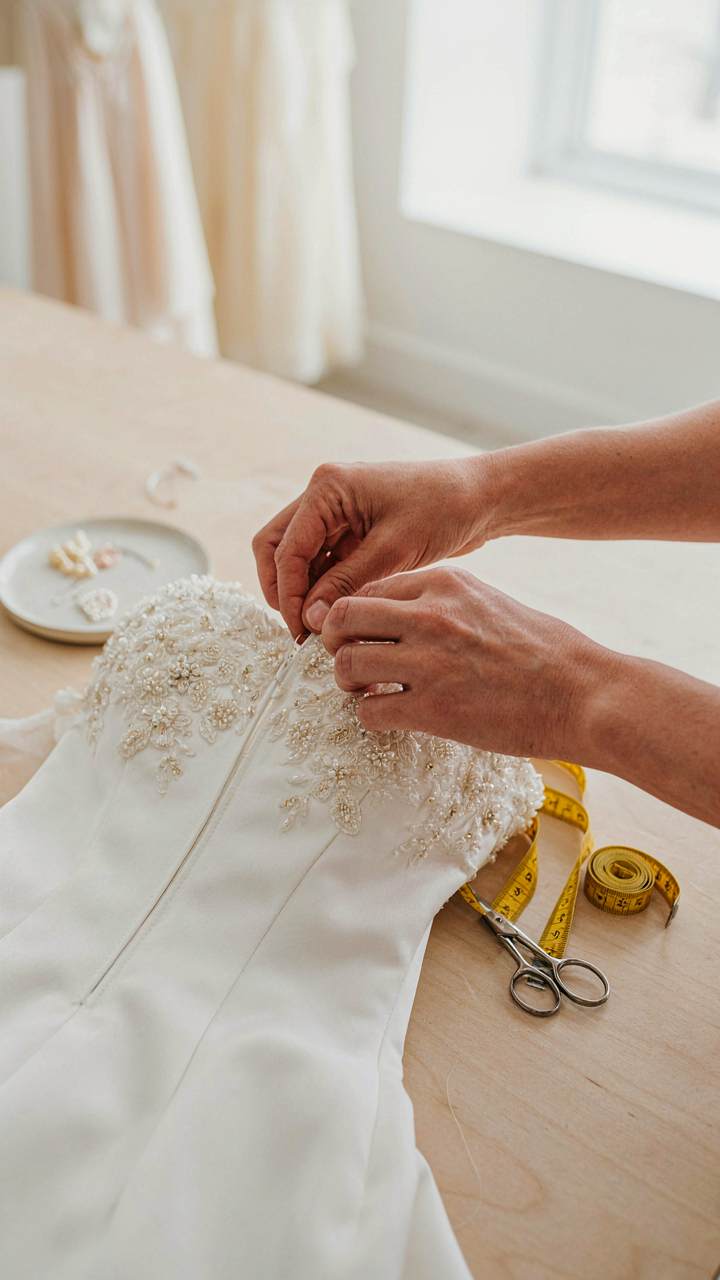
Most budget advice says “just buy your size.” That’s incomplete. The real mechanism is this: discount dresses have inconsistent sizing because manufacturers cut corners on quality control. A size 8 from one label fits nothing like a size 8 from another. You need to try on the actual dress you’re buying, not a sample. Alterations for a budget gown often run 200 to 400 dollars for standard adjustments like hemming, taking in seams, or adjusting straps. That’s 40 to 80 percent of what you paid for the dress itself.
Cleaning And Preservation: Long Term Value
The moment you walk down the aisle, your dress becomes a liability you didn’t budget for. Professional wedding dress cleaning costs 150 to 300 dollars, and preservation storage runs another 100 to 250 dollars if you want it done right. Most budget brides skip this entirely, which is the actual mistake. Sweat, champagne, and time destroy fabric in ways that look permanent but often aren’t if addressed fast.
Preservation isn’t about keeping a museum piece. It’s about stopping deterioration before it becomes irreversible. Stains set within 48 hours. Yellowing accelerates without proper storage environment. You have a 30-day window after the wedding to clean and preserve the dress or accept permanent damage. After that window closes, the dress is essentially worthless as a resale item and unwearable. Get professional cleaning done immediately, then store it in acid-free tissue and a dark, temperature-controlled space.
Wedding Dress Shopping: Your Inner Game
The Comparison Trap
You’re afraid you’ll miss the one dress that makes you special, and that fear is costing you money. This is scarcity thinking in economics—the belief that limited options force immediate action. Budget shopping requires the opposite: abundance mentality. You walk into ten shops and see one hundred dresses. That abundance kills the urgency that makes you overspend. The mechanism is simple. When you see many options at many price points, you stop treating each dress like your last chance.

Real budget discipline starts when you stop hunting for the perfect dress and start hunting for the acceptable dress at the right price. Most brides reverse this. They find the dress they love, then negotiate the budget around it. That’s backwards. Set the budget first. Then find the dress inside it. The price ceiling forces clarity. You eliminate shops, designers, and fabrications that don’t fit. You stop considering options that were never on the table.
What Your Gut Actually Knows
Ignore the advice to “listen to your instinct about the dress.” That’s vague and useless. Your gut isn’t magical. It’s pattern recognition built from your actual life and body. When you put on a dress and feel wrong, your nervous system has already measured fit, weight distribution, movement range, and alignment against what your body knows works. Your bridesmaids and mothers have zero access to that data. They’re voting on what they see in a mirror for three minutes, not what you’ll feel wearing it for eight hours.
The real move: trust your gut about comfort and movement, not about whether the dress “feels bridal.” Bridal is marketing. Comfort is logistics. When a dress fits your body, your movement, and your actual tolerance for structure or weight, you’ll wear it with less friction. You’ll spend less on alterations trying to force a dress into your shape. You’ll stop second-guessing at the fitting stage. One decision rule: if the dress doesn’t feel right in the shop, no alterations will fix it.
The Unseen Costs Of Saving On Your Wedding Dress

When Cheap Becomes Expensive
You’re reading this section because you’re terrified of wasting money on something you’ll wear once. That fear is the mechanism that blinds you to actual waste. Buyer’s remorse doesn’t happen because the dress costs too much. It happens because you chose based on price instead of fit, construction, and how you feel wearing it. A $300 dress that doesn’t fit your body or photographs well becomes the most expensive decision you made. A $1,200 dress that makes you move like yourself becomes invisible in retrospect.

The math people ignore is simple: a dress you hate costs infinitely more than a dress you love, regardless of the tag. Alterations, rushed tailoring, constant adjustments during the day, and the mental weight of regret add real cost. You’ll spend energy thinking about what you should have chosen instead of being present. That’s not an emotion. That’s operational inefficiency. The fix isn’t to spend more blanketly. It’s to spend strategically on the variables that actually matter to you, then hold the line everywhere else.
What You’re Really Investing In
The long-term emotional investment in a wedding dress isn’t sentimental nonsense. It’s about whether you’ll look at your photos in five years and feel the version of you that day, or cringe at a compromise you made to save $200. This distinction matters because your brain doesn’t distinguish between “I regret this choice” and “I regret who I was when I made it.” They’re neurologically identical. A dress becomes part of how you remember your own wedding. Cheap regret lingers longer than expensive satisfaction.
The protocol is ruthless: before you shop anywhere, write down the non-negotiables. Not the wants. The things that would make you feel like an imposter in the dress. Fit matters more than style. Photo quality matters more than in-person comfort. How you move matters more than how it looks on the hanger. Then price everything from that anchor point, not backward from a budget. The moment you choose the dress first and justify the cost second, you’ve already lost.
The Real Obstacle Isn’t Your Budget; It’s Your Perceived Lack Of Options
You walked in thinking you had three choices. You actually have thirty. The wedding industry wants you broke and grateful. Most brides never call a seamstress, never check sample sales, never ask designers directly about trunk shows. They assume the mall is their only move. Stop assuming. Pick up the phone today and ask one local seamstress what a custom dress costs. Your budget didn’t betray you. Your imagination did.