The Myth Of The Perfect Rainy Wedding Photos
What Everyone Tells You To Do
You want rain to disappear because you’re afraid the photos won’t look like the ones you’ve bookmarked. That’s the real fear underneath. The standard advice is clean: shoot indoors, use an umbrella, reschedule if possible. Move the couple away from the weather. Treat rain as a problem to solve, not a variable to manage. This framework comes from event logistics, not photography. In logistics, you eliminate variables. In photography, variables are your material.
Rain doesn’t ruin images. Poor positioning does. Most photographers chase the myth of perfect conditions instead of learning how weather changes light quality, contrast, and mood. They see rain as an obstruction rather than a light modifier. Couples end up with flat, safe images taken in back rooms because the backup plan itself became the primary plan. The real cost isn’t the weather. It’s the lost opportunity to create something the couple couldn’t have predicted or replicated indoors.
What Actually Happens When You Stay Outside
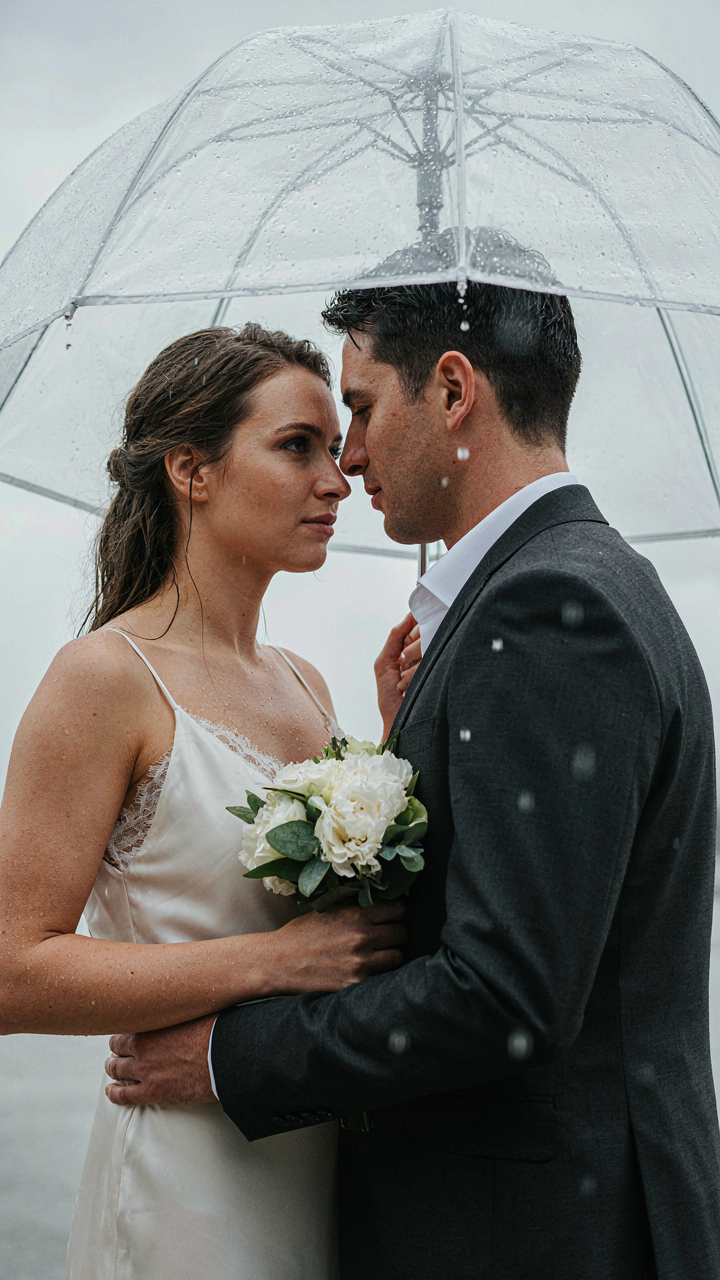
Overcast skies create diffused light that kills harsh shadows and produces skin tones that don’t need heavy editing. This is objective. Professional studio photographers spend hundreds on softboxes to replicate exactly what clouds do for free. Wet surfaces reflect this light, adding dimension that flat indoor backdrops cannot match. Rain changes texture. A couple under an umbrella in falling rain has drama. Candid moments happen because discomfort breaks performative behavior. People stop posing and start reacting.
Shooting in weather requires one protocol shift: expose for the highlights, meter off skin, and bracket your shots. Bring a second camera body in a weather-sealed bag. Position yourself so rain falls across the frame, not directly into your lens. The couple doesn’t need to be soaked. They need to be present in an environment that feels real. When you stop fighting the conditions and start using them, you generate images that couples cannot find anywhere else. Your backup plan becomes your competitive advantage.
Rainy Wedding: The Prepared Photographer’s Arsenal
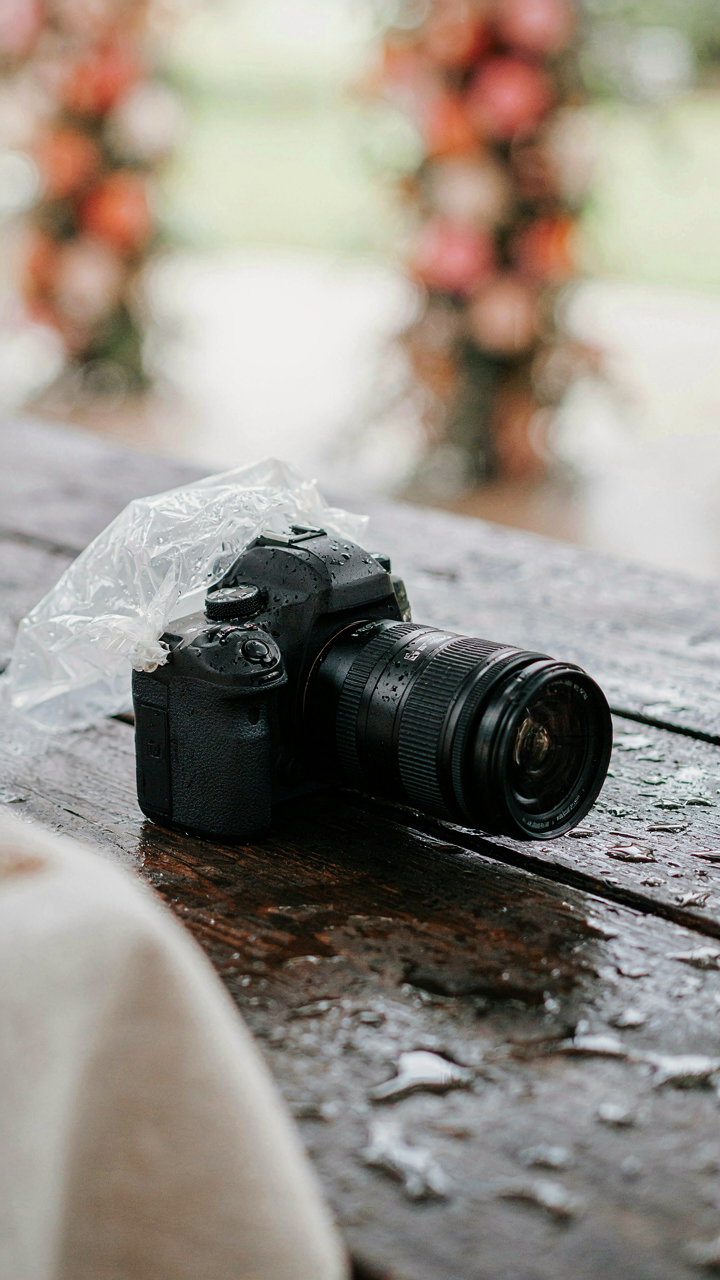
Sealed Gear For Wet Conditions
You’re worried rain will destroy expensive equipment and cost you the job. That fear is justified, but most photographers respond with paranoia instead of engineering. The real mechanism is simple: water finds gaps, not solid surfaces. Your job is eliminating those gaps before they exist.

A weather-sealed camera body doesn’t mean waterproof. It means the manufacturer sealed internal joints and ports against moisture intrusion. Canon and Nikon’s professional bodies have gaskets around the mirror chamber, viewfinder, and memory card door. Sony’s mirrorless systems seal the sensor chamber. This is your foundation. Pair this with a weather-sealed lens, not a budget kit lens with exposed screw holes. Your backup body should meet the same standard.
Rain sleeves and camera rain jackets are not luxury items. A rain sleeve costs thirty dollars and covers your entire body and lens. It’s a thin vinyl bag with an opening for the front element. The sleeve sits between you and the elements, not between the element and the rain. This is where most photographers fail. They assume the sleeve is the armor. It’s not. The sleeve is documentation that you’re thinking tactically. Your sealed camera inside the sleeve is the actual defense.
Working Light When The Sky Dies
Outdoor wedding photography depends on directional light, but clouds kill that source entirely. In optical physics, this is called diffusion, where light scatters uniformly instead of traveling in parallel rays. When clouds diffuse sunlight during rain, you lose modeling, shadow, and depth in your images. Most photographers respond by cranking ISO or slowing shutter speed. That’s not a solution. That’s damage control.
Bring a powerful off-camera flash system with a wireless trigger. Position it on a stand under an umbrella or reflector brolly to throw light back onto the couple from the side or above. This creates the directional light the clouds stole. The flash overpowers ambient light and compresses the dynamic range, which actually helps in overcast conditions. Set your camera to manual mode, ISO 400, and let the flash meter dictate your settings. Stop using aperture priority when weather gets complicated.
Reflectors are free directional light if your assistant knows how to angle them. A five-in-one reflector angled toward the bride’s face bounces ambient light and creates catch light in the eyes. During rain, this becomes mandatory, not optional. Position your assistant opposite your key light source to punch fill light across the couple’s faces. The gold reflector side adds warmth that white fill cannot match. This is not artistic preference. This is compensating for a light source the weather removed.

Continuous LED panels are underrated backup tools because they allow you to see what you’re doing in real time. They don’t have the power of flash, but they never miss. Set your shutter speed to 1/60th, drop your ISO to 800, and shoot aperture priority with one LED panel above the couple and one to the side. Your exposure preview shows exactly what you captured before the couple moves. This removes guessing during chaotic weather moments when you cannot afford reshoots.
The Adaptability Protocol For Rain Wedding Photos

Scout Indoor Spaces Before The Contract
You’re worried rain kills your wedding photos because you’ve seen backups that look like hostages were taken indoors. Here’s the mechanism: most photographers scout locations the week before or day-of, which means they’re working with whatever exists in panic mode. Borrow from military logistics—reconnaissance. You identify fallback positions before engagement begins. Walk every venue’s interior during daylight. Note light sources, ceiling height, background depth, and how natural windows function at different times.
This isn’t about finding a ballroom that matches your vision. It’s about documenting usable geometry. A plain hallway with a window becomes your fill light. A stairwell becomes depth. A brick wall becomes texture. Measure ceiling heights because cramped spaces crush posing options. Document which interior walls face north versus south to understand how light moves through the day if you’re forced indoors at 2 PM versus 5 PM.
Reframe Your Shot List For Weather Shifts
The standard advice says “have a plan B shot list ready.” That’s incomplete. Most photographers list the same shots twice and call one indoor. The real question is which moments genuinely lose value indoors and which ones you’re just romanticizing because you saw them on Instagram. Eliminate outdoor-dependent shots entirely if rain probability exceeds 40 percent. Don’t include “couple walking through meadow” then scramble indoors shooting the same pose against a wall.

Your core shots—first look, ceremony details, ring close-ups, family formals, first dance—don’t care about location. They care about light positioning and person positioning. Build your primary list around these. Your secondary list contains location-specific shots only if conditions allow them. The protocol: finalize the core list by the rehearsal, communicate it to the couple, then add outdoor bonus shots if weather holds. This removes decision friction when the sky breaks.
Rain Wedding: The Psychological Edge
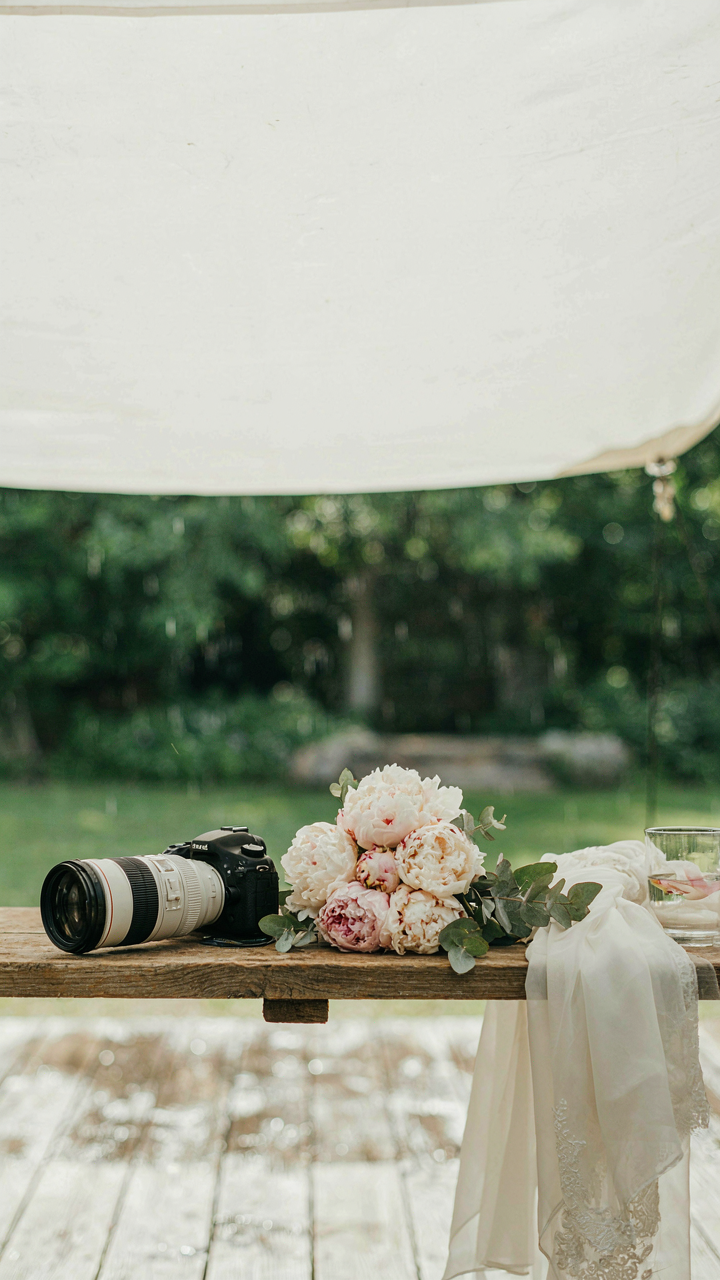
Tell Couples What Actually Happens
You’re reading this because you want to look competent to clients, not because you genuinely believe rain ruins weddings. The real mechanism is simple: couples fear the unknown more than they fear rain itself. Uncertainty kills confidence. Specificity kills fear. You don’t reassure by saying “we’ll figure it out.” You reassure by describing exactly what happens when water falls during their ceremony and portraits.
Show them the actual playbook before they ask. Tell them which covered locations you’ll use for ceremony backup. Name the specific timeframe for portraits if weather turns. Explain how you’ll shield the camera gear. Couples don’t need false confidence that rain won’t happen. They need the certainty that you’ve already mapped the response. That certainty transfers to their mood, which transfers directly into the images you capture.
The Operator’s Advantage
Rain creates constraint, and constraint forces clarity in how you work. Borrowing from military strategy, think of weather backup as “terrain advantage”—the photographer who controls the space during adverse conditions wins the day while others panic. Most photographers treat rain as a problem that interrupts their process. You treat it as the process itself. This shifts everything.

A wet ceremony doesn’t slow you down if you already know your indoor focal points and angles. Bad light from cloud cover doesn’t waste your shooting time if you’ve pre-scouted how to position couples near windows or against darker backdrops for contrast. Rain wedding days produce the sharpest images because you move with intention, not improvisation. The edge isn’t in having a backup plan. It’s in moving before the rain arrives, not after.
Beyond The Umbrella: Creative Shots For Wedding Photos Rain
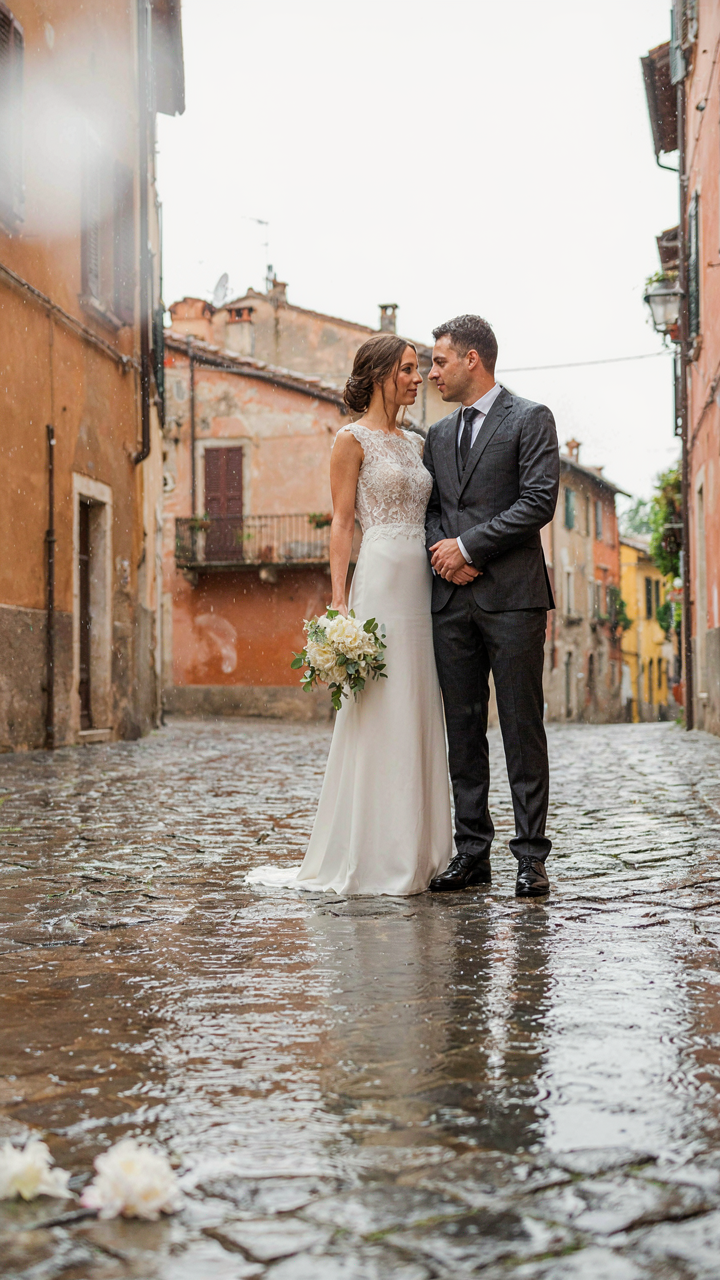
Puddles And Reflection Composition
You want rain to look intentional, not like your backup plan failed. The real mechanism here is optical physics: water creates a mirror surface that doubles your available light and adds depth layering that dry ground cannot match. Puddles aren’t obstacles to shoot around. They’re compositional elements you place the couple in front of or shoot through.
Position the bride and groom so a puddle reflects the sky, trees, or ceremony backdrop behind them. Shoot from a low angle that makes the reflection prominent in the frame. The reflection adds visual weight and draws the eye deeper into the image. This transforms weather from a liability into a visual asset that separates your work from standard sunny-day photography.
Motion Blur And Kinetic Drama
Rain photography borrowed a term from cinematography: frame rate. In still photography, fast-moving raindrops appear frozen only at shutter speeds above 1/500th of a second. Below that threshold, rain trails become visible streaks. The couple’s movement through rain, combined with visible precipitation, creates layered motion blur that static sunny photos cannot replicate.

Shoot at 1/250th to 1/400th of a second with the couple walking or dancing. Raindrops render as diagonal lines that guide the viewer’s eye toward the subjects. Increase your ISO and open your aperture to compensate for underexposure in overcast conditions. The protocol is simple: slower shutter speed, faster film speed, wider aperture, rain in motion, couple in motion, deliver images that look deliberate, not accidental.
Wedding Pictures Rain: The Insurance Policy Model
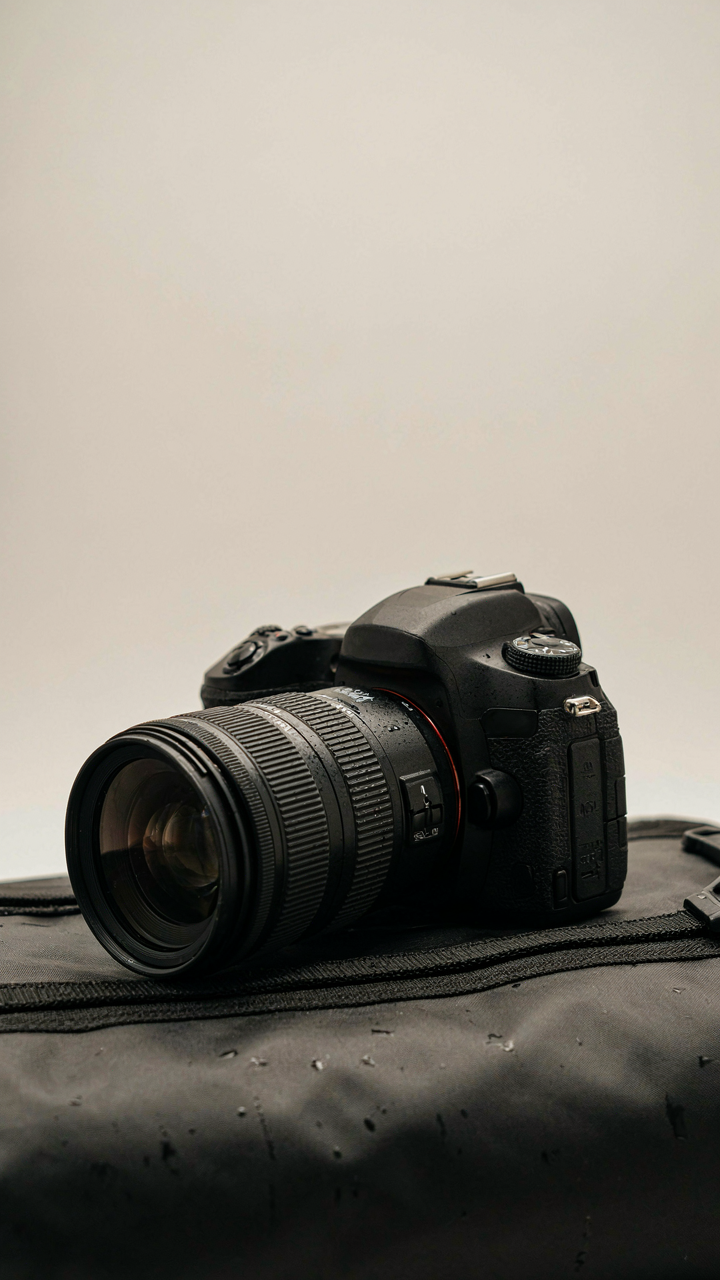
Backup Equipment Strategy
You’re really asking: what if I show up unprepared and look incompetent? That fear drives most photographers to either over-buy gear or skip redundancy entirely. Think like an insurance adjuster—you don’t insure against one loss, you insure against the specific failure modes that would end your business. For weather backup, that means redundancy at the failure points that matter.
Weather destroys three things on a shoot: your camera body stops working, your lens fogs or fails, or your storage fills up mid-event. Each requires different backup equipment because each has different failure rates and recovery times.
- Second camera body: Identical model to your primary. Sensor failure, shutter malfunction, or weather damage on one body means you keep shooting without switching lenses or losing time between frames.
- Backup lens for each focal length: Rain and condensation degrade optics. Carry a secondary 35mm or 50mm and a secondary 70-200mm so you’re never stranded without a working focal length if one lens fogs or fails.
- Extra memory cards: Carry three times the capacity you think you’ll need, stored separately. A corrupted card or weather-damaged card slot means you have backup cards in different pockets, not a ruined shoot.
- Weather-sealed gear only: Non-sealed bodies and lenses are liability in rain. Buy equipment with actual rubber seals and metal mounts, not marketing claims about splash resistance.
- Backup batteries and charger: Cold weather and constant shooting drain batteries faster. Pack four batteries minimum and a portable charger that works without grid power.
You test redundancy before the shoot, not during it. Mount your backup body one week before the event, shoot a full wedding scenario, and confirm autofocus, flash sync, and image quality match your primary rig. This reveals mechanical issues before they cost you a paying client.
Second Shooter Role In Bad Weather
Most backup shooter advice treats them as a second lens—shoot different angles, get more frames, look professional. That’s missing the mechanism. In weather, your second shooter becomes your technical insurance and your logistics handler. Their job is not to be an artist; their job is to prevent your primary shooter’s failure.

The second shooter carries identical backup equipment and positions themselves to catch moments your primary shooter misses due to weather disruption. When wind gusts make handheld shooting unstable or rain forces lens changes, your second shooter keeps the timeline moving with clean frames. They also monitor your primary shooter’s equipment in real time—watching for condensation buildup on lenses, flagging when batteries are low, and physically protecting cameras between shots.
During the ceremony, the second shooter shoots from the opposite side and prioritizes capturing footage your primary might miss if visibility or weather forces repositioning. At the reception, they handle the moments you can’t shoot solo in bad weather: simultaneous events in different rooms, or fast-moving moments that require two angles at once. They also own the backup power supply and keep it dry and accessible. If rain forces a venue shift mid-event, your second shooter scouts the new space while you keep shooting, then reports viable angles and lighting conditions immediately. This prevents the hour of lost coordination that kills most weather contingency plans.
Rainy Day Wedding Photos: Post Processing For Impact
Grading Mood Into Flat Rain Light
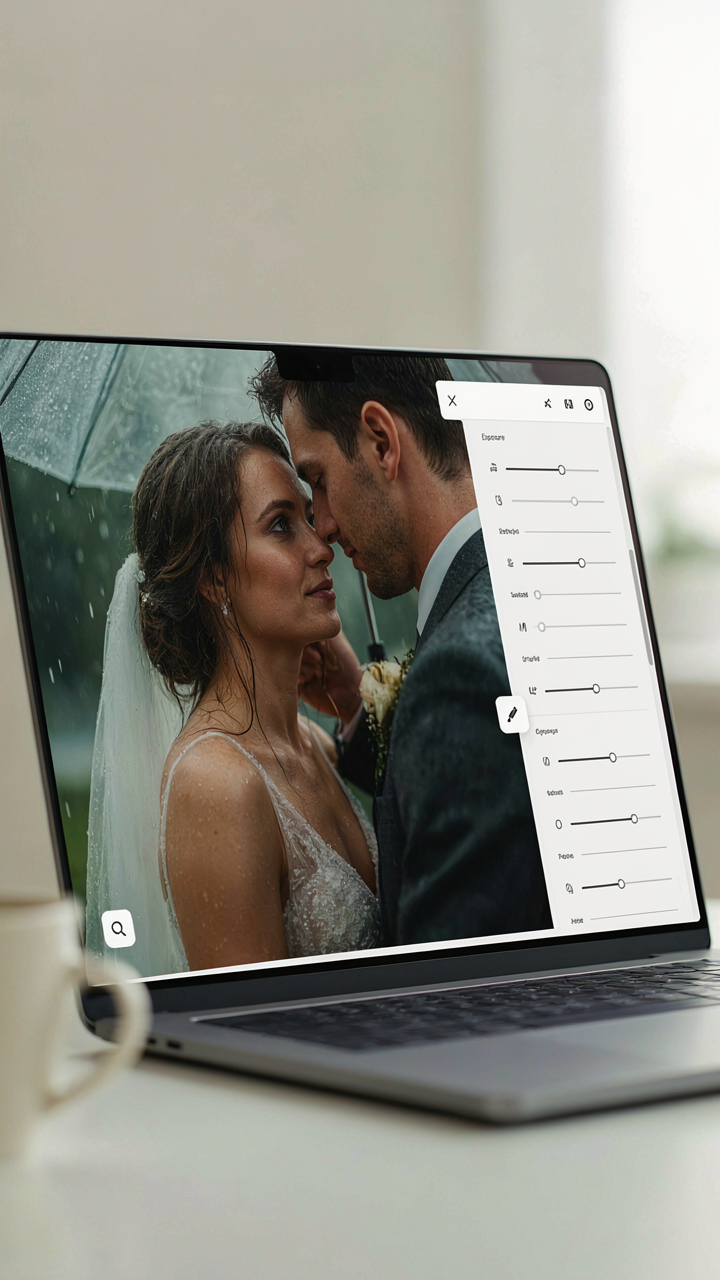
You want rainy wedding photos to look intentional instead of like you got stuck outside without a real plan. The mechanism is borrowed from color science: you’re treating your image like a film stock with an inherent temperature cast, then correcting toward a specific emotional target instead of toward “neutral.” Rain flattens contrast and pushes blue into every frame. Stop fighting that. Push the color temperature warmer by 800-1200K, lift shadows by 10-15 points to recover detail in the bride’s face, then crush blacks slightly to restore dimension. The bride’s skin reads warm against cool ambient light. This creates separation without looking fake.
Desaturate the background greens and grays by 15-25 points. This pulls focus toward the couple while keeping the rainy setting readable. Lift magenta in the midtones by 5-10 points. Rain renders skin as slightly cool and flat, so magenta correction restores vitality without adding yellow. Raise vibrance, not saturation. Vibrance protects skin tones while enriching the fabric and environment. The edit isn’t about making rain disappear. It’s about making the couple’s warmth feel like the only source of light in the frame. Apply this LUT as a base, then adjust per image because no two rain conditions match.
Cleaning Noise From Low Light Captures
Most wedding photographers recommend noise reduction software first, which is backwards. Luminance noise matters. Chroma noise destroys images. Separate them in post. Shoot at the lowest ISO you could manage during rain, then only denoise chroma channels in Lightroom or your editor of choice. Chroma noise reduction at 80-100 kills color grain without erasing detail. Luminance noise reduction at 20-40 preserves texture while taming the grain pattern. This prevents the plastic, over-smoothed look that kills wedding photos faster than actual noise does.

Noise reduction is most effective on skin, backgrounds, and cloth. Apply it selectively using masks. The couple’s faces get full treatment. The background gets moderate treatment. Small details like bouquet flowers get minimal or zero treatment because reducing noise there can flatten texture. Export at full quality, not compressed. Rain conditions mean you’re already fighting low light and lower shutter speeds. The file quality loss from aggressive export compression compounds your noise problem.
Rainy Day Wedding: Embracing The Unpredictable
The Shift From Forced Perfection
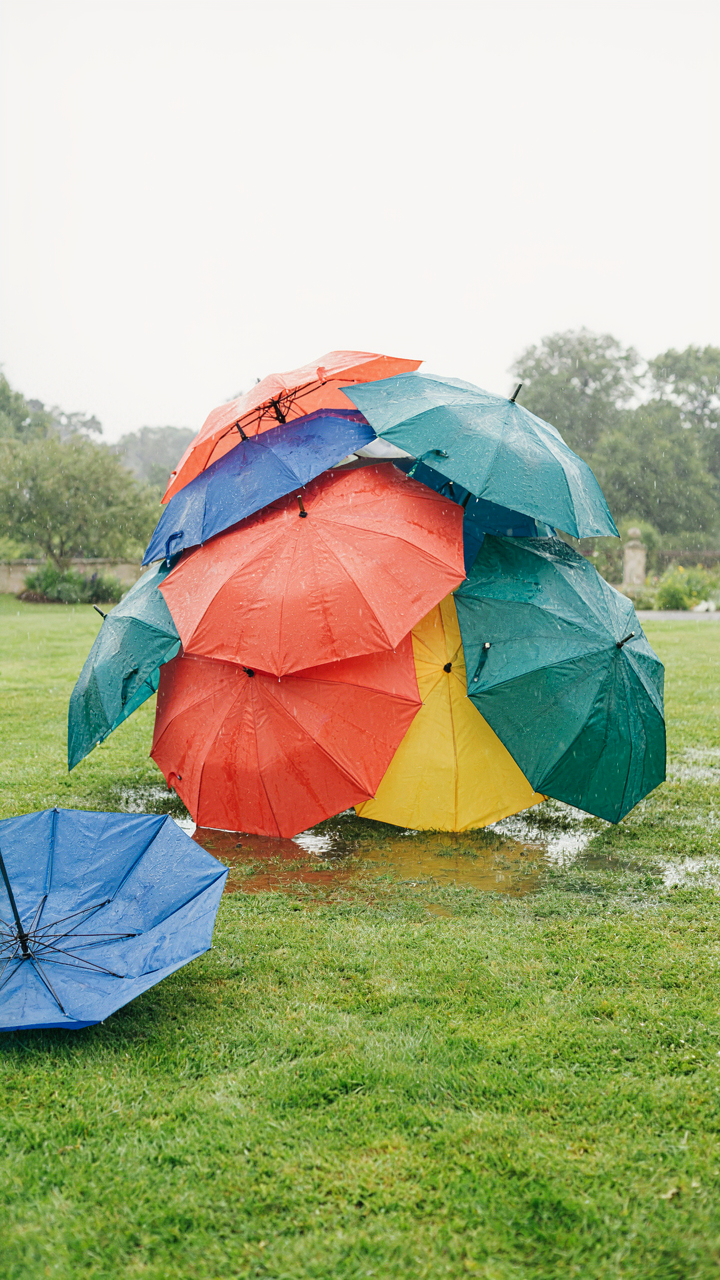
You’re worried rain will tank your portfolio and client satisfaction. Here’s the real mechanism: couples don’t hire you for blue skies. They hire you because you deliver the story that actually happened. Rain doesn’t ruin weddings. Pretending rain didn’t happen ruins them. The best backup plan isn’t about avoiding weather. It’s about shooting the day that exists instead of the day you imagined.
Weather operates on the same principle as narrative tension in storytelling. The obstacle becomes the plot. Overcast skies flatten harsh shadows. Wet surfaces reflect light and create depth. Rain forces guests into proximity. Genuine moments spike when people stop performing for an imaginary camera and start actually living. Your job shifts from controlling conditions to documenting what emerges when conditions force authenticity.
Capturing What Rain Reveals
Rain removes the filter between people and their real reactions. Guests cluster under umbrellas. Families huddle closer. The groom sees his bride walk through rain and that’s not a problem. That’s the shot. Common advice says get wide lenses and shoot from distance. Wrong. Rain eliminates the distance people maintain. Get close. Shoot the details nobody posed for: water beading on fabric, mascara smudging, laughter breaking through frustration.

The protocol is simple. First, identify your rain zones before the ceremony. Scout covered areas, doorways, and spots where rain creates backlighting instead of flat gray. Position yourself where rain becomes a compositional element, not an obstruction. Second, shoot the transition moments. Umbrellas up. Jackets off. People regrouping. These unscripted decisions reveal character. Third, commit to the conditions. If you keep checking the weather and signaling worry, the couple feels it. You set the tone. Confidence in bad weather reads as competence.
Your Fear Of Bad Weather Isn’t About The Rain; It’s About Losing Control Of Your Perfect Narrative

You don’t fear rain. You fear looking unprepared. The backup plan isn’t insurance against weather. It’s proof you’re a professional who thinks three moves ahead. Stop waiting for perfect conditions and start building systems that work anyway. Text your photographer right now and ask one question: what happens if it storms? Their answer reveals whether you hired someone with a plan or someone with hope. The couples who survive bad weather aren’t the lucky ones. They’re the ones who decided luck wasn’t an option.