
The Jitter Audit: Identifying True Fears Vs. Manufactured Anxiety

What You’re Actually Afraid Of
You want permission to feel nervous without looking weak in front of people who’ve already made their judgments about you. Here’s the mechanism: anxiety isn’t one monolithic thing. It’s a mix of legitimate biological signals and manufactured pressure you’ve absorbed from wedding culture. Your nervous system can’t tell the difference between a real threat and a social expectation, so it treats both as emergencies. The only way out is to separate them.
Start by listing every worry that surfaces. Don’t filter. Write “I’ll trip walking down the aisle” and “My dress won’t look right” and “What if I forget my vows” on the same page as “Mom will judge my choices” and “Everyone will think I’m making a mistake.” The ones tied to actual performance or physical logistics are real. The ones tied to how others perceive you are manufactured. Real fears respond to preparation. Manufactured anxiety responds to nothing except acceptance.
Where The Actual Problem Lives
The advice to “just breathe” or “focus on your partner” misses the target entirely. You can’t think your way out of a physical state. Anxiety that grips your chest, makes your hands shake, or speeds your heart isn’t a thought problem. It’s a nervous system problem. In neurobiology, we call this the difference between top-down control (thinking your way out) and bottom-up regulation (calming your body first). Your body needs evidence that you’re safe before your mind believes it.
Narrow down to the specific moment or situation that triggers the worst response. Is it the walk itself? The ceremony’s start? Being watched? The first dance? Knowing which micro-moment creates the spike lets you build a protocol around that exact trigger. You don’t need to fix generalized wedding anxiety. You need to solve what your body does at 2:47 PM when you’re about to enter the venue. That specificity is where the real work begins.
The Pre Mortem Protocol: Stress Testing Your Wedding Day Tips
Imagine The Failures Before They Happen
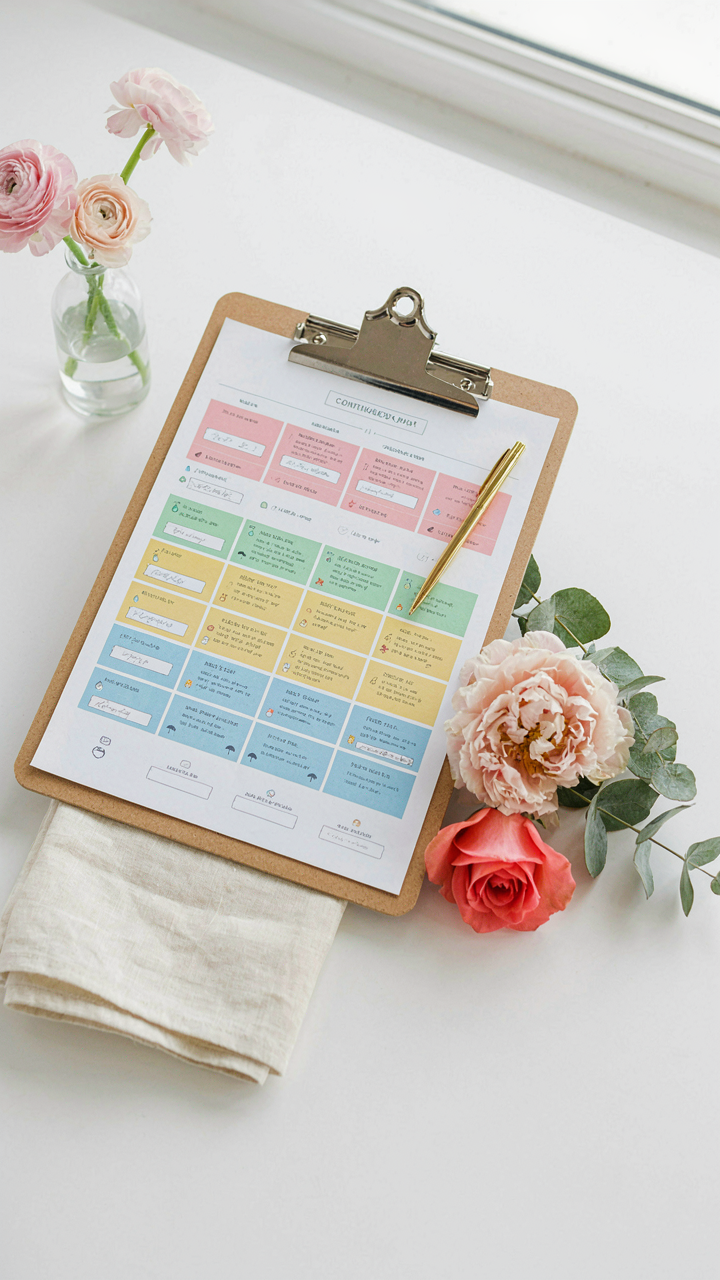
You want this section because you’re terrified something will go wrong and you’ll look foolish in front of everyone. That fear is the mechanism you’re about to weaponize. A pre-mortem is a military planning tool: you assume the mission already failed, then work backward to identify what broke. Applied to your wedding, you don’t wait for disaster. You manufacture it mentally first.

Most wedding advice tells you to “stay positive” and “trust your vendors.” That’s incomplete. Positive thinking doesn’t prevent a no-show photographer or a collapsed cake table. You need a failure inventory. Write down every scenario that would derail your day: key people arrive late, weather forces a venue change, someone gets drunk and causes conflict, the sound system fails. Don’t catastrophize. Just list what’s possible based on how humans actually behave under pressure.
Build Your Backup For Each Scenario
Once you’ve named the failures, you stop reacting and start deciding. For each failure, you write one concrete contingency. Not a vague hope. A specific action. If your photographer doesn’t show, you have the phone number of a backup photographer already contacted and briefed. If weather forces an indoor pivot, you’ve already walked through that space and know where people stand. If a family member causes drama, you’ve identified the person responsible for removing them and where they go.
The cost here is zero. It’s thinking time. You’re literally stealing a few hours today to buy yourself immunity from chaos tomorrow. This isn’t overthinking. This is the difference between panic and protocol. When something breaks on your wedding day, you don’t have time to invent solutions. You execute the one you already decided on. That’s how you stay calm. That’s how others perceive you as having your act together.
The Unspoken Contract: Aligning Future Wedding Plans

Say What You Actually Want After The Day Ends
You’re nervous because you haven’t admitted what you’re really afraid of: that this person doesn’t want the same life you do after the vows. The mechanism is simple. Contract law exists because people assume agreement when none exists. You and your partner are operating on different mental models of what comes next, and jitters emerge from that gap, not from cold feet about the marriage itself.

Most couples never have this conversation. They talk about honeymoons and house hunting, but they skip the core misalignment: income expectations, work priorities, geographic stability, timeline for kids, family involvement, lifestyle spending. Each person carries an invisible blueprint. The anxiety you feel on the wedding day often traces back to unstated differences you’ve both felt brewing but never named directly.
The Actual Cost Of Unspoken Assumptions
Most advice tells you to “communicate more,” which is vague enough to be useless. What actually works is the inventory method: write down ten decisions that will happen in your first three years of marriage. Kids or no kids by year two. One job move or none. How much money stays in savings. Time spent with extended family. Then ask your partner to write the same list independently. Compare. The gaps are your real problem.
Jitters spike when your nervous system detects incongruence between what’s being said and what’s being assumed. You can’t logic away that feeling by telling yourself you’re being silly. You eliminate it by making the invisible visible. Spend two hours this week answering those ten decisions together. Write down the answer you both give. That’s your actual contract.
The Stoic’s Stance: Accepting The Uncontrollable

What You Actually Control
You want this section because you’re looking for permission to stop fixing everything. Here’s what matters: Stoicism from ancient Rome identifies two categories of events—premeditatio malorum separates what responds to your effort from what doesn’t. On your wedding day, you control your breathing, your words, your attention. You don’t control weather, guest behavior, catering timing, or how your body physically reacts to adrenaline. Most jitter advice conflates these categories and tells you to “manage” the unmanageable, which creates more anxiety, not less.

The mechanism is simple. Your nervous system fires up when you believe you’re responsible for outcomes outside your power. You waste mental energy trying to prevent the unprevatable. The moment you draw a hard line between controllable and uncontrollable, that energy redirects toward what actually matters. You stop negotiating with reality and start executing on what’s yours to execute on. This isn’t resignation. It’s clarity.
Surrender What You Cannot Change
Radical acceptance means you stop the internal argument with reality before it starts. You acknowledge that your hands might shake during vows, that someone might cry loudly during the ceremony, that the DJ might play the wrong song. None of these outcomes threaten the actual event. The event happens regardless. Your job is to experience it, not prevent every deviation from a fictional perfect version that never existed anyway.
Write down three things you’re anxious about. For each one, ask: can I influence this outcome? If yes, take one action today and release it. If no, practice saying it aloud: “This will happen or it won’t, and I’ll handle it either way.” Repeat this for 60 seconds. The nervous system learns through repetition. Do this three times before the ceremony. This is your protocol.
The “Day Before Wedding” Decompression Strategy

Cut The Information Feed
You want to feel in control before the wedding, so you’re scrolling through vendor confirmations and group chats—but you’re actually manufacturing anxiety. The mechanism is simple: your nervous system can’t distinguish between real threats and information threats. Every notification triggers a low-level stress response. Stop it the night before. No phone. No messages. No checking details you’ve already confirmed.

The goal is to lower your baseline cortisol so you enter tomorrow in a stable state, not already depleted. This isn’t about meditation or spiritual nonsense. It’s about removing the stimulus that keeps your amygdala fired up. Put your phone in another room after 8 PM. Tell your wedding party and family this is happening. They’ll manage without you for twelve hours.
Ground Yourself In Physical Reality
Most people skip this part because it sounds boring, and boredom feels like a wasted opportunity. It’s not. Neuroscience calls this “vagal toning”—activating your parasympathetic nervous system through deliberate physical action. Your body doesn’t know the difference between controlled breathing exercises and actual calm. It only knows the signal.
Do three things: take a twenty-minute walk without music or a phone, do ten minutes of slow stretching, then sit outside for five minutes and name five things you can touch right now. Texture, temperature, weight. This grounds your mind in the present moment instead of tomorrow’s performance. End by drinking water and eating something bland. Your digestive system digestion state is inseparable from your mental state.
The Cognitive Reframe: Jitters As Evolutionary Advantage

Your Nervous System Isn’t Broken
You want permission to feel normal on your wedding day without spending money on a therapist to tell you what you already know. Here’s the mechanism: evolutionary psychology treats jitters as threat detection. Your amygdala doesn’t distinguish between physical danger and social stakes. When millions of years of survival instinct activate before a high-stakes event, that’s not malfunction. That’s your nervous system doing exactly what it evolved to do. The jitters signal your brain recognizes the moment matters.

Most advice tells you to eliminate anxiety. That’s incomplete. Your body produces adrenaline and cortisol before meaningful events because activation improves focus and reaction time. The jitters aren’t the enemy. Misinterpretation is. You can’t turn off the signal. You can decode it. When your chest tightens and your mind races, that’s preparation, not panic. The physical state itself doesn’t determine your performance. Your narrative about that state does.
Reframe The Physical Symptoms
The common move is telling people to “breathe through it” or “calm down.” That advice fights your biology instead of using it. Your elevated heart rate doesn’t mean you’re failing. It means you’re mobilized. Your dry mouth and trembling hands don’t signal weakness. They signal readiness. Athletes call this “optimal arousal.” Performers call it “being sharp.” The sensations are identical whether you interpret them as fear or focus.
Change the label, not the feeling. When your stomach flutters, name it as excitement preparing you for execution. When your breathing quickens, recognize it as your lungs oxygenating your system for peak performance. Your body already knows what to do. Your job is to stop narrating the story as breakdown and start narrating it as breakthrough. During your ceremony, anchor this one action: when you feel the jitters spike, deliberately tense your jaw for three seconds, then release. This interrupts the fear narrative and channels the activation into a physical action you control.
Things To Do Before Wedding Brides: The Minimalist Prep

Cut Your Task List In Half
You want to feel in control because the alternative is admitting how many things could go wrong. Here’s what actually matters: your nervous system doesn’t fire up because of a missing napkin fold or seating chart mistake. It fires up because you’re mentally juggling 40 tasks when your brain can only hold 7 at capacity. The mechanism is cognitive load, borrowed from psychology. Strip the list ruthlessly.

Most brides keep a 60-item to-do list and complete 45 of them, then spend the morning spiraling about the 15 they didn’t. The fix isn’t motivation. It’s elimination. Identify what directly affects the ceremony, the food service, and guest experience. Everything else gets cut or moved to after the wedding.
- Confirm vendor arrival times and locations: Call photographers, caterers, florists, and musicians the day before. Lock down exact arrival windows and contact info. This prevents the panic of wondering where key people are.
- Verify the rings and marriage license are physically present: Not in a car at someone else’s house. Not with a best man who’s running late. In your hands or your partner’s hands the night before.
- Test the sound system and music playlist: Do a five-minute run-through of ceremony music, first dance song, and reception audio. One bad speaker setup ruins the entire day’s flow for 80 people.
- Prep a weather contingency: Know exactly where guests move and what changes if it rains. Communicate this to one designated person who handles logistics, not five people.
- Lay out what you’re wearing the morning of: Dress, shoes, undergarments, jewelry. Everything in one place. No hunting at 7 AM while your cortisol is already high.
The goal is to move from “preparing” to “ready” by the night before. On the morning of, your only job is eating, hydrating, and dressing. Everything else has already been handled or will happen without your input.
Delegate Every Non Critical Task To One Person
You can’t do this alone, and the problem isn’t that you’re asking too much of others. The problem is you’re assigning different tasks to different people and then micromanaging whether they got done. That multiplies your anxiety by ten.
Pick one person on your side—usually the maid of honor—and give them the entire non-critical list. Hair and makeup timeline, guest arrivals, final decorations, photo coordination with the photographer, ceremony music cues, reception timing. They own it. You give them full authority to make decisions if something shifts. You do not check in with them six times in the morning. The agreement is: they handle it, you trust it, and you stay out of the loop until the ceremony starts.
This isn’t about being distant. It’s about creating a single point of contact for logistics so your brain isn’t running six different processes in parallel. Your job is to show up mentally present, not to be the project manager. If you’re managing everything, you’re not experiencing your own wedding. The person you delegate to gets a clear scope, full autonomy, and one check-in phone call two hours before ceremony time. That’s it.

The Reality Check: Your Dream Wedding Ideas Dresses Vs. Logistics

The Gap Between Pinterest And What Actually Happens
You’re anxious because you’ve built a version of your wedding in your head that has nothing to do with the day you’re actually having. The mechanism is simple: expectation exceeds reality, so your nervous system stays activated looking for the gap. You saw a dress in a magazine. You imagined how you’d feel wearing it. You didn’t imagine the alteration delays, the sweat under studio lights during photos, or the fact that you’ll sit down for six hours and won’t think about how you look once.
Your jitters aren’t about the ceremony or the commitment. They’re about defending an image that was never real in the first place. The fix isn’t positive thinking or meditation. It’s deliberate subtraction. Write down the five specific things you visualized about your wedding day. Then cross out the ones that depend on conditions you don’t control: weather, guest reactions, photographer mood, vendor timing. What’s left is what actually matters, and it’s probably smaller than you thought.
Glitches Are The Story, Not The Accident
Everyone tells you the mistakes won’t matter and everyone is lying about why. The truth is borrowed from how systems fail under pressure. In engineering, they call it “graceful degradation”—when part of a system breaks, the whole thing adapts and keeps functioning. Your wedding isn’t different. The flower arrangement wilts. The timeline shifts. Someone spills wine on the tablecloth. These aren’t failures. They’re the actual content of your day.
Your anxiety spikes because you’re mentally rehearsing a flawless execution that nobody remembers. What people actually retain are the moments where something went sideways and how you responded. That’s the story. That’s what gets told at dinners five years later. Stop treating imperfection as damage control and start treating it as material. The second you accept that glitches are inevitable, your nervous system stops scanning for threats that “shouldn’t happen” and starts managing the ones that will. That shift alone cuts jitters by half.

The Real Obstacle Isn’t The Jitters Themselves, But Your Unwillingness To Listen To Their Inconvenient Truths

Your nervous system isn’t broken. It’s trying to tell you something you don’t want to hear. Maybe you’re marrying the wrong person. Maybe you’re not ready. Maybe you picked a wedding that doesn’t actually reflect who you are. The jitters aren’t a problem to fix with breathing exercises. They’re information you’ve been ignoring. Stop numbing them and start asking why they exist. Write down the three things that terrify you most about tomorrow, then ask yourself if you’ve been honest about any of them. The answer determines everything that follows.