What A Rainy Wedding Day Really Means And Why It Is More Common Than You Think
How Weather Patterns Affect Outdoor Weddings Across Different Seasons
Seasonal shifts dictate your precipitation risk. Spring brings high moisture due to rising temperatures and low pressure systems. This causes frequent showers in temperate zones. Summer weddings face convective rain. This happens when heat builds up during the day. It leads to short but intense afternoon thunderstorms. You cannot predict these far in advance. Planners must monitor local dew points and barometric pressure.
Fall and winter offer different challenges. Stationary fronts in autumn cause steady drizzle that lasts for days. This saturates the ground and ruins turf. Winter rain occurs near the freezing point. This creates mud and drainage issues for tented structures. Tropical regions have defined wet seasons where rain occurs daily at specific times. Professionals track these cycles to time ceremonies between storm cells. Data shows rain is a constant variable.
The Cultural And Symbolic Meaning Of Rain On Your Wedding Day Around The World
Different cultures view rain as a strategic advantage rather than a failure. In Hindu traditions rain represents a strong bond. A wet knot is notoriously difficult to untie. It symbolizes a lasting marriage. Italian culture uses the phrase “Sposa bagnata, sposa fortunata.” This translates to wet bride, lucky bride. These beliefs focus on fertility and long term stability. They reposition weather as a positive force.
Modern symbolism often focuses on renewal and cleansing. Many societies link water to the growth of crops. They view rain on a wedding day as a sign of abundance. Some traditions involve collecting rain water in glass jars. They save it for future ceremonies or home blessings. These practices shift the focus from logistics to historical significance. Understanding these views helps couples manage their mental state when weather changes.

Building A Solid Outdoor Wedding Rain Plan Before The Big Day Arrives
How To Work With Your Venue To Establish A Weather Contingency Plan
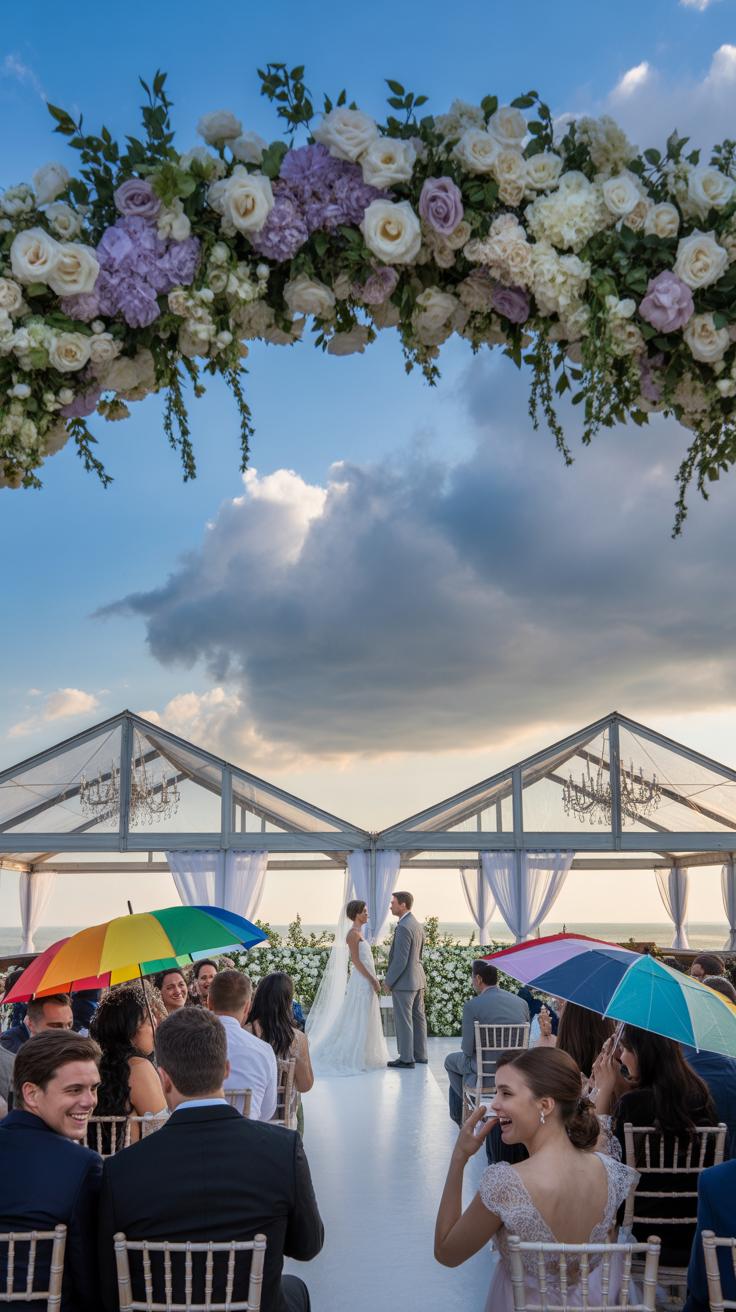
Standard contracts require a backup space for outdoor events. You must walk through the secondary location before signing the agreement. Verify the square footage and seating capacity of the indoor alternative. Ensure the floor plan accommodates your original guest count and vendors. Do not assume the venue handles the transition for free. Clarify labor costs and setup times for moving furniture.
Ask about the specific lighting and power capabilities of the backup room. Outdoor settings rely on natural light while indoor rooms may require extra rentals. Confirm if the venue provides tenting or if you must hire an outside vendor. Check the drainage path of the property to avoid mud traps near guest walkways. High traffic areas need stable flooring if rain persists for several hours.
A wet wedding is a lucky wedding, and the rain is only the sky’s way of showering you with extra blessings. If you want the rainbow, you must first learn to love the rain.
When To Start Monitoring The Forecast And How To Communicate Changes To Your Guests
Start tracking local weather patterns ten days before the wedding. High pressure systems and cold fronts change quickly so do not panic early. Check the hourly precipitation totals rather than the daily percentage. A 40 percent chance of rain often means brief showers in one area. Use professional meteorological apps for the most accurate data. Finalize your decision to move inside 24 to 48 hours out.

Update your wedding website immediately once you trigger the rain plan. Send a mass text or email to all guests using your RSVP platform. Clearly state the change in location and any adjustments to the schedule. Provide instructions on parking if the rain complicates site access. Ensure your wedding planner and key vendors receive the formal update first. Direct communication prevents confusion and keeps your timeline on track.
Rainy Wedding Day Must Haves Every Couple Should Have On Hand
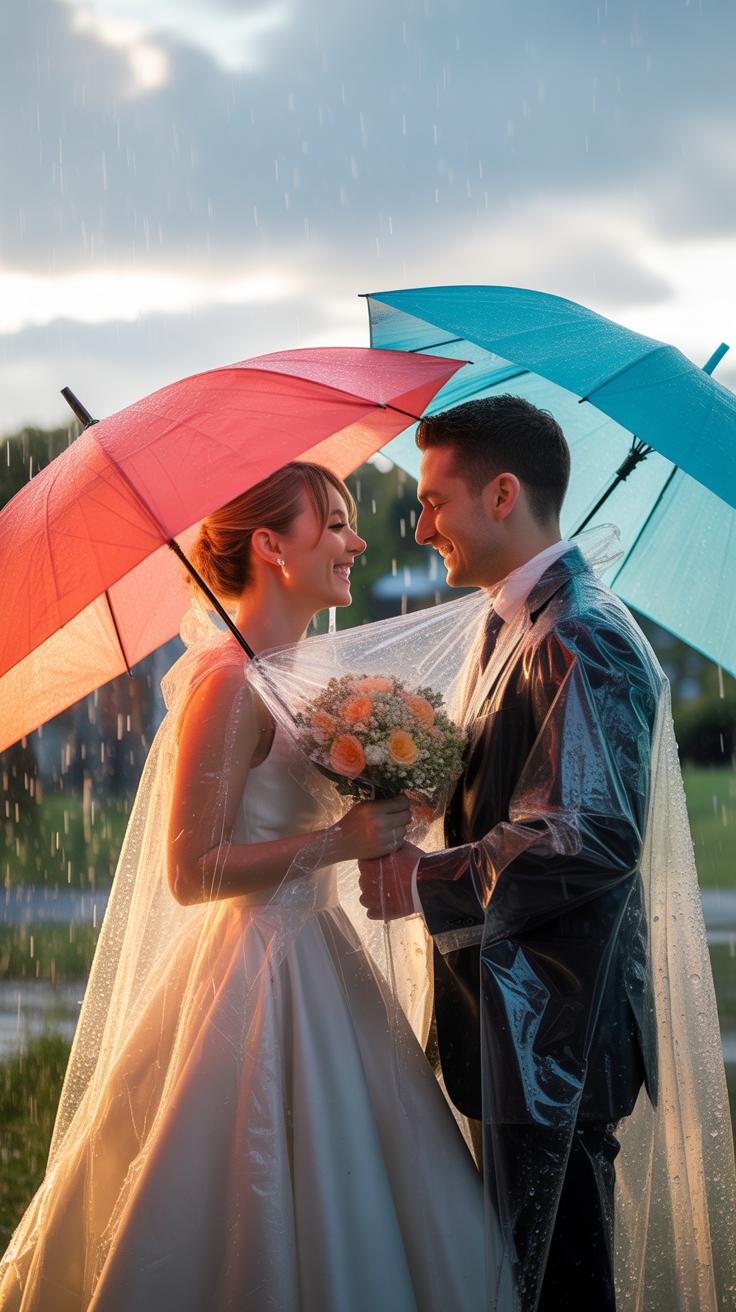
Essential Gear And Accessories To Keep You, Your Partner, And Your Wedding Party Dry
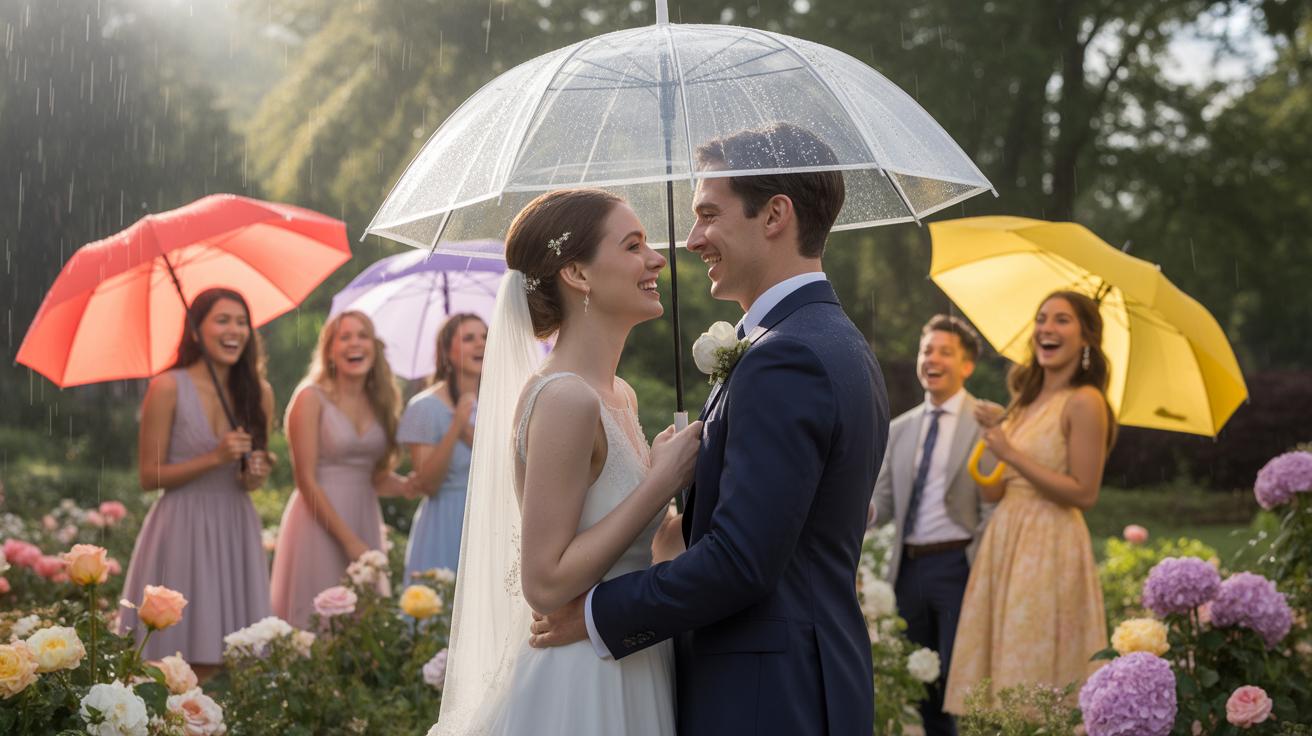
Rain ruins logistics if you lack the right tools. You must provide physical barriers against water for everyone in the wedding party. Standard umbrellas are too small and block light in photos. Large golf umbrellas or clear acrylic domes offer the best coverage. Move people in groups to minimize exposure. Strategic planning ensures your team stays dry during all outdoor transitions.
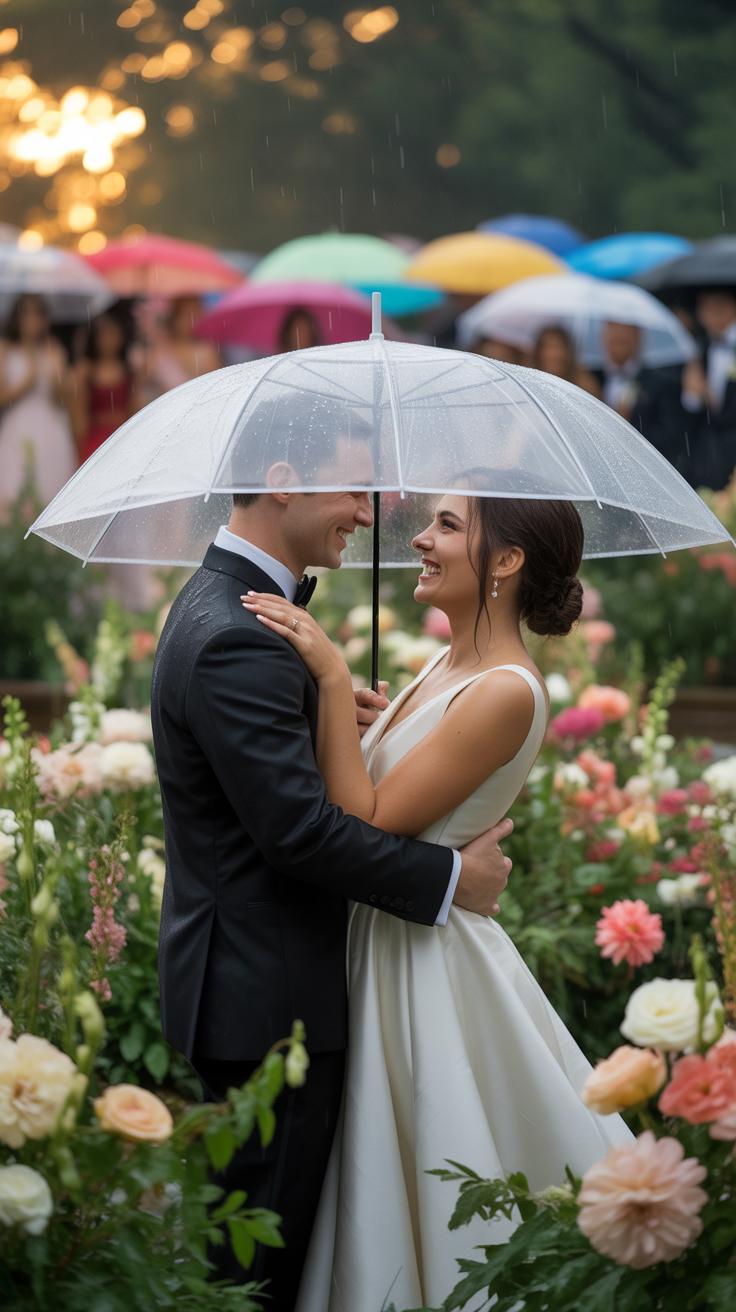
- Clear Bubble Umbrellas: These provide maximum visibility for photography while keeping shoulders dry. The transparent PVC material allows natural light to hit your face. They do not clash with wedding colors or patterns in formal photos.
- Large Golf Umbrellas: Use these for the wedding party and guests. They offer a wide diameter to cover two people at once. Choose neutral colors like black or white to maintain a professional and cohesive aesthetic for the event.
- Absorbent Microfiber Towels: Keep a stack of these in every transport vehicle and at the venue entrance. Microfiber pulls moisture away faster than cotton. Use them to wipe down damp skin or wet chairs before guests sit down for the ceremony.
- Waterproof Boot Trays: Place these at the entrance of your indoor space. They contain mud and water from wet shoes. Proper containment prevents slips on hard floors and protects delicate dress hems from getting dirty as people move around the room.
- Heavy-Duty Floor Mats: Use industrial-grade mats at every transition point. They catch moisture before it reaches the main floor. This keeps the dance floor safe and prevents the hem of your gown from soaking up dirty rainwater during the reception.
Handheld gear is only half the battle. You also need stationary protection. Renting high-quality pop-up tents for staging areas prevents bottlenecks at the door. Instruct your planners to coordinate umbrella hand-offs like a valet service. Efficiency keeps the schedule on track and morale high. Do not wait for the first drop to deploy these tools. Preparation is your only defense against a storm.
How To Protect Your Wedding Attire, Hair, And Makeup From Rain And Humidity
Humidity destroys hairstyles and melts makeup. Use waterproof primers and setting sprays to lock products in place. Avoid water-based foundations that streak when wet. Suggest that stylists use more hairspray than usual to combat frizz from moisture. Updos remain more stable than loose curls in damp conditions. Secure hair tightly to prevent the weight of water from pulling it down.

Protect your fabric from the ground up. Use a bustle or hold your train to keep it off wet pavement. Apply a fabric protector spray to shoes and hems if the material allows. This creates a barrier against mud and water stains. Carry a portable steamer to fix wrinkles caused by damp air. Quick action prevents water spots from becoming permanent marks on silk or satin fabrics throughout the night.
Creative Rainy Wedding Ideas That Turn Bad Weather Into Beautiful Moments
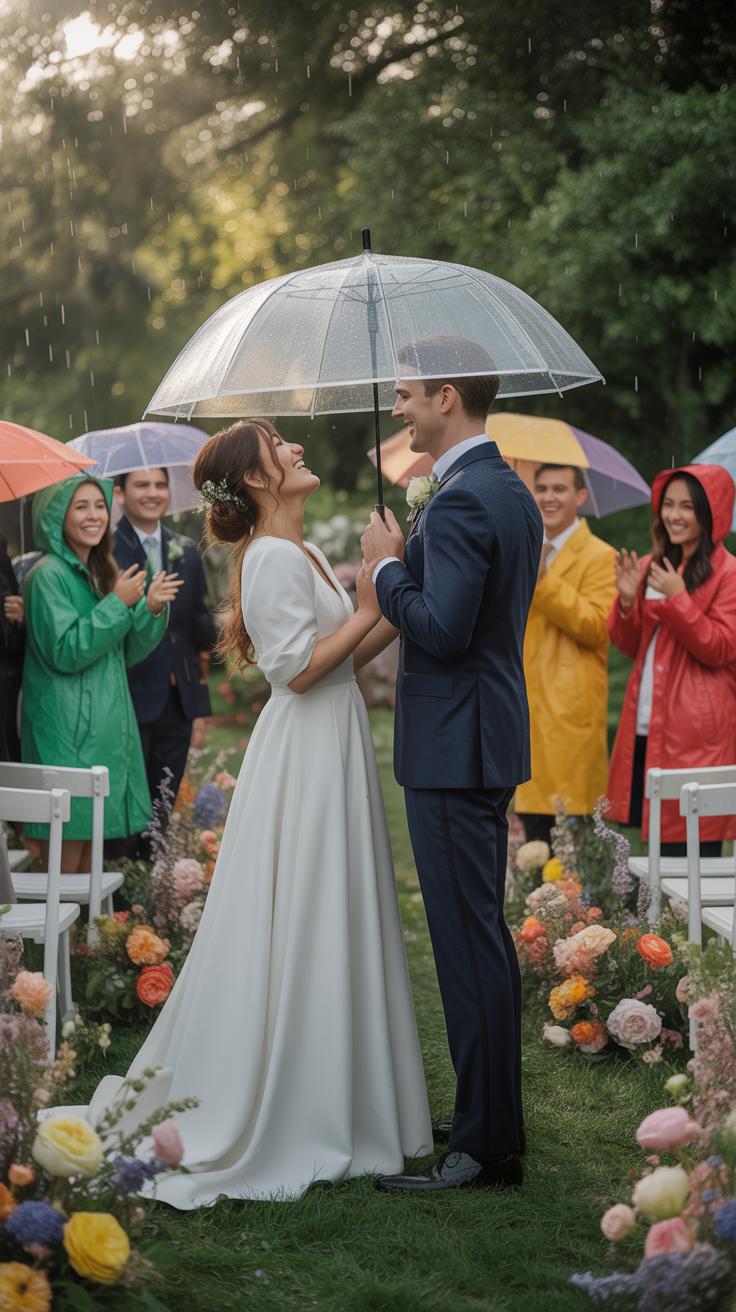
How Couples Are Using Rain As A Backdrop For Unique And Romantic Wedding Photography
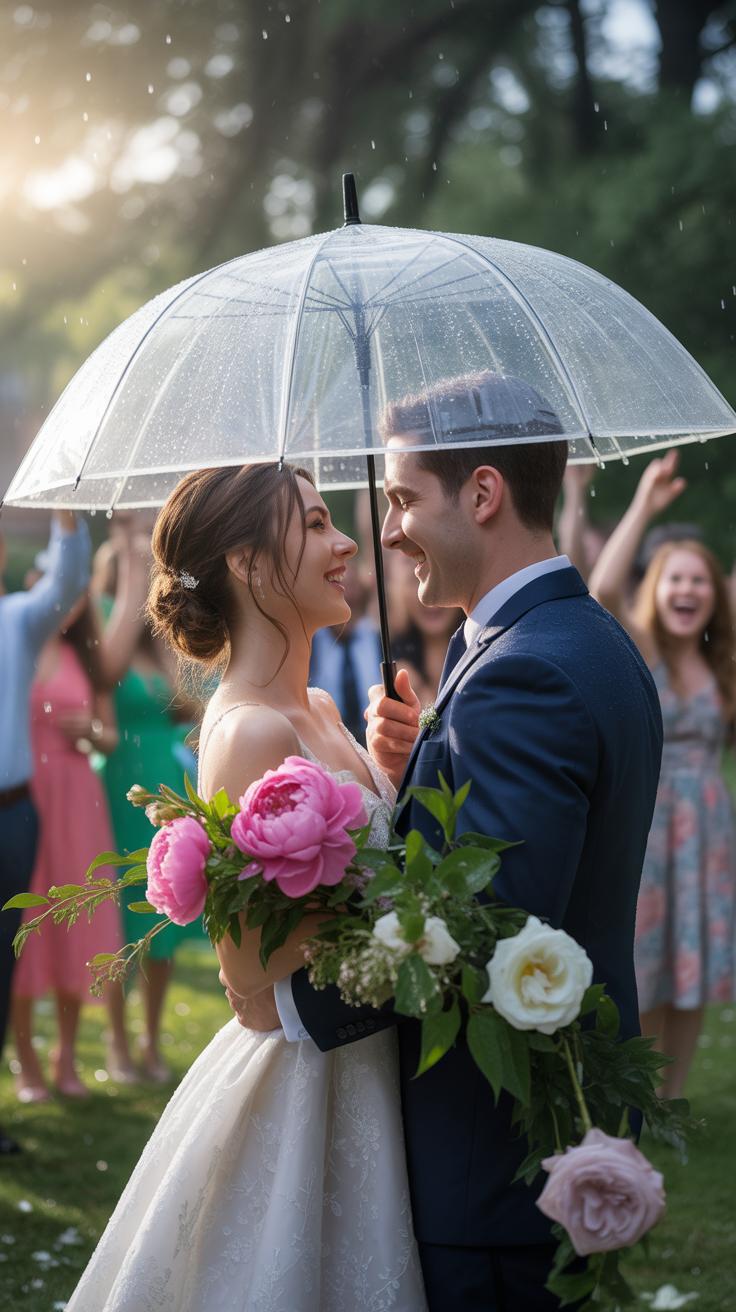
Rain simplifies the lighting environment by providing a natural softbox effect. This diffuse light removes harsh shadows that often ruin mid-day outdoor shots. Photographers use the wet pavement and puddles to create mirror reflections of the couple. These reflections add depth and symmetry to the frame. Clear umbrellas allow light to reach the faces while keeping subjects dry during the shoot.
Backlighting rain droplets creates a dramatic visual texture known as bokeh. To achieve this, a strobe light is placed behind the couple to illuminate the falling water. This technique makes the rain appear like glowing crystals or stars in the final image. Fast shutter speeds freeze the motion of the drops for sharp detail. Wet surfaces also deepen color saturation, making greenery and attire appear more vivid.
Decor And Styling Adjustments That Work Beautifully Under Overcast Skies And Wet Conditions
Overcast skies shift the color temperature toward the blue end of the spectrum. You must compensate with warm-toned lighting to prevent the venue from feeling cold. Utilize Edison bulbs, amber gels, and tea lights to create a warm contrast against the gray sky. Metals like brass and copper reflect these warm lights effectively. Use heavy, weighted decor items to prevent wind from displacing the arrangements.

Wet conditions require a shift in fabric choices for linens and drapery. Synthetic blends resist moisture better than pure cotton or silk, which sag when damp. Clear acrylic furniture keeps the space feeling open and does not hide the natural scenery. For outdoor setups, use non-slip rugs on top of saturated ground to define the aisle. These tactical choices ensure the design remains functional and visually consistent.
How To Handle Outdoor Wedding Rain During The Ceremony Itself
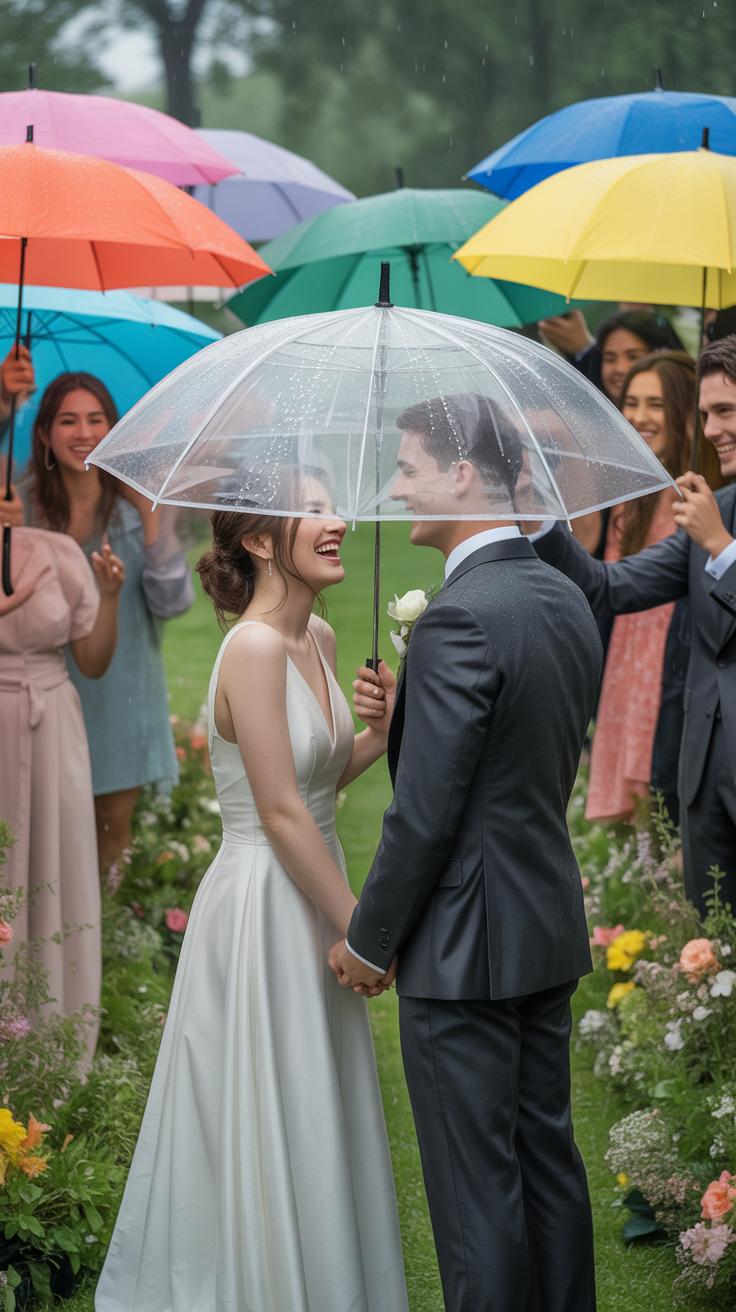
Practical Ways To Adapt Your Ceremony Setup Quickly When Rain Begins To Fall
Swift action prevents venue damage and guest discomfort. Designate a specific team to handle transitions. Move lightweight seating under cover immediately. Use towels to wipe down non-porous surfaces once moisture stops. Shift the altar focus to a porch or a doorway if available. Keep electronics elevated. Proper cable management prevents short circuits and tripping hazards in wet conditions. Speed saves costs and preserves your schedule.
Equip your staff with clear umbrellas for immediate distribution. This maintains visibility and aesthetics during the process. Adjust the sound system to account for background noise from raindrops. Use heavy-duty plastic sheeting to protect musical instruments and sound boards. Keep a dry rug or runner ready for the aisle. This prevents slips on wet grass or stone. Ensure all transitions prioritize safety and maintain the flow of the event.
How Tent Rentals And Temporary Structures Can Save Your Outdoor Wedding Ceremony
Tents provide the only reliable defense against heavy rain. High-peak tension tents offer superior stability and water runoff. Clear-span structures eliminate interior poles and provide unobstructed views. Install sidewalls to block wind and lateral spray. Ensure the rental company uses proper anchoring systems for safety. A correctly installed tent keeps guests dry and keeps the ceremony on track. Decisions on tenting must happen early.

Temporary flooring prevents mud and stabilizes chairs. Use plywood subfloors or interlocking plastic tiles. These materials provide a level surface for the bridal party and guests. Raised platforms protect the hem of the wedding dress and formal wear. Coordinate with your vendor to ensure the structure meets local fire codes. Proper drainage around the tent perimeter prevents flooding inside. Solid structures create a controlled environment regardless of the weather.
Rainy Wedding Photography Tips To Capture Stunning Shots In Wet Weather
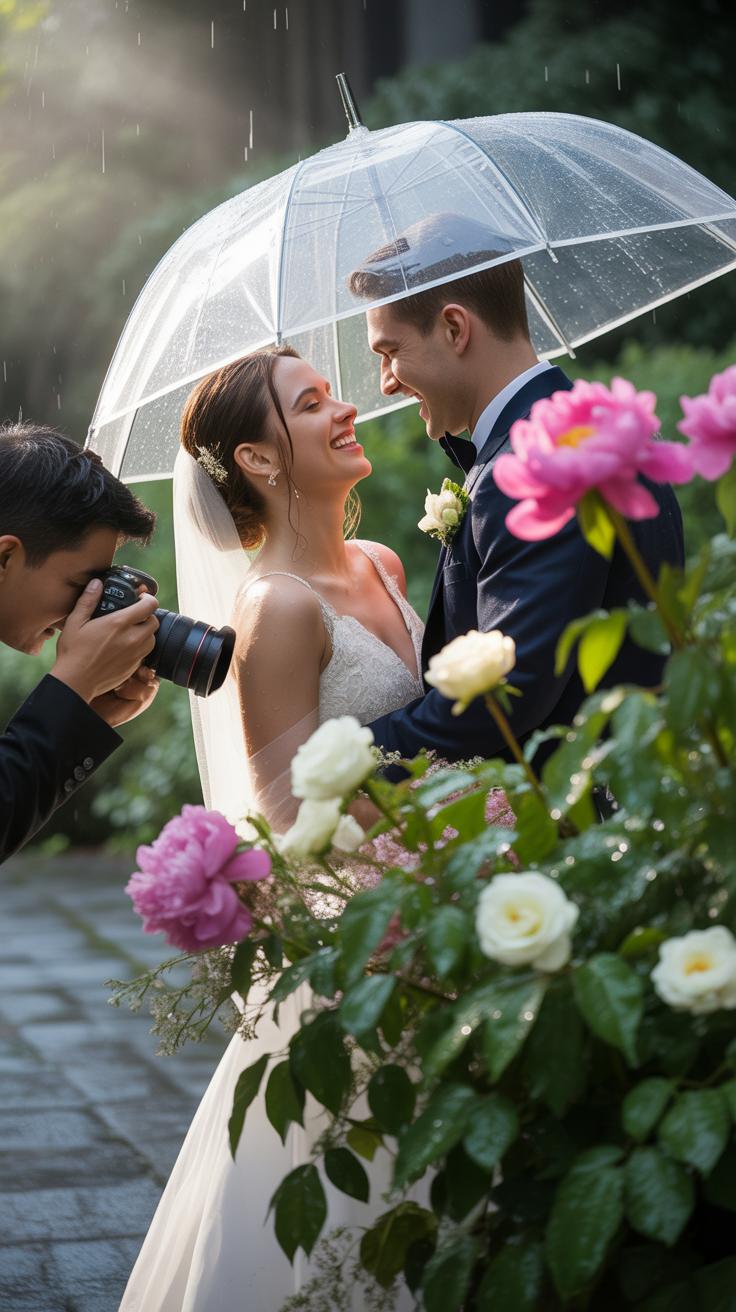
Guidance What To Discuss With Your Photographer Ahead Of Time To Prepare For A Rainy Wedding Shoot
Verify your photographer has high-speed lenses with wide apertures to manage low light levels. Rain clouds block natural sunlight and create dark environments. Professionals must use gear with weather sealing to prevent equipment failure. Ask about their experience with off-camera flash and backlighting techniques. These methods highlight falling raindrops against dark backgrounds. Confirm the photographer owns specific rain gear like camera parkas and heavy-duty plastic sleeves.
Discuss the timing of your photo session to capitalize on breaks in the weather. Use weather tracking apps to identify windows of clear skies. Establish a clear signal for moving guests and wedding parties to sheltered areas. Review the gear list for portable lighting kits that work without wall outlets. Ensure the contract covers extra time if rain causes delays. Demand a clear plan for protecting memory cards and backing up digital files.
Best Indoor And Covered Locations To Use As Backup Portrait Spots On A Rainy Day Wedding
Identify porches and deep overhangs that provide natural light without exposure to water. These architectural features offer the benefit of outdoor scenery while keeping subjects dry. Look for stone archways or covered walkways that offer neutral textures. Use large windows in the venue to mimic the look of outdoor lighting. Grand staircases and libraries provide classic backgrounds with sufficient depth for group shots. Check for clean wall space.

Utilize glass conservatories or greenhouses to maintain a natural aesthetic during storms. These structures protect clothes from mud while offering maximum brightness. Seek out foyers with high ceilings to prevent cramped photos. Look for historical details like wooden doors or decorative crown molding to add visual interest. Map these spots during the site visit to save time on the wedding day. Clear paths to these areas to avoid wet hemlines.
How To Collect Wedding Rain Memories And Embrace The Unexpected With Grace
Meaningful Keepsakes And Traditions Inspired By Rain That Couples Can Incorporate Into Their Day
Rain offers specific tactical opportunities to create physical mementos. You can turn a weather event into a curated part of your family history. Strategic couples use the rain to validate their resilience. Capturing these elements requires planning and the right materials. Use high quality glass and professional photography techniques to ensure these items last for decades. Focus on tangible assets that document the day.
- Rainwater Collection: Use a clean glass vessel to collect water during the ceremony. Professionals later filter this water for use in future life milestones or religious rites. Secure the bottle with a wax seal to prevent evaporation and maintain the integrity of the sample over time.
- Pressed Damp Florals: Save bouquets that have absorbed natural rainwater. Professional preservationists use silica gel or heavy presses to dry these flowers while retaining their color. This creates a framed piece of art that physically contains the moisture and atmosphere of your specific wedding date.
- Custom Umbrellas: Purchase high quality clear or coordinated umbrellas for the wedding party. Ask guests to sign one specific umbrella with waterproof permanent markers. This transforms a functional utility item into a guest book that survives heavy use and serves as a literal shield against future storms.
- Reflection Photography: Instruct your photographer to utilize ground puddles for forced perspective shots. These photos use the water surface as a natural mirror to create symmetrical architectural images. This technique requires a wide angle lens and low camera placement to maximize the visual impact of the rain.
- Atmospheric Audio: Place a high fidelity field recorder under a covered area to capture the sound of the rainfall. Use this audio track as the background for your wedding film. It provides a sensory layer that visual media cannot replicate alone and anchors the memory in a specific environment.
Incorporate these items into your post wedding routine immediately. Glass jars must be airtight to avoid mold. Photographers need specific instructions before the ceremony starts to prioritize reflection shots. If you wait until after the honeymoon you will lose these opportunities. Execute these tasks with precision to ensure your keepsakes remain high quality. Fact based planning ensures your memories stay intact regardless of the weather.
How To Mentally Reframe The Rain So It Becomes Part Of Your Wedding Story, Not A Setback
View rain as a logistical variable rather than a personal failure. In many cultures rain represents fertility and cleansing. Italian tradition uses the phrase Sposa bagnata, sposa fortunata which means a wet bride is a lucky bride. This perspective shifts the focus from aesthetics to long term success. You must accept the environment to remain a decisive leader on your wedding day.

Control your reaction to maintain the schedule. Your guests will follow your lead regarding the mood and energy of the event. If you treat the rain as a planned feature the guests will remain comfortable. Stress interferes with physical comfort and photo quality. Trust your vendors to execute the backup plans you already created. Focus on the legal and emotional commitment instead of the clouds.
Vendor Coordination And Budget Considerations For A Rainy Day Wedding
Which Wedding Vendors Are Most Affected By Rain And How To Prepare Them In Advance
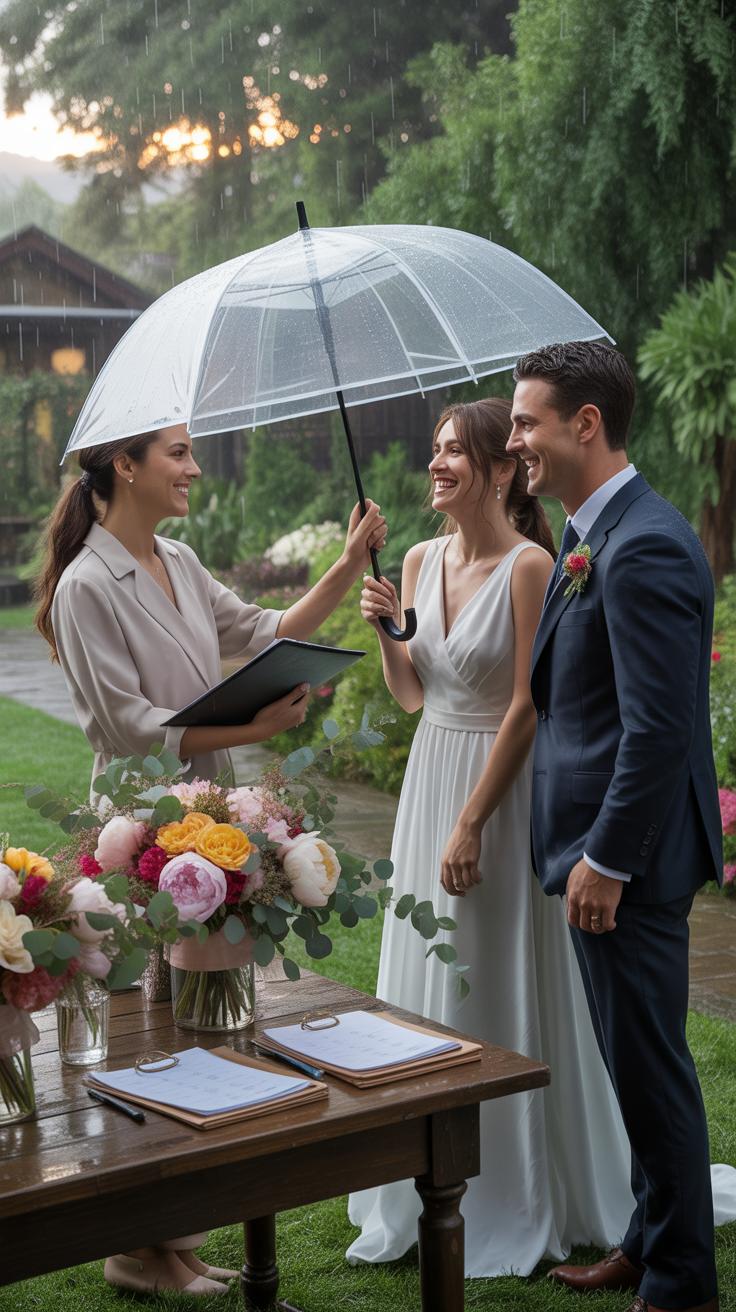
Photographers and videographers face the highest technical risks from moisture. Precision electronics fail when wet. You must confirm they carry backup weather sealed gear and lighting for indoor shots. Florists also struggle because humidity wilts certain blooms or turns petals brown. Discuss specific flower types that withstand damp air during your initial design consult. Clear communication ensures your creative team remains mobile and functional.
Caterers and rental companies require firm load-in paths to avoid mud and safety hazards. Slips on wet grass create liability issues for heavy equipment teams. Secure a tenting plan for outdoor cooking areas to keep food safe and hot. Confirm whether your electricity provider or DJ needs a grounded power source for damp conditions. Professional vendors prioritize safety over aesthetics. Check their contracts for specific rain clauses regarding equipment damage.
Understanding Wedding Insurance And What It Typically Covers For Weather Related Disruptions
Wedding insurance typically provides two types of protection: liability and cancellation. Cancellation coverage only triggers if extreme weather makes the venue unusable or prevents the couple from attending. Normal rain does not qualify for a full refund or claim. You must purchase these policies months in advance to cover specific weather events. Read the fine print to identify which specific natural disasters the underwriter excludes from your plan.

Liability coverage protects you if a guest slips on a wet surface at your event. Most venues require this policy as a baseline for booking. It does not pay for a new tent if yours leaks. It only covers legal fees or medical costs from accidents. Keep your policy documents digital for fast access on the wedding day. Confirm with your agent that your specific location is within the covered territory.
Frequently Asked Questions

Is it considered bad luck if it rains on your wedding day?
Actually, many cultures view rain as a sign of good luck, cleansing, and fertility. In the wedding industry, “tying the knot” refers to a wet rope being much harder to untie than a dry one. While it might feel stressful at first, some of the best rain on wedding day tips include embracing the symbolism of a long-lasting union and focusing on the beautiful, moody lighting that overcast skies provide for photos.
How can I protect my dress and hair if the forecast calls for rain?
Keeping your look intact requires a proactive approach. Start by using a high-quality humidity-resistant hairspray and consider an elegant updo to prevent frizz. For your gown, use a “bridal petticoat” to lift the hem off the wet ground while walking. One of my favorite rain on wedding day tips is to have a dedicated “styling kit” nearby, containing extra bobby pins, a portable blow dryer, and plenty of microfiber towels.
What are some affordable ways to prepare for a rainy wedding?
Preparedness doesn’t have to break your budget. You can purchase a bulk set of clear bubble umbrellas, which look fantastic in photos and keep your bridal party dry without blocking the view. Another cost-effective tip is to provide a “refresh station” with inexpensive towels and flip-flops for guests. These small, thoughtful touches ensure everyone stays comfortable and festive without requiring a massive investment in expensive professional tenting or venue changes.