The “Frugal Fascinator” Fallacy: Why Price Isn’t Your Problem
What Cheap Fascinators Actually Signal
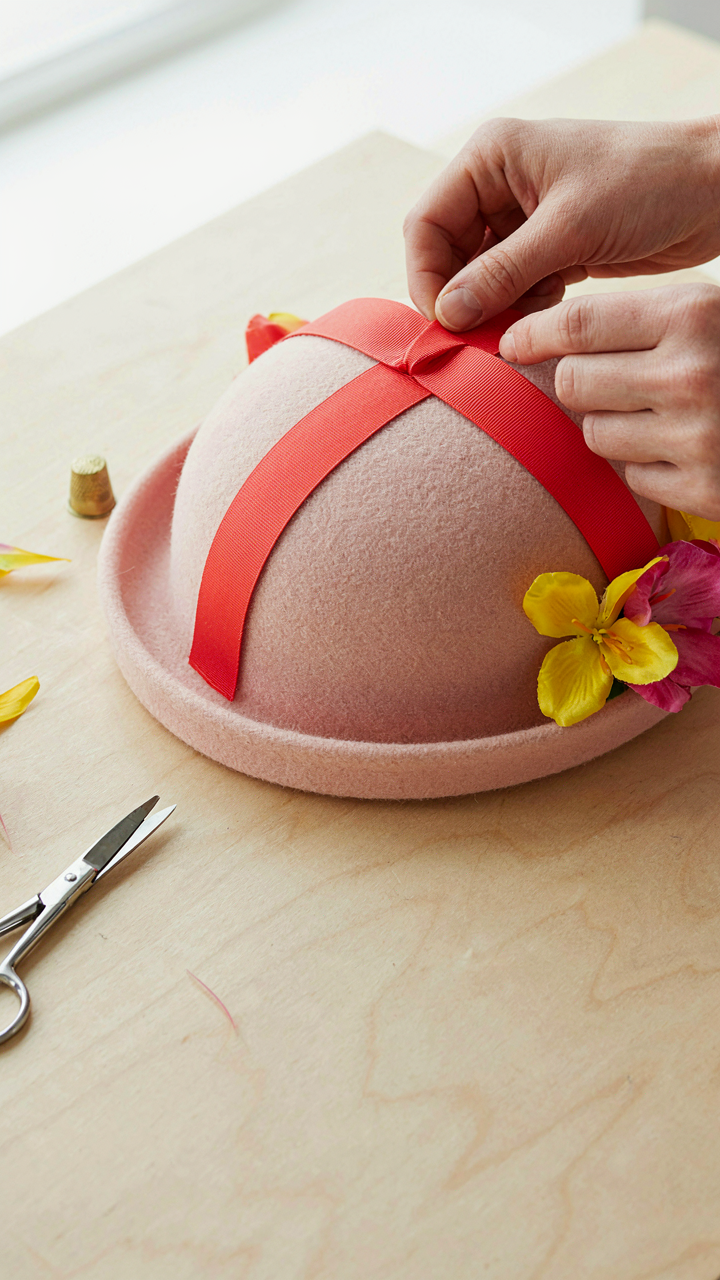
You’re worried a budget fascinator makes you look poor. That’s not the mechanism at work here. Cheap fascinators fail because they use materials that visibly deteriorate under light and movement—synthetic fabrics pill, glue joints separate, wire frames bend out of shape. A fifty-dollar piece from a department store falls apart during the ceremony. A thirty-dollar custom headpiece from a milliner holds its structure. The difference isn’t luxury. It’s material integrity.
Economics teaches us about elasticity—how demand shifts when price changes. In fascinators, there’s an inversion: lower price often signals lower material density and construction shortcuts. A budget fascinator made from felt, wire, and genuine grosgrain ribbon outperforms an expensive one made from cellophane and hot glue. Your guests don’t evaluate your hat by its cost. They notice if it looks like it survived the car ride.
Structure Beats Spending
The real advantage of spending more isn’t aesthetics. It’s engineering. A well-constructed fascinator distributes weight across your head using proper blocking techniques and reinforced anchor points. Cheap versions use single-point attachment and flimsy materials that migrate throughout the event. You end up adjusting it every thirty seconds. The milliner or experienced craft maker knows how to build a piece that stays put and looks intentional after six hours of wear.
What separates a functional budget fascinator from a failed one is whether the maker understands fascinator construction principles. A skilled crafter working with modest materials—sinamay, vintage brooches, quality ribbon—produces something reliable. An untrained crafter with expensive feathers and beads creates visual clutter that shifts and droops. Ask a maker about their construction method before you buy. That conversation reveals everything about what you’ll actually receive.
Deconstructing The ‘Wedding Fascinators’ Myth: Intentional Adornment
The Signal You’re Actually Sending
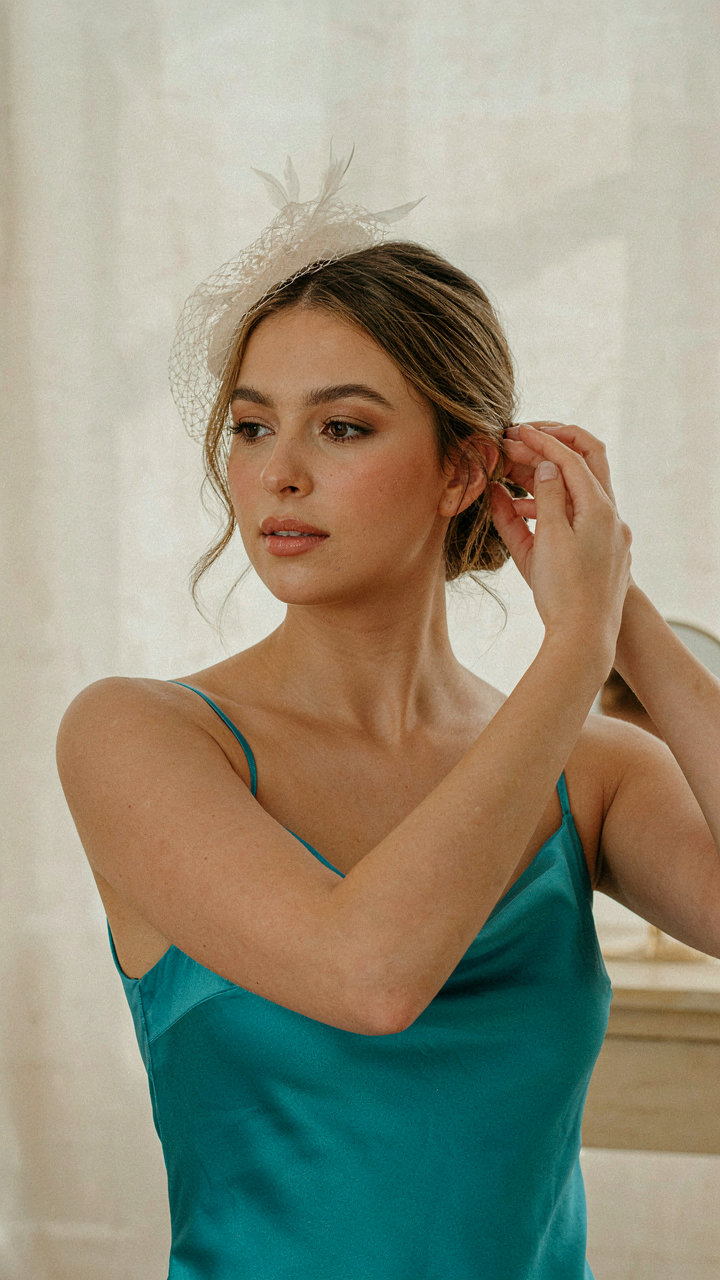
You care about this because you’re afraid of looking like you don’t belong. The real mechanism is simple: a fascinator or hat signals you understood the dress code and made an intentional choice. Most guests wear nothing on their heads. The ones who do communicate preparation and respect for the event’s formality level. That distinction costs almost nothing but reads as everything.

Fascinators emerged from millinery tradition, where headwear functioned as social equipment, not decoration. Think of it like military insignia: the specific object communicates rank and allegiance instantly. A budget fascinator does the same work as a 300-dollar one because the signal isn’t about the price tag. It’s about the presence of the object itself. You either understood the assignment or you didn’t.
Matching The Occasion Without The Misstep
The standard advice says “just wear what feels comfortable.” That’s how you end up underdressed or overcommitting to a look that clashes with the wedding’s actual tone. Read the invitation first. Formal daytime weddings call for structured fascinators or small hats with defined shapes. Cocktail receptions allow decorative pieces that sit lighter. Evening black-tie events work with darker, more dramatic options. The budget doesn’t change the rule; the occasion does.
Your fascinator’s scale and material should echo the bride’s formality level, not fight it. A large fascinator with feathers at a casual garden wedding reads as trying too hard. A simple comb clip at a black-tie evening event reads as under-prepared. The mechanism is proportion matching. Spend time identifying whether the wedding leans formal, semi-formal, or casual. Then select a piece that mirrors that intensity level. This prevents the accidental fashion statement that makes you memorable for the wrong reason.
The “Scarcity Principle” Of Headpiece Selection
When Supply Shrinks, Your Options Get Louder
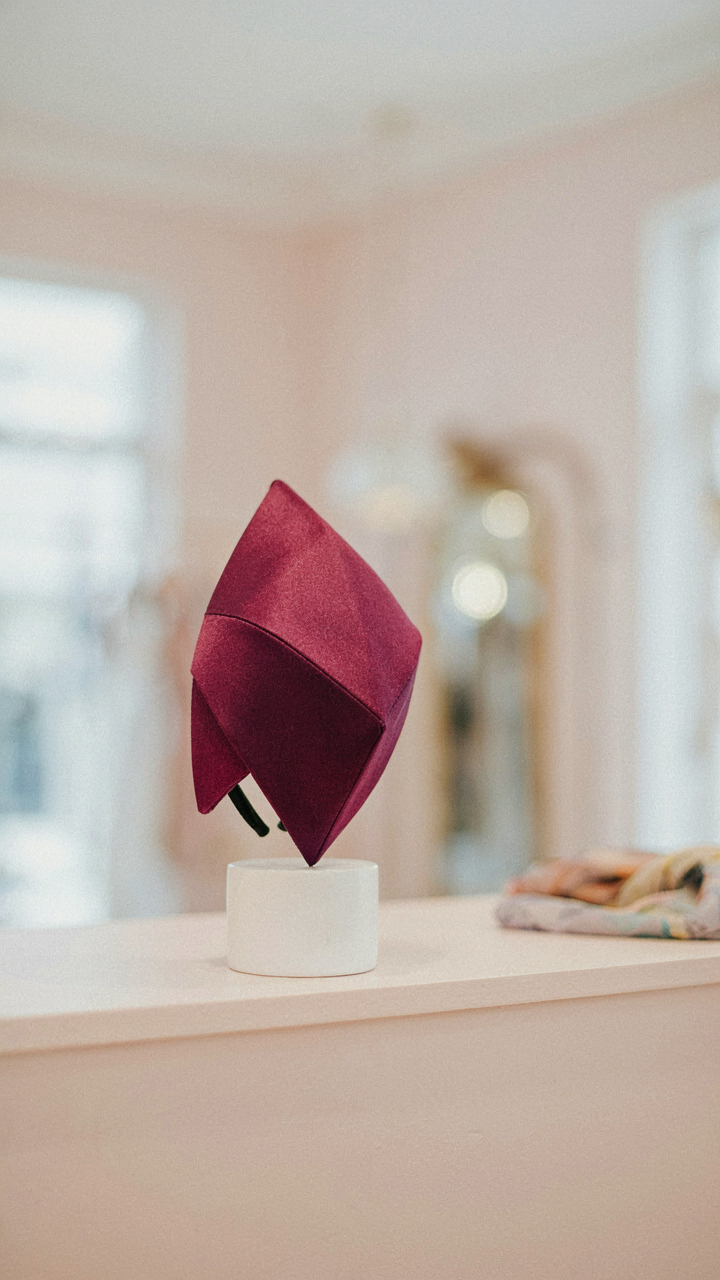
You’re worried that a budget hat makes you invisible. That’s the real fear underneath this section. Here’s the mechanism: economics calls this scarcity pricing. When fewer fascinators exist in a price range, each one stands out harder because competition for attention drops. A thirty-dollar fascinator at a wedding where everyone wore fifty-dollar ones gets noticed. A thirty-dollar fascinator where half the guests wore similar pieces vanishes into the crowd. Scarcity forces differentiation upward, not price upward.

Limited inventory at budget price points means you’re shopping from a filtered pool. Retailers stock fewer designs under forty dollars because demand concentrates on higher margins. This filtering effect works in your favor: you’re choosing from pieces already vetted by boutique owners who stake their reputation on curation. The piece you find became rare not by accident, but by someone else doing the filtering work. That makes it valuable without requiring you to overspend.
The Constraint That Builds Recognition
Limiting your search to three specific retailers forces you to know their stock deeply. Most guests browse everywhere and settle randomly. You browse nowhere and remember exactly what you saw. When the wedding happens and three other guests show up in standard fascinator shapes, yours stands out because you chose it from genuine options, not impulse. Recognition doesn’t require expense. It requires intention meeting limitation.
The mechanism is simple: constraints reduce choice paralysis and increase decision confidence. A guest who spent two hours finding a fascinator on a fifteen-dollar budget owns that choice more than someone who grabbed one from a hundred available options at sixty dollars. Ownership creates presence. When you wear something you genuinely chose from a tight field, your body language shifts. People sense that difference before they see the fascinator.
Beyond Retail: The DIY “Fascinator Hat” Protocol
The Structure First, Decoration Second
You’re doing this because you don’t want to look cheap, but you also don’t want to spend 80 dollars on something you’ll wear once. The real mechanism here is constraint-driven design. When you remove unlimited budget, you’re forced to understand what actually makes a fascinator work visually, which makes your version better than most store-bought options. A fascinator succeeds on structure, not material cost. The base needs to sit at the correct angle on your head and hold its shape. Everything else is surface treatment.

Start with a premade fascinator base. Etsy sellers and craft suppliers sell molded bases in various shapes for three to eight dollars. These are injection-molded plastic or wire frames designed specifically for this application. You avoid the amateur mistake of building a base from scratch with floral foam or wire, which inevitably collapses or shifts. Attach your base to a comb or clip designed for hair, not a temporary pin. This is your foundation. Everything visual builds from a secure, unchanging structure.
Materials That Anchor The Look
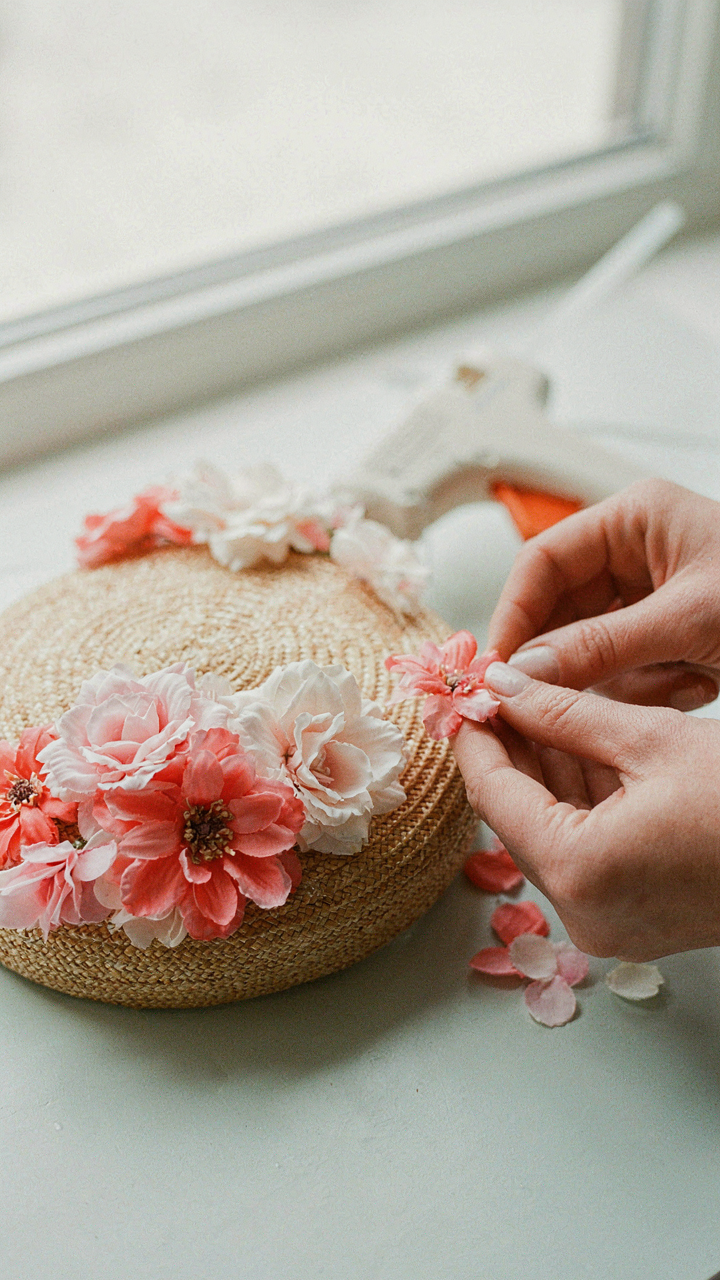
Fascinator design borrows from millinery, where weight distribution determines whether a hat stays positioned or migrates across your skull throughout the event. Your material choices must respect this constraint. Feathers, tulle, silk flowers, and fabric scraps cost between fifty cents and three dollars per component from craft stores. You’re not buying retail fascinator markup. You’re buying raw materials at maker prices. The difference between a twelve dollar base with two dollars of materials and a forty dollar finished fascinator is labor and branding, not quality.
Feathers from craft suppliers come in bunches for two to five dollars. Tulle costs under a dollar per yard. Artificial flowers run thirty cents to two dollars each depending on size. Glue gun sticks are negligible. Your actual material spend lands between four and eight dollars total. The work is assembly, not acquisition. Attach components in layers, starting with the structural elements closest to the base, then overlay decorative pieces. This method prevents the fascinator from looking sparse or top-heavy. Test the weight distribution on your head before you commit final pieces.
Fascinator Hairstyles As Strategic Advantage: Integration, Not Addition
The Hair Foundation Determines Everything
You want the fascinator to look intentional, not like you grabbed it five minutes before the ceremony. That’s the real concern underneath all this. Think of it like load-bearing architecture: your hairstyle is the foundation. If the base is unstable, the fascinator sits on top of nothing. The headpiece only works when hair creates structural support. A fascinator clipped into limp, flat hair reads as costume. The same piece anchored into an updo or textured style reads as purposeful.

The budget constraint forces clarity here. Expensive fascinators hide sloppy hair integration because they command attention through materials. Budget fascinators need perfect placement to compete. That means your hair becomes the real investment, not the fascinator itself. A 15-dollar clip or comb fascinator pinned into a deliberately styled base outperforms a 75-dollar statement piece in loose waves. The mechanism: structural hair creates the illusion of intentional design, which is what the eye actually registers first.
Clip Position Beats Clip Cost
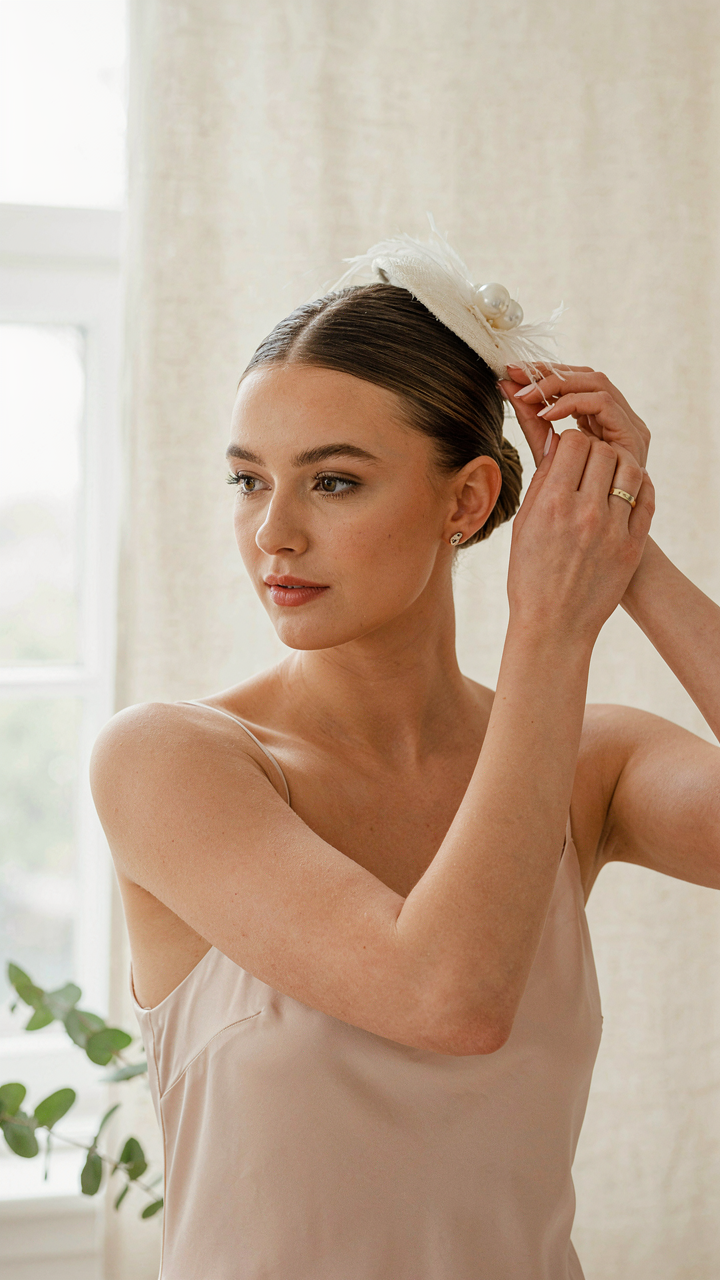
Everyone says find a good hairstylist. That’s incomplete advice. The real variable is where you position the clip relative to hair density and weight distribution. A fascinator placed at the crown where hair is thickest holds firm all day. Placed at the side temple where hair is thinner, even an expensive comb pulls loose by cocktail hour. The position determines whether your headpiece becomes a distraction you adjust constantly or disappears into the styling.
Work backward from venue logistics. Outdoor ceremony with wind and movement? Anchor the fascinator directly into a low bun or twisted section at the nape. Indoor reception where you’ll be seated? Side placement becomes viable because hair stays still and you’re not constantly turning your head. The protocol is simple: identify your highest-movement moments during the event, then position the fascinator in the hair section that will experience the least stress during those moments. Test the stability by moving your head side to side before you leave for the venue.
The “Minimalist’s Headpiece” Method: Less Is More
Stripping Away The Noise
You’re drawn to this section because you fear looking cheap. The real mechanism is that budget fascinators fail when they try to compete with expensive ones using the same visual language. They add more beads, more feathers, more movement to compensate. This backfires. Minimalism in design operates on the principle of signal-to-noise ratio from information theory. Every element must justify its presence or it becomes clutter. A budget fascinator with one strong focal point reads as intentional. One with six competing details reads as desperate.
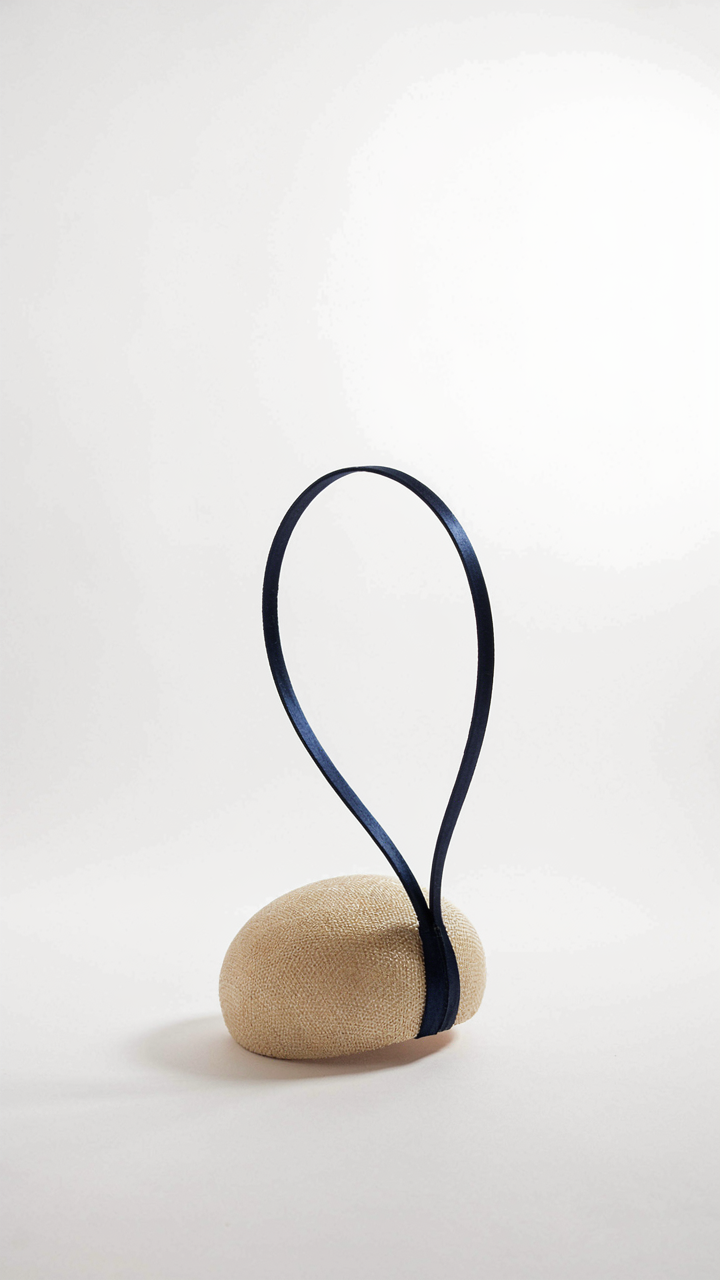
The math is simple: remove ornament until the piece breaks, then add back one element. A single structured loop of millinery wire wrapped in silk ribbon costs three dollars and creates geometry that expensive fascinators copy. A comb base in tortoiseshell resin instead of plastic shifts perception without proportional cost increase. The constraint forces clarity. When you cannot afford to cover a weak structure with embellishment, you build structure that stands alone.
Form That Carries Its Own Weight
This is where most budget advice collapses. People assume form follows budget. It doesn’t. Form follows function, and function costs almost nothing when you stop decorating dysfunction. A fascinator that sits at forty-five degrees requires internal architecture. A hat that stays put requires proper weight distribution, not a prayer. These are engineering problems, not aesthetic ones. Solve the engineering first. Aesthetics compound the solution instead of masking the problem.
A minimalist fascinator that stays in place for six hours beats an ornate one that requires constant adjustment. Choose structured base materials: felt blocks, millinery buckram, or resin combs. Shape them into clean angles or curves. The form itself becomes the decoration. This approach costs less because you buy raw materials instead of pre-assembled cheap components. You spend time, not money. A base that costs eight dollars plus two hours of your labor beats a finished piece that costs fifteen dollars and fails at its primary job.
Repurposing & Reinvention: The “Bridal Hat With Veil” Angle

Transform What You Already Own
You’re hoping someone else solved this problem so you don’t have to think. They didn’t. The mechanism here is constraint breeds innovation. You own pieces scattered across drawers and closets that only need repositioning to work as fascinator components. A basic headband becomes a base. A brooch clips to it. Netting or tulle layers on top. The math is simple: existing materials plus assembly equals new function at zero additional spend.

Most people discard the “wrong” hat because it doesn’t match one outfit. Reality check: a hat with structural bones works across multiple events if you swap the netting, ribbon, or clip attachment. The base structure holds. Only the decorative surface changes. Start by auditing what you own. Identify pieces with actual construction value, not just sentimental weight. Those are your raw materials. Everything else is filler.
Vintage Market Strategy For Real Budget Gains
Thrift stores price fascinators and formal hats at seventy percent below retail because demand is scattered and seasonal. This works like arbitrage in finance: buy where perceived value is lowest, deploy where actual utility is highest. A vintage pillbox or cocktail hat costs three to eight dollars and has the millinery skeleton you need. The veil, feathers, or beading you add costs another five to twelve dollars total. You’ve built a finished piece for under twenty dollars that sells new at sixty to ninety.
The catch: not every vintage find works. Look for hats with intact structure, no stains on the base material, and wearable interior sizing or adjustable bands. Vintage netting or veils may tear, so budget to replace them. Inspect the underside first. A strong foundation means you control the final product. Weak construction becomes a time sink that erases the budget advantage. Hit estate sales and thrift shops in your area two to four weeks before the wedding. Inventory moves faster in off-season months, which means lower prices and better selection.
The Hair With Fascinator Hairstyles Playbook: Tactical Placement

Where It Goes On Your Head
You’re worried the fascinator will look wrong or fall off mid-ceremony, exposing you as someone who doesn’t belong at formal events. The real mechanism is simple: placement determines both aesthetics and stability, and most people guess instead of measure. Think of your head as real estate with zones. The crown sits highest and catches light best. The side temple works for asymmetrical faces. The back of the head requires secure anchoring but stays hidden under hair. Each zone has different visual weight and different security demands.

Position fascinators using the vertical centerline of your face as reference. If your face is wider, place it slightly off-center toward the narrower side to create balance. If your hair volume sits naturally to one side, anchor the fascinator there where it has the most foundation. The goal isn’t artistic expression. The goal is making it look intentional while keeping it fixed.
Anchoring For Eight Hours Straight
Everyone says “just use bobby pins,” which is incomplete advice that leads to failure. Professional stylists use a three-point anchor system, not random pins. Fascinators need contact with at least three separate hair sections to stay stable through movement, sweating, and the physics of weight distribution. This isn’t optional if you’re buying a budget piece that weighs less and catches wind easier.
Start by sectioning the hair where the fascinator will sit. Backcomb each section lightly to create grip texture. Insert the fascinator base into the first section and secure with two bobby pins crossed in an X formation. Move to the second section, repeat the cross-pin method. Finish with a third anchor point at the base of the fascinator’s heaviest component. Test by gently tugging the fascinator in all directions before you leave for the event. It should not move.
Unique Fascinators: The Authenticity Dividend
Your Style Signals Status More Than Budget Does
You want people to notice you picked something intentional, not something everyone else grabbed from the same rack. That’s the real mechanism at play. In economics, we call this signaling—you’re broadcasting taste through choice, not price. A fascinator that reflects your actual aesthetic beats a expensive one that screams “I bought what the trend demanded.” Guests remember the person who wore something that felt like them, not the person who spent the most. Budget fascinators win when they’re personal.

The mass market fascinators all compress toward the same three designs: the feathered cocktail hour piece, the minimal comb clip, the safe black velvet band. None of these tell anyone anything about who you are. A budget fascinator becomes distinctive the moment you stop shopping by category and start shopping by the specific colors, textures, or silhouettes you actually wear. This isn’t about being different for difference’s sake. It’s about alignment—your hat matches how you already present yourself to the world.
Breaking Free From The Premade Template
Everyone warns against looking cheap, but that advice gets the causality backward. Cheap fascinators look cheap because they copy expensive fascinators poorly, not because budget is inherently visible. The real move is to abandon the template altogether. Stop thinking “fascinator” as a product category and start thinking about what millinery elements you can actually use. A single statement feather anchored to a metal comb costs six dollars. A silk ribbon band with a brooch pinned to the side costs four. Neither reads as budget—they read as intentional.
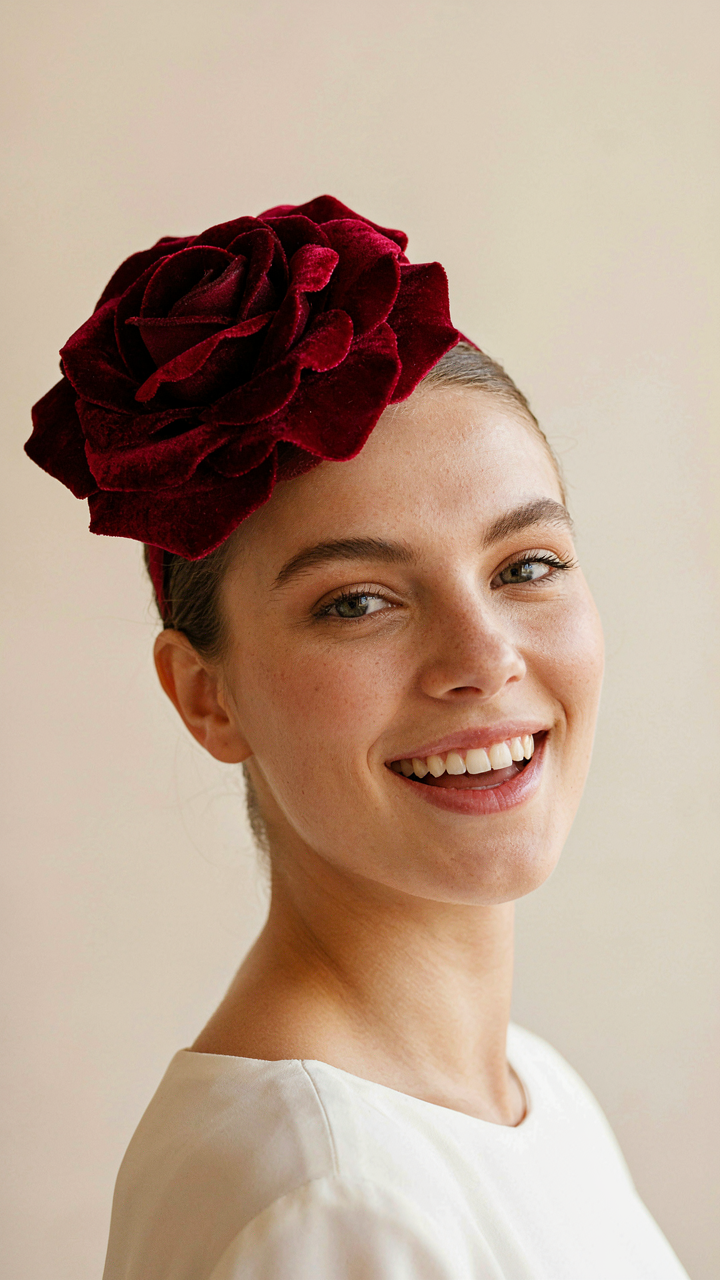
The mechanism that separates “looks cheap” from “looks curated” is constraint. When you work with one strong material or element instead of trying to pack everything into a small space, the piece gains weight. A fascinator built from a single oversized velvet rose with a clear acrylic base looks more expensive than a fascinator cramming feathers, pearls, and rhinestones together. Start by choosing one texture or color story, then build outward. This discipline makes budget constraints work for you instead of against you.
The “Strategic Investment” In Your Look
Wear It Again Without Looking Desperate
You’re worried people will notice you wore the same hat twice. That fear drives bad spending decisions. But here’s the mechanism: an accessory works across contexts only when you strip it of wedding-specific markers. A fascinator with heavy beading and a veil screams “one event.” A structured hat in solid color works at garden parties, cocktails, even professional settings where hats still matter.
The math is simple. Pay seventy dollars for something you wear once and it costs seventy dollars per wear. Pay the same seventy dollars for something you wear four times and it costs seventeen-fifty per wear. This isn’t frugality theater. It’s math. Pick pieces that survive outside the wedding ecosystem.
Pieces That Stack Across Your Life
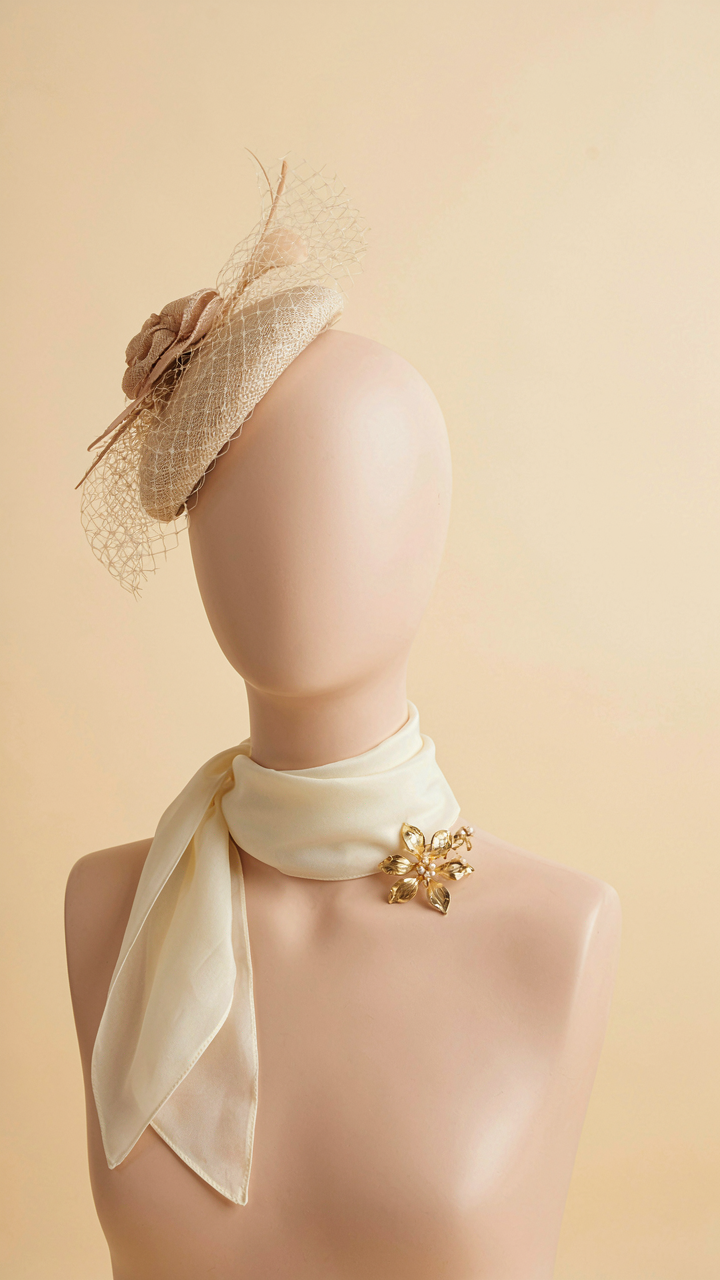
Fascinators and hats build wardrobes through overlap, not isolation. Think of it like a capsule wardrobe but three-dimensional. A nude or black fascinator clips onto multiple outfits. A straw hat in cream works spring through early fall. Structured fedoras in neutral tones pair with casual and formal wear equally. The goal is pieces that don’t announce their context too loudly.
- Neutral colored bases in natural materials: Straw, sisal, and felt in cream, tan, gray, or black adapt across seasons and occasions without looking theme-specific or dated.
- Minimal embellishment that detaches: Removable clips, ribbons, and brooches let you strip down a wedding piece for everyday wear without leaving residue or visible attachment points.
- Classic shapes over trend cycles: Pillbox hats, structured fascinators, and wide-brim styles stay functional across decades, unlike novelty silhouettes that mark their era immediately.
- Adjustable sizing or stretch bands: Internal sizing that accommodates different hairstyles and head sizes means the piece stays useful across multiple occasions and hair changes.
- Neutral trim and simple structure: Avoid heavy florals, dramatic feathers, or ornate details that lock the piece into “special occasion” territory and kill everyday wearability.
Your protocol: Before you buy any hat or fascinator, identify three non-wedding contexts where you’d actually wear it. If you can’t name three, it’s a single-use purchase masquerading as an investment. Buy accordingly.
The Real Obstacle Isn’t Your Budget; It’s Your Conformity

You don’t need more money for a statement fascinator. You need permission to look different. Every affordable option exists. The real cost is social discomfort. Stop waiting for the “right” piece and buy the one that makes you hesitate. Wear it anyway. The guests who matter won’t remember your hat price. They’ll remember you had the guts to stand out while everyone else blended into beige mediocrity. That’s the only fascinator idea that actually matters.