The Unseen Cost: Why “Affordable” Boutonnieres Fail
When Budget Signals Poor Taste
You’re worried people will think you’re cheap. That fear is backwards. The real problem isn’t spending less, it’s making decisions that scream “I didn’t think about this.” In economics, there’s a concept called signal value—the information a purchase communicates beyond its function. A boutonniere sends a signal. A wilted grocery store carnation signals neglect. A thoughtfully constructed small arrangement signals intention, even at half the price of a florist’s default option.
Most grooms default to whatever the florist charges because they haven’t examined the actual mechanics of what makes a boutonniere look assembled versus constructed. You pick the wrong filler, use too much of it, or choose flowers that wilt in four hours, and suddenly your $8 boutonniere looks like a $3 impulse buy. The mechanism isn’t complexity or cost. It’s proportional restraint and material durability.
Perceived Value Through Architectural Clarity
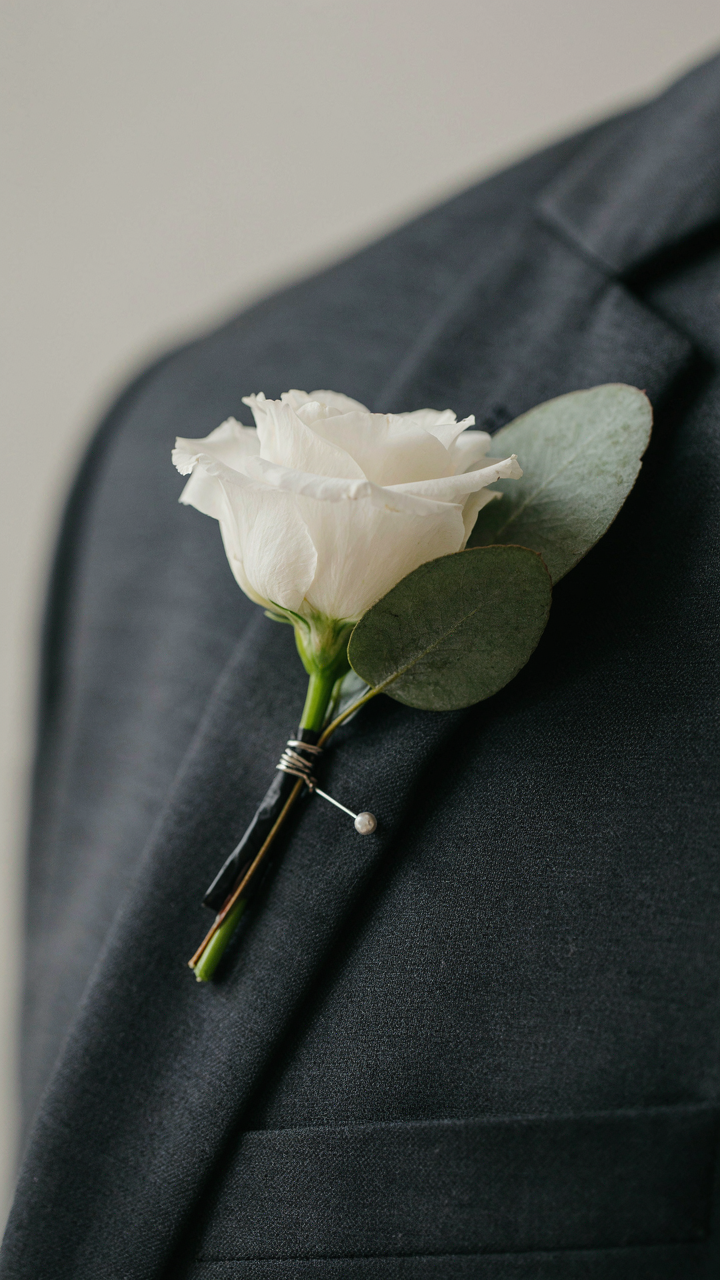
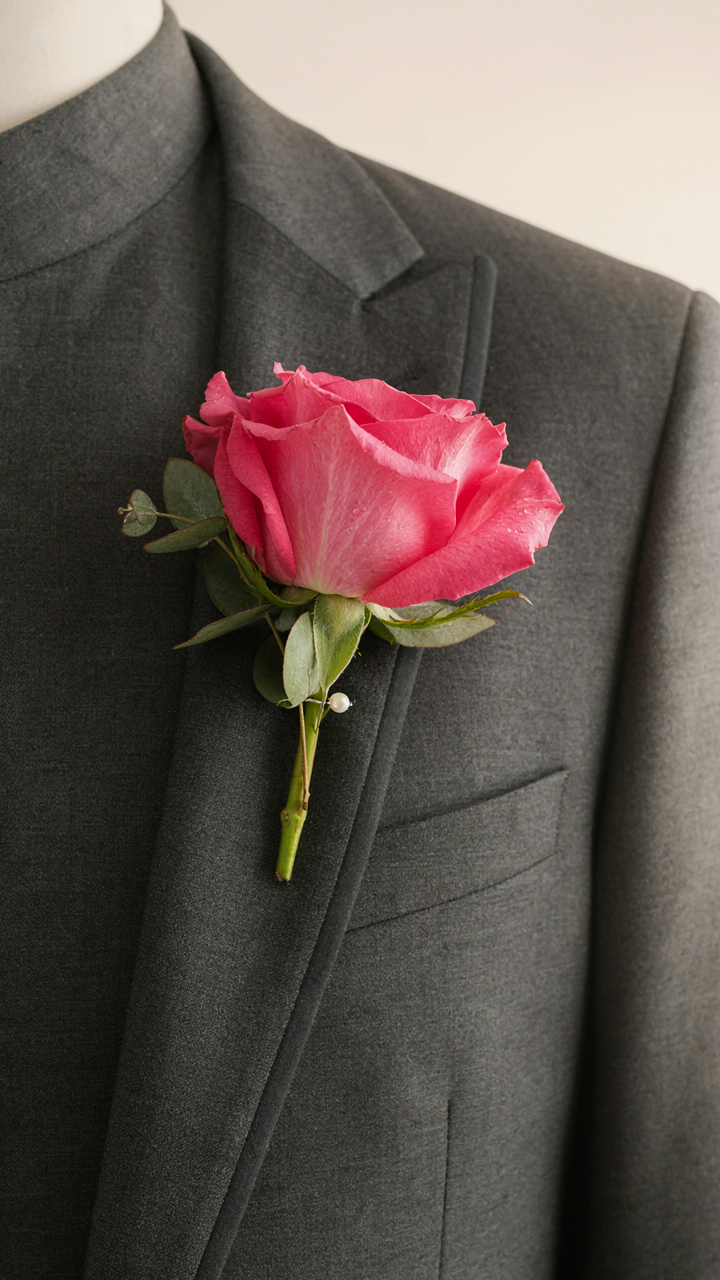
Stop adding more flowers to make it feel substantial. This is what every cheap boutonniere does wrong. Instead, architect it backward: start with one focal flower, choose one complementary texture, add nothing else unless it serves structure. A single garden rose with three stems of eucalyptus wrapped tight reads expensive and intentional. A handful of mixed flowers with baby’s breath reads desperate to fill space.
Material selection changes perception instantly. Seasonal, locally grown flowers cost less than imported ones and look fresher longer. Structural greenery like eucalyptus or leather leaf adds visual weight without adding cost or bulk. The boutonniere should fit in your buttonhole cleanly, not protrude like a corsage. Tight construction—actual wiring and taping, not just rubber-banding—makes the difference between “that fell apart by the reception” and “I noticed it looked the same all day.”
The Minimalist’s Mandate: Simple Boutonniere, Maximum Effect
One Element, Perfectly Chosen
You want people to notice the boutonniere without noticing you’re cutting corners. That’s the real fear here. The mechanism is constraint: when you remove options, the remaining choice becomes unmissable. In economics, this is called the scarcity principle. Apply it to boutonnieres and you stop competing on complexity. You compete on the single element’s quality.

A single stem of garden rose, hypericum berry, or even a well-conditioned eucalyptus leaf reads louder than a three-inch cluster of filler. The groom’s boutonniere is small real estate. Florists pile material there because they charge by density. You pay by impact instead. Pick one botanical element that can stand alone, then ensure it’s fresh and positioned correctly on the lapel.
The Cost Of Consensus Is Waste
Everyone gets told to add greenery, add texture, add depth. This advice is incomplete and expensive. The standard boutonniere budget inflates because florists default to the “safe” formula: flower plus filler plus foliage. You strip that down and suddenly a ten-dollar stem becomes a fifteen-dollar statement instead of a thirty-dollar cluster nobody remembers.
Rejection of filler isn’t minimalism for its own sake. It’s resource allocation. A single spray rose, ranunculus, or garden carnation holds its own for eight hours when kept cool and hydrated properly. Skip the baby’s breath, skip the ruscus, skip the hypericum unless it’s the focal point. The boutonniere you remove half the material from costs half as much and photographs twice as sharp.
The “Scarcity & Abundance” Protocol For Boutonniere Ideas
When Seasonal Blooms Work Against Your Budget
You want to look thoughtful without admitting you’re price-sensitive. Here’s what actually happens: most grooms pick expensive flowers in the wrong season, then blame their florist for high costs. Economics calls this ignoring supply elasticity. In boutonnieres, seasonal availability directly controls price. When a flower is naturally abundant, its cost drops. When it’s out of season, you pay markup on storage, shipping, and demand. The groom who wins isn’t the one with the rarest rose. It’s the one who builds his boutonniere around what’s actually growing right now.

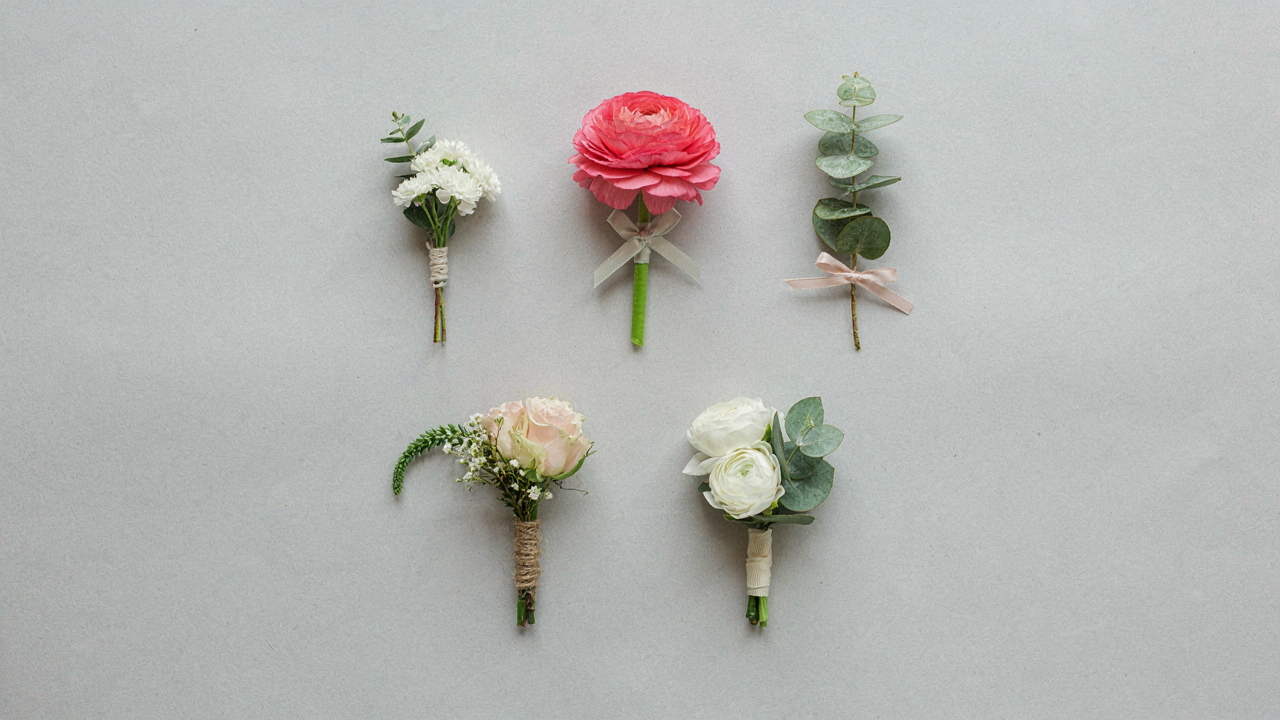
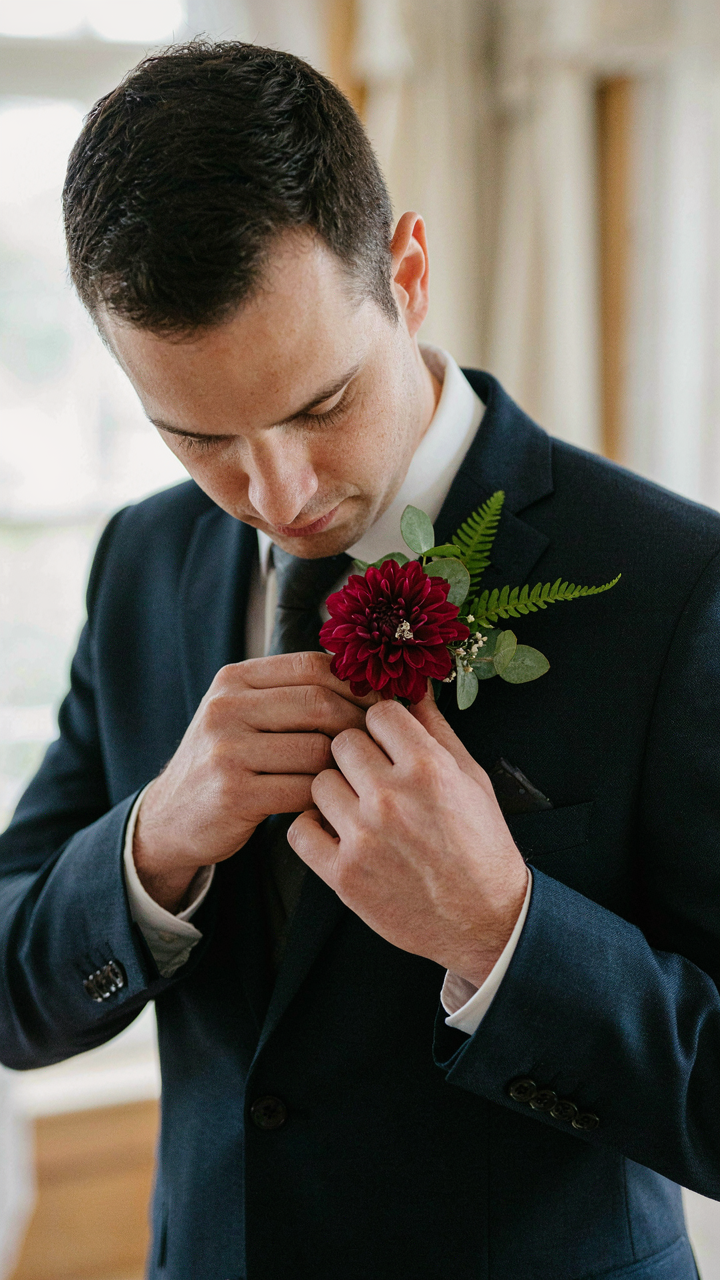
Every region has a predictable bloom calendar. Spring means tulips, ranunculus, and spray roses at their cheapest. Summer brings garden roses, lisianthus, and dahlias. Fall offers chrysanthemums, hypericum berries, and solidago. Winter defaults to carnations, statice, and forced blooms at premium prices. Work backward from your wedding date to your florist three months prior. Ask directly: what’s at peak harvest that month? That’s your anchor flower. The cost difference between a peak-season bloom and an off-season one is 40 to 60 percent per stem, sometimes more. Seasonal thinking isn’t romantic. It’s math that saves money without sacrificing appearance.
Non Floral Elements Create Real Differentiation
The common move is to add more flowers to a boutonniere and call it premium. That’s wrong. The real move is replacing flowers with materials that cost less, last longer, and read as intentional. Manufactured scarcity in design works this way: limit the material supply, increase perceived value. Leather, wood, metal, and fabric forced scarcity by nature. They don’t wilt. A single hypericum berry branch with leather wrapping reads more curated than three standard roses. Your eye registers restraint as sophistication.
Eucalyptus leaves, Italian ruscus, and salal greenery cost a fraction of filler flowers but carry visual weight. Leather strips, twine, or linen ribbon around the stem base cost nothing but shift the entire aesthetic. A single statement element like a vintage pin, wooden bead, or metal accent transforms a simple stem into a designed object. Budget boutonnieres fail because they look sparse. Strategic non-floral elements eliminate that hollowness. The mechanism is simple: replace volume with intentionality. Order your boutonniere with one premium seasonal bloom, structured greenery, and one non-floral accent. That’s the formula that works at any price point.
DIY Boutonniere Wedding: Your Time, Not Just Your Money
The Hidden Cost Of Assembly
You think DIY saves money because you’re not paying a florist’s markup. That’s incomplete math. What you’re actually doing is trading hourly labor you could bill elsewhere for materials that cost less. You’re not running a charity for yourself. Every hour spent wiring stems and gluing greenery is an hour not spent on work that generates income. Most people who calculate DIY savings ignore this completely, which is why they feel broke after “saving” money.

The real mechanism is opportunity cost from economics. You have a finite number of hours before the wedding. Spending six hours assembling boutonnieres means you’re valuing your time at zero. If you bill any income at all, that time has a price. Florists price their labor into their quotes because they understand this. A DIY boutonniere that costs twelve dollars in materials but requires two hours of your attention actually costs you whatever you’d make in those two hours plus twelve dollars.
Assembly Line Discipline Beats Scattered Effort
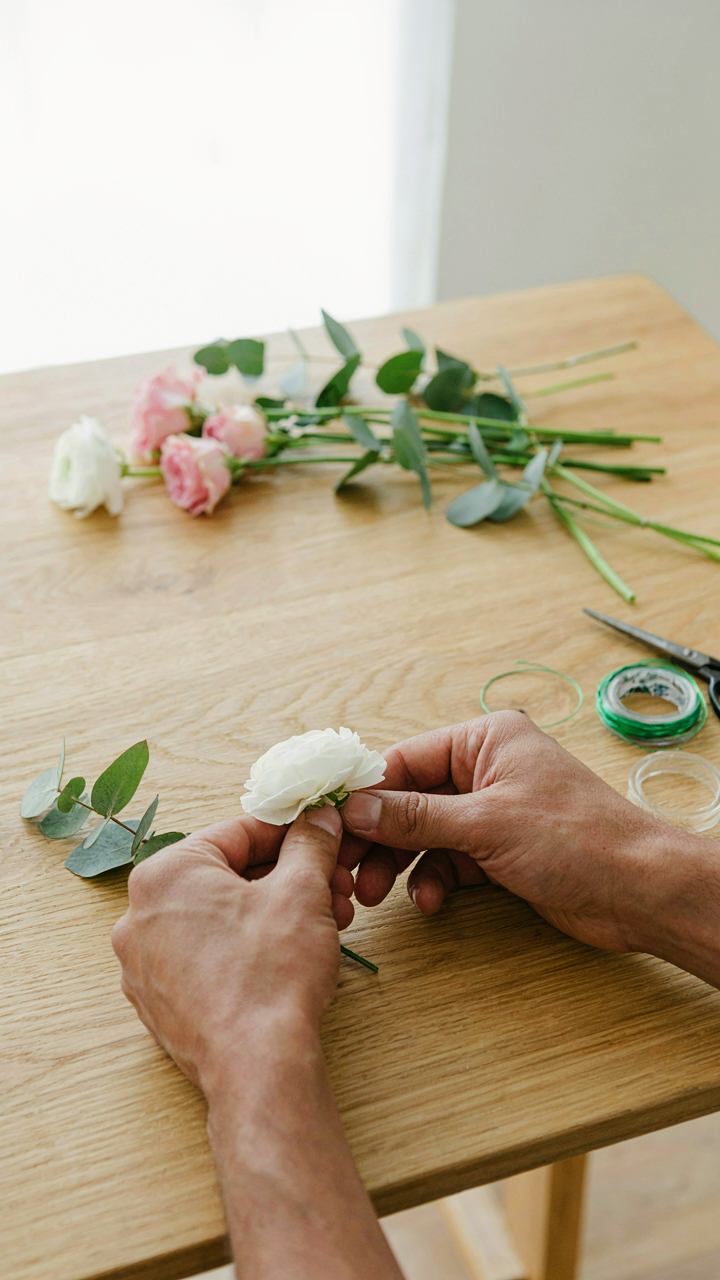
Manufacturing plants don’t ask workers to build entire products one at a time. They use station rotation. You prep all stems, then all ribbon wraps, then all water picks, then all glue steps. This batching cuts setup time, improves consistency, and kills the mental switching cost between tasks. Most DIY boutonnieres fail because people make them individually, reinventing the process each time.
Set up three distinct stations: prep station with stems and greenery sorted, assembly station with ribbon and wire, and finishing station with floral tape and water picks. Build all boutonnieres through station one before moving to station two. You reduce decision fatigue and finish faster than scattered work. Time your first complete boutonniere, then multiply by the number you need. If one takes twenty minutes in isolation but the batch of twelve takes ninety minutes total, you’ve found your actual labor cost and can decide if it’s worth the savings.
Beyond Flowers: Unexpected & Affordable Boutonniere Ideas
Texture Without The Florist Markup
You want to look like you spent more than you did. That’s the real reason you’re reading this section. The mechanism is simple: florists charge exponentially more for labor than materials. Fabric, feathers, and wire cost pennies. You assemble them yourself or use a seamstress for an hour, not a designer for a week.
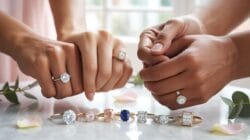
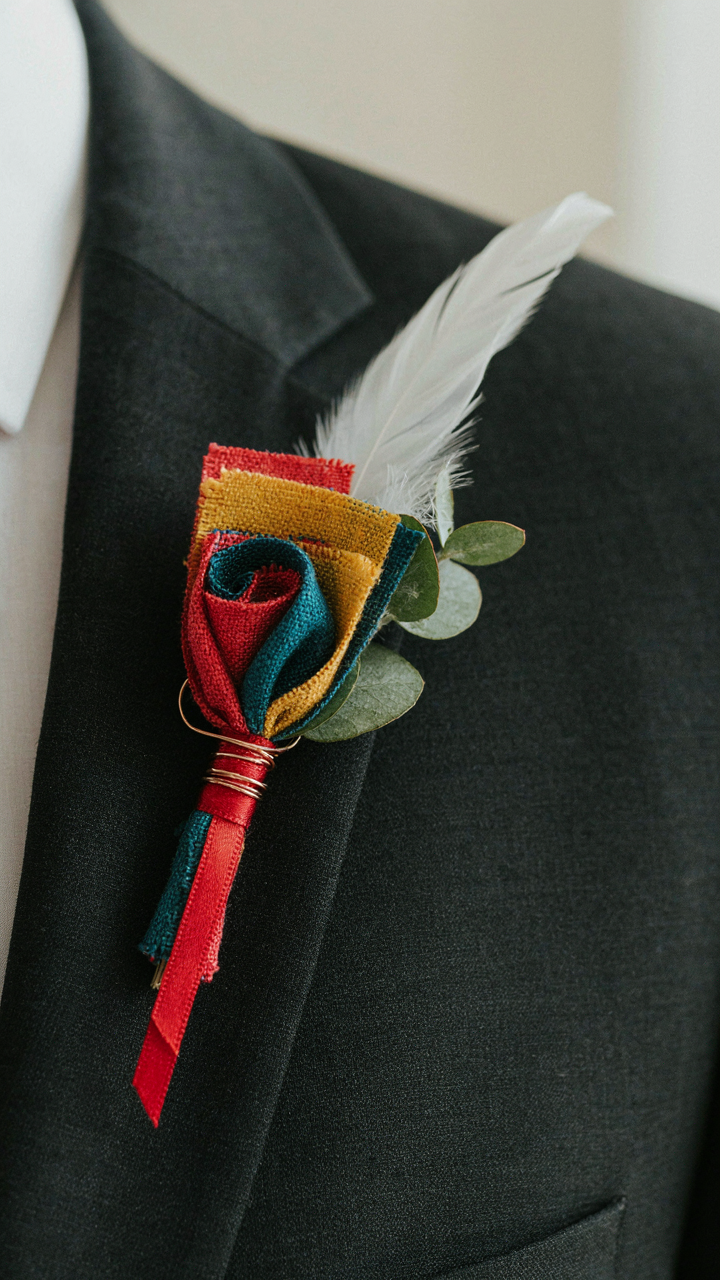
Fabric scraps work. Pull vintage ribbon from thrift stores, or use canvas, linen, or cotton twill cut into strips and layered. Feathers come from craft suppliers for under five dollars per bunch. Wire—floral wire, copper wire, or even thin branches—creates structure without adding cost. The Art Deco movement proved that geometric wire forms read as intentional design, not budget cutting. Stack these materials behind a single focal flower or greenery stem, and you’ve shifted from “simple” to “minimalist by choice.”
Symbols That Carry Weight
Skip the generic add-ons florists sell you. A meaningful token anchors a boutonniere in actual story. Thread a family heirloom button through the stem wrap. Sew a tiny patch of your grandfather’s old suit fabric into the ribbon. Include a single vintage coin or a shell from your honeymoon location. These aren’t cute touches—they’re anchors that make the piece matter beyond appearance.
The constraint is intentional. One meaningful object per boutonniere beats five decorative ones. Source the token before you source the flowers. Find the button or fabric or object first, then build the boutonniere around it. Attach it to the stem wrap with thread or thin wire so it won’t shift during the ceremony. The token becomes the story you wear, not decoration that fills space.
The Groomsmen Boutonniere Gambit: Differentiation By Design

How The Groom Becomes The Focal Point
You want the groom to look different without announcing it like a billboard. The real mechanism here is contrast through restraint. Most weddings fail this because they either make all boutonnieres identical (wasting the hierarchy) or they overdesign the groom’s piece so it screams “look at me” (which reads as insecurity). The groom should dominate the visual frame through subtraction, not addition. Remove one element from the groomsmen’s pieces that remains on his. Swap materials. Change only the binding or the secondary flower.
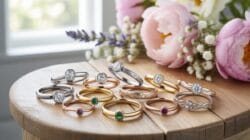
Visual hierarchy works the same way as information hierarchy in design. The eye moves toward what’s different, but only if the difference is earned through logic, not novelty. If groomsmen wear carnation with dusty miller and the groom wears the same carnation with Italian ruscus instead, that one material swap creates instant differentiation at zero budget increase. The groom doesn’t need a larger piece or exotic flowers. He needs the one choice that makes sense only for him. This is why most budget advice fails here: it treats the groom’s boutonniere as a standalone object instead of a relational statement within the group.
Batch Assembly Without Losing Your Margins
Building multiple boutonnieres fast requires treating this like a production line, not individual craft. Separate your workflow into stations: prep, assembly, wrapping, and finishing. Groomsmen boutonnieres move through stations one through three identically. The groom’s piece diverges only at wrapping or finishing. This saves money because you’re not switching materials mid-process, and it saves time because repetition builds speed.
- Station one: Stem prep: Cut all stems to 3 to 4 inches, strip leaves, soak in water. Batch 10 to 12 pieces at once before moving forward.
- Station two: Flower placement: Insert focal flower first, then secondary flowers around it in the same pattern for all groomsmen pieces. Reserve the groom’s piece for last.
- Station three: Greenery fill: Add greenery to all groomsmen pieces simultaneously. This is where most assembly time lives. For the groom, substitute or add one type of greenery at this step alone.
- Station four: Wrapping and pinning: Wrap groomsmen boutonnieres with the chosen ribbon or twine. Wrap the groom’s with a different material, or add a small accent (a single leaf, a different colored tie) at the binding point.
- Station five: Final inspection: Check stem length, secure all ties, ensure pins sit flush against fabric. Perform this check on all pieces before the wedding morning.
The timeline math: batch prep cuts assembly time by 40 to 50 percent compared to making each piece individually. Create the groom’s piece last so you see the visual relationship with finished groomsmen boutonnieres before finalizing his. This prevents the common mistake of making his piece too elaborate or too subdued. Measure everything once, then execute the same cut on all stems to lock in consistency and speed.
The Ecosystem Of Boutonnieres Diy: Borrow From Biology

Form Follows Function, Not Fashion
You’re reading this because you want permission to skip the florist markup without looking cheap. Here’s the mechanism: in biology, form follows function because organisms evolve to survive, not to impress. Your boutonniere operates the same way. Every element serves a job: the focal flower draws the eye, the filler adds volume without weight, the greenery holds structure and hides mechanics. Strip away what doesn’t work. Most boutonniere advice starts with aesthetics and bolts function on afterward. Backwards. Start with what needs to happen physically, then build the look around it.

A boutonniere that falls apart at the reception or wilts by the ceremony isn’t affordable, no matter the price. Function determines which materials survive the day: greenery that doesn’t crush under a jacket, focal flowers that don’t drop petals, binding that holds under sweat and movement. When you reverse-engineer from durability first, you eliminate 80 percent of the expensive options that exist only because they look good in photos. The cheap route isn’t about skipping quality. It’s about refusing to pay for problems you’ll never face.
Materials That Hold Each Other Up
Symbiosis in ecology means organisms survive better together than alone. Your boutonniere materials work the same way: each element stabilizes the others, reducing what you need to spend on individual components. A leather leaf behind a soft flower protects it from crushing. A sturdy branch creates internal architecture that lets you use fewer expensive blooms. Filler greenery like salal or ruscus fills visual space without the per-stem cost of roses or ranunculus.
Build boutonnieres by pairing materials strategically, not by listing “one of each” like you’re shopping. Start with one structural element: a branch or firm greenery that forms the skeleton. Layer the focal flower into that frame so it stands without tape or glue doing the work. Add secondary filler that interlocks with what you’ve already placed. This stacking method means each addition makes the whole thing stronger. By the time you secure it, the structure already holds itself. That’s where your budget goes: into materials that earn their place by doing work.
Prom Boutonniere Ideas Reimagined: The Evergreen Appeal

Design Over Fleeting Trends
You want your boutonniere to look current without dating the photos in five years. That’s the real fear driving this section. The mechanism is simple: trends die because they’re built on visual novelty, not function. Evergreen designs survive because they solve a problem elegantly. Greenery with a single focal flower works across decades because it balances visual weight and cost. A spray rose and eucalyptus from 2010 looks identical to one from today. The formula doesn’t change.

Most advice tells you to “pick timeless colors” without explaining why certain structures outlast others. The answer lives in constraint. When you limit yourself to one dominant flower plus filler, you remove the variables that age fastest. Clustered baby’s breath dates faster than sparse greenery because clustering was trendy, not structural. Sparse arrangement is structural: it reduces cost, increases durability, and photographs cleanly. Build your boutonniere around necessity, not aesthetics, and it will always read as current.
Components That Reuse Across Events
Borrowed from industrial design, think of modularity: the principle that single parts serve multiple systems. Your boutonniere components should function beyond the wedding. A quality pin, premium greenery, and wire mechanics can transfer to corsages, reception table stems, or usher arrangements. You’re not buying a boutonniere. You’re buying elements that generate three uses from one purchase.
Most boutonnieres waste 60 percent of their materials on bulk and filler that disappears after one day. Instead, buy premium elements in smaller quantities: two stems of eucalyptus, one focal bloom, one pin that doesn’t corrode. These components cost less upfront and integrate into bridesmaids’ bouquets or ceremony arrangements. After the wedding, the pin attaches to a boutonniere for the rehearsal dinner. The greenery dries and stores for future events. This approach cuts your per-use cost by forcing overlap into your planning from the start.
The Last Detail: Securing Your Boutonniere Wedding Statement
How To Pin It Without Damage
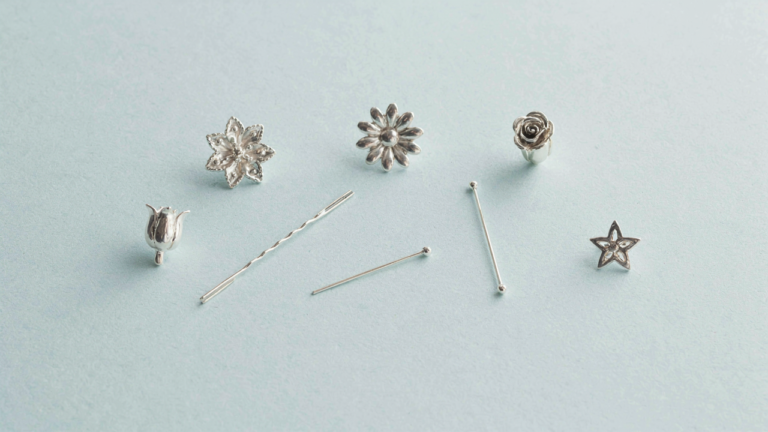
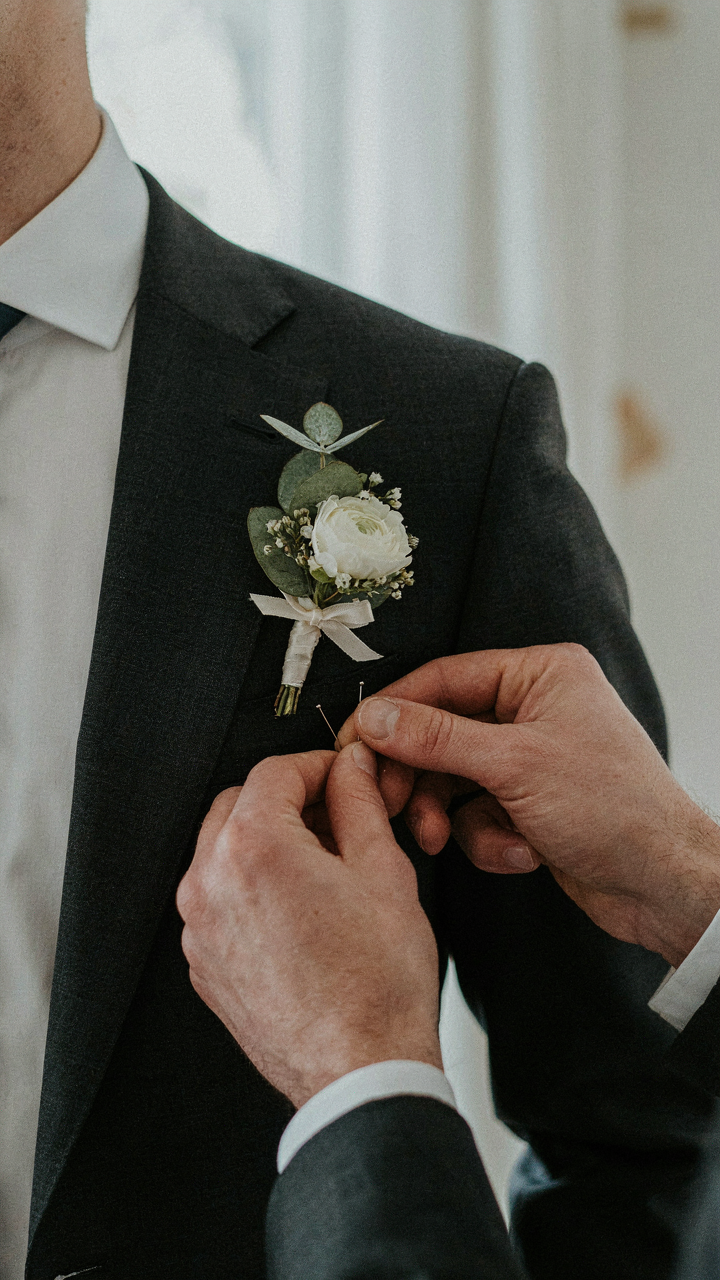
You care about this because a boutonniere that shifts or falls apart signals carelessness, and you’ll be photographed hundreds of times. Here’s the actual mechanism: a boutonniere fails when the pin placement fights the lapel’s structure instead of working with it. The lapel is a fold—not a flat surface. A straight pin inserted perpendicular to the fold will rotate and slip. Insert at a 45-degree angle, parallel to the lapel’s fold line, and the fabric tension locks the pin in place. One pin through the stem, one through the back of the lapel fabric itself, angled to catch the weave. This isn’t overthinking it. This is how it stays secure for twelve hours.

The second pin prevents rotation entirely. Run it through the boutonniere stem horizontally, then back through the lapel fold behind where the first pin sits. The two pins create opposing vectors—the boutonniere cannot twist. This takes ninety seconds. Most people use one pin and wonder why their boutonniere dangles by photos six. The florist should do this before handing it over. If they don’t mention angle or dual-pin strategy, they’re guessing.
Keeping Flowers Intact Until Evening
Longevity in floristry follows the same principle as food preservation: reduce water loss and delay oxidation. A boutonniere loses hydration through cut stems exposed to air and heat from body warmth. Wrap the stem in damp floral foam or water-saturated cotton wrapped in foil. This creates a micro-reservoir. The foil reflects body heat outward. Change nothing about the bloom itself—the stems do the work. Without the wrap, a delicate flower wilts by hour six, especially in heat or dry venues.
Keep the boutonniere off the lapel until the ceremony starts. Thirty minutes of air exposure before photos accelerates dehydration. Store it in a cool room, stem wrapped and upright in a glass of water. The florist should deliver it an hour before the ceremony, not the night before. If traveling between locations, keep it in a box, not a car seat where heat accumulates. At the reception, move the boutonniere to a cooler indoors if possible, or refresh the stem wrap with fresh water-soaked cotton before the final photos.
Your Biggest Obstacle Is Believing Expense Equals Value. True Style Is A Signal, Not A Price Tag
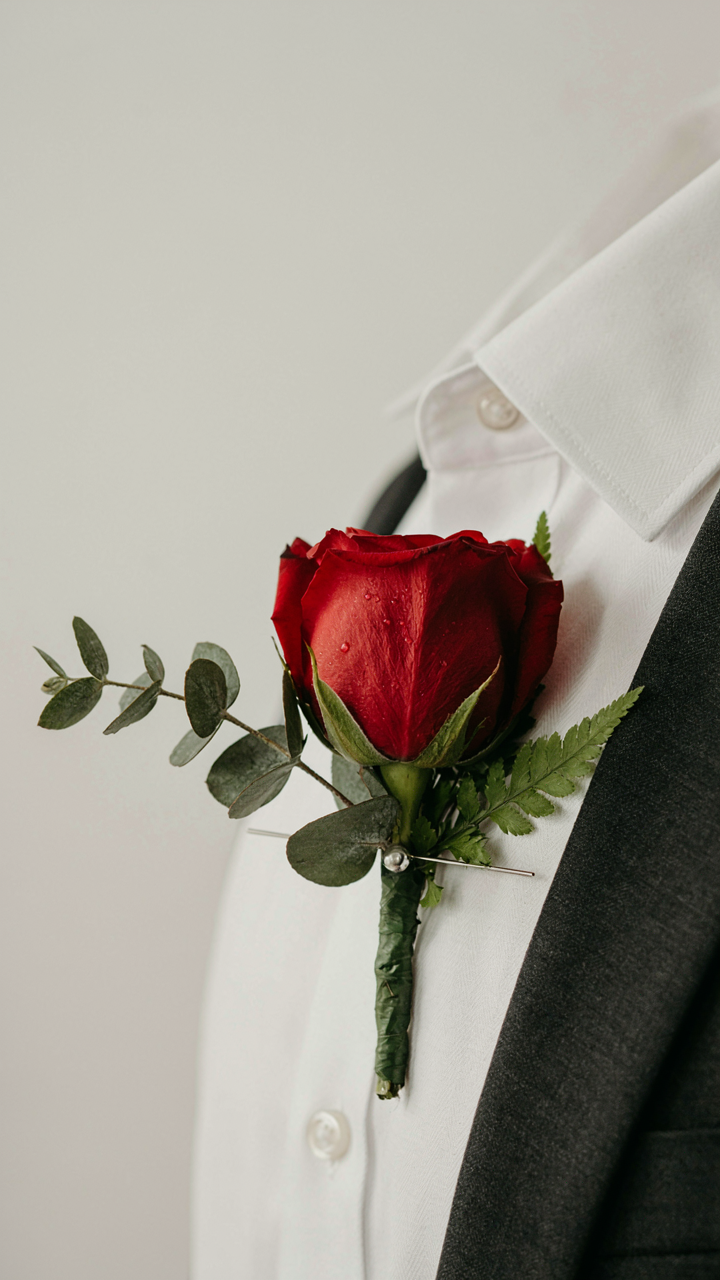
Most grooms sabotage themselves by assuming a boutonniere costs money to impress people. It doesn’t. A three-dollar grocery store rose arranged with intention beats a fifty-dollar florist bouquet designed by committee. Stop treating your boutonniere like a price point. Pick one flower you actually like, add greenery that matches your suit, and move on. Confidence comes from knowing you made the choice yourself, not from how much you spent proving it.