The Intention Inversion: Why Small Is The New Grand

What Grand Actually Means
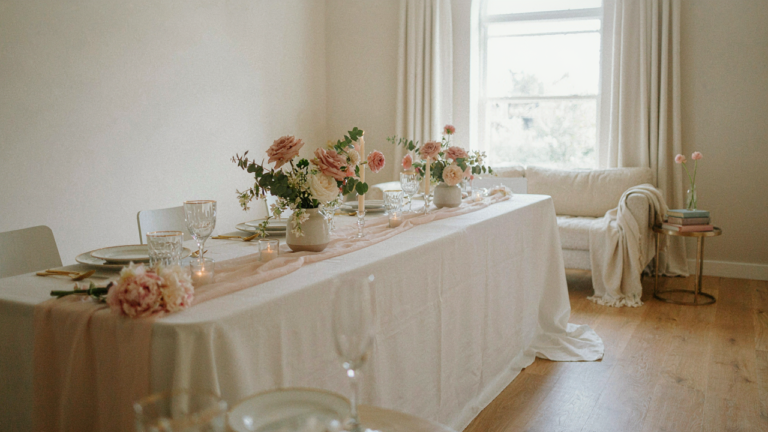
You’re worried people will think your wedding is lesser because fewer showed up. The mechanism is inverted: grandness now lives in constraint, not abundance. Borrowed from design and architecture, the signal-to-noise ratio applies here—fewer elements, each one intentional, reads as more refined than clutter. A 200-person event with half the guests on their phones broadcasts noise. An eight-person dinner where everyone speaks directly to the couple broadcasts signal. Grandness is no longer about scale. It’s about deliberation.
The wedding industry built its economics on volume. Catering companies, venues, and vendors all price around headcount. Fewer guests means fewer transactions, which is why you’ll hear “but it won’t feel special” from people whose income depends on you believing that lie. Special is the opposite of what 150 strangers in a rented ballroom produce. You control every moment when family only attends. That control is what grandness actually is.
The Real Price Of Playing By The Rules
Everyone states the surface costs: flowers, food, photography. Nobody states the actual cost: emotional labor spent managing people who aren’t invested in your marriage. Psychologist call this “social debt”—each guest creates an obligation. Invite 150 people, you’ve created 150 micro-relationships to maintain during an event designed to celebrate two. The conventional wedding demands you perform gratitude to people who came for the open bar, not for you. Small wedding immediate family only erases that debt entirely. You keep the margin.
The hidden tax runs deeper than the event itself. Post-wedding, you’ll hear comments on your choice. You’ll field questions from excluded acquaintances. You’ll spend mental cycles managing the optics of a decision that was never about optics. A small family wedding costs you zero social currency because the only people present already chose you. They’re not evaluating you. They’re witnessing something. That distinction—between being evaluated and being witnessed—is where you reclaim your actual wedding.
The “Family Only” Filter: Pruning Your Guest List For Impact
Draw The Line Before Anyone Asks
You’re afraid of the social blowback. That’s the real reason you’re reading this section. The mechanism is simple: you haven’t decided yet, so everyone else gets to decide for you. The moment you commit to immediate family only, you own the boundary instead of managing other people’s disappointment for months. A boundary announced early stops the slow erosion of your original plan. Vagueness costs you control.

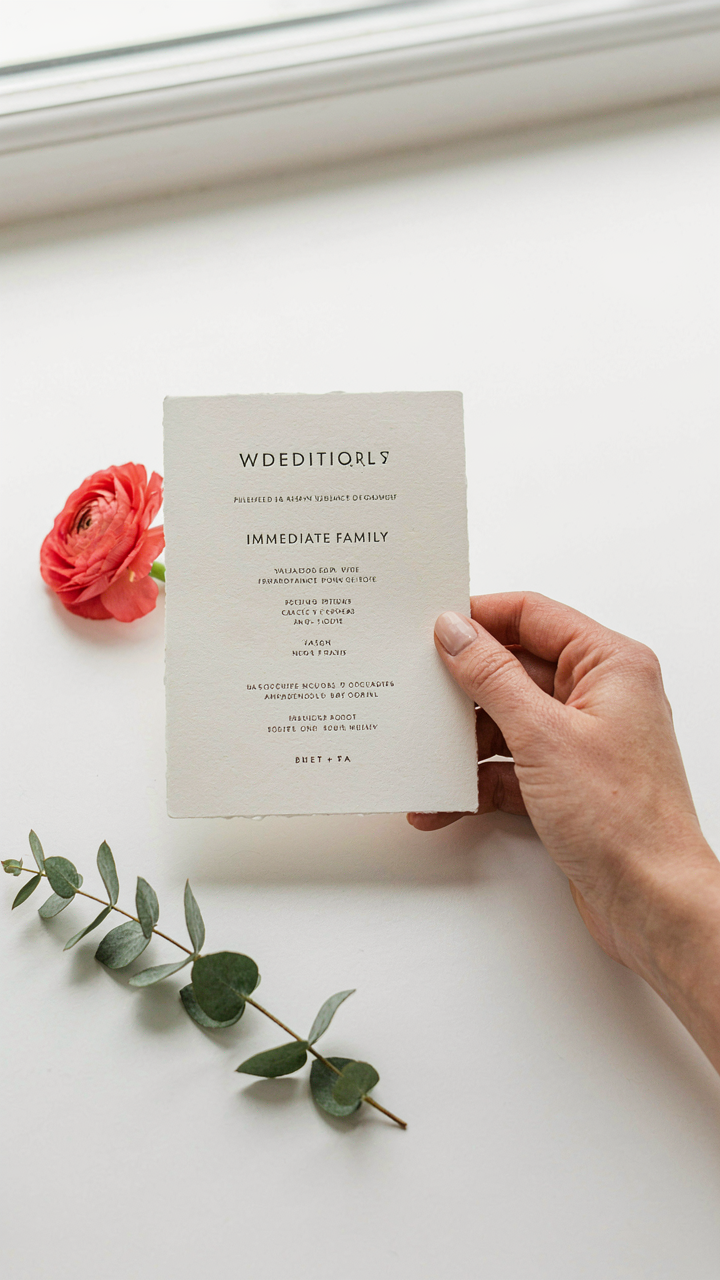
Define immediate family now, in writing, before you tell a single person. Write down who that includes: parents, siblings, their spouses, their children under a specific age if relevant. This is not a suggestion—it’s your decision framework. Without it, you’ll face repeated negotiations disguised as questions. “Does my partner’s cousin count?” becomes a trap if you haven’t already settled the rule.
The Conversation Protocol
This is where most people fail because they treat the announcement like a social event instead of a transaction. You’re not asking permission or inviting debate. You’re informing. The script: “We’re having an immediate family only wedding. That means [your specific definition]. We’re excited to celebrate with you there.” Done. No apology. No justification. No “we wish we could invite everyone.”
When someone pushes back, you repeat the boundary unchanged. “I understand, and we’re keeping it to immediate family.” Don’t explain why—explanation invites negotiation. Expect the discomfort. It passes faster than the regret of a bloated wedding you didn’t want. Document these conversations if tension runs high, so you have a record of what you actually said versus what people remember you saying later.
The Elopement Blueprint: Architecting Your Intimate Wedding
What Elopement Actually Means
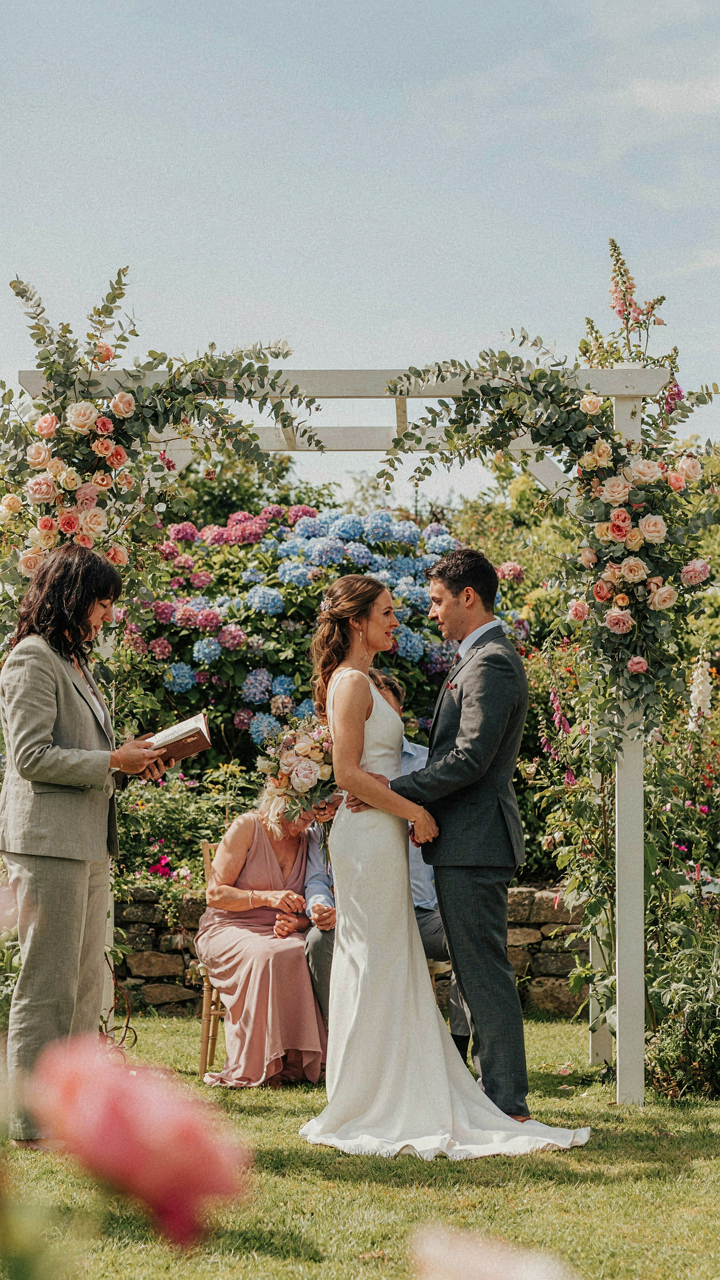
You’re drawn to this section because you want permission to skip the performance. Most people frame elopement as romantic escape or budget hack, but that’s backwards. Elopement is a decision architecture problem borrowed from systems design: you’re removing variables to increase signal. In systems terms, elopement is your signal-to-noise ratio. A small wedding with immediate family only cuts out the audience, the logistics, the competing interests that muddy your actual priority: marrying the person next to you.

The word “elopement” has shifted. It no longer means running away at midnight. Modern elopement means you’ve chosen your guest list first, then built everything else backward from that constraint. You’re not hiding. You’re optimizing. The mechanism is simple: fewer people means fewer decision points, fewer stakeholders, fewer reasons to compromise on what matters to you.
The Elopement Timeline And Execution
Start with your venue, not your date. Most couples reverse this and waste months. Your immediate family fits specific spaces: a backyard, a restaurant private room, a cabin, a park pavilion. Once you know where you’re getting married, your date becomes obvious because you book around availability, not around some arbitrary season everyone else picked.
- Venue first, date second: Confirm your location is available before you send save-the-dates. This eliminates rescheduling chaos and locks your timeline immediately.
- Guest list as design constraint: Write down exactly who attends. Immediate family means parents, siblings, grandparents if they’re central to your life. This number drives catering size, table count, and logistics.
- Vendor consolidation: One caterer who does ceremony setup. One photographer. Skip the planner unless you’re managing from another continent. Fewer vendors means fewer communication threads and faster decisions.
- Six to eight week runway: Small weddings need less lead time than large ones. You’re not negotiating with 200 RSVPs or waiting for save-the-date responses. Immediate family usually responds in days.
- Documentation over decoration: Hire a photographer. Skip elaborate floral arrangements nobody photographs. Your budget goes toward someone capturing the day, not toward table linens people forget by week two.
The execution is linear because you have fewer moving parts. Confirm venue and date this week. Send invitations week two. Lock catering by week four. Photographer booked by week five. This isn’t theory. This is the actual protocol that keeps small weddings from bloating into the thing you were trying to avoid.
The “Experience First” Protocol: Designing Memorable Moments

Connection Over Ceremony
You’re worried people will think your wedding is incomplete without the theater. That’s backwards. The mechanism is simple: intimacy scales inversely with audience size. Economics calls this the law of diminishing returns—add more people, and per-person connection drops exponentially. With immediate family only, you eliminate the performance layer entirely. Nobody’s watching you perform. Everyone’s actually present.

This shifts what matters. Instead of designing a spectacle that photographs well for strangers, you design moments that land emotionally for the five to fifteen people in the room. A thirty-minute ceremony becomes thirty minutes of actual words people remember, not background music nobody hears. A meal becomes conversation that threads through the entire night, not a logistical nightmare of table assignments and seating charts. The structure serves connection, not status.
The 80/20 Wedge
Pareto’s principle from economics states that 80 percent of effects come from 20 percent of causes. In a small wedding with immediate family, this means 80 percent of the memory lives in 20 percent of the details. Most wedding planning is waste. Centerpieces, favor bags, custom napkins, calligraphy place cards—nobody remembers these. They vanish from memory within weeks.
Identify what actually registers: the person officiating and what they say about you, the food quality and whether it tastes like care, the physical space and whether it feels intentional rather than rented. Those three elements form your 20 percent. Spend your budget there. Strip everything else. This isn’t minimalism for aesthetics—it’s resource allocation. Focus your time and money on the elements people reference years later when they retell the story.
Mini Garden Wedding & Backyard Ceremony Alchemy: Crafting Your Space

When Your Space Becomes The Venue
You want your backyard to feel intentional, not like you’re just having people over. That fear drives everything here. The real mechanism is constraint: a defined space forces hierarchy. You can’t hide weak moments in a backyard the way you hide them in a hotel ballroom. Every corner gets attention because there are no corners to hide in. This is actually your advantage.

Think of your yard as a stage designer would. The audience’s eye goes where you direct it. Remove furniture from the ceremony zone entirely. Plant two focal points: where you’ll stand and where guests will sit. Leave empty space around them. This isn’t minimalism for aesthetics. Empty space makes the important thing appear bigger and more intentional than it is.
Decor That Works Without The Budget
Most decor advice tells you to buy themed packages and string lights everywhere. Wrong move. You’re spending money on volume when small weddings need density of impact instead. Here’s what actually converts a backyard into ceremony space without waste.
- Arch or Chuppah Structure: One vertical element anchors the space and gives scale. Use PVC pipe, wood branches, or rent a simple metal frame. Cost ranges from materials-only to $200 rental. This single object tells guests where to look.
- Ground Definition: Lay down a runner, aisle cloth, or even mowed grass pattern. Marks the pathway without decoration. Creates visual separation between ceremony space and rest of yard. Costs almost nothing.
- Seating Arrangement: Chairs in tight rows facing one direction. Rows of 2 or 3 per side work best for immediate family. Borrowed chairs work fine. Arrangement itself is the decor.
- Lighting as Structure: Solar stakes or battery string lights placed at ground level, not overhead. Defines the perimeter of ceremony space. Works day or evening. Around 20 to 30 stakes or lights, not 100.
- One Statement Piece: Flowers in containers at the arch base only, or candles on a small table. Pick one focal point. Everything else stays bare. This creates contrast that reads as intentional restraint, not budget limitation.
The principle here is signal-to-noise ratio from information design. Every element must do work. Remove anything that’s only decoration. Bare surfaces around the ceremony zone make the actual focal points read sharper. Check your space after setup: if your eye doesn’t know where to land, add one more anchor point, then stop.
The Inexpensive Intimacy Strategy: Maximizing Value, Minimizing Waste

Where Vendors Compete On Scale, Not Price
You’re worried vendors will charge you more because your guest count is small. They won’t. This is basic economics: vendors price based on operational load, not headcount. A caterer serving 20 people runs the same prep, setup, and breakdown as one serving 50. The cost per person drops, but the fixed costs stay fixed. What changes is your negotiating position. Small weddings let you demand specialists instead of generalists, because specialists can’t fill their calendar with large events alone.

Call vendors and say your number upfront. A photographer booked for four hours with 20 guests isn’t managing logistics across multiple locations. A florist arranging for a single intimate space can source premium materials and spend time on detail. Restaurants often offer better pricing for private buyouts under 25 people than they do for large weddings, because your event has no marketing value but guaranteed revenue. The mechanism is simple: low complexity plus high margin equals leverage.
Recycling Materials Into Intentional Design
The common advice here is garbage: reuse decorations from past events, borrow what you can, do it yourself to save money. That’s not what works. What works is treating each element as a tool that serves multiple functions. A long family dinner table becomes the ceremony backdrop, then the reception space. Florals arranged in low vessels work as ceremony centerpieces, then move to cocktail tables without rearrangement. This isn’t thrift. This is constraint-based design, borrowed from industrial engineering where single-use parts are eliminated to reduce waste and cost.
Document what you repurpose before the event starts. Photograph the table setup, note which decorations move where, and assign one family member to manage transitions. This prevents double-handling and keeps the timeline tight. A ten-person immediate family event can shift between ceremony and reception in under 15 minutes with a clear protocol. The same florals, linens, and lighting serve the entire day. You’re not saving money by being frugal. You’re saving money by designing a system where nothing sits idle.
Capturing The Unseen: Family Portraits Wedding & Legacy
The Candid Moment Over The Posed Shot
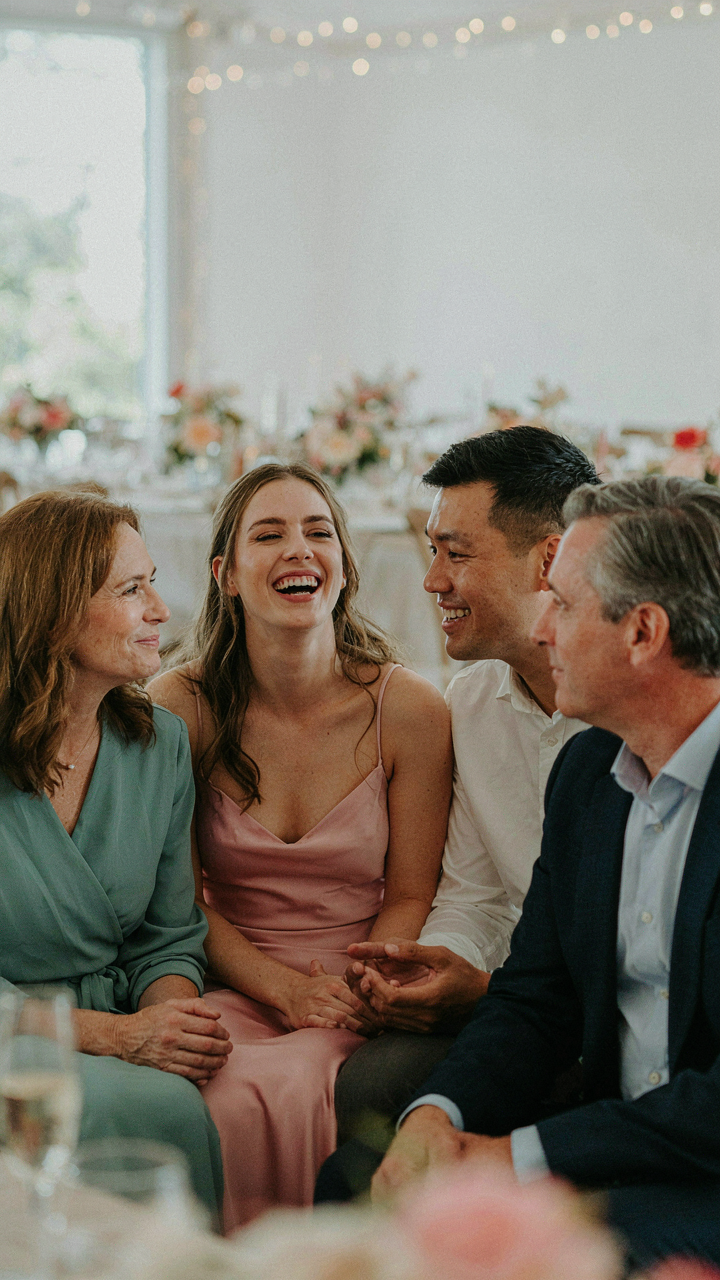
You want proof that something real happened. That’s the actual reason you care about family portraits at a small wedding. The mechanism is simple: posed shots feel like obligation. Candid moments feel like evidence. With immediate family only, the stakes flip. Your photographer isn’t managing 150 strangers. They’re watching five people who actually know each other. This is where documentary photography beats traditional portraiture. You capture connection, not compliance. The difference is attention. A posed family lineup requires everyone to perform. A candid shot of your parents laughing together requires only that they forget the camera exists. One documents a moment. One documents a relationship.

Your photographer needs a different directive for small weddings. Instead of “get everyone smiling at the camera,” the instruction becomes “watch for the moment nobody’s performing.” This means shooting more. It means positioning themselves near conversations rather than directing them. It means understanding that the best family portrait is often the one taken while people transition between posed shots, when their guard is down. Small weddings allow this because there’s nowhere to hide and nothing to prove to an audience. The photographer becomes an observer of intimacy, not a choreographer of arrangement.
Building A Visual Timeline That Matters
The real work isn’t taking photos. It’s deciding what story the photos tell. Museums use curation, not volume. You need the same discipline. With immediate family only, you have maybe 80 to 120 photos worth keeping across the entire day. That’s not a limitation. That’s clarity. Each image should answer one of these questions: who were we, how did we feel, what did we create together? This is narrative structure applied to still images. You’re not collecting moments. You’re building a sequence that reveals something true about your family across time.
Start with a shot list that maps to the day’s structure: arrival, ceremony, first moments after, genuine interaction, food together, departure. But here’s what matters: you need at least one image per section that shows faces clearly and emotion authentically. The rest can be environmental, partial, or distant. The photographer edits to 40-60 final images. You print the dozen that belong on a wall or in an album. This creates a visual narrative your family will actually revisit instead of a digital folder that disappears.
Future Wedding Plans: Beyond The Ceremony

The Milestone Trap
You want to believe this day matters forever, so you’re already planning how to extend it. The real mechanism: a small immediate family wedding creates a temporal boundary problem. You finish the ceremony and everyone disperses back to normal life within hours. The ritual ends, but the relationship doesn’t. Most people never think past Saturday night.

A small wedding actually forces you to build intentional rituals beyond the single day because you removed the social performance that usually carries the event’s weight. Your family gathered specifically for you, not for Instagram documentation or distant obligations. That means the relationship has to sustain itself through deliberate contact, not memory. The wedding becomes the foundation, not the destination.
The Story You Keep Living
Borrowing from narrative structure, your small wedding functions as exposition, not climax. Exposition introduces the stakes and conditions. Everything after the ceremony is the actual plot. Most couples treat weddings as the story’s peak, then wonder why marriage feels anticlimactic.
With immediate family only, you’re building a compact, repeatable gathering model. Thanksgiving, anniversaries, birthdays, or random weekends become valid reasons to reconvene the same group. You’ve established the precedent that this family comes together intentionally. Document what happens at the wedding itself, then repurpose that framework. Take the same venue for an anniversary dinner three years later. Invite the same people to a cabin in five years. The wedding teaches everyone the logistics and comfort level of gathering. You don’t restart from zero each time. The mechanism is repetition through established protocol, not nostalgia.
The Illusion Of External Validation, Not Logistics, Is Your Biggest Obstacle To True Intimacy

You don’t need permission to build the wedding you actually want. Stop waiting for someone else to approve your choices. The moment you stop performing for people who won’t be there, you unlock something real. Today, write down one decision you’ve been postponing because you feared judgment, then commit to it anyway. The smallest weddings aren’t small because of guest count. They’re small because you finally stopped lying about what matters.