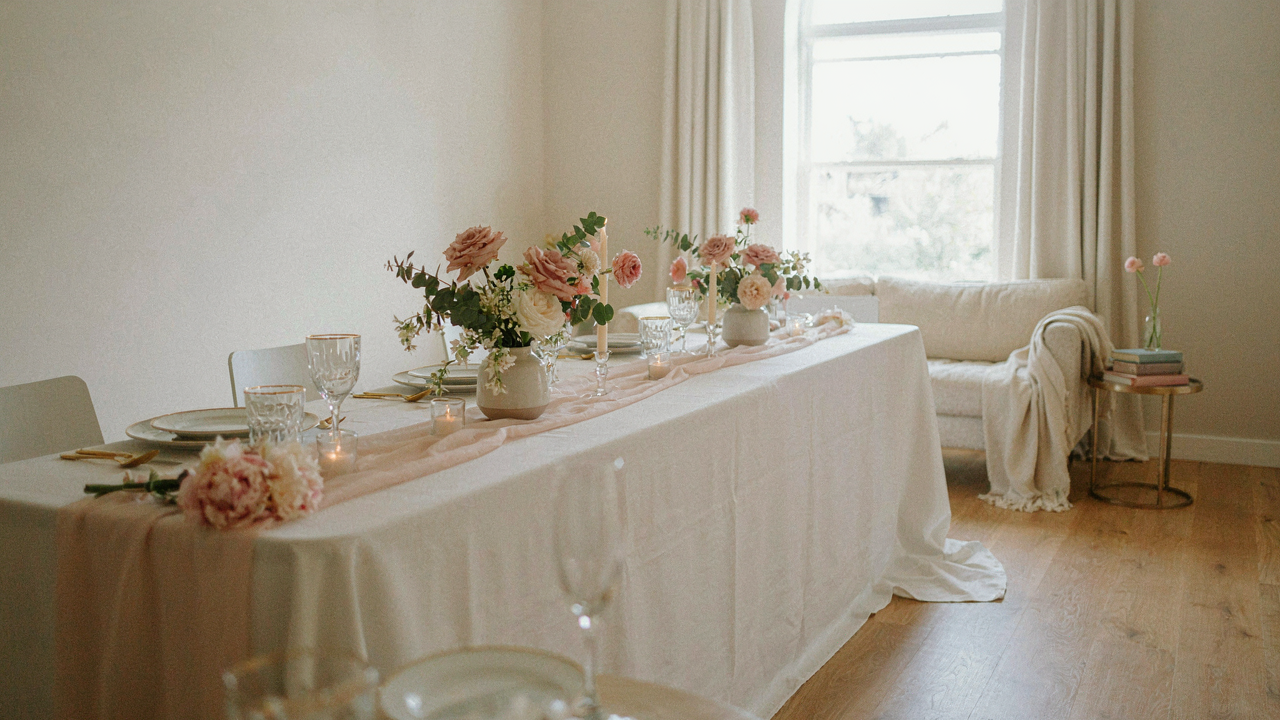
The “Small House Wedding” Illusion: Why Intimacy Is Harder

Guest List Brutalism: Who Truly Belongs
You want people to feel included without admitting you’re afraid of hurting feelings. That’s the real problem here. The mechanism is simple: small spaces force visible exclusion. In a 200-person ballroom, nobody notices who didn’t make the cut. In a friend’s living room, they do. You can’t hide the math anymore.
The common advice says “invite only close friends and family.” That’s incomplete. It doesn’t tell you how to actually decide when every person you know occupies equal emotional real estate in your head. The answer is function, not feelings. Ask one question for each name: does this person’s presence directly serve the event’s core purpose, or are you inviting them out of obligation, guilt, or fear of social consequences? If the latter, they don’t belong at a small house wedding. The constraint forces clarity you’d normally avoid.
Space As A Constraint, Not A Problem
Architects call it “traffic flow.” Wedding planners ignore it. In a small house, every guest movement creates either efficiency or friction. The living room isn’t too small because of square footage. It’s too small when people can’t move without bumping someone, can’t find a bathroom without navigating a hallway of conversation, can’t reach food without an announcement. These aren’t minor inconveniences. They’re the entire experience.
Map the physical space first, before you plan anything else. Mark doorways, furniture placement, where food sits, where people naturally cluster. Identify the bottlenecks. A kitchen entrance that forces guests into single file creates a choke point. Bathrooms upstairs mean people traffic through your host’s bedroom. These aren’t design problems you solve with better aesthetics. You solve them by reducing the guest count further or choosing a different venue. The constraint either works or it doesn’t. Don’t fight it with decorations.
The Living Room Wedding Ceremony As A Strategic Asset

Where Your Eye Should Go First
You want the living room to feel intentional, not like you’re getting married in someone’s furniture arrangement. That’s the real fear. The mechanism is basic visual hierarchy borrowed from architecture: control the focal point and you control what the brain processes first. Most people ignore this and end up with the couple standing in front of a flat wall while a TV dominates the corner. Bad optics. Real optics means placing the couple where light naturally draws the eye and where the background reads as deliberate, not accidental.

Choose the wall with the best natural light or install soft uplighting to frame it. This isn’t decoration, it’s contrast. Position the couple three to four feet from that wall so they separate from the background visually. Hang a simple fabric backdrop or bare the wall entirely if it’s a clean surface. The goal is removing competing visual anchors, not adding clutter. Photographers will have something to actually work with, and guests won’t scan the room looking for where the ceremony is happening.
Attention Moves, Not Static Viewing
The common advice here is dead: “Just have people sit and watch.” That treats a living room like a chapel with fixed sight lines. Wrong frame. Think in terms of participation design from experiential theater. A living room ceremony works because it’s intimate, but intimacy dies when guests become passive. You need deliberate movement beats that pull people into the moment, not away from it.
Structure the ceremony so guests stand for key moments instead of sitting through everything. Positioning matters: have people close enough to hear vows without strain, far enough that they’re not in the couple’s breathing space. During readings or music, direct attention to specific speakers by having them stand in a lit area. After vows, direct guests to move toward the couple for a moment rather than clapping from fixed seats. Movement creates participation; participation creates memory. This is the difference between attending a wedding and being part of one.
Beyond Decor: Engineering The Wedding Mood Via Sensory Input

Lighting As Atmosphere
You want people to feel something without knowing you engineered it. That’s the real reason you care about this section. Lighting is physics applied to emotion. Architects call this “layering”—the principle of combining different light sources at different intensities to control spatial perception and mood. In a friend’s home, you’re not starting with a blank canvas. You’re working against existing fixtures, natural windows, and architectural constraints. Your job is to override the default.

Forget string lights and candles as decoration. They’re tools for erasing or reshaping the room’s native light character. Warm light above 2700K signals intimacy and lowers alertness. Cool light above 4000K creates clarity and formality. Most home interiors default to cool overhead fixtures designed for task work, not gathering. You replace or supplement that. Position dimmable uplighting in corners to add depth. Use warm-temperature Edison bulbs in existing lamps. Eliminate harsh ceiling fixtures entirely during the ceremony and reception by switching them off and relying on layered alternatives. The mechanism: people’s nervous systems respond to light temperature and intensity before their conscious minds process the room.
Soundscape Design
Background noise isn’t absence—it’s a chosen signal. Most wedding planners default to hiring a DJ or playing a Spotify playlist, which treats sound like decoration instead of architecture. Wrong. Music functions as spatial definition. In a small home, you control sound pressure and echo by choosing volume, frequency range, and placement of speakers. If you’re using recorded music, position one speaker centrally and one in an adjacent room to avoid dead zones and the sensation of sound coming from a box.
During the ceremony, silence is louder than you think. A friend’s home isn’t soundproofed. Ambient outdoor noise, HVAC, appliances—these intrude. Counter this with a single acoustic element: soft instrumental music at 40-50 decibels during vows. This masks intrusions while keeping voices audible. For the reception, maintain 65-75 decibels for conversation-stage background music, then raise to 80+ only during intentional moments like the first dance. Establish a protocol: someone monitors volume every 20 minutes and adjusts based on conversation levels and crowd density.
The Host’s Burden: Minimizing Friend Stress Protocol

Define Roles Before Anyone Shows Up
You’re worried your friend will resent you. That fear drives most couples to avoid stating plainly what they’re asking for, which guarantees resentment. The mechanism is simple: ambiguity creates obligation without consent. Your friend agrees to host a wedding, but nobody defines what hosting actually means. Does she cook? Clean before guests arrive? Stay present the whole time? Handle vendor coordination?

Write down every task the host will own. Kitchen prep, guest bathroom stocking, parking logistics, noise management with neighbors, climate control, music volume, timeline adherence. Share this list before booking the date. Your friend either accepts the specific scope or declines. No surprises. No silent resentment building over months.
When Your Friend Cannot Deliver
Common advice says “have a backup venue.” That’s incomplete. Venues can’t bail. People do. You need a second host identified before the first one confirms, not after she cancels three weeks out. This uses insurance logic: redundancy in the critical path, not panic response. A second friend who knows they’re Plan B and has agreed to it already removes the catastrophic scenario.
If your first host backs out, you activate Plan B immediately with no renegotiation. The second host already knows the scope and timeline. You don’t call them in crisis mode asking if they could possibly, maybe, consider hosting. You inform them the date is live and confirm their availability. Have this conversation before you send invitations.
Civil Wedding Simplicity: Legals Before Logistics

Paperwork Precision: No Last Minute Scrambles
You care about this section because you’re terrified of discovering a legal blocker 48 hours before the event. The mechanism is simple: marriage licenses operate on fixed timelines that don’t bend for your convenience. Most states require you to apply in person, wait a mandatory period (typically 0 to 5 days), then use the license within a defined window, usually 30 to 90 days. Miss any step and you’re legally unmarried no matter what happens at your friend’s house.

Start by identifying your state’s specific requirements now, not next month. Visit the county clerk’s website where you’ll actually get married, not your home state if different. You need the exact document list they demand: ID types, proof of address, divorce decrees if applicable, and fee amounts. Build a checklist with application date, waiting period end date, license pickup date, and ceremony date clearly marked. The paperwork precision isn’t bureaucratic theater, it’s the foundation everything else sits on.
Legal Authority Versus Personal Touch
Think of officiant selection through the lens of contract law: you need someone with actual legal standing to execute the agreement, separate from who delivers the words. The common advice says hire an officiant or get a friend ordained online. That’s incomplete. Online ordination works in most states, but not all. Some jurisdictions require ordained clergy from recognized religions. Others demand specific residency or registration. Verify your state and county’s actual requirements before assuming your best friend can legally sign the marriage license.
The personal touch only matters if the legal authority is confirmed first. Get written confirmation from your officiant that they understand the jurisdiction’s requirements and have completed them. Request they arrive 15 minutes early to review the license itself, the exact wording they’ll use, and their signature placement. They sign in ink during the ceremony while witnesses watch. This isn’t trust building, it’s verification that prevents the license from being rejected by the county clerk three days later.
The Tiny Wedding Menu: Culinary Impact, Not Extravagance

Taste Profile Curation Maximizes Flavor Minimize Options
You want the menu to feel special without feeling like you’re serving gas station food. The real mechanism here is constraint. Neuroscience calls this the paradox of choice: too many options create decision paralysis and reduce satisfaction. In small weddings at a friend’s home, you flip this. Three to four dishes done well beat ten mediocre ones. Each guest remembers the standout entrée and the single excellent dessert, not the breadth of selection.

Pick dishes based on one flavor anchor. This could be citrus, smoke, richness, or heat. Build the rest of the menu around that signal. Appetizers echo it. The main course delivers it. Dessert resolves it. This isn’t poetry. It’s signal design. Your guests taste coherence. They don’t consciously notice it, but they feel it. The kitchen can prep these dishes simultaneously without chaos because you’ve eliminated competing demands.
Service Structure Determines Pacing And Stress
Buffets work at friend’s homes because plating stations require skill you probably don’t have. The real difference: buffet service shifts labor from your hands to guest autonomy. You prep, you set, guests serve themselves. Your only job is keeping dishes full and hot. Plated service requires timing every single plate to hit the table in a two-minute window. One person late, the whole sequence breaks.
For a small wedding at a friend’s home, set the buffet on a side table or counter that doesn’t trap people in conversation. Dishes go warm to cold, left to right. Main, vegetables, starch, sauce. This order prevents guests from loading salad on top of their entrée. Prepare a secondary holding area in the kitchen with replacement platters. The moment plating slows, swap in the fresh one. One person manages the buffet. One person clears. That’s the protocol.
The “Dream Wedding” Fallacy: Focusing On The Core Exchange

Commitment Clarity Beyond The Party
You care about this section because you’re afraid a small wedding at someone’s home will feel cheap or incomplete compared to the cultural narrative you’ve absorbed. Here’s the mechanism: a wedding is a legal and social contract, not a production value. The event itself is theater around a transaction that happened before the first guest arrived.

Most advice treats the wedding as the main event. It’s not. The commitment is the main event. The gathering at your friend’s home is a witness structure—a way to make the agreement visible and binding in your community. Remove the catering budget, the venue rental, the florals. What remains is the actual purpose: two people declaring a legal change in status while trusted people observe it.
Shared Vulnerability Over Showmanship
Shared vulnerability works like load distribution in structural engineering: the more people actively involved in the moment, the less weight any single element carries. A small wedding at a friend’s home forces this principle. You can’t hide behind production. There’s nowhere to run from the realness of the exchange.
The common advice says to make the day “special” through unique touches and personal details. That’s backwards. The day is already special because you’re doing something irreversible in front of people who matter to you. A small setting strips away the distraction. Your friend’s living room becomes the stage not because it’s Instagram-worthy, but because it’s honest. The vulnerability lives in the simplicity. Make the commitment the production. Make everything else serve that, then stop planning.
Infrastructure Audit: Applying Military Logistics To Your Venue

Entry And Exit Points
You’re worried about looking disorganized in front of people who matter. The real mechanism is bottleneck theory from military strategy: armies know that choke points determine outcome, not total force. Your friend’s home has fixed doorways. A single entrance forces guests to queue, creates congestion, and signals poor planning before anyone sits down. Map your entry and exit points like a commander maps supply routes. Identify which door guests use first, which bathroom they find, and where coats land.

The second exit matters more than the first. During emergencies or peak bathroom traffic, guests need an alternate route that doesn’t funnel everyone through the main gathering space. If your friend’s home has a back patio or secondary entrance, use it as the official exit during the ceremony or cocktail phase. This sounds tactical because it is. Test the flow with a walk-through before guests arrive. You’ll catch the moment where people naturally pile up, and you’ll fix it by redirecting foot traffic before the event starts.
Power Water And Waste Management
Logistics chains fail at their weakest link, not their strongest. You need three independent systems running simultaneously: electrical load for lighting and sound, fresh water access for drinks and kitchen prep, and waste removal that doesn’t embarrass anyone. Most small home weddings underestimate these demands because they think about capacity as a single number instead of three separate problems.
Power first: a 30-person wedding requires more outlets than a home typically offers near the catering area. You’ll need weatherproof extension cords rated for outdoor use if the kitchen is interior but food prep happens outside. Water second: confirm your friend’s water pressure and hose length before you commit to an outdoor bar setup. Waste third: rent a portable toilet if guests outnumber your friend’s bathrooms by more than a 10-to-1 ratio, and position dumpsters or waste bins out of sight from the ceremony area. Calculate waste volume backwards from guest count, not forwards from optimism.
Post Wedding Extraction: The Clean Up & Exit Strategy

Assigned Roles Beat Assumptions Every Time
You’re worried your friend will resent you forever because the house is destroyed. The real mechanism is this: without assigned roles, cleanup becomes a diffused responsibility where nobody owns the outcome. That’s economics—distributed accountability means zero accountability. Assign specific people to specific zones before the first guest arrives. Not during. Before.
- Kitchen lead: Handles dishes, countertops, and food storage. One person coordinates, not five people deciding independently. Prevents cross-contamination of tasks and missed surfaces.
- Living areas manager: Straightens furniture, collects cups, removes decorations from walls and surfaces. Clear zone boundaries prevent redundant work and gaps.
- Bathroom monitor: Checks for supply depletion, cleans spills immediately, restocks towels. Bathroom issues surface fast and fester if unmanaged in real-time.
- Outdoor space handler: If applicable, sweeps patios, manages trash bins, secures any items that moved during the event. Weather exposure accelerates property damage.
- Final walkthrough inspector: Fifteen minutes before guests leave, this person moves through the entire space with a checklist. Catches what others missed.

The mistake is thinking cleanup happens after the wedding. It doesn’t. Assign someone to do a live sweep every 90 minutes during the event itself. This cuts your final cleanup time by 60 percent and prevents stains from setting. Your exit strategy depends on starting cleanup before anyone leaves.
Protect What Isn’t Yours
Your friend’s home isn’t your event space. It’s their long-term asset. You don’t restore it to baseline after—you return it better than you found it, or you absorb the cost. That’s the real contract, stated or not.
Identify high-risk zones before guests arrive: upholstered furniture, hardwood floors, light carpeting, walls with fresh paint. Use protective barriers like furniture pads, area rugs, or temporary floor coverings in traffic lanes. Request your friend’s permission to move breakable items to a secure room. Don’t ask if something breaks. Prevent it. Document the home’s condition with photos before the first guest enters and immediately after cleanup ends. This isn’t distrust—it’s clarity. If damage occurs, you pay for professional restoration, not your friend’s insurance claim.
The Un Photographed Moments: Capturing Raw Emotion

Stop Staging And Start Watching
You want proof that your wedding mattered. That’s the real engine here. You’re afraid a small backyard gathering won’t feel “real” without professional documentation. The mechanism is simple: authenticity scales inversely with control. The moment you choreograph a shot, you’ve already lost it. In a friend’s home, your advantage is chaos. People relax faster in familiar spaces. They forget the camera exists. Your job is to position yourself to catch that forgetting, not interrupt it.
Hire someone who understands restraint, not spectacle. A photographer who shoots documentary weddings knows the difference between capturing a moment and creating it. They stay at the margins. They shoot with ambient light instead of blasting flash. They take 200 frames of your friend’s nephew laughing at the bar instead of one posed family shot. The work looks less polished on a contact sheet. On screen, years later, it’s the only version of that day that actually happened.
The Imperfect Frame Wins
Perfection is a signal you’ve staged something. Slight blur in the background, harsh shadows across a face, a drink half-cut from the frame—these aren’t mistakes. They’re proof of realness. A small wedding at a friend’s home has natural lighting problems. The kitchen is too bright. The living room has deep shadows. A professional photographer who’s trained to flatten and control light will fight these conditions. Don’t let them. The imperfection is the story.
The second half of capturing raw emotion is knowing when not to capture it. Some moments belong to the people living them. Your first kiss as a married couple. A conversation between your mother and your spouse’s mother that shifts something invisible in the room. A moment of doubt you have before walking down the stairs to meet everyone. Document the ripple, not the epicenter. Assign one trusted friend with a phone to capture fragments without thinking. No direction. No posing. Just reaction. This person becomes your shadow documentation system.
The Real Obstacle Isn’t The Budget Or The Guest List, It’s Your Inability To Define True Value

Most people plan weddings backward. They chase what Instagram tells them matters instead of asking what actually moves them. A small wedding at a friend’s home forces this confrontation. You can’t hide behind expense. You either know what you value or you don’t. Stop scrolling other people’s weddings. Open your phone right now and write down three non-negotiable moments you want to experience. That’s your wedding. Everything else is noise you’re paying for out of obligation, not conviction. Your wedding doesn’t prove your taste. It proves what you were willing to defend.