The Pre Wedding Priming Protocol
Load Your System Before The Day Starts
You care about this because you’re afraid you’ll crash mid-vow and look weak in front of everyone watching. The mechanism is simple: your body runs on stored glucose and hydration status. You can’t absorb enough calories during the wedding itself to fuel performance. What you eat and drink in the 24 to 48 hours before matters more than anything consumed during the event.
Start hydrating two days out, not the morning of. Drink 16 to 20 ounces of water every two hours the day before. Eat balanced meals with protein, fat, and carbs to stabilize blood sugar. Your nervous system will demand energy. Meeting that demand before the stress hits prevents the crash that makes you foggy, shaky, or emotionally volatile when you need to be present.
Eliminate The Hidden Dehydrators
Most advice tells you to avoid alcohol and caffeine on the wedding day. That’s incomplete. Both are diuretics, yes, but the real damage starts earlier. If you’re consuming either regularly in the week before, your baseline hydration is already compromised. You’re starting the day already down a liter of water without knowing it.
Cut caffeine intake by 50 percent starting three days before. Skip alcohol entirely for 48 hours prior. Heavy salt intake the night before also dehydrates you, so avoid salty foods at rehearsal dinners. These aren’t restrictions. They’re the opposite of restriction. You’re protecting the hydration and mental clarity you’ve already built. The mechanism works only if you stop the leak before you pour more water in.
Morning Of: Non Negotiable Nutrition
The Critical Window Before Ceremony
You’re worried you’ll crash during vows or look depleted in photos. That’s the real fear. But the actual mechanism is glycemic response: your body’s ability to sustain energy depends on how you prime your blood sugar three to four hours before the event starts. This window determines whether you have stable fuel or a spike-and-crash cycle that leaves you foggy and shaky when you need presence most.

Most wedding advice says “eat a big breakfast.” That’s incomplete. A big breakfast of refined carbs or sugar burns fast and leaves you worse off by ceremony time. You need a meal that releases energy steadily over hours, not all at once. Timing matters more than size.
Fats And Protein Over The Quick Fix
Skip the pastry trap. Croissants, bagels, and sugary coffee drinks deliver fast calories that your body processes in ninety minutes, leaving you depleted. Fats and proteins digest slower, stabilizing your blood glucose and keeping your nervous system anchored.
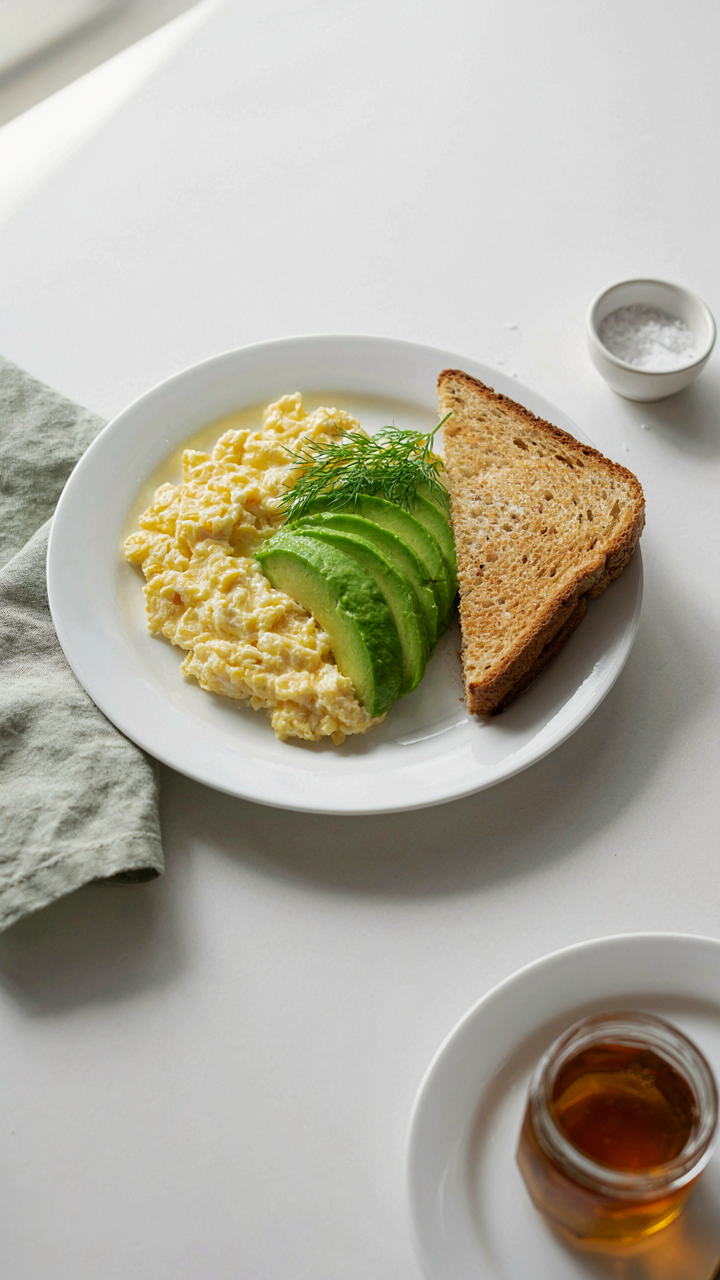
Your morning meal needs at least thirty grams of protein and fifteen to twenty grams of fat. Eggs with avocado and whole grain toast, Greek yogurt with nuts and berries, or a meat and cheese plate all work. Eat this meal two and a half to three hours before hair and makeup starts. Your body has enough distributed energy to carry you through the entire ceremony without fatigue, hunger, or mental fog breaking your focus.
The Cognitive Load Hydration Station
Station Placement Beats Willpower
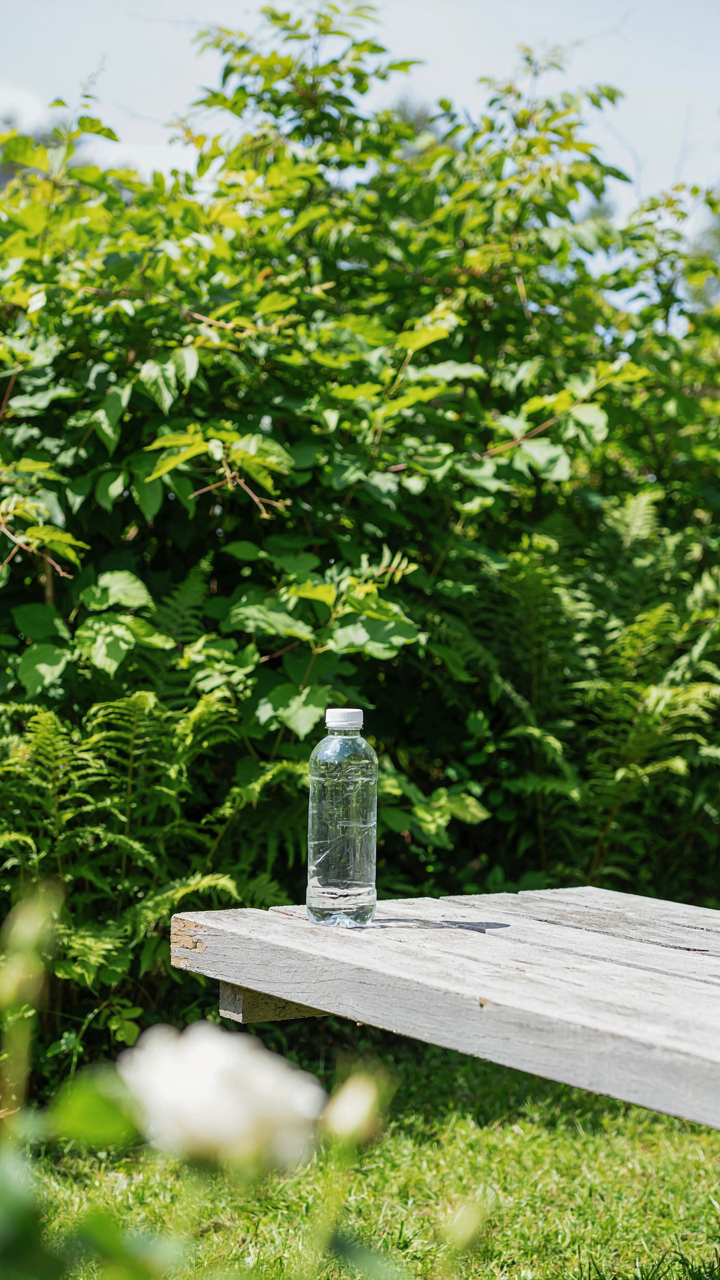
You want to believe you’ll remember to drink water when you’re in a tuxedo surrounded by 150 people watching your every move. You won’t. The real mechanic here is military logistics: armies don’t rely on soldiers remembering to hydrate—they position supply points so water finds the soldier, not the other way around. On your wedding day, you operate under extreme cognitive load. Your brain is running ceremony logistics, guest management, emotional regulation, and physical performance simultaneously. It has no bandwidth left for “remember to drink.” Pre-position water at every stage you’ll physically occupy: the groom’s room before ceremony, the altar transition point, the photo location, the reception entrance, and the head table. Station it where you naturally pause, not where you have to detour.

The mechanism works because it eliminates decision-making. You don’t decide to drink—you encounter water in your path and drink it reflexively. This isn’t motivation. This is environmental design. Place one full glass of water and one plate with light carbs (crackers, fruit, protein) at each station before the day starts. Brief your best man or coordinator to refresh these points every 30 minutes, not when you ask. You need a system that runs without your input.
Supply Timing Prevents The Crash
Predictive resupply means you stage food and water before you feel hungry or thirsty. The mistake most people make is waiting for the signal—the dry mouth, the stomach growl—then trying to fix it. By then you’re already cognitively compromised and physically declining. Your blood glucose and hydration status don’t announce themselves with a warning light. You cross a threshold, then deteriorate. Food and water intake must happen on a schedule you set before the day, not a schedule your body signals during it.
Eat something substantive two hours before the ceremony. Then take 4 ounces of water and a small carb source every 45 minutes after that through photos and cocktail hour. Don’t wait until the reception dinner. This prevents the energy cliff that hits most grooms in the 4 PM to 7 PM window. Your coordinator’s job includes handing you a water bottle and a small plate on a timer, like clockwork.
Liquid IV Wedding Favor: Beyond The Mimosa Trap
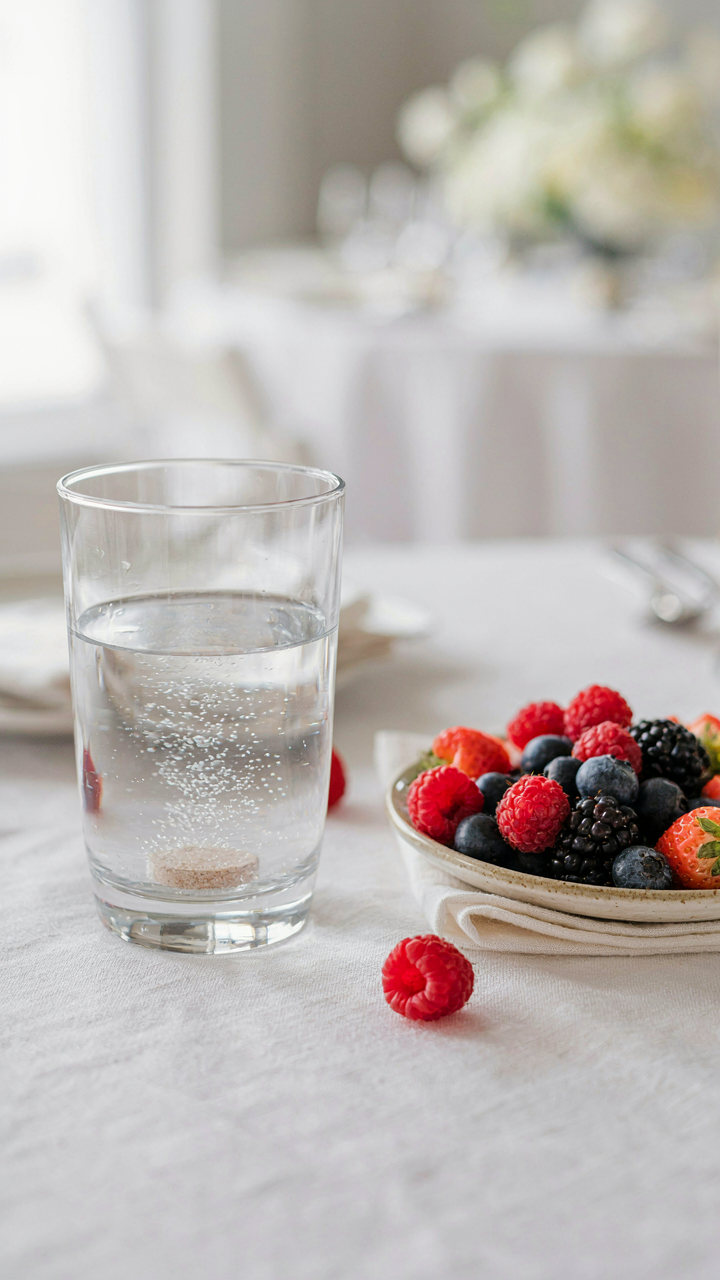
Why Your Brain Crashes At The Altar
You want to feel sharp during your vows because you’re terrified of blanking. Here’s what actually happens: your nervous system burns through electrolytes faster than plain water replaces them, and mimosas accelerate the drain. This is basic neurology. Your brain runs on sodium, potassium, and magnesium as much as it runs on glucose. Without these minerals, cognitive function tanks regardless of how much water you drink.

Standard wedding day advice says “drink water.” That’s incomplete. Water alone dilutes your electrolyte concentration further, triggering a physiological response called hyponatremia at the cellular level. You feel foggy, emotional swings intensify, and your body retains water instead of using it. Electrolyte formulas fix this by mimicking your blood’s mineral composition, allowing your cells to actually absorb and retain hydration. The mechanism is osmosis, not willpower.
Timing Beats Volume Every Time
Most people slam water right before walking down the aisle, which guarantees a bathroom trip mid-ceremony. The real protocol starts the day before. Begin electrolyte intake twelve hours before the ceremony starts, not two hours before. This allows your cellular hydration to stabilize gradually rather than shock your system.
On ceremony day itself, drink electrolyte solution in small amounts every thirty minutes starting four hours out. Skip the large bolus right before your entrance. During the reception, alternate one electrolyte drink with one water between meals. This prevents the energy crash that hits around hour five when adrenaline wears off and dehydration combines with poor nutrient timing. The specific measure is one serving of electrolyte powder mixed into eight ounces of water, consumed on a thirty-minute rotation starting at the four-hour mark before you walk.
The Tactical Snacking Imperative
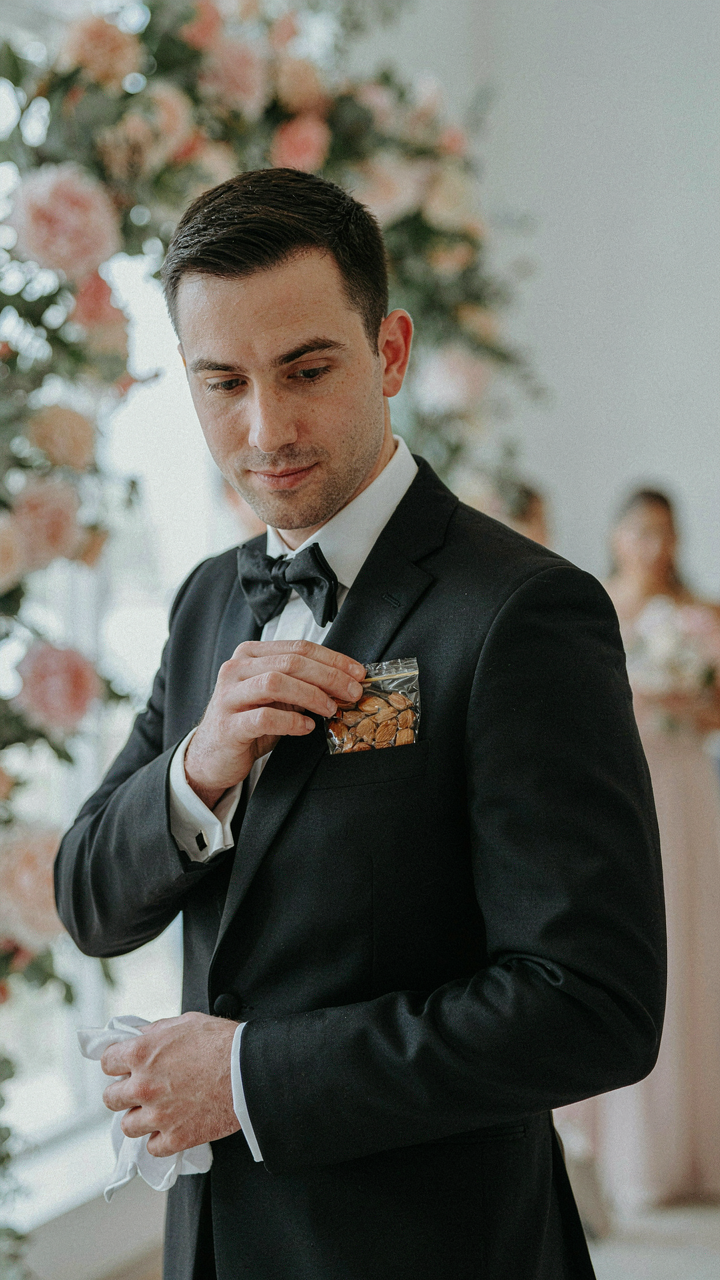
Fuel That Travels In Your Pocket
You want to look composed and in control, which means you’re terrified of visibly eating like you’re starving. The mechanism is simple: your body runs on glucose, and a wedding day depletes it faster than normal days because stress hormones spike your metabolic rate. You need calories that don’t require sitting down, don’t leave residue on your hands or clothes, and deliver energy in under five minutes. Most couples skip this entirely and crash at the reception.
- Nuts and seeds: Almonds, cashews, and mixed seeds pack protein and fat for sustained energy without the crash. They travel clean and require no preparation between ceremonies or photos.
- Dried fruit with nut butter packets: Single-serve packets of almond or peanut butter paired with raisins or dates hit carbs and fat simultaneously. No mess, fits in a pocket or clutch.
- Energy balls or protein bites: Homemade or store-bought versions made with oats, nut butter, and honey deliver 3-5 grams of protein per bite. Make them the night before so you’re not scrambling.
- Fruit leather or jerky: Both are shelf-stable, require one hand to eat, and leave zero residue. Jerky adds protein; fruit leather adds quick carbs.
- Granola or cereal clusters: Individual portions in a small container keep your hands mostly clean. Choose options with at least 3 grams of protein per serving to avoid immediate hunger return.

Timing matters more than portion size. Eat a small snack every 90 minutes starting from the morning preparation phase, not when you feel hungry. Hunger is your body’s late signal that energy has already dropped below optimal. Your photographer, your partner, and the videographer will all benefit from you having steady glucose in your bloodstream.
When Blood Sugar Crashes, So Does Everything Else
The common advice here is pure garbage: people tell you to “eat a big breakfast and you’ll be fine.” That’s backwards. A massive breakfast creates an insulin spike followed by a crash around photos or the ceremony. Your nervous system is already activated by stress hormones, which amplify the low-blood-sugar sensation into something that feels like panic or emotional fragility.
The actual mechanism is biochemical oscillation. Your pancreas overcompensates to a large carbohydrate load, driving glucose down faster than normal. Under wedding-day stress, your adrenal glands can’t stabilize that drop efficiently. Small, frequent snacks with a mix of carbs and protein keep your pancreas in steady state. This prevents the emotional volatility that makes you snappy with vendors, weepy during vows, or unable to focus during conversations with guests. Eat something every 90 minutes. Skip the drama.
Wedding Water Station: Your Personal Oasis
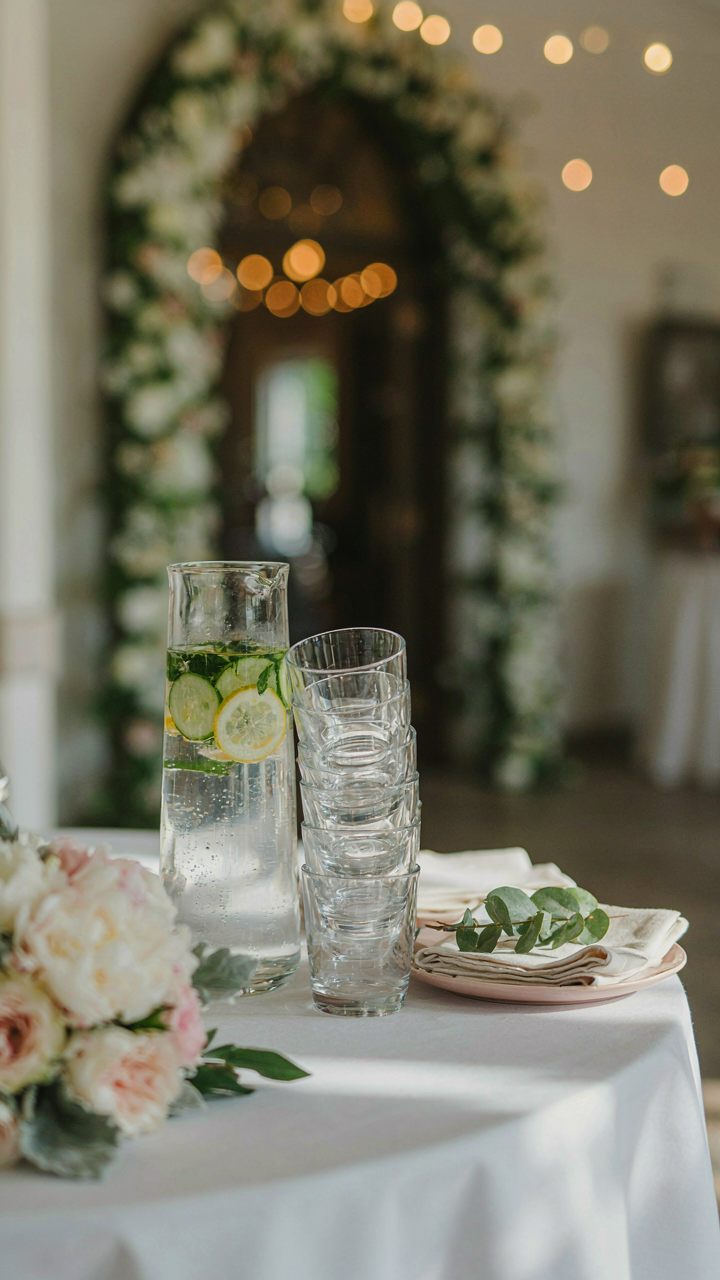
Where You Stand Matters More Than How Much You Drink
You want to feel in control on your wedding day, and hydration is the one variable that looks manageable. But most couples treat water like a background utility instead of a strategic resource. The real mechanism is placement: water availability follows the logic of friction. The lower the friction between you and hydration, the higher your actual consumption. Put the station where chaos lives, not where it’s convenient for someone else to pour.

Position your primary water station in the receiving line zone or immediately adjacent to where guests congregate before the ceremony. This is where you’ll spend concentrated time standing, talking, and burning energy. A secondary station belongs near the cocktail hour entrance. Both spots compress the distance you travel to hydrate, removing the mental load of deciding whether dehydration is worth the walk. You won’t think clearly about thirst when you’re running on fumes, so eliminate the choice entirely.
Setup Happens Without You, Consumption Doesn’t
The delegated work is staffing and refilling. The non-delegated work is actually drinking from the stations you set up. Too many couples hand off water duty to vendors or attendants and assume the problem solves itself. It doesn’t. You must own the consumption pattern, which means you drink on a schedule, not on thirst. Thirst is a lagging indicator that you’re already dehydrated.
Assign one trusted person to manage station logistics: ice levels, pitcher refills, glass availability. Your job is different. Drink a full glass of water every thirty minutes from the moment you wake up through the ceremony. Set phone reminders if you need them. During the reception, return to that station between major moments: after the first dance, after dinner service, before toasts. The mechanism is simple: a system you designed, executed by someone else, consumed by you on schedule, not on feeling.
The Post Ceremony Refuel: Beyond The Canape
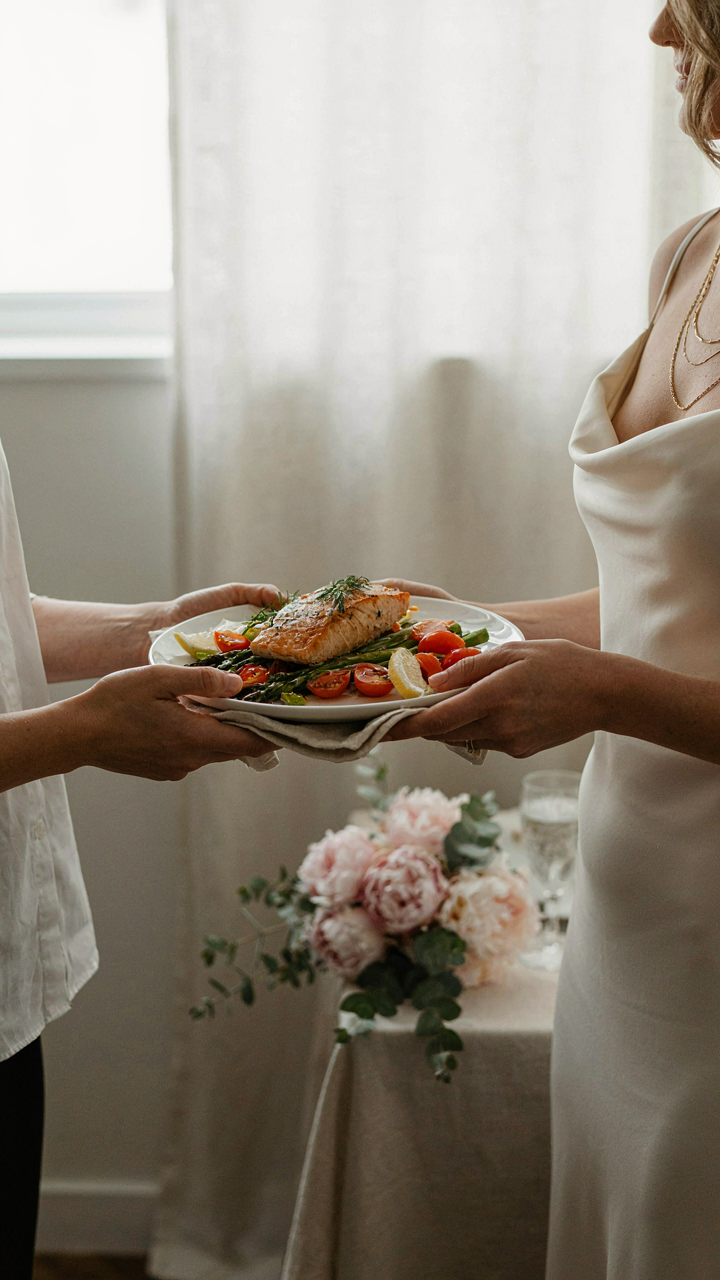
Get Your Plate Before The Line Forms
You want to look composed while everyone watches you eat, so you’re hoping the catering flow magically works out. It won’t. The mechanism is simple: your body burns glycogen and fluids during the ceremony. Standing still in heat or cold, smiling, holding tension. By the time the doors open for reception, your blood sugar has already dipped. You need real food in your stomach before the photo line consumes the next two hours.

Coordinate with your wedding planner or a trusted member of the wedding party to secure a full plate during the staff’s setup window, before guest service begins. This isn’t cutting a line. This is logistics. You eat in the back, in a quiet space, for ten minutes. Protein, carbs, and salt. Then you’re back to work. The guests won’t notice. They’re preoccupied with their own seating and conversations.
Eat Before You Greet
Common advice says to work the room first, then grab food when things settle. That’s backwards. Every interaction depletes your glycogen further. By the time you hit the dance floor, you’re running on fumes and whatever adrenaline remains. Biology calls this substrate depletion. In wedding terms, substrate is your actual fuel. You can’t manufacture it from willpower or the feeling of the moment.
Commit to eating a substantial meal in the first 90 minutes post ceremony, before the mandatory table visits and photo calls extend past two hours. This isn’t antisocial. It’s preventative. A fed nervous system handles social demands better than a depleted one. Your mood stabilizes, your energy holds, and you don’t hit a wall at hour five when you’re supposed to be dancing. Eat your plate completely before moving into extended guest interaction.
Sustainable Hydration: The Evening Strategy
The Alternation Protocol
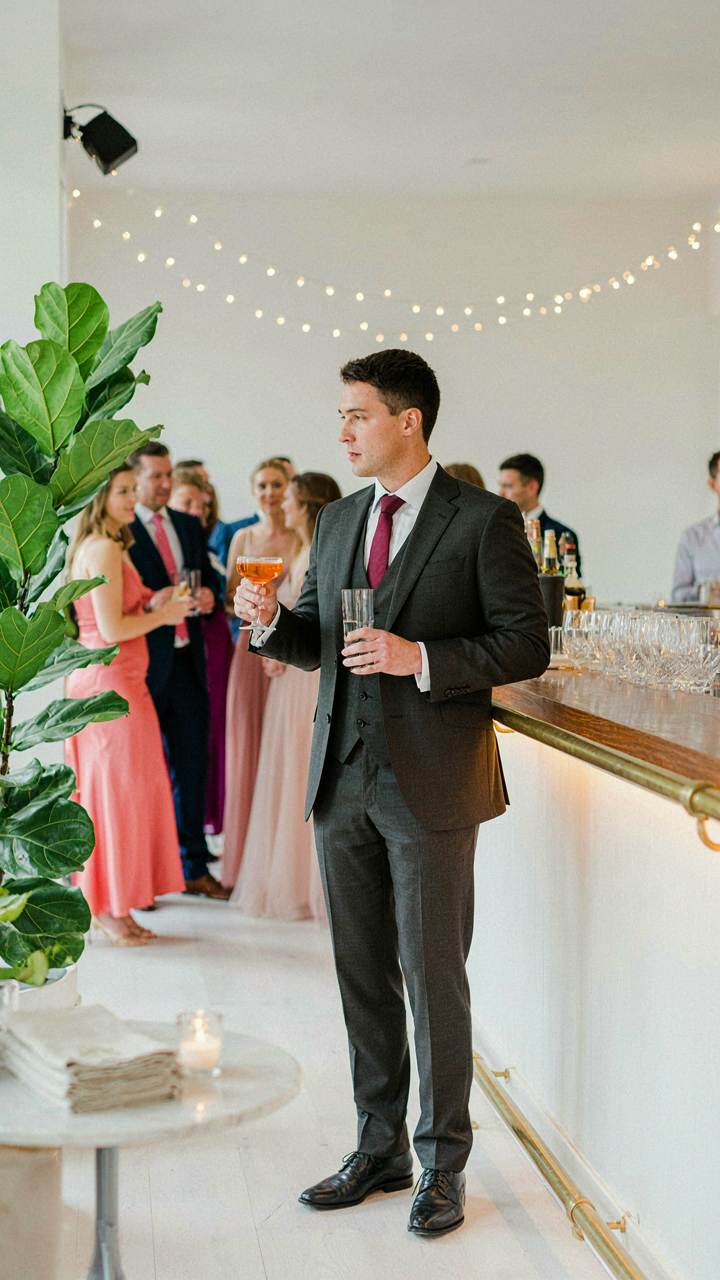
You want to drink without sacrificing mental clarity or waking up destroyed, so you’re looking for permission to party without consequences. That’s not how biology works. Think of hydration like ammunition supply in warfare: you deplete it faster than you can resupply it when you’re under sustained fire. Alcohol accelerates fluid loss through the kidneys. Every drink without water backing it up creates a deficit that compounds.

The mechanism is straightforward. Alternate one alcoholic drink with one water or electrolyte drink. Not “water nearby.” Not “I’ll drink water later.” One for one, in sequence. Electrolytes matter here because they replace sodium your body loses through sweat and alcohol’s diuretic effect. Standard water alone won’t restore electrolyte balance fast enough during active evening events. You stay sharper, recover faster, and don’t tank your appearance or energy by midnight.
Taking Ownership Of Your Intake
Common advice says “have someone check on you” or “ask the bartender.” This is lazy. You can’t outsource accountability for your own body. The bartender is managing dozens of people. Your wedding party has their own agenda. Nobody’s tracking your hydration status but you.
Set a concrete protocol before the evening starts. Drink from a specific glass or bottle you can see and track. Mark time intervals: every thirty minutes, consume a set amount. This removes the guesswork and the dependency on external reminders. You maintain awareness of what went into your body and when. By the end of the night, you know exactly how much you drank and why you feel the way you do. This clarity is what separates people who wake up functional from people who don’t.
The Mind Body Connection: Fueling Your Focus
Adrenaline Masks The Signals Your Body Is Sending
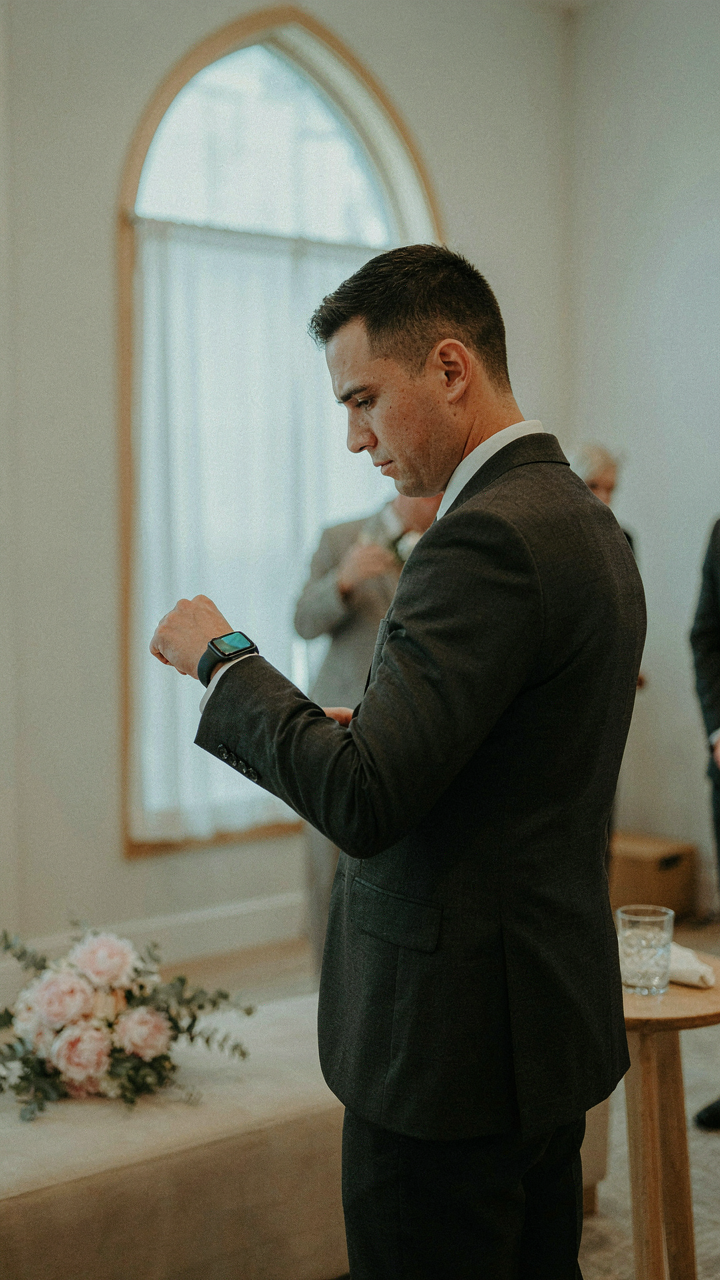
You want to feel sharp and composed on your wedding day, and you’re terrified that hunger or thirst will sabotage that image. Here’s the mechanism: adrenaline suppresses hunger and thirst cues by flooding your system with cortisol and epinephrine. Your body stops reporting legitimate deficits because survival mode doesn’t care about comfort. You’ll feel fine until you suddenly don’t, and by then your decision-making has already degraded.

Neuroscience calls this the fight-or-flight override. Think of hydration and fuel like ammunition in a combat scenario: once you’re engaged, you won’t notice the magazine running empty until the trigger clicks. The fix is simple and counterintuitive. Don’t wait for thirst or hunger signals on your wedding day. Eat and drink on a fixed schedule starting six hours before the ceremony, regardless of what your body claims it needs. Set phone alarms if necessary. Your nervous system is lying to you.
Self Care As A Performance Protocol
The common advice here is wrong: self-care isn’t about feeling pampered or relaxed. It’s about maintaining the biological infrastructure that lets you think and move deliberately. Hydration isn’t comfort. It’s the mechanism that regulates core temperature, maintains blood viscosity, and keeps your prefrontal cortex online. Same with food. You’re not indulging. You’re stacking performance.
This is where discipline becomes visible. Most people skip eating or drinking on their wedding day because they’re nervous, distracted, or afraid of looking bloated in photos. They mistake deprivation for control. Real control is eating a measured meal four hours before the ceremony, then consuming carbs and electrolytes every ninety minutes until the reception ends. Your ability to be present, to make eye contact, to remember names, to handle unexpected moments with grace—all of it depends on whether your glucose is stable and your cells are hydrated. Treat this like a non negotiable protocol, not an optional kindness to yourself.
Your Biggest Obstacle Isn’t Logistics; It’s The Delusion That The Day Will Manage Itself, Or That Someone Else Cares More About Your Well-being Than You Do

You’ll forget to eat. Your bridesmaids will forget to remind you. The caterer won’t care. Your spouse will be too caught up in the moment. Right now, before the chaos starts, text your best friend a single instruction: force feed me every two hours. Make it their job. Make it non-negotiable. The couple that starves together doesn’t remember the day together. Protect your energy like you protect your vows.