The Un Theme: Why “Retro” Is A Trap For Your Wallet

Pick Your Decade, Not Your Feeling
You want the aesthetic without the research. That’s the real reason you’re calling it “retro” instead of naming the actual era you want. The problem: “retro” is infinitely expensive because it has no boundaries. You end up shopping across 80 years of design history, buying pieces that don’t talk to each other, and spending money on correction instead of coherence.
Economics calls this constraint optimization. You have limited budget and unlimited options until you narrow the input set. The mechanism works the same way here. Name your specific decade—1950s, 1970s, 1920s—and immediately 90% of the wrong choices vanish. Suddenly your budget stretches because you stop shopping and start selecting. You know what belongs.
Vintage Store Garbage Versus Actual Period Pieces
Most wedding planners tell you to hit vintage shops and “mix eras for personality.” That’s incomplete advice masking a real problem: vintage stores are cluttered with items that survived by accident, not merit. They’re cheap for a reason. You’ll walk out with decorative filler that kills your theme’s credibility and wastes money on removal later.
Authentic period pieces—whether reproduction or original—have specific material composition, construction method, and design language from their era. A 1960s piece uses materials and manufacturing that simply didn’t exist in 1940s production. Match the construction to your decade, not just the surface look. Buy from dealers and makers who specialize in one era, not generalists selling everything. Your budget stays focused on quality that photographs well and actually reads as intentional.
The Scarcity Principle: Designing Your 70s Wedding Theme With Less

Where Constraint Forces Better Choices
You want permission to spend less without feeling like you’re settling. Here’s the mechanism: scarcity in economics forces prioritization. You can’t buy everything, so you buy what matters. The 70s aesthetic actually rewards constraint because the era valued statement pieces over volume. Macramé, brass, wood, and earth tones were chosen because they were accessible, not because they were everywhere. The style emerged from people working within limits, not around them.

When you artificially restrict your decor budget, you stop treating every surface as a canvas. You choose focal points instead. A single statement wall in burnt orange and brown geometric wallpaper costs less than decorating four walls identically and lands harder visually. The 70s didn’t fill rooms with stuff. They placed objects intentionally. Your constraint isn’t a problem to solve. It’s the design principle the era already used.
Focal Points Over Filling Space
Most couples spread their budget thin across the venue, buying mediocre versions of everything. That’s wrong. A 70s wedding needs three to four visual anchors that work without filler. The dance floor entrance, the reception table backdrop, and the ceremony arbor. Everything else recedes. You invest heavily in areas people actually look at and spend time around. Dim lighting in unused corners costs nothing and hides the emptiness better than trying to decorate it.
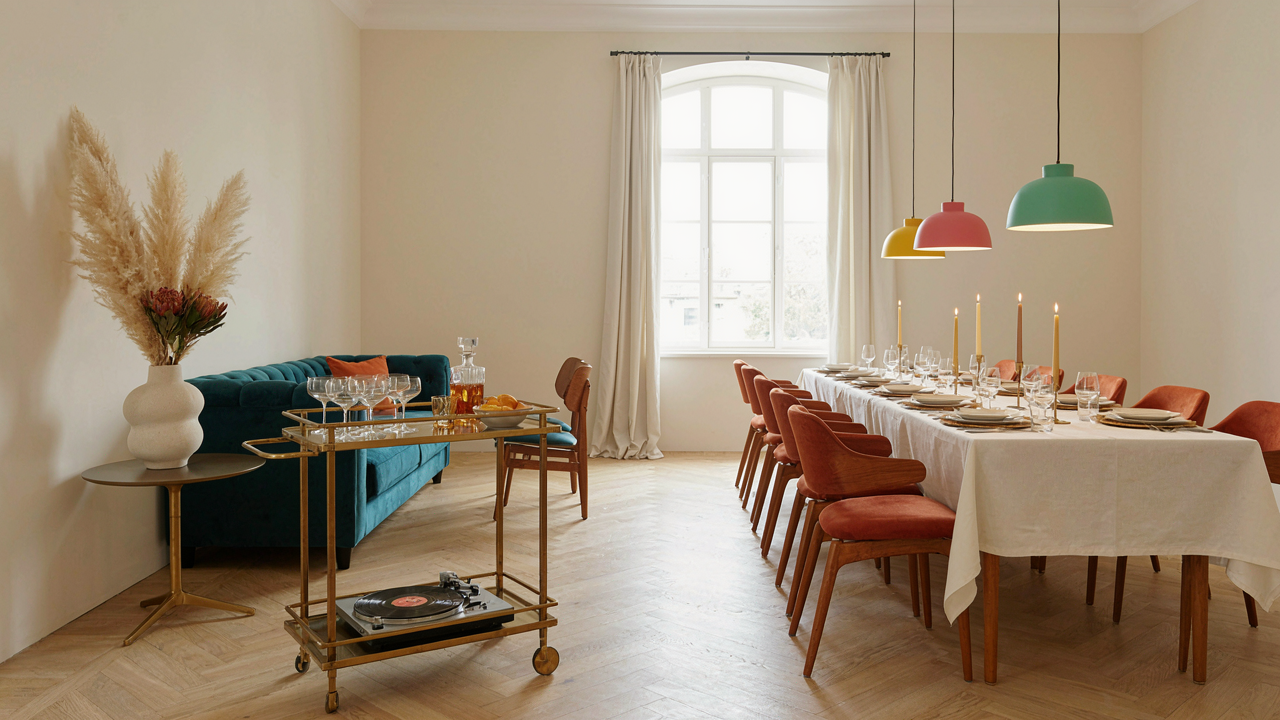
Calculate the square footage of high-traffic zones versus total venue size. Allocate 70 percent of your decor budget to those zones. A rented brass floor lamp, velvet cocktail seating, and a record player in one corner of the reception creates atmosphere more efficiently than spreading the same money across bland decorations everywhere. The 70s thrived on strategic placement, not comprehensive coverage. Your job is to identify where guests focus their attention and own those moments completely.
The Sourcing Algorithm: Finding Vintage Disco Wedding Gold, Not Just Junk

Thrift Store Territory Where Real Finds Live
You want to feel like you discovered something nobody else could find, which is why thrift stores feel like treasure hunts instead of what they are: cheap inventory dumps. The mechanism is simple: thrift stores receive bulk donations, price items at 10-20% of retail, then rotate stock weekly. You’re not hunting for rare pieces. You’re exploiting operational efficiency.
Hit the same three stores on the same day each week. Vintage mid-century furniture, brass candlesticks, glass serving pieces, and disco-era bar carts cycle through predictably. Bring measurements for your venue. Most thrift store finds cost 2-5 dollars per item, which means a complete table setting for eight runs 40-60 dollars instead of 200-plus at rental companies. The real cost savings happen when you stop treating thrift shopping like leisure and treat it like sourcing.
Online Marketplaces: Keyword Precision Over Scrolling
Most people search “vintage wedding” and drown in 50,000 irrelevant listings. Use specificity instead. Search for actual decades and object types: “1970s brass candelabra,” “art deco centerpiece,” “avocado glassware 1960s.” Economics calls this inventory targeting, and it cuts your search time from hours to minutes.
Facebook Marketplace and Craigslist let you filter by location and price. Set alerts for specific terms so you catch listings the moment they go live, before competing buyers notice. Etsy charges more but guarantees authenticity on 1950s-1970s pieces if the seller has positive reviews. Always ask for dimensions and condition photos before committing. Buy the piece once you’ve confirmed it matches your venue’s actual color palette and scale, not the imagined version in your head.
The Echo Chamber Effect: Amplifying Funky Wedding Vibes Through Sound
Vinyl Records Over Live Bands
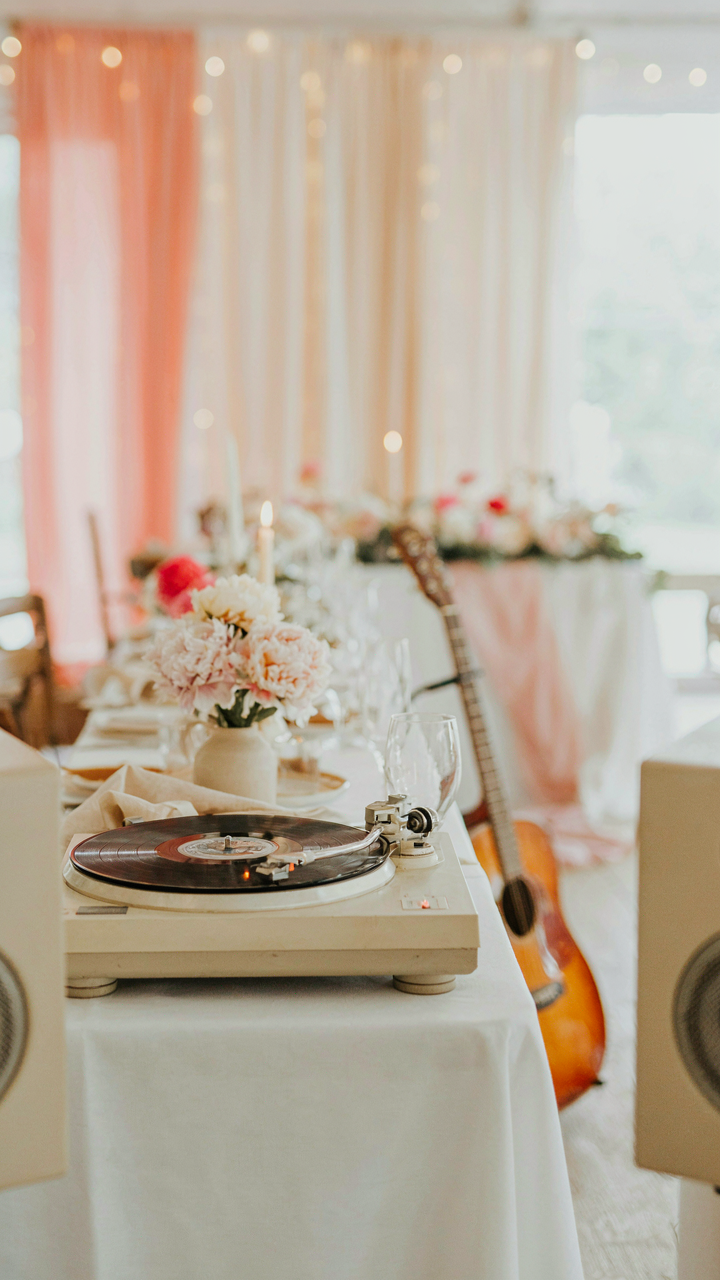
You want live music at your retro wedding because you think it signals sophistication, but the mechanism you’re missing is this: a live band locks you into paying for eight hours of labor whether guests listen or talk over it. Vinyl records don’t care. A curated playlist running through a decent sound system costs 200 to 600 dollars total and lets you control the exact song sequence. Live bands run 1500 to 4000 dollars minimum for a retro-themed act, and they’ll rush through songs or take requests that break your vibe.

The real cost isn’t the upfront fee. It’s the cognitive load of managing timing, sound checks, and performer ego while your venue’s back room gets occupied. A turntable setup takes one hour to configure and runs itself. If you want the performative element of live music, hire a DJ for three hours during cocktail hour only, then switch to vinyl for dinner and dancing. This hybrid approach costs less and gives you the cherry-picking you actually want without the all-in commitment.
Sound Systems That Deliver Genuine Retro Audio
Vintage stereo equipment from the 1960s and 1970s wasn’t designed for large rooms or outdoor spaces, so renting or buying original gear for a wedding is an expensive mistake rooted in aesthetic nostalgia rather than physics. Impedance matching, wattage, and speaker placement determine whether your playlist sounds warm or tinny, and old equipment often fails under sustained use. A modern powered speaker system that mimics vintage tone costs 400 to 900 dollars and won’t die mid-reception.
Buy two Klipsch or Edifier powered speakers rated for 100-150 watts each, positioned ten feet apart at ear level. This setup handles any venue size under 150 guests and produces the warm midrange that makes 1970s records sound authentic without requiring a sound engineer. Avoid all-in-one Bluetooth boxes under 300 dollars they lack the frequency response to make your vinyl playlist hit correctly. Test your setup with actual songs from your playlist in the venue space at least once before the wedding day.
The Mid Century Modern Wedding Aesthetic: Precision, Not Excess

Geometric Simplicity Over Decoration
You want mid century modern because it signals taste without screaming wealth. The real mechanism is constraint. Mid century design emerged from post-war material scarcity, which forced designers to strip away ornament entirely. Clean lines and functional pieces cost less to produce then and cost less to rent or buy now because you’re not paying for carved details, excessive fabric, or applied decoration that serves no purpose.
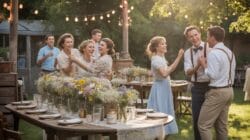
The budget win comes from doing fewer things well instead of many things adequately. A mid century room needs maybe three functional furniture pieces, solid color linens, and geometric statement lighting. Each element earns its place through design principle, not volume. You remove the urge to fill space, which is where most wedding budgets hemorrhage money. Rent one statement credenza instead of three generic tables.
Restraint In Palette And Surface
The common advice here is wrong. Most wedding planners will tell you to pick three colors and layer in textures for visual interest. That’s decorator-speak for “add more stuff.” Mid century design actually uses two dominant colors, one accent, and lets material contrast do the work. Walnut against brass against white linen creates visual weight without needing a fourth color scheme or patterned overlays.
Texture strategy in mid century weddings relies on wood grain, metal finish, and fabric weave rather than prints or embroidery. A walnut table with a brass base and white canvas napkins requires zero additional pattern. Concrete floors with geometric tile accents need no additional surface texture. The material itself provides the sensory variation. You reduce florals, linens complexity, and decorative rentals by treating the existing surfaces as your design elements. This single shift cuts décor spending by 30 to 40 percent because you’re not layering five different visual textures on top of each other.
The “Groovy Wedding Ideas” Illusion: DIY Vs. Smart Rental

Time And Skill Are Real Costs You’re Not Counting
You want to believe DIY saves money because it makes you feel resourceful. But DIY is an economics problem: you’re trading capital for labor, and your labor has an actual price whether you admit it or not. A hand-painted 1970s geometric backdrop takes 20 hours. That’s 20 hours you don’t spend on logistics, vendor coordination, or sleep before the wedding. Most people underestimate the skill gap too. Vintage lettering, proper wood staining, period-accurate fabric dyeing all have learning curves that cost time in failed attempts.

The real filter is this: do you have the specific skill already, or are you learning it for the first time on your wedding? Learning costs time, materials, and often produces lower quality results than outsourcing. A professional hand-letterer charges 300 to 800 dollars for custom signage because they’ve done it hundreds of times and won’t waste materials. You’ll spend 150 on supplies, forty hours of your time, and still won’t match their output. Calculate your hourly rate. If your time is worth more than 10 dollars an hour, outsourcing beats DIY on cost alone.
Rentals Win When The Markup Is Less Than Your Time
The rental market on retro pieces operates like market arbitrage in finance: vendors source items below retail, mark them up predictably, and you benefit from their economies of scale. A 1960s brass candelabra rents for 25 dollars instead of buying it at 120 dollars. The vendor spreads their acquisition cost across 40 weddings per year. You get functional vintage pieces without storage, breakage risk, or the hunt. The common advice says “buy if you’ll use it again.” That’s incomplete. You won’t use a gold velvet couch again unless you’re planning another retro wedding or keeping it permanently. Rentals eliminate the false choice of buying or nothing.
The cost-benefit math is straightforward. List what you need: centerpieces, lounge furniture, linens, lighting. For each item, compare three prices: retail new, thrifted vintage (with time to hunt and clean), and rental. Factor in storage space you’d pay for if you buy. Factor in your time spent sourcing. Then factor in the 40 percent breakage and damage rate on DIY vintage finds. Most couples find that renting 60 to 70 percent of decor beats buying or DIY entirely. Get quotes from three rental companies in your area, compare line items, and choose based on the specific pieces you need, not blanket percentage savings.
The 70s Party Theme Protocol: Food And Drink That Aligns
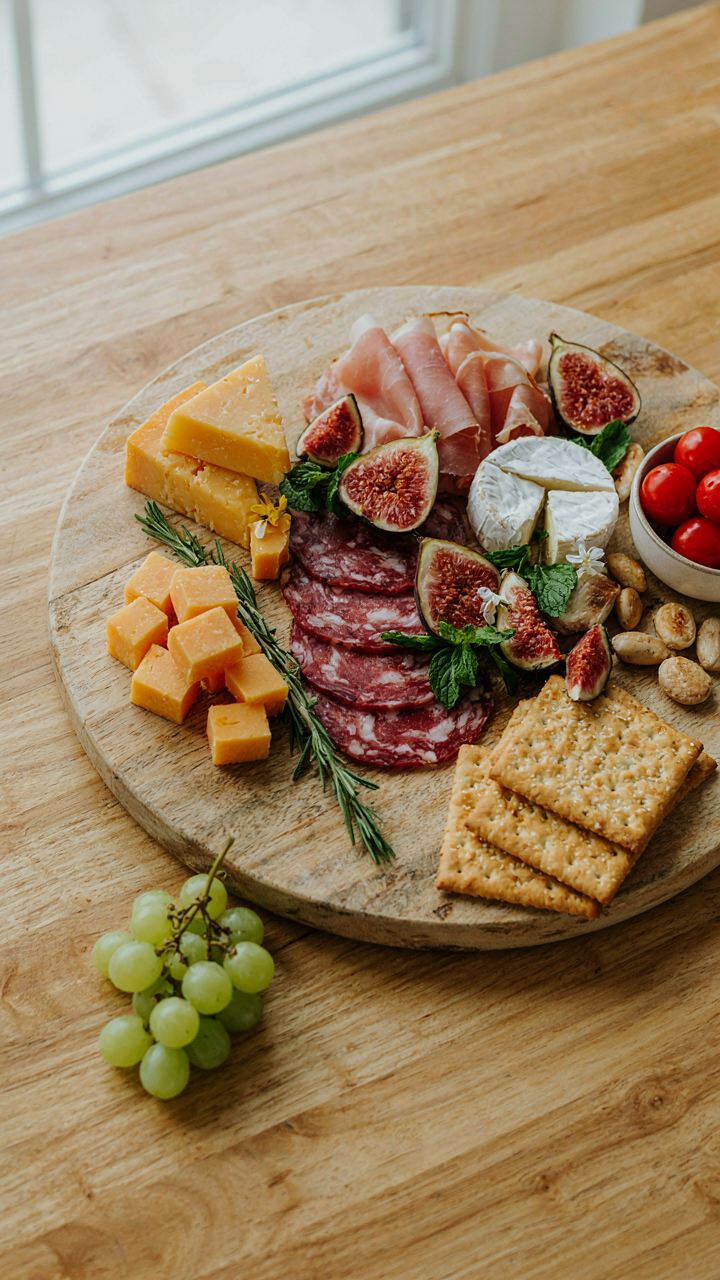
The Menu Items That Cost Less Than You Think
You want the food to look intentional, not like you raided a discount bin. The mechanism is this: 70s food wasn’t expensive because of ingredients—it was expensive because of labor and presentation. Casseroles, fondues, and charcuterie boards required skill to execute at restaurants. You can replicate the aesthetic for a fraction of the cost by buying components instead of assembled dishes. The era’s signature items relied on bulk starches, canned goods, and moderate proteins. Your actual cost per head drops when you stop trying to make everything from scratch.
- Cheese and charcuterie boards: Layer cheddar, salami, and crackers on wooden surfaces. Guests assemble their own plates. Minimal prep, maximum visual impact, and you control portion sizes ruthlessly.
- Baked beans and cornbread: Brown beans in bulk, add bacon grease and brown sugar. Cornbread from mix or frozen. Feeds thirty people for under thirty dollars total.
- Deviled eggs: Boil eggs, mix with mayo and mustard, pipe into halves. Costs pennies per serving. Photographs like a period piece from any 70s party spread.
- Spinach dip in bread bowl: Frozen spinach, cream cheese, sour cream in a hollowed sourdough. A single bowl replaces multiple appetizer platters and takes twenty minutes.
- Cocktail meatballs and pigs in a blanket: Ground beef or store-bought meatballs in sauce, crescent roll dough around hot dogs. Both freeze ahead and reheat without degradation.

The real leverage: you’re not paying for restaurants to execute recipes. You’re spending on ingredients they already marked up three times. Buy in bulk sections, skip the prepared foods aisle, and your 70s menu costs less than a contemporary catering quote while hitting the aesthetic harder.
Mixing Drinks Without Premium Spirits
The common advice is wrong here. Bartenders don’t charge you for vodka—they charge you for consistency and speed. In economics terms, you’re reducing the unit cost per drink by batching, which is what cocktail programs do at scale. Make one large-format punch or pre-batched cocktail instead of mixing individual orders. You eliminate the skill premium entirely and hit period authenticity simultaneously.
Classic 70s drinks relied on sweet mixers and basic spirits because consumers couldn’t taste the difference and marketing didn’t demand it yet. A Tom Collins uses bottom-shelf gin, fresh lemon, simple syrup, and soda. A Margarita uses standard tequila, lime, and triple sec. A Mai Tai uses rum and orgeat syrup. None require top-shelf liquor to taste correct or feel period-appropriate. Batch these drinks in a large container six hours before service and let guests serve themselves. You save thirty percent on spirits alone because you’re not paying for bartender hours or pour waste from trial-and-error mixing.
The Visual Cadence: Photography For Authentic Vintage Feel

Film Photography Delivers What Digital Cannot Fake
You want people to believe your wedding belongs in a different era. That requires visual proof they can’t consciously identify as artificial. Film stock introduces grain, color shift, and light response that digital cameras simulate but never replicate exactly. The mechanism is chemical: silver halide crystals exposed to light create a physical record with inherent imperfections that feel true. Digital tries to add these imperfections after the fact, which always reads as a filter.
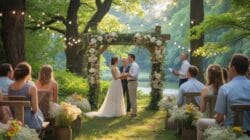
Shooting on actual film costs more upfront. A 35mm SLR camera body runs 200 to 500 dollars used. Film stock itself costs 8 to 15 dollars per roll, plus development at 10 to 20 dollars. A photographer who shoots film charges 30 to 50 percent more than digital-only competitors. The budget math is real, but the alternative is paying for editing time to artificially grain and color-grade every image. Film does the work in capture.
Color Grading Stops When You Understand The Constraint
Everyone says “match the era’s color palette.” That’s incomplete advice that leads to oversaturated, filtered-looking results. What matters is this: older films had limited color gamut and specific color bias based on film stock and processing chemicals available in that decade. Kodak’s Portra 400 from the 1990s has different color rendering than Fujifilm’s Velvia from the 1980s. Your editing should reference the specific film stock from your chosen era, not a generic “vintage” vibe.
Start with a LUT (look-up table) designed for a specific film stock and decade, not a preset called “retro” or “warm.” Then make one pass: adjust exposure, shadows, and highlights only. Stop editing. Every color grade adjustment beyond that adds labor cost and makes the image look post-processed, which defeats the entire point. A photographer who understands film stocks spends two minutes per image editing instead of twenty. That difference becomes a 500 to 2000 dollar swing in your final photography bill.
The Real Obstacle Is Not Your Budget, But Your Imagination And Willingness To Defy Expectations

Most couples blow their retro wedding theme budget because they outsource their taste to Pinterest. They hire vendors who charge premium rates for “authentic vintage aesthetics” when a thrift store and a Saturday afternoon cost nothing. Your constraint is your advantage. Stop asking what a retro wedding should look like. Start asking what you want people to remember. Pull one vintage element today that actually moves you, not one that photographs well. That’s where the real wedding lives.