The Myth Of The Million Dollar Matrimony: Redefining Fairy Tale
Wonder Without The Price Tag
You’re worried people will judge your wedding as cheap. That’s the real reason you’re reading this. Here’s the mechanism: fairy tales work through narrative, not net worth. The Brothers Grimm didn’t need a production budget. They needed contrast, mystery, and a single detail that broke the ordinary. Economics calls this diminishing marginal utility. Spend $10,000 more on flowers and guests notice incrementally less each dollar you add. Spend $500 on a single strategic element that contradicts the setting and people remember it for years.
The wedding industry profits from conflating expense with emotion. A $80,000 event and a $15,000 event can produce identical memory if the cheaper one executes one central idea with precision. Your job isn’t to match Pinterest boards. It’s to identify which single story element your guests will actually retain and pour resources there instead of spreading thin across ten forgettable upgrades.
Meaning Over The Meaningless Line Items
The common advice says cut corners everywhere equally. Wrong. That creates a thin, apologetic event. Better: eliminate entire categories of spending that produce zero narrative value, then move that money to one visible anchor. The dress, the venue entrance, the first course, the lighting design during the ceremony. Pick one. Most weddings have three expensive categories that nobody remembers and zero that stick.
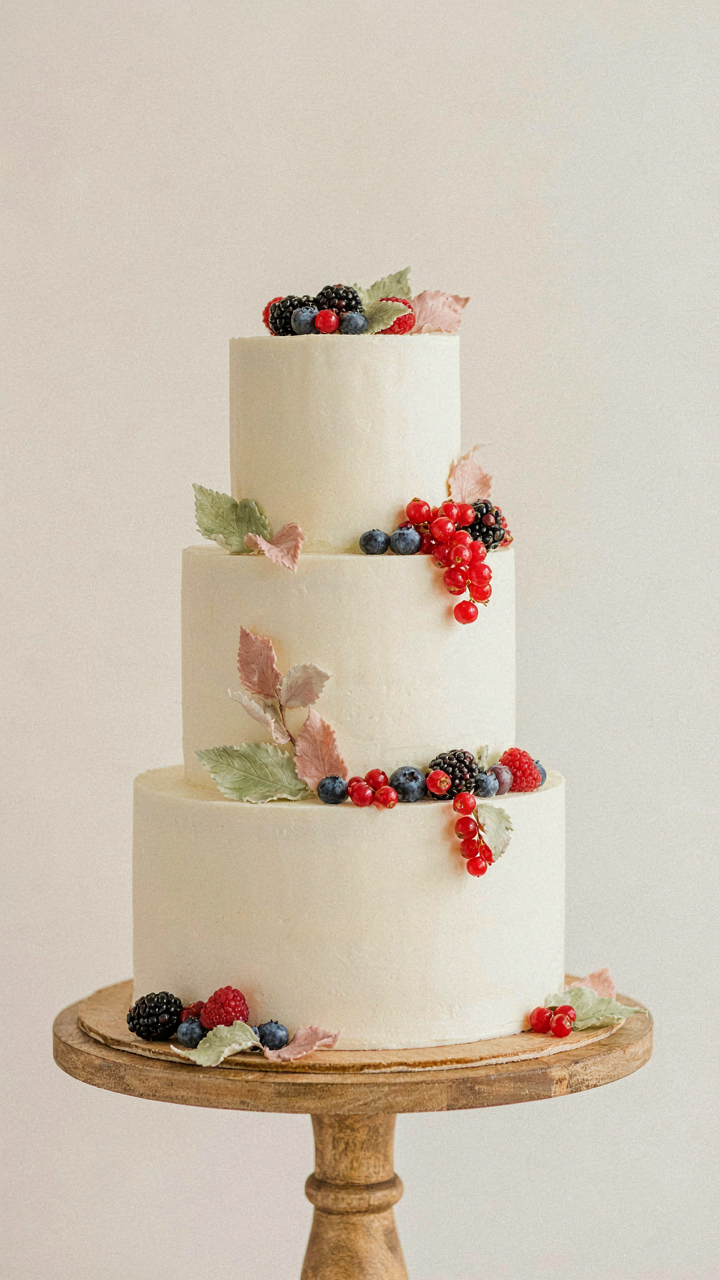
Ask yourself per line item: does this create a story my guests will reference in six months? The cake matters if it’s unusual. The decorations matter if they’re coherent. The music matters if it shifts between moments. Everything else is operational noise. Start with your core guest list size, then calculate backwards from your actual budget. One coherent fairy tale on forty acres with fifty people beats a diluted version attempting to impress two hundred strangers.
Scarcity As A Catalyst: The Enchanted Forest Wedding Protocol

When Limits Force Better Decisions
You’re reading this because you’re afraid a smaller budget signals a smaller wedding. Wrong frame. Scarcity isn’t deprivation in economics—it’s constraint optimization. A fixed budget forces you to eliminate waste before it starts. Most couples with unlimited funds waste money on redundancy: multiple florals doing the same visual job, décor that contradicts itself, rentals nobody remembers. You can’t afford that noise.

The mechanism is straightforward. When you have $5,000 instead of $25,000, you stop decorating every surface. You pick one focal point per room. That focused approach reads as intentional, not cheap. A single statement piece—a dramatic archway, a castle entrance constructed from plywood and paint—commands attention better than scattered themed elements fighting for your eye. Constraint forces specificity, and specificity reads as sophistication.
Recycled Materials And Authentic Storytelling
The common advice here is garbage: “Just use what you have lying around.” That’s not a strategy, that’s laziness dressed up as resourcefulness. Real resourcefulness means identifying which materials serve your narrative while cutting costs.
Medieval and fairy tale aesthetics actually rely on reclaimed, weathered, imperfect materials. Stone walls crack. Wood warps and grays. Fabric frays. These aren’t budget compromises—they’re historically accurate. Thrift stores, architectural salvage yards, and online marketplaces sell materials that already look aged. A weathered wooden door becomes a castle gate entrance. Mismatched vintage frames become mirrors for a witches’ cottage. You’re not settling for less; you’re using period-appropriate materials that actually strengthen the theme’s credibility. Source your materials by function first, cost second. Ask: what does this element need to do? Then hunt for materials that do it while telling the right story.
The “Whimsical Wedding” Deception: Crafting True Magic

Design Principles Beyond Trend Cycles
You want to feel like you discovered something nobody else thought of. That fear drives most couples toward Pinterest boards filled with identical castle backdrops and the same three color palettes. The real mechanism is constraint-based design. In architecture, constraints force innovation because you can’t default to expensive solutions. Budget forces you to identify which single element actually carries the fairy tale weight, then build everything else around that anchor.
Most advice says “add whimsy everywhere.” That’s the lazy path and it costs money you don’t have. Strip the aesthetic to its skeleton first. Ask what one visual rule makes something read as “fairy tale” to your brain, not to a trend algorithm. Is it asymmetry? Handmade texture? A specific color relationship? Define that rule, then apply it consistently across every element you control. The coherence does the work, not the volume.
Your Story As The Invisible Framework
The real theme isn’t Snow White or Cinderella. It’s the specific moment in your actual life that mirrors a fairy tale beat. Couples waste budget recreating someone else’s story instead of recognizing their own narrative already contains the material.
Identify one true plot point from your relationship that tracks like a fairy tale. Long-distance that ended, an unlikely meeting, overcoming family resistance, timing that felt fated. Build the visual language around that specific story, not around generic storybook imagery. Your guests respond to authenticity faster than they respond to decoration. When you design from your actual narrative, the theme becomes unmistakable without costing extra. You spend the same money but anchor it to something that matters.
Matrimonio All’aperto: Nature’s Built In Backdrop

Where Trees Replace Linens
You’re here because you want the fairy tale venue without the fairy tale price tag. The mechanism is simple: natural environments already contain the visual weight that forces you to rent or build in indoor spaces. Economics calls this “comparative advantage”—nature produces scenery at zero marginal cost once you own or access the land. A forest, garden, or meadow eliminates your largest decor expense before you spend a dollar. The trade is straightforward. You pay less for florals, backdrops, and lighting rigs because the environment does that work. You pay more for logistics: permits, weather contingency, guest comfort infrastructure. Most couples get this backwards and treat outdoor venues as cheaper versions of indoor ones. They’re not. They’re a different expense structure entirely.

The practical shift happens in your vendor negotiations. Tell your florist you’re working with existing trees and established plantings, not against a blank white wall. This changes their labor cost, not their skill. Tell your photographer the golden hour light is free and abundant. Their rate doesn’t drop, but your lighting rental bill does. The venue fee itself is often lower for outdoor land because owners carry less liability overhead than they do for climate-controlled buildings. This isn’t magic. It’s recognizing where your money actually flows in fairy tale wedding theme budget and cutting the redundant channels.
Ceremony Space Without Renting Chairs
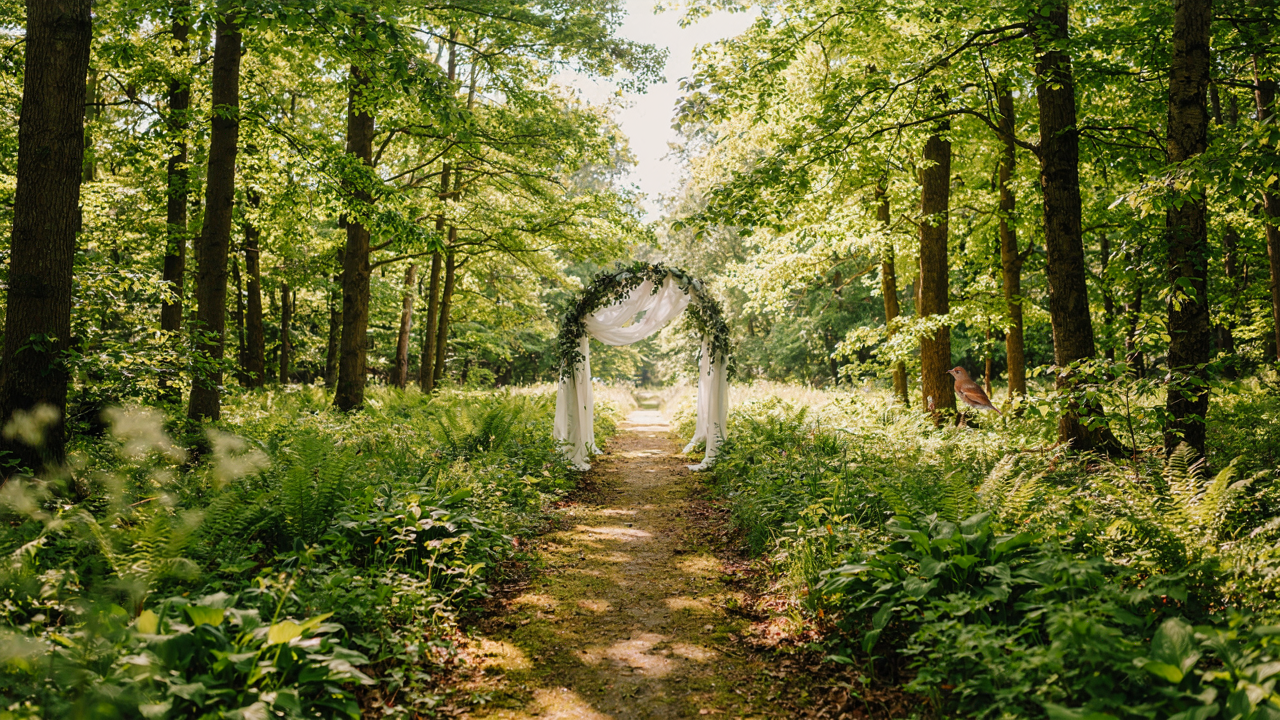
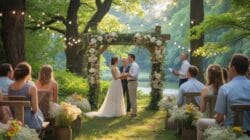
Most couples rent everything—chairs, arches, runners, lighting. A better play: use what the location provides and add only what creates the focal point. A natural arch formed by trees needs no additional structure. Seating on tiered hillside terrain needs no rented risers. This isn’t about roughing it. It’s about spending your budget on the one visual anchor—the ceremony backdrop—instead of distributing it thin across a dozen rented items. The mechanism here is concentration. Weak budgets spread money everywhere. Strong budgets create one powerful focal point and let the environment fill the gaps.
Ground the actual execution in site assessment before booking anything. Walk the space at the time of day your ceremony will happen. Identify natural sightlines, existing vegetation angles, and soil conditions. Photograph these spots from guest eye level and from above. This determines what you actually need to rent or build versus what the site already provides. A single ceremony arch placed in the right location becomes the only large decor piece you purchase. Existing trees become your perimeter. The slope of the land becomes your guest arrangement. You’ve now cut your decor vendor list in half.
The DIY Demystified: Strategic Labor Allocation

Where Your Labor Actually Matters
You want to feel like you built something instead of just paid for it. That’s the real reason you’re reading this. The mechanism is simple: some tasks multiply your effort, others waste it. The difference between a fairy tale wedding that looks intentional and one that looks half-finished comes down to where you spend your hands, not your money.
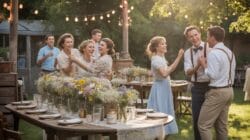
Think of labor allocation like triage in emergency medicine. You identify which wounds need immediate expert attention and which ones stop bleeding on their own. In a fairy tale wedding, some visual elements demand technical skill or physical precision. Others demand only repetition and taste. Centerpieces made from dollar-store branches and spray paint require steadiness and an eye for balance, not expertise. Hand-addressing invitations requires time, not skill. Constructing a tiered cardboard castle facade requires carpentry or engineering. These aren’t the same category. You allocate your labor to tasks where a single hour of your work produces more visual impact than a single hour of someone else’s would.
Recruiting Without Losing Control
Most advice says “ask friends to help” as if friendship itself solves coordination problems. It doesn’t. The real mechanism is assignment clarity paired with low stakes. Your friends will do work they understand and can do badly without breaking the event. They won’t do work where failure is visible or where they need guidance mid-task.
Assign tasks in three buckets: assembly line work (stuffing favors, arranging cut flowers into vases, stringing lights in a predetermined pattern), one-time setup (moving tables, covering walls with fabric, arranging borrowed furniture), and creative-but-boundaried work (decorating individual place cards with calligraphy, arranging small props on tables following a photo you provide). Create a group chat with assigned names and deadlines two weeks before the wedding. Send one photo of what done looks like. Then step back. People execute boundaried tasks. They freeze on open-ended ones.
Dream Wedding Decorations: The “Minimalist Impact, Maximum Effect” Principle
Where Your Decor Budget Actually Goes
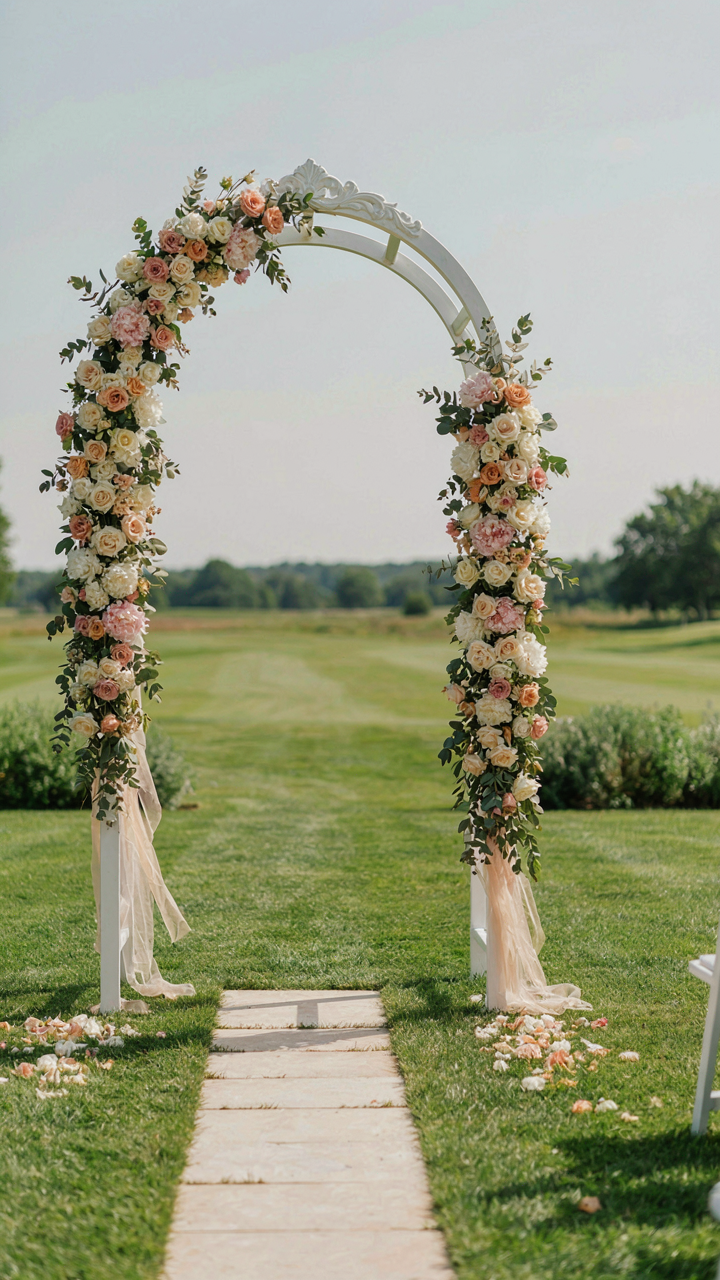
You want permission to spend less and still look like you didn’t. That’s the real question here. The mechanism is simple: you’re applying Pareto’s principle from economics, where 80 percent of your visual impact comes from 20 percent of your spending. Most couples waste money on redundant decorations that blend together. One statement piece commands attention far more than five mediocre ones scattered around the venue. Your eye lands on contrast and dominance, not volume.

The math is brutal but liberating. Identify the three to four zones guests actually see: the entrance, the ceremony backdrop, the reception tables, and the dance floor. Spend 70 percent of your decor budget on these zones only. Leave everything else sparse or undecorated. A single ornate archway beats twenty centerpieces that nobody remembers. This isn’t compromise. This is design efficiency.
The One Thing Everyone’s Looking At
Psychology research in visual attention shows humans focus on high-contrast elements and novelty, not on filling space. In fairy tale wedding theme budgets, this means one focal point per major area beats distributed spending across multiple elements. Your brain notices what stands out, not what’s filler. The venue’s natural architecture already provides 40 percent of the backdrop. You’re not building a stage. You’re framing one thing worth looking at.
Identify your focal point first, then budget backward. If your ceremony backdrop is a garden archway, build that with quality materials and intentional details. Everything else in that zone fades into supporting cast. The same applies to your reception: one elevated head table arrangement with real height variation draws all the visual weight. Guests don’t scan ten flat surfaces. They lock onto what rises above the plane.
The Illusion Of Grandeur: Applied Economics To Fairy Wedding Logistics
Where Your Guest Count Actually Goes
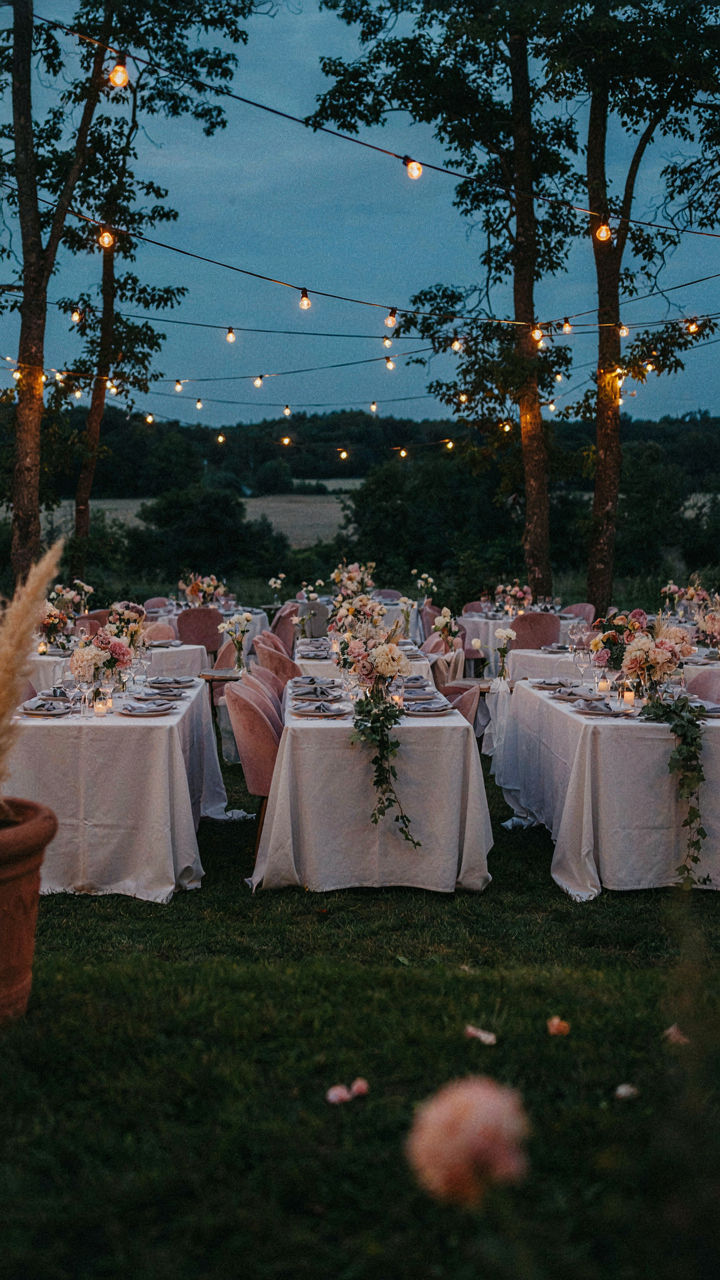
You want to invite everyone because you fear looking cheap. That’s the real math happening here. Economics calls this the scarcity principle: limited resources force trade-offs. In fairy tale weddings, your guest list is your scarcity constraint. Seventy-five guests at $80 per person costs $6,000 in catering alone. One hundred fifty guests at the same rate hits $12,000. That $6,000 difference funds your entire decor budget for florals, lighting, and set pieces that actually create the fairy tale effect people remember.
Most couples don’t calculate this trade-off consciously. They add names until the budget breaks, then slash decor to compensate. This is backwards. A smaller, well-fed crowd in a transformed space beats a large crowd in a generic venue every time. The mechanism is simple: fewer guests means higher spend per head, which means better catering, better bar, better experience. Choose your guest count first. Everything else follows from that number, not the other way around.
What Vendors Actually Control For You
The supply chain runs on contractor density and seasonal timing. Four months before peak wedding season, vendors have open inventory and flexible pricing. Two months before, they’re booked and prices climb. This isn’t negotiation theater. Fairy tale themes demand specialized services: castle rental companies, custom backdrop builders, professional lighting technicians. These vendors operate on thin margins and depend on booking density to stay profitable.
- Spring and fall shoulder seasons: April through May and September through October offer 15-25% discounts versus June and September peak weeks. Vendors have gaps to fill and will price accordingly.
- Weekday and Sunday ceremonies: Friday-Saturday rates carry premiums of 30-40%. Move your date to Wednesday or Sunday and reclaim that margin for other elements.
- Tiered vendor bundling: Florists, lighting crews, and decor installers often offer 10-15% discounts when you book multiple services through one company. One coordinator managing florals and lighting costs less than hiring separately.
- Advance payment locks: Paying 50% deposits 6+ months ahead secures lower rates than standard terms. Vendors price in payment risk. Remove that risk, remove the markup.
- Off-peak venue partnerships: Venues with consistent weekday bookings offer package deals: venue rental plus catering at fixed rates. This locks your largest expense and prevents scope creep.
The vendors who win fairy tale contracts understand theme economics. They’ve built fairy tale packages because they move inventory faster than generic services. Request their existing theme packages first, not custom builds. Customization adds 40-60% to timelines and cost. A vendor’s prefab castle backdrop costs $800. A custom build costs $2,400. The difference is negligible visually but massive financially. Use their efficiency, don’t fight it.
Beyond The “Fantasy Wedding”: Crafting Immersive Experiences

Sound And Scent Trump Decoration Budget
You want people to feel like they stepped into a storybook without dropping ten grand on props. Here’s the mechanism: psychology uses sensory hierarchy to rank what sticks in memory, and sound and scent activate the limbic system faster than visuals do. A three-hundred-dollar ambient soundtrack paired with a single dominant scent (woodsmoke, rose, vanilla) costs almost nothing to execute but rewires how guests experience the entire event.
Most couples waste money on visual clutter because that’s what photographs show. They buy centerpieces, uplighting, and backdrop rentals. The real leverage sits in what people feel, not what they see. Hire a local audio engineer to create a looped playlist that shifts between scenes, or use a Bluetooth speaker system with quality equipment. Scent comes from candles positioned strategically near entry points and the dance floor, not scattered everywhere. This approach holds a budget while creating the sensory density of a full production.
Create Participation, Not Observation
Guests remember what they do, not what they watch. Build stations where attendees make something, choose something, or contribute something to the narrative. A letter-writing station for advice to the couple, a photo booth with fairy tale props that guests use themselves, or a craft table where people make wands or tiaras during cocktail hour all cost under fifty dollars to set up and generate the emotional anchor that expensive entertainment cannot buy.
The mechanism here is participation converts passive attendance into active memory formation. A guest who spent five minutes making a flower crown remembers that moment thirty times more vividly than someone who watched an expensive performer on stage. Set clear instructions at each station so participation feels intentional, not optional. Track which stations draw the most traffic and use that data for future events. The goal is movement and choice, not perfection in execution.
The Fairy Tale Wedding Fallout: Post Ceremony Value

Decor That Moves Beyond The Dance Floor
You’re afraid that spending on wedding decor is money that vanishes the moment the last guest leaves. That fear makes you either overspend trying to make it “worth it” or underspend and resent the choice later. The real mechanism is simple: most fairy tale wedding decor falls into two categories—items with a second life and items with none. You control which category you buy.

Certain pieces convert directly into home decor or gifts without modification or degradation. Others exist only for the event. The conversion rate depends on material durability, style longevity, and whether the piece has utility outside a wedding context. Here’s what actually works:
- Wooden signs and frames: Paint them with acrylic, store them flat, repurpose for home décor or gifts. Survive multiple uses without damage.
- Lanterns and candle holders: Standard glass or metal designs transcend wedding aesthetics. Move directly into bedside tables, shelving, or seasonal storage rotation.
- Fabric drapes and tulle: Cut into smaller panels for nurseries, craft projects, or wrapped gifts. Cotton and linen blends remain usable for years.
- Floral garlands (artificial): Disassemble and store by color. Rebuild for holidays, parties, or sell pieces individually online to recover 20-30% of cost.
- Mirror and reflective surfaces: Thrift store finds that function in any room. No event-specific branding means permanent utility.
The filter for every decoration purchase should be: “Can someone use this in their home within two years?” If the answer requires modification or has a time limit, the piece has zero residual value. Budget accordingly.
Durability Over Trends, Every Time
Sustainability isn’t about saving the planet—it’s about not rebuilding the same thing twice. Fairy tale aesthetics borrow heavily from historical periods: Victorian, Gothic Revival, medieval, and Romantic Era design elements. These movements persist because their proportions and materials withstand time. Trend-dependent décor fails faster than timeless design.
The real decision point happens at material selection. Real wood, metal, glass, and natural fabrics age better than particle board, plastic, and synthetic materials. A wooden staircase runner with a castle silhouette costs more upfront but functions in a home afterward. A foam archway with spray-painted details becomes landfill in eighteen months. Calculate the total cost per year of use, not the event cost alone.
Your Budget Isn’t The Obstacle; Your Imagination’s Scarcity Is The Real Chain
The Three Constraints That Actually Matter
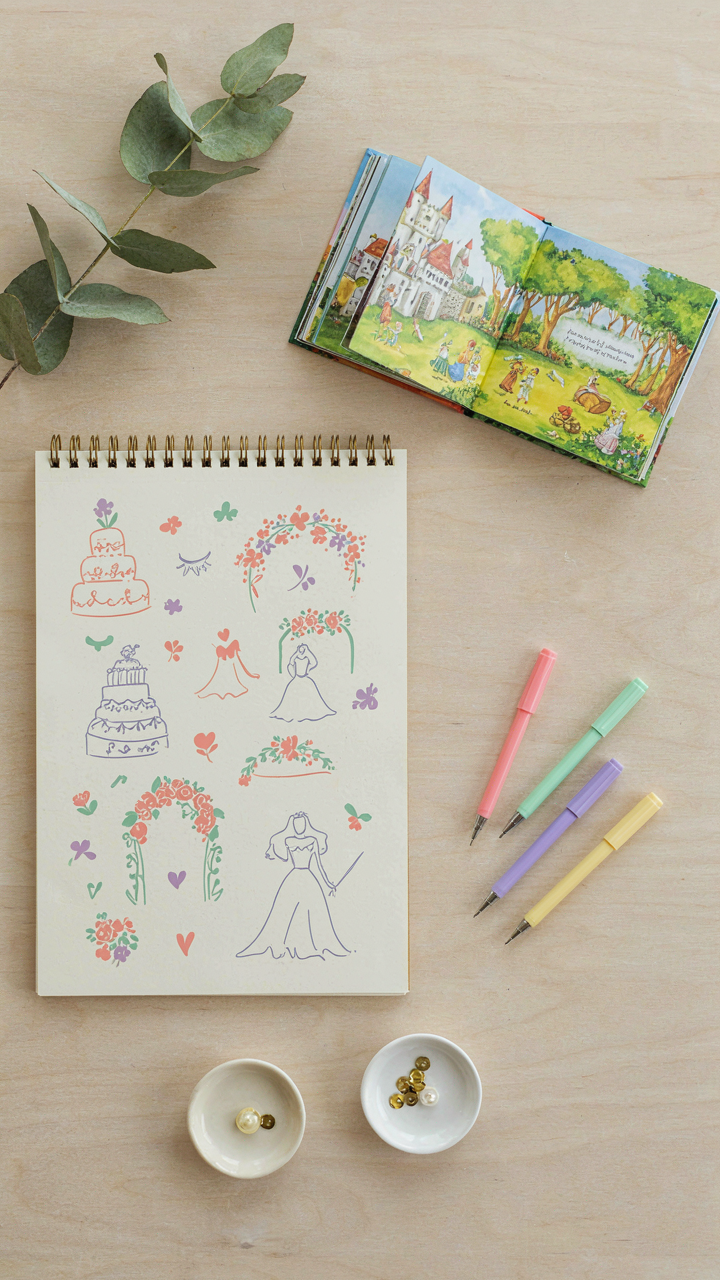
You’re afraid you can’t pull this off without money. That’s the real fear underneath the budget question. But here’s the mechanism: constraints force specificity, and specificity is what makes a wedding feel intentional instead of generic. Think of it like economics—scarcity drives value creation. A $3,000 fairy tale wedding with three deliberate design choices beats a $15,000 one with ten half-baked ideas. The budget isn’t your problem. Your problem is you haven’t decided what matters.
The three real constraints are decision clarity, material sourcing, and labor allocation. You need to pick your story first, then build backward. Do you want Grimm darkness or Disney magic? Medieval forest or enchanted castle? Once you answer that, every dollar has a job. Most people skip this step and spend money reactively on whatever looks “fairy tale-ish” without a frame. That’s where budgets explode.
What Actually Works When Money Is Tight
Stop taking advice about thrifting and DIY as moral virtue. That’s incomplete thinking. The real play is substitution—swapping expensive materials for cheap ones that serve the same visual function. Velvet costs money; crushed velvet and cotton blends look similar from three feet away. Silk flowers arranged strategically work as well as fresh florals in dimmed lighting. Painted fabric beats real linen for table runners. You’re not cheapening the experience. You’re engineering the perception with better constraints.
The mechanism is texture contrast and strategic focal points. Invest heavily in what guests see close up—entrance archway, table centers, ceremony backdrop. Spend aggressively there. Everywhere else, the material matters less than the arrangement. This isn’t compromise. It’s design efficiency. Start by listing every visual zone at your venue. Rate them by guest proximity. Your budget flows to zones one and two only.
Your Budget Isn’t The Obstacle; Your Imagination’s Scarcity Is The Real Chain
Most couples blame money when their fairy tale wedding feels generic. The truth is harsher. They never asked themselves what “fairy tale” actually means to them. You have enough budget to execute a compelling vision. You don’t have a compelling vision. Stop scrolling Pinterest for inspiration today. Spend one hour writing down three specific scenes from stories that actually move you, then reverse engineer those into real details for your wedding. Your budget stretches when your creativity stops borrowing from everyone else’s Pinterest boards and starts pulling from what genuinely matters to you.