Beyond Blankets: The Micro Event Design Mandate
Where Water Meets Sightlines
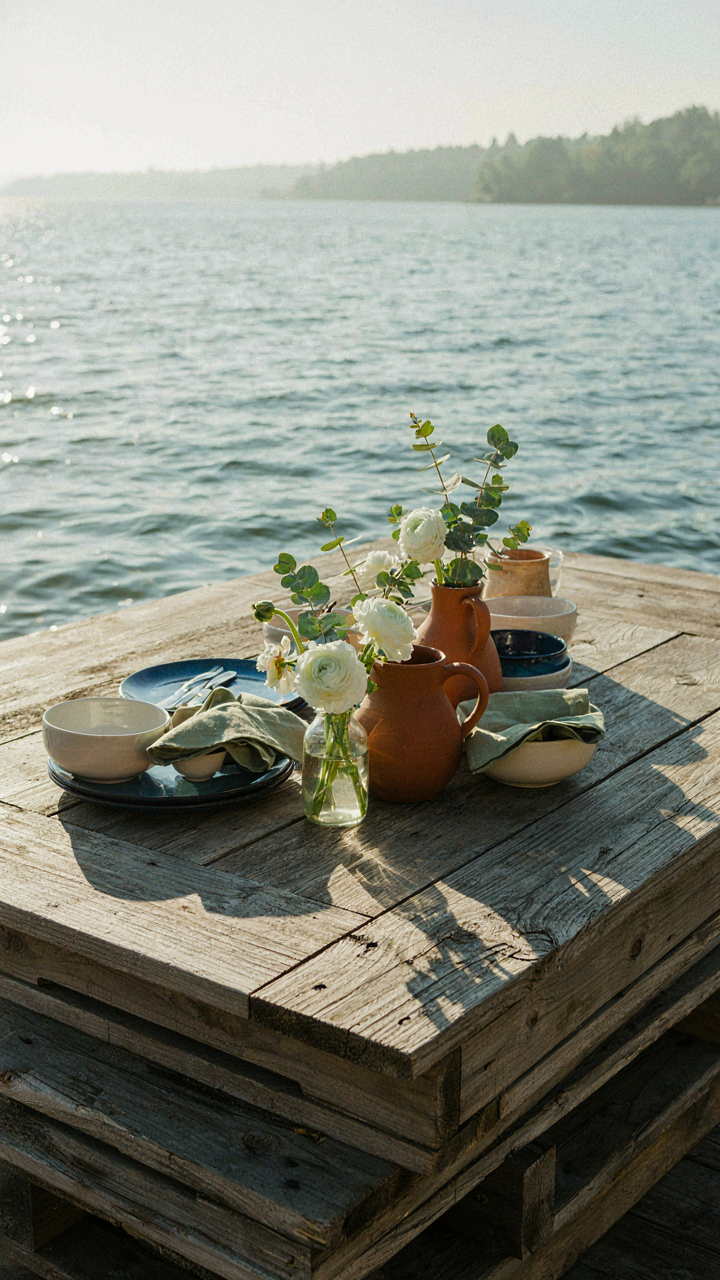
You want people to see that you chose this spot deliberately, not just found a flat patch near water. The real mechanism is borrowed from real estate: what matters is scarcity of view combined with isolation from noise. At a lakeside location, this means positioning your gathering where the water creates a natural boundary on one side, forcing other guests and distractions to stay contained on the opposite direction. Scout the site during the same time of day your event happens to understand sun angle, wind patterns, and how sound travels.
The practical move is this: arrive at potential sites two hours before your preferred start time and sit in the exact spot where guests will gather. Note what you hear, what blocks sight lines, and which direction the wind pushes. A location that feels peaceful at noon might trap noise from a distant boat launch or highway. Choose elevation changes that work for you—slight slopes hide car parks and neighboring properties while maintaining sight lines to water. This isn’t about finding perfection; it’s about understanding what you’re actually buying with your chosen spot.
Furniture That Doesn’t Pretend
Everyone says to upgrade from basic picnic tables to something nicer. That’s incomplete. The real problem is that standard picnic furniture broadcasts cheapness because it’s designed for volume, not intention. Instead, source vintage folding directors’ chairs or low camp stools that compress into portable form but look deliberate when placed. These pieces signal you curated this experience rather than renting whatever the venue offers. The constraint—portability to a lakeside location—forces better aesthetic choices naturally.
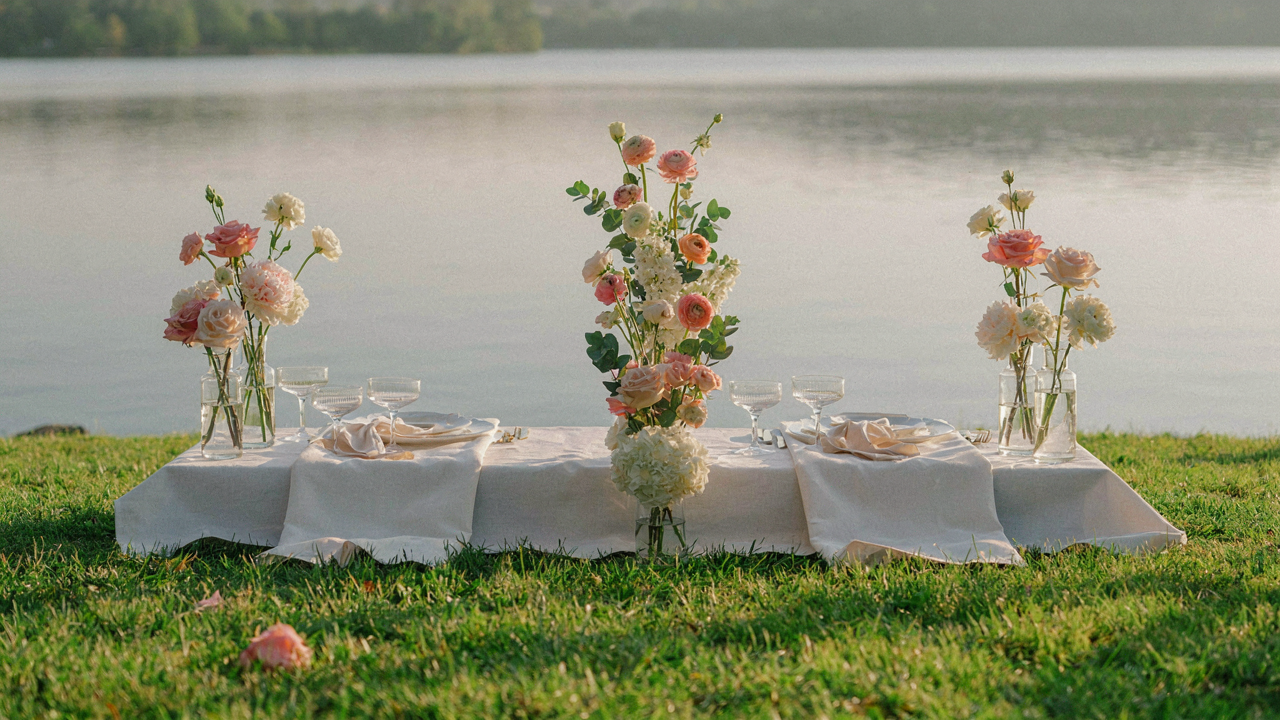
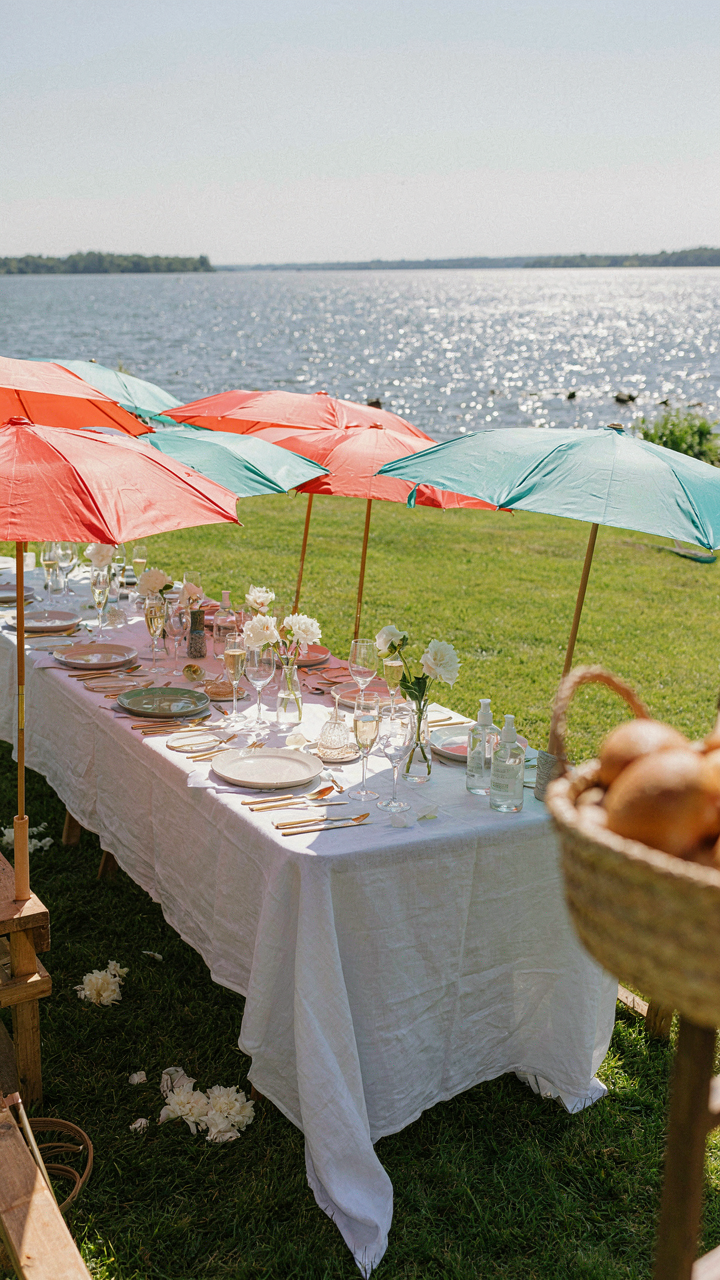
Upgrade the table surface itself by draping quality linen over basic structures or using low platform tables built from reclaimed wood. Surface matters more than frame because guests touch it, eat from it, and it appears in photos. Pair upgraded seating with simple glassware rather than disposables, and you’ve shifted the entire perceptual weight of the event. Bring serving pieces that work without electricity: wooden boards, ceramic vessels, cast iron. These pieces survive transport and become part of the visual narrative that this gathering demanded real planning.
The Intentional Menu: From Sandwiches To Signature Spreads
Source Your Food Like You’re Building Reputation
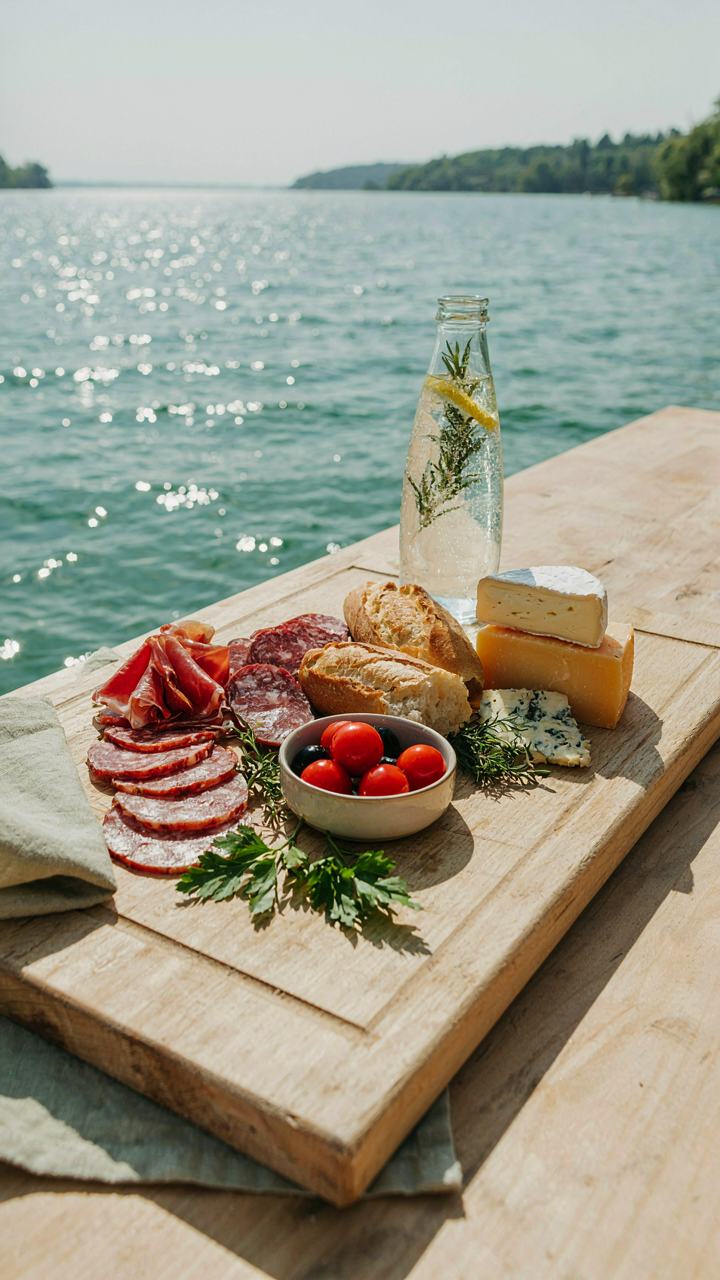
You want people to remember this meal because you believe it reflects who you are. Here’s the mechanism: constraint forces specificity, and specificity builds memory. Small weddings let you abandon the catering industrial complex entirely. Buy from one local bakery, one fishmonger, one farm stand. Not because it’s trendy. Because you can actually know the person making it and taste the difference. Economics calls this vertical integration. You’re collapsing the supply chain so nothing generic touches your table.

Seasonal eating isn’t philosophy. It’s math. Strawberries in January cost more, travel further, taste like nothing. Same fruit in June costs less and came from fifty miles away. Pick a month. Build the menu around what’s actually ripe. Cured meats, good cheese, fresh bread, one protein prepared simply. Your guests don’t need novelty. They need evidence that you thought about this beyond clicking a vendor checkbox.
Beyond Water: Beverage Service That Signals Intent
Most small weddings default to beer, wine, and a cooler. That’s not intentional. That’s lazy. Water should be there, yes, but flavored water signals that you noticed people’s actual needs at a lakeside event. Citrus-infused or herbal tea chilled in a pitcher costs nothing to plan and everything to execute correctly. One signature drink, not five. A single cocktail made well beats a full bar that requires someone to bartend. If you’re doing wine, pick two bottles maximum. One red, one white or rosé. Let people understand your actual taste instead of performing choice theater.
Nonalcoholic options aren’t accommodations for edge cases. They’re the default. Sparkling water with fresh herbs, kombucha, fresh lemonade. Have more of these than wine. People drink what’s there. The real mechanism is removing friction. Don’t make guests ask for something without alcohol. Make it so visible and well-executed that ordering it requires no explanation or courage. Set everything on a table and walk away. Self-service eliminates the performance of ordering and the server overhead of a small event.
Nature Aesthetic: Integrating The Lakeside Grandeur
Let The Landscape Do The Work
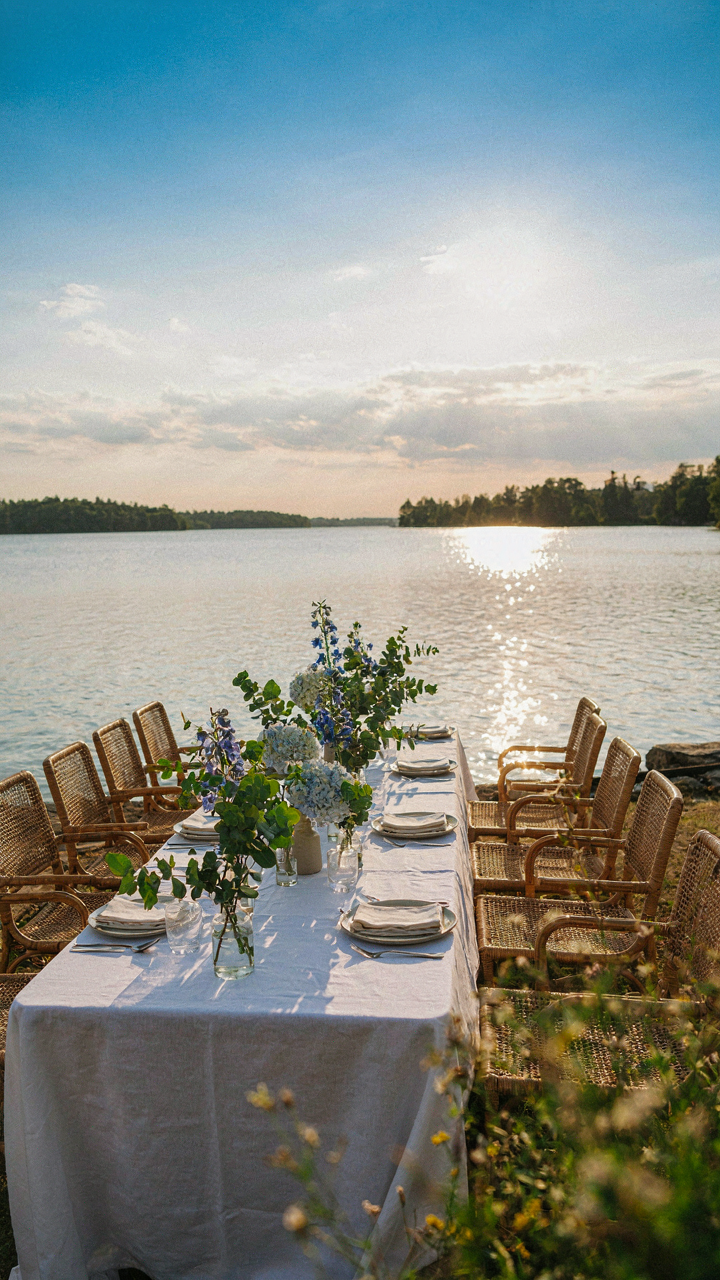
You want people to notice you picked a beautiful spot. That’s the real reason this section matters to you. But the mechanism is simple: decoration at a lakeside wedding fights the environment instead of partnering with it. The lake, trees, and sky are already doing visual labor. Your job is subtraction, not addition. Remove competing elements. A small wedding at the lake survives on restraint.

Minimalist decor borrows from negative space theory in visual design. The empty space around an object makes the object matter. At a lakeside picnic wedding, the empty space is water and horizon. Drape nothing over branches. Skip the fabric swags. Use one color palette that echoes what’s already there: greens, blues, warm earth tones from sand or stone. Centerpieces should not exceed six inches in height so guests see the water, not flowers.
Golden Hour Timing Beats Artificial Light
Romantic lighting at a lakeside picnic wedding doesn’t require strings or lanterns. Physics matters here: golden hour, the period roughly one hour before sunset, produces low-angle light that flatters faces and creates depth across water. Schedule your event to end during this window, not fight against it. Most small weddings underestimate how much work natural light eliminates. You don’t need backup. You need timing.
If your event extends past golden hour, introduce light strategically. Candles in glass holders work because they’re contained and won’t blow out over water. Battery-operated tea lights placed low on tables cost twelve dollars total. Skip overhead string lights entirely for small lakeside events. They create harsh shadows on faces and compete with the water’s reflection. Position guests so the setting sun becomes your backdrop, not your obstacle.
The Elopement Picnic Protocol: Streamlined Sentiment

Permit Navigation: Essential Legalities For Public Spaces
You’re worried about looking foolish if something goes wrong legally. Here’s what actually matters: most lakeside venues operate under zoning law, not contract law. The mechanism is jurisdiction. A public park answers to municipal code. A private property owner answers to state trespass law. A state forest answers to Department of Natural Resources rules. Each has different requirements for gatherings, alcohol, amplified sound, and fire. Call the specific agency that owns the land. Ask three questions: Can we gather here? Can we bring alcohol? Can we use sound equipment? Write down the name and date of who answered. That becomes your liability shield.

Most couples skip this because they think permits are expensive or bureaucratic theater. They’re not. Most public lakeside areas don’t require permits for groups under fifty people eating a picnic meal. Private land owners rarely care if you’re quiet and clean. The cost is a phone call. The protection is documentation. Before booking anything, verify the specific rules that apply to your location. Email the agency confirmation and print it. This step prevents the entire event from collapsing on the day it happens.
Vendor Vetting: Curating A Lean High Impact Team
You don’t need a vendor roster. You need transaction clarity. Borrow from supply chain management: single point of failure. Most small lakeside weddings fail because couples hire six vendors who never communicate. The real mechanism is dependencies. If your caterer arrives late, your photographer captures nothing but stress. If your rental company forgets tables, your florist’s work sits on the ground. Pick vendors who own their output completely. A caterer who also handles setup. A photographer who arrives early and stays late. A single person managing music and lighting. This eliminates handoff points where things break.
Vet for track record on small outdoor events specifically, not just weddings. Ask each vendor: Have you worked lakeside before? What went wrong? How did you solve it? Their answer to the last question matters more than their portfolio. Skip vendors who seem offended by the questions. You want operators who’ve failed and learned, not people selling you confidence. Write a one-page timeline showing exactly when each vendor arrives, what they do, and who they coordinate with. Share it with every person involved. Execution depends on this clarity, not on how many vendors you hire.
Guest Experience Architecture: Intimacy Amplified
Force Multiplication Through Constraint
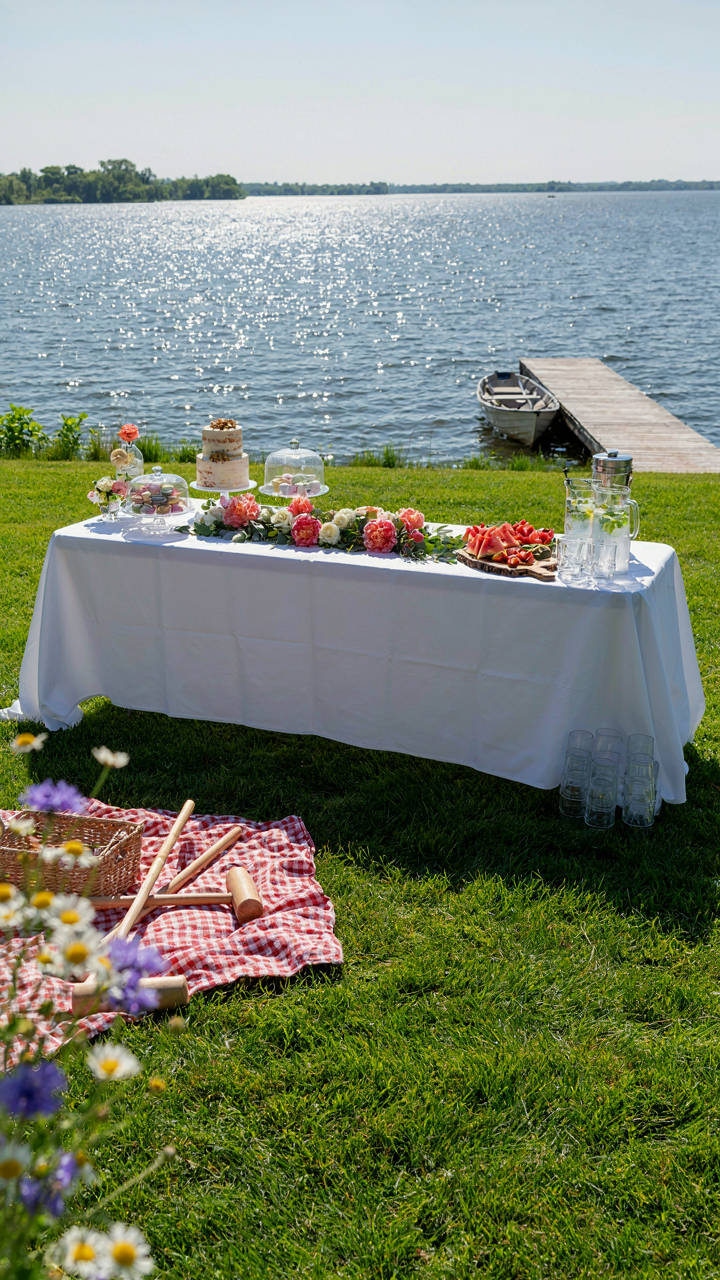
You want people to feel special without spending extra money. The real mechanism is military force multiplication: achieving disproportionate impact with limited resources by removing friction points instead of adding amenities. A small lakeside picnic wedding operates under natural constraints that actually work in your favor if you architect around them instead of fighting them.

The constraint isn’t the problem. It’s the delivery system. When you can’t seat eighty people at formal tables, you don’t try. You design for movement. Guests circulate between food stations, lawn games, and water access. This forces organic interaction instead of trapped table conversation. Proximity to the lake becomes part of the experience architecture, not decoration. Each design decision multiplies comfort by eliminating the friction of feeling crowded or bored.
Removing Friction Before It Starts
Conventional wedding advice tells you to “make guests feel welcome.” That’s lazy. The real work is mapping every moment a guest spends energy on logistics instead of enjoying the event, then eliminating it. A small picnic wedding reveals these friction points faster than a formal event because there’s nowhere to hide inefficiency.
Assign parking before guests arrive. Mark spaces with low stakes. Provide a simple map showing restroom location, water access, and food stations. Create a covered waiting area in case of sudden weather. Have one person dedicated to greeting arrivals and pointing them toward setup. These aren’t nice touches. They’re the infrastructure that lets guests stop thinking about logistics and start experiencing the event. Without this protocol, even a beautiful lakeside setting becomes an obstacle course of small frustrations.
Lake Reception: Beyond The Ceremony
What Happens After Food Disappears
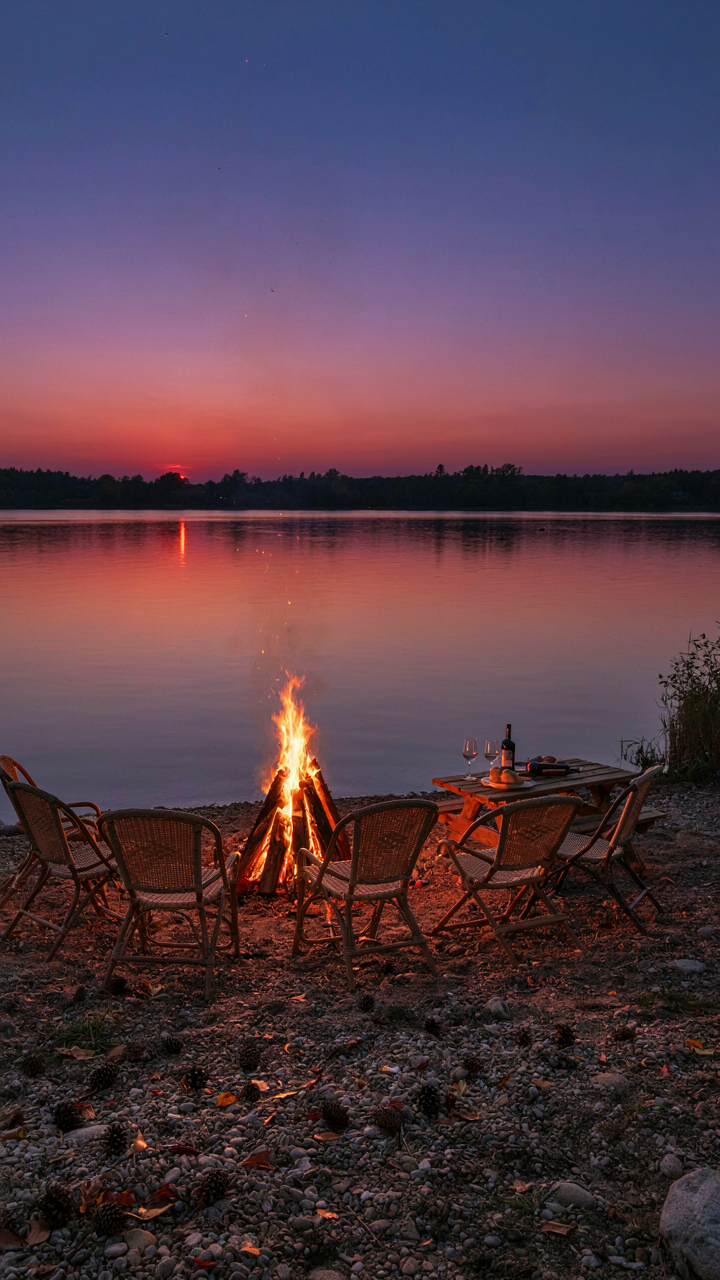
You want people talking about your wedding for months, not checking their phones at 7 PM because the momentum died. The real mechanism is this: energy at small events decays fast unless you architect something to sustain it. Most people default to “let’s just see what happens,” which guarantees a flat ending. You need sequential activity, not simultaneous entertainment competing for attention.
- Lawn games on the shoreline: Cornhole, ladder toss, or bocce ball give people permission to move around and create natural conversation clusters. Keep rules loose and stakes zero to avoid competitiveness that kills vibe.
- Bonfire or fire pit timing: Light it 90 minutes after the meal concludes, not before. This gives the meal its own arc and creates a legitimate reason for guests to stay into evening. Assign someone to tend it so it doesn’t become background clutter.
- Acoustic music or curated playlist rotation: Live musician playing 30-45 minutes during food, then shift to a pre-built playlist you’ve actually listened to. Bad music ends celebrations faster than rain.
- Water activity during daylight: If your lake permits, rent kayaks or paddleboards for the two hours before sunset. This physically separates groups briefly, then reunites them with new conversation material when everyone reconvenes.
- Planned send-off moment: Sparklers, lanterns, or a specific ritual at dusk gives people a clear endpoint without awkward lingering. Ambiguity about when to leave kills small-wedding energy instantly.

The sequence matters more than individual activities. You’re not filling dead time; you’re creating natural transition points that feel organic to guests but were actually mapped out weeks prior. This is the difference between a wedding that fades and one people remember as tight and intentional.
Light And Timing: Where The Real Photography Wins
Most wedding photography advice treats cameras as passive observers, which completely misses the mechanism. Use biology here: human faces photograph best in the golden hour because of the light’s angle and color temperature, not because it “looks romantic.” Lakeside settings create a bonus advantage most photographers ignore: water reflects light back onto faces, filling shadows naturally and reducing contrast issues that plague midday shooting.
The real move is time your key moments for 90 minutes before sunset, not during it. The light is directional without being harsh, and the water’s reflection acts like a professional fill light you didn’t pay for. Position your photographer with the water behind guests during toasts and candid moments, forcing backlit situations that force the light to bounce. Candid moments stop being random when you control the light variables first. The photographer shows up knowing exactly where the sun will be and how water reflection behaves at your specific lake at that specific time of year.
Weathering The Unpredictable: Contingency Planning
Backup Shelters: Elegance In Adverse Conditions
You’re worried about looking unprepared in front of your guests. The real mechanism is simple: weather doesn’t care about your timeline, so you need redundancy built into the site itself. Borrow from military strategy—they call it defense in depth. You stack layers of protection so no single failure point ruins the operation. A small lakeside wedding needs a primary shelter (tent, pavilion, or structure) and a secondary option positioned separately. This isn’t pessimism. It’s acknowledging that lakeside air produces weather fast.

The most common mistake is renting one tent and hoping. Instead, identify a natural shelter on the property first—a boathouse, cabin, or tree line dense enough to provide coverage. Then add a rental structure as your primary setup. Position them so guests can move between them without crossing open ground. If weather turns, people flow to shelter without confusion or panic. The secondary option gets used maybe once every five years, but when you need it, you’ve already won. Set up a clear pathway between both locations before guests arrive.
Comfort Provisions: Protection From Elements
You need specifics here, not philosophy. Temperature swings hit water-adjacent spaces harder than inland areas because water reflects and radiates heat differently. Bring blankets—lightweight fleece, not heavy quilts—that guests can grab without asking. Position them on benches and chairs beforehand so they’re visible and accessible. Bug spray matters more at lakeside than anywhere else because water breeds insects. Leave bottles at tables and near seating clusters so people can reapply without hunting you down.
Sun protection requires three tools working together. Rent umbrellas and position them at tables and standing areas before guests arrive. Provide sunscreen in SPF 30 minimum at multiple points around the site. Finally, schedule your ceremony and primary gathering during lower-UV hours if possible, typically before 11 AM or after 4 PM. Don’t announce this as a feature. Just build the timing into your flow. Guests stay comfortable when they never notice the systems keeping them comfortable.
The Unforgettable Touch: Personalizing Your Lakeside Story
Rituals That Replace Generic Traditions
You care about this because you want proof that your wedding mattered, that it wasn’t just another event people forgot by Tuesday. The mechanism is simple: borrowed rituals carry no weight because they carry no history. Your guests attend a thousand weddings built from the same template. The ones they remember are the ones that only make sense because of who you are.

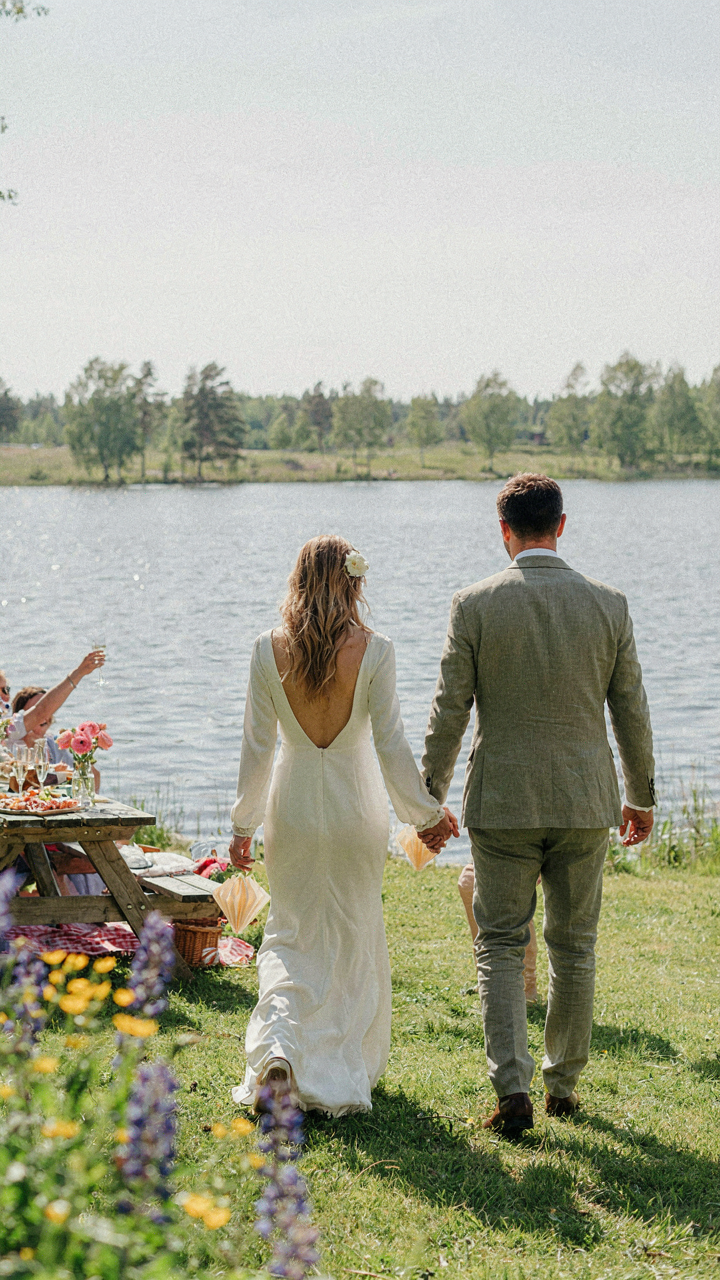
Custom rituals work like genetic code in biology. They carry information specific to your relationship. At a lakeside picnic, this means ditching the unity candle and instead walking together to the water’s edge to release a shared object, or reading vows you wrote three months before the wedding date, or having guests contribute a single memory instead of a generic toast. The ritual itself matters less than the fact that it’s unreplicable. It cannot happen at anyone else’s wedding.
Favors That Serve A Function
Most wedding favors are landfill waiting to happen. Guests throw them away before the drive home. The real mechanism is reciprocity: a favor only works if it’s something the guest actually keeps and uses. At a lakeside picnic, this is easy because your constraints are tight. Give something small that lasts. A custom camping mug with your initials and the date. A packet of wildflower seeds that grow in the region where your lake sits. A bookmark. A small jar of honey from a local beekeeper with a label you designed. The object should require zero display space and high utility. Favors that matter solve a small problem the guest encounters later.
The final step is logistics: order favors eight weeks before the wedding, inspect them two weeks out, and package them the night before your event. Place them at each seat rather than on an exit table. This forces the guest to touch it, register it, decide consciously whether to keep it. That decision moment is where the favor becomes memorable instead of invisible.
Your Biggest Obstacle Isn’t The Budget; It’s Your Inability To Define Enough
Most people planning a lakeside picnic wedding small enough to matter fail before they start. They want everything. Small doesn’t mean less—it means ruthless elimination. Stop asking what to add. Start asking what you’ll remove. Today, write down three things your wedding doesn’t need. Not tomorrow. Now. The couple who wins isn’t the one with the longest guest list or the fanciest details. The couple who wins is the one who knows exactly what they’re saying no to.