Understanding Why Difficult Family Members Wedding Dynamics Are So Common

Why Weddings Bring Out Strong Emotions In Family Members
Weddings trigger deep psychological shifts within a family structure. Parents see the event as a public reflection of their success or a loss of influence. Siblings may feel a change in their social standing or birth order relevance. These shifts cause anxiety. Anxiety often manifests as controlling behavior or emotional outbursts. The high financial costs and traditional expectations add external pressure to these internal family conflicts.
The event marks a formal transition of loyalty from the birth family to a new spouse. Some relatives view this boundary setting as a personal rejection. They fight to maintain their previous level of control or attention. Alcohol and lack of sleep during the planning process further lower emotional filters. This combination makes even minor disagreements feel like major threats. You must recognize these triggers to manage the resulting behavior.
The Most Common Types Of Challenging Family Behavior At Weddings
Challenging behavior usually falls into predictable patterns. Narcissists will attempt to steal focus during Wedding Family Pictures or speeches. Controlling relatives try to dictate the guest list or the schedule of the day. Passive-aggressive members might make subtle comments about the cost or the choice of venue. These actions aim to reassert power in a situation where they feel secondary. Understanding these roles helps you stay detached.
Disruptive relatives often use Family Shots Wedding sessions to showcase grievances. They may refuse to stand near certain people or complain about the timing. Others use the reception to bring up old family secrets or unresolved arguments. These behaviors are rarely about the wedding itself. They are about long-standing power struggles. Identifying the type of behavior early allows you to create a tactical plan to neutralize the disruption before it starts.

Setting Boundaries Early Conversations To Have Before The Big Day

How To Have An Honest Conversation With A Difficult Family Member Before The Wedding
Direct communication prevents chaos. Schedule a specific time for this talk. Do not wait for a random conflict to arise. State your expectations clearly and without emotion. Use “I” statements to focus on your needs rather than their faults. This approach reduces defensiveness and keeps the focus on the event goals. Clear rules about behavior and roles eliminate ambiguity before the guests arrive at the venue.
Be firm about the guest list and the schedule. If a relative is known for causing scenes, address it now. Tell them exactly what behavior will result in their removal from the event. Do not negotiate your non-negotiables. You are the primary stakeholder in this transition. This conversation serves as a verbal contract. It ensures everyone understands the consequences of their actions during the ceremony and the reception.
Deciding Which Battles Are Worth Fighting And Which To Let Go
Identify high-stakes issues versus minor annoyances. Budget, guest count, and core traditions are high-stakes. Napkin colors or song choices are minor. Save your capital for the problems that will actually ruin the day. If a family member wants a specific tradition that does not hurt anyone, concede. Pick your fights based on the long-term impact on your peace and the event flow. Do not waste energy on trivial details.

Analyze the cost of resistance. Fighting a stubborn parent over a small detail often causes more stress than the detail itself. Let them have the small wins so they feel included. This strategy buys you leverage for the bigger issues. Conserve your mental energy for managing the timeline and the vendors. Focus on the final objective. A successful wedding requires tactical compromises to keep the overall structure intact and the day moving forward.
Seating Chart Strategies To Minimize Conflict Among Family Members

Strategically Separate Feuding Family Members At The Reception
Distance serves as the most effective physical barrier against verbal altercations. Map the floor plan to place high-conflict relatives in opposite corners of the room. Use the dance floor or the buffet station as a neutral zone to increase the distance between tables. Ensure both parties have a clear view of the head table so neither feels slighted. Proper spacing prevents accidental interactions during the meal.
Assign shared associates to different tables to act as social buffers. Place neutral friends or distant cousins between feuding parents to discourage cross-table shouting or glares. Do not put enemies in the same line of sight. If two people cannot coexist peacefully, position them so they face away from each other. This layout minimizes eye contact and reduces the chance of spontaneous confrontations throughout the night.
Using Seating Arrangements To Create A Comfortable Environment For Everyone
Prioritize comfort by grouping guests with familiar and supportive peers. People remain calmer when they feel safe and respected by those at their table. Grouping by shared interests or common history keeps conversation productive and light. A comfortable guest is less likely to focus on old grievances or cause a scene. This strategy keeps the focus on the celebration rather than personal family drama.

Avoid placing difficult family members near high-traffic areas like the bar or bathrooms. High-traffic zones increase the probability of unplanned run-ins with feuding relatives. Secure their place in quieter areas where they feel distinguished but contained. This tactic limits their movement and keeps them engaged with their immediate table mates. Controlled environments lead to fewer outbursts and a smoother flow for the entire reception event.
Assigning A Trusted Point Person To Manage Family Drama On The Day

What Role A Wedding Day Liaison Or Coordinator Plays In Managing Family Tension
A wedding liaison acts as a human buffer between the couple and high-conflict relatives. This person handles logistics and monitors emotional triggers. They intercept complaints before they reach the couple. This ensures the bride and groom remain insulated from petty grievances. Professional coordinators often fill this role, but a blunt friend or distant cousin also works. They must possess enough authority to command respect from unruly elders.
The liaison manages the flow of the event to prevent physical altercations or verbal outbursts. If two divorced parents cannot stand near each other, the point person directs their movement. They ensure people stay in their assigned seats. During high-pressure moments like Family Shots Wedding sessions, they keep the crowd moving. This role requires a thick skin and a clear head. They prioritize the wedding schedule over individual feelings or family ego.
Tips For Briefing Your Point Person On Specific Family Sensitivities
You must provide your point person with a detailed map of existing family conflicts. Identify which individuals cannot sit at the same table. Explain history that might trigger a scene. Clear communication prevents the liaison from making accidental social errors. Give them a physical list of names and faces. This allows them to monitor the right people throughout the event without asking questions.
- Identify Conflict Zones: List specific pairs of relatives who have a history of fighting. Your point person needs to know exactly which people to keep on opposite sides of the room. This prevents accidental confrontations during dinner or dancing.
- Specify Alcohol Limits: Note which family members become aggressive or unpredictable when drinking. The liaison can instruct bartenders to cut off specific guests quietly. This stops a scene before it happens. It keeps the environment professional and safe for everyone.
- Review Photo Groupings: Detail exactly who should appear in Wedding Day Photos Family sets. Identify which parents need separate photos to avoid tension. This prevents awkwardness when the photographer calls for Wedding Photos With Parents or large Family Wedding Pictures.
- Establish Exit Signals: Create a non-verbal cue to tell the liaison when a relative is overstepping. If a conversation turns sour, the point person steps in with a fake scheduling emergency. This provides you with an immediate and polite escape route.
- Provide Visual Aids: Share photos of the most difficult family members. This ensures the point person knows who to watch immediately. They can track these individuals during Family Wedding Pics to ensure they do not cause delays or start arguments with others.

Brief your liaison on the exact timeline for Family Pictures Wedding sets. Tell them who to prioritize during Wedding Picture Poses With Family. If a relative tries to hijack the session, the liaison must shut it down. They use the photographer’s schedule as a shield to deflect pushback. This keeps the Family Wedding Photo process efficient. It removes the burden of discipline from your shoulders during the celebration.
How To Plan Family Shots Wedding Style Keeping Photo Sessions Drama Free
Why A Shot List Keeps Family Shots Wedding Sessions Organized And Efficient
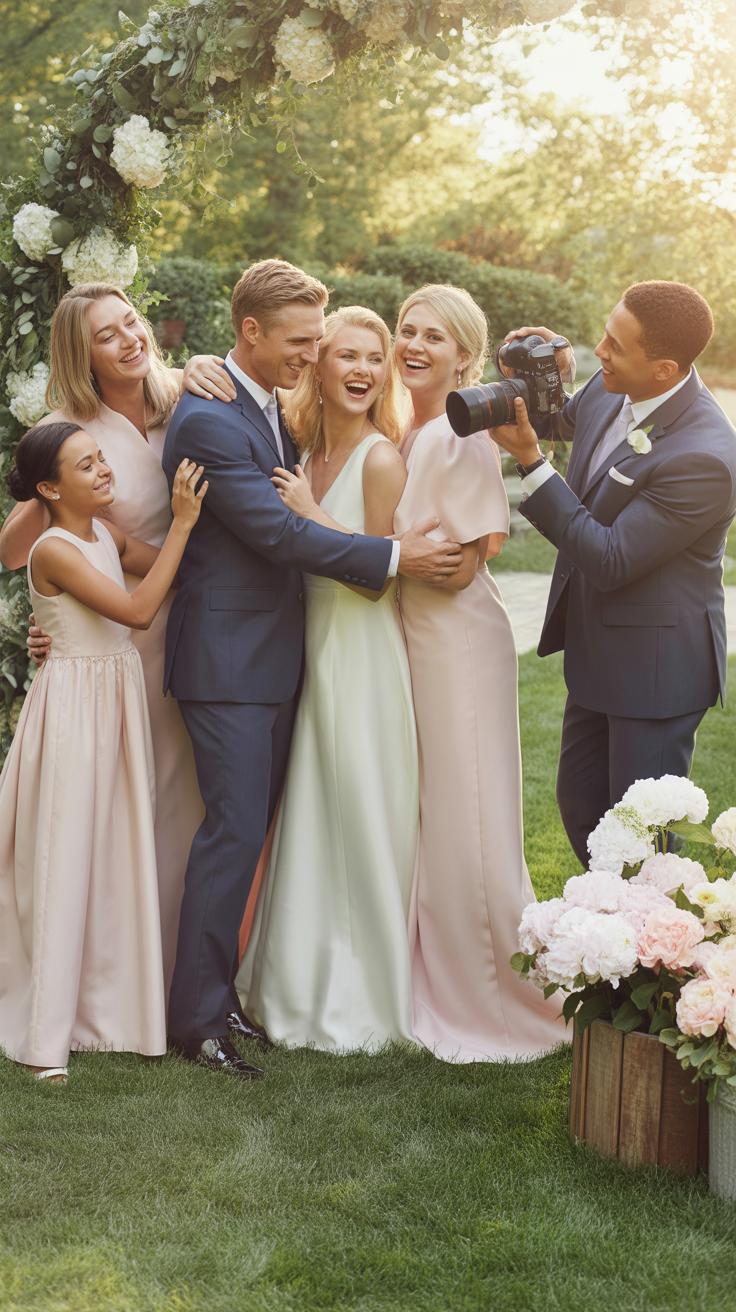
A detailed shot list serves as the operational blueprint for Family Shots Wedding sessions. You must map out every grouping before the event begins. This document prevents the photographer from asking who should stand where. It reduces time spent on Wedding Day Photos Family segments. Efficiency is the primary goal here. A clear list ensures no critical Family Wedding Pics are missed during the chaos.
The shot list also acts as a buffer between you and your relatives. You eliminate real-time debates about who belongs in which Family Wedding Photo by setting a fixed schedule. Use first and last names for everyone involved. This precision helps coordinators find missing people quickly. Fast movement through Wedding Picture Poses With Family keeps morale high. It prevents bored or restless relatives from starting unneeded arguments.
How To Politely Manage Difficult Family Members During Wedding Day Photos Family Moments
Managing difficult relatives during Wedding Photos With Parents requires a neutral third party. Assign a trusted friend or professional planner to act as the point person. This individual handles the “why” and “when” for all Family Wedding Pictures. They take the heat if a relative feels left out. This strategy protects your peace. It keeps your focus on the camera rather than the family friction.

Physical distance is a tactical tool for Remind Wedding Family Photo sessions. Place feuding relatives on opposite ends of the group. Use younger children or neutral cousins as buffers in Wedding Picture Poses With Family. Keep the sessions short to limit interaction time between high-conflict individuals. Professionalism overthrows emotion in these moments. You must maintain a strict schedule to ensure the event moves forward without any public confrontations.
Remind Wedding Family Photo Participants Ahead Of Time To Avoid Day Of Confusion
How Early Communication Helps You Remind Wedding Family Photo Groups To Be Ready
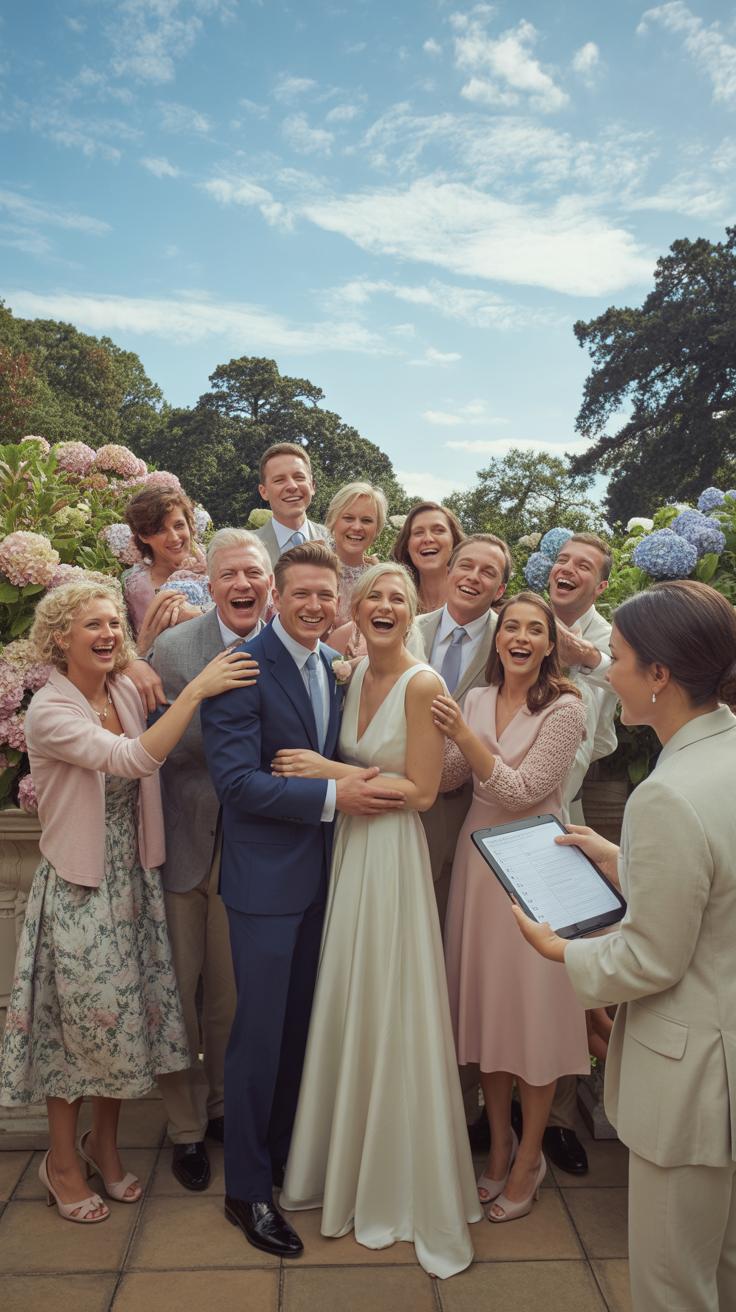
Early communication prevents the most common cause of timeline delays. Most family members do not understand the logistics of wedding photography. They assume photos happen organically. You must correct this mistake weeks before the event. Clear instructions remove excuses for absence. When people know exactly where to stand and when to be there, the photographer maintains control. This discipline stops difficult relatives from wandering off.
Standard wedding timelines fail when key people disappear during cocktail hour. You must send individual notifications to every person in the shot list. Digital reminders serve as a paper trail to prevent arguments. These messages set the expectation that their presence is a requirement, not an option. You reduce stress by making the schedule visible. Proactive alerts ensure the group remains intact for every essential shot.
What To Include In A Pre Wedding Photo Schedule Sent To Family Members
A tactical photo schedule must provide data that eliminates any room for interpretation. Do not use vague terms like “after the ceremony” or “near the entrance.” Provide specific times and precise GPS locations or room names. This level of detail keeps difficult family members on a tight leash. It prevents them from claiming they were lost or unaware of the plan during the session.
- Specific Call Time: State the exact minute each person must arrive at the photo location. Tell them to arrive ten minutes early to account for slow walkers or bathroom breaks. This buffer protects the timeline from late arrivals.
- Exact Physical Location: Name the specific garden, staircase, or altar area. Use landmarks that are easy to find within the venue. Clear directions prevent people from wandering around the property and missing their designated time slot for pictures.
- Defined Shot Order: List the specific groupings so people know who they will stand next to during the shoot. This transparency allows people to prepare mentally for potentially awkward interactions. It also shows them exactly when they are finished.
- Arrival Attire Requirements: Remind participants that they must be fully dressed with boutonnières pinned and makeup finished before the start time. This prevents delays caused by last-minute grooming. The photographer should not wait for someone to find their shoes or tie.
- Point of Contact: Provide the phone number of a trusted bridesmaid or coordinator, not the couple. This person handles questions and hunts down missing relatives. Keeping the couple out of the logistics loop reduces their stress on the wedding day.

Explain the consequences of missing a time slot to ensure compliance. State clearly that the photographer will move to the next group if someone is missing. This creates a sense of urgency. It shifts the responsibility from the couple to the individual family member. When the rules are firm, people follow them. Strategic documentation is your best defense against chaos and missed photo opportunities.
Capturing Beautiful Family Pictures Wedding Memories Despite The Tension
How Your Photographer Can Help Navigate Awkward Family Wedding Pics Situations
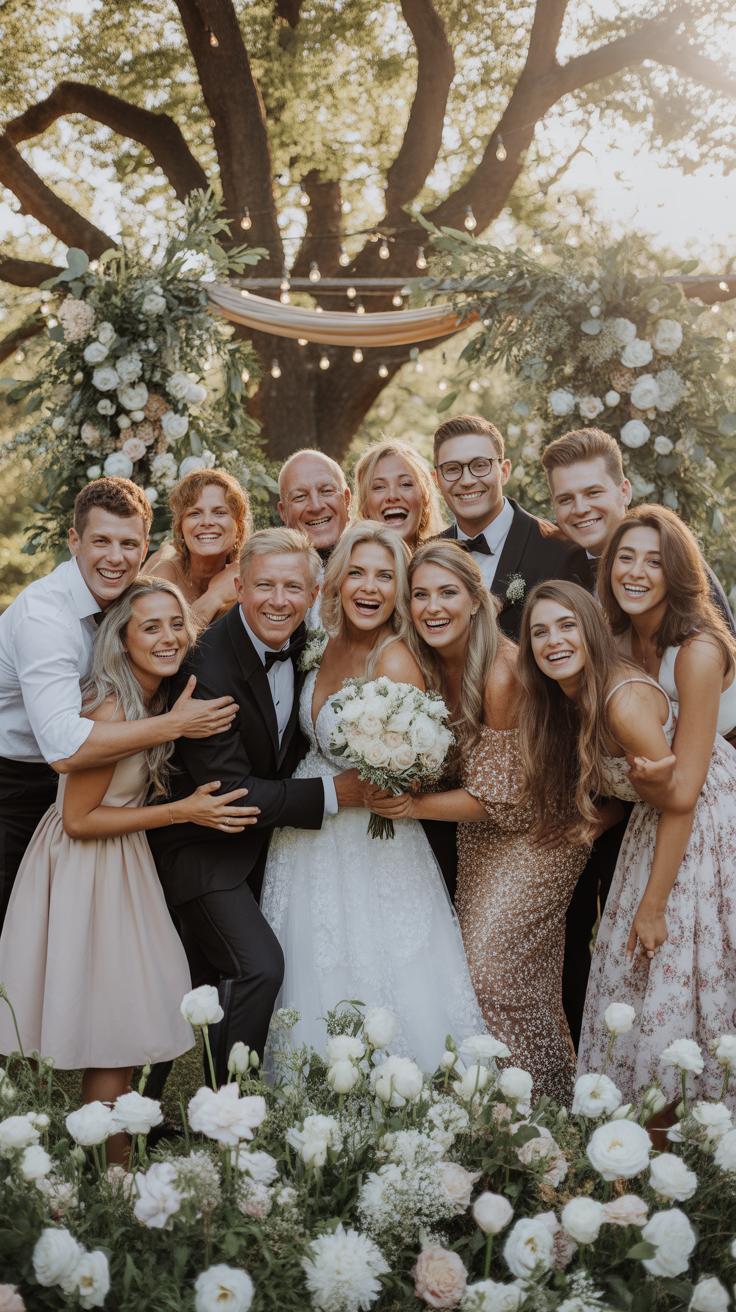
Hire a photographer with high emotional intelligence and a firm personality. This professional acts as a neutral third party to manage Family Wedding Pics without bias. Provide a detailed list of estranged relatives or sensitive dynamics weeks before the event. A pro uses this data to call out names from a pre-set list. This removes the couple from the center of conflict.
The photographer keeps the Family Wedding Photo process moving quickly to minimize downtime. Idle time breeds conflict among difficult relatives. A skilled shooter uses clear vocal commands to direct movement and placement. They act as a buffer between clashing personalities. This strategy ensures the Family Shots Wedding session stays on schedule. Speed prevents arguments from starting during the portrait session.
Choosing The Right Wedding Picture Poses With Family To Keep Things Natural And Relaxed
Select Wedding Picture Poses With Family that prioritize physical distance between high-friction individuals. Place the couple in the middle ofทุก group to act as a barrier. Use staggered rows to prevent hostile relatives from standing shoulder to shoulder. This layout creates a clean look for Family Wedding Pictures while maintaining peace. Strategic positioning reduces the chance of physical or verbal brushes.

Focus on Wedding Photos With Parents early in the timeline to release them to the reception quickly. Use the Remind Wedding Family Photo tactic to keep everyone focused on the task. Keep people moving and changing positions to prevent stiff stances. Simple standing poses work best for efficiency. These techniques ensure Wedding Day Photos Family segments remain professional and calm for everyone involved.
Honoring Wedding Photos With Parents When Relationships Are Complicated
How To Handle Divorced Or Estranged Parents During Wedding Photos With Parents
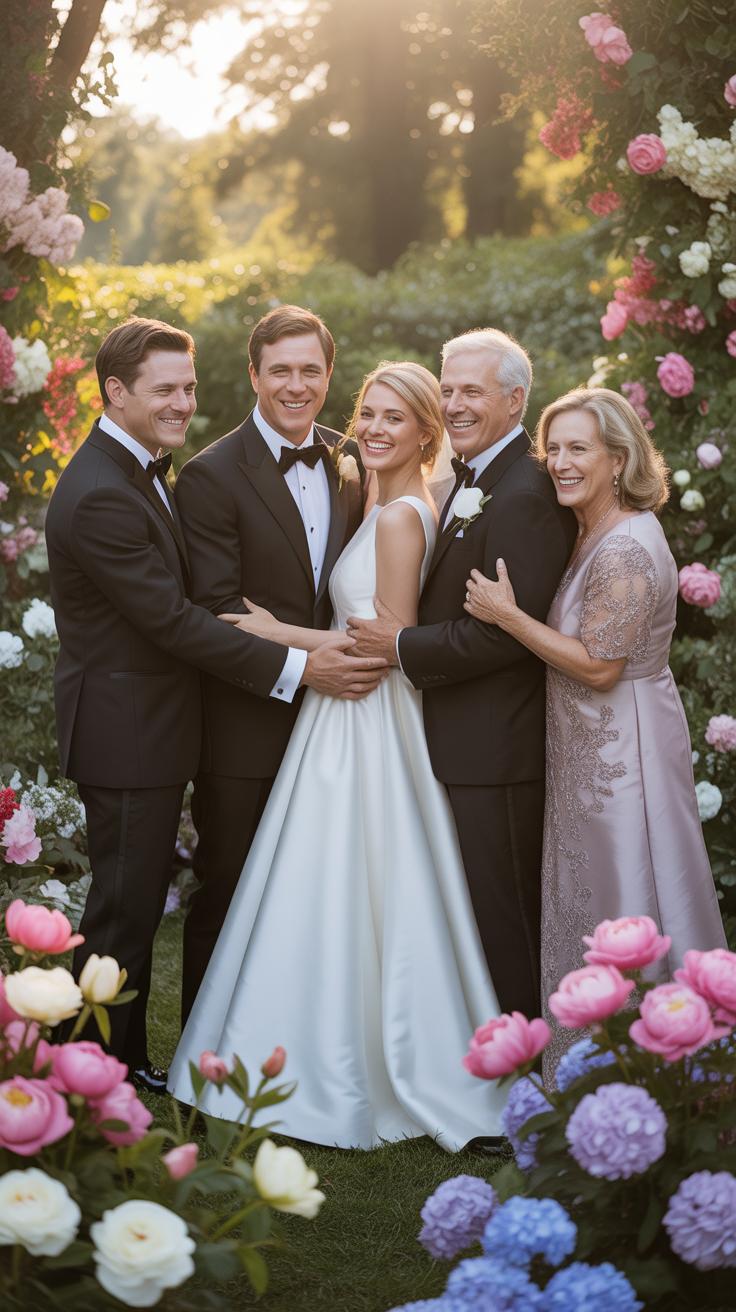
Divorced or estranged parents require a strict shot list and a neutral buffer. Do not force them into a single frame if hostility exists. Tell your photographer about the tension beforehand. They will act as the enforcer to keep the schedule moving. Use a designated wrangler to bring parents in and out of the scene. This prevents awkward waiting periods where conflict often starts between bitter former spouses.
Separate the sessions into distinct blocks for Wedding Photos With Parents. Shoot one parent and their side of the family first. Release them to the cocktail hour before the second parent arrives. This staggered timing eliminates physical overlap and reduces stress. Focus on the goal of getting Family Wedding Pics that look professional. You do not need to play mediator. Stick to the logistics and maintain a fast pace.
Letting go of the need for perfection allows the spirit of family to shine through even the oldest shadows. Focus on the love that brought you here, and let the rest simply be a part of the story.
Blended Family Wedding Family Pictures: Navigating Step Parents And Half Siblings With Grace
Blended families need clear hierarchy in Family Wedding Photo sessions. Start with the most inclusive group shots involving step-parents and half-siblings. Move from largest groups to the smallest. This method allows you to honor everyone without creating resentment. Use the photographer to direct placements so no one feels secondary. Professional positioning ensures Family Picture Poses With Family look balanced and intentional rather than cluttered or messy.

Communicate the photo schedule to all parties one week before the event. Explicitly state who should be in which shot for Wedding Family Pictures. This removes the chance for mid-session arguments about inclusion. If a step-parent is a high-conflict individual, place them on the ends of the row. This makes it easier to crop the photo later if relationships change. Focus on the biological parents in the core Family Shots Wedding set.
Protecting Your Mental Health From Difficult Family Members Wedding Day Stress
Mindfulness And Grounding Techniques To Stay Calm When Family Drama Arises
Stress triggers the sympathetic nervous system and cloud your judgment during the event. Use the 5-4-3-2-1 technique to engage your senses and stop intrusive thoughts. This method forces your brain to identify physical objects in the room rather than focusing on a relative’s comment. Rapid sensory engagement lowers your heart rate and restores logical thinking. It stops the emotional spiral before it ruins your mood.
Practice box breathing to regulate your physical response to confrontation. Inhale for four seconds and hold for four seconds. Then exhale for four seconds and wait another four. This controlled breathing signals safety to your brain. Use this tool during Family Shots Wedding sessions or when tensions rise near the altar. Staying physically calm prevents you from reacting impulsively to family provocations or unexpected schedule changes.
Why Having A Private Moment With Your Partner Resets Your Focus During The Day
The wedding schedule often leaves no room for personal reflection. Escaping the crowd for ten minutes reconnects you with your partner. This brief isolation breaks the cycle of external demands from difficult relatives. It reminds you why the event is happening. Use this time to vent or sit in silence. Stepping away preserves your energy for the remaining reception events and prevents total social burnout.
Schedule this private break immediately following the Wedding Day Photos Family segment. This transition period is often high stress due to complex family dynamics. Stepping into a private room allows your nervous system to reset after posing with estranged or difficult individuals. You return to the celebration with a unified front. This tactic ensures the day belongs to the couple rather than the loudest voices in the room.
After The Wedding Addressing Family Fallout And Moving Forward Peacefully

How To Approach Post Wedding Conversations With Family Members Who Caused Conflict
Wait forty-eight hours before initiating any contact. Adrenaline and exhaustion distort judgment immediately after the event. Analyze the specific damage caused during the ceremony or reception. Determine if the behavior was a one-time lapse or a pattern of disrespect. Clear communication requires a calm state of mind. Tactical silence serves as a powerful boundary tool. Do not apologize for your wedding day choices during these talks.
Address the conflict using objective facts rather than emotional reactions. Use “I” statements to describe how their actions impacted the schedule or atmosphere. State your future boundaries clearly and firmly. If the family member remains defensive or aggressive, end the conversation immediately. You do not owe anyone an audience for their vitriol. Document the interaction if you expect ongoing legal or safety issues. Move forward based on their actual behavior.
When To Seek Professional Guidance Such As Family Therapy After Wedding Tensions
Seek professional help when family conflict disrupts your new marriage. Tensions from the wedding often expose deep-seated systemic issues. If a family member’s behavior causes chronic anxiety or depression, clinical intervention is necessary. Therapists provide a neutral ground to deconstruct toxic patterns. Professionals help identify if the relationship is salvageable or requires total estrangement. Prioritize your mental health and your partner’s well-being above all.
Family therapy is essential if the conflict involves physical aggression or financial manipulation. Do not attempt to fix long-term personality disorders or addictions solo. A licensed counselor offers tools for setting enforceable boundaries. They assist in processing the grief of a tarnished wedding experience. Early intervention prevents these specific wedding day traumas from poisoning future holidays and milestones. External expertise provides the quickest path to emotional recovery and strategic clarity.
Frequently Asked Questions

Why is it common to experience conflict with relatives during wedding planning?
Weddings are high-pressure milestones that often trigger deep-seated family dynamics and expectations. When you are managing difficult family members wedding stress can amplify, as relatives may feel entitled to provide input on your personal choices. Understanding that this friction usually stems from their own insecurities or a desire to feel included can help you maintain perspective while you navigate the complex emotional landscape of your big day.
How should I handle a family member who refuses to get along with another guest?
When managing difficult family members wedding conflicts involving guests who do not get along, the most effective approach is proactive seating and logistics planning rather than confrontation. Assign seats strategically to keep tension at a distance, and loop in a trusted family member or coordinator who can quietly manage the situation if it arises. Setting this expectation ahead of time reduces the chance of an uncomfortable scene on your wedding day.
Is it okay to exclude a difficult relative from the wedding entirely?
Yes, it is entirely acceptable to exclude a relative if their presence would create significant emotional distress for you or your partner. While managing difficult family members wedding etiquette usually favors inclusion where possible, your wellbeing on your wedding day takes priority. If you choose to exclude someone, a brief, calm conversation beforehand can help manage expectations and minimize fallout.