The Illusion Of Luxury: What Most Vietnam Honeymoon Guides Get Wrong

Experiences Over Opulence
You want to feel like you made the right choice. That’s the real reason you’re reading about luxury on a budget. The mechanism is simple: luxury isn’t a price tag. It’s scarcity of access. In economics, value follows scarcity, not cost. A private sunrise boat in Halong Bay costs $40 because supply exceeds demand. That same experience in the Maldives costs $400 because it doesn’t. Vietnam honeymoon couples confuse expense with exclusivity. The couples getting the actual memorable moments aren’t the ones spending the most. They’re the ones doing things their friends can’t easily replicate.
The real play is booking experiences before they become obvious tourist traps. Cooking classes in Hanoi run by locals still cost $15-25 because tourists haven’t saturated the market yet. A tailored silk suit from a family-run shop in Hoi An delivers status because few people know that quality exists there at that price. You’re not buying luxury. You’re buying access to things that haven’t been packaged and marked up yet. The window closes fast. Move on the recommendation before it appears in five other blog posts.
What Budget Travel Guides Miss Entirely
Most guides tell you to skip the resorts and stay in hostels. That’s incomplete advice dressed up as frugality. The real trap isn’t choosing between expensive and cheap. It’s choosing the wrong thing at any price. You’ll waste $20 per night on a hostel bed in a neighborhood where nothing happens. You’ll waste $80 per night at a resort built for families with kids. The mechanism is fit, not cost. Wrong fit at any budget creates dead time, regret, and a marriage photo album that looks like everyone else’s.
Your honeymoon budget fails when you optimize for the lowest price instead of the highest return per dollar spent. Skip the five-star hotel in District 1 of Ho Chi Minh City. Book the three-star in a neighborhood with actual restaurants, galleries, and street life. Spend the difference on a cooking class, a private car day trip, or a tailor. The rule: never pay for a view you won’t use, and always pay for an experience you can’t get anywhere else. Build your budget around scarcity, not accommodation. That’s where the difference compounds.
The Southeast Asia Arbitrage: How To Maximize Your Vietnam Travel Dollar

Currency Exchange Rate Hacks For Vietnam
You want to feel smart about money without actually changing your behavior. The real mechanism here is simple: Vietnam uses the Vietnamese Dong (VND), and the exchange rate sits around 24,000 to 25,000 VND per one US dollar, though this fluctuates. Most couples lose 2-4% to bad conversion rates by using airport exchanges or credit cards with poor terms. The arbitrage isn’t finding a “better” rate. It’s eliminating the middleman markup.

Your bank’s exchange rate is closer to the real market rate than your credit card company’s rate. ATM withdrawals in Vietnam beat both of them. Hit a Vietcombank or BIDV ATM in a major city like Hanoi or Ho Chi Minh City, withdraw cash in VND, and you’ll pay a flat fee of around 20,000 to 30,000 VND per transaction. That fee costs less than the percentage markup your card issuer adds. Bring a credit card with no foreign transaction fees as backup, but treat ATM cash as your primary tool.
Where Your Money Stretches Furthest In Vietnam
Geography in economics means the same dollar buys different quantities of goods depending on location, and Vietnam’s regional cost variance is steep. Hanoi and Ho Chi Minh City cost 30-50% more than northern rural areas or the Mekong Delta. A meal in District 1, Ho Chi Minh City runs 150,000 to 250,000 VND. The same meal in a provincial town costs 50,000 to 80,000 VND. Most couples spend their honeymoon in expensive tourist zones and never test the actual price structure.
Southern Vietnam, particularly the Mekong Delta towns like Can Tho and Vinh Long, stretches your budget hardest without sacrificing experience. Midrange hotels there run 300,000 to 500,000 VND per night versus 600,000 to 1,000,000 VND in Saigon. Northern mountain towns like Sapa offer similar savings. The tactical move: spend your first and last nights in a major city for logistics, then move to cheaper regions where your daily burn rate drops by half. This single protocol shift determines whether you have surplus money for activities or watch your budget evaporate by day six.
The “Scarcity Mindset” Protocol: Unlocking Abundance On A Budget
Every Dollar Has An Opportunity Cost
You want permission to spend without guilt. That’s the real reason you’re reading this. Behavioral economics names this clearly: opportunity cost. Every dollar you spend in Vietnam removes a dollar from another experience. You can’t have the private boat tour and the cooking class and the five-star dinner. The scarcity isn’t money—it’s time and attention. A honeymoon is finite. Most couples pretend this doesn’t exist and overspend on low-impact activities, then resent the trip because they didn’t account for what they sacrificed. Name the trade-off first, then decide if it’s worth it.

The mechanism works like this: before spending on anything, write down what you’re giving up. A four-hour Ha Long Bay cruise costs 80 to 120 dollars per person. That’s two full days of meals, motorbike rentals, and temple visits in Hanoi or Hoi An. If you choose the cruise, you don’t get those days. State it plainly. This forces the real decision—not “can we afford this,” but “is this better than the alternative.” Most couples never do this calculation, which is why they leave Vietnam depleted instead of rejuvenated.
The 80/20 Rule Cuts Through Tourist Noise
The Pareto Principle applies directly to honeymoon experiences: eighty percent of your satisfaction comes from twenty percent of your spending. Vietnam’s tourism industry doesn’t advertise this because it destroys the upsell economy. The real experiences are cheap. Walking through the Old Quarter in Hanoi at dawn costs nothing. Swimming in Nha Trang’s bay costs nothing. Eating pho at a street stall costs two dollars. Staying in a family-run guesthouse in Hoi An costs thirty to forty dollars per night and delivers more connection than a resort.
Identify your twenty percent before you arrive. For most couples, it’s the people you meet, the food you eat, and the landscape you move through—not the packaged tours or branded experiences. Spend aggressively on those three. Spend almost nothing on everything else. A private guide for two days costs sixty to eighty dollars and unlocks months of better stories than ten days of resort amenities. The protocol: list ten things you want from this trip, rank them, then cut the bottom eight. Spend your budget on the top two.
Vietnam Itinerary: Crafting Experiences, Not Just Bookings
The Route That Doesn’t Waste Your Money
You want to feel like you discovered something real, not just collected passport stamps like everyone else. The mechanism that kills most honeymoon budgets isn’t the cost of experiences—it’s backtracking. Every kilometer you reverse costs money and time you can’t recover. Think of your itinerary like supply chain logistics: minimize unnecessary movement, batch geographically adjacent stops, and eliminate redundant transit.

Most couples follow the tourist pipeline: Hanoi, then down to Halong Bay, then flights to Ho Chi Minh City, then Mekong Delta, then back up to Da Nang. That’s logical on a map but wasteful in practice. You’re paying for multiple flights and burning days in transit. The real play is north to south or south to north in one unbroken line, with strategic stops clustered by region.
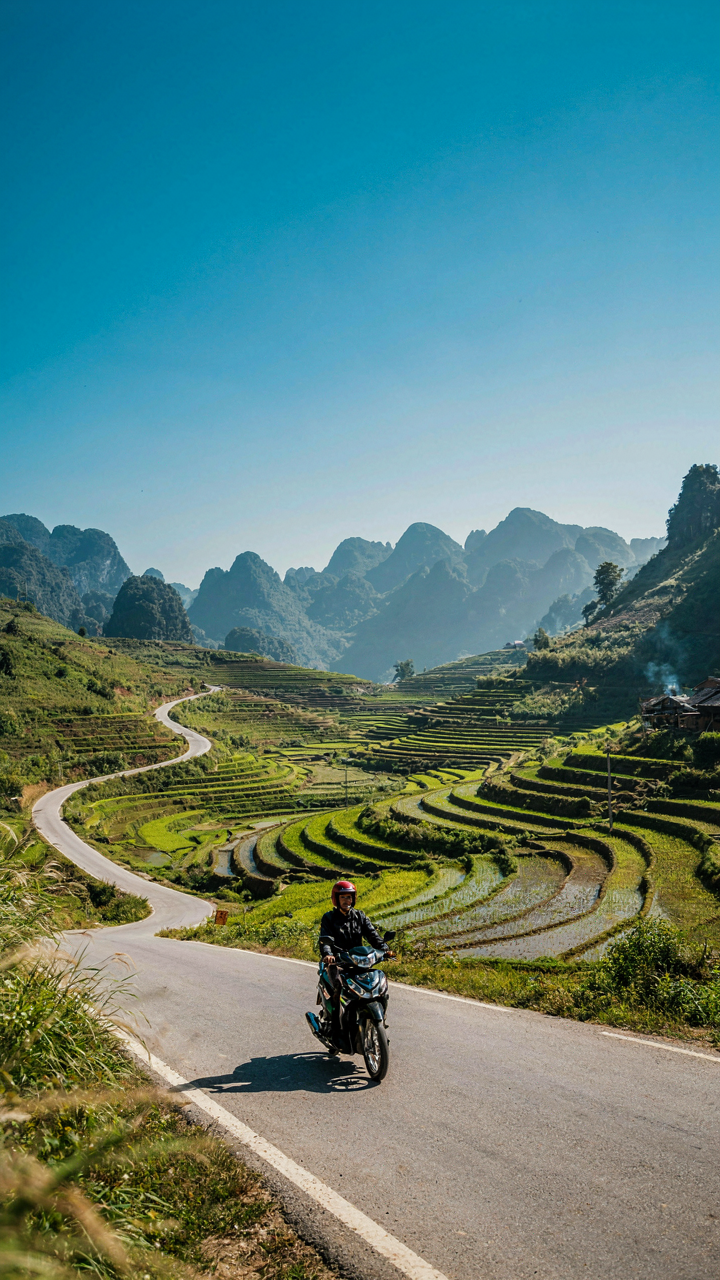
- Hanoi to Ha Giang loop: Remote mountains in the far north, road trip friendly, fewer tourists than Halong Bay, same budget range, three to four days of actual immersion.
- Halong Bay as a day trip from Hanoi: Skip the overnight cruise markup. Take a morning speedboat, return evening. Save 40 percent of cruise costs while avoiding crowds.
- Ninh Binh as your real overnight base: Limestone karsts rival Halong visually, dramatically cheaper, local homestays available, stronger food culture than tourist ports.
- South central coast straight shot: Nha Trang to Mui Ne to Ho Chi Minh City via bus or motorbike rental, no backtracking, all stops feed into one south-flowing route.
- Mekong timing as an afterthought: Hit Mekong Delta on the way out of Ho Chi Minh City if you’re flying from there anyway, not as a separate destination that requires re-entry to the city.
The itinerary that saves money is the one that moves in one direction without reversing course. Build your honeymoon as a line, not a circuit.
Experiences The Locals Actually Do
Tourist traps aren’t bad because they’re touristy—they’re bad because you pay peak prices for what locals experience at 20 percent of the cost, or don’t experience at all because it’s designed for outsiders. The mechanism is simple: whenever an experience requires you to book through a middleman, the price inflates. Whenever locals book separately or pay cash on arrival, the price drops.
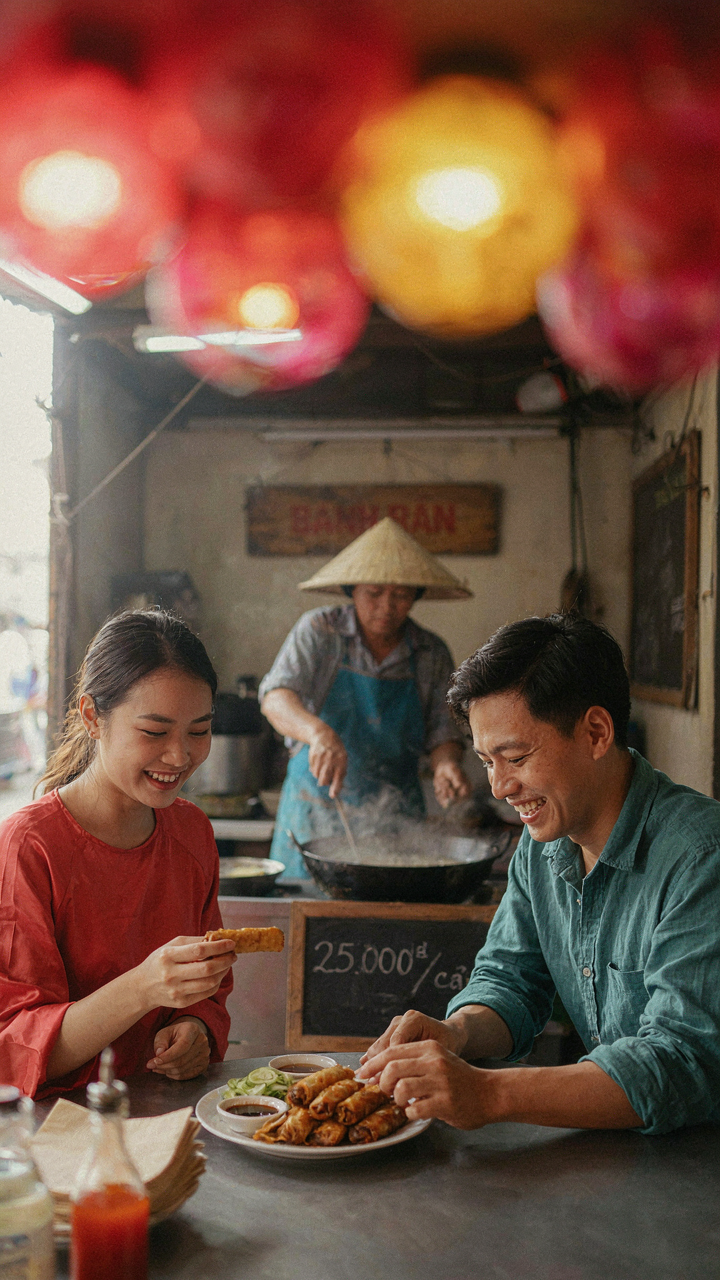
Street food markets like Ben Thanh in Ho Chi Minh City or the Old Quarter night markets in Hanoi don’t require reservations or tours. You walk in, order direct, eat for two to four dollars per person. Cooking classes marketed to tourists cost thirty to fifty dollars. Asking a market vendor or guesthouse owner where families actually cook together costs nothing and nets you a home meal for five dollars. The difference isn’t quality—it’s who’s extracting margin. Motorbike rentals let you move independently through rural areas where tour buses can’t fit. You see actual village life: water buffalo in rice paddies, family workshops, roadside noodle stalls that serve only locals. Rent one for fifteen dollars a day instead of booking a guided tour for seventy. The knowledge gap between you and the guide is smaller than the margin they’re keeping.
Accommodation Alchemy: Transforming Stays Into Steals For Your Vietnam Honeymoon
Where The Real Money Leaves Your Account
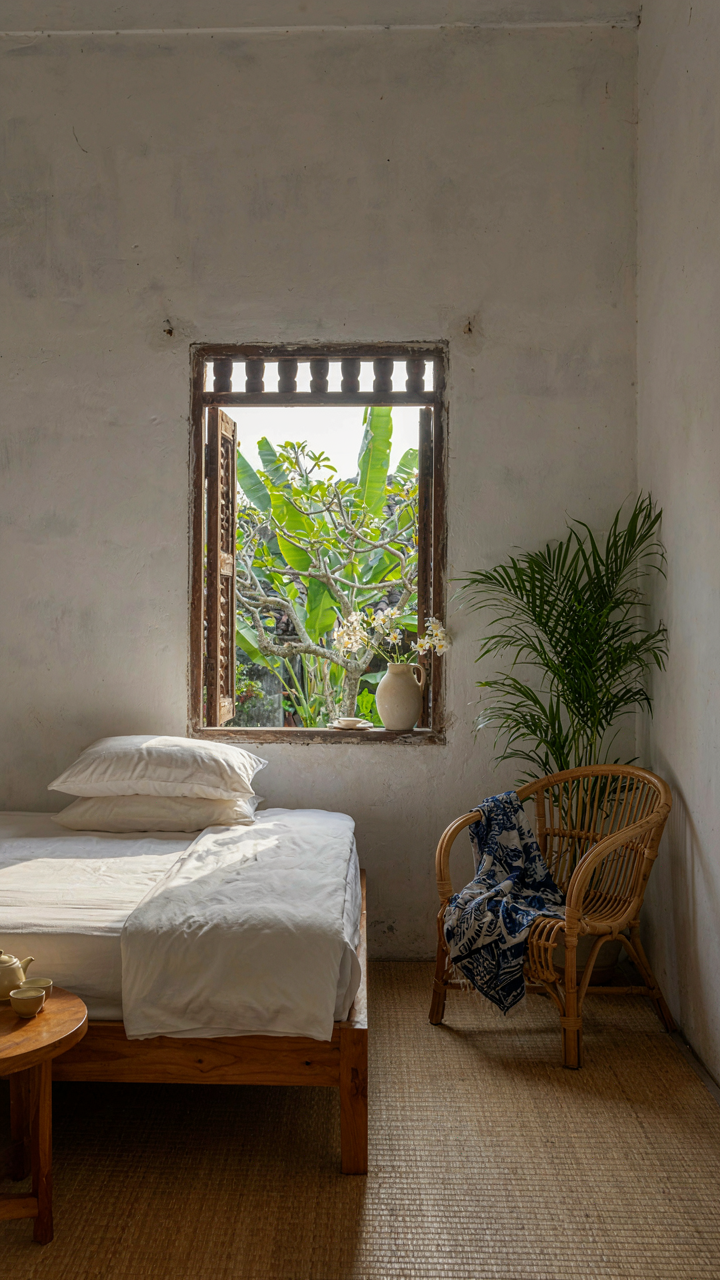
You want to feel like you made the right choice, not like you got fleeced on a honeymoon. That’s why accommodation matters—it’s where couples either hemorrhage cash or engineer actual savings. The real mechanism is supply asymmetry. In economics, when one party knows the market better than the other, they extract value. Tourist hotels operate on fixed margins. Homestay owners operate on desperation. One has standardized pricing. The other has empty rooms and bills due next month.

Boutique homestays in Hanoi’s Old Quarter or Hoi An’s backstreets don’t compete on brand or amenities. They compete on occupancy. A guesthouse owner with a three-room property books one room and loses 67 percent of daily revenue. Hotel chains spread that loss across hundreds of units. This changes your negotiating position entirely. You’re not haggling with a corporate yield manager. You’re solving a cash flow problem for someone who owns the place. The difference in price between posted rates and what you actually pay can run 20 to 40 percent if you understand what they actually need.
The Negotiation Protocol That Actually Works
Forget generic haggling advice. It doesn’t work because it assumes equal information and no relationship. You need a different framework. Contact the owner directly through Airbnb messages or direct email, never through the platform’s booking system. State your dates and length of stay upfront. This signals you’re not a one-night browser. Ask a specific question about the property that shows you read the listing—the garden layout, the kitchen equipment, the neighborhood quiet hours. People negotiate more aggressively with strangers than with humans who demonstrate attention.
Wait for their response before mentioning price. Once they’ve engaged with you as a person, mention you’re flexible on dates and ask if they’d offer any rate adjustment for staying longer or booking further in advance. Couples traveling off-peak months, especially June through August or October, have maximum leverage. The owner would rather lock in revenue at 30 percent off than watch the calendar turn. Close by asking for their best available rate and mentioning you have other options. Don’t accept the first counter. Respond with a specific number between their offer and your target. The negotiation ends when they stop dropping price, not when you find the lowest number possible.
Culinary Code: Eating Like Royalty On A Pauper’s Budget In Vietnam
Where Street Food Actually Wins
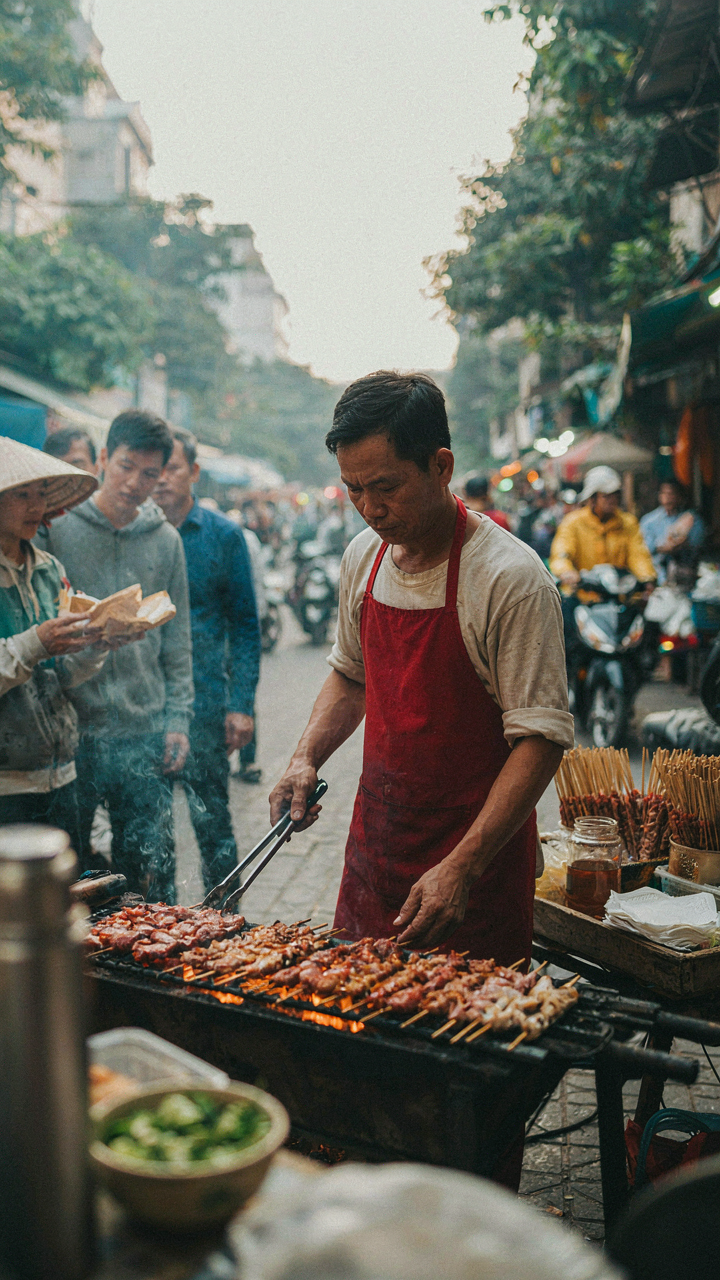
You want proof you made the right choice picking Vietnam for a honeymoon without emptying your account. Street food is it. Here’s the real mechanism at work: in economics, comparative advantage means Vietnam’s labor costs force restaurants to either compete on volume and quality or die. Street vendors choose volume. They move product fast, keep margins thin, and maintain obsessive quality control because reputation is their only asset. One bad meal and word spreads through the neighborhood in hours.

Safety isn’t the gamble most travel blogs make it sound like. Street food vendors in Ho Chi Minh City, Hanoi, and smaller towns like Hoi An cook in front of you. You watch them prepare bánh mì, phở, bánh xèo, and grilled meats from raw ingredients. The speed of turnover means nothing sits. Pick vendors with lines. Eat where locals eat breakfast. Spend 20,000 to 50,000 VND per person per meal, roughly 1 to 2 USD. Your stomach adapts faster than you think, and the risk calculation favors street vendors over mid-range restaurants charging triple the price for reheated prep.
Learn To Cook, Then Eat Better Tomorrow
Cooking classes in Vietnam aren’t cultural tourism disguised as self-improvement. They’re leverage. You pay 200,000 to 500,000 VND per person, roughly 8 to 20 USD, for a half-day session in towns like Da Nang, Hoi An, or Hanoi. You leave knowing how to make three to five dishes you’ll actually replicate. The real value surfaces later: you buy ingredients from markets for a fraction of restaurant prices and execute meals together. One shared cooking session becomes five home-cooked dinners at restaurants’ cost.
The class also teaches you market navigation. You learn which vendors sell quality fish, how to identify fresh herbs, and what prices should actually be. This knowledge compounds every time you eat for the rest of the trip. Instructors teach techniques specific to the region you’re in, not generic cooking principles. Book classes through your accommodation or local tour operators. Go early in your trip so you can apply what you learned for the remaining days. This isn’t nostalgia shopping. This is building a repeatable system for eating well without overspending.
Transportation Tactics: Navigating Vietnam Without Breaking The Bank
Local Transport: Buses, Trains, And Motorbikes
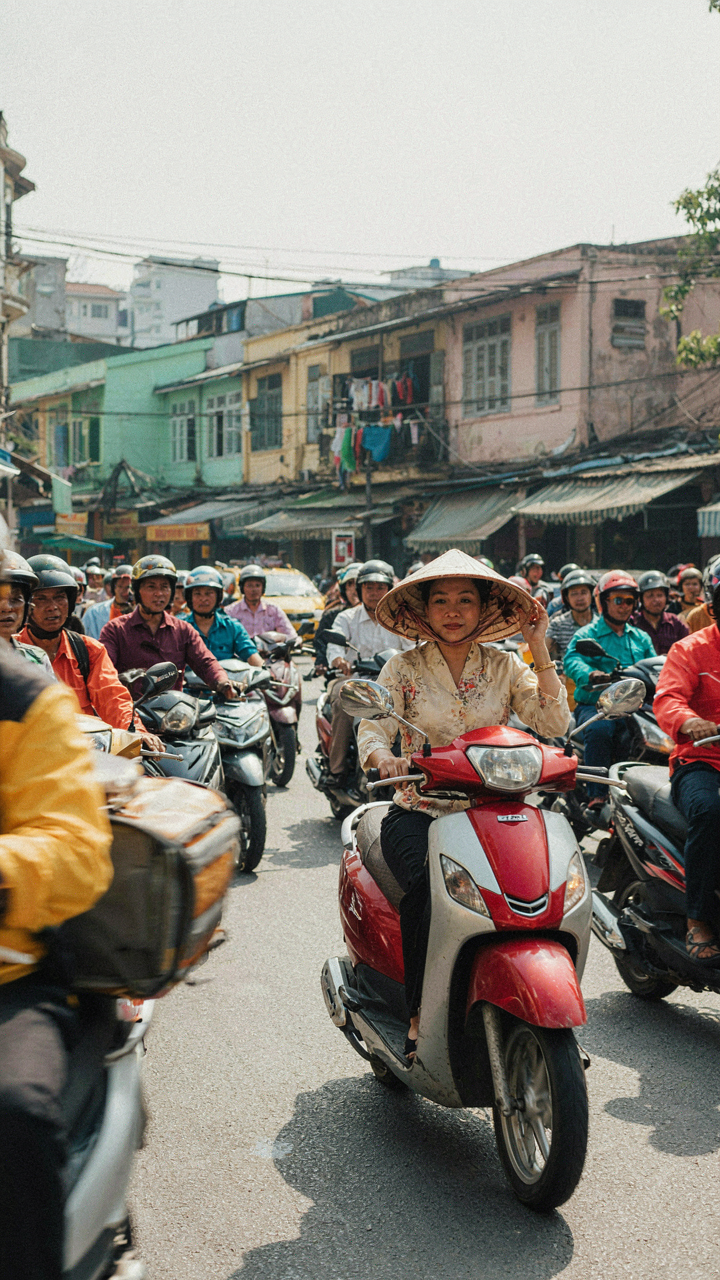
You’re worried about looking like a tourist getting ripped off, but the real mechanism is scarcity thinking: you assume Vietnam’s transport works like home, so you overpay for comfort instead of adopting local supply chains. Think of transport as an economic network—you’re either plugged into the tourist layer or the local layer, and they operate on different pricing entirely.
- Intercity buses: Book through Futa Bus or Kumho Samco directly rather than via travel agencies. Prices run 200,000 to 600,000 VND depending on distance and comfort class. Overnight buses save a hotel night but cost more upfront.
- Trains: The Reunification Express from Hanoi to Ho Chi Minh City costs 400,000 to 2,000,000 VND depending on class. Book at least two weeks ahead at the station or through official railways website to avoid middleman markups.
- City buses: Operating in major cities like Hanoi and Ho Chi Minh City, fares cost 5,000 to 7,000 VND per ride. Routes are numbered and posted at stops; download Citigo or similar apps for real-time tracking.
- Motorbike taxis: Grab Bike undercuts traditional xe om by 15-25 percent and generates a receipt. Ride costs 10,000 to 40,000 VND depending on distance; surge pricing hits during rush hours between 6-9 AM and 5-8 PM.
- Sleeper buses: Popular for multi-hour routes, these beds cost 400,000 to 800,000 VND and include snacks. Book direct with operators like Sao Viet or Hoang Long, not travel agencies, to cut 20-30 percent markup.

The transport layer you access depends on when you book and how you transact. Buying at the station in local currency beats online markups by 10-20 percent, but requires you to actually be there three to five days before departure. Grab handles surge pricing algorithmically, so traveling at 3 AM versus 7 PM on the same route cuts your cost in half.
Ride Sharing Apps: Convenience And Cost Effectiveness
Grab and Be dominate Vietnam, and the instinct to use them everywhere is backward. You pay premiums during peak demand because the app matches supply to demand mathematically, which means you’re paying for convenience rather than transport. The mechanism is real-time pricing, and it punishes you for not understanding when demand clusters.
Off-peak Grab rides cost nearly the same as city buses but deliver door-to-door service. Peak hours (7-9 AM, 5-8 PM, midday lunch rush) trigger surge multipliers that push costs 1.5 to 3 times normal rates. Use Grab strategically: book during shoulder hours like 10-11 AM or 3-4 PM when surge hasn’t kicked in yet. Be, the local alternative, operates in Ho Chi Minh City and Hanoi with slightly lower base fares but less available driver supply. Split rides with your partner using the app’s share function to cut costs by half when routes overlap. Motorbike taxis via Grab Bike remain cheaper than cars for solo trips, running 40-60 percent below car fares on identical routes. The real efficiency move is combining transport layers: use buses for intercity, motorbike taxis for quick city hops, and reserve app-based cars for when timing is tight and surge pricing hasn’t triggered.
The Post Honeymoon Audit: Sustaining Your Newfound Freedom

What You Actually Learned In Vietnam
You want to know if you wasted money. That’s the real question underneath this section. The mechanism is simple: Vietnam forces you to make dozens of micro-decisions about spending because everything costs so little. You can’t hide behind autopilot. A $3 meal or a $15 hotel night demands a choice every single time. That friction builds competence. You learned what you actually value versus what you thought you valued before the trip.

Most couples return home and abandon these lessons immediately because they don’t extract the pattern. They remember “Vietnam was cheap” instead of “I discovered I sleep fine on a $10 mattress and feel zero deprivation.” The real learning isn’t about Vietnam’s prices. It’s about the gap between your perceived needs and your actual baseline happiness. Write down three spending categories where you felt no loss of pleasure despite paying less than half your home country rate. That’s your permanent cost reduction blueprint.
Rebuilding Your Budget With Real Data
Economics calls this concept “revealed preference” and it applies directly to post-honeymoon budgeting. Stop guessing what you need. You now have field data from Vietnam showing exactly where money actually moves your satisfaction needle and where it doesn’t. Most budget advice ignores this because it requires actual memory work instead of generic percentage rules.
Start a simple spreadsheet with three columns: category, Vietnam cost per day, and home cost per day. Accommodation, food, transport, activities. The ratio between these columns is your leverage point. If you paid $12 per night in Vietnam and $90 per night at home, that’s a 7.5x multiplier you can compress immediately by negotiating your housing or changing neighborhoods. Apply this same ratio collapse to two other categories before the year ends. Mechanism: pick one category, identify the ratio gap, execute one decision that closes it by 40 percent, measure the result after 90 days.
The Real Obstacle Isn’t Your Budget; It’s Your Inability To Define What Truly Matters

Most couples waste money in Vietnam because they never asked themselves what they actually want. Do you crave adventure or relaxation? Crowds or solitude? Local food or familiar meals? Stop scrolling budget guides and answer these three questions today: What’s one experience that would make this trip non-negotiable? What would you regret missing? What drains your energy? Your budget works when your priorities work. A honeymoon fails not because you spent too little, but because you spent it on the wrong things.