The Frugal Flight Fallacy: Don’t Chase The Cheapest Airfare

When Layovers Cost More Than Direct Flights
You want to feel smart about saving $80 on airfare. That instinct is costing you money. The mechanism here is what economists call false economy: you optimize for one variable and blow up your total cost. A flight with two layovers saves you cash upfront but destroys the math when you factor in real costs.
Each layover adds risk, time, and hidden expenses. You lose eight hours traveling instead of four. You need a hotel near a connection airport. You pay for food during the layover. You arrive exhausted and waste your first full honeymoon day recovering. That $80 savings disappears the moment you book a spa treatment to recover, or skip an excursion because you’re wrecked.
Direct Flights As Time Value Investment
This is an economics problem, not a travel problem. Treating time as a resource you can buy back changes the decision entirely. A direct flight from most US hubs to San José or Liberia costs maybe $150 to $250 more than a connection. You recover that money in the first day you’re not foggy.
Book direct flights as the first line item in your honeymoon budget, not the last place you cut. When you land fresh at 7 PM instead of midnight, you can do dinner at a decent restaurant, walk around your hotel area, actually enjoy the first night. Direct flights from major US cities to Costa Rica run four to five hours nonstop. Accept that you pay the premium for arrival quality, not just arrival.
Beyond The Brochure: Authentic Costa Rica Honeymoon Hotels

Local Guesthouses Beat Resort Economics
You want the resort because it feels safer. You think the brand guarantees quality. Wrong. The mechanism is simple: resorts mark up 40-60 percent on rooms to cover marketing, corporate overhead, and the expectation that tourists will overpay. A local guesthouse owner lives in the community and competes on reputation alone. Their margin is thin. They work harder because their name is on the building.

Guesthouses in towns like Ojochal, Santa Teresa, and Puerto Viejo consistently deliver better rooms at half the resort price. You get original tile work, real local design, and owners who actually answer your questions at midnight. Resorts hand you off to a night manager who reads from a script. The guesthouse owner tells you which restaurant is open on Tuesday and which beach road to avoid during rain. Book direct with the owner, never through a third-party booking site that takes 15 percent commission.
Value Lives In Location And Access, Not Thread Count
Thread count doesn’t matter in Costa Rica. Humidity ruins linens. Mold finds its way in. What matters is whether you can walk to a restaurant, hike to a waterfall, or swim without a twenty-minute drive. This is real estate economics: position determines utility, not amenities. A mid-range hotel in Manuel Antonio town center gives you more accessible experiences than a luxury resort hidden in the hills forty minutes from anything.
The real win comes from booking accommodation near the actual activity you traveled for. If you want jungle canopy tours, stay in Monteverde or the Arenal region. If you want diving and marine life, pick Uvita or the Osa Peninsula. Resorts isolate you on their property because they profit from their restaurant and bar markups. Local guesthouses near town let you choose freely and spend money with locals who actually need it. Book first for location, then filter by price.
The Honeymoon In Costa Rica Itinerary Inversion Protocol

Anchor On Experiences First
You’re scared you’ll waste money on a honeymoon that feels generic and forgettable. The real mechanism is simple: most couples reverse-engineer their trip from hotel availability and flight dates, which locks them into expensive infrastructure before they’ve decided what they actually want to do. Think of it like portfolio construction in finance. In investing, you define your thesis first, then build positions around it. In honeymoon planning, you define the experience first, then book the logistics. Costa Rica’s cost structure rewards this sequence because experiences vary wildly in price while accommodation is relatively fixed.

Start by listing what you both actually want to remember. Not Instagram moments, not what travel blogs suggest. Zip-lining through cloud forest, rafting, sleeping in a treehouse, cooking with a local family, hiking to a waterfall at dawn. These become your non-negotiable anchors. Once you know which experiences matter, you choose regions and dates around them, not the other way around. This cuts wasted days and prevents overpaying for hotels in the wrong part of the country. The itinerary becomes lean because every location serves a specific experience, not just a place you booked because flights were cheaper.
Strip The Filler Completely
Conventional advice tells you to “see as much as possible” and “don’t miss the big attractions.” This is how couples end up driving five hours through traffic to spend two hours at a crowded viewpoint, then paying for a mediocre meal because they’re exhausted and stuck. The real play is ruthless elimination. Costa Rica has finite time and budget. Every activity that doesn’t produce a genuine memory is a hole in your spending. Pick three to four high-impact experiences maximum, then give yourself permission to do nothing else.
High-impact low-cost means: Manuel Antonio’s monkey-filled beaches and trails cost nothing beyond park entry. Arenal’s hot springs and hiking run cheaper than the resort markup suggests if you skip the spa package. Monteverde’s cloud forest delivers on foot for basic trail fees. What gets cut: the “combo tour” that bundles five mediocre activities, the sunset catamaran when you could watch it from shore, the lodge upgrade that adds cost but not memory. Build the schedule around depth in one or two locations rather than speed across five. This concentrates your budget where it matters and eliminates the dead time that makes honeymoons feel rushed instead of intimate.
Eating Smart: Ditching Tourist Traps For Tico Flavors

Where Locals Actually Eat
You want the Instagram version of Costa Rica, which means you’re terrified of looking like a tourist. The mechanism is simple: restaurants near hotels charge 3 to 4 times what sodas charge for identical food. A soda is a small family-run restaurant serving traditional Costa Rican meals. They exist on every block in towns like San José, La Fortuna, and Puerto Viejo. You eat what locals eat. Rice, beans, plantains, fresh fish, gallo pinto for breakfast. A full meal costs 4 to 8 dollars per person. Tourist restaurants in the same area charge 18 to 25 dollars for diluted versions of the same dishes. Ask your hotel staff or taxi driver where they eat lunch. That answer is your map. Sodas don’t advertise because they don’t need to. They operate on volume and reputation. You show up, order in broken Spanish or pointing, and eat better food for less money than you would at any place with laminated menus and a view.

The cost difference compounds across a two-week honeymoon. Eating three meals daily at sodas instead of restaurants saves 600 to 800 dollars for two people. That money shifts to activities, accommodation upgrades, or simply extends your trip. Ticos know where the food is honest. Follow that knowledge instead of tripadvisor ratings written by people visiting for four days.
The Market Strategy
Buying ingredients at a farmers market isn’t romance. It’s economics. You reduce food costs by 50 percent and gain control over what you eat. Central markets in San José, Manuel Antonio, and Monteverde operate daily and sell produce, cheese, bread, and prepared items at wholesale prices. One couple cooking one meal together costs less than one couple eating that meal in a restaurant. The mechanism is supply chain elimination. You remove the restaurant, the server, the markup, the rent. You become the restaurant. Markets close by early afternoon, usually between 1 and 3 PM. You shop in the morning, return to your accommodation, cook lunch or dinner. Cooking together is not a bonding activity dressed up as budget advice. It’s literally cheaper and gives you something to do on a rest day that costs almost nothing.
Stock basics at the market: fresh fish from the counter, plantains, avocados, rice, beans, local cheese. A meal for two runs 8 to 12 dollars in ingredients. Restaurants charge 40 to 60 dollars for the equivalent. Do this three times during a two-week trip and you save enough for a guided tour you’d otherwise skip. The protocol is straightforward: locate the market on your first day in each region, buy for two to three days, cook one meal daily at your lodging, eat sodas for other meals.
Transportation Tactics: Navigating Costa Rica Romantic On A Dime
Public Buses Beat The Rental Car Trap
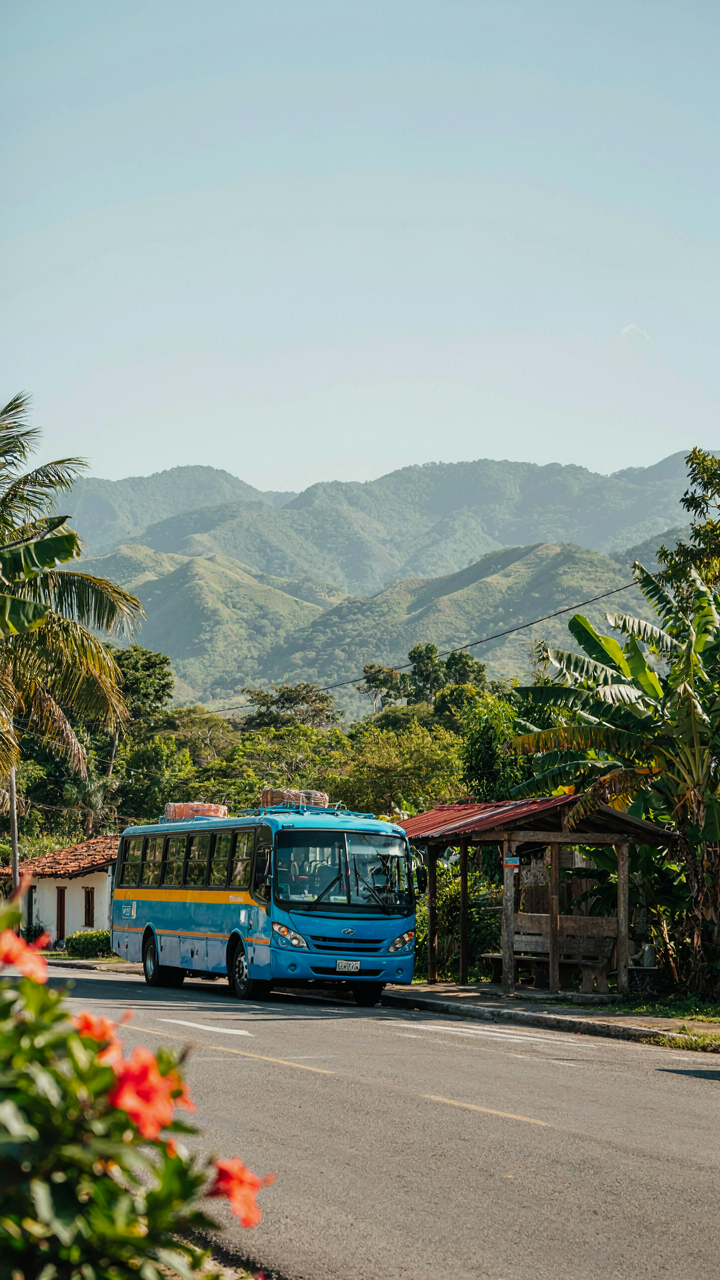
You want to feel independent and spontaneous on your honeymoon, which is why you’re already planning to rent a car. Here’s the mechanism that kills that budget: rental companies charge daily rates that compound fast, insurance adds 30-50% on top, gas costs more than home, and tolls hit you unprepared. Public buses operate on a different economic model than what you’re used to. They run fixed routes at fixed prices, typically 1,000-3,000 colones per ride (roughly $2-6 USD). You pay once, you go. No hidden costs. No decisions that bleed money.

Costa Rica’s bus system reaches everywhere tourists actually want to go: San Jose to Manuel Antonio, Monteverde to La Fortuna, Arenal to the coasts. Buses run frequent enough that you’re not stranded, and you’ll see how locals actually move through the country instead of viewing it from an air-conditioned bubble. The cost difference compounds over two weeks: a rental runs $400-600 minimum, plus fuel and insurance. Buses cost $50-80 for the same coverage. Put the $350 you saved toward accommodation or experiences that matter.
Ride Sharing And Taxis: The Specific Splurge Moments
Most travel advice says “use Uber for safety” or “avoid taxis,” which is lazy and wrong. Both exist in Costa Rica. Uber operates in San Jose and tourist zones but charges North American rates. Taxis charge by meter in cities, by negotiated rate in rural areas. The real move is recognizing when to spend money versus when not to. You splurge on transportation when it solves a legitimate friction problem: arriving at night in an unfamiliar area, moving between multiple locations on one day, or accessing a remote lodge without a rental vehicle.
Define those moments in advance. If you’re staying in one town for three days, take buses and walk. If you’re island-hopping twice in one day, negotiate a taxi rate upfront or book a private driver for those specific legs. A taxi from Arenal to a remote hot spring costs $40-60 and saves three hours of bus transfers. A taxi between two beach towns five kilometers apart costs $8-12 and solves nothing. Know the difference before you book.
Activity Arbitrage: Maximizing Value For Your Costa Rica Honeymoon
Where The Tour Operator’s Math Breaks Down
You want to feel like you’re getting your money’s worth, so you book the expensive guided experience. That’s the trap. Economics teaches us the principle of diminishing returns: each additional dollar spent produces less value than the dollar before it. A $200 guided canopy tour delivers more memorable impact than a $50 one, but a $400 tour doesn’t deliver twice the experience of the $200 tour. The operator knows this gap exists. They price accordingly and pocket the difference.

Most tour companies in Costa Rica operate on thin margins in the actual activity delivery. They extract profit through markup on convenience, not through superior execution. A $180 guided beach walk costs them $40 to run. A $80 self-guided beach walk costs you nothing. The experience gap between those two is smaller than the price gap suggests. You don’t need a guide pointing at rocks to understand why you’re there.
High Leverage Activities Cost Nothing
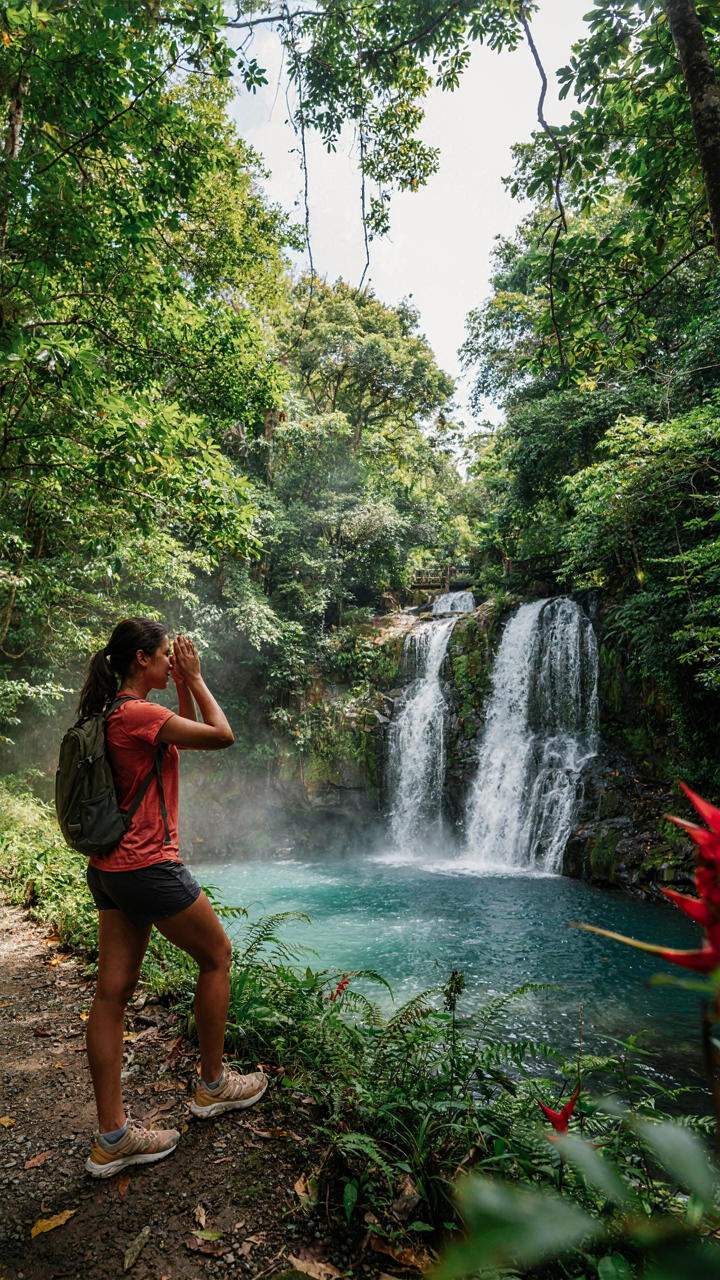
Physics leverage works like this: apply force at the right point and you move the entire system with minimal input. In Costa Rica honeymoon planning, identify which activities generate the memory and emotion that honeymoons exist for, then execute the free or cheap version. Sunset watching doesn’t improve because someone charges you $120 for it. Swimming in a waterfall doesn’t become better through a tour operator’s narration.
Your real value generators are: swimming in natural pools, hiking accessible trails, watching wildlife from public land, eating at sodas where locals eat. These cost under $50 combined per day and deliver 80 percent of the experience that $400 daily tour itineraries promise. The mechanism is simple: you’re paying for access and information when you book tours, not for the inherent quality of the natural phenomenon itself. Remove the middleman where the activity doesn’t require specialized knowledge, and the experience remains intact.
Mastering The Micro Budget: Elope In Costa Rica, Not Just Honeymoon

The Legal Path Forward
You want the wedding Instagram moment without the $30,000 price tag, but you’re terrified the paperwork will kill the romance. It won’t. Costa Rica’s civil marriage process is faster and cheaper than most people think because the country treats marriage as a legal transaction, not a ceremony. A licensed notary (notario público) handles everything. You need a valid passport, proof of single status, and a certified translation of your birth certificate into Spanish. The notary files the paperwork, charges around $300 to $500, and you’re legally married in days. No church required. No guest list required. No flowers required.

The real cost sink isn’t the legal work—it’s the vendor markup when you tell them it’s a wedding. Hire a notary directly through your hotel concierge or a local attorney. Skip the “destination wedding coordinator” entirely. They charge $2,000 to $5,000 for the same paperwork you can handle yourself. Schedule the ceremony in the morning before tourists clog the offices. Bring two witnesses (hotel staff work fine). Sign the documents. Leave by noon. Total elapsed time: two hours.
When Fewer People Changes Everything
Economics calls this constraint optimization: removing options forces smarter decisions. With ten guests instead of one hundred, you stop renting venues and start dining at restaurants. You stop hiring planners and start exploring the landscape. You stop performing for an audience and start actually being with your partner. That’s the mechanism nobody names. The honeymoon budget problem disappears when you remove the ceremony audience problem.
Two people spending $3,000 on a week in Costa Rica eat better, sleep in nicer places, and experience more than two people plus thirty guests spending $8,000 each on a destination wedding. You control the itinerary. You move when you want. You sit in silence when you want. An elopement forces you to be present instead of managing logistics. Book a rental car, choose your own towns, and stay longer in places you like. The real cost savings aren’t in ceremony expenses—they’re in reclaiming four days you would have spent planning.
The Pre Trip Reconnaissance: Planning A Costa Rica Honeymoon Like A Spy

Where Locals Actually Spend Money
You want to feel like you discovered something nobody else knows. That’s the real reason you’re reading this. The mechanism is simple: tourist blogs optimize for clicks, not accuracy. They recommend the same five spots everyone visits, then you pay premium prices in a crowd. Local forums and travel communities operate on reputation within a smaller circle, so the information stays honest longer before it gets commercialized.

Reddit’s r/costa_rica, specific Facebook groups for expat communities, and TripAdvisor’s filtered reviews from people who stayed longer than a week show you where costs actually drop. You’ll find which restaurants locals eat at versus tourist traps, which towns have better exchange rates, and which activities genuinely deliver value. Here’s what changes your budget calculation:
- Reddit threads from past two years: Search “costa rica budget” with date filters. Locals answer questions directly without selling anything. You get real prices, recent inflation data, and honest warnings about areas to skip.
- Facebook expat groups by region: Join groups for Tamarindo, La Fortuna, or Puerto Viejo and lurk for a week. Members discuss where they buy groceries, which tour operators overcharge, and which hidden beaches require no entry fee.
- TripAdvisor reviews sorted by length of stay: Filter for reviewers who stayed 7 plus days. Their opinions on restaurant prices and accommodation value matter more than someone’s three-day resort experience.
- Nomad List for cost breakdowns: Search Costa Rica by region. Users log actual daily spending, rent prices, and food costs with timestamps. The data updates constantly and beats any article.
- Local travel blogs in Spanish: Search “viajes costa rica presupuesto” or “costa rica barato”. Spanish-language blogs target locals and budget travelers, not luxury honeymooners, so prices reflect reality.
The second move is asking specific questions in these communities. Don’t ask “where should we go?” Ask “what did you spend on a meal in Monteverde last month?” or “which tour operator in La Fortuna didn’t upsell us?” Specificity forces real answers. People ignore vague questions but answer precise ones because they’re solving an actual problem, not writing marketing copy.
Maps And Tools Before You Land
Download everything offline before you leave. Costa Rica’s cell signal fails in national parks, mountain towns, and rural areas where honeymoon activities actually happen. You’ll waste hours searching for connectivity instead of moving. Google Maps offline works but Google Translate does not, which creates friction when you need a word quickly at a restaurant or pharmacy.
Download Google Maps for every region you’re visiting, add starred locations so you don’t rely on internet to navigate. Get iTranslate or Offline Dictionary plus on your phone before departure. These apps work without signal and beat struggling with spotty wifi at a café. Store a currency converter app, a local SIM card provider’s contact info, and screenshots of your hotel addresses in case your phone dies. The goal is removing decision paralysis from your trip’s actual days. You want to move, not troubleshoot.
Beyond The “Costa Rica Honeymoon Resorts” Myth: True Luxury Defined

What Actually Moves You
You’re reading this because you’re afraid a budget honeymoon means settling for less status. Here’s the mechanism: resort marketing has trained you to equate price with quality, so you’re scanning for the cheapest five-star property instead of asking what actually makes a honeymoon memorable. The gap between what you think you want and what you’ll remember is where real value lives.

Costa Rica doesn’t reward spending more on thread count. It rewards presence. A canopy walk through old-growth forest where you see a three-wattled bellbird costs almost nothing and beats any resort breakfast. A conversation with a local coffee farmer on his land, learning why his harvest matters, creates the story you’ll repeat for years. The mechanism is simple: scarcity of attention beats abundance of amenities. You’re trading money for experience, not comfort for comfort.
Moments Over Thread Count
In economics, scarcity creates value. A sunset viewed from your room’s balcony feels common. The same sunset witnessed from a hidden ridge you hiked to, finding it by accident while lost, becomes irreplaceable. That’s the difference between what money buys and what creates meaning. Budget honeymoons force you toward the second category because you can’t afford to outsource the discovery process to a resort concierge.
The protocol is direct: spend money on access to unique moments, not on removing friction from standard ones. Book the early morning guided walk to spot resplendent quetzals. Take the kayak tour into mangrove channels where you’re eye-level with wildlife. Hire a local guide who knows where tourists don’t go. These cost $40 to $120 per person, not $500, and they’re what you’ll photograph and retell. The honeymoon people remember isn’t defined by room service quality—it’s defined by the moments they couldn’t have engineered at home.
The Real Obstacle Isn’t Your Budget; It’s Your Scarcity Mindset

Most couples kill their honeymoon dreams before they even book. They convince themselves Costa Rica is expensive, so they don’t research prices. They assume they need ten grand when $4,000 works. The budget isn’t the problem. Your belief about the budget is. Today, pull three random all-inclusive deals from Google. Spend fifteen minutes. Just look at what’s actually possible instead of what you invented in your head. Your honeymoon exists on the other side of curiosity, not capital.