The Illusion Of Control: Why Generic Wedding Day Timeline Templates Fail

Templates Assume Static Systems
You want a timeline because you want to feel like the day won’t fall apart. That’s the real driver here. But generic templates treat a wedding like a manufacturing line where every input produces the same output. That’s systems thinking borrowed from industrial operations, and it breaks the moment a vendor becomes a variable. Your florist runs thirty minutes late. Your photographer gets stuck in traffic. Your uncle drinks before the ceremony and needs management. A template can’t absorb these shocks because it was built for predictability that doesn’t exist.
The gap between template and reality is where anxiety compounds. You follow the schedule perfectly through the morning, then a vendor delay hits at 2 PM. Now every downstream time slot collapses. Instead of adjusting the framework itself, you panic because the template said this shouldn’t happen. Generic timelines promise control while delivering the opposite. They make you brittle instead of adaptive.
The False Certainty Trap
Couples cling to templates because they reduce decision fatigue in planning. But that same template creates a different problem on the day itself: you become rigid defending a schedule instead of managing the actual event. When something deviates, you don’t have a protocol for recalibration. You have a piece of paper that’s now wrong. This kills your ability to problem-solve in real time because your mental energy goes into processing the gap between what should happen and what is happening.
The stress isn’t from the deviation. It’s from being unprepared for deviations while holding a template that pretends they won’t occur. Build buffers into your timeline structure itself. Add 15-minute cushions between major segments. Identify which moments are fixed and which can compress. This shifts your mind from following a script to managing within a framework that expects friction.
The Antifragile Wedding Day System: Beyond Basic Wedding Schedule Timeline Templates
Separate What Cannot Slip From What Can
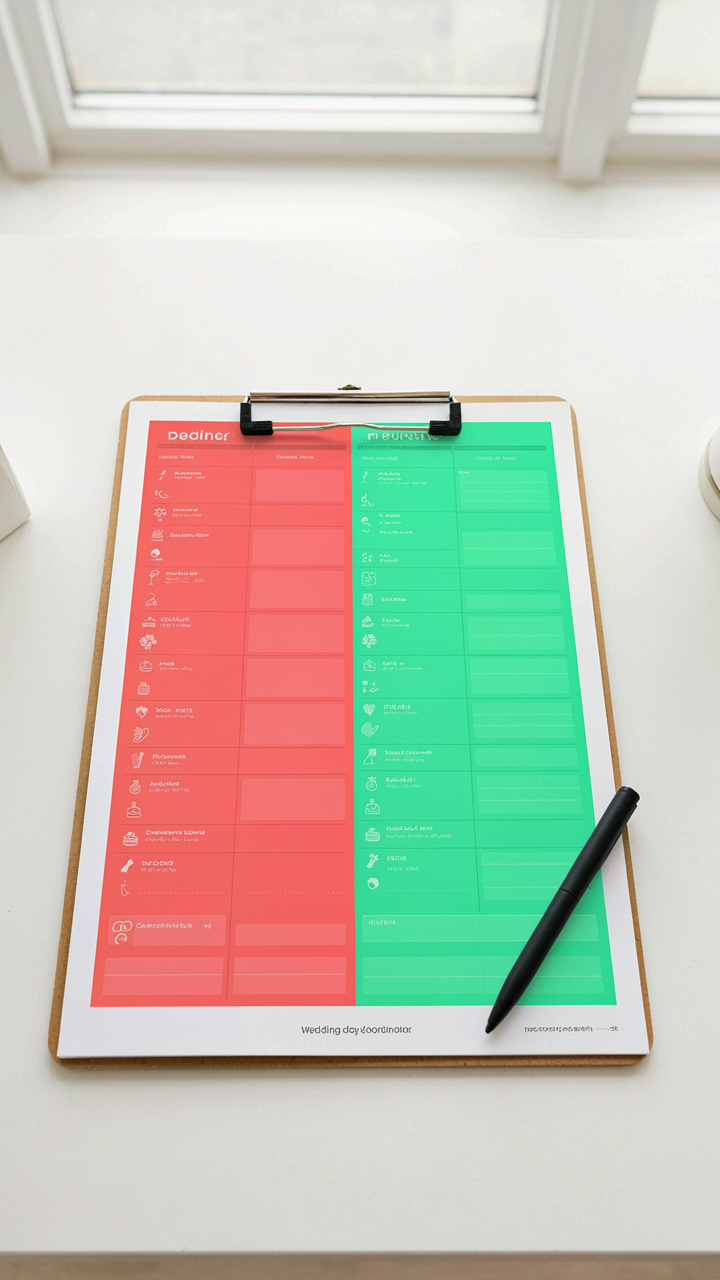
You want a timeline template because you’re afraid something will go wrong and you’ll look unprepared. That’s the real reason. The mechanism is simple: not every task on a wedding day carries the same consequence for failure. Military operations call this the critical path. Apply it here: identify which events have hard dependencies. The ceremony start time is locked. Photos with the full family must happen before people scatter. The reception entrance is fixed. Everything else floats. Your free wedding day timeline template should visually distinguish these two categories. Use one format for immovable events, another for flexible ones. This separation prevents you from treating a 20-minute cocktail hour delay the same as a delayed ceremony. One breaks the entire timeline. The other doesn’t. Build your template around this distinction first.

The common approach is to schedule everything sequentially with equal weight. That’s wrong. A timeline that treats the hair schedule with the same rigidity as the ceremony start is noise. What matters is mapping dependencies backward from fixed events. If photos start at 2 PM and take 90 minutes, hair and makeup must finish by 12:30 PM. If the reception dinner begins at 6 PM, the ceremony must end by 5 PM to allow for transition and photos. Work backward from what cannot move. Your template becomes a cascade of actual constraints, not a wish list disguised as a plan. This is how you stop wasting mental energy on scheduling tyranny.
The Chaos Margin Is Your Real Buffer
Adding 15 minutes between tasks because wedding planning blogs recommend “buffer time” is ceremonial nonsense. What you actually need is the chaos margin. Take the legitimate delays that will definitely happen: someone’s hair takes 10 minutes longer than estimated, the photographer’s car has slow traffic, the caterer arrives during setup instead of before, someone forgets their shoes. Don’t pretend these won’t occur. They will. Add a discrete margin to your timeline, separate from task duration. Call it the chaos margin. For every 4 hours of events, add 20 to 30 minutes. Not distributed throughout, not vague. One block of time explicitly labeled for unexpected friction. Your free wedding day timeline template should show this as a real line item, not hidden in the margins of other tasks.
The mechanism is probability. Small delays compound. A 10-minute slip in hair cascades into makeup running late, which pushes getting dressed back, which delays the ceremony by 15 minutes if you’re not careful. The chaos margin absorbs these compounding effects before they become visible problems. Without it, you’re managing crisis after crisis. With it, minor slips vanish into the buffer instead of domino-ing through your day. Place the chaos margin strategically: one before the ceremony, one before the reception events. This ensures you catch delays at decision points where you can actually adjust, rather than at the end where panic takes over.
Deconstructing The “Free Wedding Day Timeline Template” Trap

The Real Cost Of Free Templates
You want a template because you’re afraid you’ll forget something critical and look unprepared on the day itself. Here’s what actually happens: you download a generic timeline, spend six hours customizing it to your venue, your vendors, your specific ceremony details, then realize the template structure doesn’t match your actual flow. You’ve now invested emotional labor into something that creates false confidence instead of clarity.

Economics calls this “hidden transaction costs”—the invisible expenses buried beneath a zero-dollar price tag. A free wedding day timeline template trades upfront dollars for back-end time spent debugging, second-guessing, and reorganizing someone else’s framework to fit your constraints. You’re not saving time. You’re redistributing when you spend it, and stress compounds later when you’re actually executing the plan.
Templates As Scaffolding, Not Scripture
Common advice treats a timeline template like law. It isn’t. A template is structural scaffolding you use to build, then dismantle once the real plan emerges. Most couples treat it as rigid scripture because it came from the internet and therefore feels authoritative. That’s the trap.
Your timeline must reflect three variables no generic template captures: your vendor sequencing, your personal priorities, and your actual energy levels throughout the day. Download a template for reference, yes, but treat it as a checklist of categories to think through, not a sequence to follow. Your photographer doesn’t care that the template says hair and makeup takes ninety minutes—they care when you’re ready for first photos. Build backwards from that single non-negotiable moment.
The Event Horizon Protocol: Mastering Your Wedding Ceremony Schedule
Identify Your Unmovable Anchors
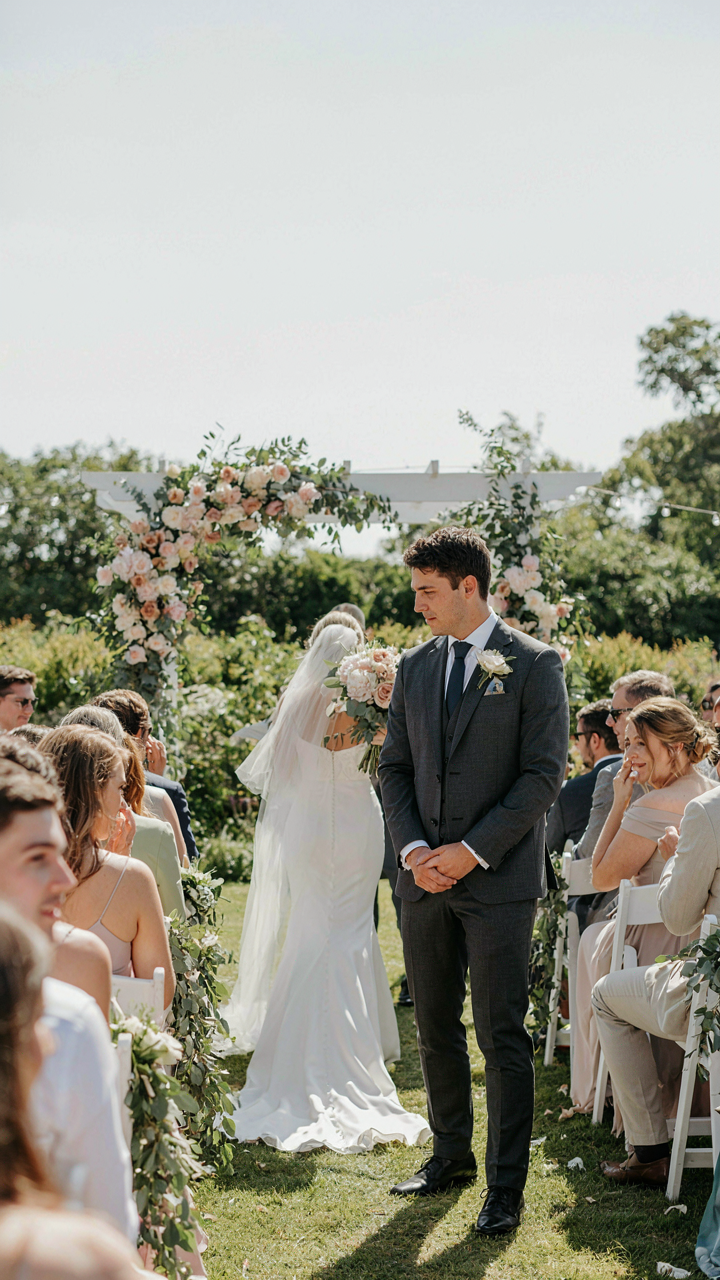
You’re stressed about timing because you’re terrified of looking disorganized in front of your family and your partner’s family. The real mechanism is this: every wedding day has physics. In physics, an event horizon marks the point of no return. Your ceremony has one too—the moment guests sit down. Everything before that moment is flexible. Everything after it is locked.

Start by listing what cannot move. Your venue’s rental window ends at a specific hour. Your photographer leaves at a set time. Your officiant has another wedding. These aren’t suggestions. They’re constraints that shape every other decision on your timeline.
- Venue end time: The hard stop when you must vacate the space. This is your outermost boundary and determines your ceremony start window.
- Photographer departure: Many photographers book back-to-back events. Confirm their exact departure time and work backward from there.
- Officiant availability: Some clergy or officiants serve multiple ceremonies daily. Lock in their exact available window with no assumptions.
- Vendor arrival windows: Caterers, florists, and rentals companies have delivery time slots. These anchor your prep schedule before guests arrive.
- Guest arrival expectations: Your invitation sets an implied start time. Deviating more than 15 minutes creates confusion and resentment.
Build your entire ceremony schedule by anchoring to these five points first. Ignore them and you’re building on sand. Every other timing decision flows from these constraints, not your preferences.
Map The Micro Transitions
Forget generic ceremony timelines that list “processional, vows, rings” as if they’re atomic units. They’re not. Each contains micro-transitions that either flow or stall. Watch where people move, where they pause, where confusion happens. That’s where your ceremony bogs down and runs over.
The average processional takes four to six minutes depending on aisle length and music choice. The average exchange of vows takes three to five minutes. But the transition from one to the next—the walk to the altar, the repositioning of the wedding party, the officiant’s pivot from one script section to the next—that transition is where ceremony timelines fail. You account for the vows but forget the 45 seconds of dead space after the last family member sits. Build your timeline around micro-transitions, not ceremony elements. Insert buffer time at every handoff point: between processional completion and first reading, between readings and vow exchange, between rings and pronouncement. Your officiant controls pacing. Tell them to move faster between sections, not during them. Rushing through vows looks cheap. Rushing between vows and rings looks professional.
Dynamic Prioritization: Applying Military Logistics To Your Wedding Day Timeline
The Buffer You’re Afraid To Build
You want to believe everything will run on time because the alternative—admitting you need contingency space—feels like planning for failure. It’s not. Military logistics calls this “reserve capacity,” and it’s the gap between what you scheduled and what actually happens. Your free wedding day timeline template needs built-in slack, not because Murphy’s Law is real, but because humans move slower than spreadsheets predict and vendors rarely finish exactly when promised.

The mechanism is simple: assign 15 to 20 percent of your total timeline as uncommitted time. This isn’t padding your schedule with busywork. It’s strategic reserve. If your ceremony starts at 4 PM and photos are scheduled for 5 PM with a 30-minute buffer already built in, you’ve already failed. The buffer absorbs delays in hair, makeup, transportation, or vendor setup. Without it, one minor slip cascades into every downstream event. Your timeline becomes a liability instead of a tool.
The Single Person Who Makes Every Call
Most couples treat the wedding day timeline like a democracy where decisions happen by committee in real time. This creates paralysis. The military operates on a clear chain of command. You need one person designated as the decision-maker for unforeseen events, and that person cannot be the bride or groom. They need authority and distance from emotional investment.
This is typically the wedding planner, day-of coordinator, or a trusted family member who understands the full timeline and has your explicit permission to make trade-offs without asking. Write this into your timeline template as a named role with specific decision parameters: If photos run 20 minutes late, this person decides whether to shorten the cocktail hour or compress dinner timing. They don’t ask. They decide, communicate the change to relevant vendors, and move forward. This single protocol eliminates the bottleneck that crashes most wedding days.
Beyond The Minute: The Psychology Of A Relaxed Wedding Day Timeline
Strip Decision Fatigue From The Critical Path
You want a timeline that makes you look organized, but the real problem is that every decision point on your wedding day drains the same mental resource your brain uses for actual memories. Cognitive load theory from organizational psychology maps directly to timeline design: each unplanned moment or unclear role assignment forces someone to decide in real time instead of executing a known protocol.

The couple doesn’t need more time slots. They need fewer decision nodes. A compressed timeline with clear handoffs between vendors, wedding party, and family removes the ambient anxiety that kills presence. Build your timeline so that at 2 PM, the photographer knows exactly what happens without asking, the best man knows when to cue the ceremony, and you know whether you’re eating or getting ready next. Specificity is what creates calm.
When Silence Becomes The Schedule
Overbooked timelines create the illusion of control while guaranteeing you’ll miss the day itself. Most couples pack their timeline so densely that there’s no gap between hair, makeup, photos, ceremony, cocktail hour, and reception. The mechanism isn’t productivity. It’s anxiety masquerading as organization.
Build 15 to 20-minute buffers between major transitions, not to hide mistakes, but to let people breathe and reset. Your timeline should allocate specific unscheduled time where the couple sits together before the ceremony, or where the wedding party has 30 minutes without a photo call. These gaps aren’t wasted time. They’re the actual event you paid for.
The Post Mortem Power Up: Refining Your Wedding Day Schedule

What Actually Happened Versus The Plan
You want to believe your timeline worked because admitting it didn’t means confronting your own planning failures. The mechanism is simple: memory distorts under stress. You need data, not feelings. Collect specifics within 48 hours while the day is still clear: exact start times, actual duration of each segment, where people bunched up, where time vanished. Write it down. Don’t trust your brain’s highlight reel.

Your timeline template is only useful if you mine it for gaps between intention and reality. Compare scheduled times against what your photographer’s timeline shows, what the venue manager noted, what your partner remembers. The friction points reveal the system’s weakness. A 15-minute ceremony that ran 35 minutes didn’t fail because of bad luck, it failed because you didn’t account for the actual variables that day. Document those variables.
- Ceremony Length: Record exact start and end time. Note what caused delays, whether readings ran long or technical issues interrupted flow.
- Photo Session Timing: List how long formal photos actually took versus scheduled. Identify which groups took longest and why.
- Cocktail Hour Reality: Track when guests arrived at cocktail space and when they moved to reception. Note any bottlenecks or early transitions.
- Meal Service Pace: Record when courses went out, how long each took, when stalling happened. Server count matters here.
- Dancing Start Time: Note when music actually started, when the floor filled, when energy shifted. This reveals pacing problems.
The post-wedding data dump is where amateurs stop. Professional event planners build a comparison matrix: what you predicted versus what happened. Mark deviations in minutes, not impressions. This becomes your actual template for future events because it’s rooted in your specific venue, your team’s speed, your guest count’s real behavior.
Using This Cycle Beyond Just Weddings
The timeline template you built operates on feedback loops, a term from systems engineering. Your wedding day is one closed loop. But the framework scales to any event where timing compounds consequences: corporate retreats, multi-day conferences, milestone celebrations, product launches with staged reveals. The principle stays identical: predict, execute, measure deviation, adjust.
Refinement compounds. The first wedding’s timeline gives you raw material. The second event uses the lessons embedded in data. By your third or fourth major gathering, you’re not guessing anymore, you’re executing a system that accounts for human behavior, venue constraints, and realistic durations. This is why professional planners get faster, not slower, as they gain experience. You develop institutional knowledge. Start documenting your numbers now so you don’t rebuild this work every time you host something that matters.
Adaptive Planning: Not A Wedding Day Timeline, But A Strategic Framework

Delegate Authority To The People Running Your Day
You want the timeline to work because you’re terrified of looking disorganized in front of 150 people. That fear makes you cling to minute-by-minute control. The real mechanism is this: a free wedding day timeline template becomes useful only when you stop treating it as a script and start treating it as a communication tool between you and your vendors. Your photographer, caterer, and coordinator each have domain expertise you don’t. They’ve run a hundred timelines. They know what breaks. Ask them where the template fails for their role, then integrate their input directly into your version.

A timeline that ignores vendor feedback is a timeline that creates bottlenecks during execution. Your caterer knows they need thirty minutes between the ceremony end and when appetizers should circulate, not because it sounds nice but because that’s the actual buffer kitchen logistics require. Your florist knows setup takes longer than you think. These aren’t opinions. Build their constraints into your template as non-negotiable anchors, then let them own the execution within those windows. You stop being the bottleneck. They stop improvising.
Measure Against Outcomes, Not Clock Compliance
Most couples treat a free wedding day timeline template as a pass-fail test where hitting every mark on time equals success. That’s backward. Outcome-focused planning means defining what actually matters before the day starts, then building the timeline around those outcomes, not the other way around. Your real outcomes are probably: guests feel welcomed, you have unrushed time with your partner, photos capture the moments you care about, food is hot when served. The timeline is just the tool that enables those outcomes. If serving dinner five minutes late preserves a meaningful moment with your grandmother, the timeline was wrong, not your decision.
Clock adherence becomes the enemy of intentional days. A rigid timeline pushes you through a receiving line when you’re emotionally present with someone important. It forces you to leave cocktail hour early to hit a scheduled photo slot. Real adaptive planning means identifying which moments matter most, protecting those outcomes in the timeline, then letting the rest compress or flex as the day demands. Build in outcome-focused checkpoints with your coordinator: “By 6 PM, we’ve completed photos and family time. By 7:30 PM, dinner service begins.” The exact minutes between those outcomes belong to the day itself, not the template.
Your Biggest Wedding Day Obstacle Isn’t Time; It’s The Illusion Of Control. Embrace Adaptive Planning, Not Template Dogma
Most couples treat a timeline like scripture. They memorize it. They panic when reality deviates. Here’s the shift: use the template as a compass, not a GPS. Build slack into every hour. Train your vendors to adapt. Then let the day breathe. Control kills presence. The couples who remember their weddings aren’t the ones who executed a perfect schedule. They’re the ones who abandoned it when their grandmother wanted an extra song or the light hit perfect at golden hour. Download the template, study it, then give yourself permission to ignore it the moment something better shows up.