The Illusion Of “Free Wedding Planner Printables Pdf”: Why Most Templates Fail
More Options Paralyze You Into Paralysis
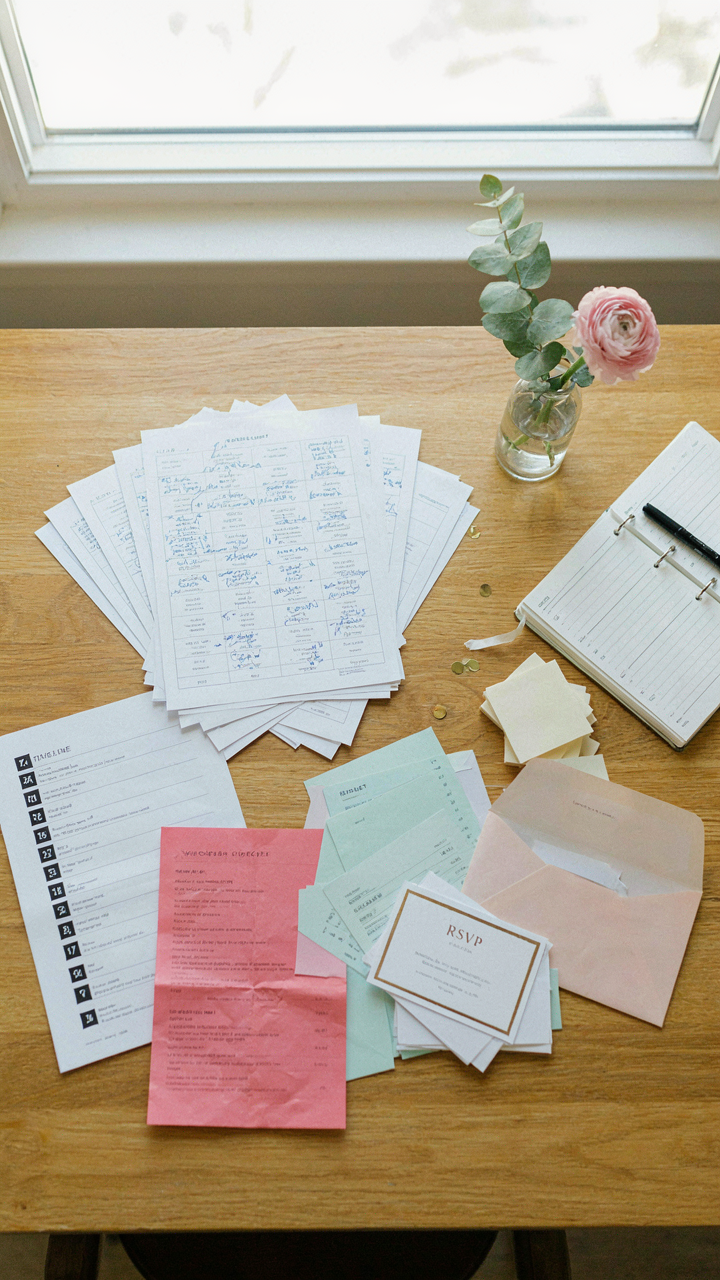
You want the printable pack because you think it solves the problem. It doesn’t. It creates the opposite: decision fatigue masquerading as progress. A typical free wedding planning printable pack gives you 40 to 80 templates—checklists, timelines, budget sheets, seating charts, vendor trackers. Each one assumes a different wedding structure. Each one competes for your attention. You end up using five templates half-way, abandoning three quarters through, and printing things you never look at again.
The mechanism here mirrors information theory in communication systems: signal-to-noise ratio determines whether a message gets received. Your brain has finite processing capacity. When you’re hit with 60 templates, 45 of them become noise. You don’t choose better because you have more options. You choose less because the cognitive load paralyzes you into doing nothing well. Most couples abandon printables entirely by month three because the template pack promised clarity and delivered clutter instead.
Generic Templates Ignore Your Actual Wedding
The advice floating around wedding planning circles says printables are universally helpful because they cover all scenarios. That’s incomplete. A template designed for a 300-person formal wedding with a separate rehearsal dinner does real damage when you’re planning a 40-person backyard event with one timeline. The same budget template doesn’t work when one couple has family contributions and another is self-funding. The same vendor tracker misses critical details for a destination wedding but overcomplicates a local one.
Your wedding has specific constraints: guest count, venue limitations, budget source, timeline length, cultural or religious requirements, vendor availability in your region. A printable made for the statistical average wedding ignores all of these. You either force your wedding into the template’s logic, wasting time on irrelevant sections, or you abandon it and build your own system—which defeats the purpose of using a free pack in the first place. Start by mapping your three core constraints before opening any template. This single protocol step saves six weeks of wasted iteration.
The Strategic Blueprint: Before Any Wedding Planning Checklist Printable

Define What Actually Matters
You want the printable pack to solve your problem, but you’re hoping it replaces actual decision-making. It won’t. The real mechanism here is constraint. Economics calls it scarcity, and every bounded resource forces trade-offs. Your wedding has three hard constraints: budget, guest count, and aesthetic direction. Everything else flows from these three. Pick them wrong and no checklist printable saves you from wasted money and misaligned execution.

Start by stating these constraints in writing. Not thinking. Writing. Budget is the number you’ll actually spend, not the number you wish you’d spend. Guest count is the realistic final headcount, not the fantasy list. Vision is one visual reference or three maximum that show your aesthetic, not “elegant and fun.” These three inputs determine which tasks matter and which ones are noise that steal your time and create decision fatigue.
Map Tasks By Return On Time
The common advice is to “prioritize what matters most,” which is useless because it assumes you already know. You don’t. Use the impact-to-effort matrix from operations management instead. Venue and catering are high impact, moderate effort. Napkin color is low impact, moderate effort. Put the low-impact tasks on your printable pack but don’t touch them until the high-impact decisions lock in. This is discipline, not procrastination.
Build a simple two-column list: left side is the task, right side is either “must decide first” or “decide after.” Tasks that constrain other tasks go first. Venue location constrains catering, photography timing, guest logistics. Photography style constrains whether you need a detailed timeline or a loose one. Do the constraining work before the dependent work. This is how you use a free wedding planning printable pack as a tool instead of letting it use you.
The Event Horizon Protocol For Wedding Binder Printables Free

When To Deploy Each Template
You’re drawn to printables because you want proof you’re doing this right. The real mechanism is phased deployment, borrowed from software rollout strategy. You don’t activate all templates at once. You introduce them in sequence, aligned to decision urgency and information dependency. Early templates handle broad strokes. Late templates handle detail. This prevents decision paralysis and wasted printing.

Start with the guest list and budget templates eight to twelve weeks before the wedding. These feed every other decision downstream. Introduce venue and vendor comparison sheets four weeks later once location and team size lock in. Timeline and task breakdowns activate six weeks out. Seating charts and final logistics printables arrive two weeks before. This sequence respects how decisions actually cascade, not how generic advice arranges them.
Where Your Critical Data Actually Belongs
Everyone says to keep everything in one binder. That’s incomplete and creates a single point of failure. The real play is information arbitrage: store contact data and time-sensitive numbers in a separate, accessible system outside the binder itself. Your printables are working documents and reference tools. Your live data is what changes daily.
Keep vendor phone numbers, confirmation codes, and payment receipts in a phone notes app or spreadsheet you update in real time. Print those details only after payment clears and dates confirm. The binder holds completed checklists, finalized timelines, and approved vendor contracts. This split keeps your printable pack functional as a decision tool rather than a disintegrating archive of outdated information.
Leveraging Free Wedding Planner Printables For Maximum Impact

Make The Printable Match Your Actual Wedding
You want a printable pack because you think it’ll make you feel organized. That’s the real reason. But a generic template solves nothing if it doesn’t reflect your specific constraints: guest count, budget, venue type, timeline. The mechanism is constraint-based customization. Remove sections that don’t apply. Reorder priorities based on what actually matters to your situation. A template for 200 guests means nothing if you’re planning 50.

Start by identifying what sections you’ll actually use before you print or download anything. Most couples waste time filling out irrelevant fields instead of focusing on decisions that move the needle. Grab a pen and cross out every template section that doesn’t align with your wedding’s scope. This takes fifteen minutes and prevents hours of busywork. Print only what you’ll reference weekly, not everything available.
Sync Printables With One Digital Anchor Point
Most wedding planning advice says use both digital and paper. Wrong. That creates duplication and contradiction. The real move is designating one digital tool as your source of truth, then using printables only for what paper does better: quick visual reference, handwritten notes during vendor calls, timeline tracking at a glance. Use your phone calendar or shared spreadsheet for dates and costs. Print the timeline and guest list for your desk or kitchen.
The integration works one direction only: digital drives the primary data, printables receive it. Don’t track information in both places. When a vendor confirms a date, update your digital calendar first, then update the printed timeline if you use one. This prevents the scenario where your printable shows June 15th and your phone shows June 22nd. Assign one person as the updater if you’re planning together. Printables work as accountability tools, not record-keepers.
The “Critical Path” Method: Beyond Simple Wedding Planner Checklist Free

Task Order Determines Everything Else
You want a free wedding planning printable pack because you’re terrified of forgetting something critical. The real mechanism is this: most tasks have dependencies. You cannot finalize the guest list before selecting a venue. You cannot book vendors before knowing your headcount. A basic checklist treats all 200 tasks as equal weight. That kills you. Military logistics borrowed the term “critical path” to describe the sequence of dependent events that determines project completion time. In wedding planning, your critical path is the chain of tasks where any delay cascades into everything downstream.

Map your printable pack around dependencies, not dates. Start with venue availability (this unlocks guest count), then catering (this unlocks menu selections), then invitations (this unlocks RSVP deadlines). Non-dependent tasks like choosing flowers or music can move around without consequence. Most free wedding planning printable packs ignore this entirely and just list tasks alphabetically. That’s why they fail. Your printable needs a sequenced workflow, not a shopping list.
Buffer Time Prevents The Cascade
Delays happen. Vendors miss deadlines. RSVP numbers shift. The standard advice says “build in extra time” which means nothing. Military planners use “slack time” or buffer allocation to protect the critical path from normal variance. Your free wedding planning printable pack needs explicit buffer blocks built into vendor deadlines and decision points, not just the final date.
Add 14 days of buffer before your critical decisions lock in. If your invitations must go out by April 15th, make your final guest list by March 31st. If your catering contract needs signing by June 1st, have your headcount confirmed by May 15th. The buffer absorbs reality. Without it, one vendor delay forces you to compress every decision that follows. Your printable pack should show two dates per critical task: the actual deadline and the internal deadline with buffer built in. Print those. Use the internal deadline every single time.
Free Wedding Planner Templates Free: Building Your Command Center

One Place For Everything
You want this because scattered information feels like control until the week before your wedding when you realize you’ve lost a vendor email. The mechanism is simple: a centralized repository eliminates the cognitive load of remembering where you stored what. Think of it like inventory management in supply chain logistics—you don’t optimize by keeping stock in five warehouses, you consolidate into one system with clear labeling.

A free wedding planning printable pack gives you the physical and mental architecture to stop searching. Every document lives in the same location: vendor contracts, timeline spreadsheets, budget tracking, guest lists, seating charts, mood boards. When you need information, you know exactly where to find it. This removes decision fatigue and the anxiety that comes from not knowing what you’ve already decided.
Vendor Details And Timeline Tracking
Most couples keep vendor phone numbers in their phone, contracts in email, and timelines in their head, then wonder why communication breaks down. That’s not organization, that’s chaos pretending to be a system. A printable pack centralizes every contact point—name, phone, email, contract deadline, payment due date, final confirmation date—on one or two reference sheets you actually use.
The real mechanism here is visibility. When you see all vendor timelines on one page, you spot conflicts immediately. The florist needs final numbers three weeks before the wedding. Your caterer needs them two weeks before. Your invitation designer needs them four weeks before. Print this once, tape it near your kitchen, and you stop missing deadlines because you forgot someone else was waiting on the same information from you.
Avoiding “Analysis Paralysis” With Free Wedding Planning Printables

From Information To Action
You’re afraid you’ll miss something critical and end up with a wedding that feels half-baked. The real mechanism at work is this: free wedding planning printables dump data in front of you without forcing you to decide what matters first. Information without hierarchy breeds paralysis. A printable pack becomes useful only when you translate every checklist item into a specific task with a date and owner. Not “plan flowers”—”call three florists by March 15th and compare quotes.” The printable is just the container. Your job is converting it into a task system.

Most wedding planning advice treats printables as passive reference documents you browse when you think of something. That’s backwards. Treat your printable pack as a translation layer. You read a checklist, then you immediately write the task into your calendar or task manager with a deadline. This prevents the printable from becoming clutter that stares at you without driving action. The gap between “things we need to do” and “things we’ve assigned to someone with a date” is where most weddings get stuck. Close that gap in your first session with the printables.
Set Decision Rules Before You Decide
You need to cut through noise by establishing what matters to you before you start evaluating options. Borrowing from decision science, you’re creating decision criteria—fixed constraints that eliminate entire categories of choices without deliberation. Instead of debating every vendor, you decide upfront: budget cap per category, geography radius, availability window. Write these onto your printable pack before you use it to research anything. A free wedding planning printable that includes a vendor comparison section becomes 10x more useful when you’ve already written your non-negotiables across the top row.
- Budget bands: Assign total spend and cap each category. This kills 70% of options instantly without emotional debate.
- Availability window: Pick your wedding date range first. This eliminates venues and vendors before you waste time researching them.
- Guest count ceiling: Set your absolute maximum. Everything from venue to catering hinges on this single number.
- Core values checklist: Write three things that matter most. Sustainability, intimacy, celebration—whatever it is. This filters every decision.
- Ownership assignment: Name who decides each category before you research. Your partner chooses photography. You choose catering. This kills decision fatigue in half.
Once your criteria are locked, your printable pack stops being a generator of choices and becomes a filter. You’re no longer asking “which is best?” but “which fits our rules?” This removes the emotional weight that freezes most couples. Fill in your decision criteria section on your printable first, before you fill in anything else.
The Unseen Value: How Wedding Planner Spreadsheet Free Elevates Your Game

Budget Tracking: Real Time Financial Oversight
You want to avoid looking foolish in front of your partner by losing track of money mid-planning. The mechanism is simple: a spreadsheet forces you to confront actual spend versus projected spend the moment the gap appears. Most couples never use a budget tool because they assume spreadsheets are complicated. They’re not. A free wedding planning printable pack gives you rows for vendor categories, columns for quoted price versus actual invoice, and a running total that updates as you fill it in. This removes the cognitive load of mental math and kills the delay between spending and knowing you’ve spent.

A spreadsheet becomes your financial checkpoint system. Without it, you discover budget overages three weeks before the wedding when corrections are costly or impossible. You log each vendor payment into the printable sheet the day you commit to them. The total column compounds automatically. You see immediately whether catering ate your photography budget. This visibility forces real decisions instead of drift.
Vendor Comparison: Data Driven Selections
Economics teaches us the concept of opportunity cost: what you gain in choosing one option versus another. A free wedding planning printable pack applies this directly by forcing you to compare vendors on identical criteria across the same row. Most couples text back and forth with vendors, store quotes in different email folders, and forget what vendor B offered two weeks ago. A comparison sheet solves this by making side-by-side evaluation mandatory, not optional. You stop choosing based on gut feeling or who responded fastest. You choose based on actual deliverables and price.
Build your comparison grid with columns for service type, price, deposit due date, cancellation terms, and included items. List each vendor option in its own row. The pattern emerges instantly: which vendors bundle services, which charge hidden fees, which demand early payment. You notice that Vendor A costs more but includes a second shooter while Vendor C offers just the basics at a discount. The printable format keeps this data visible on your desk or phone screen during decision calls. You no longer need to reconstruct the comparison in your head each time a new vendor enters the conversation.
Mastering The Feedback Loop: Free Wedding Planning Printables For Adaptability

Review Plans Before Reality Hits
You want a sense of control. That’s the real reason you care about adjusting plans. The mechanism is this: a printable planning system only works if you treat it like a working document, not a completed one. Most couples fill out their printables once, then ignore them until the week before the wedding. That’s not planning. That’s wish casting.

Set a review cadence. Check your printables every two weeks starting three months out, then weekly after that. Compare what you wrote against what actually happened with vendors, guest responses, and budget reality. Mark changes directly on the page. This isn’t about perfection. It’s about catching the drift between intention and execution before it costs you money or time.
Prepare For The Problems You Know Are Coming
Wedding planning borrows from risk management strategy: you identify failure points before they occur, then build redundancy into critical systems. Your printables should include a contingency section that names specific scenarios and your response to each one. This isn’t pessimism. It’s competence.
- Vendor Cancellation: List backup vendors for catering, photography, and florals with contact info and availability windows already confirmed in advance.
- Weather Disruption: Pre-decide your indoor backup location, timeline for switching venues, and communication plan for notifying guests within 48 hours.
- Guest Count Variance: Build three budget scenarios on your printable: baseline, 15 percent under, and 15 percent over, with corresponding meal counts and seating adjustments.
- Key Team Member Illness: Assign a secondary contact for each major role—wedding day coordinator, ceremony reader, reception contact—with their number printed on your timeline.
- Budget Overrun: Designate a cut list before spending begins, ranked by priority, so you remove items instead of panicking when costs spike.
The couples who execute contingency planning don’t suffer less when problems hit. They respond faster because they’ve already decided. Your printable pack becomes a decision journal, not a decoration guide. Print your contingency section twice: keep one copy with your planner, give one to your partner or wedding coordinator. Decision speed matters more than decision quality when the moment arrives.
The Real Obstacle Isn’t The Lack Of A Perfect Template; It’s Your Undisciplined Approach To Execution

You don’t need a free wedding planning printable pack. You need to stop abandoning half-finished decisions. Download one today, pick three sections, and complete them before tomorrow. Most couples fail because they treat planning like a hobby instead of a project with actual deadlines. The template doesn’t matter. Showing up does.