The 80/20 Guest List Protocol For Budget Reception 200 Guests
Identify Your Core 20 Percent
You want everyone to feel included without admitting you can’t afford to treat them equally. That’s the real pressure. But here’s the mechanism: in any group of 200, roughly 20 people drive 80 percent of the emotional weight and memory of your event. These are the people whose presence or absence actually matters to the story you’re telling. Identify them first. Everyone else gets a consistent baseline experience, not a tailored one.
The 20 percent rule comes from economics and concentration. In budget reception planning, your core guests are your scarcity constraint. Spend on them deliberately: better seating, earlier arrival access, a personal moment with you during the event. This doesn’t mean lavish treatment. It means strategic placement of your limited resources where they compound relationship value. Document this tier before you book a single vendor. Your entire budget architecture depends on this decision.
Priority Guests Versus General Admission
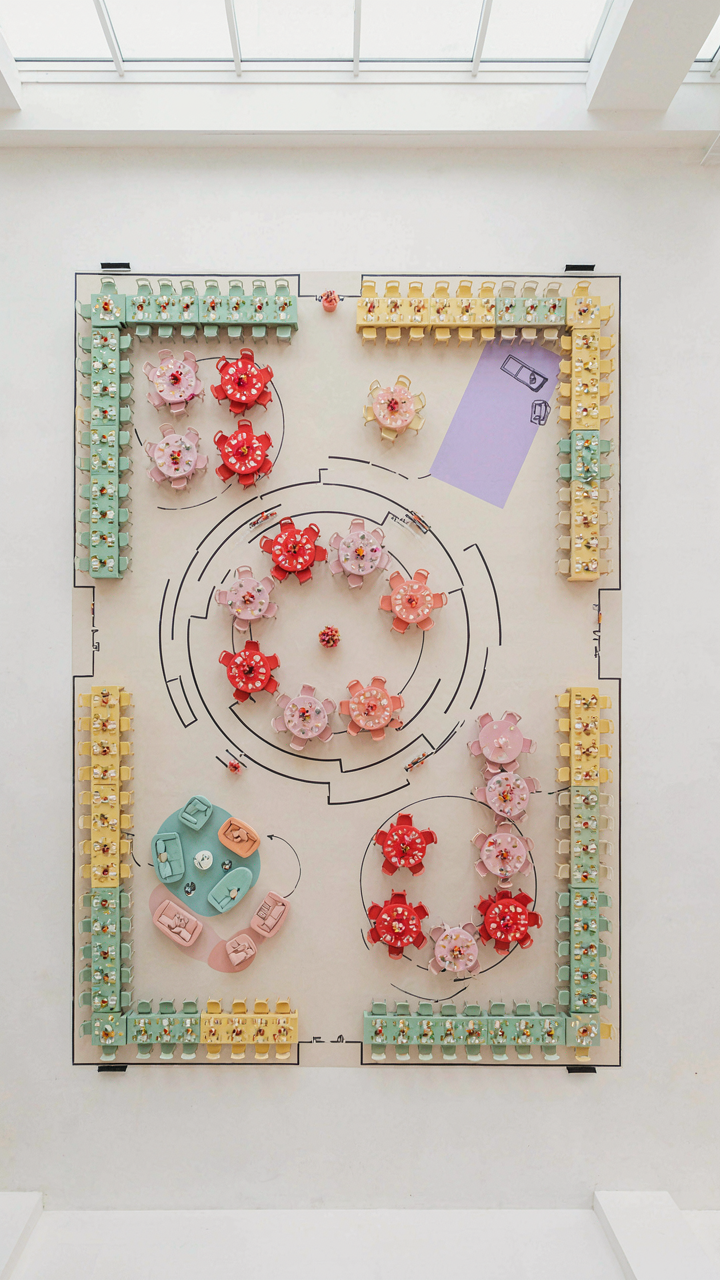
The common advice is to treat all guests equally or risk offense. That’s lazy thinking that wastes money. Create two distinct experiences by design, not accident. Priority guests (roughly 40 people from your core 20 percent, expanded slightly for family logistics) get positioned for genuine connection: better sightlines, quieter zones for conversation, served food before general seating. General admission guests get reliable hospitality: adequate food, comfortable seating, full access to the celebration. Different doesn’t mean insulting.
The protocol is simple: announce the tiers to yourself only, never to guests. Build your floor plan around it. Your core 20 gets seated where they can see and be seen. The remaining 160 fill the room efficiently around them. This isn’t about status performance. It’s about managing 200 people’s experience when your budget won’t scale linearly. Tier your guest experience before selecting your venue, not after.
Venue Arbitrage: Unlocking Cheap Wedding Venue Value
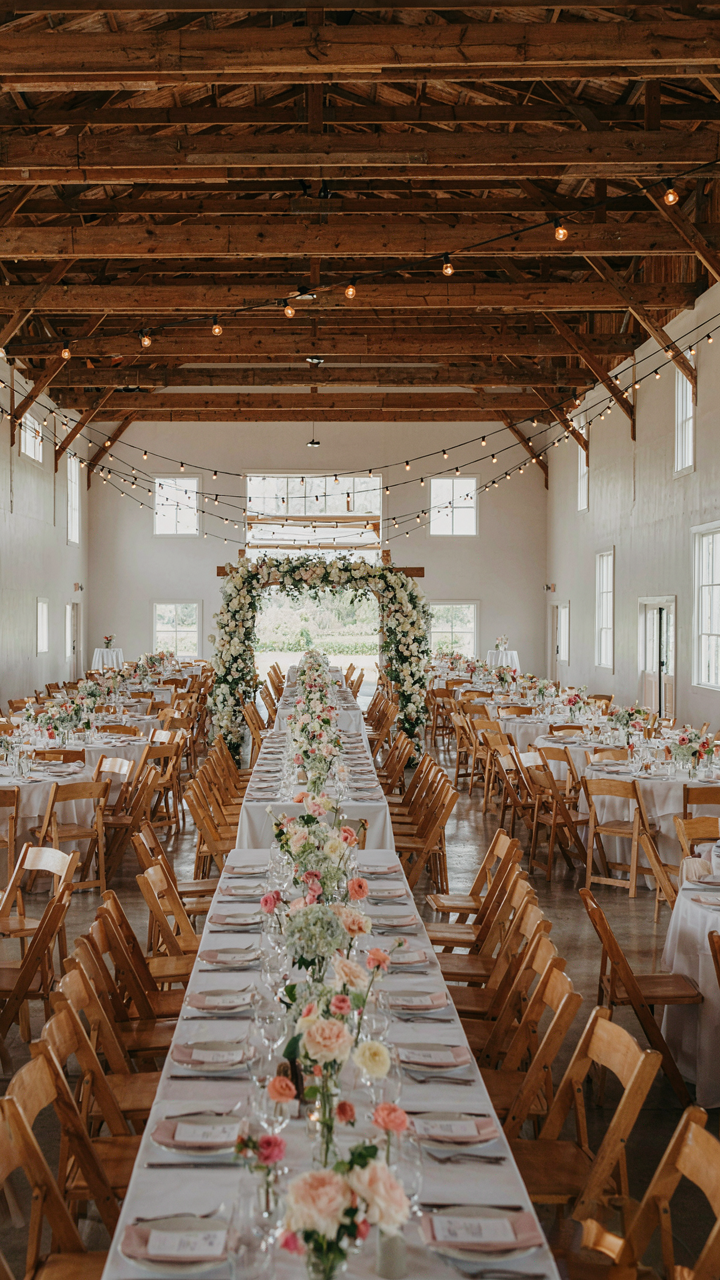
Where Real Venue Deals Live
You want the venue to feel intentional, not budget-conscious. That’s the real reason you’re reading this. The mechanism is simple: traditional wedding venues price based on demand capture, not actual cost. They own the category, so they tax you for it. Non-traditional spaces operate outside that pricing structure because they were never designed as profit centers for events.

Public parks require permits, not markup. Community halls charge flat rental fees. Private estates and barns sit empty most days, making any booking revenue acceptable. The owner of a 50-acre property doesn’t need to hit the per-head pricing model that a dedicated venue does. You’re not paying for their specialized staff, their catering contracts, or their brand recognition. You’re paying for access to space. That gap between what the space costs to operate and what they charge you is where budget reception economics actually work.
Timing As Your Negotiation Weapon
Off-peak dates aren’t a compromise—they’re leverage in disguise. Economics teaches us about supply and demand elasticity, and venue pricing demonstrates pure textbook elasticity: demand for Saturday nights in June is inelastic, so venues price accordingly. Wednesday nights and Sunday afternoons? Demand collapses. A venue owner with an empty Saturday faces sunk costs. They’d rather negotiate.
Most couples negotiate as supplicants asking for a discount. Stop that. You’re offering to fill a revenue gap that wouldn’t exist otherwise. A venue available on a Tuesday in February has zero alternative uses. Call the owner directly and anchor the conversation with a specific date and guest count, then propose your number. Venue owners cut deals faster when they believe you’re serious and actually available when nobody else is booking. Move from requesting a discount to presenting a transaction they’d be foolish to refuse.
The Culinary Multiplier: Feeding 200 Without Bankruptcy

The Food Truck Alliance
You’re afraid the moment you say “budget wedding” people will judge the food quality. That fear is the mechanism working against you. In supply chain economics, redundancy is how systems survive cost pressure. Food trucks give you that redundancy: you’re not dependent on one catering operation, one kitchen, one point of failure.

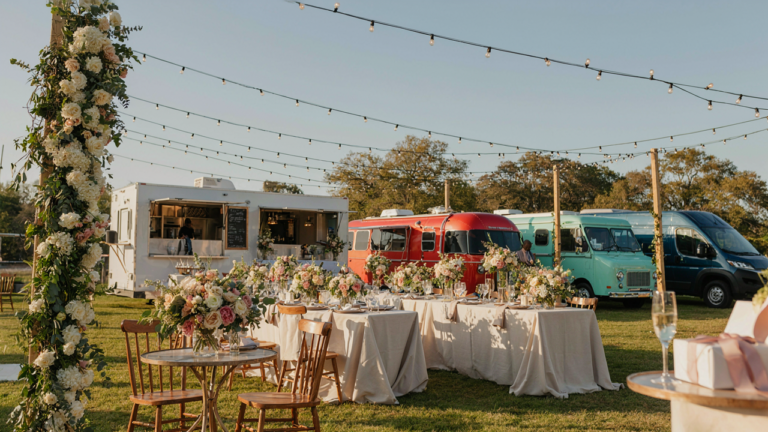
Three to four trucks covering different cuisines cost less per head than traditional catering because trucks operate on thin margins and high volume. They handle their own setup, their own staffing, their own liability. You pay for output, not overhead. Negotiate a flat rate per guest, confirm headcount three weeks out, and position trucks in a line rather than scattered around the venue so guests see the abundance.
Family Style Service
Everyone says family style is cheaper. That’s incomplete. Family style works because it flips labor costs in your favor. Instead of servers plating individual dishes, guests serve themselves from large bowls and platters passed hand to hand. You cut server count by 60 percent.
Culture matters here. Family style signals abundance and informality, which works for most weddings but needs alignment with guest expectations. Ask your caterer for per-plate pricing on family style versus plated service. The gap is usually 15 to 25 percent. Implement a single-service model: appetizers during cocktail hour, then one large meal service. One service means one kitchen rush, one window to execute, one chance to control cost.
Elegant Budget Wedding Design Principles: Beyond Generic Decor
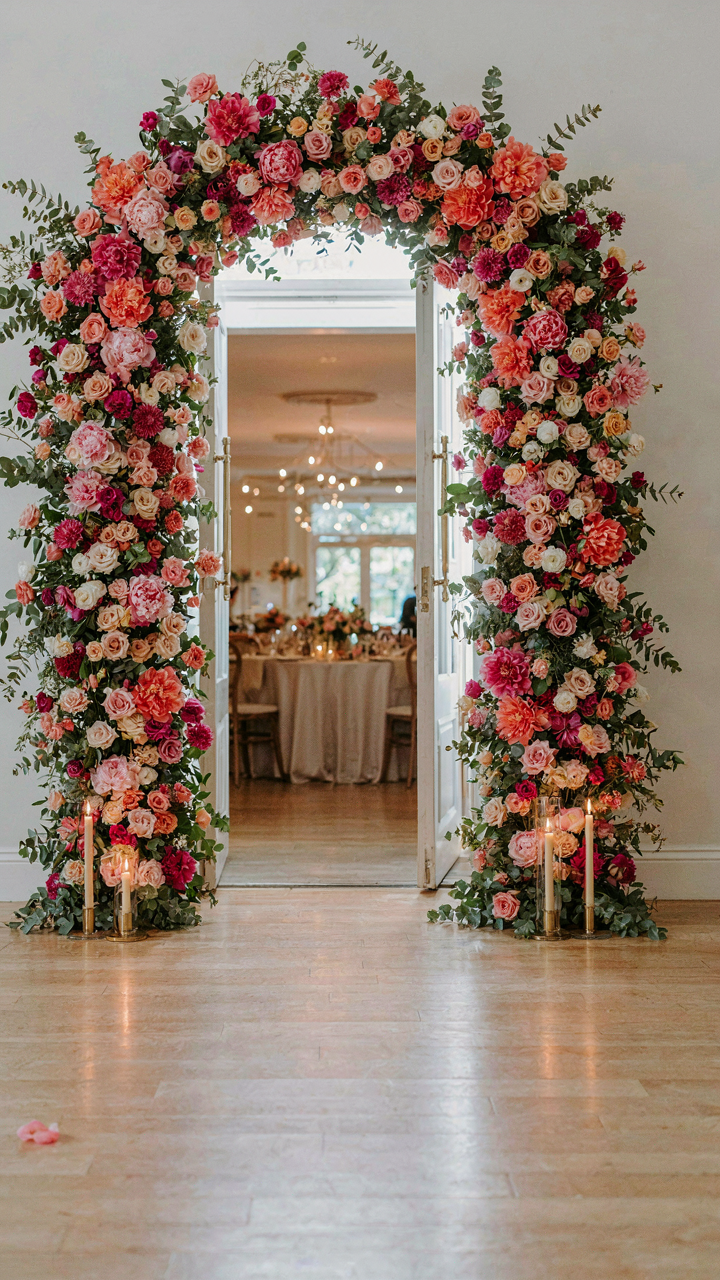
Atmosphere Over Accumulation
You want people to feel like your wedding mattered without looking broke. That’s the real tension here. The mechanism is this: human perception runs on contrast and environment, not object count. Cheap venues become expensive-feeling spaces through two tools: lighting that controls what guests see and what they don’t, and sound that fills dead air and creates energy. Bad lighting exposes every corner and flaw. Good lighting hides problems and manufactures mood. For 200 people, strategic placement beats scattered decorations.

Sound operates the same way. Most budget receptions fail because they’re silent except for speeches. Dead air makes 200 people feel like 200 strangers. A curated playlist running at conversation volume, or a single speaker positioned correctly, transforms the acoustic environment. Guests perceive fullness instead of emptiness. This isn’t decoration. This is infrastructure. Rent two uplighting kits for your venue’s corners and one quality speaker system before you buy a single flower.
Design Through Subtraction
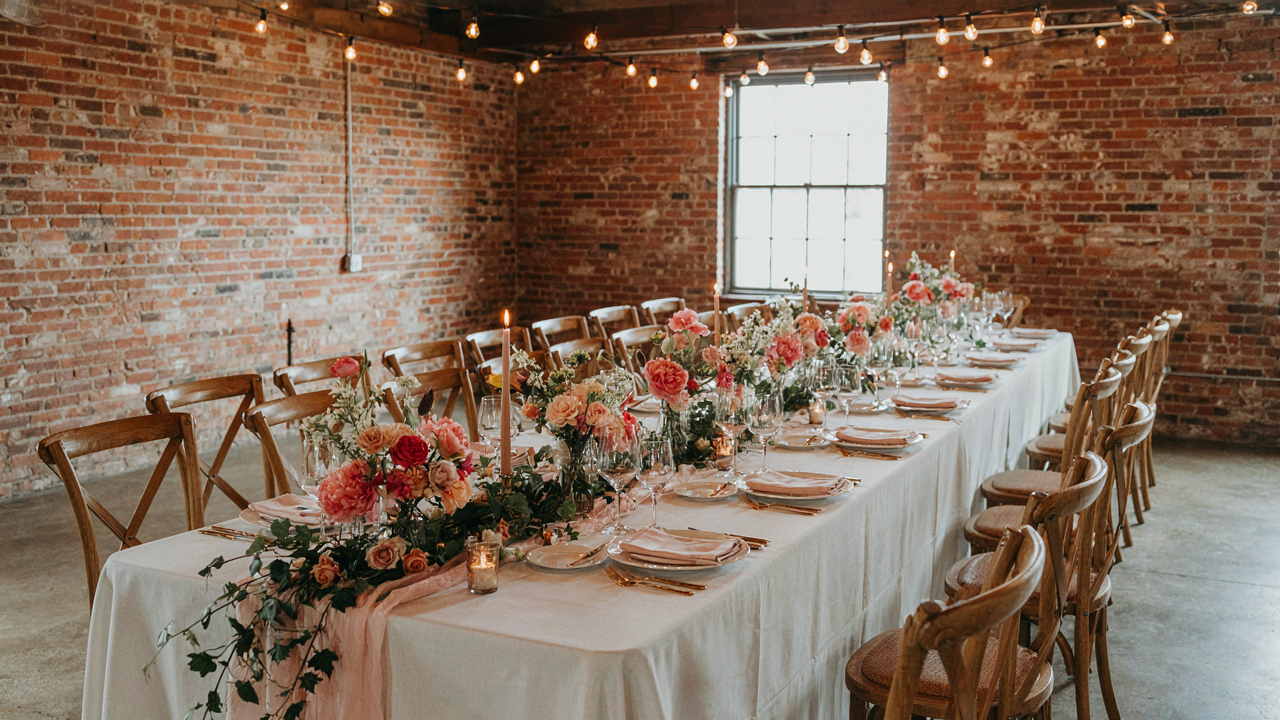
Most budget wedding advice tells you to DIY everything. That’s incomplete. The real play is ruthless curation: choose three to five visual elements that work hard and remove everything else. Scatter is what makes budget weddings look cheap. Intentionality is what makes them look planned. One statement backdrop, one table treatment repeated identically across all tables, one lighting choice, one floral anchor per room. This is restraint. Restraint reads as confidence.
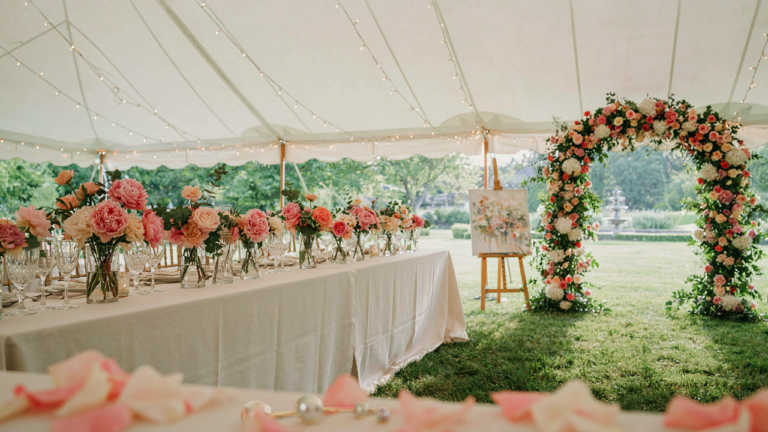
The difference between cluttered and curated is this: does each element earn its place or is it filler? A single large floral installation at the entrance costs less than twelve small centerpieces and impacts guests more. One quality table runner on all tables creates coherence. Repetition is your budget multiplier. When you commit fully to three decisions instead of half-committing to twenty, 200 people see intentionality instead of compromise. Execute your three elements flawlessly before adding a fourth.
The Service Economy: Smart Staffing For 200 Guests
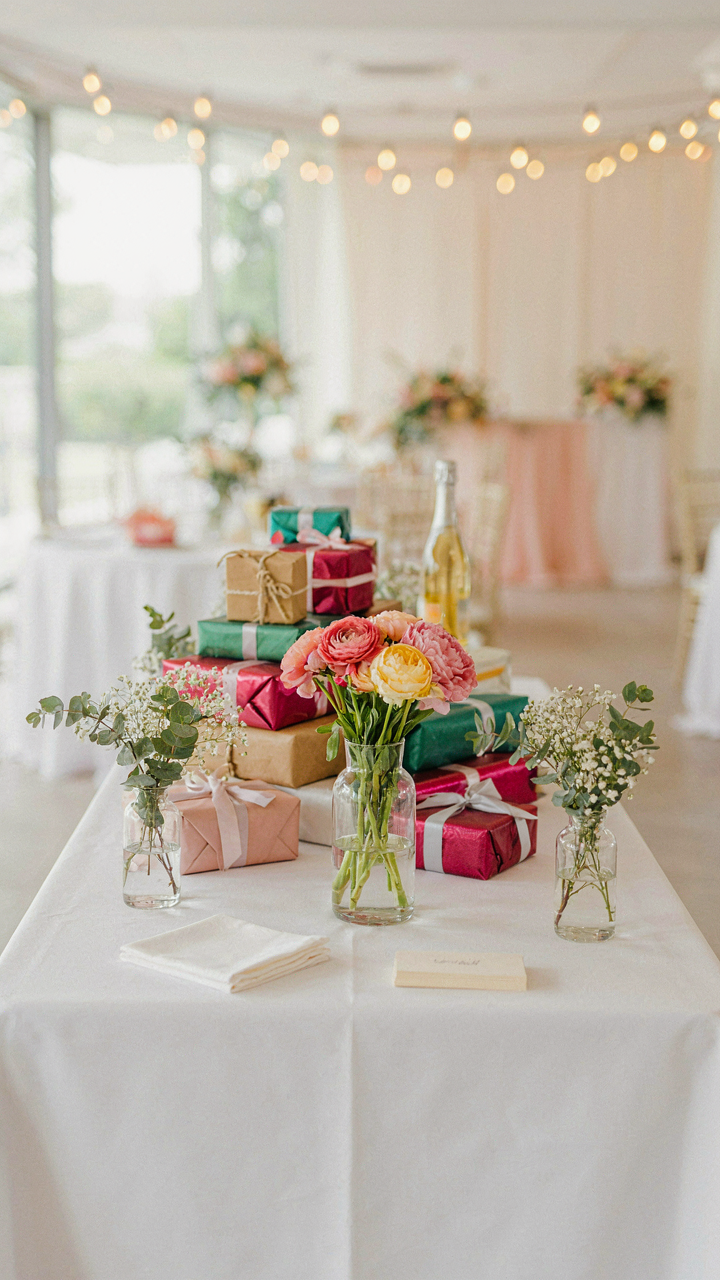
Leverage Your Network Without Burning It
You want free labor because you’re afraid of the bill, but that’s not the real problem. The real problem is that untrained people create chaos at scale, and 200 guests expose every gap in coordination. Think of staffing like supply chain management: each role is a node, and a single failure cascades. You need volunteers, but only in roles where failure doesn’t break the reception.

Assign specific tasks with written expectations. A friend managing the gift table needs to know exactly when to open it, where to store it, and how to log items. A volunteer bartender needs a pour guide and a cutoff time. The gap between “help us” and “here’s your role” is where resentment forms. Gratitude comes after clarity, not before it.
Hire For The Bottlenecks Only
Most wedding advice tells you to hire everyone. That’s wrong. Hire only for roles where your unprepared friends will create a visible disaster. Professional catering staff, if you’re using them, handle food and plating. A hired coordinator manages timing and logistics. Everything else can be delegated to people you trust.
The math is simple: a professional bartender or food runner costs less than fixing problems created by someone learning on the job. You don’t need hired staff for setup, cleanup, coat check, or guestbook management if you’ve assigned clear instructions. Write down the protocol for each role. Hand it to your volunteers before the day. Verify they understand it. That separation between hired professionals and trained volunteers stops chaos before it starts.
Logistics As A System (Military Strategy)
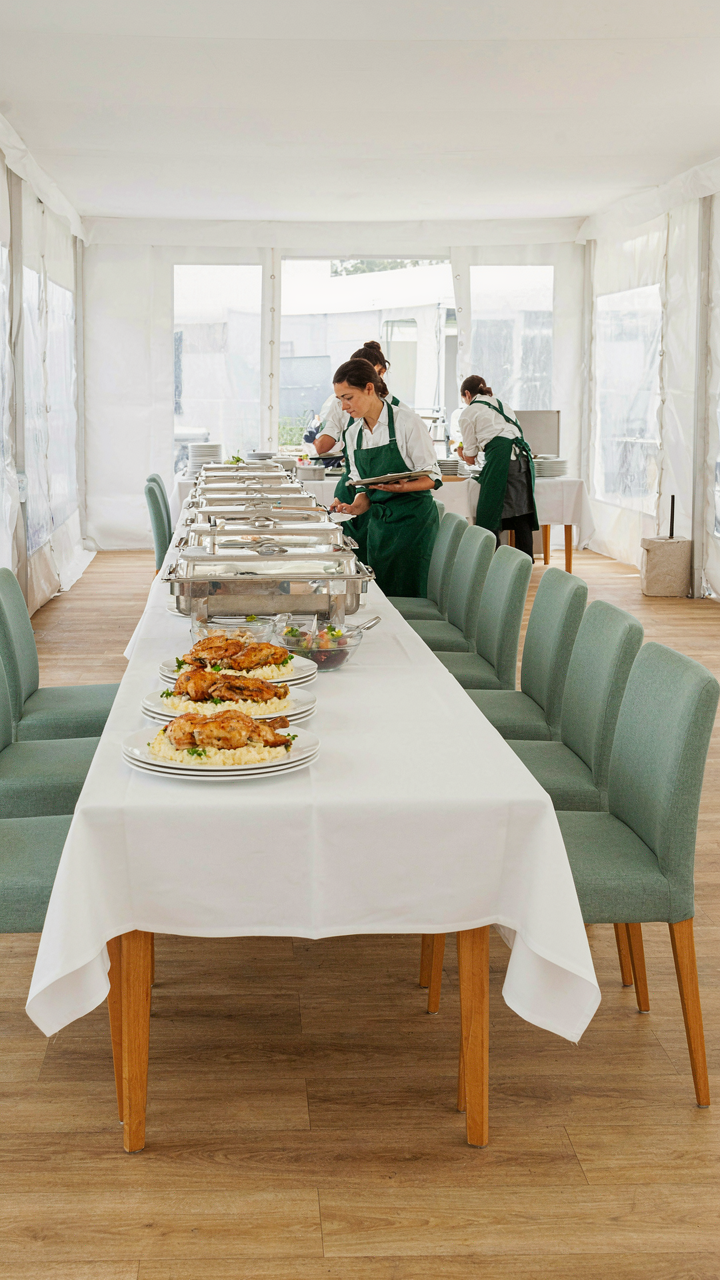
Resource Flow Before Bottleneck
You’re reading this because you’re terrified of chaos on the day—of food running out, of staff vanishing, of 200 people standing in line for bathrooms. That fear is rational. The mechanism that stops it is supply chain management from operations, and you apply it by mapping inventory against consumption rate before the event starts. A 200-person reception isn’t a party; it’s a distribution problem.

Military logistics borrowed the concept of “nodes” to describe points where resources pass through. Your reception has nodes: the bar, the kitchen, the entrance, the restrooms. Each node has a maximum throughput. A single bartender moves 20 drinks per hour. Bathrooms process 4 people every 5 minutes. The kitchen plates 15 meals per 10 minutes. When demand exceeds node capacity, you create a queue—which becomes a pain point, which becomes a memory of a bad event. Measure your nodes before you book staff or choose a venue.
Failure Points And Redundancy
The common advice on contingency is “have a backup plan.” This is too vague to act on. Real contingency planning identifies which specific resource failure costs the most and which you can replace fastest. If your rental company delays table delivery by two hours, you’ve lost your setup window. If one server calls out sick, you lose 15 percent of bar coverage. If the caterer undershoots portions by 10 percent, you’ve got 20 people eating sides instead of mains.
Build redundancy into bottleneck resources first. Hire 20 percent more bar staff than the math suggests you need. Confirm food quantities with your caterer 72 hours before, then add 5 percent to the order. Secure a second venue option in writing until 30 days out. Identify a backup transportation vendor for rentals. Assign one staff member as “resource monitor” whose only job is tracking real-time consumption and signaling when inventory drops below 30 percent of what’s projected to be used. This person keeps the system from failing mid-event.
Entertainment: Experience Over Extravagance For Wedding For 200 Guests
Curated Playlists And Professional Sound
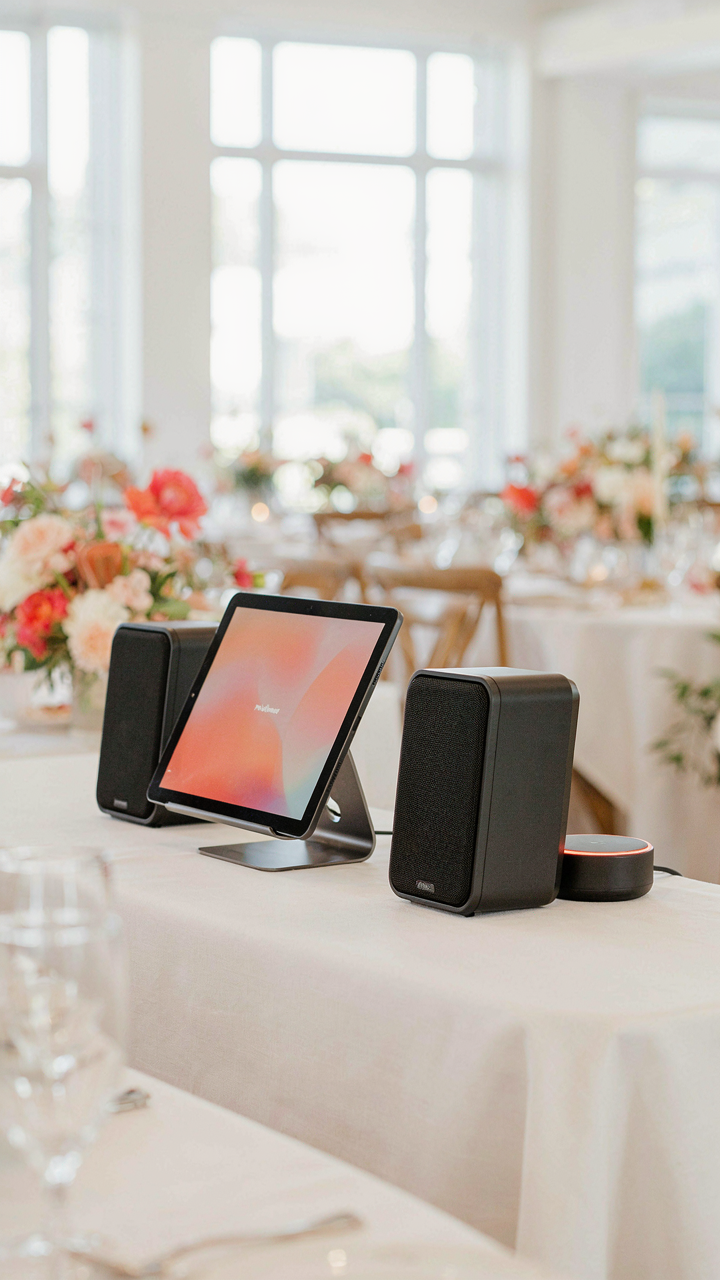
You want entertainment that doesn’t scream “we cut corners,” but that’s not why you actually care about this section. You’re afraid of dead air and awkward silence making your reception feel cheap. The mechanism is simple: silence reads as abandonment. Sound fills that void instantly, whether it’s a DJ talking or a speaker playing a song. A professional sound system without a DJ solves this at a fraction of the cost.

Rent a quality PA system with wireless microphones and a tablet-controlled speaker setup. Load a carefully ordered playlist that sequences songs by energy level and era, matching the flow of your timeline. Start with background music during cocktails, ramp up tempo during dinner, then front-load dance requests before momentum drops. One person manages the tablet from a discrete location. Most venues have an aux input already. Your cost: 300 to 600 dollars for the system rental and roughly 40 hours of playlist curation beforehand.
Interactive Stations And Live Moments
Borrowing from economics, think of entertainment as capital allocation: you’re distributing guest attention across multiple points rather than concentrating it all on one performer. This reduces bottleneck risk. Interactive stations keep people engaged without demanding a single stage focus. Photo booths, lawn games, and performers like caricaturists or musicians create natural clusters of activity that spread guests throughout the venue.
- Photo booth with props: Rent a backdrop and instant printer for 200 to 400 dollars. Guests get a takeaway. Booth operator handles flow. Budget roughly 15 seconds per group.
- Lawn games: Cornhole, giant Jenga, and croquet require minimal setup. Buy used sets or rent them. Guests self-organize into tournaments. Near-zero operator cost.
- Caricature artist: One artist working 4 to 5 hours costs 400 to 700 dollars. They draw in real time while guests wait in a short line. Creates a natural gathering point.
- Live acoustic musician: Hire a local guitarist or cellist for 2 to 3 hours during dinner and early evening. Cost ranges from 300 to 600 dollars. They provide ambient sound without needing a full setup.
- Lawn projection screen: Rent a projector and screen to show a slideshow of couple photos or old wedding clips. Minimal operator needed. Fills visual space for 150 to 300 dollars.
The mistake most couples make is treating entertainment as a single hire instead of a system. One DJ can’t move around the venue. Multiple smaller activations do. Assign one person per station to keep flow moving, or rotate responsibility every 90 minutes among trusted friends. This keeps 200 people occupied without hiring entertainment staff for the entire evening.
The Post Event Protocol: Maximizing ROI And Minimizing Waste

Recoup Decor Costs Before The Venue Closes
You want to feel like you didn’t throw money away on one night. That’s the real reason you’re reading this. The mechanism is simple: decor holds resale value because buyers exist. Centerpieces, linens, and backdrop structures retain 40-60% of purchase price on secondhand markets. Venues often allow you to leave items temporarily while you arrange pickup or sale. Post-event is when you still have buyer momentum because wedding season keeps other planners shopping.

List your rentals and purchased decor on Facebook Marketplace or Craigslist within 48 hours of the event while photos are fresh. Donated items to nonprofits also generate tax deductions that offset your actual cash outlay. Contact local event rental companies about wholesale buyback programs. They’ll often purchase excess linens and centerpieces at 25-35% of retail to resell. The key is execution speed: wait two weeks and your decor becomes someone else’s problem to store.
Distribute Food Before Guests Leave
The common advice is donate leftovers to food banks, but most food banks won’t accept catered food due to liability rules. What actually works: send guests home with containers, donate to shelters with direct relationships to your caterer, or arrange pickup with community fridges if your city has them. For 200 people, leftover food represents $800-1200 in waste if you don’t have a protocol. Your caterer already knows which organizations accept prepared food legally because they navigate this every event.
Coordinate the departure plan with your caterer before the event ends. Assign one person to oversee takeout container distribution while another manages shelter pickup. Many caterers include leftover strategy in their contract if you ask upfront. Establish this in writing two weeks before the wedding so the caterer budgets staff time and containers. This prevents the chaotic final hour where food sits in warming trays and becomes disposal cost instead of community value.
Supplier Renegotiation: The Art Of The Deal For Low Cost Wedding

Volume Unlocks Leverage
You want vendors to see you as worth their time instead of a one-off transaction. That’s the real reason you care about this section. Economics calls this “elasticity of demand”—the bigger your order, the lower the per-unit cost the supplier can offer while maintaining margin. With 200 guests, you have genuine leverage most couples don’t. A caterer pricing at $45 per plate has room to move to $38 when you’re feeding 200 people instead of 75.

The mechanism is simple: suppliers price based on volume thresholds because larger orders mean better kitchen utilization, vendor efficiency, and predictable revenue. Request quotes in bands—get one price for 150 guests, another for 175, another for 200. Don’t ask for a discount. Ask what price point makes the vendor’s operation run smoothest. Most vendors will drop 10 to 15 percent when you cross into their operational sweet spot. Confirm the exact headcount two weeks prior, not one week, so they can finalize their prep schedule without panic pricing.
Single Vendor Stacking
Common advice says hire specialists for everything. That’s wrong for 200-person budgets. Bundling services with one vendor removes their acquisition cost, which means they’ll undercut a standalone provider to win the entire package.
A catering company that handles rentals, bar service, and setup charges less per line item than three separate vendors because they eliminate communication overhead and win guaranteed revenue per event. Request bundle pricing explicitly: catering plus rentals, or catering plus bar service, or all three together. Most vendors have internal cost structures that allow 12 to 20 percent discounts on bundled services. When you negotiate with one vendor for multiple services, you compress your timeline, reduce logistics failures, and create a single point of accountability. End negotiations by requesting their standard bundled rate, then ask what additional discount applies if you commit to a deposit within seven days.
Your Real Obstacle Isn’t The Budget; It’s Your Scarcity Mindset, Fixated On Perceived Limitations Instead Of Abundant Solutions

Stop negotiating with yourself about what’s possible. You have 200 guests and a number. That’s not a problem to solve. It’s a constraint to work within. The couples who pull off incredible receptions on tight budgets don’t find more money. They stop wasting it on things nobody remembers. Pick one vendor today and ask what they’d cut first. That answer changes everything. You’re not broke. You’re just thinking broke.