The Myth Of Cheap: Why Food Trucks Aren’t An Automatic Budget Win
What You’re Actually Paying For
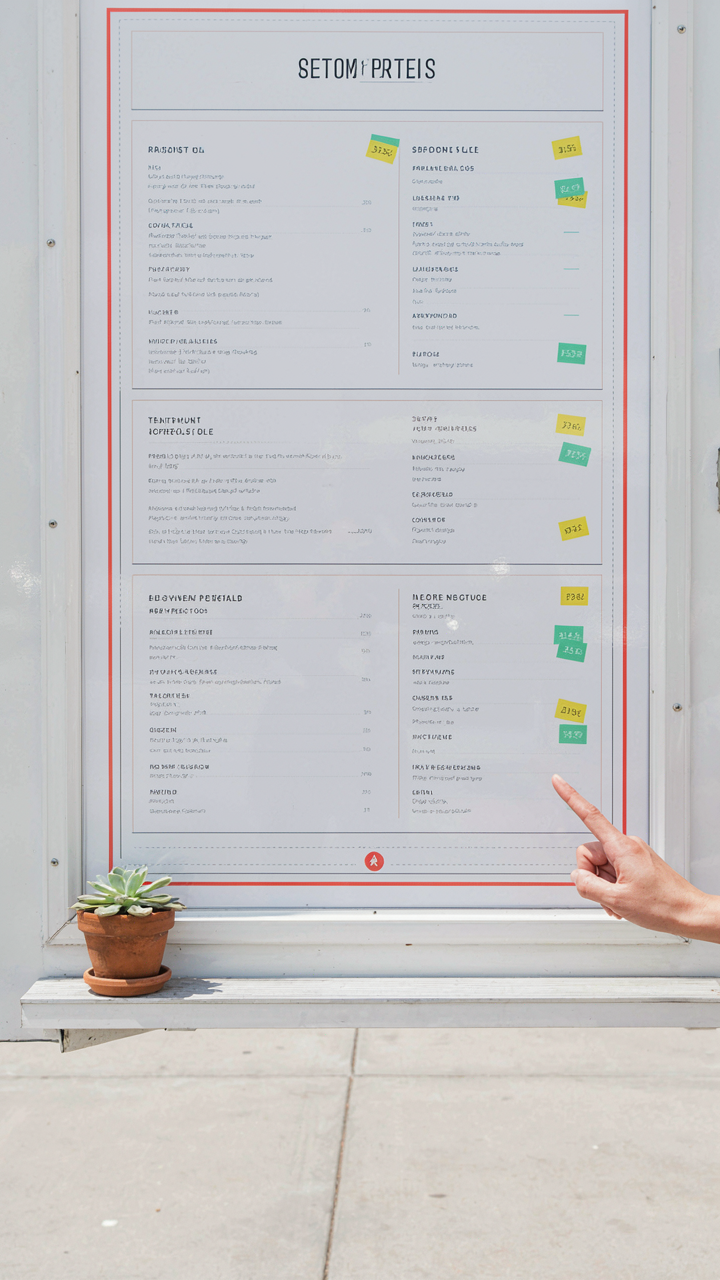
You picked food trucks because you thought you were being smart about money. You weren’t. The mechanism at work here is the same one that makes budget airlines feel cheap until you add fees: the vendor controls what’s visible and what stays hidden. Food truck operators quote you a per-plate price, and you think that’s the entire cost. It isn’t.
The per-plate number doesn’t include setup fees, parking permits, service staffing, fuel surcharges, equipment rental for serving stations, liability insurance passes, or minimum order requirements that force you to overshoot your headcount. Most couples see the $12 to $18 per-person menu price and do the math against their guest list. Then they get hit with $800 to $1,200 in line-item costs that weren’t in that initial quote. The difference between food truck and traditional catering isn’t the price per mouth. It’s the transparency of what you’re actually buying.
The Real Cost Structure Versus Sit Down Catering
Economics has a term called “price discrimination.” It’s when vendors charge different customers different total amounts for essentially the same service by fragmenting costs. Traditional caterers bundle everything into one per-plate price because they operate at scale with fixed overhead. Food truck operators break costs into fragments because their business model depends on high variability and low commitment.
A traditional caterer quotes $25 per plate and includes staffing, setup, breakdown, and liability. A food truck quotes $14 per plate and adds $600 for the truck itself, $300 for permits, $200 for a service attendant, and $150 for parking. The caterer’s true cost is $25. The truck’s true cost lands closer to $22 to $28 depending on headcount and location. When the truck serves fewer than 80 people, the per-person cost climbs above traditional catering. Demand the all-in number before you decide you’re saving money.
The “Scarcity Mindset” Fallacy: How To Really Leverage Food Truck Wedding Ideas

What Vendors Actually Trade On
You want the lowest price because you’re afraid you’re overpaying, but vendors set initial quotes high because most couples never push back. The mechanism is asymmetric information: they know what they can absorb in margin, you don’t. Food truck operators quote all-in numbers that bundle service hours, staffing, fuel, and equipment wear into one figure. That bundling is where negotiation actually lives.

Most couples accept the first number. The operator quotes $3,500 for a taco truck for six hours, and couples pay it because the quote feels official. What couples miss is that this price assumes zero leverage on your part. The operator built in buffer for haggling they know most won’t attempt. Your job is to disaggregate that quote into its components, then compress specific ones without cutting the service itself.
The Line Between Margin And Collapse
Equipment rental, fuel, and labor are real costs that can’t compress. What compresses is positioning and timing. Book a food truck for a Thursday instead of Saturday and you’ve eliminated the operator’s highest-margin day. Bundle two services from the same vendor (ceremony cocktail hour plus reception) and you’ve reduced their setup and breakdown friction. Offer a deposit that locks in their calendar three months earlier and you’ve solved their cash flow problem.
Don’t ask for a discount. Ask which variables in their operation cost them time or money. Then remove one of those variables in exchange for a lower rate. A vendor quoted $2,800 for a barbecue truck on a Saturday? Shift to Friday and ask what they’d charge to fill that day instead. The answer often drops 15 to 25 percent because you’ve moved their constraint. That’s not negotiation, that’s economics.
The “Logistics Labyrinth” Protocol For Your Food Truck Wedding Reception
What Your Venue Actually Needs To Allow
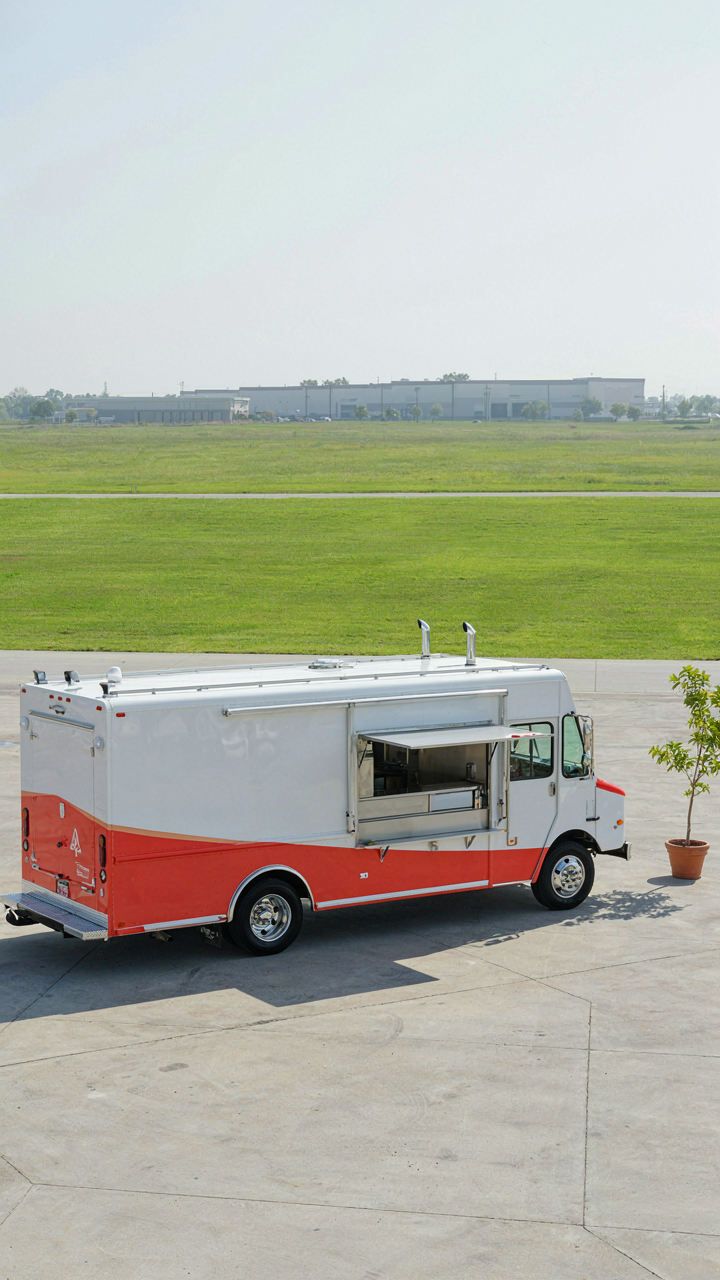
You’re worried about looking cheap. That’s why you’re reading this section instead of just calling venues. The real mechanism is simple: most venues have blanket food truck bans because one operator left grease stains and blocked the fire lane. Your job is proving you’re not that operator. Venues care about three things: liability, property damage, and flow.
- Paved or reinforced surface: Food trucks weigh 10,000 to 26,000 pounds depending on size. Grass dies under that load, and mud becomes a liability nightmare. Confirm the venue has concrete or asphalt rated for the truck’s specifications.
- Clear fire lane access: Local fire codes require unobstructed 20-foot radius minimum around commercial vehicles. Measure your setup zone before booking. One blocked lane kills the whole permit.
- Loading zone and parking: The truck needs direct access to enter and exit without navigating tight turns or guest areas. Dead-end positions trap the operator and create unsafe guest flow.
- Permission in writing from venue management: Verbal approval means nothing when the property manager changes or disputes arise. Get the food truck clause explicitly written into your venue contract with operator insurance requirements listed.
- Distance from building exhaust and air intakes: Truck exhaust vents upwind from HVAC intakes and can trigger fire suppression or contaminate indoor air. Walk the perimeter and identify all building air systems before finalizing truck placement.

The contract detail most couples skip: specify which utilities the venue provides and which the truck operator supplies. This prevents last-minute arguments about who covers generator rental or water hookup fees. Get photos of the final positioning from the venue manager before the wedding day.
The Power, Water, And Waste Reality
Most food truck operators don’t tell you this straight: their vehicle is designed to be self-contained, but weddings break that design. A catering-scale food truck serving 100-150 guests for three hours burns through water and propane faster than a typical service day. The truck’s onboard fresh water tank holds 200-400 gallons, sounds fine until you factor in three-compartment washing, handwashing, ice, and cooking.
The waste management problem is worse than couples expect. A food truck generates 30-50 gallons of gray water per 100 guests. Without proper drainage infrastructure, the operator either overfills the tank and stops service, or dumps waste illegally on-site. Solid waste from plates, napkins, and packaging adds 40-60 pounds per event. If your venue lacks a waste area, you’re paying extra disposal fees or the truck leaves mid-reception. Generator noise is the third hidden cost: most trucks need 30-50 amps of power or a 15-20 kW generator running continuously. That noise carries. Negotiate with your operator about generator placement and runtime expectations before signing the contract.
Beyond The Main Course: Crafting A Cohesive Wedding Food Truck Experience
The Margins Around Your Main Truck
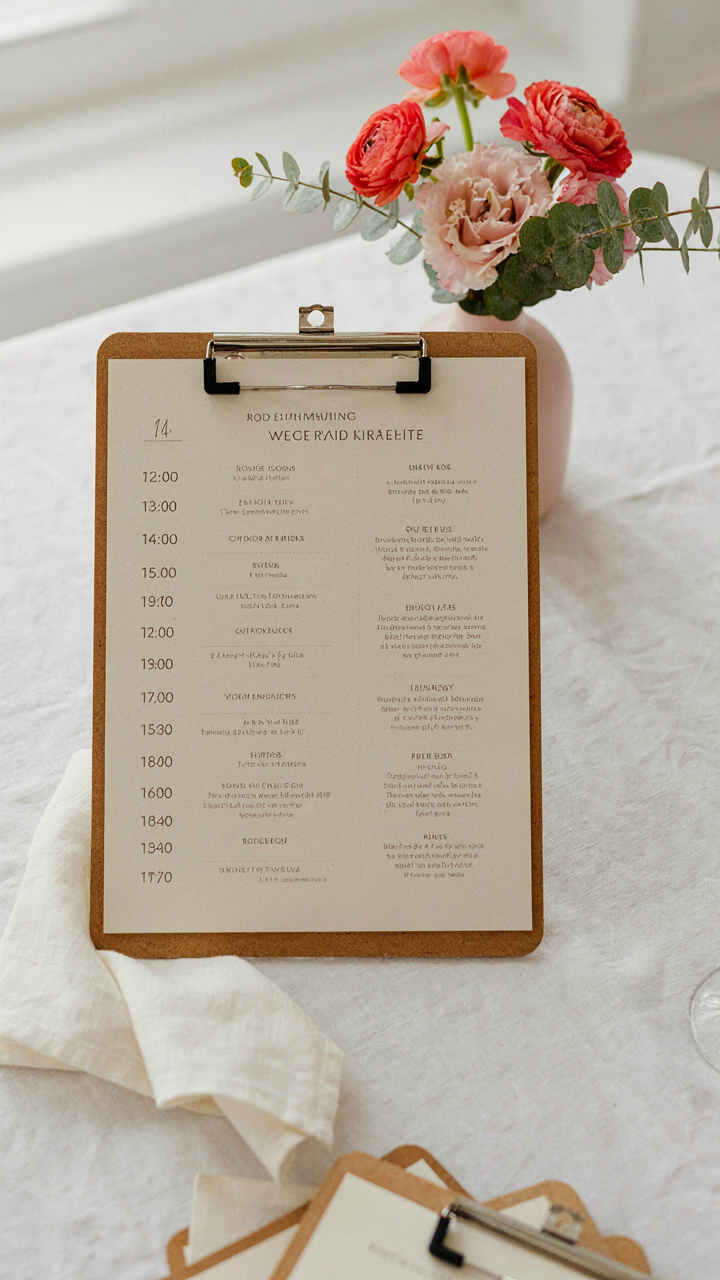
You want this section because you’re afraid appetizers and desserts will feel like afterthoughts that crater your budget instead of amplifying value. Here’s the mechanism: every food truck wedding has a throughput problem. Guests consume the main course in a compressed window. Appetizers and desserts exist to solve timing and perception, not to impress. This is pure inventory management applied to hospitality. Your appetizers bridge the gap between cocktail hour and truck service. Your desserts justify leaving the trucks running after the main course ends. Your beverages either become a profit drain through unlimited bar service or a controlled cost through strategic rationing.

The real mistake couples make is hiring a second truck for appetizers and desserts without calculating the actual demand spread. One truck handles appetizers from 5 to 5:45 PM. Your main truck operates 5:45 to 6:30 PM. A third truck runs dessert from 6:30 to 7:15 PM. This staggered model prevents crowding, reduces per-guest serving time, and lets you staff progressively rather than deploy all hands at once. Your cost per head drops because you’re not duplicating labor across simultaneous operations. Design your menu timeline first, then assign trucks to slots, not the reverse.
Orchestrating Flow Before First Service
The common advice here is laughable: “Have a clear line” or “assign seating logistics.” Wrong. Actual restaurant operations teams use staging protocols, and weddings need the same discipline. Your real constraint isn’t the menu complexity. It’s the human bottleneck at each service station. If appetizers require plating or assembly at the truck window, you need 1.5 servers per 50 guests. If they’re grab-and-go items, you need 0.75. Calculate this before selecting your vendors.
Guest experience optimization is a pure math problem dressed up in feelings. Brief your food truck operators on exact timing. Appetizers truck opens at X, closes at Y. Main course truck begins at Z. Dessert service runs from minute 90 to minute 120 of reception. No exceptions. Provide them with a written service timeline, guest headcount, and table assignments so they understand traffic flow, not just menu items. The operator who knows they’re serving 125 guests in 45 minutes will pace differently than one given vague numbers. This precision is what separates a controlled event from chaos disguised as spontaneity.
The “Behavioral Economics” Of Guest Satisfaction: Wedding Food Truck Receptions
How Price Anchors Drive Perceived Value
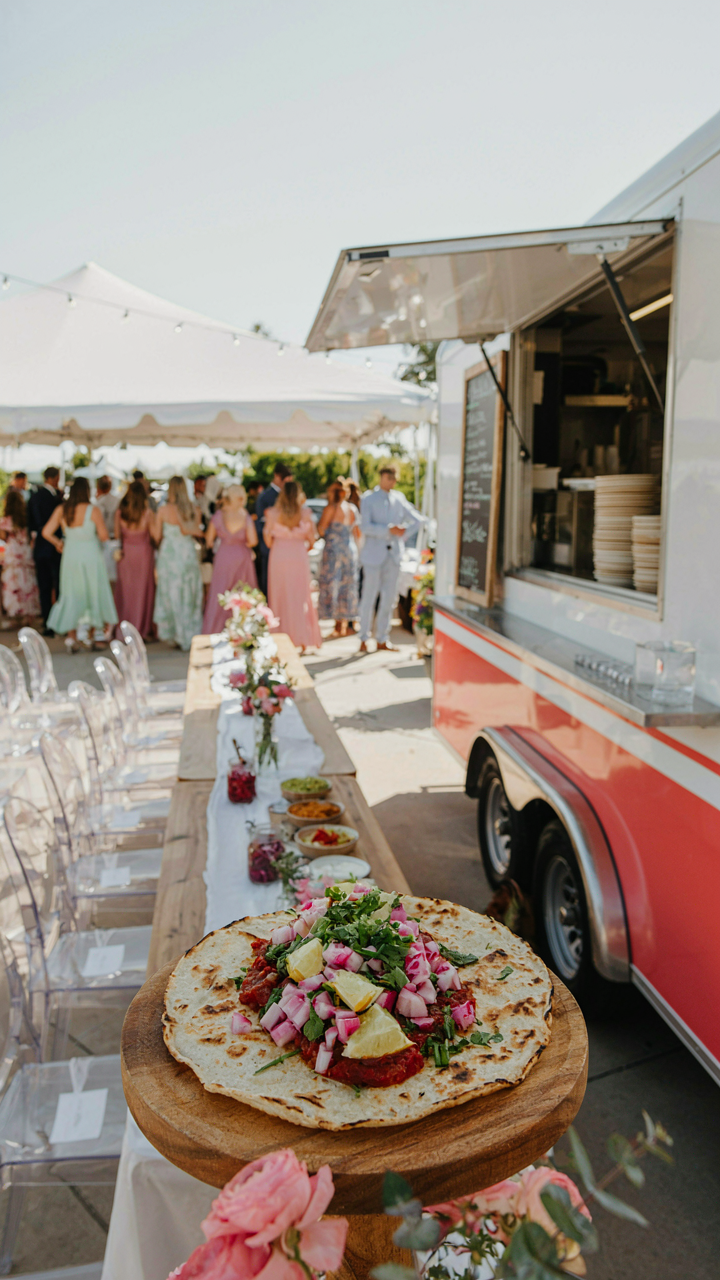
You want guests to feel like they got fed well without knowing exactly what you paid. That’s the real reason you care about this section. Anchoring bias from behavioral economics explains why the first price guests see shapes their entire satisfaction baseline. A food truck charging $18 per plate primes guests to judge quality against that $18 anchor. A truck charging $12 anchors them lower, and suddenly the same taco tastes cheaper.

Most wedding planning advice ignores this. You can’t just list truck prices and pick the cheapest option. Your menu presentation order matters more than the actual cost. Feature your most visually impressive dishes first, attach a reasonable price to them, and every other plate gets evaluated upward against that anchor. Guests don’t taste objectively. They taste against the number their brain locked onto three minutes ago.
The Trap Of Unlimited Customization
Giving guests choice sounds generous. It’s actually a budget killer and satisfaction destroyer. The endowment effect, also from behavioral economics, means people overvalue options they feel they’ve chosen themselves. When you offer “build your own” truck menus, guests treat their personal selection as worth more than the standardized plate next to it, even if the food cost is identical.
The mechanism is simple: limited options force satisfaction. Three curated truck stations beat eight chaotic ones every time. Your guests feel the constraint as thoughtfulness, not limitation. They order faster. The trucks prep faster. Quality stays consistent. You pay less per head because you’re not printing custom sauce combinations or holding specialty ingredients for twelve different requests. Design scarcity into your menu structure and watch both your budget and guest experience improve simultaneously.
Legal And Permitting Pitfalls: Don’t Get Blindsided With Your Food Truck For Wedding
Health Codes And Permits
You’re worried about this section because you think a permit is just paperwork you pay for and move on. Wrong. The real mechanism is that health departments don’t regulate food trucks for weddings the same way they regulate permanent restaurants. They regulate based on where the truck operates and what it serves. Your budget dies when you discover permits cost more than you allocated because you didn’t ask the right question upfront.

Each jurisdiction requires different permits. Some demand a temporary food service permit specific to your venue. Others require the truck to operate from its licensed home base only, making off-site wedding service impossible without separate approval. Contact your county health department and your venue’s municipality separately. Don’t assume one permit covers both. The truck operator often handles their own licensing, but you handle the event permit. Confirm this split in writing before signing any contract.
Insurance And Liability Coverage
This isn’t about being cautious. This is about understanding who pays when something goes wrong, because without clarity on coverage, you become the default defendant. Think of insurance as a contract that transfers financial risk from one party to another. Your liability transfers to the truck operator, but only if their policy actually covers private events at your specific venue on your specific date.
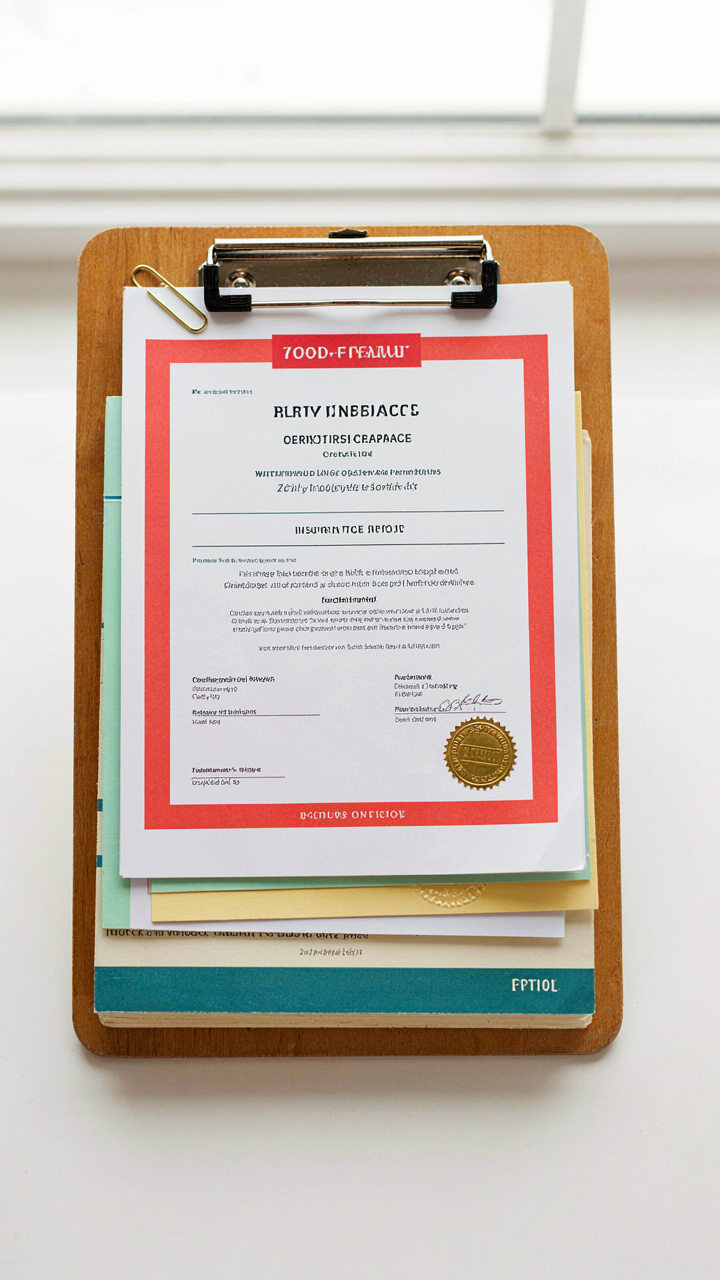
Standard commercial auto and general liability policies for food trucks often exclude private events or limit coverage to specific venue types. You need the truck operator to provide a certificate of insurance naming you and your venue as additional insureds before the event date. Get this document in writing at least two weeks prior. Ask specifically whether their policy covers alcohol service if you’re serving it. Most don’t. Your venue may require its own event liability policy if the truck operator’s coverage has gaps. Don’t sign the final contract until you hold all three documents: truck operator’s certificate, venue requirements confirmation, and your own event policy if needed.
Vendor Vetting: Separating The Pros From The Pretenders In Wedding Food Truck Ideas

The Questions That Actually Matter
You’re worried about hiring someone who’ll show up late or serve cold food in front of your guests. That fear is valid, but it’s making you ask the wrong questions. The real mechanism here is simple: amateur operators haven’t built systems for consistency under pressure. Ask about their setup time, not their menu variety. Ask how they handle weather delays, not their truck’s paint job. Ask what happens if equipment fails one hour before service starts. Ask for the exact headcount they’ve served at their largest wedding. Ask which three weddings you can call and speak to directly. Ask if they own the truck or rent it, because renters disappear when trucks need maintenance.

The difference between a working food truck operation and a side hustle pretending to be a business is operational redundancy. Ask how many staff they bring and whether they’ve trained backups. Ask if they carry liability insurance and can provide a certificate the day of. Ask their policy on alcohol service if you’re providing it. Ask about their food storage capacity—do they keep hot items above 140 degrees Fahrenheit consistently? Ask if they’ve worked outdoor weddings in rain or extreme heat and what their contingency looks like. Ask for a written timeline: when they arrive, when prep starts, when first service begins, when cleanup finishes. Vague operators give vague answers.
The Contract Clauses Nobody Reads Until It’s Too Late
Most food truck wedding contracts are written to protect the vendor, not you. The common advice says “read everything carefully,” which is useless. What you need is to identify the three clauses that actually determine whether you pay more or less money and whether the vendor shows up on time. First: the cancellation policy tied to weather. If rain cancels the event, do you get a refund, a credit toward a future date, or do you lose the deposit? This clause often gets buried under vague language like “acts of God.” Push for specific weather thresholds in writing—wind speed, temperature, or rainfall amounts that trigger cancellation clauses. Second: the payment schedule and what triggers final payment. Third: the liability and what the vendor does if they can’t perform.
- Weather Cancellation Terms: Define exact conditions that trigger refunds versus rescheduling options. Get specific numbers for temperature and wind speed rather than vague language. This protects you if the event becomes impossible to execute safely.
- Payment Trigger Points: Specify when deposits are due, when final payment is due relative to the event, and what happens if the vendor cancels versus you canceling. Most contracts require 50% down, 50% on arrival day—push back if final payment comes before service begins.
- Equipment Failure Clause: Require the vendor to guarantee a replacement truck or alternative service method if their truck breaks down. Get this in writing rather than relying on a handshake promise you can’t enforce the day of.
- Guest Count Overages: Specify the per-person cost if your headcount increases after contract signing and the cap on how many extra guests they can accommodate. Trucks have finite capacity, and vendors use this to justify price hikes.
- Setup and Breakdown Time: Lock in arrival time, setup duration, service window, and departure time. Vendors often underestimate setup or linger during breakdown, cutting into your reception timeline.
- Staff Requirements: Confirm the number of staff members the vendor brings and whether they handle plating, serving, or just food prep. Clarify if gratuity is included or added separately to your final bill.
Don’t negotiate price until every clause is locked down. A cheaper contract with ambiguous terms costs more in stress and hidden fees than paying slightly more for a clear, specific agreement. Request the vendor’s contract template now and mark every clause where the language is vague or puts liability entirely on you. Tell them you need written clarification before signing. If they resist clarity, they’re the pretender—move on.
The “Contingency Cadence”: Planning For The Unexpected At Your Food Truck Wedding

When Weather Breaks Your Service Model
You’re worried about looking unprepared in front of your guests. Here’s what actually matters: a food truck’s service capacity collapses under specific weather conditions, and you need to architect around that collapse before it happens. Rain doesn’t just inconvenience—it forces guests indoors, eliminates truck access to certain venues, and turns outdoor serving lines into bottlenecks. The mechanism is simple: weather changes guest flow patterns, and a truck-dependent model has zero flexibility once service starts.

Scout your venue’s covered alternatives during your site visit. Identify a tent location, garage space, or indoor area large enough to redirect the truck or pivot to stationary serving. Measure clearance heights and approach angles. Confirm the caterer can operate from that space if needed. Don’t assume the backup plan works—test it with measurements and photos before the wedding date.
Backup Supply Chains Break Under Pressure
Conventional advice says “order extra food.” That’s incomplete. The real pressure point isn’t quantity—it’s the truck operator’s ability to source replacement items mid-event if something runs out. Operators often work with single suppliers on tight timelines. If a protein sells faster than projected or a delivery fails, there’s no safety net because food trucks don’t stock deep inventory the way traditional catering does.
Build a secondary supply agreement with your caterer before the wedding. Specify what items they can source locally on short notice and at what cost. Get the names and phone numbers of backup suppliers they use. Agree on a communication protocol if stock drops below 25% during service. This isn’t insurance—it’s a documented failsafe that forces the caterer to think through scarcity before your guests notice it.
Post Wedding Review: Optimizing For Future Food Truck Wedding Reception Ideas

What Your Guests Actually Thought
You want to know if people had fun so you can feel like you made the right call. Here’s the mechanism: guest feedback isn’t about feelings, it’s about friction points that either repeat or disappear. The moment someone waited thirty minutes in the heat for tacos, that’s a data point. The moment someone left because the truck ran out of a menu item, that’s a failure you can measure and fix next time.

Send a simple survey within two days. Ask three questions: What worked with the food service? What caused delays or confusion? Would you come to another food truck reception? Don’t ask for general impressions. Friction surfaces in specifics. A guest saying “the line was long” beats a guest saying “it was great” because you can actually fix a line. Track responses by time of day attended. The 6 PM crowd experiences different bottlenecks than the 7:30 PM crowd.
Vendor Performance Against Budget Reality
The common advice is to ask vendors if they’d do it again. That’s useless. What matters is whether they delivered the service they promised at the price they quoted, and whether their margins allowed them to care about execution.
Pull your contracts and final invoices side by side. Every line item either stayed on budget, went over, or came in under. Document the delta and the reason. If the truck owner charged extra for setup time you didn’t anticipate, that’s real information for your next negotiation. If the food cost less than quoted because they simplified the menu, mark it. If they had to staff an extra person due to crowd size, note it. These variances aren’t complaints. They’re the operating conditions of food truck catering. Meet or call your primary vendor within a week and ask one direct question: Given this crowd size, what would you do differently? Their answer reveals whether they’re problem solving or just collecting checks.
Your Budget Isn’t The Problem; Your Execution Strategy Is
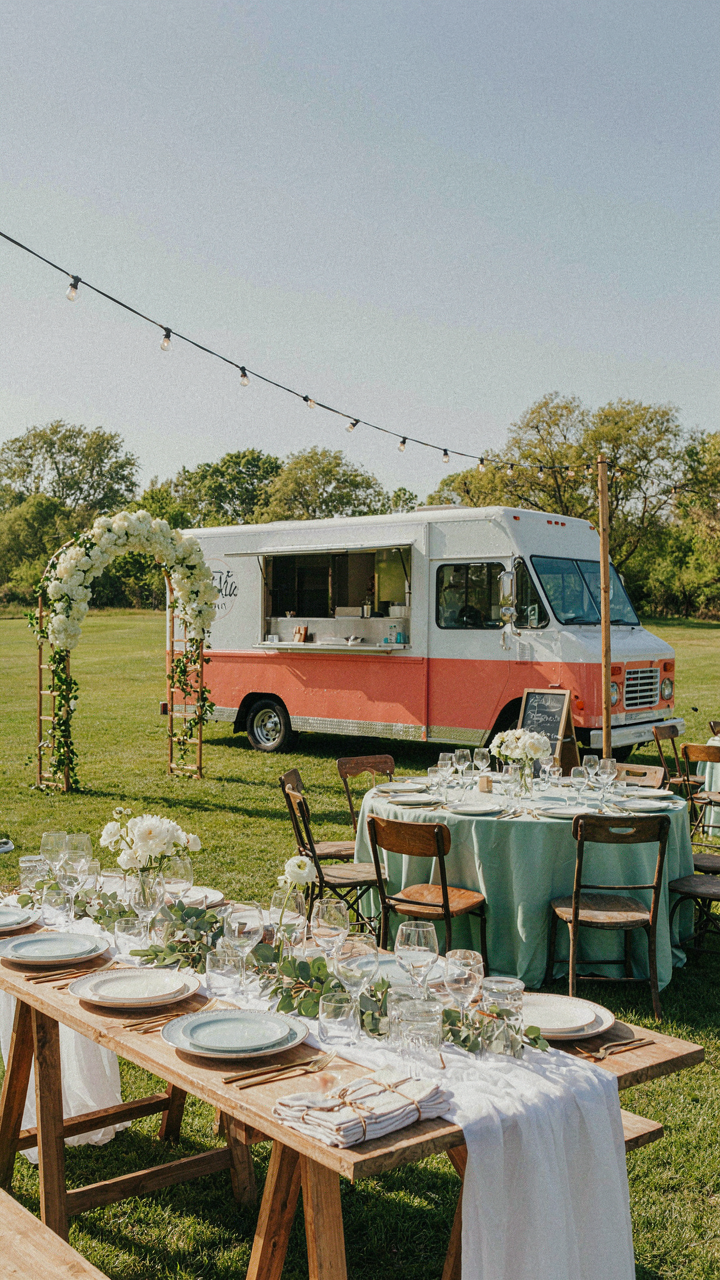
Most couples blow their food truck budget because they negotiate like they’re buying a car instead of building a partnership. Stop asking “what’s your lowest price” and start asking “what can you deliver for X dollars.” The vendor who says yes to your number and actually shows up matters more than the one who quotes low and disappears. Call three trucks today. Give them your real budget. Hire the one who gets excited about solving your problem, not the one who resents your constraints.