
The Illusion Of “Flexible” In Venue Contracts

What “Flexible” Actually Means In Writing
You want “flexible” because you’re afraid of losing money. Here’s the mechanism: venues use “flexible” as a catch-all term that means nothing legally. The word appears in marketing copy and email confirmations but almost never in the actual contract document where it matters. What vendors call flexibility is usually just a discretionary clause that favors them.
The contract is the only document that counts. When you sign, you’re binding yourself to specific cancellation terms, refund percentages, and dates. The venue’s ability to waive penalties or refund your deposit hinges on their willingness, not on any promise made outside the contract. Read the terms and conditions document, not the booking page. That’s where the real rules live.
Hidden Clauses That Drain Your Budget
Venues embed financial penalties in neutral-sounding language that doesn’t announce itself. The most common hidden clause is the tiered cancellation structure: cancel 90 days out and lose 25 percent, 60 days out and lose 50 percent, 30 days out and lose 100 percent. This isn’t presented as a penalty trap. It’s framed as “our standard policy.” You’re reading it at booking speed, not legal speed, so you miss it.
Another mechanism is the force majeure clause, which lets the venue keep your money if they close due to circumstances beyond their control, but doesn’t guarantee you a refund or reschedule. The asymmetry is built in. They protect their revenue. You assume the risk. Before signing, extract the exact cancellation percentages from the contract and calculate what you’ll lose at each interval. Write these numbers down. This prevents the “$5,000 disappears in fees” moment six months later.
The Pre Emptive Strike: Due Diligence Beyond The Brochure

What A Venue’s Track Record Actually Reveals
You’re checking reputation because you’re afraid a flexible policy is a trap. Here’s the mechanism: venues that enforce cancellation policies inconsistently signal desperation or incompetence. The enforcement pattern tells you whether “flexible” means negotiable or fictional. Most venues post policies they don’t follow uniformly. This inconsistency is the red flag that matters.

Start by examining how a venue handles refund disputes publicly. Check Google reviews, wedding forums, and industry-specific platforms for specific cancellation stories, not generic ratings. Look for patterns in complainants’ timelines and the venue’s response tone. A venue that argues with customers online likely argues during actual cancellations too. Venues confident in their policy rarely need to defend it in comment sections.
How Past Clients Describe Their Real Experience
Common advice says “ask the venue for references.” That’s useless because they’ll only give you happy clients. The real move is finding clients who actually cancelled and hearing what happened next. LinkedIn, Facebook groups for event planners, and industry Slack channels contain people with genuine cancellation stories. They’ll tell you whether the venue fought them, delayed refunds, or stuck to terms.
When you contact past clients, ask specifically: How many days elapsed between cancellation request and refund? Did the venue try to keep deposits for supposed losses? Were verbal promises about flexibility honored in writing? Their answers reveal the gap between policy language and actual practice. Document these answers. You need three consistent stories before you trust any “flexible” claim from that venue.
The 24 Hour Cancellation Policy Fallacy

Why Standard Windows Rarely Protect Complex Events
You want the safety net without admitting you’re afraid of losing money. The real mechanism here is borrowed from supply chain management: buffer stock. A venue’s standard cancellation window is their buffer stock of time. But unlike inventory, time doesn’t replenish. A 24-hour window works only if your event has zero dependencies. Most don’t.

Caterers need 72 hours minimum to adjust headcount and sourcing. Vendors need staging time. Staffing confirmations lock in 5-7 days out. The 24-hour policy assumes a stripped-down event with no moving parts. Your event has moving parts. When you cancel at hour 25, the venue loses nothing. Your vendors lose contracts, deposits, and scheduled labor. You’re protected against venue risk, not operational risk, which is backwards.
Negotiating Extended Or Tiered Cancellation Timelines
Most venues treat cancellation as a binary gate: refund or forfeit. This is lazy negotiation. Economics calls it price discrimination by time. The real play is tiered refunds matched to actual sunk costs. You structure this by asking the venue one specific question: what costs do they actually incur, and when?
A week-out cancellation costs them lost booth rental opportunity but minimal staff prep. Two weeks out is better. A month out is nearly free. Build your cancellation schedule around their actual cost curve, not their policy template. Offer 100% refund 90 days out, 75% at 60 days, 50% at 30 days, 25% at 14 days, forfeit within 14 days. Venues accept this because you’ve named their real costs instead of fighting their rule. Then get it in writing as an amendment to the contract, not a handshake.
The Force Majeure Gambit: When Acts Of God Save Your Wallet
What Force Majeure Actually Covers
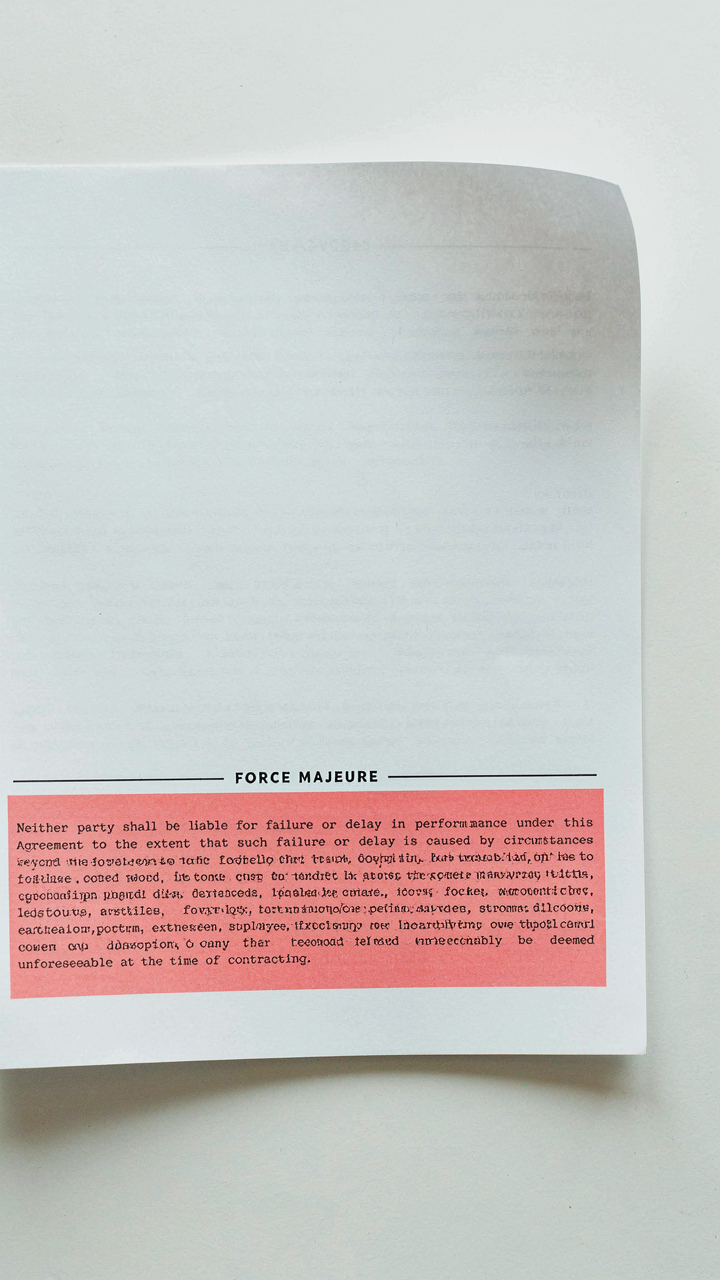
You’re reading this because you want permission to cancel without losing money. That’s the real fear underneath. Force majeure operates like an insurance contract: you’re buying protection against events outside your control, but only the events the contract actually names. Most venues write their force majeure clauses so vaguely that they exclude almost everything you’d actually need to cancel over. Read what’s written, not what you wish was written.

The legal mechanism is simple. Force majeure clauses protect parties from liability when unforeseeable, extraordinary circumstances make performance impossible or illegal. Pandemics, severe weather, government orders, venue destruction, and infrastructure failure typically qualify. War, terrorism, and civil unrest sometimes fit depending on jurisdiction. The moment you sign, you’re locked into whatever definition sits in that contract. Venues know this. They write narrow definitions on purpose.
Negotiating Force Majeure Clauses That Actually Protect You
Contract law doesn’t give you a default set of protections. You negotiate them or you get nothing. The common mistake is accepting the venue’s standard cancellation language without pushing back on the force majeure section. That language exists to protect the venue, not you. Demand specificity. Add your actual risks to the clause before signing.
Name the exact scenarios that would kill your event. If it’s a wedding, list illness of the couple, death of immediate family, or loss of primary income. If it’s a corporate event, add government travel restrictions, loss of key speakers, or supply chain breakdown. Include a weather threshold: which wind speeds, snowfall amounts, or flood risks trigger coverage. The clause must reference your event type. Generic language means the venue will dispute your claim when you need it most. Get this amendment in writing as an addendum to the main contract, and have both parties initial every change.
The Contingency Matrix: Borrowing From Military Strategy

War Game Your Cancellation Triggers
You want the safety net without admitting you’re afraid of losing money or looking unprepared. That’s the real reason this matters. Military strategy calls this “decision trees”—mapping every branch before the battle starts. Apply that to venue flexible cancellation policy by identifying which specific events force your hand to cancel: budget cuts, low registration, key speaker dropout, venue damage, illness, weather. Each trigger has different timing implications and financial exposure windows.

Write these triggers down with their probability scores based on your event history. Don’t estimate. Use actual data from past events you’ve run or observed. For each trigger, document when you’d know it’s happening and how many days remain before your cancellation deadline with the venue. This isn’t busywork. It’s the difference between making a reactive panic decision and executing a planned protocol you’ve already thought through when your mind was clear.
Build Your Backup Infrastructure Now
Common advice says “have a backup plan.” That’s useless because it’s too vague. You need specific alternate venues already scouted and their cancellation terms already documented before you book the primary one. Virtual pivots work, but only if your event structure supports them. A panel discussion works online. A networking mixer doesn’t translate well and loses 60% of its value.
Contact two to three backup venues in your area and ask about their availability flexibility on your target date. Get their cancellation policies in writing. Understand their setup time and capacity compared to your primary venue. Then store this information in a single document you can reference within minutes if a cancellation trigger activates. When you sign with your primary venue, you already know your escape routes and their cost.
The Art Of The Cancellation Policy Notice Negotiation

Write Your Own Terms First
You want the venue to think you’re reasonable, so you accept their cancellation policy without reading it. That’s the real problem. Venues build in margin for their risk, not yours. Most standard policies favor the house because nobody pushes back.

Start by drafting your own cancellation terms before you even call them. This shifts the negotiation frame. You’re no longer reacting to their offer—you’re presenting an alternative. Your proposal should reflect your actual business risk: if your event cancels 60 days out, how much do you actually lose? Build the policy from that number, not from industry averages.
- The 50/50 Penalty Bracket: Full refund up to 90 days before, 50% retention 90-45 days out, 100% retention under 45 days. This mirrors your real cost structure at each phase.
- The Force Majeure Clause: Define what qualifies as cancellation without penalty—pandemic, natural disaster, government prohibition. Venues often bury this or omit it entirely.
- The Rescheduling Window: Specify that cancellation fees don’t apply if you reschedule within 12 months to an available date. This protects you without destroying their revenue.
- The Performance Threshold: Tie cancellation fees to their performance metrics. If they fail to deliver contracted services, your cancellation liability drops to zero.
- The Deposit Credit Rule: Any deposit you paid applies fully to rescheduled dates within your window, not as a “credit” they can refuse.
When you submit your draft, the venue sees a professional who understands contracts. They’ll negotiate from your framework instead of making you negotiate from theirs. That single move changes the power dynamic before the conversation starts.
Competitive Bids As Leverage, Not Comparison Shopping
Getting three venue quotes isn’t about finding the cheapest option—it’s about creating urgency and revealing what the market actually allows. Venues know other venues exist. They don’t know if you’ve talked to them.
Tell each venue you’re in active conversations with two competitors. Then, take the most flexible cancellation policy from venue B and ask venue A if they’ll match it. Most will, because losing a booking to a competitor over a policy detail feels like a management failure. You’re not asking for a price cut. You’re asking for contract terms that prove they’re confident in their service. The venue that refuses gets marked as risk-averse. The one that agrees gets your signature. One venue will offer terms so loose they signal desperation—which means either they’re underbooked or their cancellation rate is high enough that they’ve built in heavy margin. That’s useful data. The venue that offers balanced terms without hesitation is the one operating from strength. Book there. They’re not hiding behind legal armor because they deliver.
Beyond The Deposit: Minimizing “Cancelation Fee Policy” Exposure

Structuring Payment Schedules To Delay Financial Commitment
You’re reading this because you want to book without getting trapped. The real mechanism venues use is front-loading risk onto you through lump-sum deposits. Borrow from basic cash flow management: spread payments across time to reduce your exposure window. Most venues demand 50 percent upfront. Negotiate installments instead: 25 percent at booking, 25 percent at 60 days out, final 50 percent at 14 days before the event.

This works because venues care about cash flow predictability, not timing. They want confirmation you’re serious. Early installments prove commitment without locking you into a cancellation penalty if circumstances shift during the middle 60 days. Request written confirmation that early payments apply as credits toward the full balance if you reschedule rather than cancel. Get the payment schedule in writing. The venue won’t offer this voluntarily because most bookers don’t ask.
Event Insurance As The Actual Solution To Cancellation Risk
Common advice says read the cancellation policy carefully. That misses the point. Cancellation insurance transfers the financial burden from you to a third party designed to absorb it. This is how risk management works in industries with inherent uncertainty. Event insurance policies cover your losses if you must cancel for weather, illness, vendor failure, or sudden venue closure, not just guest no-shows.
The cost runs 1 to 5 percent of your event budget depending on coverage scope. You pay the insurance premium once upfront, then file a claim if cancellation becomes necessary. Venues won’t reduce their cancellation fees because insurance exists, but the fee becomes irrelevant when insurance pays it. Require your insurance carrier to list the venue as a named beneficiary on the policy. This removes incentive disputes if a claim arises and ensures the venue gets paid directly.
The “Community Event Cancellation Ideas” Playbook

Build Recurring Venue Relationships First
You want flexibility because you’re afraid of being locked into a bad bet. The real mechanism is reciprocity: venues grant better terms to organizers they’ve already made money from. A single successful event creates baseline trust. Venues care less about contract language with repeat clients and more about whether you’ll fill seats again next quarter. This shifts the negotiation from “prove you deserve flexibility” to “here’s what we can do for you since we know you.”

Commit to booking the same venue twice before asking for cancellation concessions. The first event establishes you as reliable. By the second booking, mention your growth plans and ask about their cancellation policy as part of the conversation, not as a demand. Most venues will offer better terms to proven repeat customers than they will to first-time renters. This isn’t generosity. It’s transaction cost math: replacing you costs more than accommodating you.
Using Instagram To Signal Changes Clearly
Most event organizers treat Instagram announcements like press releases, which ruins the mechanism entirely. Social platforms work because they create a clear, timestamped record of what you communicated and when. This matters legally and logistically when you need to reschedule or cancel. Your announcement post becomes proof of due diligence to both your audience and the venue.
Post cancellations or rescheduling 24 to 48 hours before you contact the venue directly. This sounds backward, but it works: the venue sees public communication first, reducing their liability exposure. They’re less defensive about flexibility when they know you’ve already managed audience expectations. Tag the venue in rescheduling announcements. This creates a visible shared narrative rather than a dispute. Your next cancellation conversation starts from “we handled the last one well together” instead of “we had a problem.”
The How To Write A Cancellation Policy Protocol For You, Not Them

Build Your Own Cancellation Template First
You want this section because you’re tired of venue contracts written to protect them while you absorb the risk. The real mechanism is simple: venues draft policies that maximize their revenue, not your operational reality. You need a template that forces you to name what actually matters before you negotiate with anyone else.

Your template answers five questions upfront. What triggers a cancellation? What’s your financial threshold for pulling the plug? How much notice do you need to recover costs? What dependencies exist that would make cancellation catastrophic? When does a partial refund make sense versus a full one? These aren’t theoretical. They determine whether you lose everything or walk away intact.
- Deposit Percentage Threshold: Define the minimum amount you must recover to justify proceeding. If a venue requires 50 percent upfront, you need a cancellation clause that protects that deposit if they cancel, not just if you do.
- Days-Out Cancellation Windows: Set specific cutoff dates—90 days out, 60 days, 30 days—with different refund percentages attached to each. This mirrors how venues operate and gives you negotiating anchors.
- Force Majeure Language: Name the events that let either party walk without penalty. Be specific: extreme weather, government restrictions, venue closure, key personnel illness. Vague language kills you in disputes.
- Vendor Refund Cascade: Document which third-party commitments you can cancel and their individual refund terms. This prevents a single vendor’s strict policy from locking you into a dead event.
- Partial Event Scenarios: Define what happens if the venue partially fails—room becomes unavailable, capacity drops, equipment fails. Not every problem means full cancellation, and your template should say which ones do.
This template becomes your negotiation floor. You don’t walk into a venue meeting asking what their policy is. You walk in saying what yours requires and ask if they can accommodate it. The shift from reactive to proactive changes the entire conversation.
Define Your Non Negotiable Cancellation Subjects
Most event organizers skip this because naming what matters feels like you’re inviting bad outcomes. That’s denial. Your team needs to know which cancellation triggers are automatic stops, not discussions. This clarity prevents your team from making exceptions that compound into policy collapse.
Three subjects are typically non-negotiable: cancellations initiated by the venue for any reason, force majeure events that make the event impossible to execute safely, and circumstances where your primary revenue stream vanishes. These aren’t negotiable because they’re not about risk tolerance—they’re about whether the event exists at all. When a venue goes dark, you don’t renegotiate. You cancel and recover what you can.
Document these subjects in your team playbook with the exact cancellation protocol attached to each. Who decides? What’s the timeline for notifying vendors? Who communicates with attendees? What documentation do you need? The policy only works if your team executes it identically every time. Ambiguity kills the policy faster than a bad venue ever could.
Let It Be: The Stoic Acceptance Of Unavoidable Loss

Know When To Walk Away
You’re reading this because you’re terrified of leaving money on the table. But here’s what actually happens: you throw good capital after bad ones because you can’t admit the event won’t work. In economics, this is called the sunk cost fallacy. A venue flexible cancellation policy is your circuit breaker against it. The mechanism is simple. Once you trigger your cancellation window, you stop pretending the event will happen and move to damage control. Your only job becomes minimizing what you lose, not fighting to salvage what’s already broken.
The moment you spot three signals hitting simultaneously, you act. Ticket sales plateau below 40% capacity. Your top speakers pull out. Market conditions shift hard. These aren’t small signs you ignore and hope fix themselves. A flexible cancellation policy exists specifically so you can respond to this reality without financial devastation. You lose your deposit and maybe 10-20% of upfront costs instead of hemorrhaging the full event budget. The alternative is pretending the event still matters while you hemorrhage money on marketing for a ghost show.
The Real Cost Of Holding On
Clinging to a doomed event doesn’t preserve value. It destroys it in ways that don’t show up on a spreadsheet. You divert attention and capital from projects with actual momentum. Your reputation takes real damage when you execute a poorly-attended, half-baked event instead of canceling and pivoting fast. The psychological pressure of managing failure in real time exhausts the team. You make worse decisions because you’re operating from defense, not strategy.
Flexible cancellation policies let you quit before you become the person who held the event nobody attended. Your audience respects the cancel more than the half-measure. Your team moves to the next thing. Your capital flows to initiatives where it actually multiplies. When you commit to your cancellation window in the booking contract, you’ve already accepted the loss and built the escape hatch. The work now is mechanical: document why you’re canceling, notify stakeholders by your contracted date, process refunds according to your tier structure, and announce your next event before people forget you exist.
The Real Obstacle Isn’t The Venue’s Policy, But Your Own Aversion To Strategic Foresight

Most people treat flexible cancellation policies like insurance they hope to never use. They book it, cross their fingers, and move on. The real players book with flexibility because they’re building optionality into their decisions. They know their plans will change. They expect it. Call three venues today and ask one question: what scenarios trigger your full refund. Write down their exact thresholds. This one move separates people who get trapped from people who stay in control. Your event’s success doesn’t depend on perfect planning. It depends on refusing to be locked into a bad bet.