
The “Not A Writer” Advantage: Why Generic Vows Fail

Authenticity Over Artistry
You’re worried people will judge your vows as unsophisticated. The real mechanism is simpler: generic vows fail because they hide who you actually are behind borrowed language. When you use someone else’s phrases, you activate the listener’s pattern-matching brain. They recognize the template. They disengage. Authenticity isn’t a feeling—it’s a signal of specificity that only you can transmit.
Non-writers have an advantage here. You don’t default to polished language or literary devices that create distance. You speak in the vocabulary of your actual life. Your partner recognizes your voice because they’ve heard it a thousand times. That recognition is what lands emotionally. Generic vows sound like they could be read at anyone’s wedding. Yours should sound like they could only be read at yours.
Your Voice Only
The common advice says “be yourself,” which is useless. Here’s what actually works: reject any phrase you wouldn’t say in a conversation with your partner on a Tuesday night. Test every sentence against that filter. If you’d never use the words in real speech, they don’t belong in vows. Performative language creates friction. It makes listeners work to decode whether you mean what you’re saying.
Your voice is your competitive advantage, not a limitation. Formal wedding-speak exists because people assume vows require formality. They don’t. What they require is clarity about what you’re committing to and why. Write the way you think. Use the words you actually know. When you get stuck on phrasing, ask yourself: how would I explain this to my partner if we were alone? That’s your answer.
Deconstructing The Myth Of Perfect Vows
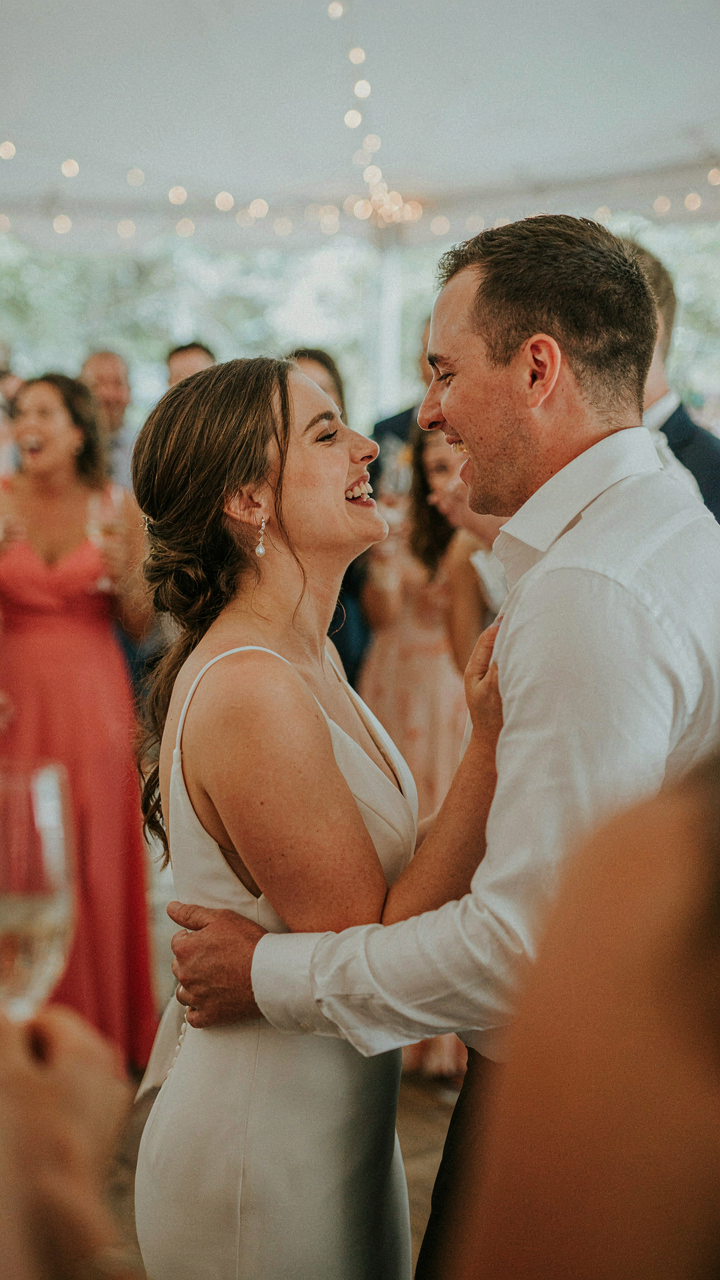
Society Doesn’t Care What You Say
You’re afraid people will judge you for not sounding like a poet. That fear is the actual problem, not your ability. Most guests won’t remember your vows word-for-word. They’ll remember if you meant them. The real mechanism at work here is borrowed from psychology: signal detection. You’re trying to signal status through language polish instead of authenticity. Non-writers often produce better vows because they skip the performance layer entirely.

Your job isn’t to impress the room. It’s to make a commitment audible. The gap between what you think vows should sound like and what actually works is where most people sabotage themselves. Remove the imaginary audience from your head first. Write as if only your partner hears this.
Common Vows Sound Like Templates Because They Are
Everyone says “I promise to love you through sickness and health” because wedding vow culture has calcified around five or six stock phrases. This isn’t inspiration. It’s plagiarism dressed as tradition. The common advice to “be yourself” is incomplete. You also need to avoid the specific language patterns that have been hollowed out by repetition.
Spot the phrase you’ve heard before in other weddings. Delete it. Replace it with a concrete memory or observation unique to your relationship. You don’t need flowery language. You need specificity. If you can’t point to a single moment or habit that proves your vow, it’s too generic. Strip it down until only true things remain.
The Emotional Blueprint: How To Write Vows

The Specifics That Actually Stick
You’re worried people will judge you for not sounding poetic enough. Here’s what actually happens: vows fail when they’re generic, not when they’re plainly spoken. The mechanism is simple. Your brain stores memories through sensory detail and emotional contrast, not flowery language. When you name the exact moment you knew, or the specific thing your partner does that nobody else notices, you activate recognition in the room. That’s the opposite of forgettable.

Start by listing five core memories. Not “the day we met.” Instead: the coffee shop, the color of the napkin, what you were both wearing wrong, what you laughed about. The smallest details are the connective tissue. Skip the universal sentiment. Write down the exact phrase your partner uses when they’re tired. The way they handle disappointment. The stupid thing they do that makes you want to stay. These are your building blocks. Vows built on specifics land harder than vows built on borrowed emotion.
The Promises You Will Actually Keep
Generic advice says to “commit to love forever.” That’s useless because you can’t control love. You can control action. This section demands precision because you’re making a contract, not writing a feeling. The military calls this “rules of engagement”—explicit conditions, not vague intentions. Your vows should do the same.
Here are the commitments that matter:
- Show up when it’s boring: Name the non-negotiable presence. Not romance, but Tuesday. Not vacation, but the mortgage conversation.
- Fight fair, not to win: Specify how you’ll disagree. Will you take a break and return? Will you say what you actually mean instead of what hurts?
- Do the thing you hate: Name one specific responsibility. Dishes. The in-laws. The hard conversation. Own it.
- Protect the small rituals: What’s the one practice you’ll defend? Morning coffee together? A walk? Weekly check-ins? Lock it in.
- Admit when you’re wrong first: Create a permission structure for both of you. You go first, often, without score-keeping.
Write each commitment as a single sentence with a verb. Not “I promise to be there for you” but “I will listen without fixing when you need to vent.” Not “I’ll cherish you” but “I will ask how your day went before I talk about mine.” The specificity is the bind. Read them back. If you’d feel trapped by any of them, remove or reshape it. What remains is what you actually mean.
The Specifics Only Protocol: Help With Wedding Vows

Concrete Over Abstraction
You’re worried people will think your vows are shallow if they’re not poetic enough. That’s backwards. The real mechanism is this: specificity builds credibility in the same way a forensic investigation builds a case. Generic praise means nothing. One real detail means everything.

Pull three moments from your relationship that changed how you see this person. Not “you make me happy.” Instead: the night you got food poisoning and they sat on the bathroom floor at 3 AM without complaining, or the way they reorganized your entire garage to fit your bike without asking, or how they cried during that one conversation about your family. These moments prove your claim. They can’t be faked or borrowed from someone else’s vows.
Precision Replaces Poetry
The common advice here is wrong: you don’t need beautiful language to move people. You need accurate language. In engineering, tolerance is the difference between a part that works and one that fails. In vows, specificity is your tolerance.
Replace every vague sentiment with a named behavior or consequence. Don’t say “you support my dreams.” Say “when I wanted to leave my job, you didn’t tell me to play it safe like everyone else did. You asked what I actually wanted and then helped me build the plan.” The specifics do the emotional work. Your job is just to tell the truth clearly.
Leveraging Military Strategy: The Vow Reconnaissance Mission

Map Your Emotional Terrain First
You want this to feel effortless and authentic because you’re terrified of sounding rehearsed or fake. The mechanism is simple: military strategists call this “terrain reconnaissance.” Before any operation, they map the physical landscape. You need to map your emotional landscape the same way. Not your feelings about marriage in general. Your specific emotional touchpoints with this person. The moments that shifted how you see them. The patterns that prove you chose right.

Start by listing five concrete moments when your partner changed your understanding of love or commitment. Not metaphors. Not abstract concepts. Specific scenes. The day they stayed in the hospital waiting room for eight hours. The conversation where they admitted fear you’d never heard from them before. The morning they fixed something you’d complained about three months prior without you asking again. These moments are your terrain. They’re the only places vows actually land.
Identify The Specific Vulnerabilities You’ll Target
Generic vow advice tells you to talk about feelings and dreams and forever. That’s incomplete. In military doctrine, you identify vulnerabilities in your opponent’s defense to create breakthrough impact. In vows, you identify the specific vulnerabilities in your partner’s emotional armor, and you address them directly. This isn’t manipulation. It’s precision.
Your partner has fears they’ve never named out loud. Maybe they’re afraid you’ll leave when things get hard. Maybe they question whether they’re enough. Maybe they carry shame from their past and wonder if you truly accept it. Your vow targets one of these vulnerabilities by naming it and then answering it with a concrete promise. Not “I’ll love you forever.” Say: “I know you think you’ll disappoint me. I’m choosing you anyway, and I’m staying when it happens.” That hits different because it proves you see them completely and you’re still in.
Crafting Your Message: How To Write Wedding Vows To Husband

Promises That Actually Mean Something
You’re worried these vows won’t sound polished enough, that people will judge you for fumbling. Skip that. The real mechanism is this: vows fail when they stay abstract. Borrow from contract law. A contract specifies what each party will do, not how they feel. Your vows need the same precision. “I promise to love you” is noise. “I promise to ask you how your day went before checking my phone” is a commitment someone can actually measure.

Specificity forces honesty. When you name the exact behavior, you can’t hide behind sentiment. You’ve already decided you’ll do this thing, which means you’ve thought about friction points and chosen to show up anyway. That’s the only vow worth saying. Write down five behaviors you’ll repeat in hard moments. Pick two. Lead with those.
The Vulnerability That Lands
Common advice says to be funny and vulnerable, as if they’re interchangeable. They’re not. Humor without honesty reads as deflection. Vulnerability without humor reads as performance. The actual move is this: name one specific fear about marriage, then say how you’re choosing your husband anyway. Not some generic fear. The real one. Fear that you’ll stop making time for each other. Fear that you’ll resent him for something he can’t control. Fear that you’ll become invisible to each other.
Your audience doesn’t remember smooth delivery. They remember the moment you admitted something true and didn’t look away. That’s the moment they believe you actually mean what comes next. Practice saying the vulnerable part out loud three times before the wedding. Not to perfect it. To get comfortable with the discomfort. Your voice will shake slightly. That’s not a problem. That’s the evidence that you’re not reading a script.
Refinement, Not Rewrite: Wedding Vow Ideas

Cut Everything That Doesn’t Earn Its Space
You want to sound like you didn’t try too hard. That’s the real fear here, and it’s backward. Non-writers think trimming means deleting the good parts. It means eliminating the noise that drowns them out. Think of editing like signal-to-noise ratio in audio engineering: your vow is the signal, every filler word is static. Remove static, the signal becomes louder without raising volume.

Go through your draft and mark every word that serves no function. “I just want to say” adds nothing. “In this moment” is filler. “The beautiful thing about you is” wastes five words before the actual point. Strip these down to bone. “I want to say you make me braver” lands harder than “I just want to say that in this beautiful moment, the thing about you is that you make me braver.” One sentence, zero wasted real estate.
Read It Out Loud Until It Breaks
Your ear catches what your eyes skip. Sit alone and read the whole thing aloud at normal speaking pace. You’ll hit phrasing that feels clunky, words that stumble off your tongue, sections where you naturally pause wrong. These aren’t failures. They’re data. If you trip on a phrase when reading, your audience will feel that friction even if they don’t hear it.
Mark every spot where you wanted to pause but didn’t, where you repeated a word too close to itself, where the rhythm felt off. Then fix those spots specifically. Don’t rewrite the section, just smooth the exact friction point. Test it aloud again. This cycle takes three to five passes maximum. The goal is delivery comfort, not perfection. Stop when you can read it twice without hesitation.
The Final Delivery: Examples Of Written Vows

Repetition Builds Automaticity, Not Memorization
You want this section because you’re afraid you’ll freeze or forget, and that fear signals weakness. Here’s the mechanism: your brain doesn’t store vows through memorization. It stores them through neural pathways built by repetition. Neuroscience calls this automaticity. The more you speak your vows aloud, the less conscious effort retrieval requires. You’re not cramming. You’re training your nervous system to run the words without thinking.

Read your vows out loud at least ten times before the ceremony. Not in your head. Out loud, in the same location where you’ll deliver them if possible. Each repetition rewires the pathway slightly, making recall faster and more reliable. By repetition eight or nine, the words become muscle memory. Your mouth knows the next phrase before your conscious mind does. This is why actors don’t “memorize” scripts. They run lines until the lines run themselves.
Vulnerability Reads Stronger Than Perfection
The advice that vows need to be polished is wrong. Polished vows sound like someone else wrote them, and your audience knows it immediately. A slight stammer, a moment where you collect yourself, a voice crack when you hit something real—these moments are what your partner actually wants to witness. You’re not performing a monologue. You’re making a promise under pressure. That pressure should show.
The mechanism is simple: imperfection signals authenticity. Your partner has heard you speak a thousand times. They know your patterns, your hesitations, your genuine voice. A flawless delivery would feel like a stranger standing at the altar. Write vows that contain at least one moment where you stop, breathe, and say what matters most. That breath is not a failure. It’s the most honest part of your delivery.
Beyond The Ceremony: Living Your Vows

Your Vows Become Friction Points
You want to believe the vows matter after the ceremony ends. They don’t, unless you treat them like a system that needs maintenance. Vows function like a contract in economics: they only hold value if both parties enforce them. The moment you stop referencing what you promised, the vows become decorative words, not operating instructions. Write them down now, then schedule specific moments to revisit them, or they disappear into memory where all intentions go to die.

Your vows should sit somewhere visible and accessible. Not framed on a wall like a trophy. Keep them in your phone, a shared document, or a physical note you both see. The mechanism here is simple: what you don’t review, you don’t execute. Your brain deprioritizes anything that falls out of active rotation. Treat your vows like a strategy you’re actually running, not a speech you gave once. That shift changes everything about whether they shape your decisions.
Revisit When The System Breaks
Annual vow reviews sound corny until your marriage hits a wall and you realize you never actually checked if you were keeping your promises. Most couples fight about the same problems repeatedly because they never mapped the fight back to the vows. You said you’d communicate about money, but did you actually build the system to do it? You promised to stay curious about your partner, but curiosity requires intentional questions, not just cohabitation. The gap between intention and action is where every marriage loses ground.
Set a date each year, ideally around your anniversary, to read your vows together and ask one clear question: what did I commit to that I haven’t been executing? Don’t apologize or defend. Diagnose. Then pick one specific vow to strengthen that quarter through concrete action: weekly money meetings, monthly date nights where you ask the questions you said you would, or regular check-ins about something you promised to stay engaged with. The vows only work if you treat them like a quarterly business review of your relationship, which means measuring against them, not just remembering them fondly.
The Real Obstacle Isn’t Your Writing Skill, But Your Willingness To Be Truly Seen

You don’t need better words. You need better courage. Every failed attempt at vows comes from hiding behind vocabulary instead of showing up raw. The person across from you doesn’t want eloquence. They want the truth you’ve been too afraid to say out loud. Write one sentence today that scares you. Not because it’s fancy. Because it’s real. Vulnerability dressed up in perfect prose is still just a lie wearing a better suit.