
The Information Architecture Protocol: Beyond Basic Contact Info

What Actually Breaks A Wedding Timeline
You want this sheet because you’re terrified of calling the wrong person at the wrong time and torpedoing your entire day. The real mechanism here is borrowed from systems design: redundancy. A vendor contact sheet isn’t about having more numbers. It’s about eliminating single points of failure. Most couples list one contact per vendor and call it done. That’s not a system, that’s a gamble.
The moment your florist’s phone dies thirty minutes before setup, you need her assistant’s number, the studio’s main line, or her partner’s contact. You need the backup because vendors go dark. Phones die. People call in sick. A real contact sheet anticipates every failure mode and documents the human path around it. This isn’t paranoia. It’s operational design.
Building The Chain Of Command
Your vendor’s primary contact is rarely the person who executes the work. The owner might sell you the package, but the coordinator runs the day. The coordinator might hand off to the setup crew. Each layer matters because each layer has different knowledge and different availability. Write down everyone you’ve spoken to and their specific role. “Sarah handles all communications” is less useful than “Sarah manages timeline and changes” and “Marcus leads the day-of setup.”
The hierarchy clarifies who to call for what. Need to move a time slot? Call the owner or operations lead. On-site problem during setup? Call whoever’s physically there and their direct supervisor. The common advice says “just have a primary contact.” That fails the moment you can’t reach them. Your contact sheet needs depth: primary contact, their backup, the execution lead, and the direct line to whoever will be present on your wedding day. Include cell phone, studio line, and email for each role.
The “Event Horizon” Wedding Vendor Contact Sheet Template
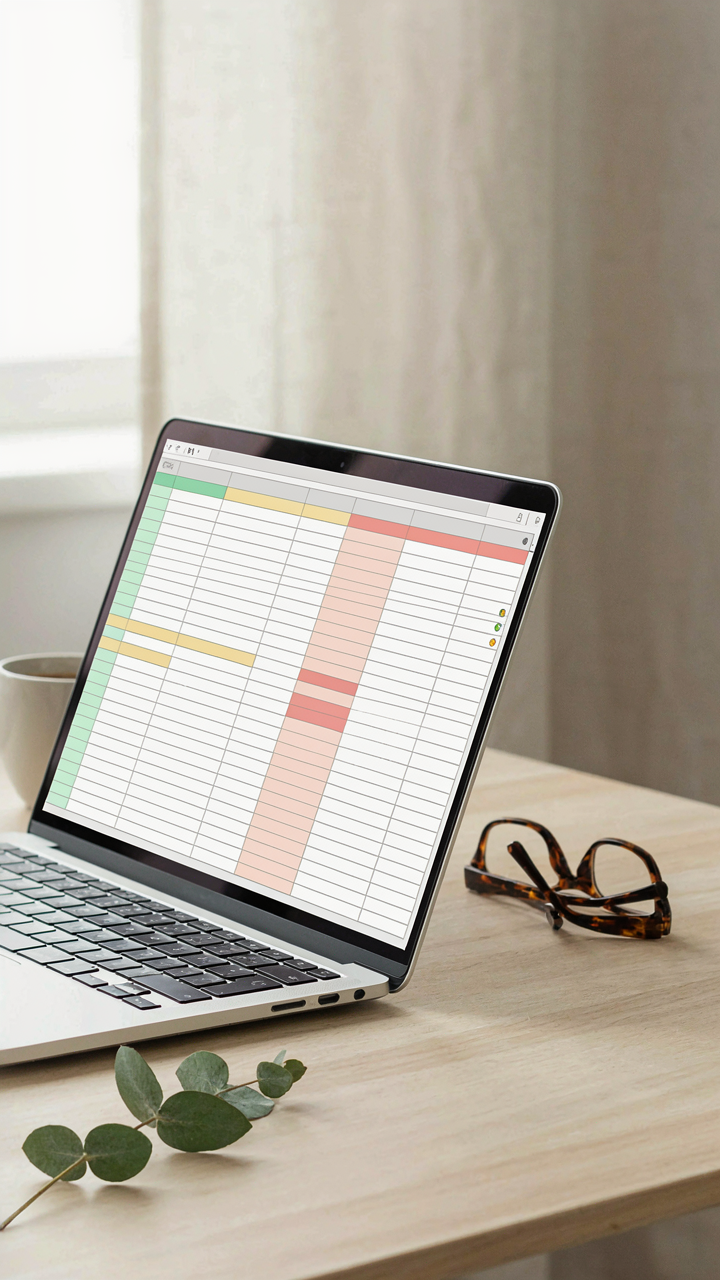
Who Needs What Information, And Why It Matters
You’re worried about someone forgetting something on your wedding day, and you’re right to be. The real mechanism here borrows from supply chain dependency mapping: in logistics, you identify which vendors are “upstream” and which are “downstream,” because one supplier’s delay cascades through the entire operation. Your florist is upstream to your photographer, because the florals must exist before they get shot. Your caterer is upstream to your venue coordinator, because headcount and setup specs drive their work. Map these dependencies first. Build your contact sheet around information flow, not alphabetical order. The vendors who need early confirmation aren’t the same ones who need day-of logistics.

Your contact sheet lives or dies by clarity on information routing. Photographer needs florist’s setup timeline. Caterer needs venue’s kitchen access specs. Videographer needs lighting vendor’s equipment list. Each vendor is blocked until they get what only another vendor can provide. Write into your sheet which information each vendor must receive from which other vendors, and by what date. This isn’t busywork. It’s the difference between coordinated execution and reactive chaos. Document this dependency chain now, before you’re juggling eight vendors in your phone on the morning of.
Triggering Communications Before You Forget
Event planning uses trigger-based protocols: specific dates and milestones that automatically prompt action. Your vendor contact sheet must do the same. The mistake most couples make is adding contacts and calling it done. The real work is assigning communication triggers to each vendor entry. Florist gets triggered at eight weeks out with final headcount. Caterer at six weeks with dietary restrictions. Photographer at four weeks with shot list. Without triggers attached to contacts, your sheet becomes a graveyard of outdated numbers. Build the triggers into the sheet itself, not your calendar, because your calendar lies and gets buried.
Embed trigger dates directly into each vendor row. Photographer: trigger at 12 weeks (engagement photo timeline), 10 weeks (final details discussion), 6 weeks (shot list review), 2 weeks (final walkthrough). Each trigger owns a specific conversation, not a vague check-in. This transforms your contact sheet from a reference tool into an operational system. When you open it, you immediately see which vendors need contact today, which next week, which in three months. The automation comes from making the triggering visible and non-negotiable. Your sheet doesn’t remind you to communicate. It tells you exactly which conversation must happen now.
The Redundancy Cascade Wedding Contact List Template

Multiple Contact Methods For Every Vendor
You’re building this sheet because you’re terrified of the one phone call that doesn’t connect two hours before your ceremony. That fear is rational. The mechanism is simple: single points of failure collapse under pressure. In systems design, this is called redundancy—the deliberate duplication of critical pathways so one broken link doesn’t kill the whole operation.

Your vendor contact sheet needs at least three ways to reach each person. Not as backup options you hope never to use. As primary pathways you rotate through based on response time and availability on the day itself.
- Primary phone number: The direct line. Assume it works 80% of the time under stress. Test it two weeks before the wedding.
- Secondary phone number: Personal mobile or alternate business line. Different carrier, different infrastructure—catches what the primary misses.
- Email address: Slower than calls but creates a timestamped record. Use for confirmations and critical details vendors need to reference quickly.
- Text message number: Reaches people when calls go to voicemail. Vendors respond faster to SMS than email on event day.
- Emergency contact person: The vendor’s co-owner, manager, or backup staff member. You call this when the primary contact vanishes.
The redundancy cascade works backward from disaster. You don’t pick the fourth contact method because you like options. You pick it because the first three will fail in specific, predictable ways under real wedding-day pressure. A florist’s phone dies. The caterer’s in their truck. The photographer’s on a different call. You need the fourth pathway loaded and verified now, not decided in panic.
Emergency Escalation Paths For Critical Roles
Most wedding planning advice treats all vendors equally. That’s wrong. Your photographer, caterer, and ceremony officiant operate in a different failure category than your rental company or parking coordinator. One no-show is a photography gap or no food. The other is inconvenience.
Map your vendors into two tiers: ceremony-critical and logistics. Ceremony-critical includes anyone without a replacement who can arrive in 30 minutes. For these roles, get three contacts minimum and establish a clear escalation protocol. You don’t call the primary, then the secondary, then hope. You call primary and secondary simultaneously the moment you sense trouble. This cuts response time in half.
The escalation path needs specifics: who you call in sequence, what you say in the first message, and the exact decision point where you activate backup vendors. Write this down. Don’t memorize it. Under stress, you’ll forget the order. Your wedding day contact sheet should have a one-sentence escalation rule for each critical vendor printed at the top. If florist doesn’t answer by 8 AM, call backup florist immediately. Non-negotiable. No second-guessing.

The “Zero Tolerance” Data Integrity Framework

Build Feedback Loops Into Your Sheet
You want to believe your contact sheet stays accurate without work. It won’t. The moment you enter a vendor’s phone number, entropy begins. Cybernetics teaches us that systems require feedback loops to maintain stability, and your contact sheet is no different. A feedback loop here means: data gets entered, then verified against reality, then corrected based on what you find.
Create a simple protocol where every vendor entry triggers a verification step within 48 hours. Call or email to confirm the information you recorded matches what they say. Document the date you verified each field. When a vendor changes their availability or pricing, that update doesn’t exist until you close the loop by recording it back into the sheet. The mechanism is brutal: no verification, no update. No update, no trust in your sheet when it matters.
Automate Reminders Before Information Dies
Most people think automating reminders means setting calendar notifications. That’s surface level. Real automation means building a system where your sheet itself prompts you when data becomes stale. Use a spreadsheet function or a lightweight tool to flag any vendor record that hasn’t been verified in 60 days. When the flag appears, it forces action: you either verify the data is still good or mark it as inactive.
Set a standing calendar rule to run monthly verification cycles on your top-tier vendors (venue, photographer, caterer, planner). Bottom-tier vendors get quarterly checks. The automation removes the decision fatigue of whether you should verify data today. The system decides for you. When a vendor’s information gets confirmed, update the verification timestamp in your sheet immediately. This single protocol turns a static document into a living system that stays reliable under pressure.

The “Pre Mortem” Wedding Vendors Checklist Integration

What Breaks Before The Day Arrives
You’re building this contact sheet because you’re terrified of vendor failure ruining your event, but you won’t admit it. The real mechanism is simple: disaster prevention works backward. Instead of hoping vendors perform, you map failure points in advance and build contact redundancy into your system. A pre-mortem borrows from project management, where teams imagine a project failed, then work backward to find causes. Your contact sheet becomes a failure prediction tool, not just a directory.
Start by naming the three vendor categories most likely to create cascading problems: catering, photography, and florals. These three touch the most visible elements and have the longest production timelines. For each, add a second contact column to your sheet. Not a backup vendor necessarily, but a contact who can step in if primary communication fails. List their name, phone, and one specific capability they bring. This transforms your contact sheet from reactive documentation into proactive insurance.
Contact Data Mapped To Crisis Scenarios
Linking vendor information to specific failure scenarios means you stop treating your contact sheet as a passive list. Instead, you treat it as a crisis protocol embedded in data. When the photographer cancels two weeks out, your sheet immediately shows you which secondary contact has shot similar events and their availability windows. When catering has a kitchen fire, you know which backup vendor’s phone is already in your system and what their capacity actually is.
Structure your contact sheet columns to reveal these scenarios before they happen. Add columns for vendor response time window, cancellation policies, and backup contact relationship. Then run through scenarios: photographer illness, florist supplier shortage, caterer no-show. For each scenario, cross-reference the contact sheet and identify which person calls whom first. This isn’t hypothetical. You’re creating a decision tree disguised as a spreadsheet. When chaos hits, you execute a protocol you’ve already written, not make decisions under pressure.

The “Field Commander” Wedding Coordinator Briefing

What Your Coordinator Needs To Control The Day
You want your coordinator to handle chaos so you don’t have to—that’s the real reason this section matters. Borrow military logistics thinking here: your coordinator is the operations officer, and your contact sheet is the intelligence briefing. They need three things: vendor arrival windows, primary contact names with direct phone numbers, and specific role assignments for each vendor on timeline.
Your contact sheet must specify who each vendor reports to during setup, execution, and breakdown. Don’t list general company numbers. Get the actual person’s cell phone who will be on-site. Include their backup. Add the exact arrival time window you negotiated and the load-in location. The coordinator doesn’t navigate ambiguity on game day—they execute predetermined decisions.
Creating Real Time Communication On The Timeline
Most couples put contact information on a sheet and call it done. That misses the mechanism: you need communication protocols that prevent double-booking, contradictory instructions, and vendors waiting for clarification. Your coordinator needs to know which vendors communicate via phone, which use text, and which require email confirmation before they arrive.
Build a communication matrix into your contact sheet. Flag vendors who need advance confirmation the morning-of versus those who are locked into a time slot. Add a column for whether the coordinator initiates contact or waits for vendor arrival. Specify if a vendor needs stage clearance from another vendor before starting setup. This removes the guesswork. The coordinator executes the protocol, not improvises in real time.

The “Post Event Debrief” Vendor Contact List

Turning Feedback Into Actionable Intelligence
You want to look back and feel smart about your vendor choices. The real mechanism here is simple: feedback without a system becomes memory, and memory is unreliable. Treat your contact sheet like a feedback loop from operations management—each vendor becomes a data point you extract insight from, not sentiment you collect and forget. Document what worked, what didn’t, and why, tied directly to the vendor’s contact information.
The common advice here is to “ask for reviews” or “leave feedback.” That’s incomplete. You need a dedicated column or linked document that captures three specifics: what the vendor delivered against what you hired them for, where they created friction or solved problems you didn’t anticipate, and whether you’d hire them again under identical conditions. That last point matters. Some vendors shine only in certain scenarios. Record the scenario, not just the grade.
Organizing Records For Future Recommendations
Your contact sheet becomes a reference library for people who ask you later. This is how you stay credible to friends planning weddings—not by having opinions, but by having documented patterns from actual execution. Archive each vendor record with the date of your event, the scope of their work, the outcome, and any contingencies they handled. Organize by service category first, then by reliability within that category.
The protocol is straightforward: maintain a separate “archive” tab or folder within your contact sheet system. Include the original contract terms, final invoice, any communication threads about changes or issues, and your post-event notes. When someone asks for a recommendation, you reference your archive instead of guessing. This takes the opinion out of the equation. You hand them documented reality.

The “Immutable Record” Wedding Vendor Contact Sheet Template For Contracts

Match Contract Terms To Contact Data
You’re building this because you’re afraid something will slip through and blow up on your wedding day. The real mechanism is simple: your contract and your contact sheet must describe the same vendor arrangement, or one document will contradict the other when you need them both. Think of it like accounting’s reconciliation process—two records of the same transaction must balance, or the discrepancy exposes hidden errors.
Pull your signed contract. Extract every service commitment, date, time, location, and payment term into a single row on your contact sheet. The vendor’s phone number means nothing if you call them about a 2 PM arrival time they agreed to at 3 PM. Your contact sheet becomes useless the moment it diverges from what the contract actually says. This is not redundancy. This is verification.
Connect Logistical Requirements To Confirmation Calls
Most couples treat confirmation calls as politeness. They’re documentation anchors. Before you call a vendor two weeks out, open both the contract and the contact sheet side by side. Confirm the exact time, location, parking instructions, weather contingencies, and any add-ons you paid for. Log what they confirm into your contact sheet immediately. If they say something different than what the contract states, you now have a record of the discrepancy before the wedding day arrives.
The contact sheet is not a backup. It’s an operational log that proves alignment between agreement and execution. When you arrive at the venue and a vendor shows up late or unprepared, you’ll reference this log to determine whether they failed to show what was promised or whether miscommunication happened between parties. That distinction determines whether you have recourse. Update the contact sheet after every conversation with every vendor, every single time.

The Real Obstacle Isn’t The List; It’s Your Failure To Anticipate Chaos And Command The Solution

Most couples build a contact sheet and call it done. That’s why they panic when the florist goes silent three weeks before the wedding. The sheet isn’t powerful until you use it to predict failure and move first. Open your spreadsheet right now. Find one vendor. Send them a message asking for their backup plan if they can’t deliver. Watch how many don’t have one. You just found your real problem, and you’re already ahead of everyone else who thinks organization is enough. A contact sheet without contingency thinking is just a list of people who can disappoint you.