Why A Terracotta Wedding Theme Is Having A Major Moment Right Now
The Rise Of Earthy Tones In Modern Wedding Aesthetics
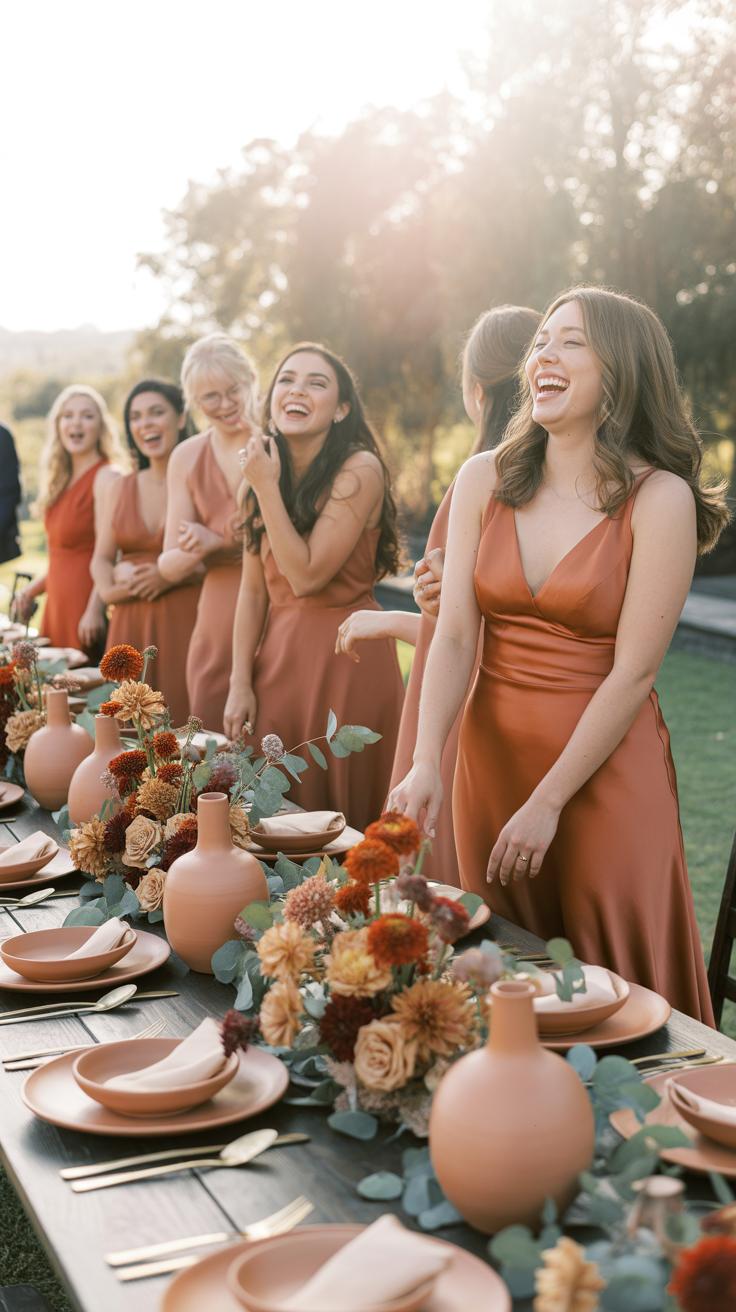
Modern couples now reject sterile and over-polished event designs. They prioritize organic textures that feel grounded and authentic. Terracotta fits this shift by offering a warm color profile that ranges from soft peach to deep burnt orange. This palette works across different seasons and environments. It connects the indoor event space to the natural world through historically significant and raw materials.
The desert chic and boho movements accelerated the use of these clay-based tones. Designers use terracotta to provide a neutral yet colorful base. It replaces the cold whites and grays of previous decades. This color choice functions as a versatile anchor for floral arrangements and table settings. It creates a cohesive look that feels sophisticated without being overly formal or staged for guests.
What Makes Terracotta Pots The Perfect DIY Wedding Decor Element
Terracotta pots offer unmatched utility for DIY planners. These vessels are inexpensive and widely available at hardware stores or garden centers. Their porous nature allows for various customization techniques like lime washing or hand painting. Unlike glass or plastic, clay adds a tactile and structural element to the table. The weight of the material ensures centerpieces stay stable in outdoor or windy conditions.
Smart planners use these pots because they serve multiple roles simultaneously. A single pot can hold a floral arrangement, display a table number, and act as a guest favor. This efficiency reduces total decor costs and minimizes logistical waste. The stacking ability of various sizes makes transportation and storage simple. Using clay pots allows for a professional look on a strict budget by focusing on high-impact repetition.
Understanding Terracotta Wedding Decor Materials Textures And Possibilities
What Is Terracotta And Why It Works So Well For Wedding Styling
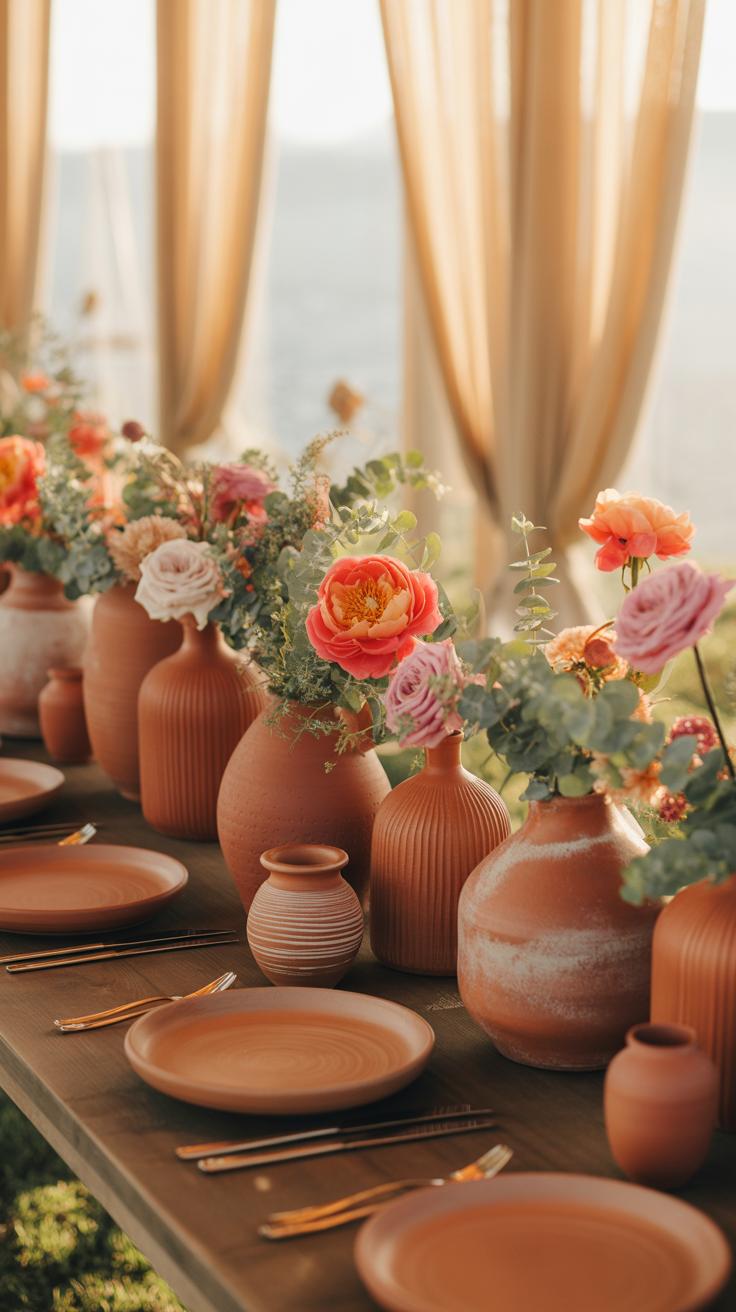
Terracotta is a fired clay ceramic material used for centuries in architecture and art. Its name translates to baked earth in Italian. The natural iron content in the clay creates a distinct range of orange, red, and brown tones during the firing process. These warm hues anchor a wedding color pallet. The matte finish prevents harsh glare during outdoor ceremonies or professional photography sessions.
This material works for wedding styling because it provides a neutral yet colorful base. It fits Mediterranean, Southwestern, and bohemian design movements perfectly. The porous surface allows it to absorb moisture, which keeps floral arrangements fresh. Modern designers use it to add physical weight and texture to tablescapes. It transitions easily from summer events to fall wedding tables without requiring expensive structural changes or updates.
Essential Supplies You Need Before Starting Your DIY Terracotta Pot Projects
Success in DIY terracotta projects requires specific preparation and the right tools. Standard clay pots are highly porous and will draw moisture out of paint or adhesives quickly. You must clean every surface to remove dust and factory residue before applying any decorative elements. Gathering high quality supplies ensures your finished pieces look professional rather than amateur. Stock these items to maintain a consistent aesthetic and structural integrity.
- Acrylic Craft Paint: Choose matte or satin finishes to preserve the natural look of the clay. Water based acrylics adhere best to the textured surface and dry quickly for efficient mass production of centerpiece items during tight schedules.
- Sandpaper and Wire Brushes: Use medium grit sandpaper to smooth out manufacturing seams or rough edges on inexpensive pots. Wire brushes help remove stubborn mineral deposits on aged planters if you want a clean slate for your wedding theme.
- Waterproof Sealant: Apply a clear matte sealer to the interior of every pot. This prevents water from seeping through the clay and bubbling your exterior paint or damaging delicate linens on your reception tables.
- Foam Brushes and Sponges: These tools apply paint evenly without leaving visible brush strokes. Sponges allow you to layer different shades of orange and brown to create a faux aged look or a variegated natural texture.
- Adhesive Primers: Use a specialized masonry or multi surface primer if you plan to use metallic gold leaf or heavy embellishments. This creates a strong bond between the porous clay and your decorative top layers.

Beyond basic pots, consider how these materials interact with light and moisture. Always test your paint color on the bottom of a pot first, as the clay color can shift the final hue once dry. Ensure you have adequate ventilation when using sealants or spray paints. Organizing your workspace into cleaning, painting, and drying zones will speed up the process and minimize mistakes during high volume production.
Choosing The Right Terracotta Wedding Color Palette For Your Big Day
How To Build A Cohesive Wedding Color Palette Around Terracotta Tones
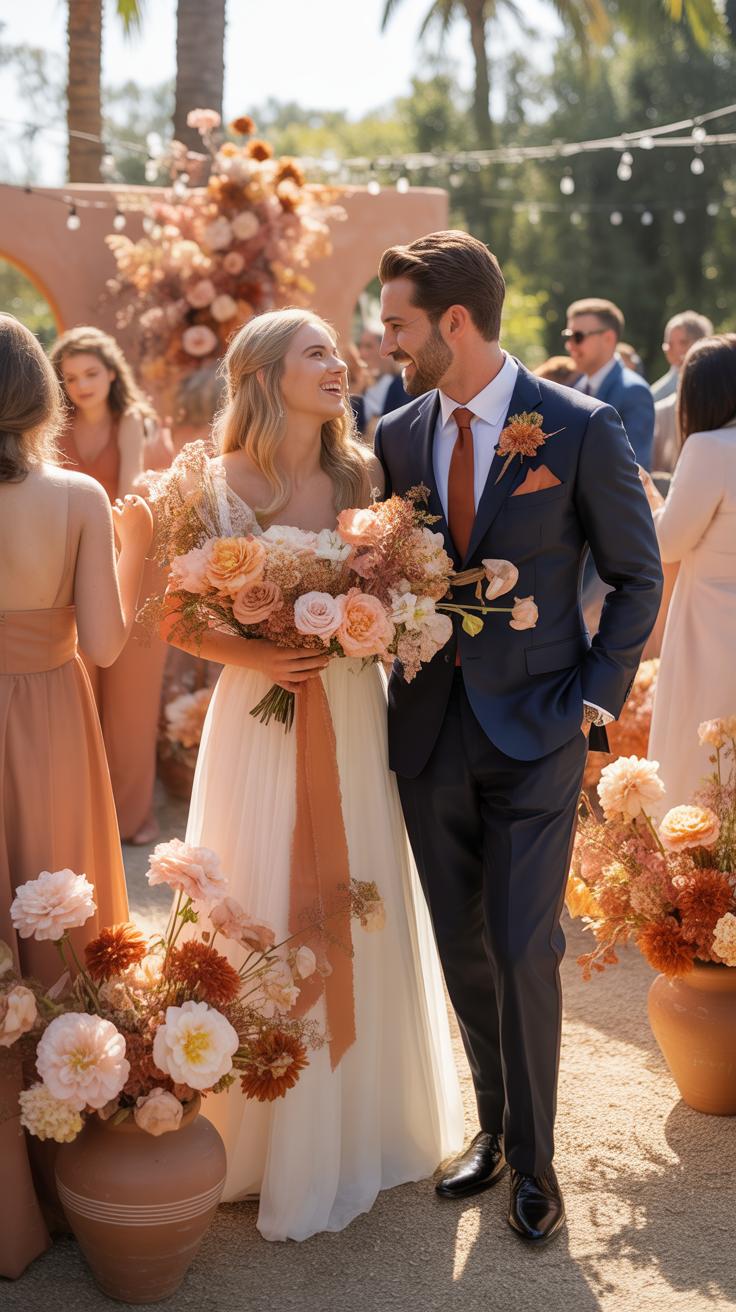
Terracotta represents a fired clay material with a natural range of earth tones. You must start with a base hue that matches your specific ceramic vessels. Genuine terracotta varies from pale peach to deep burnt orange depending on iron oxide content and firing temperature. Choose one primary shade to anchor the design. This prevents the wedding color pallet from looking messy or disconnected.
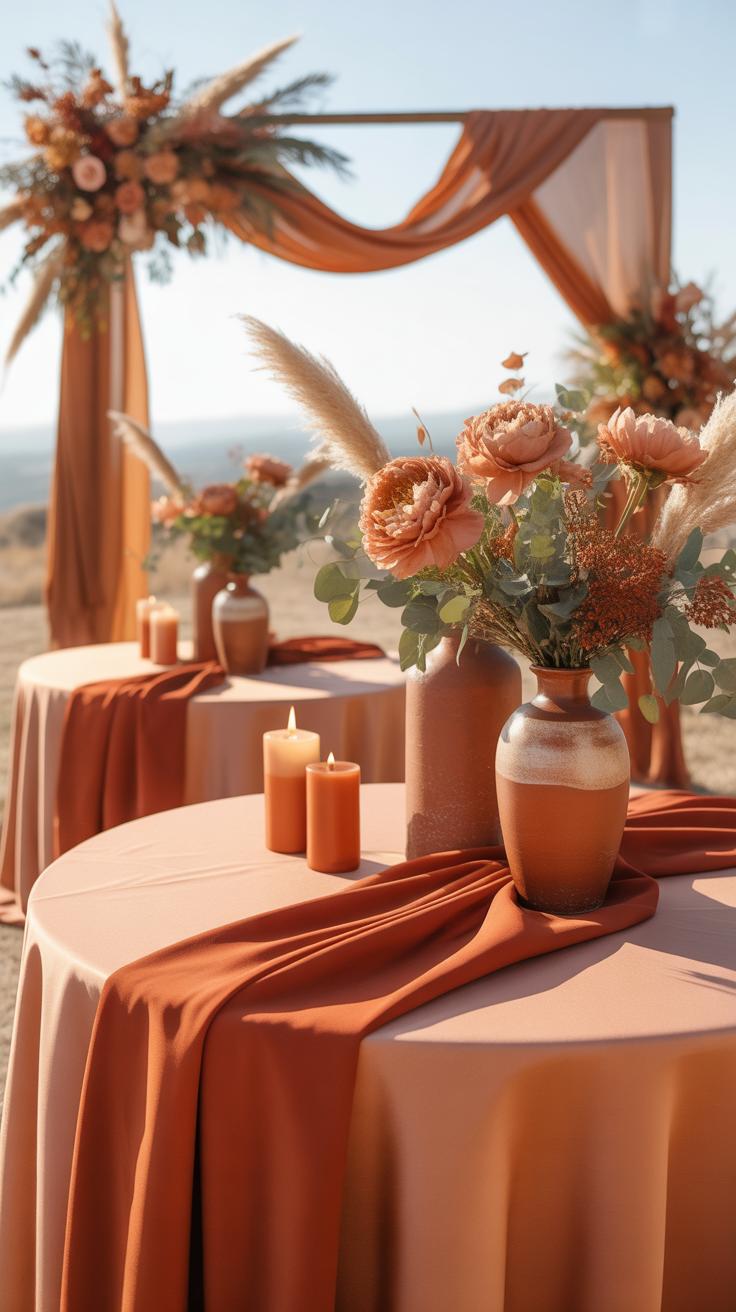
Build depth by layering tonal variations of the same orange wedding themes. Use lighter clay shades for large surfaces like linens and darker tones for accent pieces. This creates visual interest without adding unnecessary colors. Focus on the organic texture of the pots to guide your fabric choices. Matte finishes work best with this aesthetic. Avoid shiny materials that clash with the raw clay look.
Earthly things like clay are transformed by the love and intention we pour into our hands. When you craft with terracotta, you are shaping memories that will bloom long after the day is done.
Complementary Colors That Pair Beautifully With Terracotta In Wedding Decor
Select colors that sit opposite or adjacent to orange on the color wheel for maximum impact. Muted greens evoke a Mediterranean feel and balance the warmth of the clay. Sage and olive tones provide a natural backdrop for terracotta pots decor. These cool colors prevent the orange from overwhelming the space. They keep the atmosphere grounded and calm for a fall wedding theme.
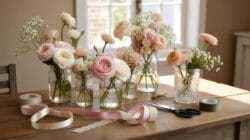
Neutral shades like cream and slate grey offer a modern contrast to the heavy orange notes. These pairings work well for a terracotta party theme in industrial or outdoor venues. Avoid bright white which can look too sharp against the earthy clay. Use charcoal or navy for a bold edge in evening settings. Stick to three main colors to maintain a clean and professional appearance throughout the event.
DIY Terracotta Pots Decor Ideas For Your Wedding Ceremony Space
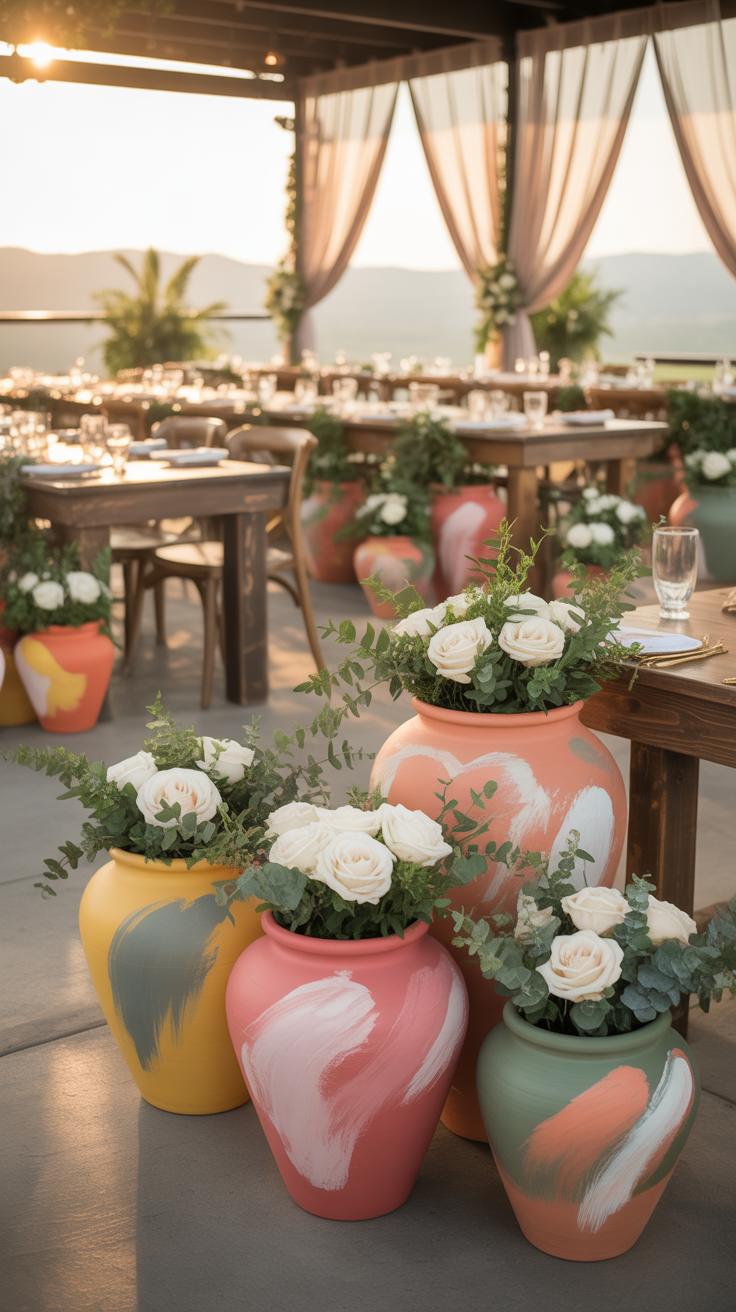
Crafting Floral Filled Terracotta Pot Aisle Markers For A Rustic Ceremony
Standard terracotta pots offer a stable base for aisle markers. Select pots with wide bases to prevent tipping on uneven ground. Use heavy clay pots rather than plastic imitations to withstand wind. Line the interior with plastic to prevent moisture from seeping through the porous clay. This step stops the orange surface from darkening or growing salt crystals during your ceremony.
Place large pots at the end of each row. Use floral foam to secure heavy stems like pampas grass or dried ruskus. Group three pots of varying heights to create visual depth. Small pots work well for low-profile arrangements. High-quality terracotta provides a matte finish that absorbs light. This prevents glare in professional wedding photos and keeps the focus on the floral path.
How To Create A Stunning Terracotta Pot Altar Backdrop Display
Build a vertical altar backdrop using tiered wooden shelving or stacked stone blocks. Arrange dozens of terracotta pots to form a mosaic of orange and sienna. Use varied pot shapes like the tall Long Tom style alongside standard Italian shapes. This creates a texture that mimics Mediterranean architecture. Secure pots to the structure with heavy-duty adhesive or wire to ensure safety during the ceremony service.

Incorporate live plants and dried elements into the stacked display. Use succulents for a modern look or trailing ivy for a classic style. The weight of the pots provides a natural anchor for the altar setup. Ensure the heaviest pots sit at the bottom of the arrangement. Use the natural color variations in the clay to create an ombre effect from dark umber to light peach.
Decorating Fall Wedding Tables With Terracotta Pot Centerpieces
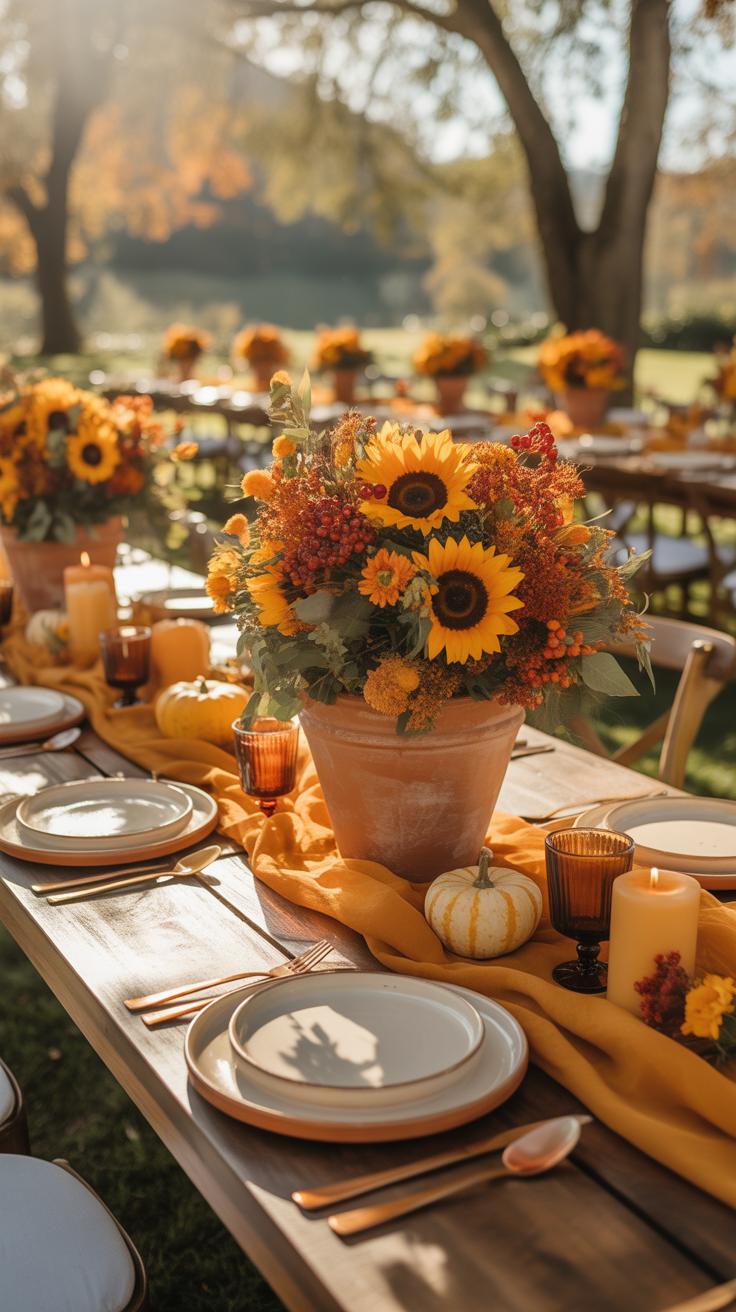
Step By Step Guide To Painting And Styling Terracotta Pots As Table Centerpieces
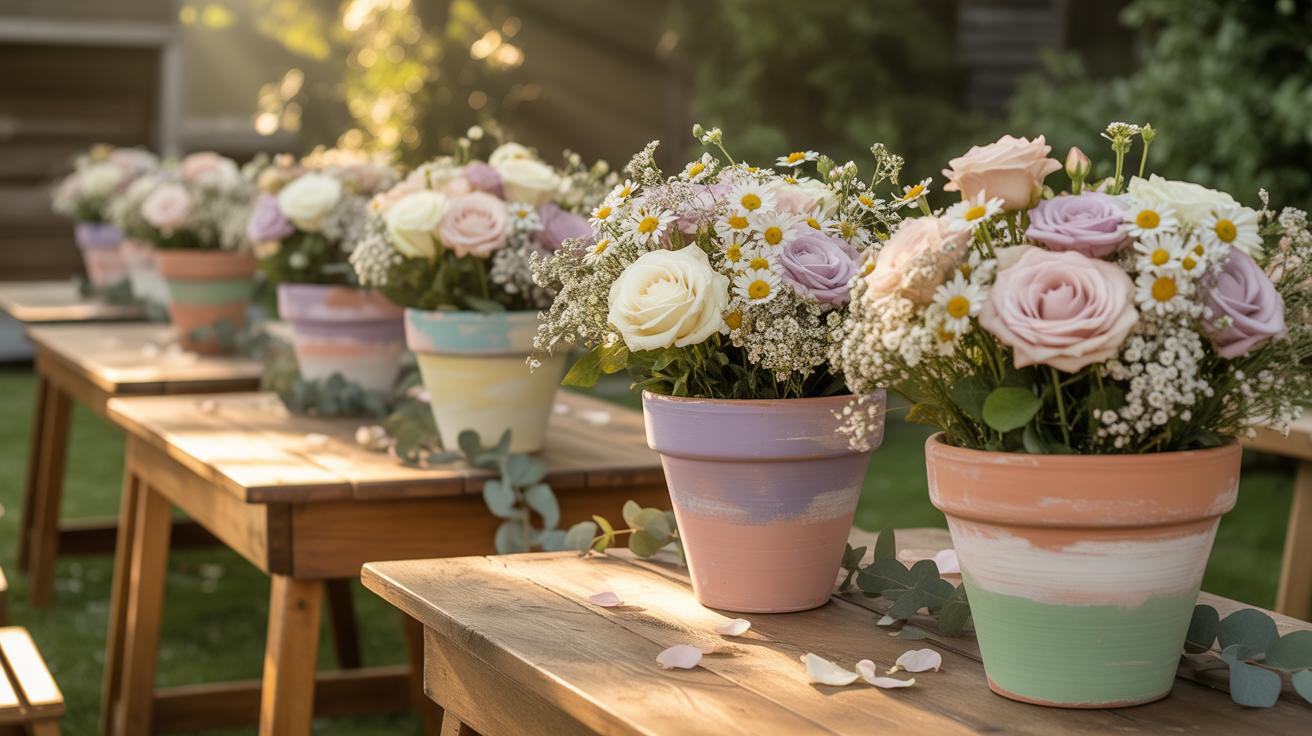
Standard terracotta pots are porous and absorb moisture quickly. This characteristic affects how paint adheres to the surface. You must clean the clay with a damp cloth to remove dust before starting. Use high-quality acrylic paint or chalk paint for the best finish. Sealing the interior prevents water from seeping through the clay and ruining the exterior paint design.
- Surface Preparation: Clean each pot with a stiff brush to remove salts and debris. Soak the pots in water if they are old to pull out minerals. Let them dry completely for 24 hours. This ensures the paint bonds to the clay surface without peeling or bubbling later.
- Primer Application: Apply a thin layer of clay sealer or white primer to the exterior. This step prevents the dark orange clay from changing the color of your light paint. It also fills small pores. A smooth base creates a more professional look for high-end wedding tables.
- Color Layering: Use a sponge or flat brush to apply your chosen wedding colors. Thin layers work better than one thick coat. Use a sea sponge for a mottled, stone-like texture. Let each layer dry fully before adding accents or gold leaf details to avoid smudging the finish.
- Dry Brushing: Dip a dry brush into a lighter shade and wipe most of it off. Lightly hit the raised edges of the pot. This technique mimics the look of aged stone or weathered plaster. It adds depth to the table decor without requiring expensive professional equipment.
- Final Sealing: Spray a matte or satin clear coat over the finished paint. This protects the pots from scratches during transport to the wedding venue. It also creates a water-resistant barrier. Proper sealing ensures your centerpieces remain intact if guests spill liquids on the reception tables.
Position the finished pots in the center of the table. Group three pots of different sizes to create a focal point. Use floriculture foam inside the pots to hold heavy stems in place. Fill the gaps with moss or pebbles to hide the mechanics. This setup keeps the flowers hydrated throughout the event. Proper prep work creates a durable and polished centerpiece for your guests.
Mixing Heights And Textures To Create Dynamic Fall Wedding Table Arrangements
Flat table designs lack visual interest and fail to capture the eye. You must vary the heights of your terracotta containers to create movement. Place tall pots in the center and shorter ones at the ends. Use wooden blocks or clay saucers as risers to lift smaller pots. This technique ensures every element is visible and the arrangement feels full and balanced.
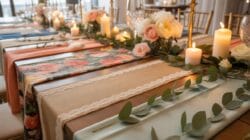
Texture contrast is the key to a professional look. Pair the smooth surface of painted clay with rough elements like dried wheat or eucalyptus. Add soft fabrics like linen runners to ground the hard terracotta. Use metallic accents like brass candles to break up the earthy orange tones. These material choices create a complex visual experience that defines a successful fall wedding color palette.
How Orange Wedding Themes Translate Beautifully Into Terracotta Pot Styling
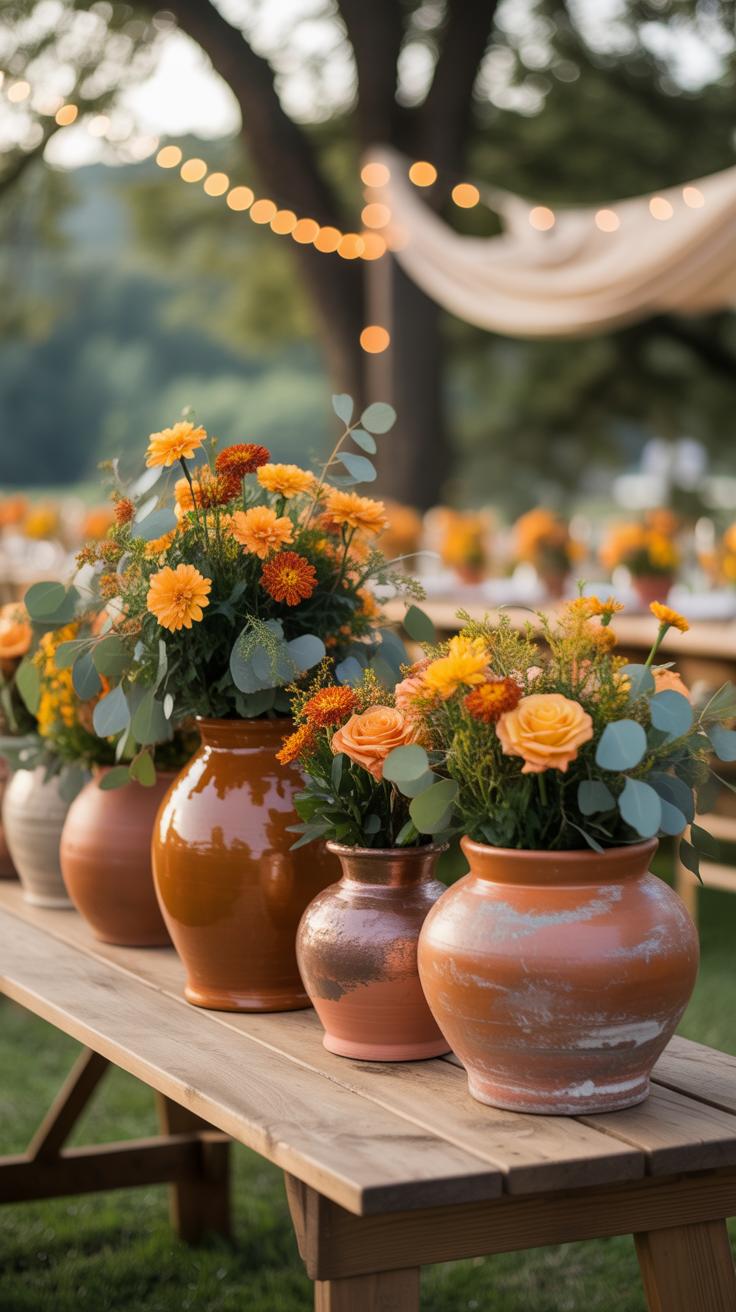
Blending Warm Orange And Terracotta Tones For A Cohesive Wedding Look
Terracotta originates from fired clay and holds a natural brownish-red hue. Professional designers use this earthy base to anchor brighter orange wedding themes. Strategic layering prevents a flat visual experience. You must pair the dull finish of raw clay with vibrant accents like burnt orange linens or copper cutlery. This contrast creates a sophisticated pallet. It moves the design away from a single monochromatic block.
Achieving a cohesive look requires balance. Use the muted tones of the pots to ground high-energy shades like tangerine or rust. Place pots next to ivory or cream fabrics to highlight the warmth in the clay. This method mimics the natural color shifts found in Mediterranean architecture. It ensures your decor looks intentional and structured. Focus on tonal depth to keep the wedding aesthetic grounded and professional.
DIY Painted Terracotta Pot Techniques That Celebrate Warm Sunset Hues
Standard terracotta pots vary in color based on their iron content and firing temperature. You can modify these surfaces using specific painting techniques. Use a dry brush method with matte acrylic paints in apricot or sienna tones. This mimics the weathered appearance of aged Italian ceramic. It adds texture without hiding the raw material underneath. This technique works best on clean, dry surfaces to ensure the paint bonds properly.

Experiment with color washing for a soft sunset effect. Mix water with orange latex paint to create a thin glaze. Apply this over the pot to shift the base tone while maintaining the porous clay texture. Avoid high-gloss finishes as they look cheap and artificial. Focus on matte or satin lusters to replicate natural stone. These tactical changes allow the pots to match specific wedding color pallets while maintaining an organic feel.
Creative Terracotta Party Theme Details That Go Beyond The Centerpiece
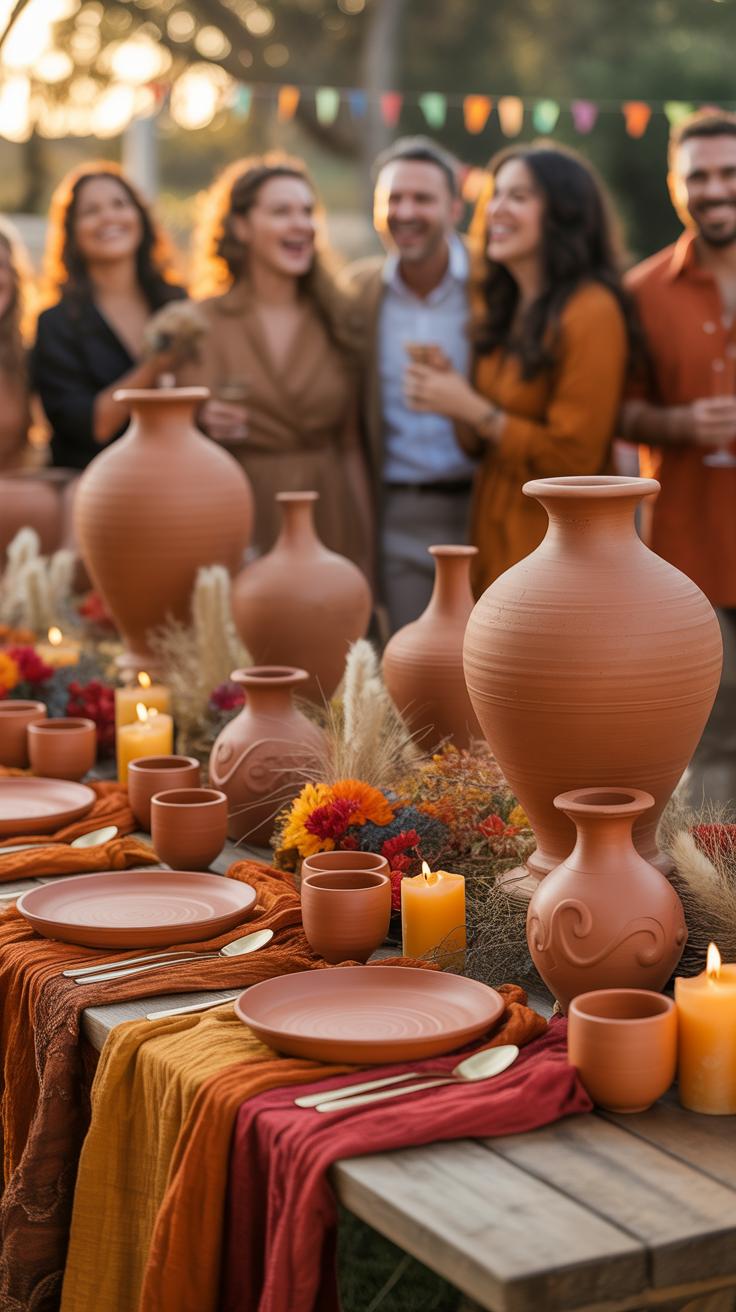
Using Terracotta Pots As Personalized Wedding Favor Holders For Guests
Standard wedding favors often end up in the trash. Using small earthenware pots creates a functional gift that guests actually keep. You can fill three inch clay vessels with succulents or local wildflower seeds. This choice connects your event to the Arts and Crafts movement values. Those values prioritized handmade goods and natural materials over mass produced plastic items. It creates a lasting memory for every guest.
To execute this properly, seal the inside of the pots first. Raw terracotta is porous and pulls moisture away from soil and plants. Use a clear water based sealer to prevent the clay from discoloring when watered. Wrap the base in burlap or recycled paper for a clean look. This strategy ensures the favor survives the trip home. It turns a simple decorative item into a sustainable gift for your attendees.
DIY Terracotta Pot Place Card Holders And Menu Display Ideas
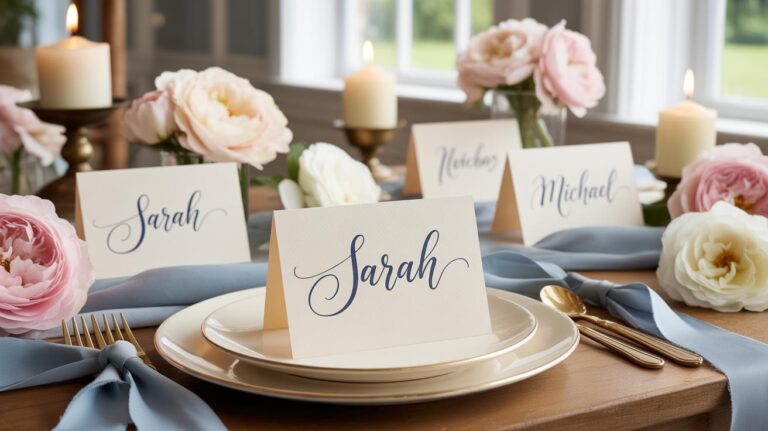
Organization at the dinner table prevents guest confusion. You can use mini clay pots to hold seating assignments. Flip the pots upside down to create a stable base for wire card holders. This method works well for outdoor weddings because the weight of the clay prevents wind from blowing cards away. You can also write names directly on the rim using white oil based paint pens for a permanent finish.
Large terracotta vessels serve as excellent anchors for your menu displays. Place a single large pot at the center of each table to hold a standing menu card. This technique keeps the table design cohesive and utilizes vertical space. Use chalkboard paint on the side of a pot to list the meal options clearly. It eliminates the need for expensive paper printing. This approach balances practical utility with the rustic aesthetic of your event.
Incorporating Greenery And Blooms Into Your Terracotta Theme Wedding Decor
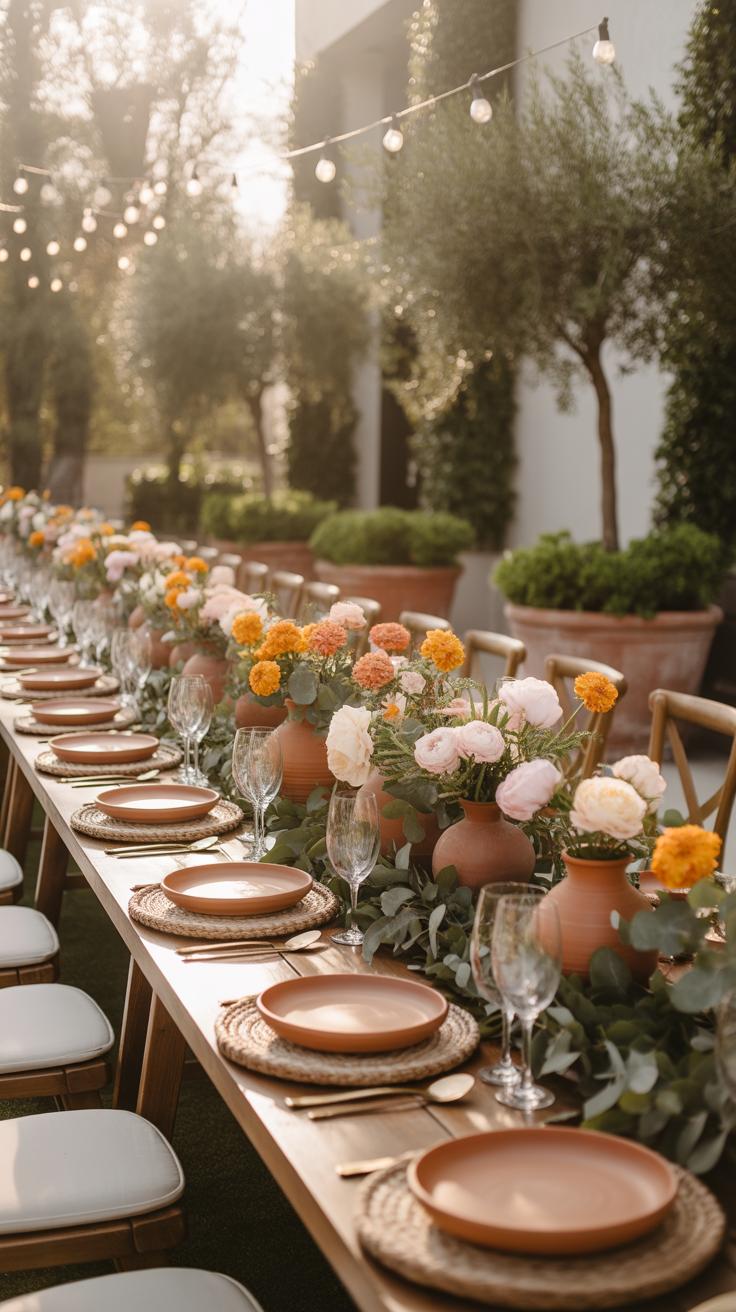
Best Flowers And Plants To Pair With Terracotta Pots At A Wedding
Terracotta pots possess organic textures that require specific floral pairings to look professional. Focus on muted tones and architectural shapes to ground the warm clay color. Olive branches and eucalyptus provide the necessary silvery-green contrast against the orange fired earth. These Mediterranean plants share a historical and regional origin with terracotta. This creates a cohesive and authentic visual language for your wedding centerpieces.
Select blooms with high pigment density to compete with the saturation of the pots. Dahlias, ranunculus, and zinnias in rust or cream tones work best. Avoid cool-toned pastels like lilac or baby blue. These colors clash with the warmth of the clay. Succulents also serve as a practical choice for terracotta. They thrive in porous clay because it wicks away excess moisture from the root systems.
How To Arrange Dried And Fresh Botanicals In Terracotta Pots For Lasting Beauty
Mechanical stability is the primary concern when arranging in terracotta. Seal the interior of the pot if using fresh flowers and water. Raw clay is porous and will absorb water away from your stems. Use a plastic liner or a waterproof floral bowl inside the vessel. This prevents the pot from sweating onto expensive linens. Secure your stems using chicken wire or floral frogs for a natural look.
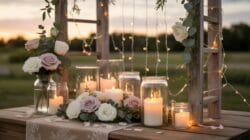
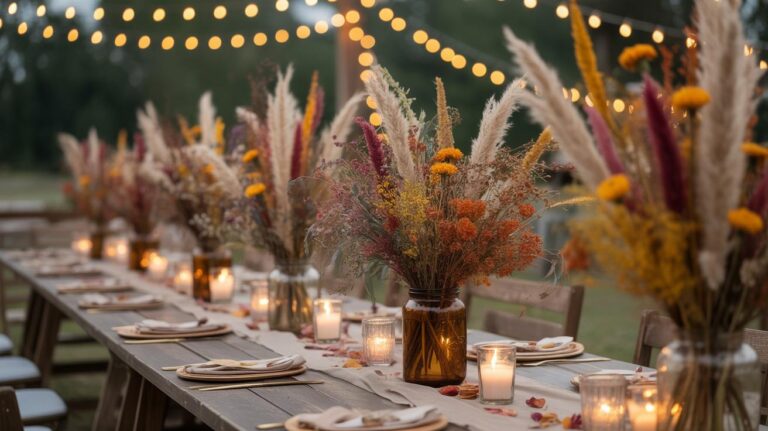
Dried botanicals pair well with the matte finish of terracotta and require no water. Use pampas grass, dried palm spears, and bleached ruscus to add height and texture. These materials do not wilt in heat, making them ideal for outdoor summer weddings. Group different pot sizes together to create depth on long tables. Mix heights to ensure the floral arrangement guides the eye across the entire landscape of the table.
Budget Tips And Planning Advice For A Full Terracotta Wedding Decor Setup
How To Source Affordable Terracotta Pots In Bulk Without Sacrificing Quality
Buy terracotta pots from home improvement warehouses or garden centers in the early spring. These stores move high volumes and offer the lowest unit price for standard red clay. Avoid boutique flower shops that mark up prices for the same material. Check for structural cracks or white salt deposits before buying. Quality clay should sound clear when tapped.
Contact local nurseries about buying their used inventory at a discount. Many professional growers use plastic liners inside clay pots to preserve moisture. This keeps the exterior clean for your event. You can also monitor liquidators and estate sales for aged pieces. This adds instant character to your display. Use wholesale floral suppliers if you need hundreds of identical pieces for consistent sizing.
Timeline And Prep Schedule For Completing Your DIY Terracotta Decor Before The Wedding
Start sourcing your inventory four months before the event date. Terracotta is heavy and takes up significant storage space. Clean all pots with a stiff brush and water to move loose dust. If you plan to seal or paint the clay, do it now. The porous nature of the material requires three days of drying time in a low humidity environment.
Complete all assembly two weeks before the wedding. Group pots by size to make transportation easier for your setup crew. Wrap every piece in thick packing paper to prevent chipping during transit. Clay is brittle and breaks under sudden impact or weight. Assign a specific person to manage the floor layout on the wedding day. This ensures your vision stays intact while you finish other tasks.
Frequently Asked Questions

Can I use standard garden pots for my wedding decor if I am on a budget?
Absolutely! Standard garden pots are the secret weapon for savvy couples planning terracotta wedding decor. Since these vessels are widely available and very affordable, you can purchase them in bulk at local hardware stores. With a little cleaning or a quick coat of white-wash paint, these basic functional items transform into high-end centerpiece bases that add a rustic, earthy charm to your celebration without breaking your budget.
What paint works best for customizing terracotta pots?
Chalk paint and acrylic craft paint both work well for terracotta wedding decor, since they adhere easily to the porous clay surface without requiring a primer. A light sanding before painting helps the color go on smoothly and last longer. Sealing the finished pots with a matte varnish protects your design from moisture and chipping, especially if you plan to use them for an outdoor ceremony or reception.
Can terracotta pots double as wedding favors?
Yes, small terracotta pots make charming and practical wedding favors, especially when paired with a succulent or herb seedling. Guests appreciate a take-home gift that is both decorative and useful, and the low cost per pot keeps this idea firmly within a tight budget. Adding a simple ribbon or handwritten tag personalizes the favor without adding much to your overall terracotta decor expenses.