
The Illusion Of Constant Connection: Why More Isn’t Better

The Trap Of Treating Your Calendar Like A Status Symbol
You want the shared calendar to prove you’re organized, in control, and coordinated with your partner. The mechanism is simpler: more events don’t create clarity—they create noise. Wedding planning doesn’t require constant availability. It requires decision points. Most couples over-schedule check-ins, vendor calls, and planning sessions into their calendars with religious frequency, then wonder why they feel burnt out before the ceremony even happens. Every meeting you add to a shared calendar should answer one question: does this decision get made today or not? If the answer is no, the calendar block shouldn’t exist.
Redundancy masquerades as thoroughness. You schedule a vendor call, then a debrief about the vendor call, then a decision meeting about what the debrief revealed. That’s three calendar events doing the job of one conversation. The shared calendar becomes a graveyard of half-finished tasks and recurring meetings nobody canceled. Your partner stops trusting the calendar because it no longer reflects reality—just intentions. Delete meetings that have no decision attached. The shared calendar’s only real job is to block time when a choice must happen, not to document every thought you might have about the wedding.
The Strategy Of Deliberate Blank Space
Blank space on a shared calendar isn’t a failure—it’s the margin you need to think. Military planners call this concept “reserve capacity,” the unprogrammed resources held back from active deployment so you can respond to what you didn’t expect. Wedding planning requires the same buffer. When every evening and weekend gets booked with wedding tasks, you lose the mental space to actually absorb decisions or notice when you disagree with your partner about something important.
Block out specific days or half-days as planning-free zones. Not because you’re lazy, but because decisions made under pressure differ from decisions made with rest. Your partner needs time to form their own opinion on flowers or guest list size without feeling rushed by the next calendar event. Set a rule: no wedding planning blocks after 7 PM on weekdays, and no more than two wedding tasks per Saturday. The shared calendar should show when you’re working, and equally important, when you’re not. That boundary is what separates couples who feel aligned from couples who resent the planning process by month three.
The “Command & Control” Calendar: Military Precision For Your Big Day
Who Decides What And When
You want this section because you’re terrified of the chaos that happens when two people have different expectations about who owns each decision. The mechanism is simple: military strategy uses “chain of command” to eliminate decision paralysis. Your shared calendar needs the same structure. Without it, you get competing priorities, missed deadlines, and resentment disguised as “miscommunication.”

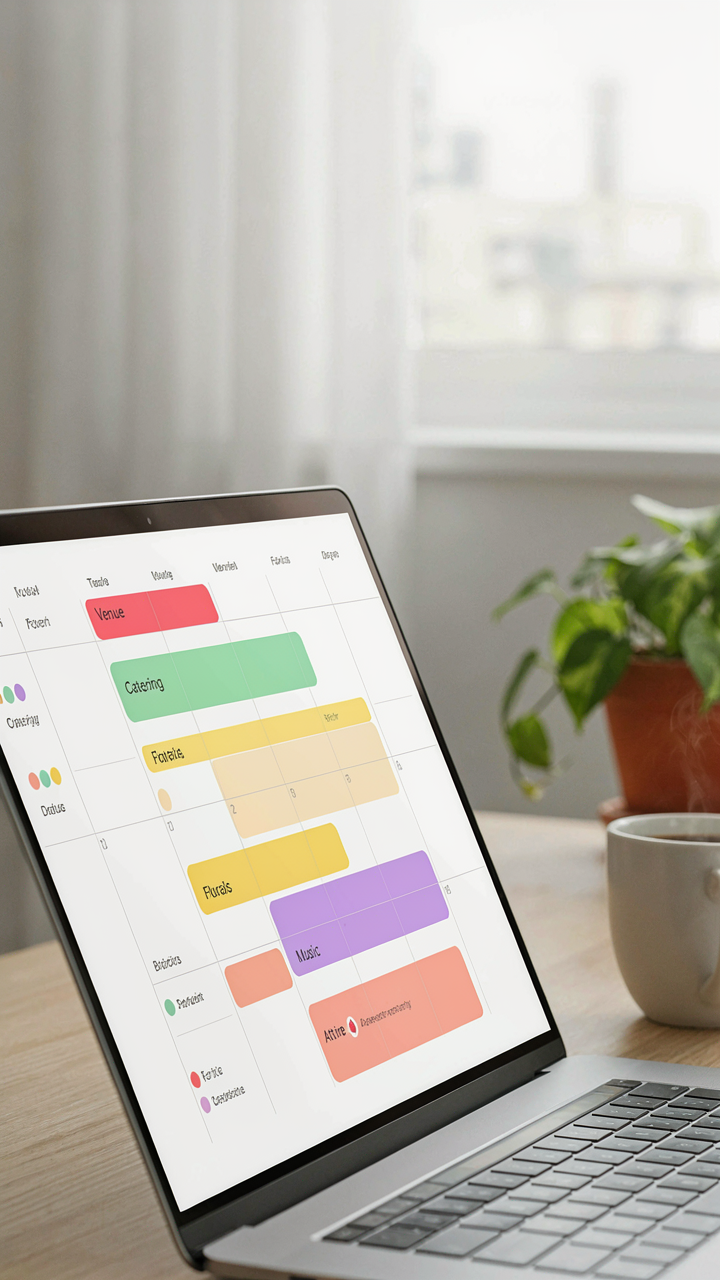
Assign one person as the final decision-maker for each category: venue, catering, flowers, guest list, timeline. Not because one person is smarter. Because decisions require a tiebreaker. Write these assignments directly into your calendar as an event labeled “Decision Owner: [Name]” for each domain. This removes the hidden negotiation that kills momentum. The calendar becomes the record of who owns what, not a place to debate it endlessly.
When Information Flows, Not When You Feel Like It
Stop pretending casual check-ins work. They don’t. Military operations run on specific communication intervals because uncertainty compounds. Your wedding operates the same way. Pick a fixed day each week, same time, same format. This is when you review the calendar together, flag blockers, and confirm next steps. Not when someone panics. Not when something breaks. On schedule.
Create a recurring calendar block called “Planning Sync” every Sunday at 7 PM, duration 45 minutes. During that window, you address changes, update timelines, and resolve conflicts. Outside that window, updates go into the calendar but do not trigger real-time discussions. This prevents decision fatigue and keeps emotions from hijacking your process. You follow the protocol, not your mood. The shared calendar is the source of truth between syncs, and the sync is the only time you renegotiate it.
The Minimum Viable Timeline: Ditch The Endless Wedding Planning Checklist
What Actually Needs A Deadline
You’re scared you’ll forget something critical and look incompetent. That fear drives you to Pinterest boards with 200-item checklists that guarantee paralysis instead of progress. The mechanism is simple: wedding planning uses project management’s critical path method, borrowed from construction and manufacturing. Your critical path is the sequence of tasks where any delay pushes your wedding date back. Everything else is slack. A shared calendar that tracks only critical path items forces you to see what actually matters.

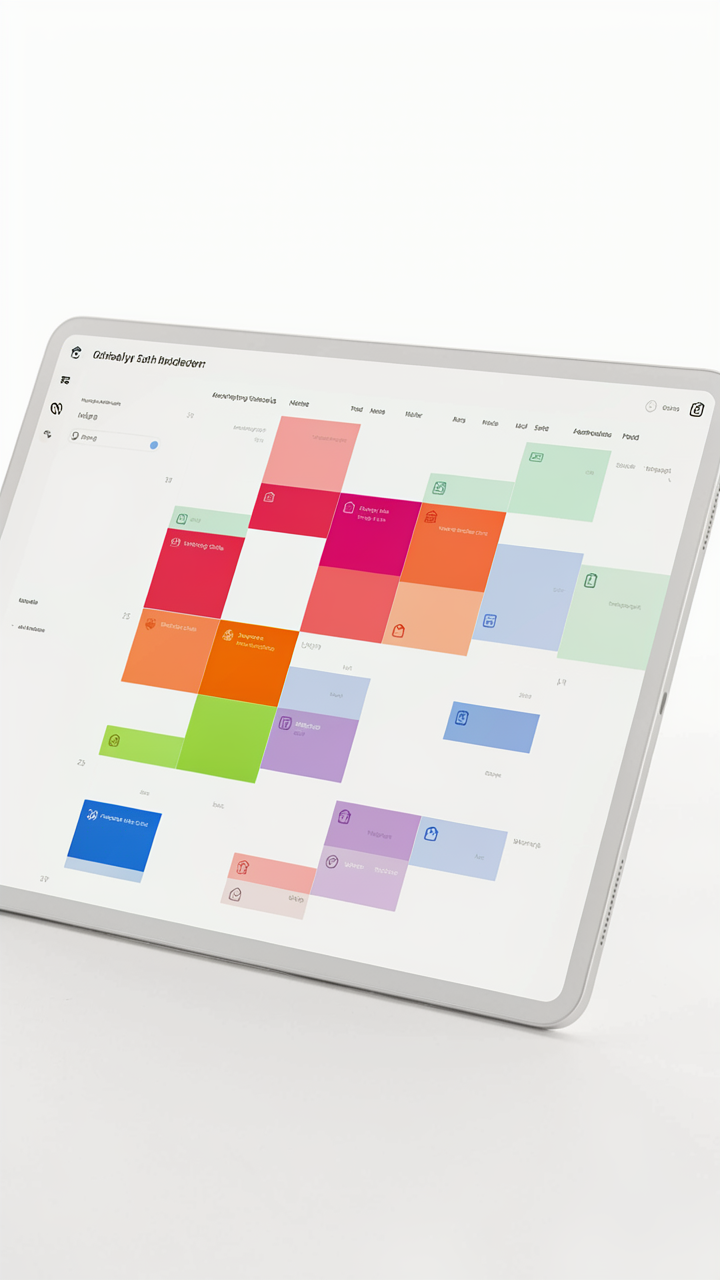
Venue booking, catering deadline, invitations sent, RSVPs closed, final headcount confirmed to caterer. Those five tasks have zero flexibility. Delay any one and your entire timeline collapses. Your photographer, florist, and rental company deadlines feed into catering decisions. Your invitation design deadline feeds into the send date. Map these dependencies on your shared calendar first. Everything else gets scheduled around them or gets cut entirely.
Delete The Busywork Tasks
The wedding industry sells you the lie that more planning equals better outcomes. It doesn’t. When you see a shared calendar choked with “finalize napkin color” and “confirm table seating arrangements” six months out, you’ve already lost. These tasks take two hours total, not six months of cognitive load. Delete all tasks that can be completed in a single sitting and that don’t gate other decisions.
Move those small tasks into a single “execution week” entry two weeks before the wedding, or handle them in a focused work session when they’re actually relevant. Your shared calendar becomes clean enough to read at a glance. You and your partner see the real dependencies, negotiate the real conflicts, and stop drowning in tasks that feel productive but produce nothing. Make the calendar a pressure valve for what matters, not a anxiety generator for everything.
Beyond Shared Calendars: The “Information Blackout” Zones

Designated Planning Windows, Not All Hours
You want the shared calendar to work because you fear constant low-level conflict disguised as “staying connected.” Here’s the mechanism: attention has a carrying capacity, and wedding planning exhausts it fast. Treat the shared calendar like a contained workspace, not a living document you check reflexively. You set specific hours when planning gets discussed and logged. Outside those windows, the calendar exists but stays unexamined. This isn’t about secrecy. It’s about preventing the slow psychological erosion that happens when one person’s anxiety drives constant micro-updates into the other person’s consciousness.

The common advice says “communicate more.” That’s incomplete. You need to communicate less often but more deliberately. Pick two or three fixed times per week, maybe Sunday evening and Wednesday lunch, where you both sit down together and review the calendar. Make changes then. Discuss decisions then. Outside those windows, you don’t add events or read updates unless it’s a genuine emergency. This boundary keeps the shared calendar from becoming a leash disguised as a planning tool. The mechanism is simple: less access paradoxically increases trust because it removes the constant surveillance feeling.
Mental Space As A Non Negotiable Resource
The deeper issue is this: your brain can’t simultaneously hold wedding logistics and emotional connection to your partner. Cognitive load isn’t infinite. When you’re checking the calendar while eating breakfast, in the car, before bed, you’re not truly planning. You’re fractionalizing your attention into useless pieces. Create specific blackout zones where neither partner accesses the calendar at all. Not just “don’t plan,” but don’t even look. Friday evening through Sunday morning works for many couples. Saturday morning through Sunday dinner for others. The window matters less than its consistency.
When you protect these zones, something shifts. The calendar stops feeling like work and starts feeling like a tool. Your nervous system gets actual breaks instead of constant low-grade wedding noise. During blackout periods, the shared calendar literally doesn’t exist in your mind. You talk about your life, your relationship, anything but the wedding. This creates the psychological space you need to make decisions that aren’t driven by fatigue or resentment. Enforce this by setting phone notifications to off during blackout periods, and tell each other explicitly: “We don’t check the calendar until Wednesday at seven.”
The Asymmetric Advantage: Delegate Or Die

Stop Managing Vendors Like Employees
You’re terrified they’ll cut corners and blame you for it. That fear kills the actual work. Vendors operate under accountability structures you don’t run. Borrow the economics term of comparative advantage: you have tasks only you can execute (decisions, final approvals, taste calls), and vendors have tasks only they execute well (logistics, technical craft, vendor coordination). Your shared calendar isn’t a surveillance tool. It’s a handoff mechanism.

The common advice says “stay involved.” That’s incomplete. Stay informed, not involved. Put vendor deadlines and deliverables on the calendar with clear decision dates attached to them. You review output, you don’t watch process. Vendors submit three cake samples on June 15th. You taste and approve by June 18th. That’s the boundary. Everything between June 15th and 18th is their work, not yours.
- Florist proposal deadline: Vendor submits options with cost breakdown and timeline by specified date. You compare and decide within 48 hours, then they execute without further input requests.
- Catering final headcount lock: Caterer needs exact numbers by this date to source and price. After this date, changes cost extra. Calendar this as immovable to prevent scope creep.
- Venue final walk through: Schedule one inspection at a set date close to the event. Vendor shows what they’ve prepped. You sign off or request specific fixes before that date only.
- Photographer shot list review: Submit your must-have photos 2 weeks before the event. Photographer acknowledges and locks it in. No day-of changes or nebulous requests.
- Rental company delivery confirmation: Vendor confirms delivery window 3 days prior. You verify arrival on calendar. After delivery, you’re responsible for inventory and setup, not them.
The calendar prevents scope creep by making deadlines visible to everyone simultaneously. When a vendor sees June 15th as the decision date, they prepare for June 15th. When you see it too, you can’t drag the decision into July and blame them for delays. The mechanism is shared visibility of hard stops.
Clear Roles Kill Ambiguity
You want your best friends involved, but involvement without defined ownership creates duplicate work and finger-pointing. Give each person on the bridal party one category that’s theirs alone. Not “help with planning.” That’s vague. That’s conflict.
One person owns the rehearsal dinner logistics. One person owns day-of timeline and vendor communication. One person owns guest accommodations and welcome logistics. One person owns bar and beverage decisions. Block these on the shared calendar so everyone sees who owns what. When the florist needs a decision and it’s unclear who decides, you waste three days in group texts. When it’s clear, that person owns it and decides.
Ambiguous ownership is cheaper to hand out but costs more in coordination and tension. Clear ownership feels harsh in the moment but scales to zero friction. Each person gets a calendar view that shows only their deadlines and deliverables. No one second-guesses what they’re supposed to do because the calendar is their job description.

Your Wedding Day Schedule: The Non Negotiable Core
Event Flow Beats Everything Else
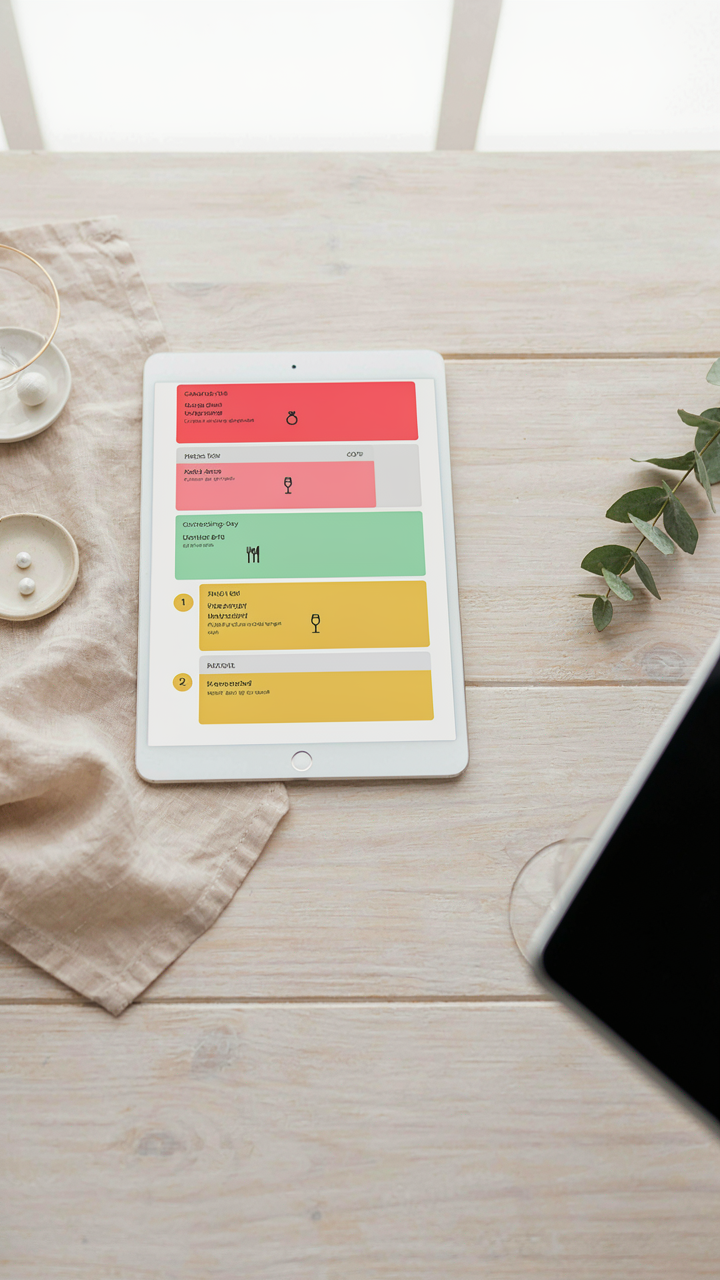
You want the day to feel seamless because you’re terrified of awkward gaps where guests stand around judging the logistics. Here’s the mechanism: a shared calendar doesn’t just list times—it maps dependencies. Each event triggers the next. Ceremony end time determines cocktail hour start. Cocktail hour length determines dinner prep. One missed connection collapses the entire structure.
Most couples obsess over specific times and forget to map the actual transitions. That’s backwards. Start with your hardest constraint—usually the venue’s final checkout time—and work backward in blocks. Each block needs a 15-minute overlap window built into your shared calendar. This isn’t padding. It’s the buffer that absorbs reality. A photographer running five minutes late doesn’t cascade into a late dinner anymore because you designed the day to tolerate it.
Buffer Time Kills Amateur Hour
Military planners call this concept “friction”—the gap between what you plan and what actually happens on the ground. Your shared calendar needs friction baked in. Every transition between events gets a dedicated buffer window marked as “holding” or “transition time.”
Most wedding advice says “add 30 minutes somewhere.” That’s useless. You need buffers at specific friction points: ceremony to cocktail (photography overflow), cocktail to dinner (guest migration and seating), dinner to dancing (bar setup and sound check). Mark these in your shared calendar as separate time blocks with assigned owners. One person manages each transition. When your caterer sees a 45-minute cocktail buffer on the shared calendar instead of a hard dinner start time, they adjust their prep rhythm automatically. The shared calendar becomes a operating system, not a decoration.

The Feedback Loop Protocol: Course Correction, Not Conflict

Weekly Calendar Sync, No Agendas Required
You want these meetings to feel productive so you don’t resent the time spent on wedding logistics. The mechanism is simple: feedback only works when friction surfaces before resentment does. Most couples skip calendar reviews and then explode when one person discovers a missed deadline or double-booked vendor call. Weekly syncs prevent that gap from widening.
Set a fifteen-minute standing meeting every Sunday or Monday. No agenda document. Open the calendar together, scan the next two weeks, and talk through what changed, what’s stuck, and what needs deciding. The point isn’t perfect execution—it’s catching reality gaps before they become arguments. When both people see the same calendar at the same time, blame disappears.
Separate The Problem From The Person
Everyone knows to blame the situation, not the partner. That advice is incomplete. The real issue is that couples frame calendar problems as character flaws instead of system failures. When a vendor email gets missed, the instinct is “you’re disorganized,” not “the calendar doesn’t flag high-priority items clearly enough.”
Reframe every calendar slip as a design problem, not a discipline problem. If tasks fall through cracks, the calendar structure failed, not the person using it. Add better labels. Create color-coded vendor categories. Set redundant reminders. The calendar should adapt to human behavior, not punish people for being human. When you fix the system instead of blaming the person, you solve the problem and keep the relationship intact.

Digital Planner Vs. Reality: Stop Planning The Fantasy

The Calendar Trap
You want the shared calendar to make you feel in control. Here’s the mechanism that actually matters: most couples treat their wedding calendar like a vision board instead of a work order. They add tasks that sound productive but carry no real deadline enforcement or assigned owner. A shared calendar without clarity becomes a mutual delusion engine. Both partners see the same items but interpret them differently, then blame the tool instead of the entry itself.
The fix is ruthless specificity. Every calendar entry must name one person responsible and include the exact action required, not the vague outcome. “Plan flowers” belongs in a Pinterest board, not your shared calendar. “Call three florists by Thursday at 5pm” belongs on Thursday with your name next to it. The calendar only works when it documents committed work, not aspirational thinking.
Committed Dates Only
What gets called “wedding planning” is often postponement dressed up as planning. Common advice says to populate your calendar with everything, but that creates noise. The real problem: uncommitted items pile up and make the calendar noise. Your brain stops trusting it because half the tasks are phantom tasks that never move. You scroll past them. Your partner scrolls past them. Nothing changes. The calendar becomes invisible.
Lock in only dates you’ve already decided to hit. If you haven’t confirmed the venue, don’t calendar “Book venue.” Once you’re actively comparing venues and have real contenders, then calendar “Decide on venue by March 15th.” This creates a binary state: either the work is happening now with real constraints, or it stays off the calendar entirely. When every entry represents actual momentum, you both treat the calendar as law instead of decoration.

The Post Wedding Purge: Eradicating Calendar Clutter

Archive Completed Tasks, Clear The Slate
You want to delete the calendar because you want to forget the stress existed. The real mechanism is simpler: a cluttered calendar obscures signal. Every completed task left visible trains your brain to treat noise as information. Delete the vendor confirmations, the dress fittings, the ceremony rehearsal times. Archive the entire wedding project into a separate folder labeled by year and couple names. This takes fifteen minutes and breaks the psychological loop where you confuse “finished” with “still relevant.”
Your shared calendar should return to its actual function: showing what happens next. The wedding entries were scaffolding, not architecture. Remove them completely rather than moving tasks to “done” columns or greying them out. That half-measure leaves the visual clutter intact. A clean calendar is one where you open it and see only decisions that require your attention now. The cognitive load drops immediately.
Extract Data Before You Delete
Project retrospectives work like thermodynamic systems: energy spent on planning gets trapped in execution. Squeeze the usable insights out before they vanish. Document what timeline decisions actually worked, which vendor categories needed more lead time, where communication gaps appeared, and which calendar reminders prevented disasters. Write this in a separate document, not in the calendar itself. You’re creating a decision framework for your next major project, whether that’s another wedding or something else entirely.
The data lives in the patterns you notice, not the individual tasks. Did you book the venue eight months out and wish you’d done it earlier or later? Did certain notification windows cause panic or boredom? Did assigning specific people to specific calendar items improve accountability? Capture these mechanisms in plain language, then purge the calendar completely. Your future self will reference that document. Your calendar stays clean for actual use.
The Unscheduled Moments: The Real Wedding Planning Inspiration

When The Calendar Becomes The Obstacle
You want a shared calendar to make wedding planning feel controlled and orderly because the alternative is chaos, and chaos feels like failure. Here’s what actually happens: the calendar becomes a constraint that kills the moments where real decisions get made. Those moments live in friction, in conversation that meanders, in the 2 AM text when one of you suddenly sees something that changes everything. A shared calendar documents decisions. It doesn’t generate them.
The mechanism is simple. Tight calendar discipline optimizes for task completion, not for discovery. You block off “discuss flowers” at 7 PM on Thursday, but the actual insight about what your wedding should feel like arrives during a random walk three days later. The calendar trains you to defer all thinking to scheduled slots. Remove that pressure, and you create space where instinct actually works. Your best ideas won’t come from a time block. They come from unguarded moments when you’re not trying.
Structured Spontaneity Beats Pure Improvisation
The advice to “just be spontaneous” is incomplete because spontaneity without structure becomes procrastination dressed in better language. You need a frame that permits discovery without collapsing into chaos. The answer is not less planning. It’s planning that holds space for the unplanned.
Build one recurring unscheduled window into your shared calendar each week. Mark it “open time” or “exploration.” No agenda. No tasks. You and your partner show up with one question or idea each, and you follow where conversation goes for sixty minutes. Document what emerges, but don’t force decisions. This creates permission for spontaneity within a bounded system. At the end of planning, your calendar will show tasks completed. The real wedding will be shaped by what happened in the spaces between those tasks.
The Real Obstacle Isn’t The Calendar; It’s Your Inability To Delegate And Trust

Most couples don’t fail at shared calendars. They fail because one person controls everything and the other checks out. The tool doesn’t matter if you won’t actually let your partner own tasks. Stop micromanaging decisions and trust their judgment on vendor calls, decoration choices, and guest coordination. Pick one major wedding element today and hand it completely to your partner. No corrections. No “helpful suggestions.” The calendar works when you both believe you’re actually in charge of something real.