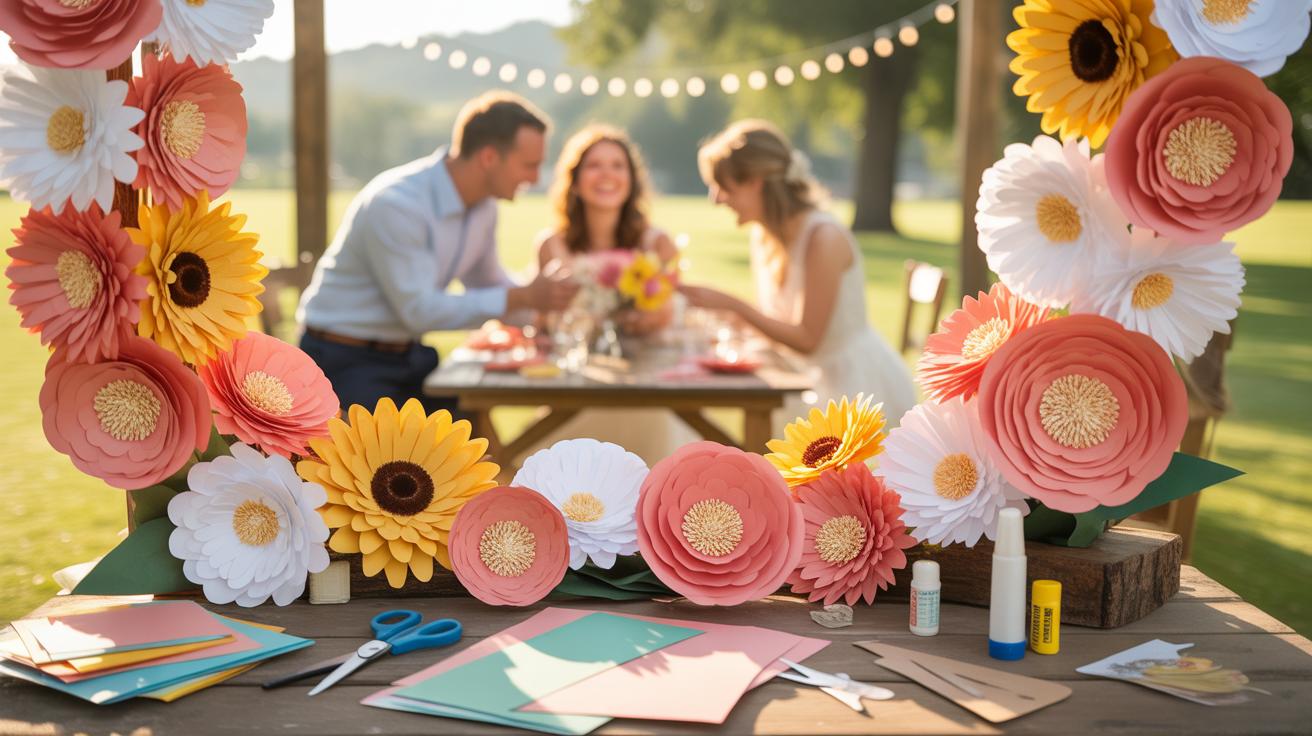
Why Paper Flowers Wedding DCor Is Having A Major Moment
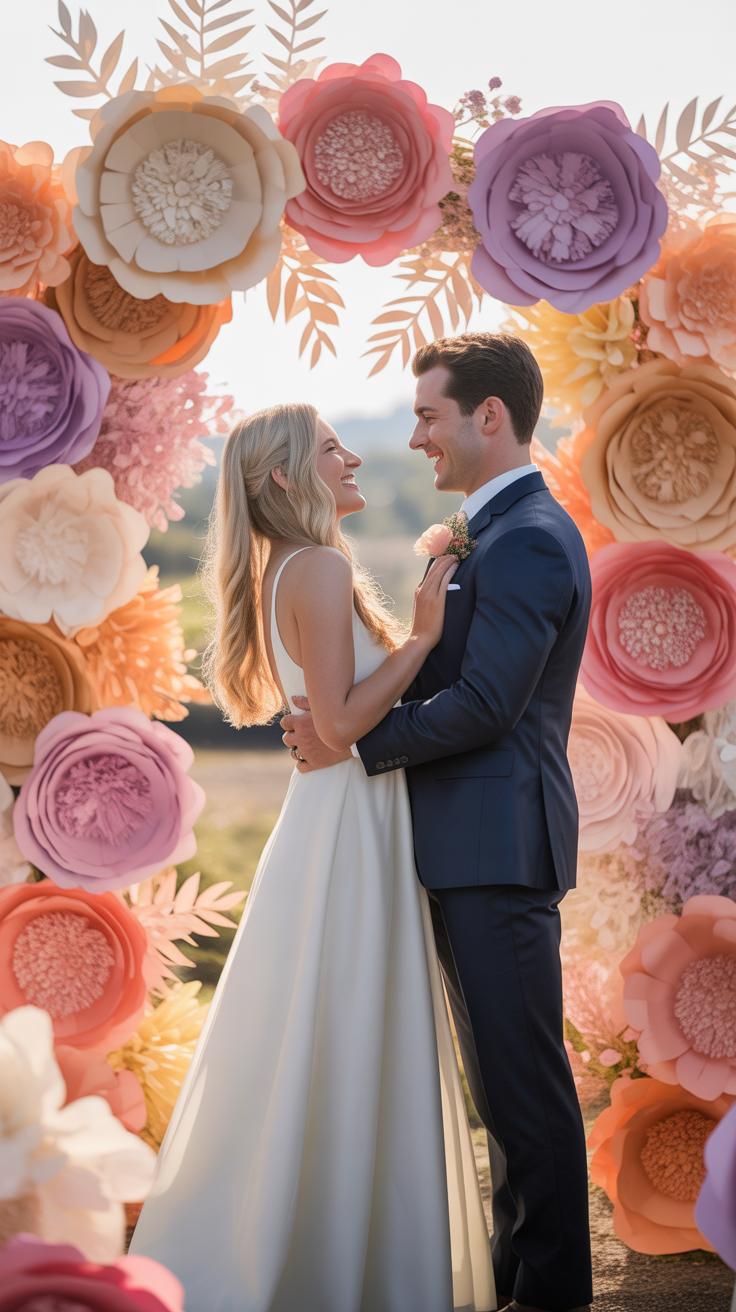
The Rise Of Handmade DéCor In Modern Weddings
Couples now prioritize personalization over generic luxury. High-end events use paper flower wedding decorations to create unique visual themes. This movement stems from the need for specific color matching that nature cannot provide. Artists use heavy cardstock and crepe paper to mimic or invent botanical shapes. This shift reflects a move toward artisanal quality. Hand-cut designs show a high level of detail and care.
Modern weddings use large standing flowers to create immersive environments. These structures act as architecture rather than simple accents. A paper flower curtain or paper garland wedding setup allows for total control over the venue floor plan. Designers build these elements weeks before the event. This preparation eliminates the stress of last-minute floral deliveries. Designers can test various arrangements well in advance to ensure the final look remains perfect.
How Paper Flowers Compare To Fresh Floral Arrangements In Cost And Longevity
Fresh flowers require climate control and water. They wilt within hours in heat or direct sun. Paper flowers wedding installs do not have these limitations. A big paper flower wall stays crisp for the entire duration of the event. You can transport these items without specialized refrigeration. This durability makes them superior for outdoor ceremonies and destination weddings. They offer a rigid structure that fresh blooms lack.
Cost efficiency drives the preference for paper over real stems. Exotic fresh flowers are expensive and seasonal. High-quality paper costs much less than rare out-of-season peonies or lilies. A giant standing flowers display provides more visual impact per dollar spent. You can also reuse these items after the wedding. Many couples sell their paper flowers garland or use it for home decor. This extended lifespan increases the overall value.
Essential Materials For Making Paper Flower Wedding Decorations
Choosing The Right Paper Types: Cardstock, Crepe, And Tissue Paper
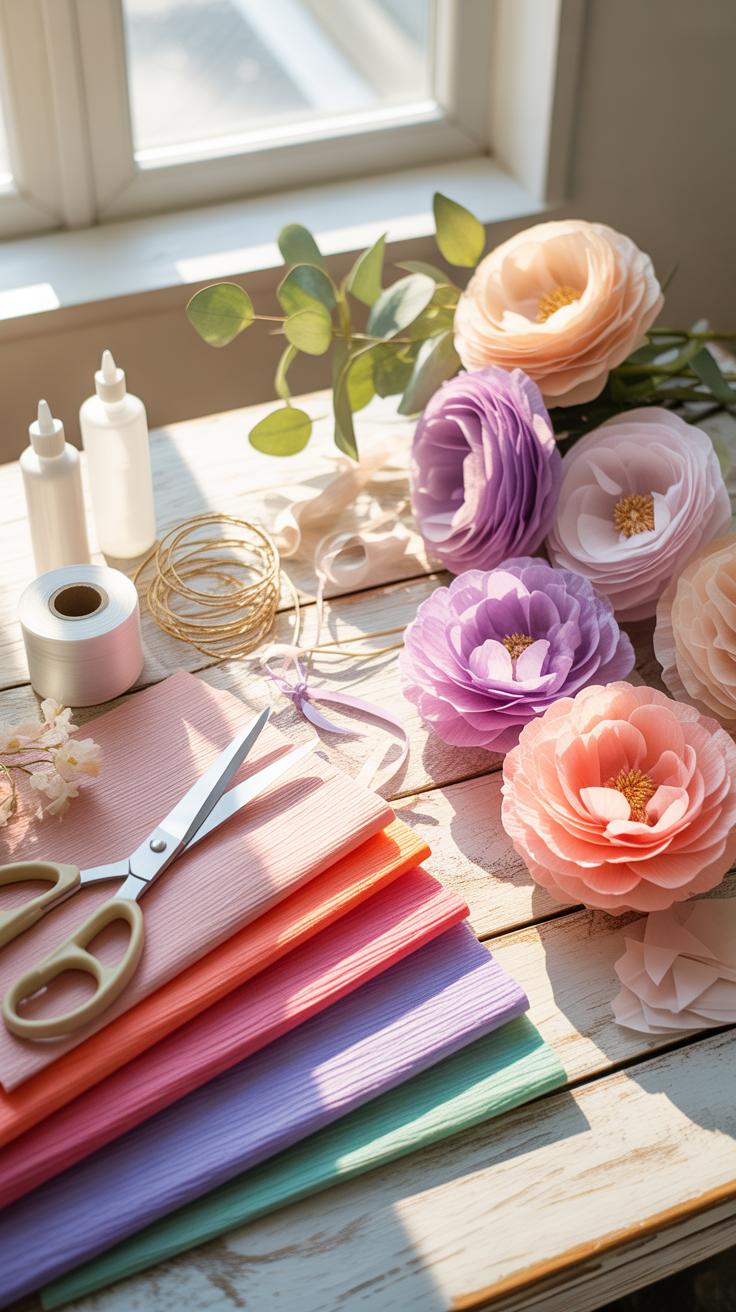
Cardstock is the standard for a Big Paper Flower or Giant Standing Flowers. This material provides the structural integrity needed for large scale installations. Weight matters here. Use 65 lb to 80 lb cover stock for the best results. Heavy cardstock holds its shape against gravity and humidity. It allows you to score, fold, and curl petals without the paper tearing or losing its defined form.
Crepe paper offers superior flexibility for realistic textures. High quality Italian crepe paper has a high stretch percentage. This stretch allows you to cup and mold petals into organic shapes. It is the primary choice for a Paper Flower Curtain or a Paper Garland Wedding. Tissue paper is less durable but adds bulk and softness. It works well for center fillers or light Paper Flowers Wedding accents.
Tools And Supplies You Need Before You Begin
You need precise tools to handle bulk assembly for a Paper Flower Garland Backdrop. Using the wrong gear leads to hand fatigue and poor results. Invest in a high temperature glue gun for a permanent bond on heavy cardstock. Sharp shears or a digital cutting machine will save hours of manual labor. Prepare your workspace with a self healing mat to protect surfaces during repetitive cutting tasks.
- High Temperature Glue Gun: This tool creates a thermal bond that secures heavy petals instantly. Low temp guns often fail when supporting the weight of Large Standing Flowers or dense wall installations.
- Precision Scissors and Craft Knives: Sharp blades prevent jagged edges on delicate crepe and tissue. High quality steel ensures clean cuts through multiple layers of paper. This is vital for uniform Paper Flowers Garland production.
- Floral Wire and Tape: Industrial gauge wire provides the skeleton for stems and hanging loops. Use green floral tape to wrap wires. This creates a cohesive look for any Paper Flower Garland Backdrop structure.
- Curling Tools and Bone Folders: These tools allow you to manipulate paper fibers without causing creases. Use them to create natural curves in petals. This adds three dimensional depth to every Big Paper Flower you build.
- Paper Towel Roll Crafts Spindles: Recycled cardboard cores serve as sturdy connectors for large stems. These tubes provide a lightweight but rigid base. They are essential for stabilizing tall, vertical displays like Giant Standing Flowers.
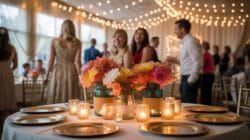
Organization is the final step in your material setup. Sort your paper by weight and color before you start cutting. Keep your adhesives and fasteners in reach to maintain a steady workflow. Successful paper flower wedding decorations require consistency across hundreds of individual pieces. Having every tool ready prevents delays during the assembly of complex items like a Paper Flower Curtain or large scale venue decor.
How To Create A Showstopping Paper Flower Garland Backdrop
Planning The Layout And Size Of Your Backdrop
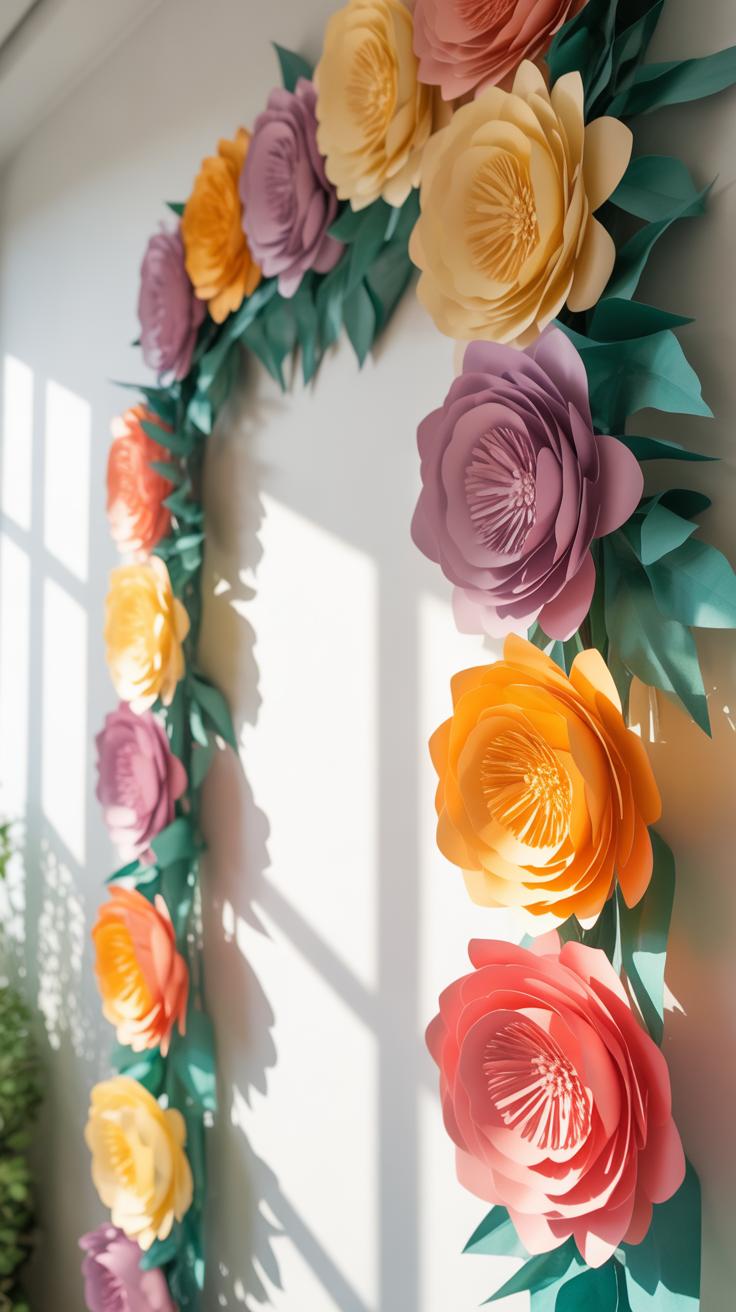
Standard ceremony walls require a backdrop at least eight feet tall and six feet wide. This height ensures the design spans the camera frame during the vows. Measure the venue wall space before purchasing materials. Map the layout on a grid to determine flower density. High-density designs hide the structural frame but require more paper. Low-density arrangements create a modern floating look.
Calculate the weight of your finished flowers to select a support system. Heavy cardstock blooms need a rigid wood or metal frame. Lightweight crepe paper works on tension rods or adhesive hooks. Use varying flower sizes to create depth and visual interest. Place the largest blooms first at key focal points. Fill the remaining gaps with smaller buds and foliage to complete the visual balance.
Step By Step Assembly Of A Paper Flower Garland Backdrop For The Ceremony Wall
Construct the base using a heavy-duty photography stand or a custom timber frame. Secure horizontal crossbars to hold the vertical garland strands. String high-test fishing line or thick twine from the top bar to the floor. Space these lines six inches apart for a full curtain effect. Attach the base flowers to the bottom of each line to provide necessary tension and weight.
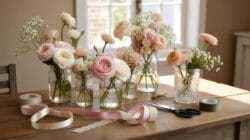
Use hot glue or wire ties to move up the vertical lines. Bond the back of each bloom directly to the string. Alternate flower types and colors to prevent repetitive patterns. Leave small gaps between elements to allow for movement and air flow. Check the alignment from ten feet away to ensure the pattern looks even. Reinforce all attachment points to prevent falling pieces during the ceremony.
Crafting A Beautiful Paper Garland Wedding Accent For Tables And Arches
Designing A Paper Flowers Garland That Complements Your Wedding Color Palette
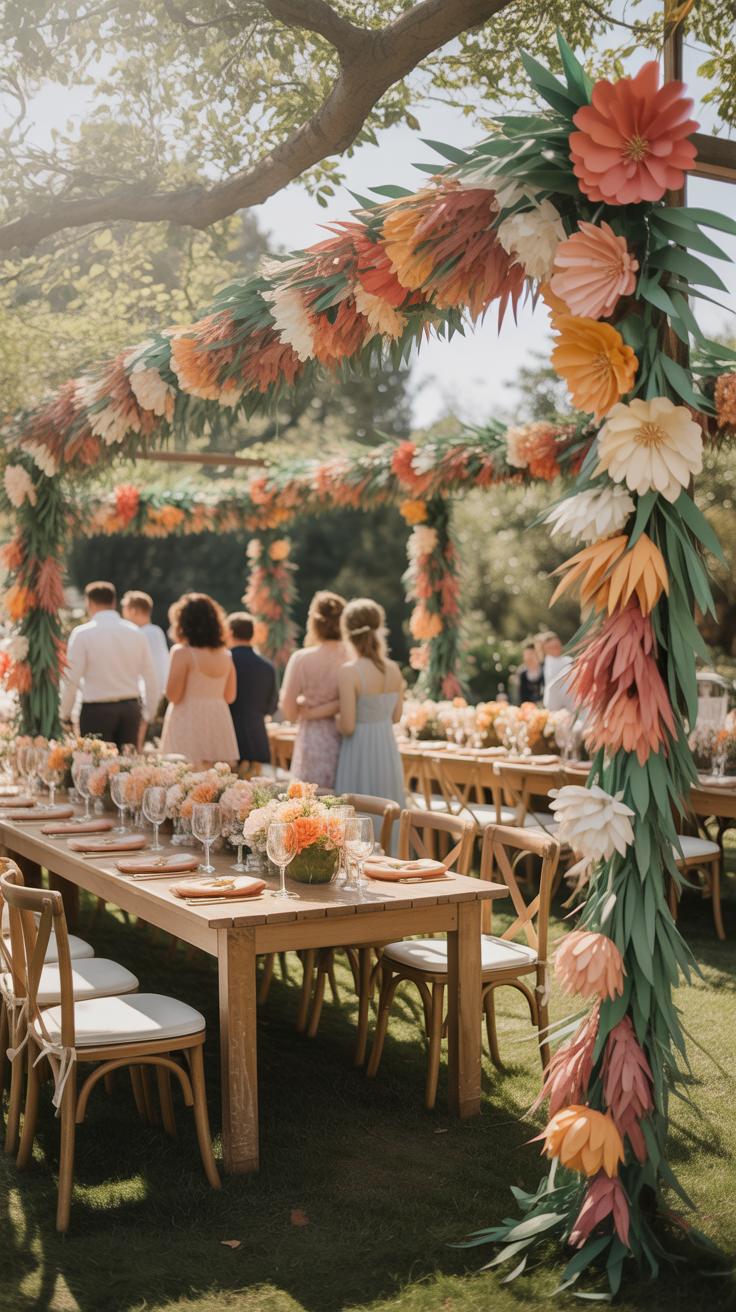
Effective color strategy requires selecting three distinct tones. Use a dominant hue, a secondary shade, and a neutral accent. This prevents the garland from looking flat in professional photography. Match your paper stock to the hexadecimal codes of your wedding brand. Crepe paper offers deep saturation while cardstock provides a matte finish. Select materials that maintain their color under high-intensity venue lighting.
Balance your palette by distributing dark and light shades evenly across the strand. Grouping too many dark flowers creates visual holes in the garland. Use greens or metallic gold paper to mimic natural foliage between blooms. These spacers break up the color and add necessary contrast. Consistent color spacing ensures the installation looks professional from a distance. High contrast helps the paper textures stand out.
How To String And Secure Your Paper Flower Garland For Indoor And Outdoor Venues
Strength is the primary requirement for vertical and horizontal rigging. Use 20-pound monofilament or braided nylon line to support the total weight. Cardstock flowers weigh more than tissue versions and require reinforced attachment points. Feed the line through the center of the bloom or use hot glue on a reinforced backing. Space your flowers tightly to hide the structural wire or string.

Outdoor venues demand wind resistance and moisture control. Secure the garland at multiple points to prevent swaying or tangling in the breeze. Direct sunlight can fade certain papers quickly. Use UV-resistant sprays to preserve the color for the duration of the event. For indoor arches, use removable adhesive hooks or zip ties for damage-free installation. Always test the weight capacity of your support structure before the final setup.
How To Make A Dreamy Paper Flower Curtain For Reception Backdrops
Selecting Flower Sizes And Layering Depths For A Full Curtain Effect
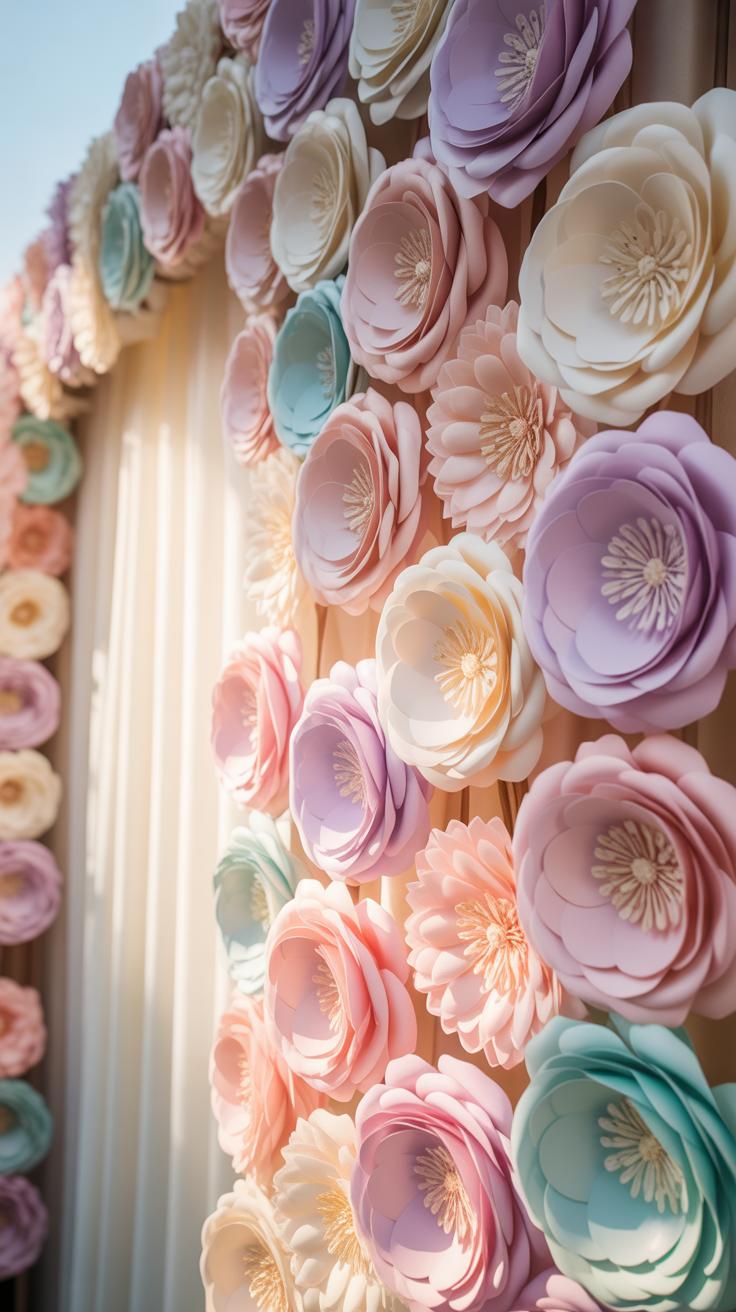
Strategic curtain design requires varied flower diameters to eliminate negative space. Use large focal blooms between six and eight inches wide. Mix these with smaller three inch filler flowers. This scale contrast creates visual density without excessive weight. Use heavy 65lb cardstock for structural integrity in larger petals. Lighter crepe paper works for delicate interior layers. This combination ensures the backdrop looks substantial.
Depth comes from petal manipulation and staggered spacing. Curve petal edges away from the center to create three dimensional profiles. Flat flowers look cheap and disappear under reception lighting. Space your blooms four to six inches apart on the vertical line. Overlap the edges of adjacent flowers to hide the hanging cord. This technique builds a solid wall of texture. It looks professional from every angle.
Hanging And Finishing Techniques To Keep Your Paper Flower Curtain Looking Polished
Secure each flower to a clear monofilament line using high temperature hot glue. Fishing line provides the strength needed for long vertical drops. Start gluing from the bottom of the strand and work upward. This prevents the cord from tangling as you add weight. Use a T-bar or a wooden dowel as the primary support beam. Secure the dowel to a heavy duty adjustable backdrop stand.
Check the balance of the curtain once it hangs vertically. Gravity often reveals gaps that are invisible during assembly. Glue small leaves or buds into these empty spots to finish the piece. Use a matte finishing spray to reduce glare from professional camera flashes. This step is vital for wedding photography. Hide the top support beam with a draped fabric header or a row of large paper greenery.
Making Large Standing Flowers And Giant Standing Flowers For Statement DCor
How To Build A Sturdy Base For Big Paper Flower Floor Displays
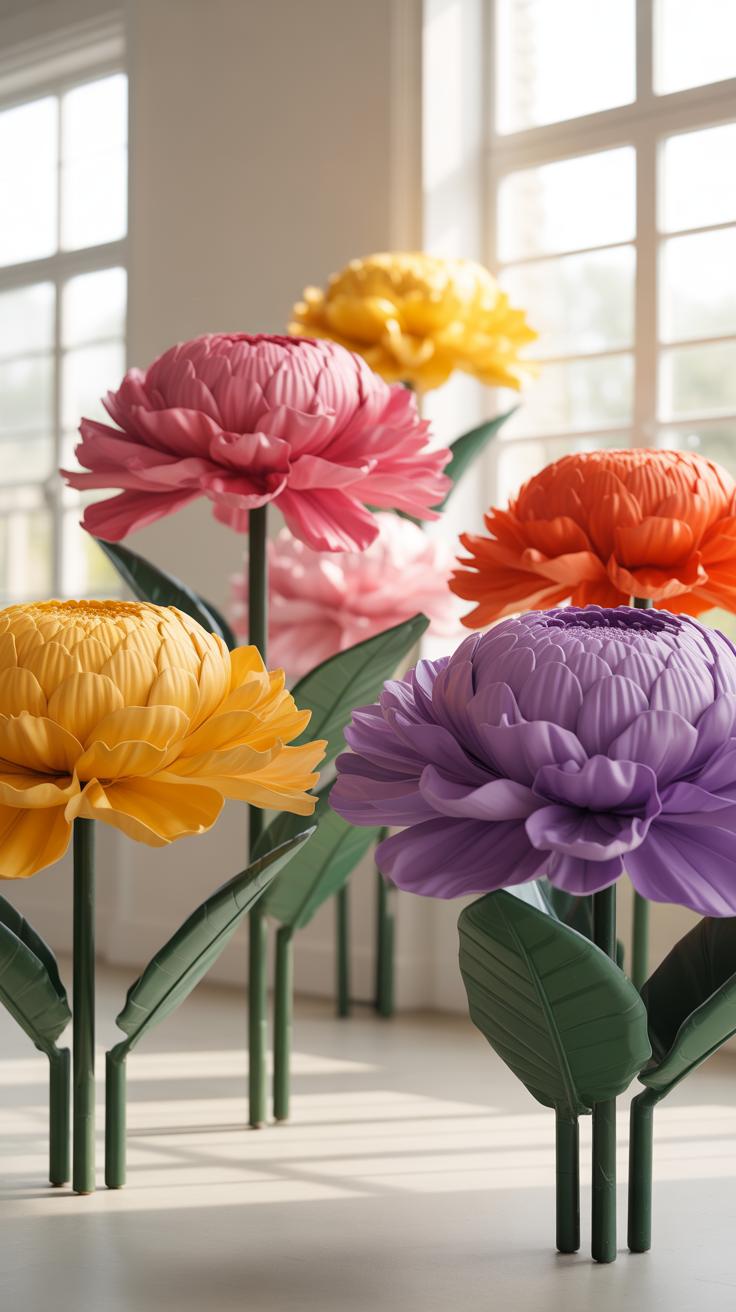
Large displays require a rigid foundation to prevent tipping. Use a heavy wooden board or a weighted metal plate as the primary base. Attach a vertical PVC pipe or copper tube to this base using floor flanges and screws. This central pole acts as the spine. Ensure the hardware is tight to handle the leverage of a top heavy paper bloom.
Stabilize the structure by filling the base with decorative stones or sandbags if using lightweight containers. Cover the mechanical parts with moss or fabric to maintain the visual design. Professional builders often use concrete poured into small buckets for permanent weight. This setup ensures the flower remains upright during wind or foot traffic. Your base must support the height and the center of gravity.
Scaling Up Petal Templates To Create Giant Standing Flowers That Wow Guests
Scaling requires a mathematical approach to maintain petal proportions. Start with a standard template and increase dimensions by a fixed ratio using a projector or grid system. Large petals need structural reinforcement to prevent sagging. Glue thin wire or heavy cardstock strips along the center of each petal. This allows you to curve the paper and keep the shape fixed over time.

Select heavy weight paper between 180 and 250 gsm for the best results. Thinner paper will collapse under its own weight at this scale. Layer the petals starting from the outer edge and move inward to the center. Use high temperature glue for a fast and permanent bond. This method creates a rigid flower head. Attach the finished head to the stem using thick wire or bolts.
Clever Paper Towel Roll Crafts To Supplement Your Wedding Flower DCor
How To Transform Paper Towel Rolls Into Flower Stems And Structural Supports
Cardboard tubes provide the rigid core necessary for large standing flowers. These rolls serve as lightweight internal skeletons for stems that must remain upright. Engineers and designers use these cylinders because they resist bending better than thin wire. You can slide the tubes over dowels or PVC pipes to add girth. This technique ensures giant standing flowers look proportional and maintain their structural integrity during the event.
To hide the cardboard, wrap the rolls in floral tape or green crepe paper. Secure the base of the big paper flower to the tube using hot glue or industrial adhesive. For taller displays, stack multiple rolls by inserting a smaller diameter tube inside them to create a firm joint. This method allows you to build tall stalks for a paper flower garland backdrop without adding excessive weight or cost.
Handcrafted flowers capture a moment in time, turning simple paper into an everlasting memory of your most beautiful day. Like love itself, these blooms are fashioned by hand and meant to endure long after the final dance.
Creative Paper Towel Roll Craft Ideas For Budget Friendly Wedding Centerpieces
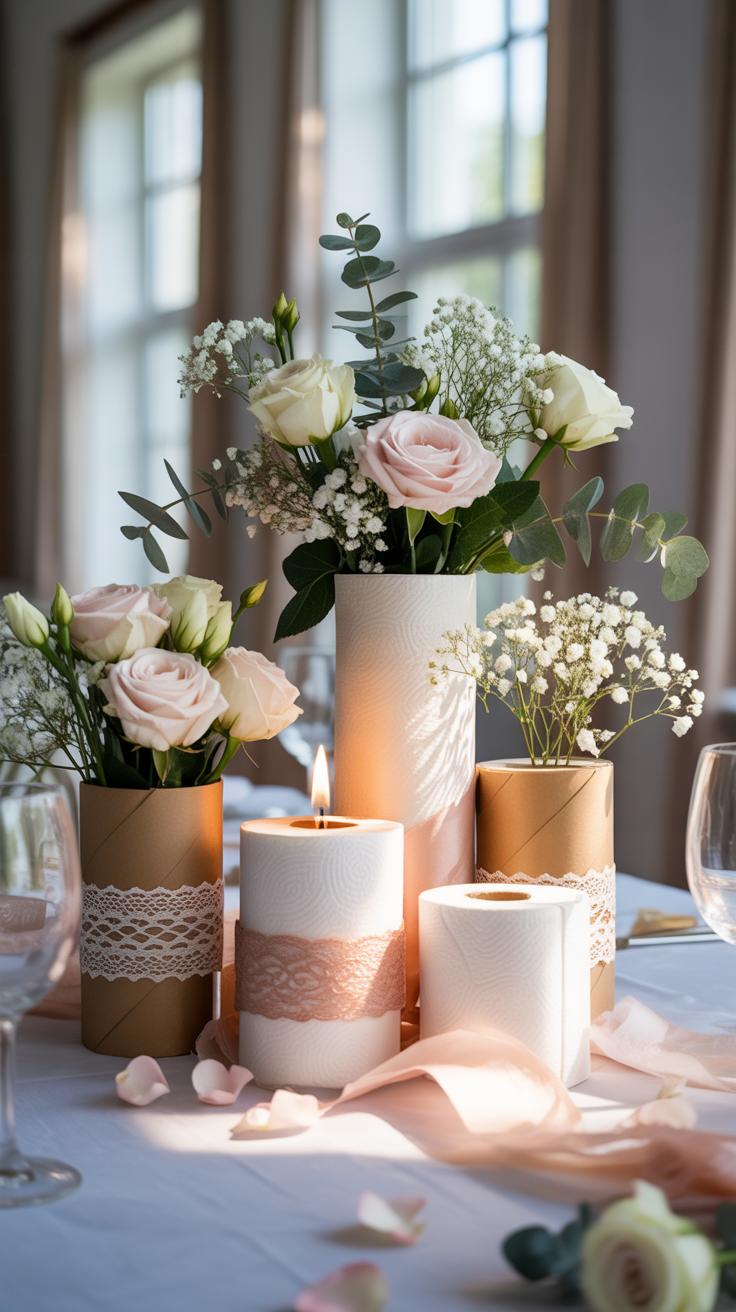
Cardboard rolls offer a versatile foundation for tabletop arrangements. They provide a stable height for paper flowers wedding displays without the cost of glass vases. Designers use these tubes to create tiered heights in a centerpiece layout. This strategy draws the eye upward and fills vertical space. You can paint or wrap these rolls to match any specific wedding color palette or theme.
- Tiered Pedestals: Cut rolls at varying lengths to create height levels for individual blooms. Grouping these pedestals creates a dynamic 3D effect on round tables. This tactic ensures each big paper flower remains visible from all angles.
- Eco-Friendly Vases: Coat rolls in plaster or textured paint to mimic stone or ceramic finishes. This hides the industrial origin of the material. Use these shells to hold dry foam for or stable paper flower garland arrangements.
- Structural Spacers: Use small sections of rolls inside larger containers to keep stems perfectly centered. This prevents the flowers from leaning or falling over during the reception. It provides a professional finish for many paper towel roll crafts used in decor.
- Napkin Ring Bases: Slice rolls into thin rings to coordinate with the larger floral displays. Wrap them in the same paper used for the paper flower wedding decorations. This creates a cohesive design language across the entire guest table setting.
- Weighted Bases: Fill the bottom of the roll with plaster or heavy beans to prevent tipping. This is vital for top-heavy blooms like paper peonies or roses. A weighted base keeps your large standing flowers secure on uneven linen surfaces.
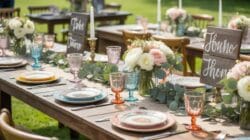
Strategic use of these materials reduces the total wedding budget. These paper towel roll crafts replace expensive hardware with functional recycled alternatives. By focusing on the structural strength of the cardboard, you build reliable decorations. This approach allows more funds for high-quality paper and dyes. Solid structural supports are the difference between a flimsy DIY project and a professional-grade wedding installation.
Color Texture And Style Tips For Cohesive Paper Flower Wedding Decorations
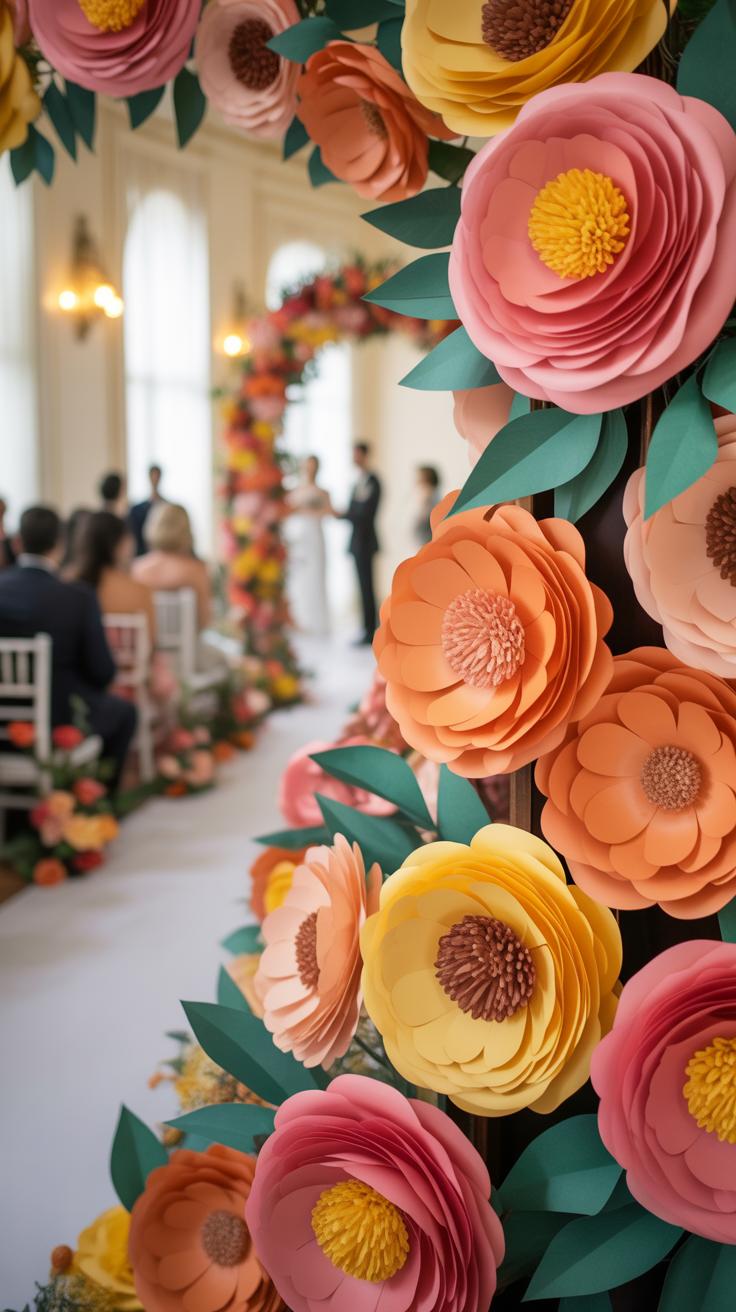
How To Choose A Color Scheme That Ties All Your Paper DéCor Elements Together
Color selection dictates the mood of the entire venue. Select one primary base color to ground the design. Add two secondary shades to provide range. This approach prevents the paper flower wedding decorations from looking cluttered or cheap. Use the 60-30-10 rule for balance. Sixty percent stays in the neutral or base tone. Thirty percent uses the secondary color. Ten percent adds a sharp accent.
Ensure your chosen palette works under the specific lighting of the venue. High-wattage bulbs wash out pale pastels. Dim environments require saturated hues to remain visible. Match your paper stock to the existing room colors. This creates a unified look from the paper flower garland to the table settings. Consistent color application makes various paper types look like a single, professional installation. Stick to the plan to avoid visual chaos.
Mixing Flower Styles And Sizes To Add Visual Depth Across Venue Spaces
Contrast creates interest in large installations. Mix giant standing flowers with smaller, delicate buds. This mimics natural growth patterns found in real gardens. Use structured geometric folds for a modern look. Integrate soft, rounded petals for traditional themes. Varying the diameter of each big paper flower prevents the display from looking flat. Depth comes from the physical distance between the front and back petals of each bloom.
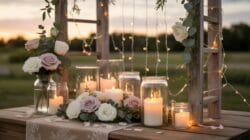
Scale your flowers according to the architecture. Use a paper flower curtain to fill empty wall space. Place large standing flowers near high ceilings to draw the eye upward. Construct a paper garland wedding walk for transitions between rooms. Use paper towel roll crafts as internal supports for stems to save on costs. Combining different textures like crepe and cardstock adds more dimension. Proper scaling ensures the decor does not overwhelm the guests.
Planning And Organizing Your Paper Flower Wedding Decoration Project
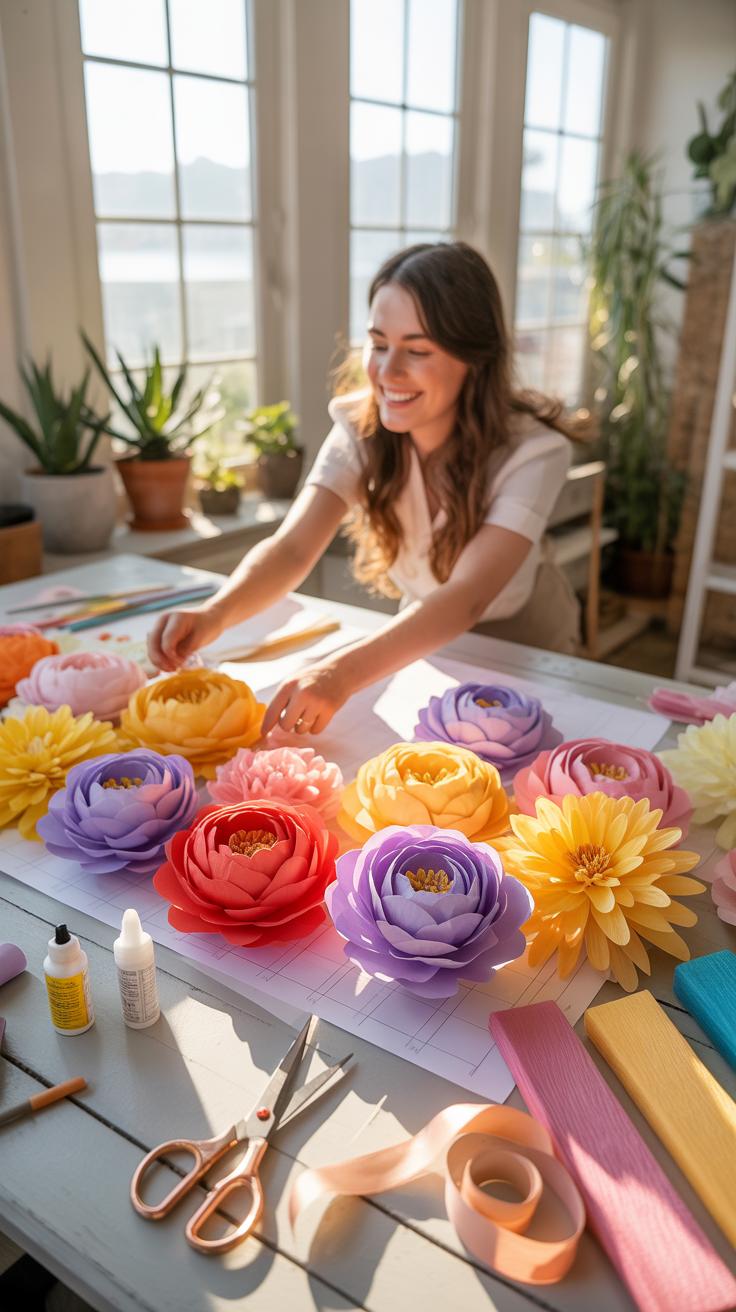
How Far In Advance To Start Making Paper Flowers For A Wedding
Start production at least four to six months before the wedding date. Paper flower construction is labor intensive and requires significant manual repetitive motion. Calculating the total number of stems needed for centerpieces and backdrops is the first step. You must account for the time spent cutting petals, shaping edges with tools, and assembling the blooms with hot glue or floral wire.
Standard crepe paper and heavy cardstock are durable but take time to process in bulk. Do not leave assembly to the final month when other logistics demand your attention. Aim to finish all individual flowers two months out. This timeline leaves space for unexpected delays or material shortages. Early completion prevents rushed work which leads to sloppy edges and weak structural bonds in the finished floral pieces.
Storing, Transporting, And Setting Up Paper Decorations On Your Wedding Day
Store finished flowers in airtight plastic bins to prevent moisture damage and dust accumulation. High humidity will cause crepe paper to lose its shape and bleed dye. Use acid-free tissue paper to cushion layers and avoid crushing delicate petals. Label each bin by decoration type, such as paper garlands or giant standing flowers. Keep these bins in a cool, dark, and dry environment to preserve the color.
Transport requires a climate-controlled vehicle with enough space to stack bins without pressure. On site, assign a specific team to handle the setup of paper flower curtains and backdrops. These items are lightweight but fragile under wind or physical contact. Use high-quality Command hooks or heavy-duty floral tape for secure mounting. Ensure all standing structures have weighted bases to prevent tipping in high-traffic areas or near open doors.
Frequently Asked Questions

Are paper flowers a good choice for beginner DIY wedding decor?
Absolutely! Crafting paper flower wedding decorations is an approachable project for any skill level. Beginners can start with simple crepe paper peonies or cardstock daisies that use basic cutting and folding techniques. Unlike fresh blooms, these won’t wilt, allowing you to practice and create your arrangements months in advance. With a few basic tools like sharp scissors and floral wire, you can achieve professional-looking results for your big day.
How do I choose the right paper for durable wedding venue decor?
Selecting the right material is essential for long-lasting paper flower wedding decorations. Heavyweight cardstock (65lb to 80lb) is ideal for large, structural wall backdrops because it holds its shape against gravity. For delicate, realistic bouquets or centerpieces, high-quality Italian crepe paper offers incredible stretch and texture. Always consider the venue’s humidity; while these flowers are durable, treated or coated papers will better resist drooping in outdoor or humid environments.
Is it actually cheaper to make paper flowers than to buy fresh ones?
Generally, DIY paper flowers are significantly more affordable than high-end fresh floral arrangements. While there is an initial investment in materials like quality paper, hot glue, and floral tape, the cost per stem is remarkably low. Because you are trading your time for labor, you can create a high-impact, luxury aesthetic on a modest budget. Plus, these beautiful keepsakes can be repurposed or sold after the wedding, adding even more value.