What Defines A Coastal Wedding Theme And Why Couples Love It
The Core Aesthetic: Natural Textures, Ocean Hues, And Open Air Charm
A coastal wedding theme relies on organic materials and a specific color palette. Designers use bleached wood, raw linen, and dried seagrass to build tactical layers. Common colors include navy, slate, and sand tones rather than bright or neon shades. These elements mimic the environment without using cheap plastic props. This approach creates a clean look that feels permanent and sophisticated.
Lighting and airflow play critical roles in this design strategy. Planners prioritize natural sunlight and open floor plans to connect the indoor space with the horizon. This aesthetic focuses on minimalism to avoid clutter. High-quality materials like sea glass and polished stone provide weight to the decor. Large windows or outdoor setups maximize the visual impact of the water and sky during the event.
How A Coastal Wedding Differs From A Traditional Beach Or Garden Wedding
Coastal weddings prioritize architectural elegance over casual settings. A typical beach wedding often uses sandals and tiki torches. In contrast, a coastal wedding maintains a formal structure with tailored fabrics and structured seating. This style blends the rugged nature of the shore with the refined details of a high-end estate. It offers better weather protection and sturdier flooring than literal sand ceremonies.
Garden weddings focus on lush greenery and floral density. Coastal themes shift that focus to negative space and mineral elements. You replace roses and ivy with driftwood and coastal grasses. The primary goal is to reflect the power of the sea instead of the softness of a meadow. This distinction offers a masculine and modern edge that traditional garden or tropical themes lack.

Setting The Mood With Coastal Wedding Decor That Wows
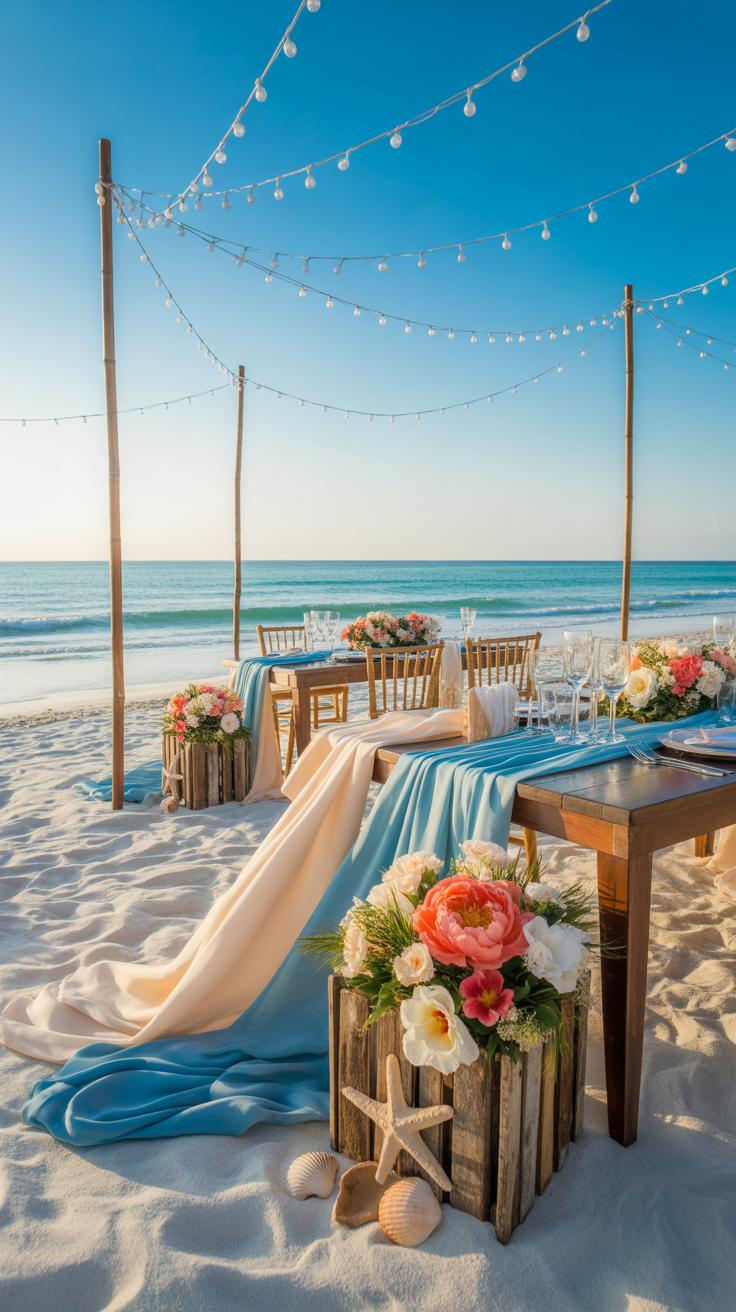
Driftwood, Seagrass, And Linen: Choosing Natural Materials That Anchor The Look
Select raw materials that withstand outdoor elements. Driftwood provides structural integrity for centerpieces and archways. Its weathered texture hides scratches and resists wind. Use seagrass for floor runners and baskets. This fiber is durable and handles moisture better than standard carpet. These materials create a sturdy foundation for any ocean wedding decor. They reflect the landscape without looking like cheap plastic props.
Focus on tactile contrast to build visual interest. Layer heavy linen cloths over wooden tables. Linen breathes well and stays cool in the sun. This fabric drapes better than polyester and absorbs sweat and humidity. Combine smooth glass with rough salt-washed wood to create balance. High-quality natural materials signal luxury while maintaining a relaxed atmosphere. Avoid synthetic fibers that trap heat and ruin the coastal wedding aesthetic.
Color Palettes That Capture The Coastal Spirit: Navy, Sand, Sage, And Seafoam
Effective color palettes for a white beach wedding rely on light reflection. Navy creates a strong visual anchor for high-contrast designs. Use it for men’s suiting or heavy stationery. Sand tones provide a neutral base for large surfaces like floors and tents. These shades hide dust and grit effectively. This strategy ensures the venue looks clean even after guests walk through sand and salt.

Sage and seafoam soften the environment. These green-blue hues mimic local coastal flora and shallow water. Use them for table linens or bridesmaids’ dresses to reduce glare from the sun. Bright white remains the standard for an August beach wedding because it reflects UV rays. This keeps the space physically cooler. Stick to this four-color limit to keep the coastal wedding theme professional and cohesive.
Designing Beautiful Beach Wedding Tables Your Guests Will Remember
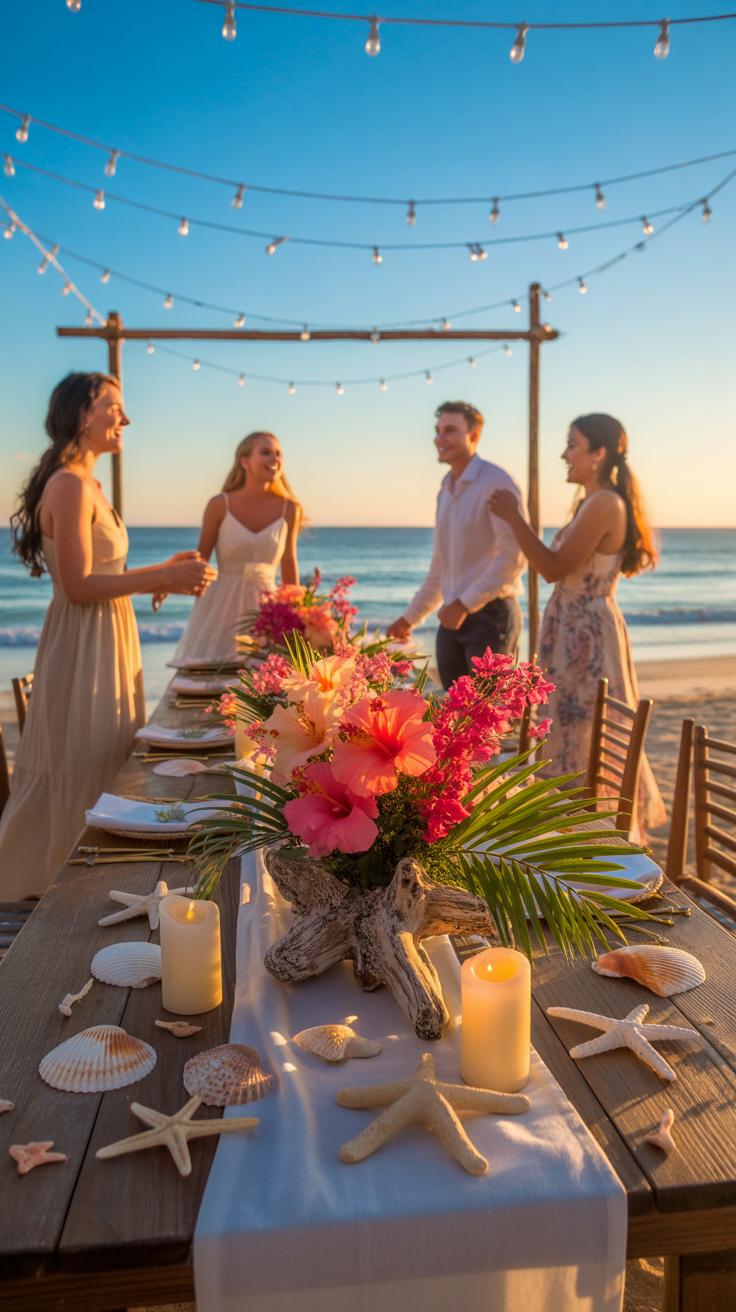
Centerpiece Ideas Using Shells, Coral, And Wildflowers For A Relaxed Elegance
Effective centerpieces for a coastal wedding theme rely on texture rather than height. Use real brain coral or fan coral replicas to create structural focal points. These organic shapes mimic the geometric patterns found in reef systems. Surround them with weathered conch shells or bleached starfish to ground the design. Focus on tactile elements that guests can see clearly when seated at the table.
Balance these hard materials with a selection of native wildflowers. Choose species like sea lavender or thistle that tolerate heat and wind. Use low vessels to keep sightlines open across the beach wedding tables. This approach merges marine biology with traditional floral design. It creates a clean aesthetic without the clutter of plastic props. Stick to a neutral palette to maintain a sophisticated and modern look.
Linen, Rope Details, And Lanterns: Styling The Full Tablescape From Base To Top
Start your ocean wedding decorations with heavy linen table runners in sandy tones. Choose flax or hemp fabrics for their natural weight and durability. These materials stay in place during a windy August beach wedding. Incorporate manila or cotton rope as napkin rings or plate accents. Use a square knot or a bowline knot to reference authentic maritime traditions. These small details signal high quality.

Provide lighting through functional glass lanterns with weighted bases. Wind can extinguish open flames instantly near the shore. Use LED pillar candles inside glass enclosures for safety and consistency. Place lanterns at varying heights to create depth on the white beach wedding tables. This setup ensures the wedding by the sea remains well lit as the sun sets. Tactical lighting protects the guest experience and highlights the table textures.
Planning A Sea Themed Wedding That Feels Personal And Unique
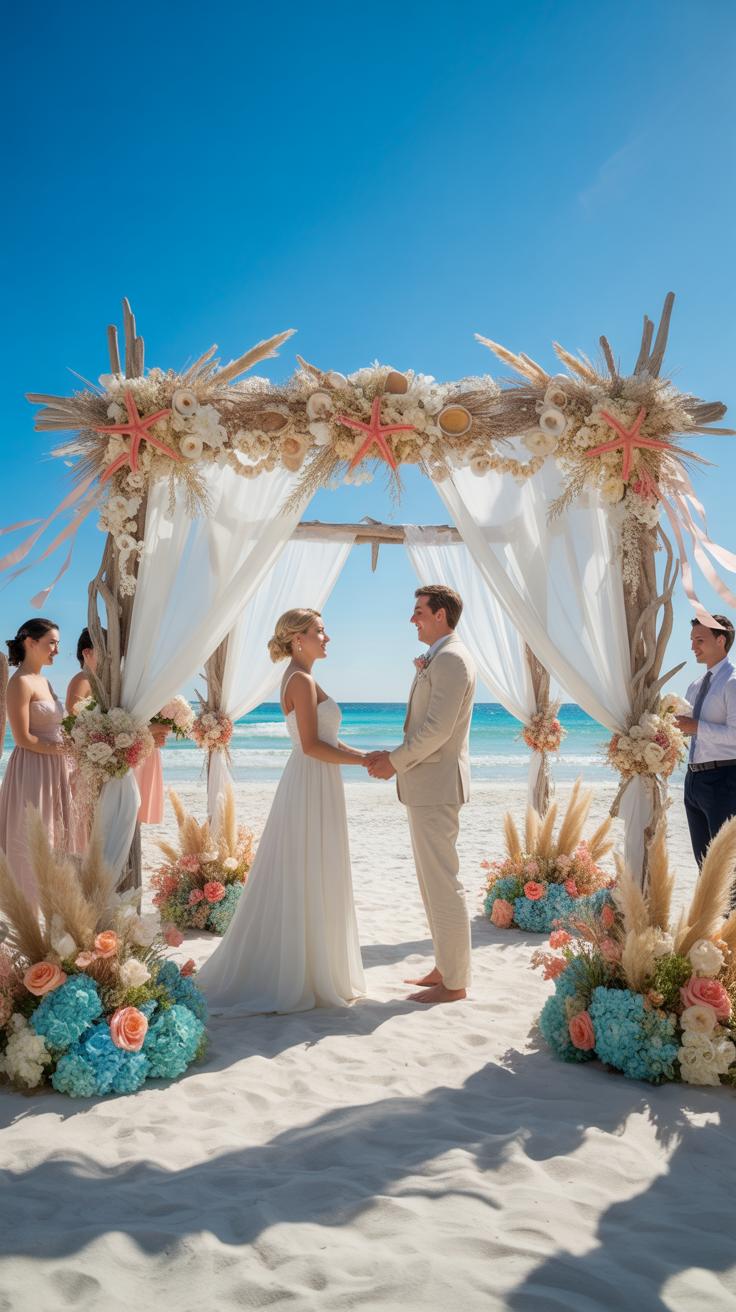
Meaningful Touches: Incorporating Maritime Symbols, Anchors, And Nautical Elements
Maritime symbols provide structural consistency to a coastal wedding theme. Use the anchor to represent stability and strength. This symbol originated in early Christian history and later became a staple of naval tradition. Incorporate brass or oxidized metal finishes to ground the aesthetic. These materials offer weight and durability. They prevent the decor from looking like cheap plastic party favors or temporary props.
Nautical charts serve a functional and decorative purpose. Use local hydrographic surveys for table runners or envelope liners. This adds geographic specificity to the event. Compasses symbolize direction and can act as physical metaphors for a new life together. Avoid overusing these elements. Select one or two primary symbols to maintain a refined look. Professional planners use these icons to create a cohesive visual narrative.
Writing Vows And Choosing Readings That Reflect The Beauty Of The Sea
Choose readings that focus on the physical reality of the ocean. Focus on its depth, tides, and historical role in navigation. Avoid generic sentimental prose. Look for literature that discusses the constancy of the tides. This reflects commitment and reliability. Use technical terms like trade winds or safe harbors sparingly. These terms add weight to the spoken word when used correctly in a ceremony.

Vows should mirror the scale of the landscape. Coastal environments are vast and require strong, direct language. Refer to the water as a witness to the exchange. This connects the couple to the immediate environment. Select readings from maritime authors like Anne Morrow Lindbergh or John Masefield. Their work focuses on the discipline of the sea. These choices provide a mature perspective on love and long term partnership.
Why An August Beach Wedding Is One Of The Most Sought After Celebrations
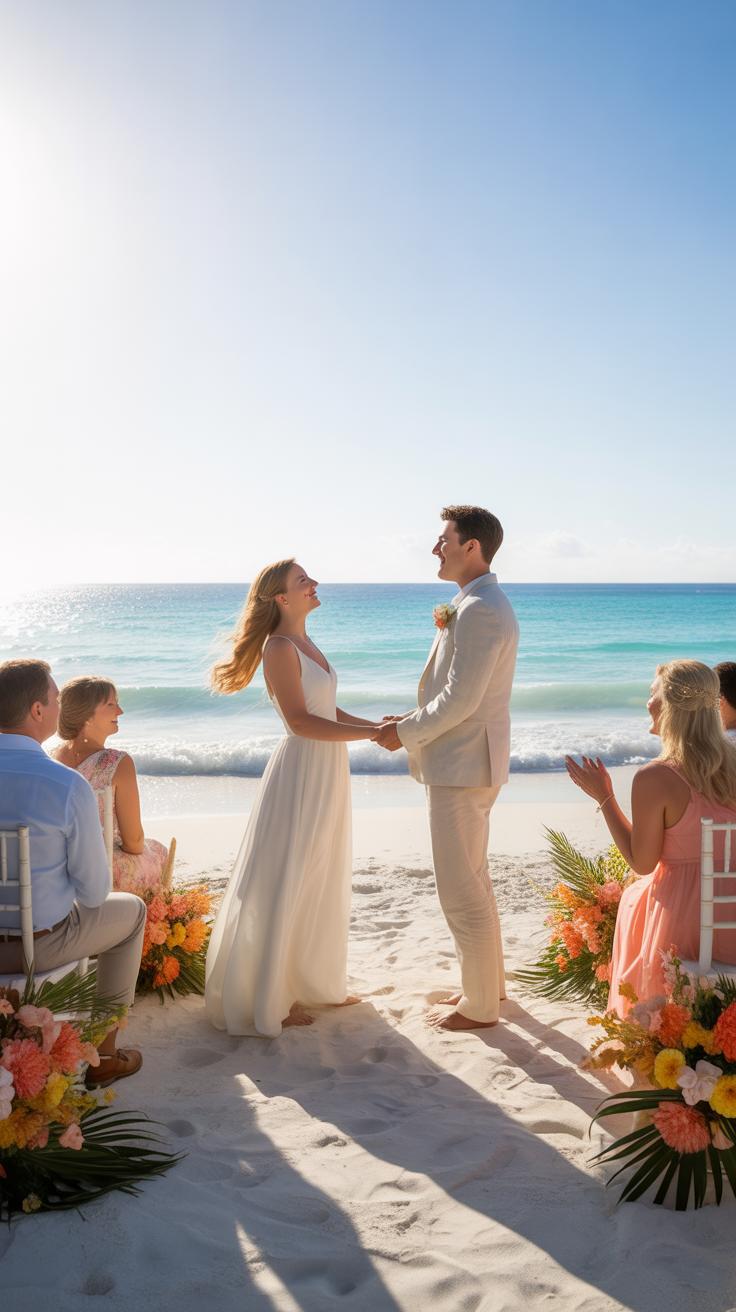
Weather, Light, And Atmosphere: What Makes Late Summer Coastal Weddings So Magical
August offers the most stable thermal conditions for a coastal wedding theme. Ocean temperatures peak during this month. This creates a natural heat sink that regulates the immediate shoreline environment. Warm breezes replace the sharp gusts found in early spring. High pressure systems typically dominate the coast. These systems provide clear skies and predictable visibility. This reliability allows for precise scheduling of outdoor events.
Photography benefits from the specific solar angle of late summer. The sun sits lower on the horizon during the afternoon. This produces softer light across the water and sand. Designers use this golden hour to enhance white beach wedding palettes. Natural light interacts with salt spray to create a distinct atmospheric haze. This effect adds depth to ocean wedding decorations without artificial lighting. Clean lines and textures become more visible.
Practical Planning Tips For An August Beach Wedding: Permits, Tides, And Timing
Strategic planning requires managing external variables unique to public coastal spaces. High demand in August means permit applications must be filed months in advance. Planners must track the lunar cycle to predict tidal shifts. Do not set up equipment below the high-tide line. Professional coordinators check local noise ordinances for beachfront properties. Access for vendors requires firm logistics. Sand makes heavy equipment transport difficult.
- Tide Table Analysis: Check NOAA tide charts for your specific GPS coordinates. Aim for a receding tide during the ceremony to maximize beach space. High tides narrow the shoreline and can flood guest seating areas. Ensure the reception stays well above the maximum high-tide mark for safety.
- Permit Procurement: Contact the local municipality or parks department for land use permits. Public beaches often restrict guest counts and alcohol service. Private beach access requires written agreements from property owners. Verify insurance requirements for outdoor structures like tents or arches before signing contracts.
- Hydration and Shade: Heat exhaustion is a genuine risk at an August beach wedding. Provide physical shade structures or high-quality umbrellas for every guest. Set up water stations at the entrance of the seating area. Use weighted bases for all shade fixtures to prevent wind-related accidents during the event.
- Guest Communication: Notify guests about the terrain in advance. Suggest appropriate footwear like flat sandals or wedges for the sand. Provide a designated area for shoe storage near the boardwalk. Clearly state the lack of air conditioning on the invitation. This helps guests choose breathable fabrics like linen or cotton.
- Micro-Climate Monitoring: Coastal weather changes rapidly due to sea breezes. Keep a real-time weather app active on site. Have a localized backup plan in case of sudden thunderstorms. Wind speeds can increase significantly after sunset. Secure all ocean wedding decor with heavy-duty anchors or fishing line to keep items stationary.

Timing dictates the success of a wedding by the sea. Avoid scheduling the ceremony between midday and three o’clock. This is the hottest period with the harshest overhead light. Late afternoon starts ensure cooler air for the guests. It also aligns the vows with optimal lighting for photos. Always verify sunset times for your specific longitude. This data allows you to transition into the evening reception seamlessly.
Stunning Ocean Wedding Decorations That Bring The Sea To Your Ceremony
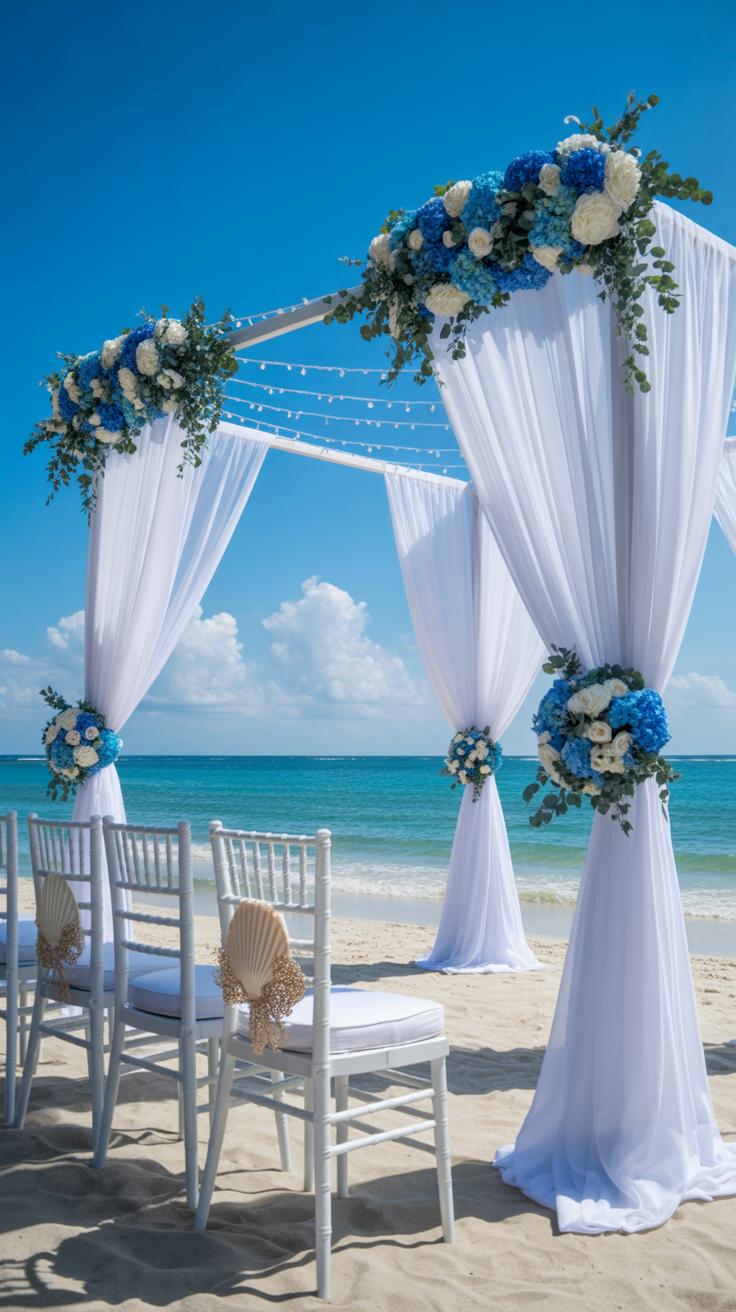
Floral Arches, Canopy Drapes, And Pampas Grass: Creating A Statement Ceremony Backdrop
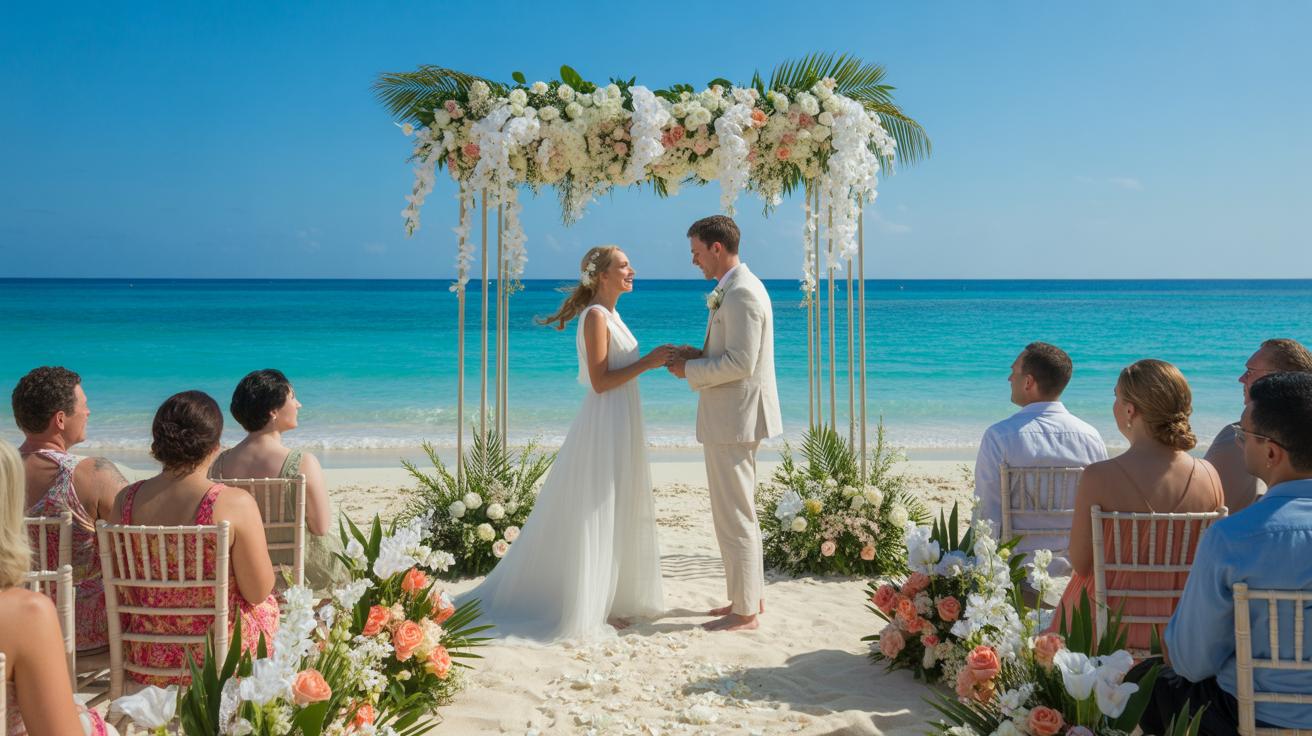
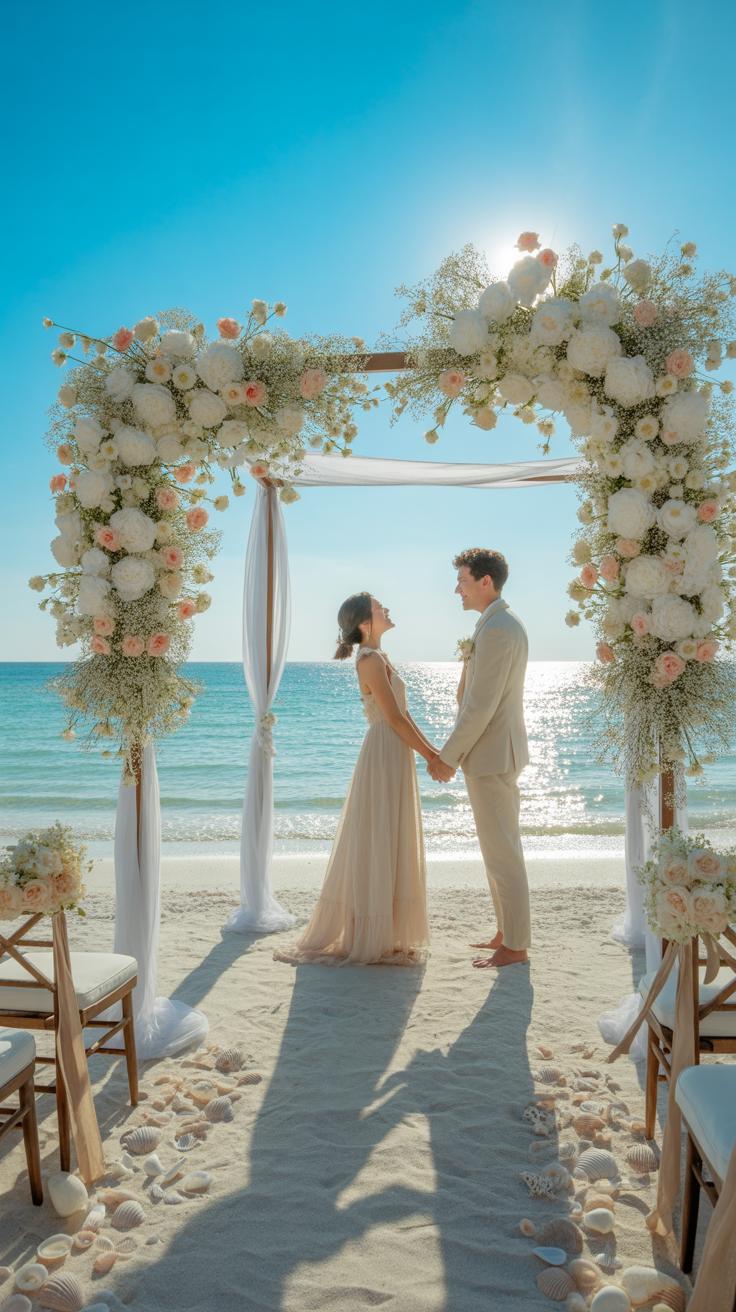
Coastal ceremony backdrops require structural integrity to withstand sea breezes. Use heavy timber or metal frames for arches. Drape lightweight fabrics like linen or sheer silk to catch the wind without toppling the structure. Secure these drapes with industrial clips hidden by floral arrangements. This setup creates visual movement. It defines the altar space against a broad horizon. Use neutral tones to keep the focus on the water.
Incorporate dried elements like pampas grass and bleached ruscus for texture. These materials resist wilting in high heat and salt air. Mix them with hardy tropical greenery or white roses for a classic look. Fix the base of the arch into deep sand or use weighted containers. This prevents common beach wedding accidents. Keep the design open. A dense backdrop blocks the natural scenery that guests came to see.
To me, the sea is like a person — like a child that I’ve known a long time. It appears to be a world where time stands still, offering a getaway where every moment feels like a beautiful escape.
Aisle Styling With Sand Pathways, Lanterns, And Coastal Foliage
Define the aisle clearly to guide guests and the wedding party. Use wooden boardwalk sections or heavy canvas runners for stable footing. These materials prevent heels from sinking and provide a flat surface for photography. Avoid thin rugs that catch the wind and create trip hazards. Secure the edges with heavy decorative stones or anchored pegs. Functional paths improve the logistics of the entire ceremony process.

Line the path with heavy glass lanterns to shield candles from the breeze. Use LED pillars for fire safety and consistent lighting. Surround the lanterns with local greenery like sea grape leaves or beach grass. This anchors the decor to the local environment. Space the items evenly to maintain a clean visual line toward the altar. Simple arrangements reduce setup time on public beaches where permits often limit decorative hours.
Elevating Your Reception With Ocean Wedding Decor That Feels Like A Resort
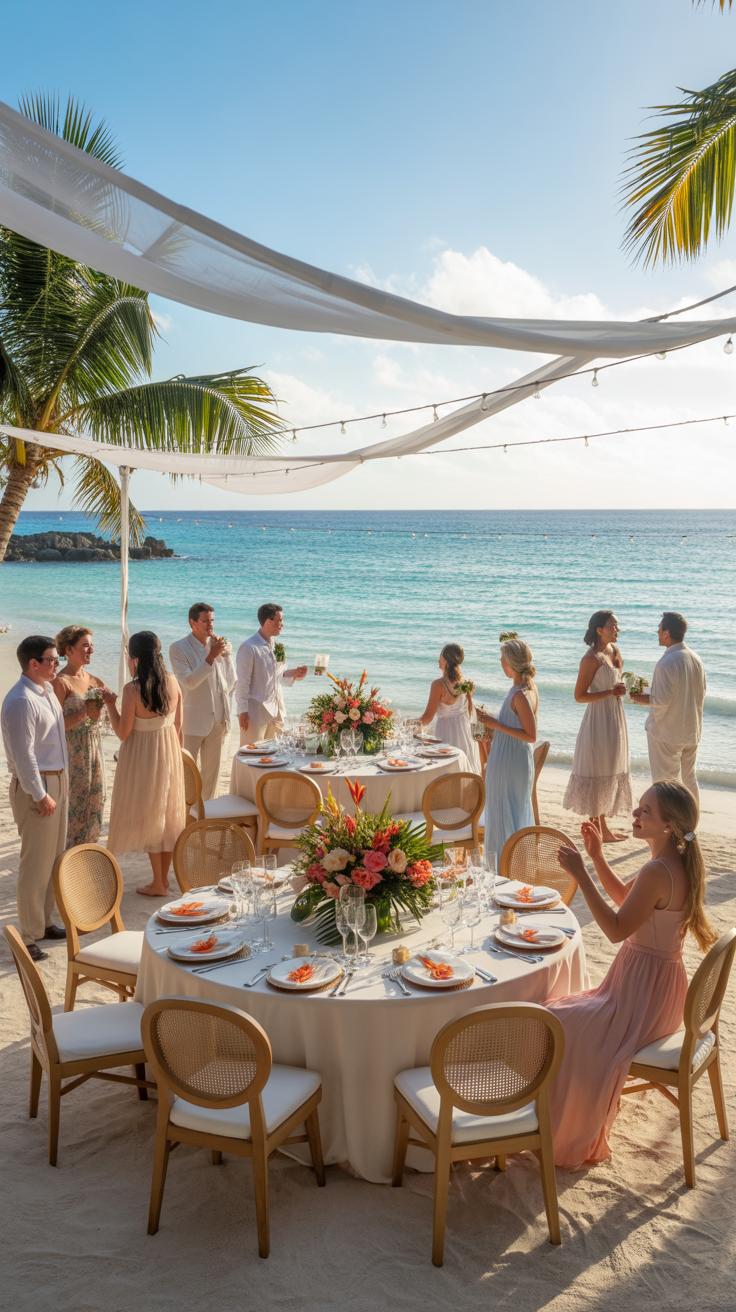
String Lights, Rattan Furniture, And Sheer Draping For An Effortless Coastal Reception
Lighting and furniture choices define the structural layout of a coastal wedding theme. Use overhead bistro string lights to mimic the clear night sky. These lights provide a warm glow that maintains visibility without glare. Opt for rattan furniture and woven wicker chairs to introduce organic textures. These materials withstand wind and humidity better than heavy upholstered pieces. They create a relaxed lounge atmosphere common in high end seaside resorts.
Sheer fabric draping serves as a functional tool for space definition. Use white linen or lightweight cotton voile to catch the breeze. Attach these drapes to wooden pergolas or tent frames to soften hard edges. This technique mimics the movement of sails and clouds. It provides privacy for the reception while allowing airflow. Strategic draping also hides structural poles or unsightly venue hardware. This keeps the focus on the natural surroundings.
Food, Drinks, And Coastal Inspired Wedding Cakes That Complete The Theme
Menu selection must reflect the environment through local sourcing and temperature control. Server chilled seafood platters on ice to prevent spoilage during an August beach wedding. Small portions work best in outdoor heat. Offer signature cocktails featuring citrus and salt to match the ocean profile. Avoid overly sweet drinks that attract insects. Use heavy glassware or weighted acrylics to prevent tips from sudden gusts of wind.

The wedding cake design should prioritize structural integrity and minimalist aesthetics. Use fondant or Ganache rather than soft buttercream to resist melting in the sun. Incorporate texture through deckle edges or subtle sugar glass that mimics sea glass. A white beach wedding cake uses monochromatic layers to maintain a clean look. Place the cake in a shaded, ventilated area. This prevents the tiers from shifting before the cutting ceremony begins.
Dressing For A White Beach Wedding Attire That Suits The Setting
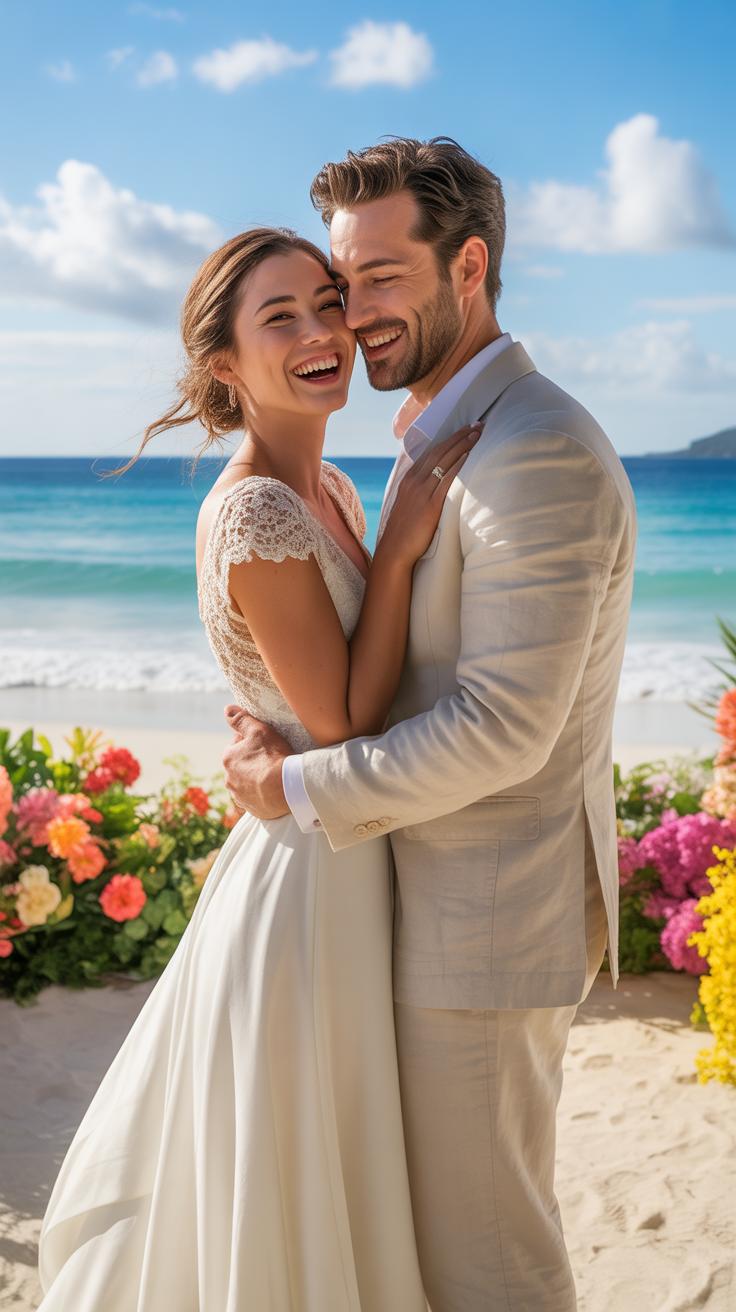
Bridal Gowns And Suits That Work With Sand, Sea Breeze, And Natural Light
Select fabrics based on weight and breathability. Silk chiffon and organza allow for movement in the wind without adding bulk. Avoid heavy satin or velvet that traps heat and absorbs moisture. Structured corsets often fail in high humidity. Choose silhouettes like A-line or sheath to prevent the hem from gathering excessive sand. Scalloped lace edges provide visual interest while resisting visible wear.
Men should choose linen or seersucker suits to manage body temperature. These materials wick sweat and dry quickly. Avoid black or dark navy as they absorb solar radiation. Tan, light gray, and pale blue reflect light and fit the coastal aesthetic. Use unlined jackets to increase airflow. Skip the silk tie and opt for a knit cotton version or go open collar.
Guest Dress Codes For A White Beach Wedding: Smart Casual, Tropical Formal, And Beyond
Define the dress code clearly to prevent guest discomfort. Coastal environments require a balance between tradition and physical reality. Uneven terrain and heat dictate the appropriate footwear and cloth. Formal does not mean heavy. Guests need to know if they will encounter sand or grass. Provide these details on the invitation to ensure the wedding party looks uniform and stays cool.
- Lightweight Linen: This flax-based textile is the standard for coastal events. It offers high air permeability and dries faster than cotton. Encourage guests to wear linen suits or trousers to maintain a sharp look without overheating in the sun.
- Midi and Maxi Lengths: Short skirts often fail in unpredictable sea breezes. Longer dresses provide better coverage and security. Suggest these lengths to ensure guests remain comfortable during an outdoor ceremony where wind speeds can fluctuate near the shoreline.
- Block Heels or Wedges: Stilettos sink into sand and soft turf. Recommend flat sandals or sturdy block heels for stability. This choice prevents injury and allows guests to move between the ceremony and reception areas without struggling through difficult coastal terrain.
- Breathable Cotton Blends: High-quality cotton provides structure while allowing skin to breathe. It works well for smart casual dress codes. These blends resist wrinkling better than pure linen. They keep guests looking polished throughout the duration of a long outdoor event.
- Light Color Palettes: Dark colors attract heat and show salt stains more easily. Suggest pastels, neutrals, or ocean tones. This creates a cohesive visual for photography. It also keeps guests physically cooler by reflecting sunlight rather than absorbing it during peak daylight.

Footwear dictates the success of a beach wedding. Traditional dress shoes lack the necessary traction and ruin easily in salt air. Consider a shoe valet where guests can swap heels for flip-flops. This tactical addition ensures guests stay on the dance floor. Clear communication regarding the surface prevents wardrobe malfunctions. Stick to these practical standards to keep the focus on the event.
Choosing The Perfect Venue For A Wedding By The Sea
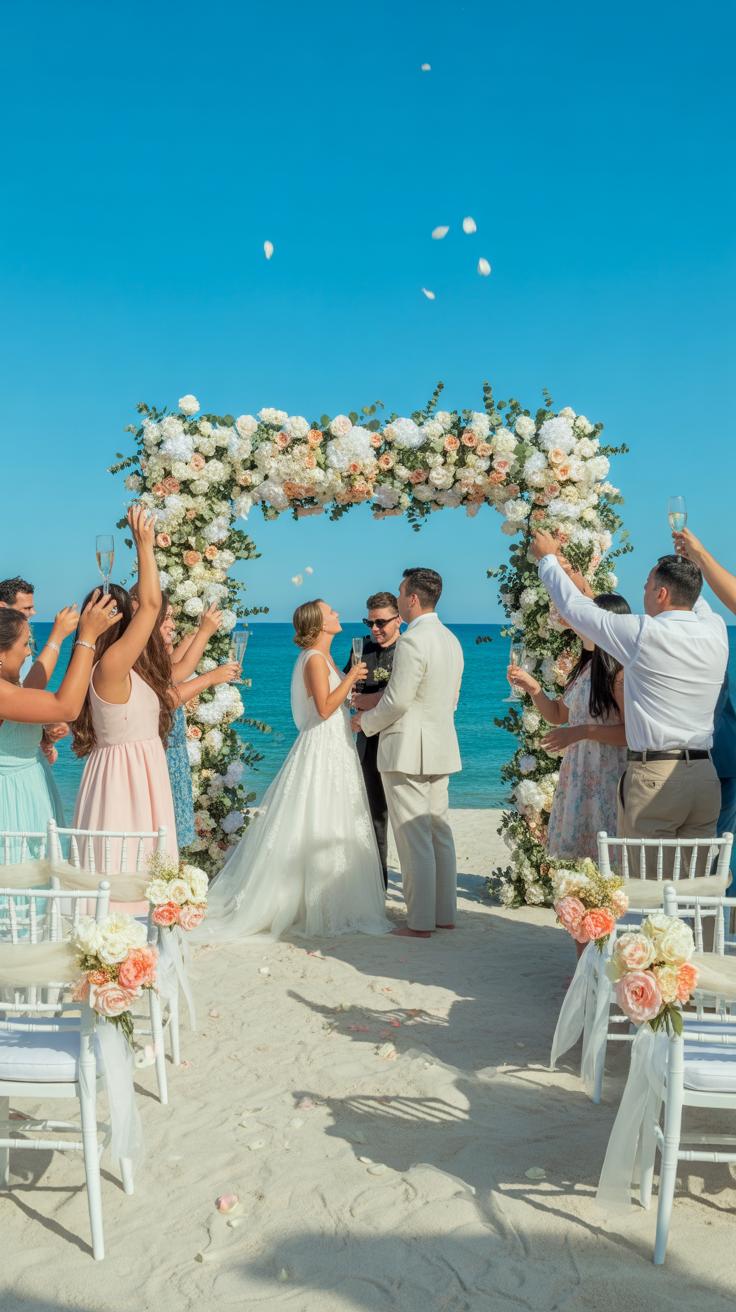
Cliffside Terraces, Beachfront Estates, And Coastal Gardens: Venue Types To Consider
Cliffside terraces offer elevation and stable ground for guests. These sites provide panoramic views without the logistical mess of sand. Most cliff venues feature stone or concrete flooring. This allows for heavy floral installations and classic seating. These locations favor modern aesthetics and clean lines. High winds are a constant factor here. You must secure all decor items with heavy weights or anchors.
Beachfront estates provide private access and controlled environments. These properties often include indoor backup spaces for weather emergencies. They allow for a cohesive transition from ceremony to reception. Most estates offer lawns that overlook the water. This offers the visual benefit of the ocean with better footing. Coastal gardens offer natural wind protection from salt-tolerant hedges. They provide a lush backdrop that complements organic wedding themes.
Questions To Ask Your Venue Before Booking A Wedding By The Sea
Inquire about local noise ordinances and permit requirements immediately. Public beaches often have strict curfews and sound limits. You need to know if the venue allows amplified music outdoors. Ask about the specific high tide times for your date. A rising tide can reduce your usable space by half. Ensure the venue has a solid plan for sudden rain or extreme heat.
Verify the status of electricity and restroom access for remote sites. Coastal locations often require portable generators for lighting and catering. Salt air corrodes metal and affects electronics quickly. Ask how the venue manages pests like sand flies or mosquitoes. These factors impact guest comfort more than the decor does. Confirm if there are restrictions on specific materials like glass or confetti. These rules protect the local marine ecosystem.
Frequently Asked Questions

What exactly defines a coastal wedding theme for a modern couple?
A coastal wedding theme is defined by a relaxed, breezy atmosphere that draws inspiration from the seaside. Unlike a traditional nautical look, it focuses on organic textures like driftwood, linen, and sea glass. The color palette usually features soft sands, aquamarine, and sunset corals. It aims to evoke the carefree feeling of a luxury summer holiday, prioritizing comfort and natural beauty over stiff formality or outdated maritime cliches.
How can I style my reception to capture the coastal wedding theme aesthetic?
To master the coastal wedding theme, focus on layering textures and light. Use sheer drapes that catch the breeze and table runners made of raw linen. Incorporate centerpieces with bleached greenery, dried palms, and white coral accents rather than heavy floral arrangements. Lighting is also key—opt for woven rattan pendant lamps or flickering lanterns to create a warm, sunset glow that makes guests feel like they are dining seaside at a resort.
Can I achieve a coastal look if I am getting married away from the beach?
Absolutely! You can bring the vacation vibes to any venue by focusing on sensory details. Use scents like coconut or sea salt in your candles and serve a menu featuring fresh seafood and tropical cocktails. Bring in sandy neutrals and ocean blues through your linens and stationery. These thoughtful touches create a convincing coastal wedding theme that transports your guests to the shore, regardless of your actual GPS coordinates or distance from the water.