Introduction
Spiritual Artwork Featuring Energy Art And Chakra Art Styles offers a unique way to connect with deeper emotions and energies. This type of art focuses on visual representations of unseen forces that influence life, such as energy flows and chakra centers.
In the following sections, you will learn what Spiritual Artwork is, its significance, and practical steps to create your own Energy and Chakra Art. You will also discover how these artworks can bring balance and calm to your life and environment.
What Is Spiritual Artwork
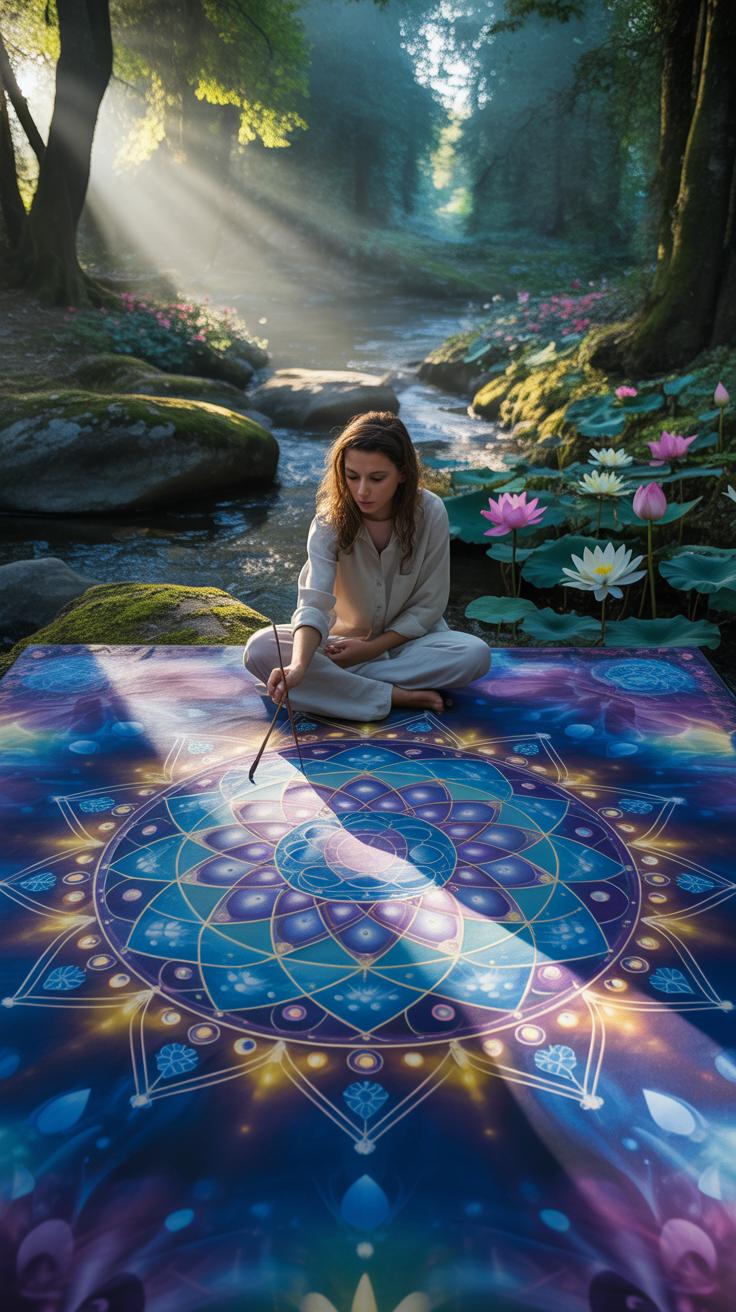
Spiritual artwork isn’t just about pretty pictures; it has a deeper aim. It’s often created to express something beyond the visible world—energy, consciousness, and inner experiences take center stage. Unlike regular art, which may focus on aesthetics or external realities, spiritual art invites viewers to look inward or feel a connection to something greater. It often explores themes like meditation, enlightenment, the soul’s journey, and universal energies.
Common themes include symbols from various traditions, light and aura effects, and abstract shapes representing energy flow or chakras. The purpose can be healing, guiding, or invoking a sense of peace. This kind of artwork acts almost like a bridge between material and immaterial realms.
Examples Of Spiritual Art Styles
There are several distinct styles in spiritual art that each offer a unique visual approach:
- Energy Art: This focuses on depicting energy fields and vibrations around living beings or objects. Bright colors and dynamic patterns often show movement or flow.
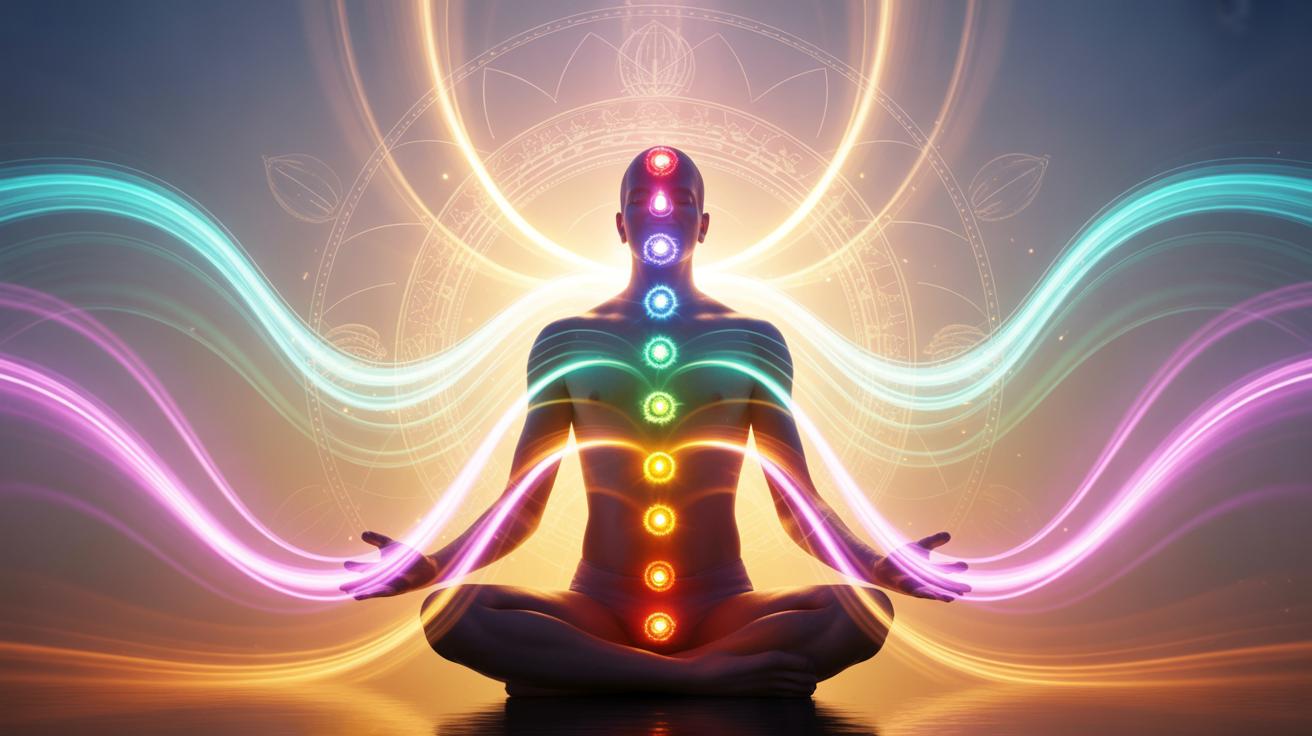
- Chakra Art: Centers on the chakra system in the body, using specific colors and symbols for each chakra to represent spiritual centers and energy balance.
- Mandalas, the circular designs built from balanced geometric patterns, are also common and symbolize harmony and wholeness.
- Visionary art often blends detailed symbolism with surreal or otherworldly imagery aiming to depict mystical experiences or altered states of consciousness.
Energy art and chakra art belong to this category because they both visually express unseen forces interacting within and around us. They stand out by combining vibrant colors and symbolic imagery that directly reference energy anatomy, making them instantly recognizable in spiritual circles.
Why Spiritual Art Appeals To People
People are drawn to spiritual artwork for several overlapping reasons:
- Emotionally, it often triggers calmness or introspection.
- Psychologically, it can provide comfort or a sense of meaning, helping one navigate personal challenges.
- Culturally, spiritual art may connect one to heritage, ancient wisdom, or a shared belief system.
Sometimes, it might shift your mood unexpectedly—perhaps a piece feels oddly grounding or uplifting without you knowing exactly why. It nudges your awareness toward inner states, encouraging meditation or reflection, which might explain its timeless appeal. The art becomes not just something to look at but something to experience, interact with on a personal level.
Why Energy Art Matters
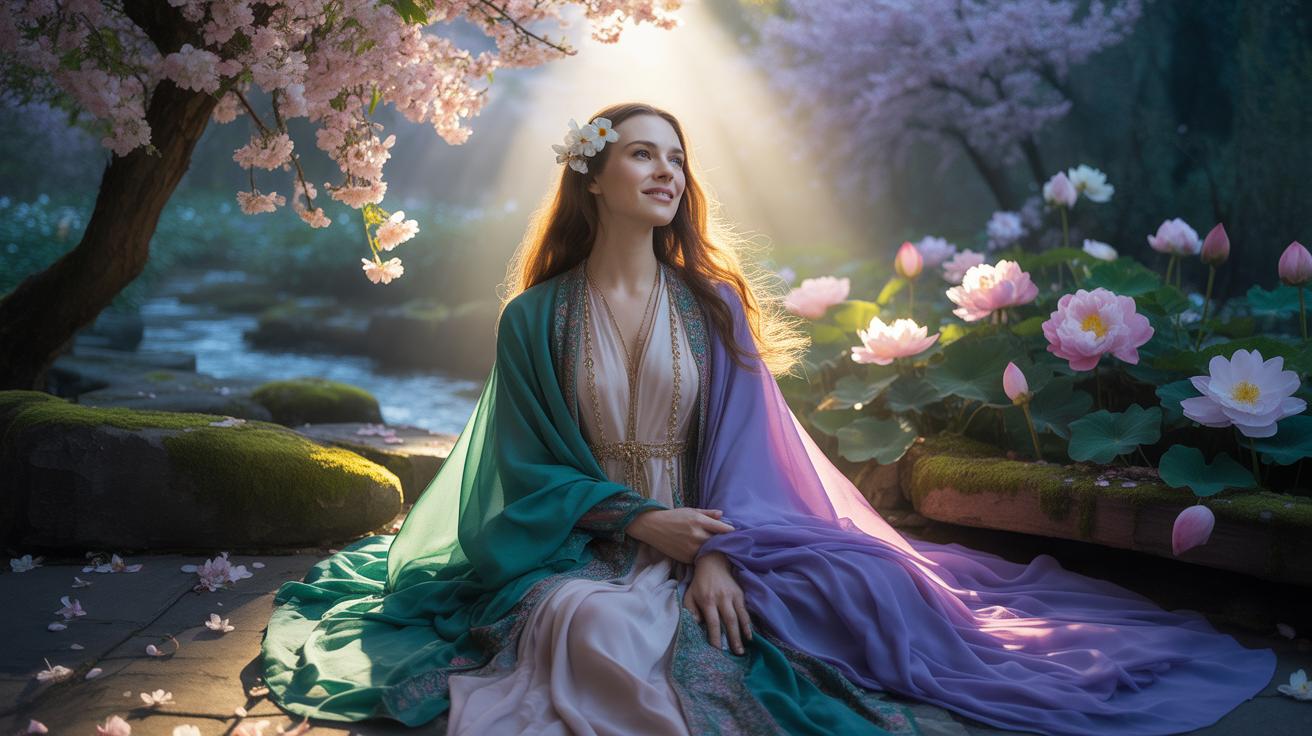
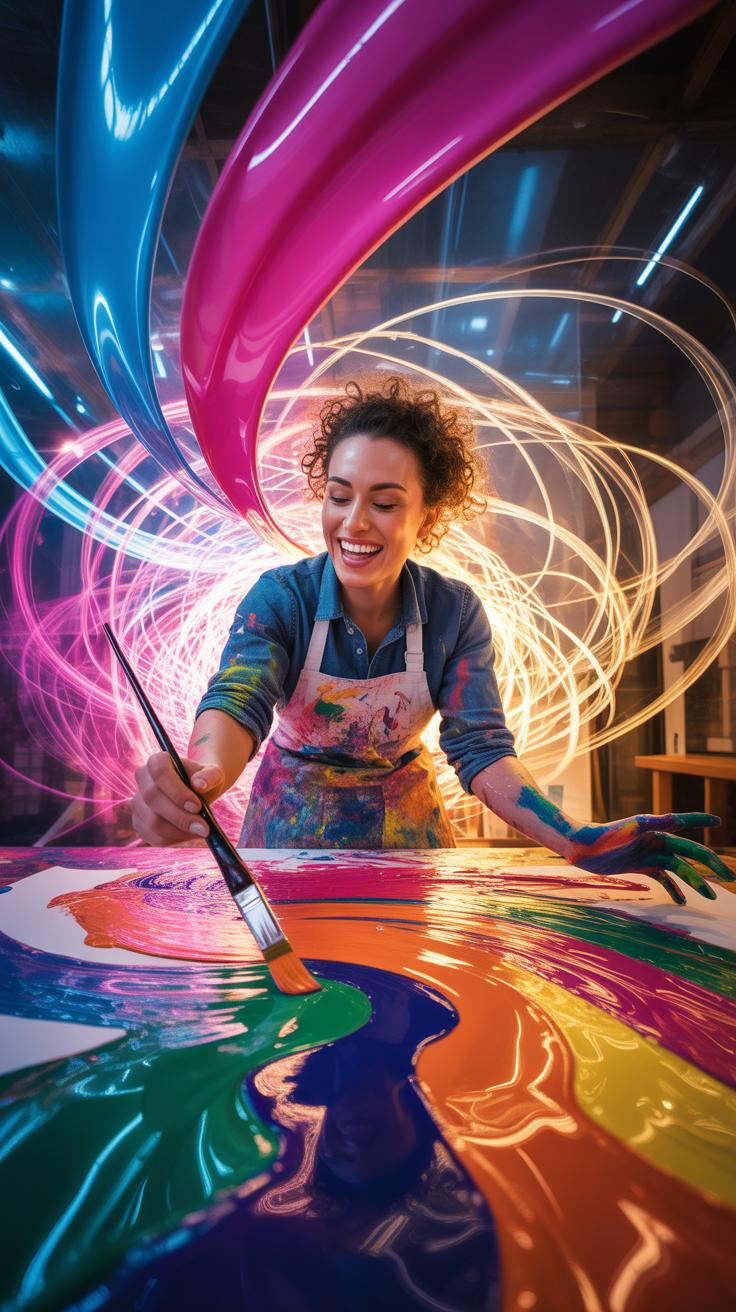
Energy art captures the intangible flow of energy that moves through and around us. It’s not just decoration—this art form aims to mirror the unseen currents affecting our mental and physical states. Seeing these dynamic forms can be surprisingly impactful, almost like feeling the energy shift in a room. Some believe it helps recalibrate the mind, inviting calm or inspiration depending on how energy is represented.
This kind of art often doesn’t stick to realistic images but focuses on movement, color, and vibration. It represents energy as something in motion, continuous and alive. This visual flow can influence how you feel—your mood might lift, or your thoughts may become clearer, just by absorbing the patterns and colors that symbolize energy.
Visual Symbols In Energy Art
Energy art uses specific visual elements repeatedly, each carrying a meaning connected to energy’s nature:
- Abstract forms: swirling lines, waves, or spirals depict energy movement.
- Colors: bright hues like red or yellow often signify active, stimulating energy, while cooler blues or greens suggest calm or healing energy.
- Shapes: geometric or organic shapes symbolize energy’s direction, intensity, or harmony.
You may notice how these symbols don’t just represent energy—they interact with it, pulling your attention or guiding your gaze in a certain flow. It’s almost as if the art itself moves the viewer’s focus along with the energy it depicts.
Using Energy Art To Enhance Spaces
You might want to place energy art somewhere you need focus or relaxation. In a workspace, a piece bursting with warm colors and dynamic shapes can stimulate creativity and drive. At home, softer tones and smoother shapes can cool down tension, making rooms feel more peaceful.
Think about walls that face natural light, so the art’s colors brighten and energize the space throughout the day. Sometimes, placing energy art near areas for meditation or rest amplifies its calming effect. The arrangement matters—hanging a piece at eye level invites ongoing connection with the energy it holds.
Experimenting with placement could help you feel subtle mood shifts, reinforcing how energy art molds the ambience of your environment in unexpected ways.
Chakra Art Vs Other Spiritual Styles
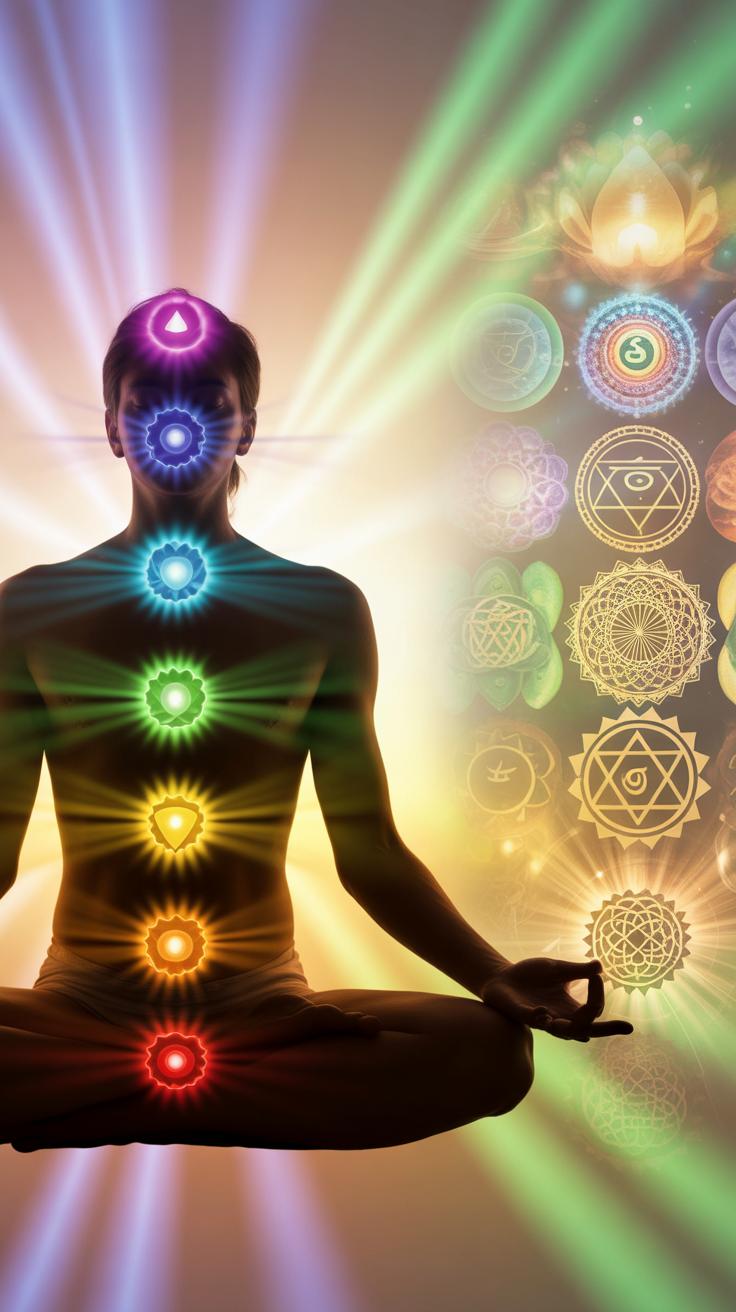
When you look at chakra art next to other spiritual art forms, you quickly notice a few things that set it apart. Unlike many general spiritual artworks that might focus on mystical or religious themes broadly, chakra art zeroes in on specific energy centers within the body. It’s less about external deities or abstract spiritual concepts and more about internal balance and flow.
Colors play a huge role here—each chakra traditionally corresponds to a particular color, making the artwork vibrant and purpose-driven. You might see deep reds for grounding or bright greens symbolizing heart energy, and these aren’t just decorative choices; they reflect deeper meanings related to healing and emotional states.
Other spiritual styles sometimes adopt color symbolism, but not with the same consistent, systematic approach. Chakra art’s use of circles, lotuses, and mandalas also pushes it into a distinct category. It’s pretty focused on the symbolism of the seven chakras, whereas other styles can be more varied—incorporating figures, nature scenes, or cosmic imagery without the same intrapersonal emphasis.
Key Chakras And Their Representation
There are seven principal chakras that most chakra art highlights, each tied to particular symbols and colors:
- Root Chakra (Muladhara) – Red, often shown as a four-petaled lotus.
- Sacral Chakra (Svadhisthana) – Orange, displayed as a six-petaled lotus.
- Solar Plexus Chakra (Manipura) – Yellow, represented by a ten-petaled lotus.
- Heart Chakra (Anahata) – Green, commonly a twelve-petaled lotus.
- Throat Chakra (Vishuddha) – Blue, symbolized by a sixteen-petaled lotus.
- Third Eye Chakra (Ajna) – Indigo, often with a two-petaled lotus.
- Crown Chakra (Sahasrara) – Violet or white, shown as a thousand-petaled lotus.
These symbols and colors aren’t just visually striking; they’re carefully chosen to reflect each chakra’s energy and meaning. Sometimes, you see additional imagery like geometric shapes or Sanskrit letters linked to these centers, making the artwork feel almost like a spiritual map.
How Chakra Art Supports Healing
Chakra art isn’t solely decorative—it’s often used in ways to support healing. In meditation, for example, focusing on the specific chakra colors and symbols helps many people direct their energy and attention inward. This act can quiet the mind or shift emotional states.
Therapists and healers sometimes integrate chakra art into environments where spiritual or energy work happens. It helps to create a visual focus that encourages relaxation, balance, and a deeper sense of connection with one’s energy system.
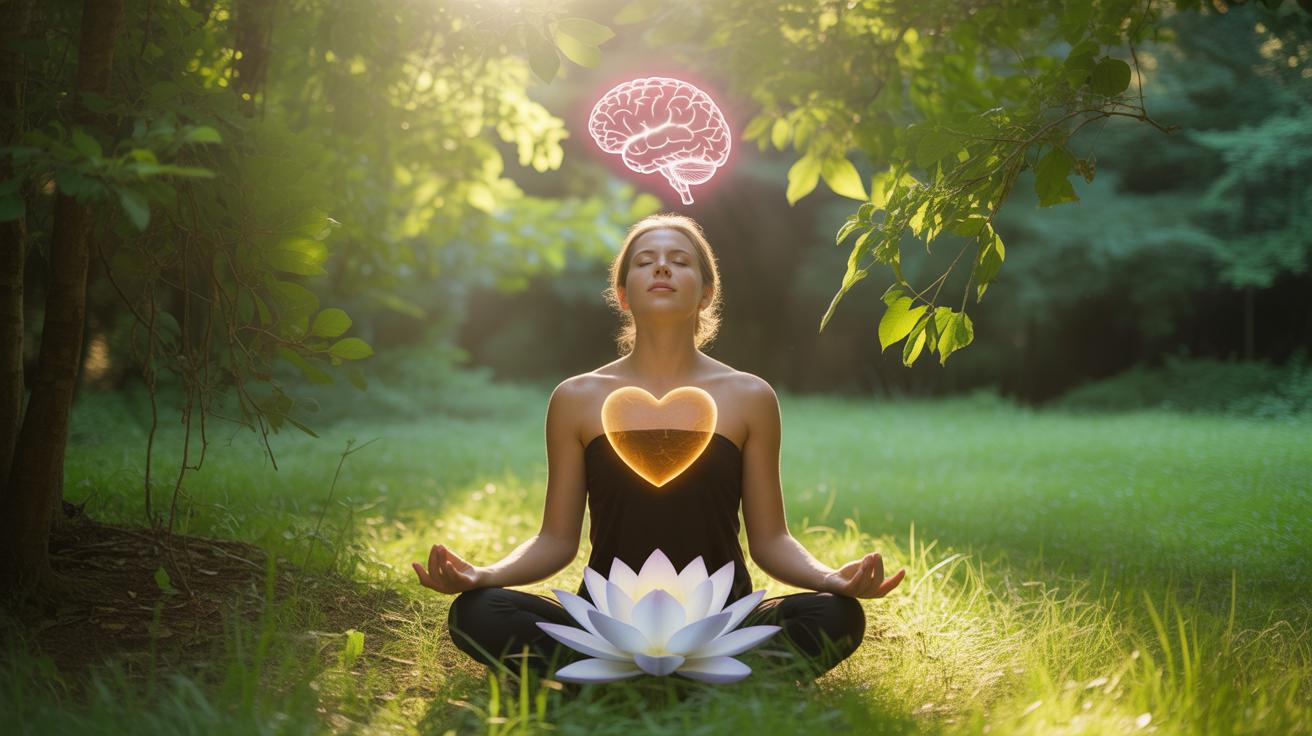
Of course, how effective this is can vary widely from person to person. Some swear by it, noting changes in mood or physical symptoms, while others might find it more symbolic than practical. Still, as an accessible tool, chakra art offers a way to engage with spirituality in a tangible, colorful form that can resonate deeply during healing practices.
Checklist For Creating Spiritual Artwork
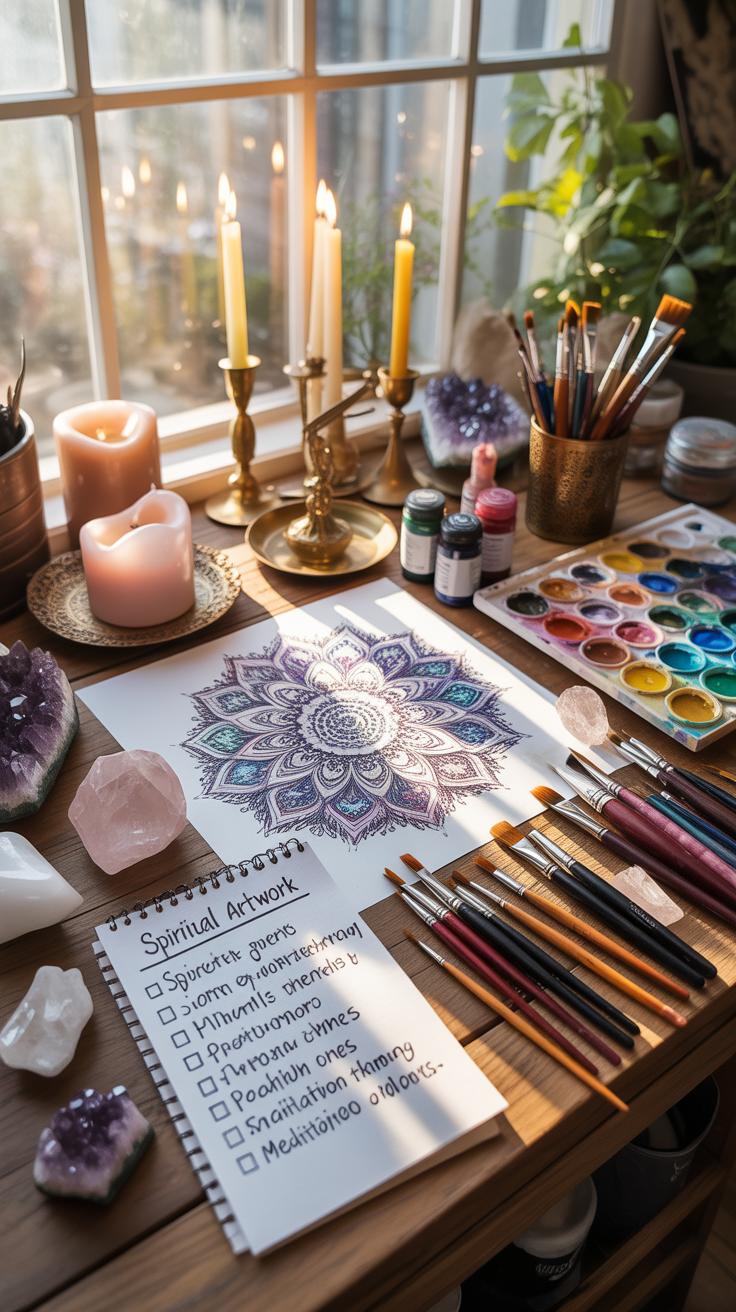
Start with a clear plan for your artwork. Ask yourself: what energy or chakra do you want to express? Write down your concept to keep focused. Think about the feeling the piece should evoke—calm, strength, balance? Sketch rough ideas before choosing your final design.
Then, look at your materials. Select paints and canvases that resonate with the energy theme. Natural fibers or textured surfaces might help bring out certain emotions or spiritual tones. Having the right tools ready can also affect how freely your energy flows onto the canvas.
Next, be mindful as you work. Let your brushstrokes follow the rhythm of the energy you want to capture. Don’t rush. Pause frequently and reflect on whether the work aligns with your original concept. Sometimes stopping before finishing helps clarify what the art really needs.
Finally, revisit your piece with fresh eyes after some rest. Does it speak the language of the chakras intended? If not, adjust colors or shapes thoughtfully rather than impulsively. Spiritual artwork is less about perfection and more about honest expression.
Choosing Materials That Enhance Energy

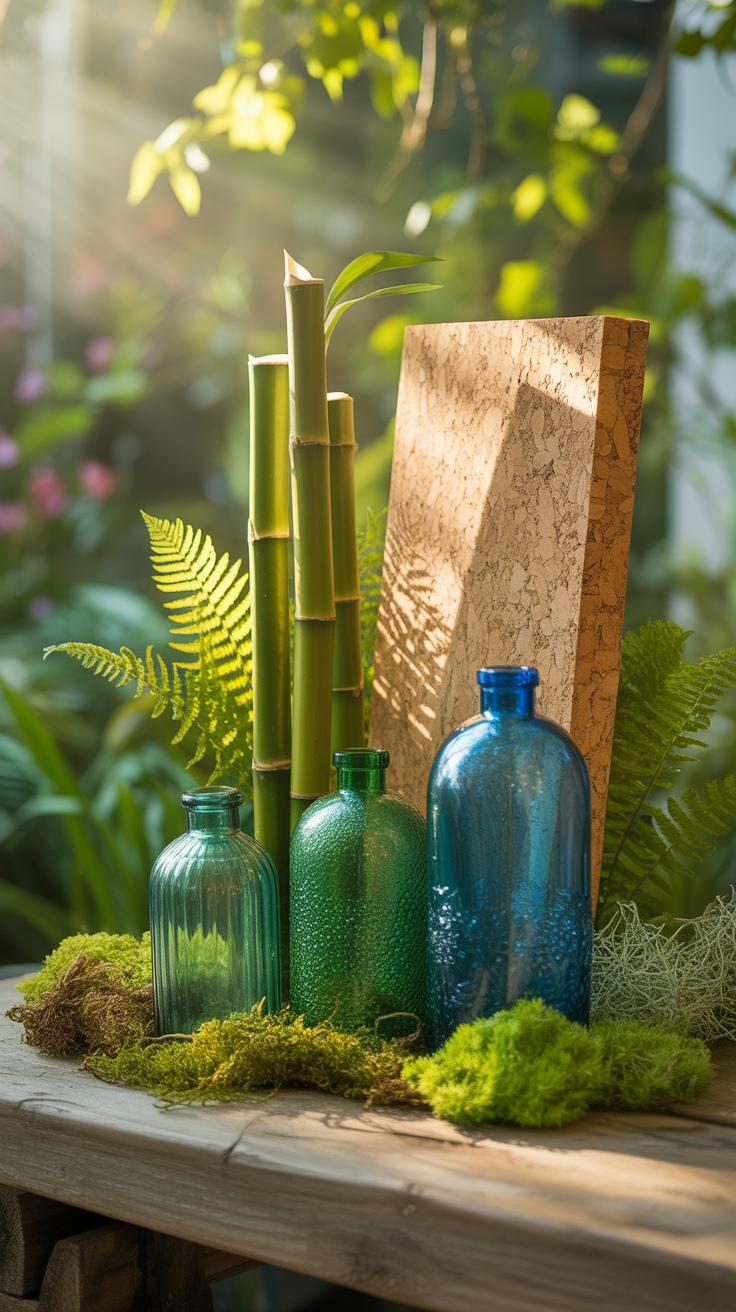
Choosing the right materials can influence the energy your art holds. For chakra-themed pieces, consider using natural or organic paints. Acrylics are popular—they dry fast and their brightness can highlight energy centers effectively. Oils offer depth but require patience.
Canvas texture matters too. Smooth canvases allow crisp shapes, while rough surfaces can add an unpredictable, dynamic feel that mirrors the flow of energy. Paper or wood panels might be good alternatives if you like working with different textures.
Tools like various brush sizes, palette knives, or even unconventional objects can help you create specific energy movements or chakra symbols. I’ve found that using fingers for blending sometimes brings a directness that brushes can’t match. What feels right for your hands may be unique.
Capturing Energy Through Color And Form
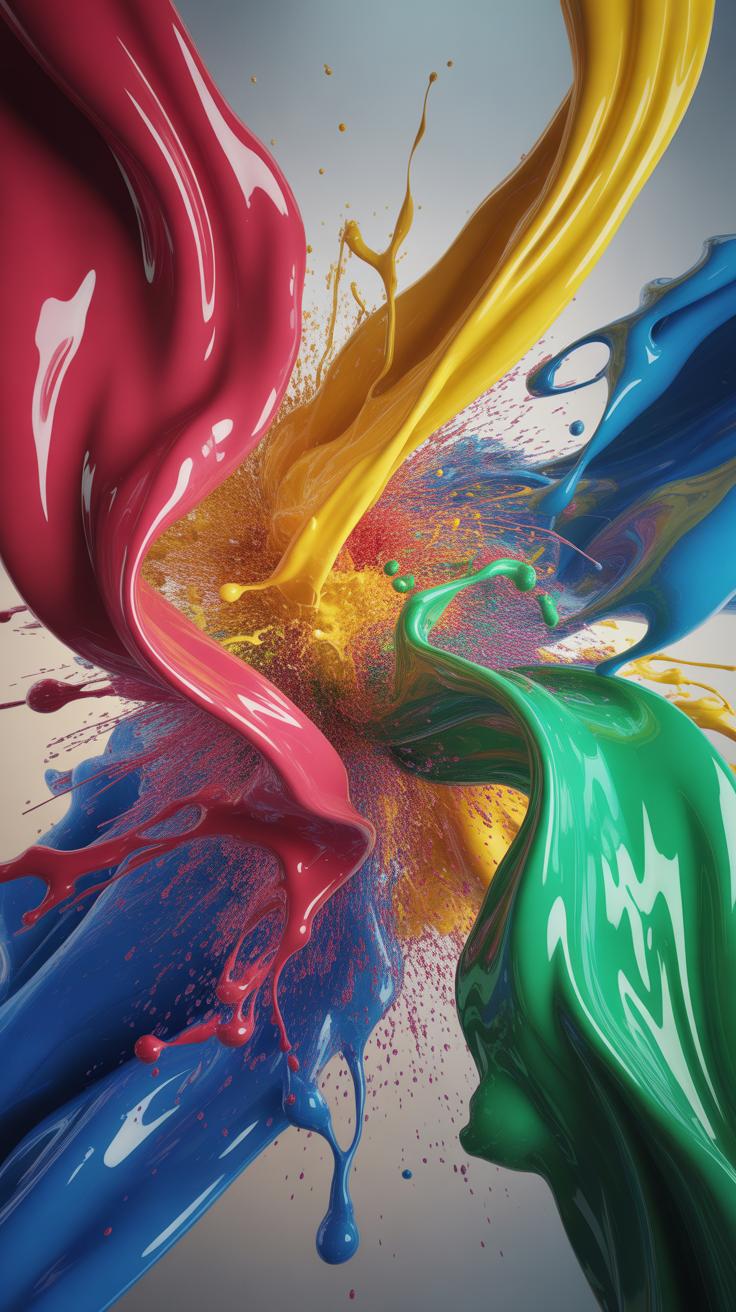

Colors hold strong meanings in spiritual art, especially with chakras—red for root, green for heart, violet for crown, and so forth. Yet, how you use colors matters as much as their choice. Blending hues softly can symbolize harmony, while sharp contrasts might depict conflict or awakening.
Form plays a role too. Rounded forms tend to suggest flow and continuity, while angular shapes can break energy or highlight tension. Experiment with layering different shapes and colors to find a balance that feels authentic, not forced.
Try stepping back often to see the overall energy your work conveys. Does the piece seem alive or static? Sometimes abstract shapes beyond strict chakra symbols can express energy better—don’t be afraid to go beyond tradition and listen to what your intuition says.
Examples Of Energy Artworks
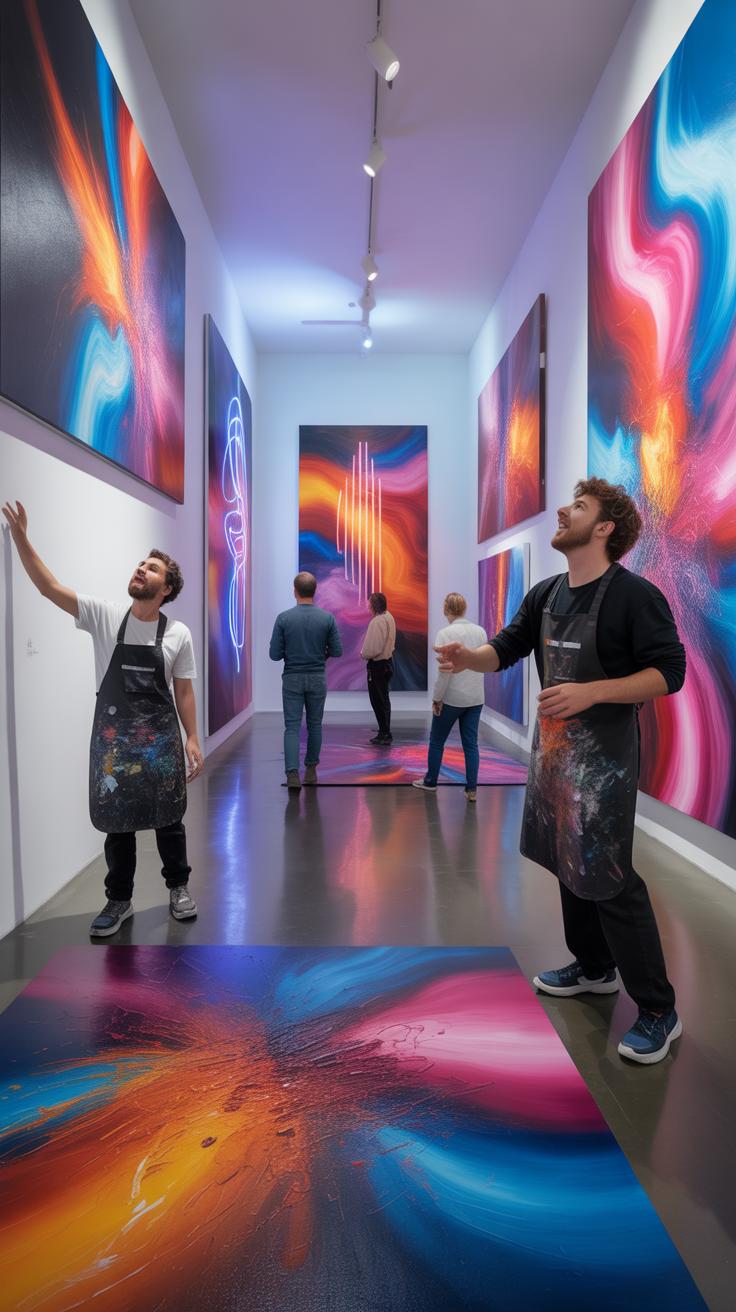
When you look at energy artworks, you often see vivid swirls of color, lines that seem to vibrate, or shapes that pulse with rhythm—almost like the energy inside the painting is alive. One example that comes to mind is the work of Hilma af Klint, whose abstract paintings from the early 20th century explore spiritual energy with geometric shapes and organic forms. Her pieces don’t just depict energy; they seem to transmit it.

Another artist, Emma Kunz, created drawings meant to channel healing energy. Though her work appears simple at first glance, it’s deeply rooted in spiritual mapping of life forces. You might notice her use of symmetry and precision, which contrasts with the more flowing styles common in energy art. This shows how artists take very different routes to express similar ideas.
Energy art often focuses on movement and flow. Take Alex Grey’s paintings, which often visualize energy fields and chakras within the human body. The layers of translucent color invite you to feel the art, not just see it.
Famous Energy Art Pieces And Artists
You might have heard of Kandinsky, who’s seen as a pioneer in abstract art. His works are frequently called manifestations of spiritual energy, as he believed colors and shapes could evoke feelings and vibrate on a higher plane. His piece “Composition VII” is often cited for its chaotic yet harmonious energy.
There’s also Wassily Kandinsky’s contemporary, Piet Mondrian, whose grid patterns are more restrained but still charged with a unique kind of energy—one that comes from balance and tension rather than bursts of motion. Both artists stand out because they approached energy art from different angles—Kandinsky with emotion, Mondrian with structure.
In recent times, Chiharu Shiota’s installations use thread to map energy in physical spaces, creating immersive experiences that engage your senses and emotions in unconventional ways.
How To Interpret Energy Art
Sometimes energy art can feel overwhelming or vague. But you don’t always need to decode every detail. Instead, try to notice how the art affects your mood or thoughts. Does a swirling pattern make you feel restless or calm? Does the color palette inspire warmth or distance? You might find your own meaning arising naturally.
Look for repetition and flow—energy art often uses these to mimic natural rhythms like breathing or heartbeat. If you engage with those rhythms, the art might resonate with your own internal energy.
It helps to ask yourself what emotions stir up. Are you curious, reflective, or maybe unsettled? These reactions are part of the conversation the artwork starts with you. So, rather than searching for a fixed message, stay open to becoming part of the energy the art represents.
Creating Chakra Artwork Step By Step
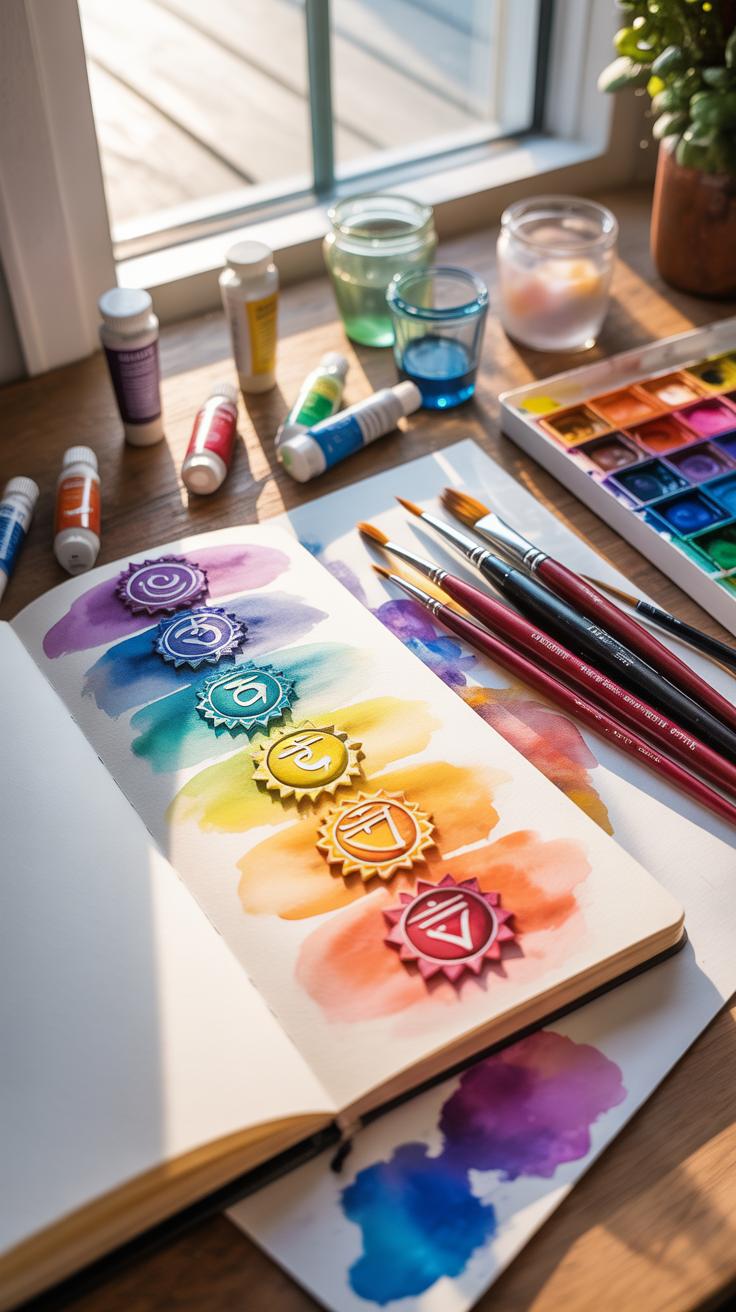
Starting chakra artwork involves more than just placing symbols on a canvas. Planning the chakra placement carefully is vital. Usually, chakras align vertically along the spine, from the base to the crown of the head. It helps anchor the energy flow and visual harmony in your piece. It might seem straightforward, but you’ll need to consider the scale and perspective you want.
Next comes selecting colors and shapes. Each chakra resonates with specific hues and forms — red for the root chakra, a vibrant triangle for example, or violet for the crown depicted as a multi-petal lotus. But don’t fret if you want some personal touch within these conventions; slight variations can express unique energy without losing meaning.
Drawing Chakra Symbols Correctly
Drawing chakras requires some attention to tradition but also room for creativity. Traditional chakra symbols are intricate and packed with meaning—like the lotus petals, circles, and sometimes Sanskrit letters inside. To draw them accurately, focus on their geometry. Take your time with the number of petals, which differs for each chakra. Using compasses or digital tools can help for precision.
Still, don’t let perfection box your expression. It’s okay to adapt the design to your style, but keep core elements clear so the symbol stays recognizable. Sometimes, a touch of looseness brings life to the piece.
Color Choices For Chakra Artworks
Color is crucial in chakra art. Each chakra corresponds with specific colors that represent its energy and qualities:
- Root Chakra: Red – grounding and physical vitality
- Sacral Chakra: Orange – creativity and emotions
- Solar Plexus Chakra: Yellow – personal power and confidence
- Heart Chakra: Green or pink – love and compassion
- Throat Chakra: Blue – communication and truth
- Third Eye Chakra: Indigo – intuition and insight
- Crown Chakra: Violet or white – spiritual connection
Use solid colors or gradients to reflect energy flow in your artwork. Combining colors carefully can evoke balance or focus. Sometimes choosing a less conventional shade might communicate your interpretation better. Trying out layered washes and textures could also deepen the vibrational feel embedded in color.
Common Mistakes In Spiritual Art
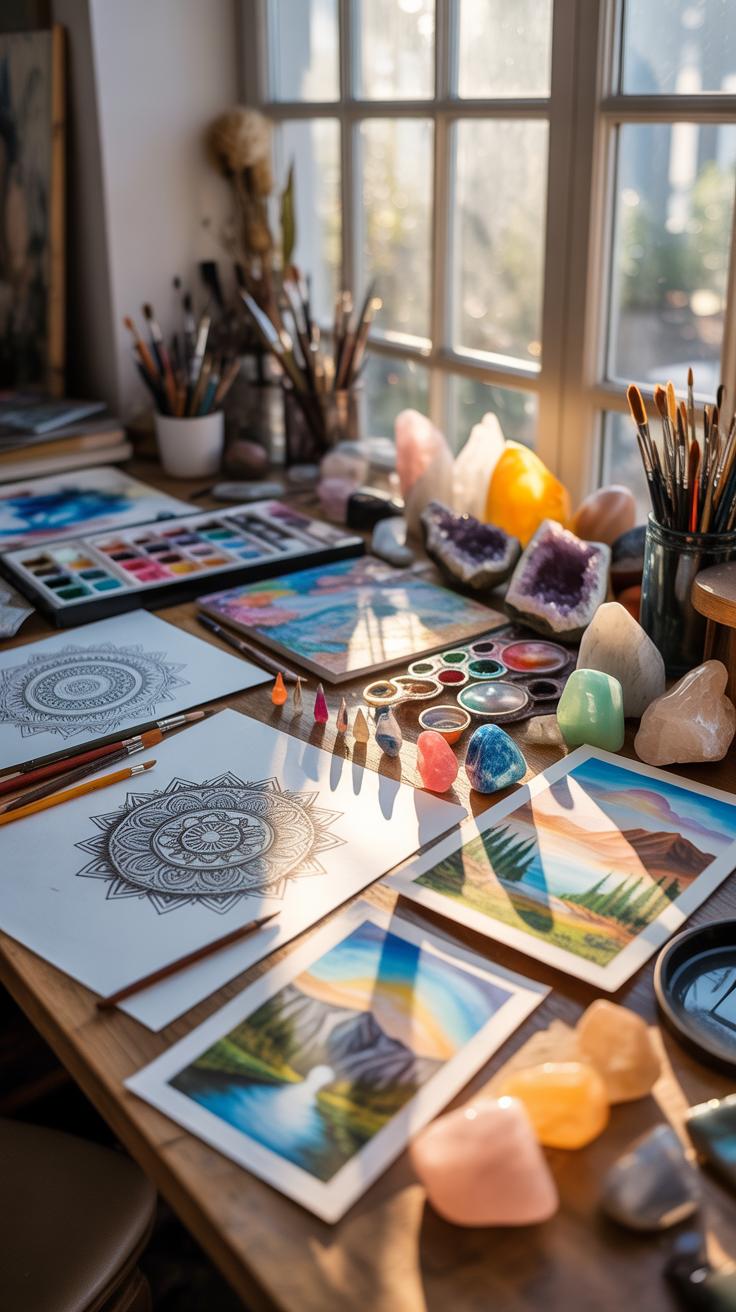
When creating spiritual artwork, especially in energy and chakra styles, artists often stumble into a few recurring errors. One of the biggest issues I’ve noticed is a sort of overcomplication—trying to cram too many ideas or symbols into one piece. It can end up overwhelming the viewer rather than inviting them in. Simplicity, sometimes, serves the spiritual message better.
Another frequent mistake involves neglecting the balance of colors and energy flow, which can result in artwork that feels off or disconnected from its intended spiritual intention. Since energy and chakra art focus on vibrational qualities, an unbalanced composition can inadvertently confuse the viewer’s experience.
Avoiding Symbol Misuse
Spiritual symbols are powerful, but they’re also easy to misuse. Misplaced or inaccurately represented symbols might confuse rather than enlighten the audience. For instance, using a chakra symbol out of context, or blending symbols from different spiritual traditions without understanding their meanings, risks diluting or misrepresenting sacred ideas.
Preventing this requires more than just a quick lookup online. Dive deeper. Reflect on the origins and meanings of symbols you wish to include. It’s not about stifling creativity but ensuring respect for what these symbols represent. Sometimes, an open conversation with knowledgeable practitioners might reveal nuances you hadn’t considered.
Balancing Artistic Freedom With Tradition
Respecting spiritual traditions while creating art is a delicate dance. You want to express your unique vision but without misappropriating or offending. Artistic freedom doesn’t mean ignoring the spiritual context—you can experiment, of course, but grounding your work in understanding builds stronger connections.
Think of tradition as a foundation—not a cage. Using established symbols and styles as a starting point can add depth to your work, but don’t feel completely bound by rules. There’s room for personal interpretation, exploration, and sometimes healthy tension between tradition and innovation.
Isn’t it a bit tricky, though? Balancing that line may feel uncertain at times, but that’s where your genuine engagement with spirituality comes into play. Your artwork becomes not just a visual piece but also a thoughtful dialogue between past wisdom and your present insight.
How To Use Spiritual Artwork Daily
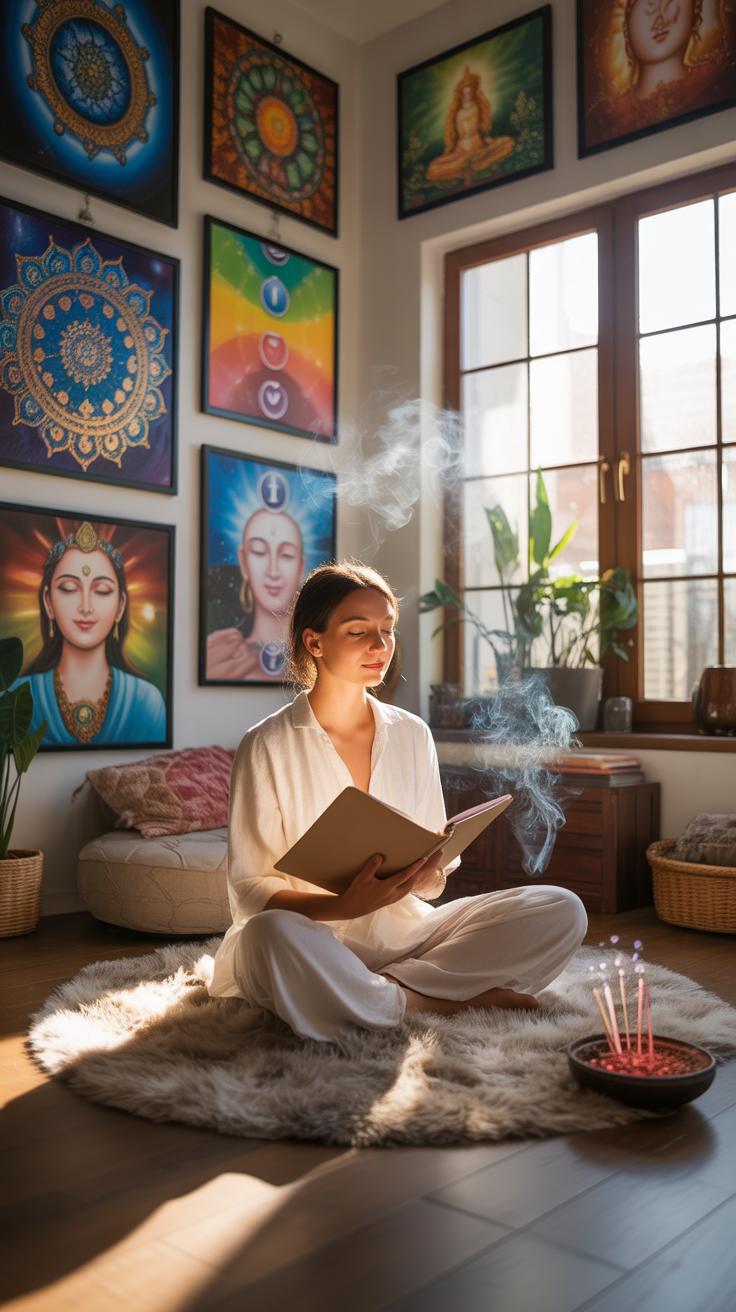
Spiritual artwork can become a quiet companion in your daily life, subtly affecting your mood and energy. One practical way is to keep it within your line of sight—like near your workspace or breakfast nook. Seeing these images regularly might offer moments of calm that you didn’t even expect to find.
Try pairing specific pieces with daily routines. For example, placing chakra art near your morning coffee spot could help center your energy before the day begins. Or, if you tend to feel scattered, having an energy art piece where you unwind might gently guide your focus back to calmness.
Another approach is to rotate artworks based on how you feel. Some days call for soothing blues and greens to ease tension. Other days, maybe the fiery reds and oranges awaken your spirit. Experimenting this way could reveal surprising shifts in your mental state.
Placement Tips For Home And Office
Where you hang or place spiritual art matters more than you might think. The idea is to influence energy flow—what some traditions call “chi” or “prana.” You don’t need to follow strict rules, but there are some simple guidelines that might help.
- Near entrances: Position artworks with welcoming, positive energy to set a harmonious tone upon entering.
- Work corners: Choose invigorating images to boost creativity or concentration, but avoid anything too overwhelming.
- Relaxation zones: Soft, balanced colors work best to foster a peaceful atmosphere.
- Height matters: Eye-level placement encourages effortless appreciation, while lower spots might invite grounding energy.
Sometimes people forget the value of subtle shifts, like moving a piece just a few inches or changing its angle. These tiny changes can impact the feel of a room more than you realize.
Combining Art With Meditation Practices
Spiritual art can be more than decoration during meditation—it can be a tool. Starting your session by focusing on a piece can help tune your attention, especially if your mind tends to wander.
Try gazing softly at the artwork, taking in its details while breathing steadily. Let the colors or shapes guide your mental flow. It might even encourage you to explore feelings or thoughts connected to the imagery.
Some practitioners place art behind their meditation cushions, allowing the visuals to fill their peripheral vision. This can deepen the experience without demanding full attention.
Yet, it’s okay if sometimes the art distracts you or feels irrelevant. Meditation is a personal journey—honor what works for you today and let it change tomorrow.
Tools To Create Digital Spiritual Art
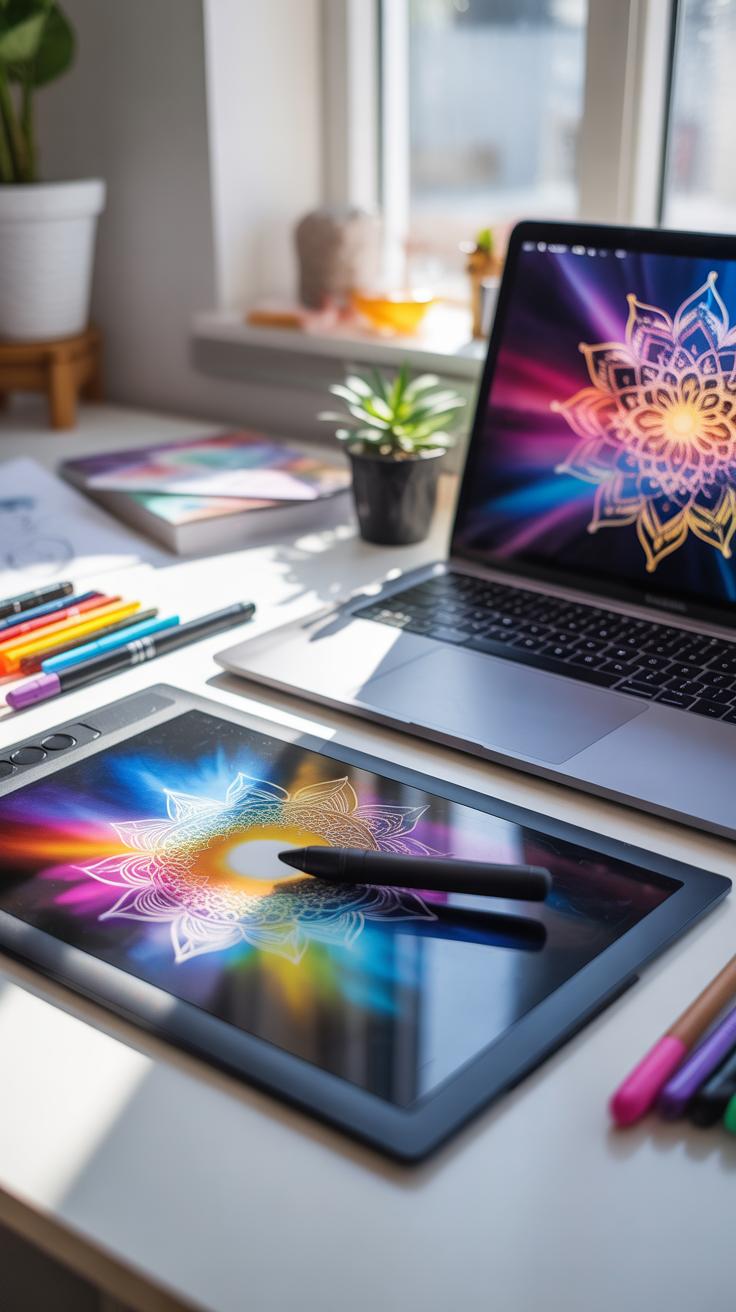
If you’re venturing into digital spiritual artwork, especially with energy and chakra themes, it’s good to know what tools are available. Several software options cater well to these kinds of expressive, symbolic pieces. Programs like Adobe Photoshop and Corel Painter offer extensive brush libraries and layering options which help artists simulate the ethereal qualities of light and flowing energy. You might find software like Procreate very intuitive, especially on tablets where you can draw directly with a stylus—this feels closer to a hands-on experience and can be quite helpful when capturing subtle spiritual nuances.
Other digital platforms such as Krita, which is free, support advanced blending modes and gradients needed to illustrate chakra aura colors and energy flows. If you want to experiment with more abstract, algorithm-driven art, tools like Processing or Artbreeder provide ways to play with shapes and colors, sometimes generating surprising energy patterns.
Choosing a tool depends a lot on what you’re comfortable with and what effect you want to achieve. Don’t rush into the most complex tool right away; sometimes simpler software can let your creativity flow more freely, especially when working with concepts as abstract as spiritual energy.
Popular Software Features For Spiritual Art
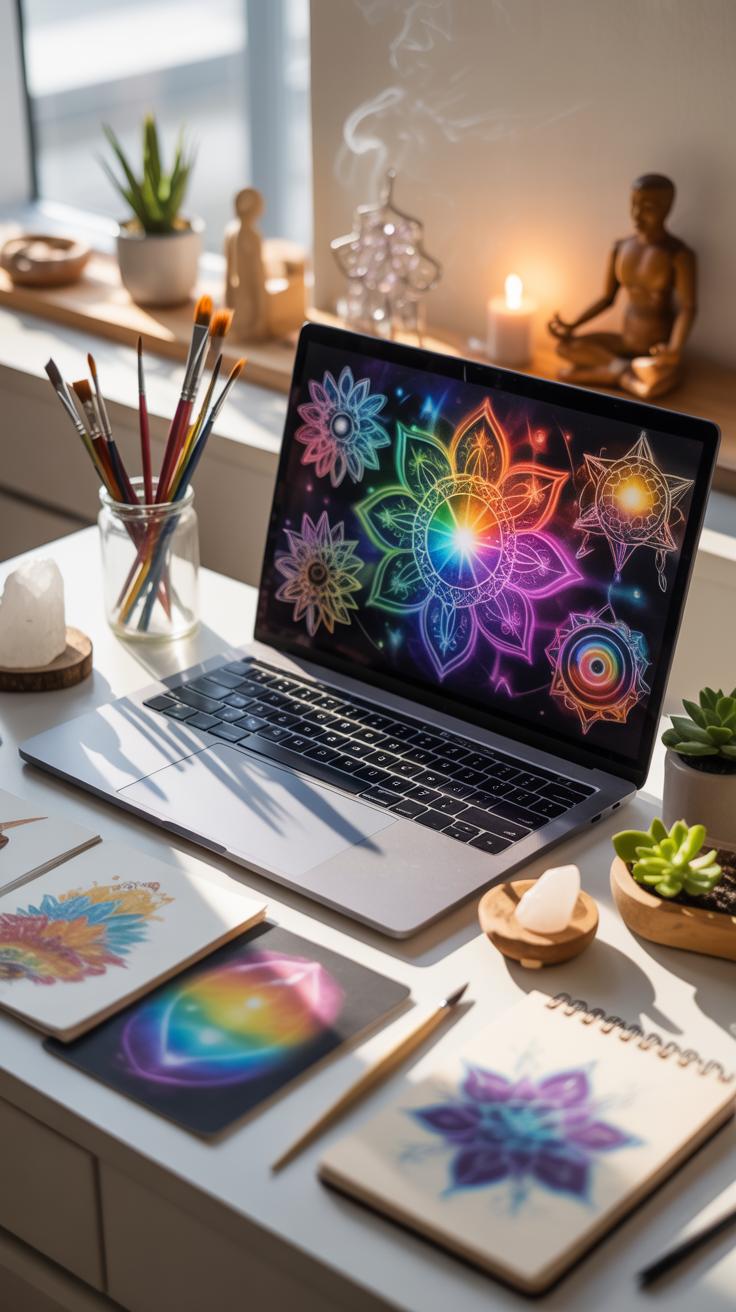
When it comes to representing energy flows and chakra symbolism digitally, certain software features stand out. Layer blending modes, for example, let you overlay colors and textures, creating glowing or translucent effects reminiscent of energy fields or auras. Brushes that simulate light effects or soft edges can mimic the subtle vibrance of chakra colors. Gradient tools help blend hues smoothly, essential for illustrating the gradual transition of energies.
Symmetry tools are another feature you may find useful. Chakras and spiritual mandalas thrive on symmetry, but manually drawing symmetrical patterns can be tricky. Digital tools can automatically reflect your strokes around a center, making it easier to maintain harmony in the design.
Customizable brush settings allow you to tweak opacity, flow, and scatter, helping to create the delicate, sometimes unpredictable feel of energy movements. Some applications also support layering with masks, which help isolate parts of your artwork for detailed work without disturbing other areas—this is quite useful when dealing with complex chakra symbols layered over abstract backgrounds.
Tips For Digital Art Beginners
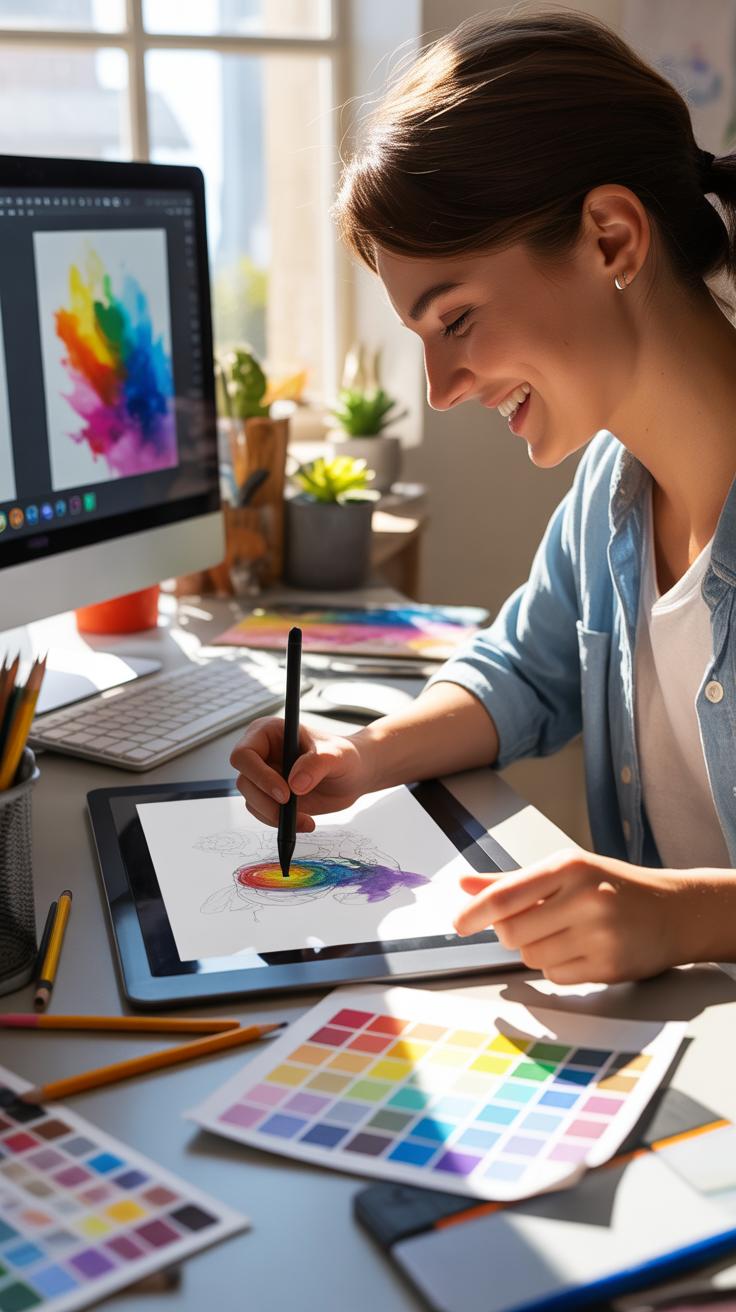
Starting digital spiritual art can be a bit overwhelming, but a few practical pointers can help. First, familiarize yourself with basic digital tools through free tutorials on platforms like YouTube or websites dedicated to digital art education. Don’t hesitate to experiment—try blending colors to find combinations that feel right to you for energy representation.
Begin with simple shapes to create chakra symbols and study existing spiritual art for inspiration. Pay attention to how artists incorporate color and flow to express energy. Practice layering techniques to achieve depth and light effects.
Consider using a drawing tablet or stylus-enabled device; these tools offer more precision than a mouse and can feel more natural, almost like drawing on paper. If you’re unsure where to start, there are many community forums and digital art groups where you can ask for feedback and advice, which can be invaluable for newcomers.
Finally, patience is key. Progress might feel slow at times, especially when trying to capture something as intangible as spiritual energy. Keep refining your work and don’t shy away from revisiting and reworking pieces as your skills develop.
Future Trends In Spiritual Artwork
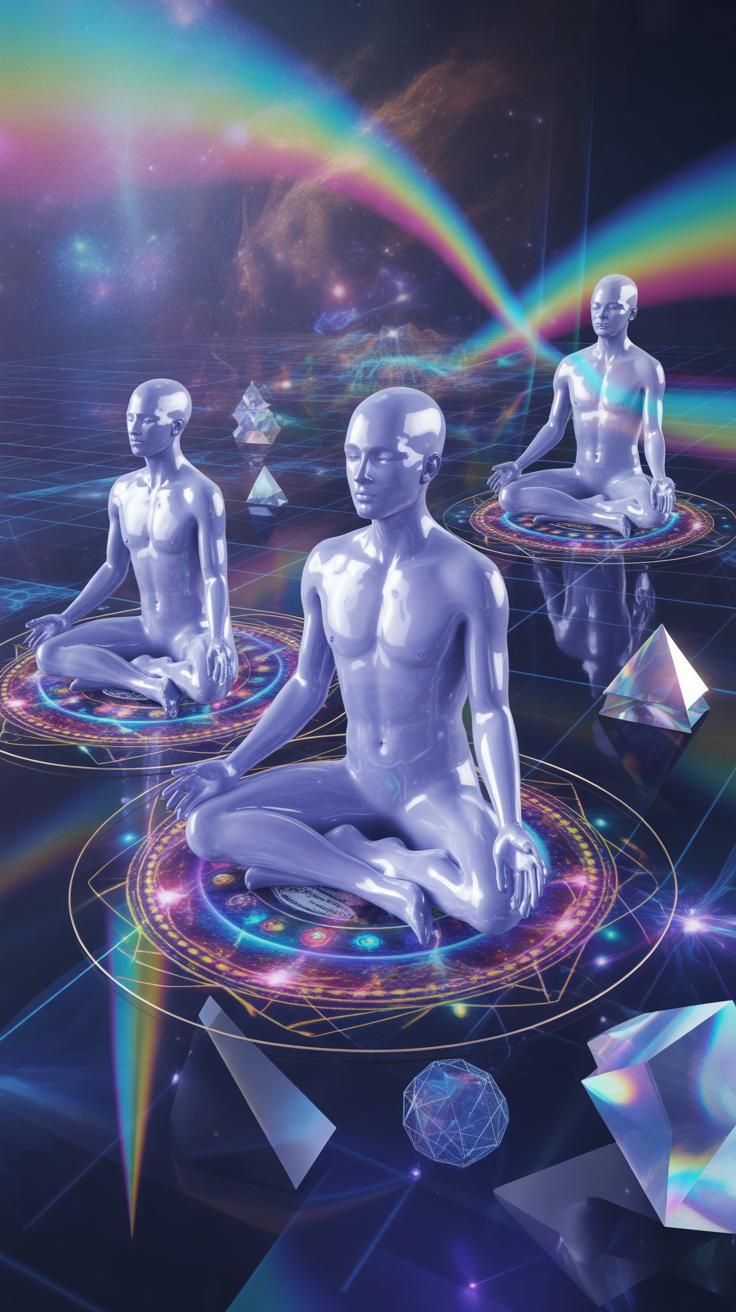
The way spiritual art is created and shared is shifting noticeably. New media forms, such as digital painting and mixed reality installations, are giving artists fresh ways to express energy and chakra themes. You might find that traditional canvas works now often coexist with interactive digital pieces. This invites viewers not just to observe but also to engage, activating a different connection with the artwork.
Audience involvement is becoming more layered, sometimes blending with social media or virtual spaces where communities form around shared spiritual experiences. It’s intriguing to consider how such communities might shape the art itself, possibly influencing themes or methods through collective feedback.
What’s less clear is how these trends will balance the deeply personal, introspective nature of spiritual art with the public, often fast-paced nature of digital engagement. Will such exposure enhance the meaning for the viewer or dilute it? It’s a question artists and audiences alike seem to be exploring.
Integration Of Technology And Art
Technology is becoming more than a tool—it’s part of the spiritual art experience itself. Augmented reality (AR) projects invite viewers to see layered energies around physical artworks, revealing subtle chakra patterns or movement that isn’t visible otherwise. Virtual reality (VR) can immerse a person inside a chakra-themed environment, simulating a meditation or healing session through visuals and sounds.
This blending of tech and spirituality might feel like a leap for some, perhaps risking the raw, intuitive feel of traditional art. Yet, it also opens doors to multisensory experiences that can deepen awareness. Imagine, for instance, stepping into a VR space that responds to your breathing or heart rate. Such interaction could bring a new dimension to how spiritual states are perceived and understood.
Community Impact Of Spiritual Art
Spiritual art communities are growing steadily, often forming around workshops, galleries, and online forums dedicated to energy and chakra art. These communities foster learning and sharing, where artists and enthusiasts exchange ideas on symbolism, techniques, and personal journeys.
The social impact extends beyond the art itself. Group exhibitions and collaborative projects sometimes spark broader conversations about wellness, spirituality, and cultural identity. In certain areas, these interactions have even influenced local cultural events and festivals, highlighting spiritual art as a connective tissue in community life.
But there’s a subtle tension, too. How open should these communities be? Some fear that too much exposure or commercialization might undermine the sincerity or sacredness of the art. It’s a delicate balance between growth and maintaining authenticity—a balance each community navigates in its own way.
Conclusions
Spiritual Artwork Featuring Energy Art And Chakra Art Styles is more than decorative; it is a tool to connect with inner energy and promote well-being. By understanding the core elements and methods, you can start to create meaningful pieces yourself.
Following clear guidelines and exploring the symbolism behind energy and chakras will help you appreciate this art form and use it to enhance your space and mental state. Your journey into spiritual art can begin simply and grow with your personal insights.