What To Expect When You First Receive A Secondhand Engagement Ring
Common Signs Of Wear, Tarnish, And Buildup On Pre Owned Rings
Secondhand rings often carry layers of biological and chemical debris. Dead skin cells, lotion, and soap residue accumulate behind the stone and inside the setting. This buildup blocks light from entering the diamond or gemstone. It makes a high-quality stone look dull and lifeless. You will likely see a gray or yellow film on the underside of the pavilion. This is normal for a clean secondhand engagement ring project.
Metal surfaces show age through scratches and oxidation. Gold and platinum develop a patina of fine lines from daily contact with hard surfaces. Silver rings may show black or brown tarnish from sulfur exposure. Check the prongs for thinning or flattening. Years of wear erode the metal that holds the stone in place. Look for bent components or gaps where the metal should meet the gem.
Why A Thorough Initial Inspection Is The First Step Before Cleaning Jewelry
You must inspect the ring before applying any liquid or pressure. Cleaning can dislodge stones that are already loose. Use a jeweler loupe to check the security of every prong. Antique rings from the Georgian or Victorian eras often use foil backings. Introducing water to these pieces will ruin them forever. You need to know exactly what materials you have. Identify the metal hallmarks and the gemstone type immediately.
Structural integrity determines your cleaning method. A cracked shank or a loose head requires a professional repair before you attempt cleaning jewelry at home. Ultrasonic cleaners can shatter stones with many inclusions like emeralds. They can also shake loose stones out of their seats. Finding these issues now prevents permanent loss or damage. A tactical inspection saves money. It ensures you do not destroy a valuable historical asset during the restoration process.

Understanding The Metal And Stone Before You Clean A Secondhand Engagement Ring
How To Identify Your Rings Metal Type Gold Platinum Silver And More
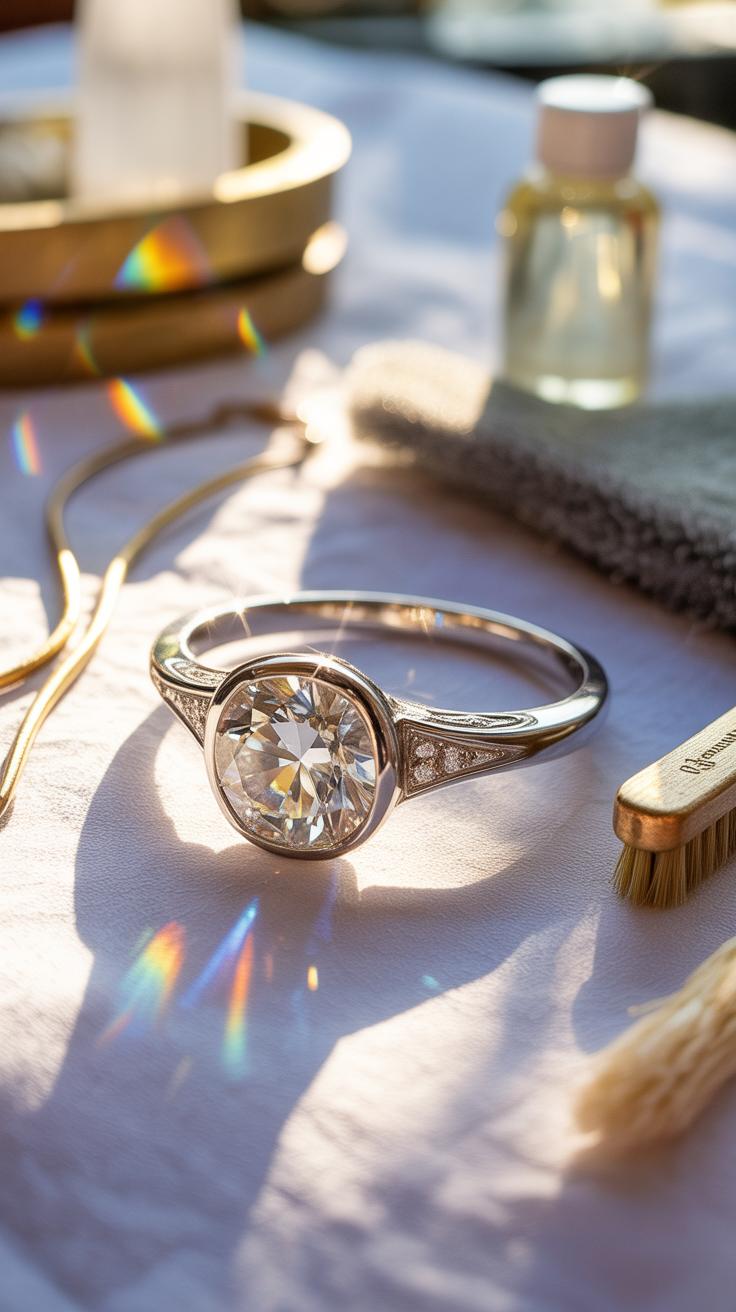
Locate the hallmark on the inner band of the ring. This stamp reveals the metal purity and type. Modern gold rings show 10k, 14k, or 18k marks. Older European pieces may use decimal stamps like 750 for 18k gold. Platinum usually features a 950 or PLAT mark. Use a jeweler loupe to find these markings if the metal shows significant wear or scratches.
Testing the metal is vital because different materials react poorly to specific chemicals. Silver tarnishes and turns black when exposed to certain acids or sulfur. Gold is softer and scratches easily during mechanical cleaning. Platinum is dense and resists most corrosion but develops a dull patina over time. Identification prevents you from using high heat or harsh abrasives on delicate alloys that might erode or discolor.
Every piece of vintage jewelry has a story to tell, and restoring its brilliance is like waking a sleeping beauty. By polishing away the years, you are not just cleaning a ring but honoring the enduring legacy of a love that came before you.
Identifying The Center Stone And Side Stones To Avoid Cleaning Damage
Assess the hardness of your gemstone using the Mohs scale. Diamonds sit at 10 and handle heat and standard cleaners well. Rubies and sapphires follow at 9 but often contain fractures. Secondhand rings frequently feature softer stones like emeralds or opals. These are porous and fragile. High heat or ultrasonic vibrations will shatter them instantly. You must know the stone type to select a safe cleaning method.

Check for common historical treatments like oiling or glass filling. Antique emeralds often have oils that keep them stable. Using degreasers or steam will strip these oils and ruin the appearance. Many modern secondhand diamonds are laser drilled or fracture filled with glass. Ultrasonic cleaners can shake these fillers loose. Inspect the stone under bright light for any visible surface cracks before you apply any pressure or chemicals.
Safe Supplies You Need For Cleaning An Engagement Ring At Home
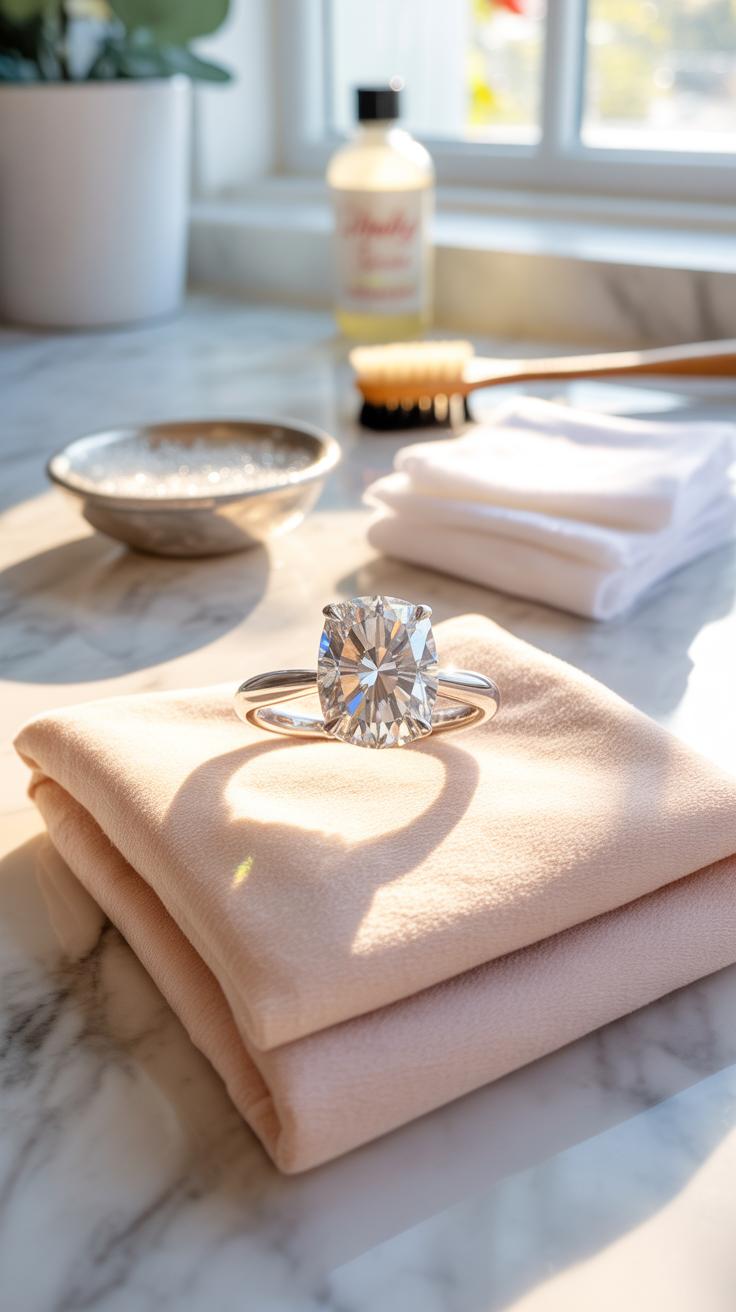
Gentle Household Ingredients That Work For Cleaning Engagement Ring At Home
Professional restoration starts with breaking down organic oils and daily grime without corroding the metal. Secondhand rings often carry layers of compacted debris from previous owners. You must use pH-neutral surfactants to lift this dirt. Avoid harsh bleach or chlorine because they damage gold alloys and pit the surface of platinum. Hot water and basic soap remain the standard for safe home maintenance.
- Mild Dish Soap: Use a basic transparent soap free of dyes or heavy perfumes. These surfactants break down skin oils and lotion buildup that dull diamond brilliance. It is the safest chemical for every common bridal metal and gemstone.
- Warm Distilled Water: Minerals in tap water can leave spotting or film on the underside of the stone. Distilled water ensures a streak-free finish. Heat the water to a warm temperature to help the soap penetrate tight crevices.
- Isopropyl Alcohol: A quick dip in 70 percent isopropyl alcohol dissolves stubborn greasy residues and disinfects the metal. This is vital for secondhand rings to ensure total hygiene. It evaporates quickly and leaves no residue on the diamond surface.
- Baking Soda Paste: Mix small amounts of baking soda with water to create a very soft scrub for heavy tarnishing. Only use this on the metal and avoid soft stones like opals or pearls. It provides a light mechanical action for cleaning.
- Non-Detergent Degreaser: Specific jewelry cleaners formulated without ammonia provide a concentrated way to strip away thick grime. These solutions work well for rings with complex filigree or deep galleries. Always verify the solution is safe for your specific gemstone type.
Chemical safety prevents permanent damage to the setting integrity. Many vintage rings use delicate prongs or milgrain detailing that aggressive chemicals can weaken over time. Simple ingredients allow you to control the cleaning environment. Stick to these verified supplies to preserve the structural health of the jewelry. Proper chemistry ensures the stone reflects the maximum amount of light by removing all obstructive films.
Tools And Materials That Help You Clean Without Scratching The Setting
Physical tools must be softer than the metal alloy used in the ring. Gold and platinum can scratch if hit with stiff bristles or abrasive pads. Use a soft-bristled toothbrush to reach the pavilion of the diamond and the interior of the setting. The goal is to dislodge dirt without applying excessive force that could bend a delicate or aged prong.

Wiping the ring requires a clean microfiber cloth or a specialized lint-free jewelry rag. Do not use paper towels or facial tissues because their wood fibers can create microscopic scratches on gold. A secondary rinse bowl is essential to prevent the ring from falling down a drain during the process. Keep your workspace organized to ensure you handle the piece with precision and total security.
How To Clean Your Wedding Ring At Home Using Dish Soap And Warm Water
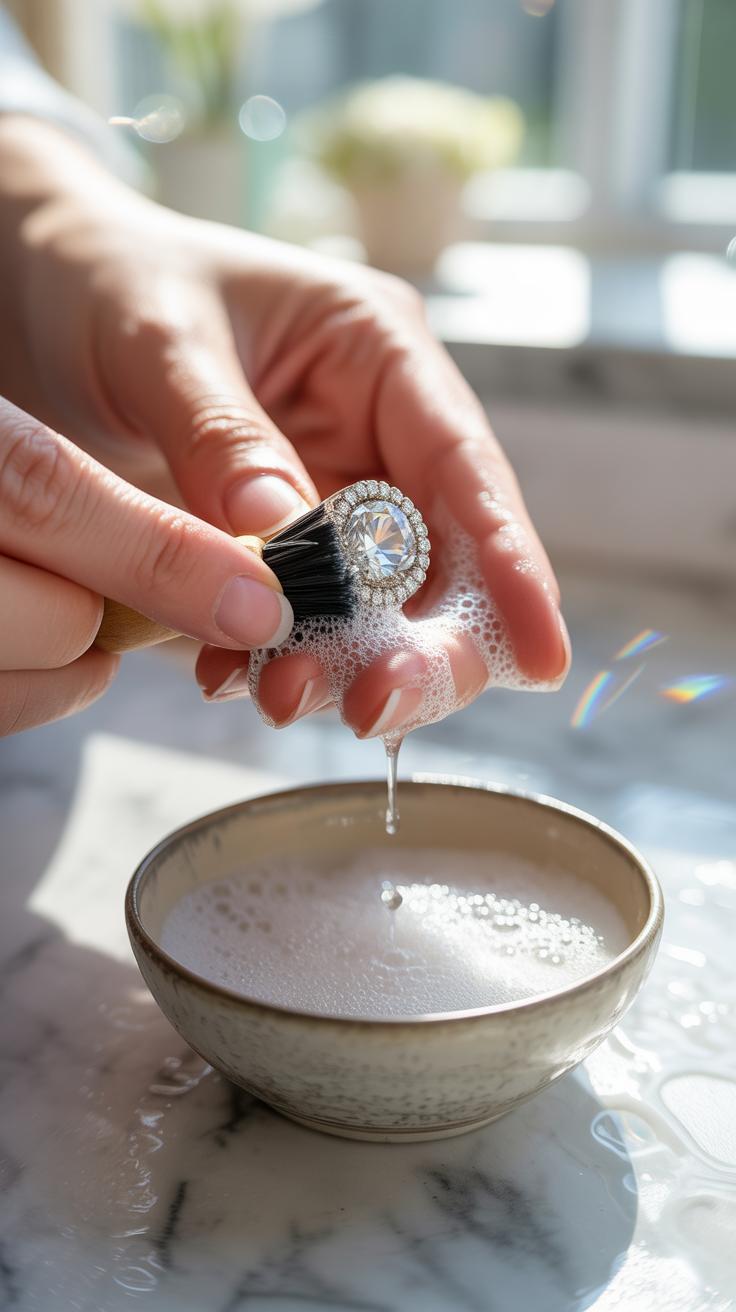
Step By Step Guide To The Dish Soap Soak Method For A Clean Wedding Ring
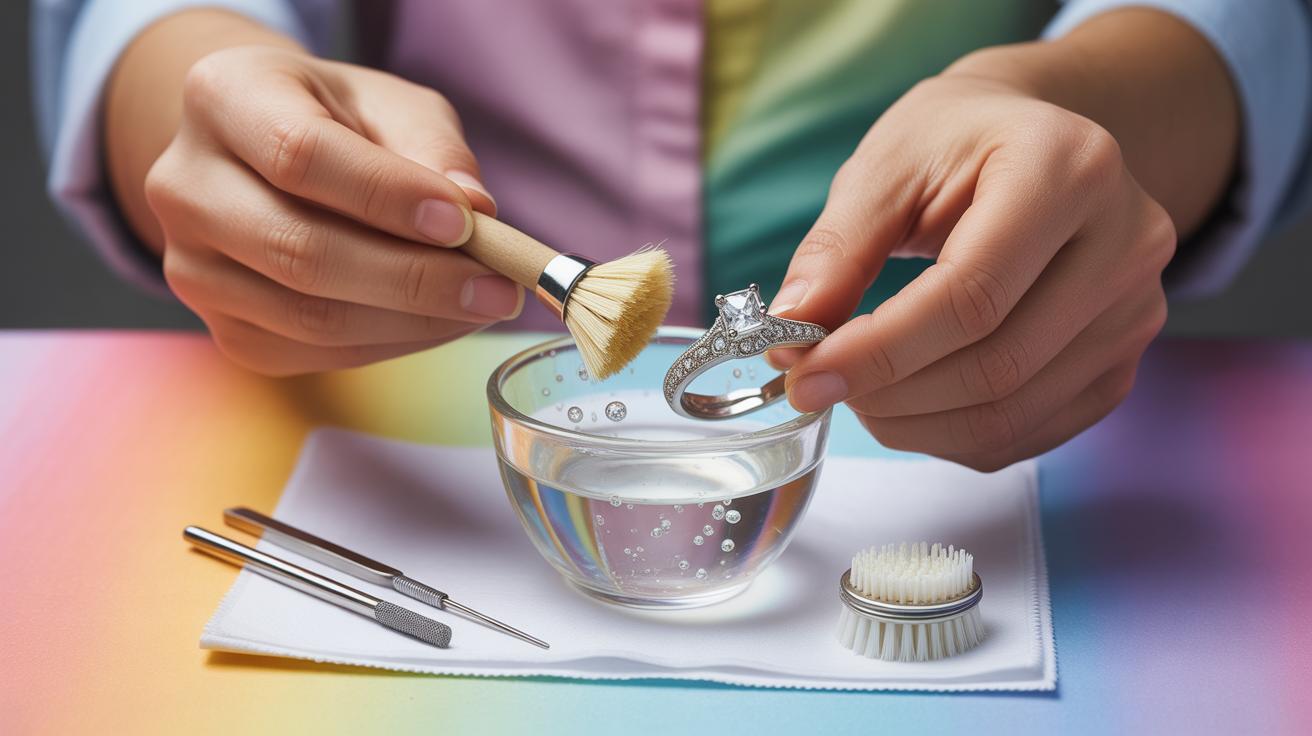
Maintaining a clean secondhand engagement ring starts with a mild degreasing agent to remove oils and skin cells. This method works for gold, platinum, and most hard gemstones. Avoid harsh chemicals that can erode vintage metal or damage delicate antique settings. Use a dedicated bowl to prevent the ring from falling down the drain. Follow these tactical steps to achieve a professional result at home.
- Prepare the Solution: Fill a small glass bowl with warm water and add three drops of mild dish soap. Ensure the water is warm but not boiling to avoid thermal shock to the gemstones.
- Submerge the Ring: Place your jewelry into the soapy mixture and let it sit undisturbed. This allows the detergent to break down stubborn grease and lotion buildup trapped behind the stone or within the metal gallery.
- Scrub the Details: Use a soft-bristle toothbrush to gently agitate the debris. Focus on the underside of the diamond and the tiny crevices where dirt accumulates. Do not apply heavy pressure on vintage prongs.
- Rinse with Care: Hold the ring over a separate bowl of clean, room-temperature water. Rinse away all soap residue to prevent a film from forming on the surface of the metal or the facet faces.
- Dry and Polish: Pat the ring dry with a clean, lint-free microfiber cloth. Air drying can leave water spots on the diamond or metal. Avoid paper towels as they can scratch high-polish gold or catch on delicate antique filigree.
This routine ensures your cleaning engagement ring at home process remains safe and effective. Regular maintenance prevents the buildup of dangerous debris that can loosen stones over time. Tactical cleaning preserves the integrity of the metal while maximizing the light return of the diamonds. Consistency is more important than strength when handling older jewelry. Use this method weekly to maintain a factory-standard finish on your investment.
How Long To Soak And What To Avoid During The Basic Cleaning Process
A standard soak should last between twenty and forty minutes for a clean wedding ring. If the jewelry has decades of grime, you can extend the time without damaging the metal. Warm water opens the microscopic pores of the grime and allows the soap to penetrate deep layers. Do not rush this stage because mechanical scrubbing alone cannot reach the deepest areas of a complex setting.

Avoid using bleach, chlorine, or abrasive toothpaste when cleaning wedding ring at home. These substances can pit gold alloys and destroy the structural integrity of the prongs. Never use boiling water on emeralds or opals as they may crack under intense heat. Stick to the basic soap and water formula to protect your jewelry. This conservative approach guarantees the safety of the gems while delivering a high-quality shine every time.
How To Clean A Diamond Ring At Home Without Causing Damage
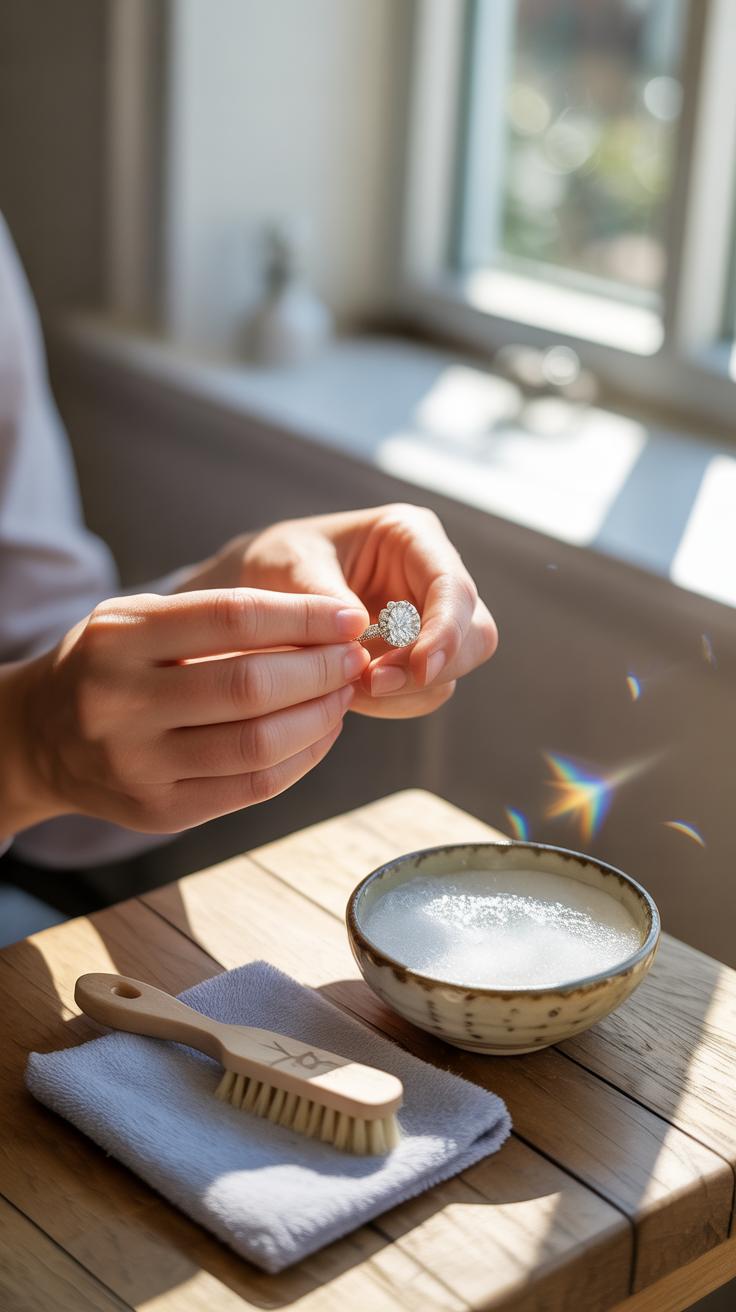
Why Diamonds Attract Grease And How That Affects Their Brilliance Over Time
Diamonds possess a natural affinity for lipids. This property means grease and oils bond to the stone surface on contact. Common sources include finger oils, hand lotions, and soaps. This attraction happens because of the carbon structure of the stone. Unlike other gemstones,
diamonds repel water but hold onto fats. This chemical preference makes daily wear a primary cause of buildup.
A layer of grease acts as a film. It blocks light from entering the diamond. Light must enter the stone and bounce off the internal facets to create sparkle. When oil coats the pavilion or crown, the light dies. The diamond looks dull and flat. Regular cleaning removes this film. It restores the refractive index. You must clean the stone to maintain its original fire.
The Best At Home Methods For How To Clean Diamond Ring At Home Safely
The safest way to clean secondhand engagement ring settings involves mild dish soap and warm water. Fill a small bowl with the solution. Soak the ring for twenty to forty minutes. This softens the organic matter trapped behind the stone. Use a soft-bristled toothbrush to scrub the underside of the diamond. Focus on the small gaps in the metal setting.

Avoid harsh chemicals like bleach or chlorine. These substances damage the alloys in gold and platinum. They can make the metal brittle or cause pitting. Rinse the ring under warm running water to remove soap residue. Always plug the drain before rinsing. Dry the piece with a lint-free cloth or let it air dry. Do not use paper towels as they scratch metal.
Cleaning Wedding Ring At Home When It Has Delicate Or Porous Gemstones
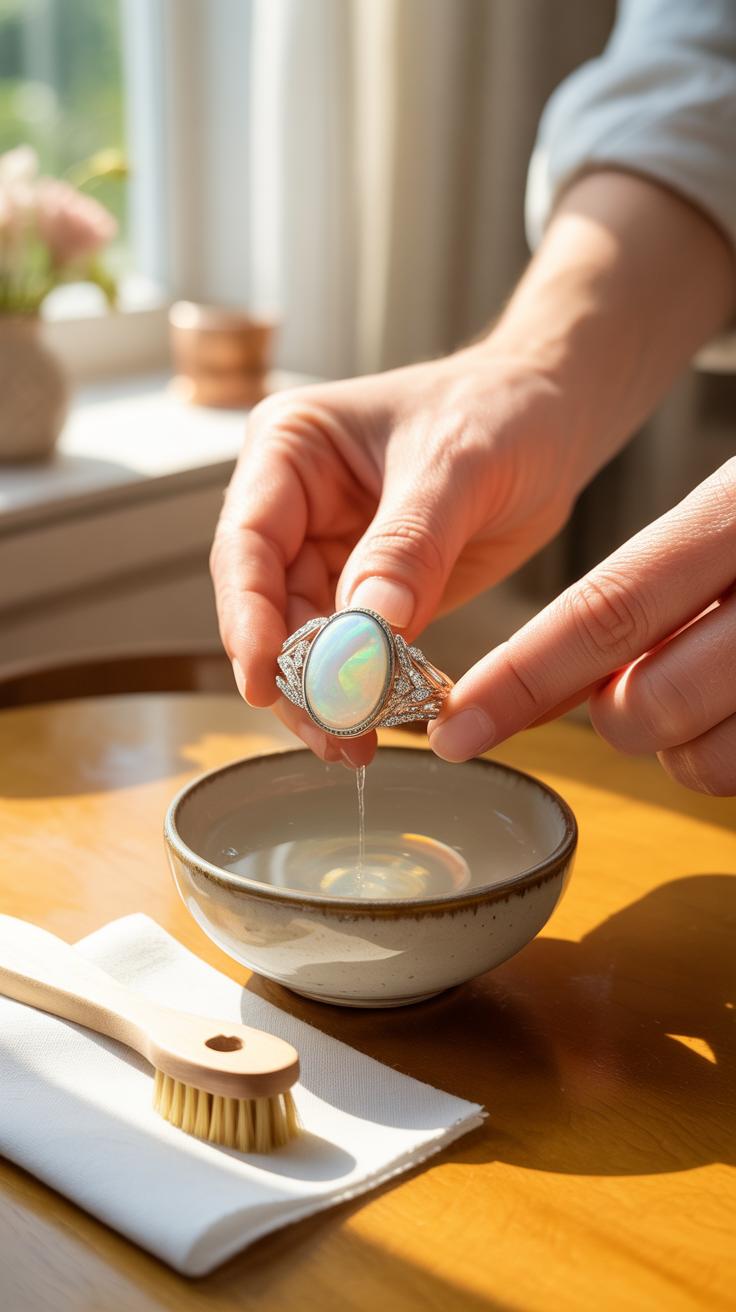
Gemstones That Require Special Care: Pearls, Opals, Emeralds, And Turquoise
Specialty gemstones in secondhand rings demand strict handling protocols. Pearls and opals contain organic matter or water that reacts poorly to chemicals. Emeralds often feature natural inclusions filled with oil or resin to improve clarity. Harsh cleaners strip these fillers and ruin the stone. Turquoise is extremely porous and absorbs oils or soaps easily. This absorption causes permanent discoloration or structural cracking over time.
Standard diamond cleaning methods will destroy these delicate materials. You cannot treat an Art Deco emerald ring like a modern solitaire. Porous stones soak up liquids like a sponge. Organic gems like pearls scratch with the slightest friction. You must identify the stone type before any liquid touches the setting. Misidentification leads to irreversible damage and loss of value. Protect the integrity of the vintage material by following restricted cleaning rules.
Tailoring Your Cleaning Engagement Ring At Home Approach To Fragile Stones
Adopt a dry or damp cleaning strategy for fragile settings. Never soak porous stones in a bowl of solution. Instead, use a soft lint-free cloth dampened with room temperature water. Avoid all detergents and soaps for turquoise and pearls. Use a makeup brush with soft bristles to remove dust from tight crevices. Focus on precision rather than immersion. Speed is essential to prevent moisture from seeping into the stone core.

Dry the jewelry immediately after wiping it down. Use a fresh microfiber cloth to blot away any remaining dampness. Do not use hair dryers or heat guns as high temperatures crack opals and emeralds. Store these rings in a separate soft pouch to prevent scratches from harder diamonds. Professional inspection is the safest route for heavily soiled antique pieces. Limit your home maintenance to light surface cleaning to preserve the historical finish.
How To Restore The Shine And Polish Of A Pre Owned Wedding Engagement Ring
When At Home Polishing Works And When You Should See A Jeweler Instead
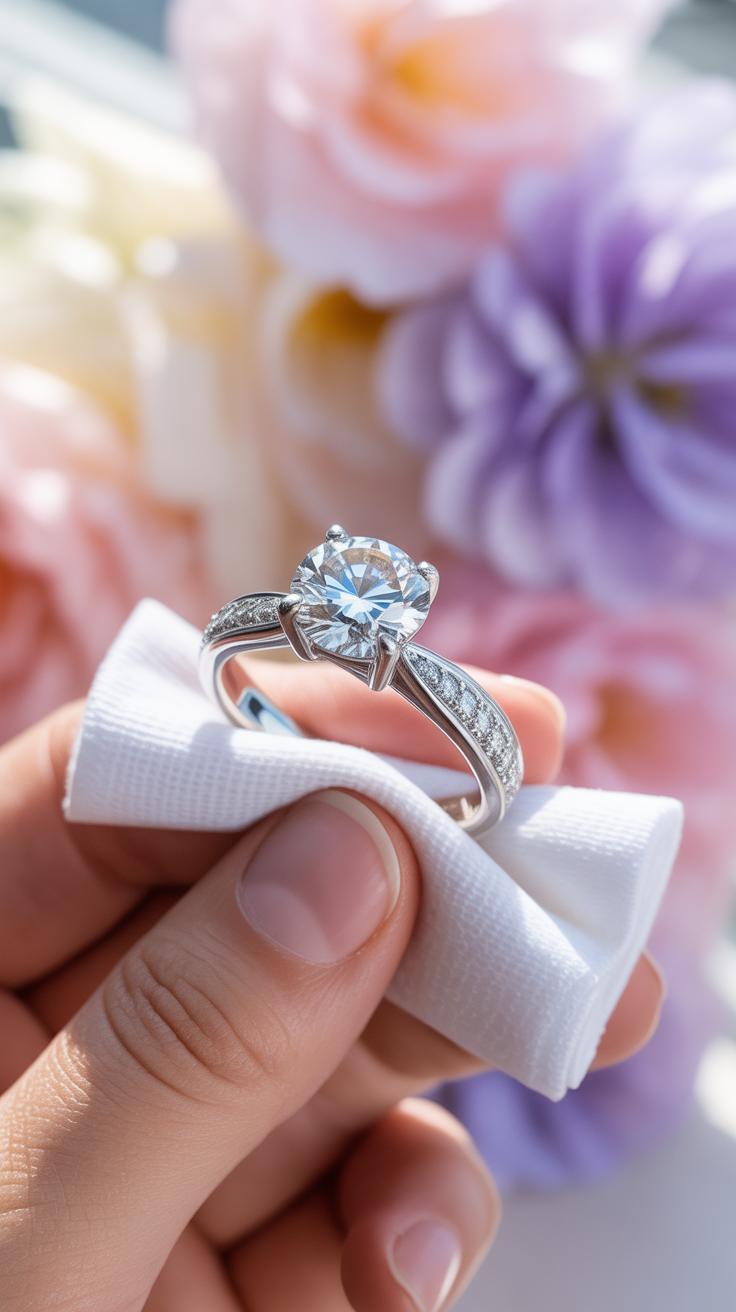
Polishing a clean secondhand engagement ring at home requires a soft microfiber cloth. This method removes light surface oils and fingerprint smudges from the metal. It works well for maintaining daily luster on gold or platinum bands. You should avoid abrasive chemical pastes or stiff brushes for this task. These harsh tools create tiny scratches that dull the metal over time and ruin the finish.
Professional intervention is necessary for deep scratches or thinning prongs found on older Wedding Engagement pieces. A jeweler uses high-speed buffing wheels and industrial rouge to level the metal surface. They also check the structural integrity of the setting under magnification. You cannot replicate this level of repair at home without specialized machinery. Attempting to buff out deep gashes yourself often results in uneven metal thickness.
How Professional Rhodium Plating Revives White Gold Wedding Rings Engagement Pieces
White gold is not a naturally occurring metal. It is an alloy of yellow gold and white metals like nickel or palladium. Jewelers apply a thin layer of rhodium over the surface to give it a bright silver finish. Over time, this plating wears off and reveals a yellowish tint underneath. This transition is common in many Wedding Rings Engagement styles from the late twentieth century.

The rhodium plating process involves an electrolytic bath that bonds the metal to the ring surface. This step effectively hides minor surface wear and restores the original brilliance of the piece. You should expect to repeat this process every one to two years depending on daily wear. This treatment provides a protective barrier against scratches while enhancing the light reflection of Cleaning Wedding Ring At Home results.
What To Avoid When You Clean A Secondhand Engagement Ring
Household Chemicals And Abrasives That Can Permanently Harm Your Ring
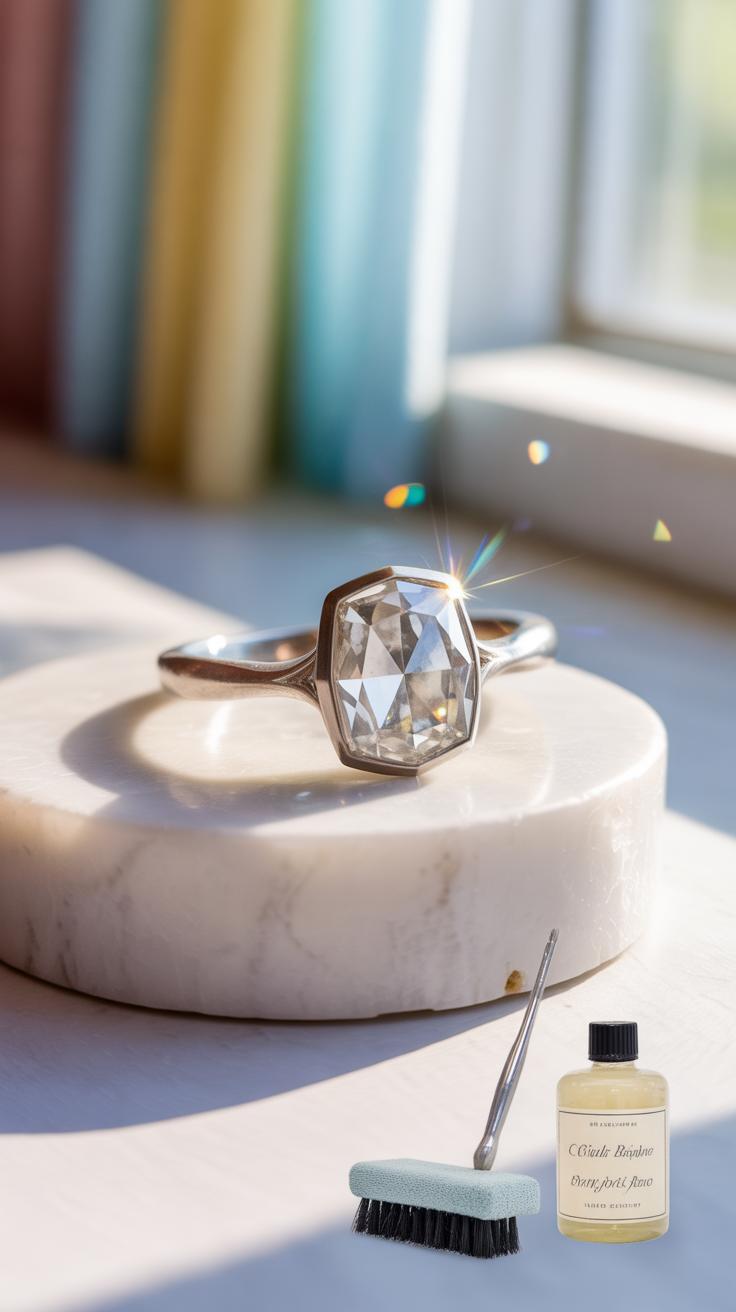
Bleach and chlorine destroy the structural integrity of gold alloys. These chemicals leach out base metals like copper or silver from the gold. This process creates internal pits and brittle spots in the metal. Your band can snap or lose a prong without warning. Never wear your ring in a swimming pool or use harsh laundry products while cleaning jewelry at home.
Abrasive cleaners like toothpaste or baking soda scratch the surface of precious metals. These small scratches dull the finish and trap more dirt over time. Soft gems like emeralds or opals take permanent damage from scrub brushes or coarse powders. Use only mild dish soap and a soft toothbrush for a safe result. This protects the original polish and prevents costly metal loss.
Why Ultrasonic Cleaners Are Not Always Safe For Every Engagement Ring Setting
Ultrasonic cleaners use high frequency sound waves to shake dirt loose from an engagement ring. These vibrations pose a major risk to vintage settings and fragile stones. Constant shaking can loosen small pave diamonds or side stones. Antique rings with worn prongs may lose gems during the cycle. You must inspect the setting for any movement before using these powerful machines at home.

Some gemstones cannot survive the heat or pressure inside an ultrasonic tank. Emeralds and opals often contain natural fractures or oil treatments that the machine will ruin. Organic stones like pearls or turquoise will crack or discolor instantly. Only use this method for modern rings with hard stones like diamonds or sapphires in sturdy mounts. Verify the stone type and setting security before you start the process.
When To Take Your Secondhand Ring To A Professional Jeweler For Restoration
Signs That Go Beyond Cleaning Jewelry: Bent Prongs, Loose Stones, And Deep Scratches
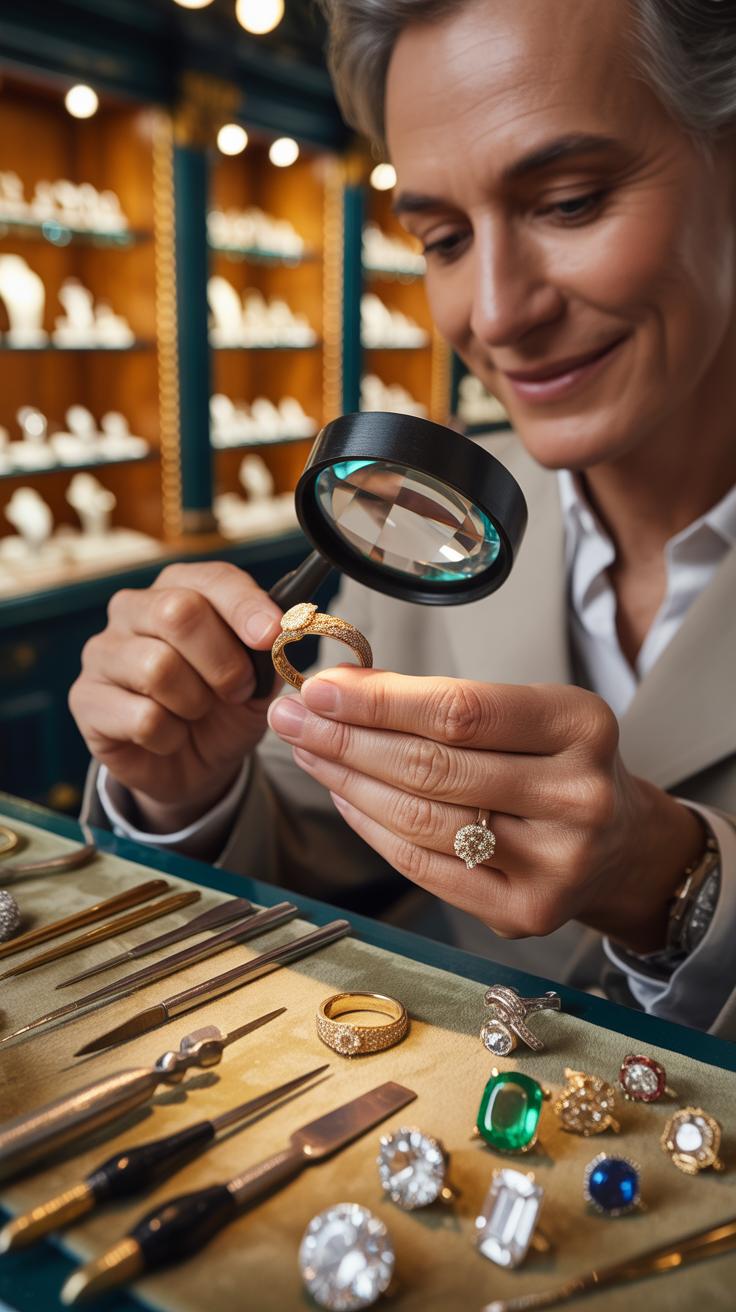
Standard home maintenance cannot fix structural failure. You must inspect your ring for bent prongs under a loupe. Metal fatigue happens over time. Prongs shift or thin out from daily wear. If you hear a rattling sound when tapping the stone, the seat is loose. This indicates a high risk of stone loss. Home scrubbing will not resolve hardware instability.
Deep scratches and gouges require professional metal removal. Polishing at home only removes surface grime. Significant abrasions in platinum or gold need abrasive wheels and heat. If you notice a crack in the shank, stop wearing the piece immediately. Stress fractures lead to total band failure. A jeweler must weld or laser solder these breaks to ensure the engagement ring remains secure.
What A Professional Jewelry Inspection And Restoration Service Typically Includes
A professional session starts with a multi-point inspection. The jeweler checks the integrity of every claw and setting. They use ultrasonic cleaners and high-pressure steam to remove impacted debris. This process reaches areas your toothbrush cannot access. They also verify the quality of previous repairs. Secondhand rings often have poor solder joints from old resizing jobs that require technical correction.
The restoration process includes refining the metal surface through staged polishing. Jewelers remove minimal material while restoring the original luster. For white gold, they apply a fresh rhodium plating. This electroplating process restores the bright white finish lost through wear. Professionals also tighten stones using specialized setting tools. This service ensures your wedding ring meets factory safety standards before you resume daily wear.
How To Maintain Your Clean Wedding Ring And Keep It Looking New Long Term
Daily Habits That Prevent Buildup And Reduce The Need For Deep Cleaning
Preventing grime is more efficient than removing it. You must remove your ring before applying lotions, hairsprays, or heavy creams. These products contain oils and waxes that create a film on stones. This film traps dirt and dulls the light refraction of diamonds. Constant exposure to cosmetic chemicals also builds up in the delicate crevices of vintage settings.
Take off your ring during heavy manual tasks. Avoid wearing jewelry while gardening, lifting weights, or cleaning with harsh chemicals. Impact can loosen prongs and scratch soft metals like gold or platinum. Store the ring in a fabric-lined box to prevent dust accumulation. Keeping the ring dry and away from grease preserves the metal finish and keeps the center stone bright.
How Often You Should Clean Your Engagement Ring And Schedule Professional Checkups
Perform a light cleaning at home every two weeks. Use warm water and mild dish soap to dissolve surface oils. Soak the ring for twenty minutes then scrub gently with a soft toothbrush. Focus on the underside of the stone where skin oils collect. Regular maintenance prevents the hardening of dirt that requires ultrasonic cleaning. A consistent schedule ensures the metal stays polished.
Schedule a professional inspection every six months. A jeweler checks for thin prongs and loose stones under high magnification. Secondhand rings often have wear from previous owners that weakens the structure over time. Professionals also provide deep steam cleaning that home methods cannot match. These checkups prevent the loss of stones and identify metal fatigue before the ring breaks or fails.
Frequently Asked Questions

Is it safe to buy and wear a pre-owned engagement ring?
Absolutely! Buying vintage or pre-owned is an ethical and sustainable way to find a unique piece of jewelry. However, before wearing it, you should properly clean secondhand engagement ring settings to remove any lingering debris or oils from the previous owner. Beyond hygiene, a thorough restoration ensures the metals shine and the gemstones regain their original fire, making the piece feel brand new and uniquely yours.
What is the best way to deep clean a vintage ring at home?
To safely clean secondhand engagement ring surfaces, soak the piece in a bowl of warm water mixed with a few drops of mild dish soap for twenty minutes. Use a very soft-bristled toothbrush to gently scrub behind the stone where dust accumulates. Rinse thoroughly under lukewarm water and pat dry with a lint-free cloth. Avoid generic jewelry cleaners or harsh chemicals, as these can damage delicate antique filigree or porous gemstones.
Can I restore a dull secondhand ring on a limited budget?
Restoration doesn’t have to be expensive. While a professional jeweler can provide a “buff and polish” for a small fee to remove surface scratches, you can achieve great results at home using a specialized polishing cloth. Focus on gentle cleaning and consistent care to maintain the metal’s luster. If the stones are loose, prioritize a professional prong tightening, which is a low-cost service that prevents losing your precious diamond later.