Why A Library Themed Wedding Is Perfect For Book Loving Couples
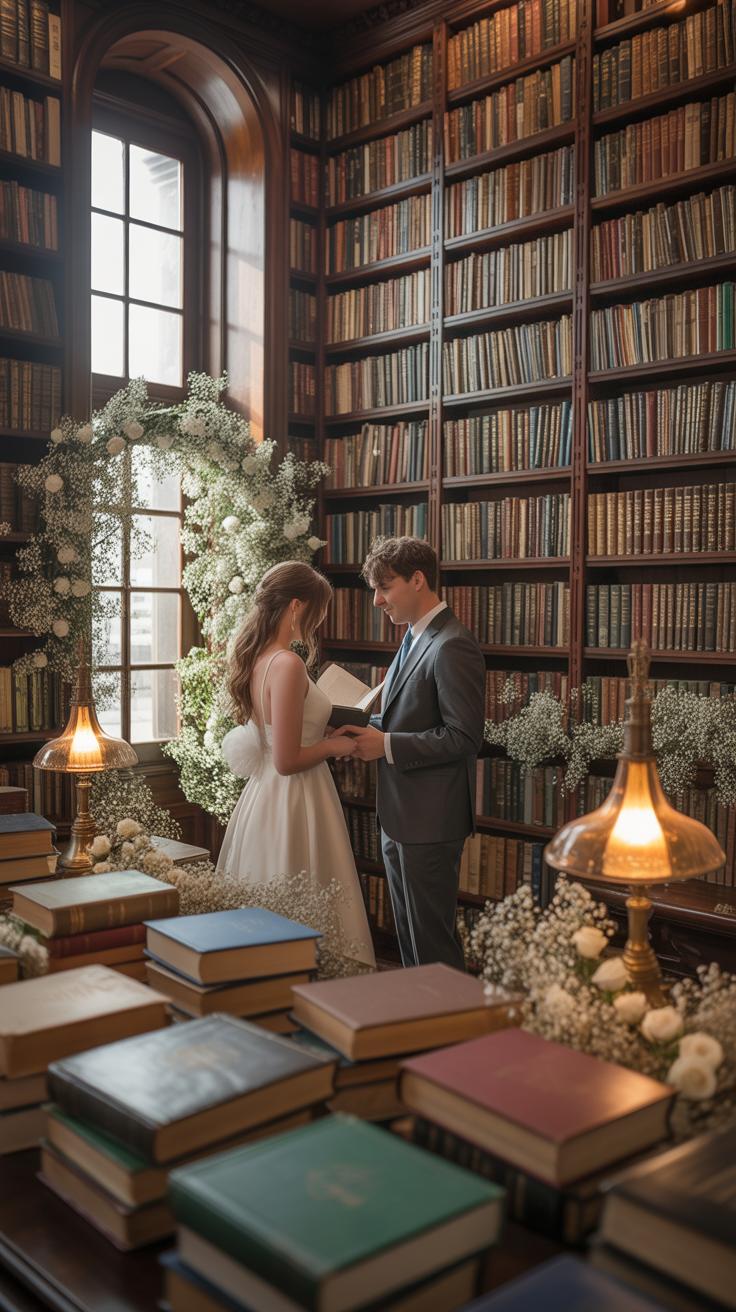
The Romantic Appeal Of Surrounding Your Ceremony With Books And Literature
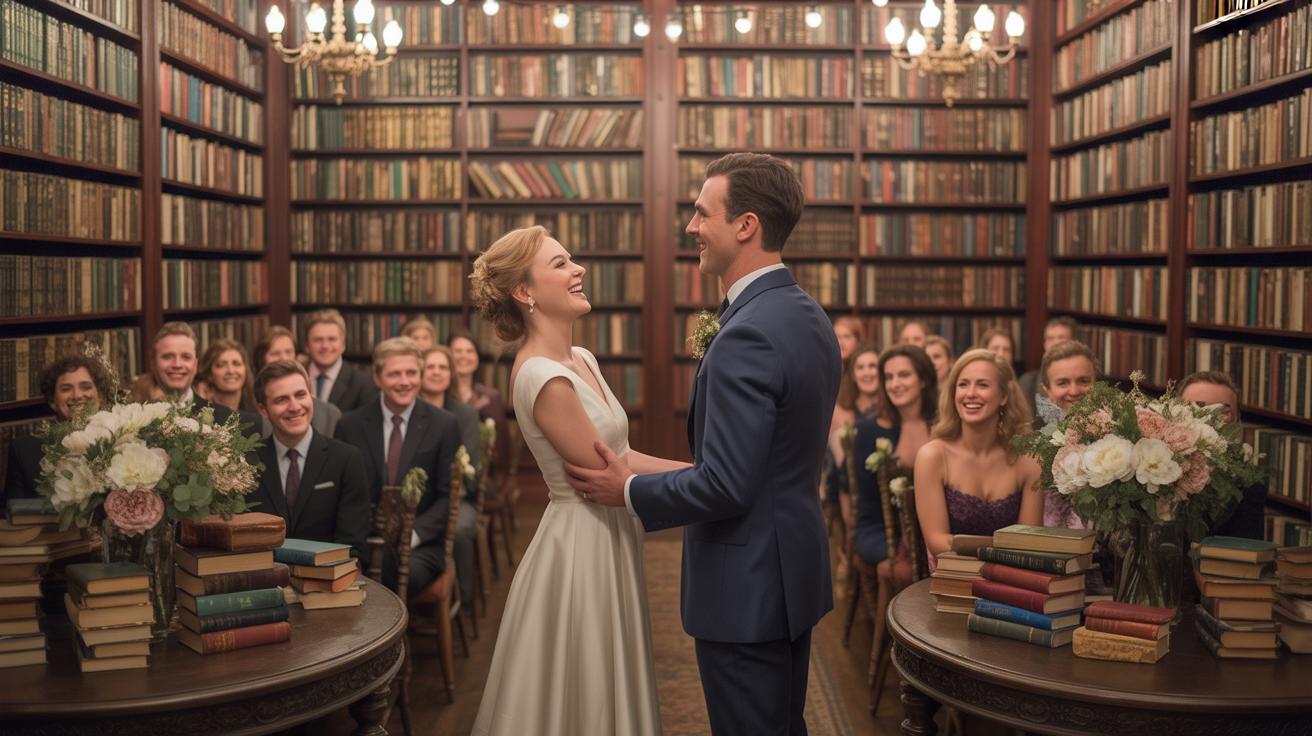
Library venues provide a built-in aesthetic that requires minimal additional decor. These spaces often feature high ceilings, mahogany shelving, and significant architectural detail. Choosing a library means you leverage decades of history and design without paying for extra rentals. The environment creates a quiet and focused atmosphere for your ceremony. This setting allows guests to focus on the spoken words and the significance of the union.
Libraries prioritize preservation and order. This professional and structured environment ensures a smooth event flow. Books provide a natural textured backdrop for photographs. You do not need to spend money on floral walls or expensive backdrops. Historic libraries offer classic materials like brass, leather, and stone. These elements create a sophisticated look that survives changing wedding trends. Using an existing library supports public institutions and architectural heritage.
How A Library Themed Wedding Reflects Your Shared Story As A Couple
A library wedding allows you to showcase your intellectual partnership. You can curate specific titles that reflect your shared interests or personal history. This theme moves beyond generic decorations to meaningful objects. It tells guests that your relationship prioritizes knowledge and shared experiences. You can use book titles to organize seating charts or table themes. This practical application turns a decorative choice into a functional logistics tool.
Couples often choose libraries to signal their values. A library represents a lifelong commitment to learning and growth. Using this space frames your marriage as a continuing narrative. You can incorporate actual literary passages into your vows or signage. This practice links your commitment to established works of literature. It provides a clear and consistent motif across all wedding touchpoints. This strategy creates a cohesive and memorable experience for everyone involved.
Choosing The Right Wedding Venues Library For Your Big Day
What To Look For When Touring A Library As A Wedding Venue
Verify the lighting restrictions before signing any contract. Historic libraries often ban flash photography to protect aging ink and paper. Check for UV-filtered windows and existing lumens in the reading rooms. Dim lighting creates a moody look but makes professional photography difficult. Ask if you can add floor lamps or uplighting. Many venues prohibit heat-generating bulbs near archival collections or ancient wooden shelves.
Evaluate the floor load capacity and acoustic limitations of the space. Large halls with marble floors create significant echoes that ruin audio recordings. Test the sound system during your tour. Look for ADA compliance in older buildings. Many historic libraries lack elevators or wide ramps for guests with mobility issues. Ensure the venue has a dedicated prep area. Most libraries lack professional kitchens, so caterers need extra space and power.
A library is a place where you can lose your heart, and find it again. May your new chapter begin surrounded by all the stories that led you to each other.
Notable Historic Libraries Around The World That Host Wedding Ceremonies
The New York Public Library remains a top choice for grand events. The Stephen A. Schwarzman Building features Beaux-Arts architecture and iconic marble Details. Couples typically use the Celeste Bartos Forum or Astor Hall. These spaces offer high ceilings and massive stone columns. This venue requires a high budget and strict logistical planning. You must work with their approved vendors for most technical needs and catering services.
The George Peabody Library in Baltimore offers a striking vertical interior. It features six tiers of cast-iron balconies that rise to a skylight. This design follows the 19th-century Neo-Grec style. In the United Kingdom, the Bodleian Library at Oxford University provides several historic rooms. The Divinity School features a famous perpendicular Gothic vaulted ceiling. These venues function as active academic spaces. You must schedule events around student access and rigorous preservation rules.
Setting The Scene With A Library Wedding Aesthetic
Color Palettes And Textures That Capture The Classic Library Atmosphere
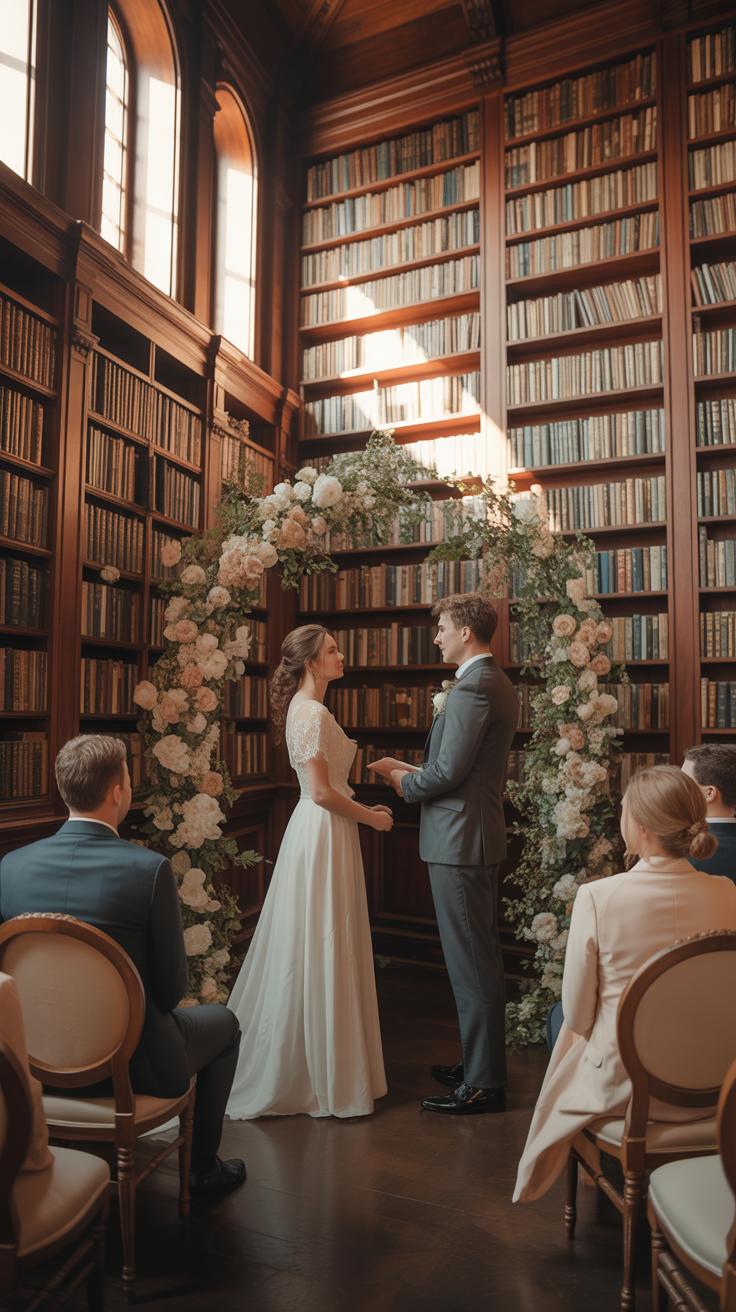
Effective library weddings rely on deep hues and heavy materials. Use dark wood tones like mahogany or walnut to anchor the space. These colors reflect the Dark Academia aesthetic. Incorporate forest green, navy blue, or burgundy to mimic vintage book bindings. These rich tones create a sense of history. Gold or brass accents provide a high-contrast finish that mimics gold-leaf lettering found on old book spines.
Textural variety improves the sensory experience. Use genuine leather or high-quality faux alternatives for seating. Incorporate velvet linens to absorb sound and add weight to tables. Vellum and parchment paper textures work well for stationery. These materials ground the event in a traditional scholarly setting. Avoid bright plastics or synthetic neon colors. Stick to organic materials like stone, paper, and wood to maintain the desired historical look and feel.
Lighting Techniques That Enhance The Warm Intimate Feel Of A Library Space
Lighting in a library must be functional and atmospheric. Use low-wattage bulbs with warm color temperatures. Aim for a range between 2000K and 2700K to mimic firelight or incandescent bulbs. This range reduces harsh glare on book pages and glass cases. Use shaded desk lamps or bankers lamps to provide focused pools of light. These fixtures direct the eye to specific focal points like guest books or centerpieces.

Avoid overhead fluorescent lights. They wash out the rich colors of the wood and books. Use uplighting to highlight architectural details like tall shelves or vaulted ceilings. This adds height to the room without overexposing the space. Use candles or LED flickering lights to create movement. Proper layering of light makes large halls feel private. This strategy ensures the venue looks sharp in photos while keeping the mood quiet and focused.
Book Wedding Theme DCor Transforming Any Space Into A Literary Haven
Using Vintage Books, Globes, And Reading Lamps As Meaningful Decorative Elements
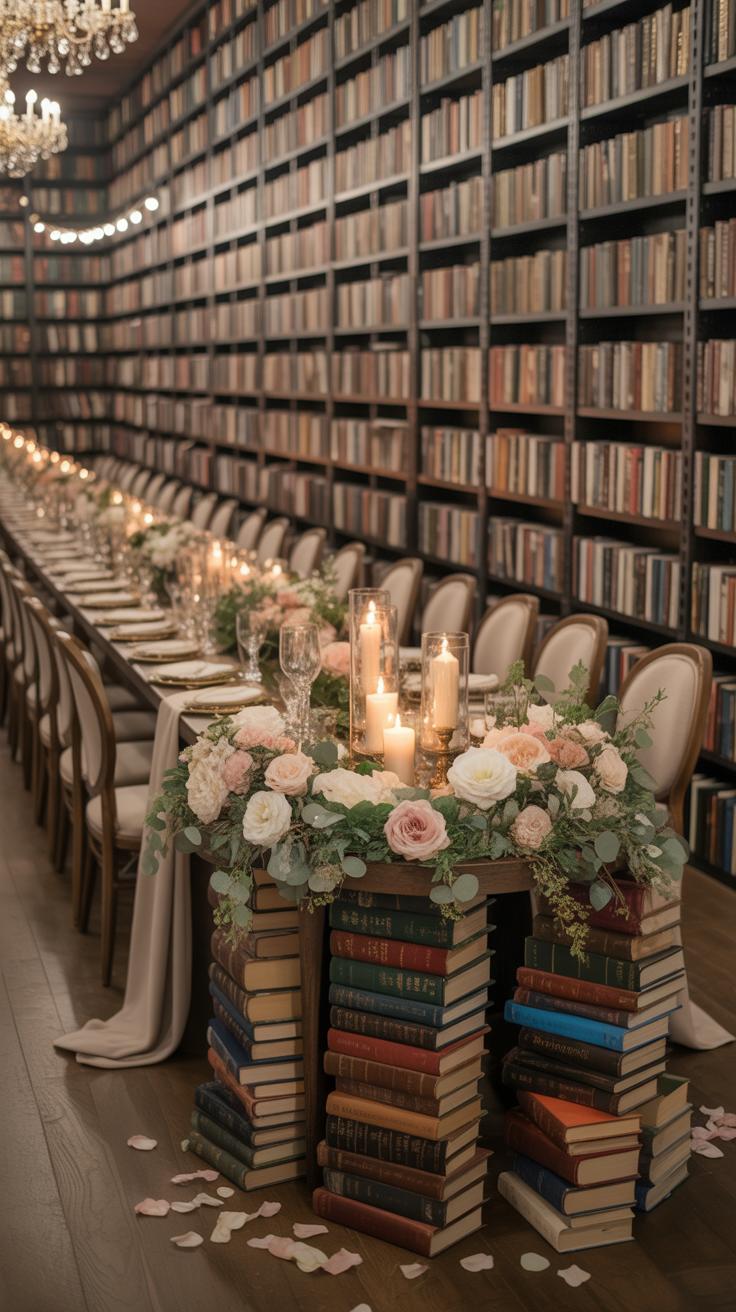
Hardcover books from the late nineteenth century provide structural weight and height to table centerpieces. Use cloth-bound editions with gold foil stamping to evoke a Victorian library aesthetic. Stack these volumes horizontally to create platforms for floral arrangements or candles. Avoid matte modern paperbacks because they lack the necessary visual gravity. Select titles that reflect personal history to ensure every element serves a purpose.
Brass bankers lamps and green glass shades provide focused task lighting that mimics traditional reading rooms. Place these on bars or guest book tables to direct movement and attention. Incorporate vintage globes to reference classic travel literature and adventure themes. These items create a grounded, scholarly atmosphere without requiring permanent structural changes to the venue. Stick to materials like brass, wood, and glass for historical accuracy.
Essential DéCor Items To Build Your Book Wedding Theme From Ceremony To Reception
Standard decorative components must transition from the ceremony aisle to the reception tables to maximize your budget. Use functional library equipment to organize guest interactions and navigation. These tools provide an authentic tactile experience for your guests.
- Card Catalog Cabinets: Use authentic wooden filing units to hold escort cards or seating assignments. These vintage pieces provide a heavy, permanent feel to the entrance of your reception space.
- Date Due Slips: Insert manila pockets and stamped cards into wedding programs or favor boxes. This detail references the mid-twentieth century borrowing systems used in public and academic libraries before digital tracking.
- Typewriters: Place manual machines on the guest book table to encourage printed messages. The mechanical sound and physical strike of the keys create a sensory connection to the act of literary creation.
- Book Arch: Construct a structural focal point for the ceremony using stacked decommissioned encyclopedias or law books. Use internal steel supports to ensure the installation remains stable and safe for the wedding party.
- Embossers: Utilize custom hand-held library embossers to mark napkins, menus, and stationery with a raised seal. This technique mimics personal collection marks and adds a layer of professional branding to paper goods.

Organize your layout to mimic a functional archive. Use wooden signage with serif fonts to label different zones like the stacks or the periodicals lounge. High-contrast colors and natural wood textures reinforce the academic environment. Keep the lighting warm and low to replicate the quiet intensity of a private study. Every item should look like it belongs in a working collection of rare texts.
Stationery And Signage Inspired By The Library Theme Wedding
Designing Wedding Invitations That Look Like Classic Library Cards Or Book Covers
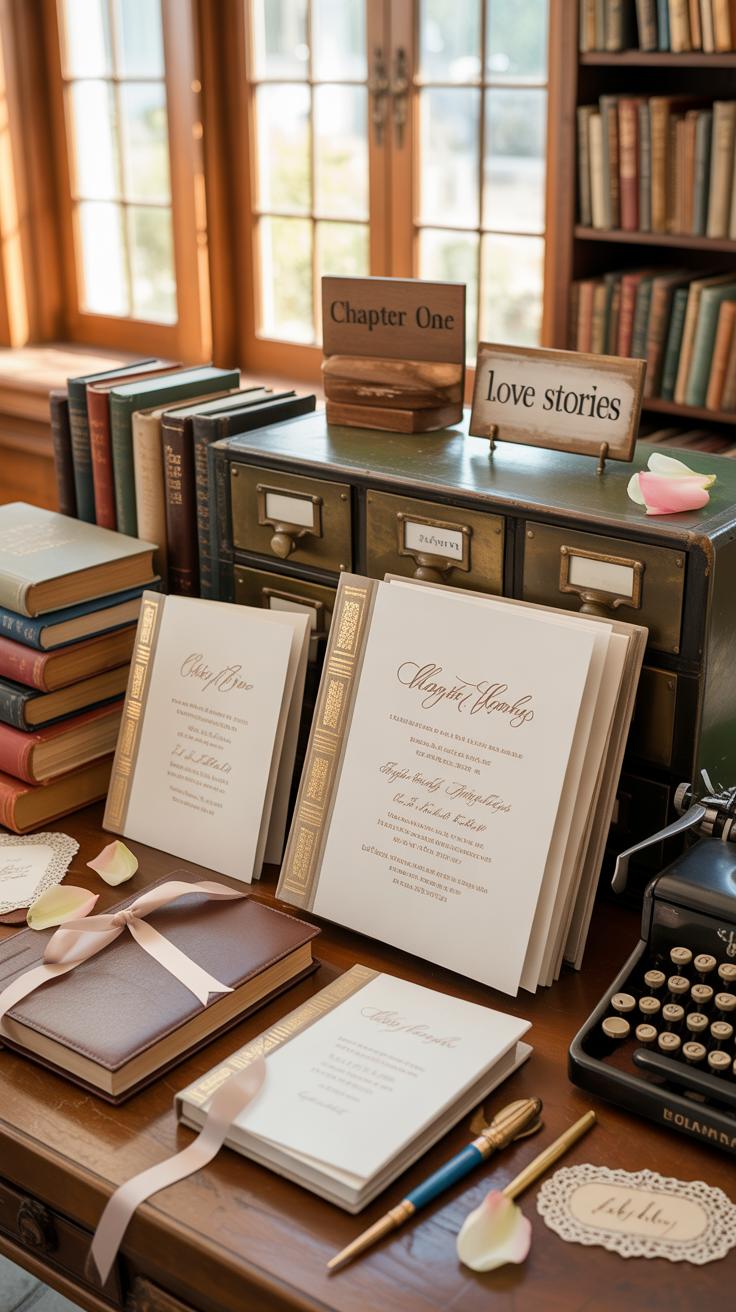
Modern printing techniques allow couples to replicate the physical texture of vintage library materials. Use heavy cardstock in manila or cream to mimic 20th-century circulation cards. Offset printing or letterpress adds a tactile feel that digital methods lack. Printers can replicate the standard three by five inch dimensions of a catalog card. This size fits into standard envelopes while maintaining historical accuracy for a library wedding.
Graphic designers can also model the outer suite after cloth-bound book covers. Use gold foil stamping on dark navy or forest green stock to simulate hardcover titles from the Victorian era. Incorporate a date stamp graphic to indicate the wedding date. This visual cue tells guests the theme before they read a single word. Functional design choices include a pocket on the back of the invite to hold the response card.
Creative Signage Ideas Including Dewey Decimal Systems And Literary Quotes
Successful library signage uses the Dewey Decimal Classification system to organize guests. Assign each table a specific three-digit number representing a genre. For example, use the 800s for American Literature or the 900s for History. Print these numbers on rigid cards and mount them in brass holders. This method provides clear structure for the reception. It turns a logistical need into a tactical part of the decor.
Place strategic signage at key transitions throughout the venue. Use typed quotes on archival paper to guide guests from the ceremony to the bar. Frame these quotes in simple wood or metal to match the library aesthetic. High-contrast black ink on white paper ensures legibility in dim lighting. Avoid complex fonts that distract the reader. Clear typography facilitates better movement through the space and maintains the academic tone of the event.
Floral Arrangements And Centerpieces For A Wedding Library Setting
Pairing Blooms With Books: Floral Styles That Complement A Literary Venue
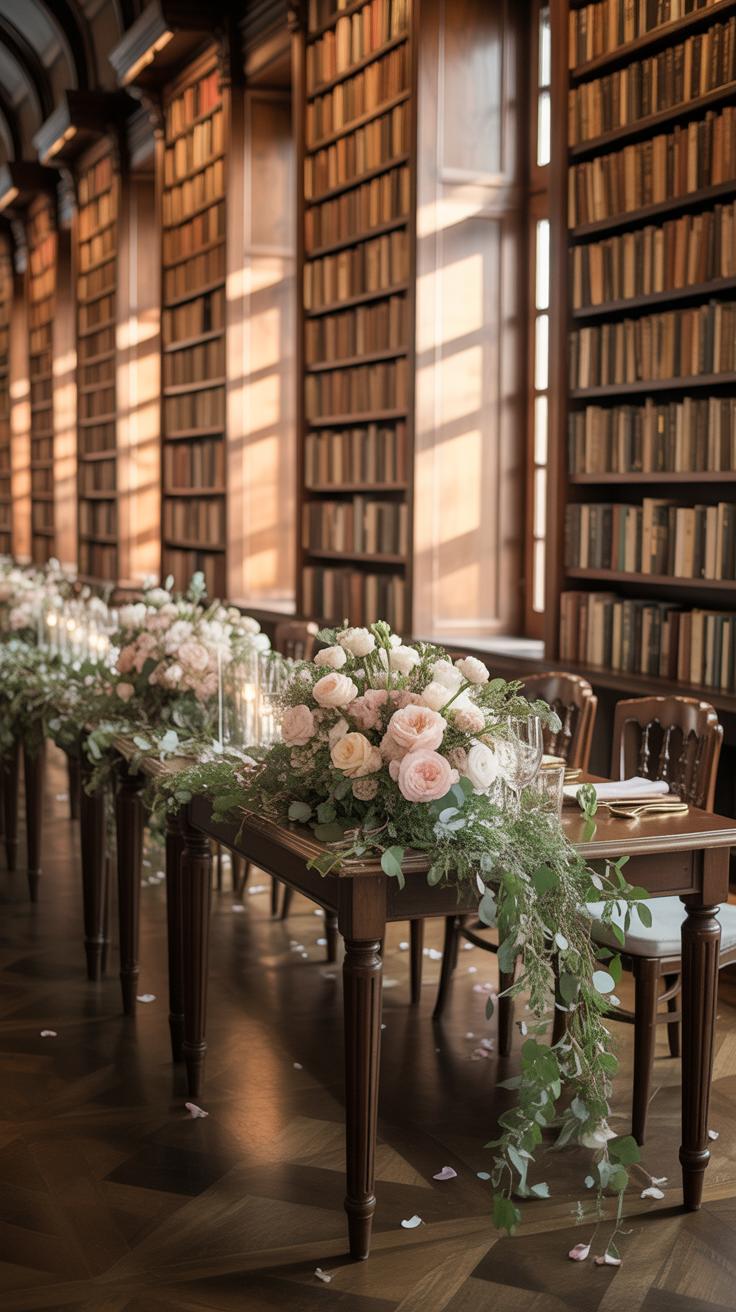
Library environments often feature heavy wood, dark shelves, and specific lighting conditions. Select flowers that provide high contrast to prevent the arrangements from disappearing into the shadows. Deep jewel tones like burgundy and navy work well in Traditional or Dark Academia settings. Use low-fragrance flowers to protect rare book collections from scent saturation. Focus on structural plants like ferns or lilies to match the vertical lines of bookshelves.
Balance the organic shapes of the plants with the rigid geometry of the books. Incorporate dried elements such as baby breath or eucalyptus for a vintage aesthetic that mimics old paper textures. Avoid excessive water in the vessels to prevent accidental damage to the venue archives. Use weighted bases for any tall arrangements to ensure stability on narrow surfaces. Strategic placement keeps the focus on the literature while adding necessary color.
DIY Book Stack Centerpieces That Double As Personalized Decor And Guest Gifts
Create functional centerpieces using curated stacks of hardcover books. Group books by color or subject to maintain a cohesive visual theme across the tables. Secure these stacks with twine or lace to keep them stable during the event. Top the books with small bud vases or tea lights to provide height variations. This method replaces expensive floral foam with recycled materials. It cuts costs while reinforcing the primary theme.
Invite guests to take the books home at the end of the night. This turns your decor into a meaningful favor that does not go to waste. Use a custom stamp on the inside cover to mark the date and event. Choose books from thrift stores or library sales to keep the budget low. This tactic provides a tactical solution for both decoration and gifting. You reduce cleanup time by letting guests clear the tables.
Academia Wedding Aesthetic Elevating Your Library Wedding With Scholarly Elegance
What The Dark Academia Aesthetic Means And How It Translates To Wedding Style
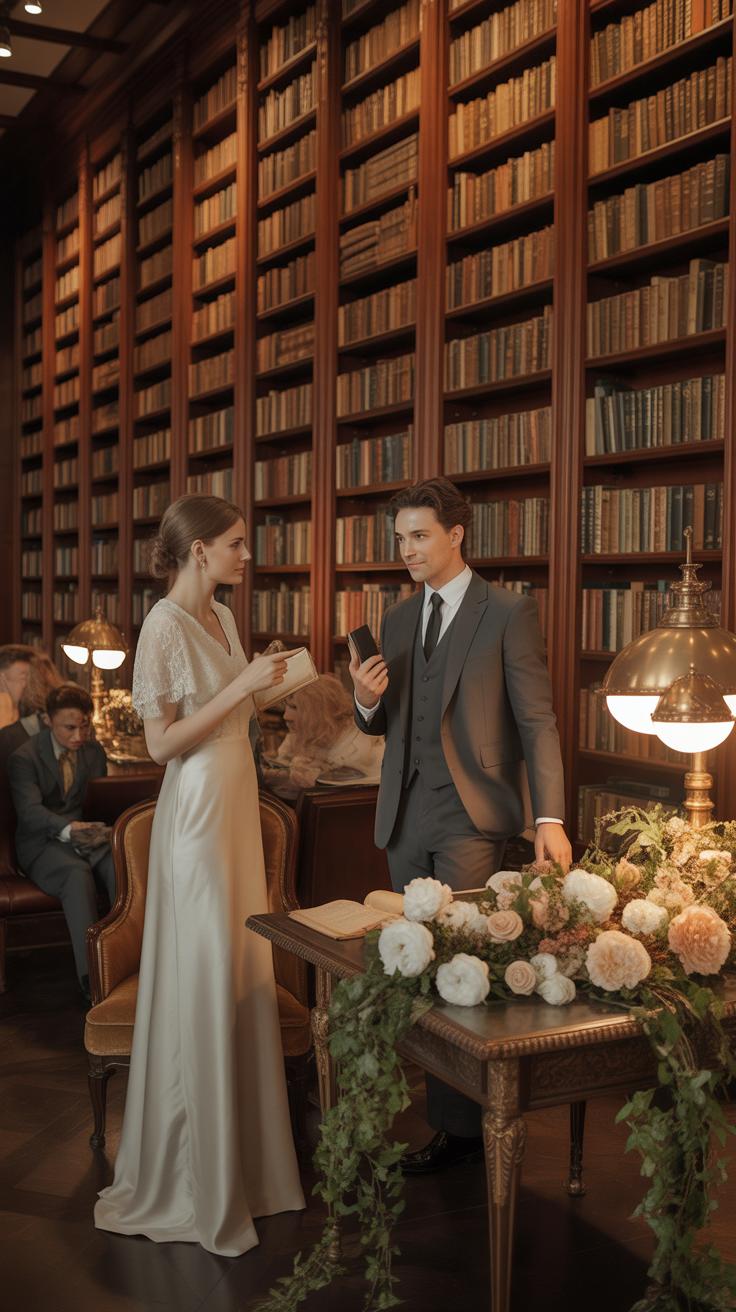
The dark academia aesthetic centers on a passion for higher education and classical literature. It draws heavy inspiration from European boarding schools and Ivy League universities of the mid-twentieth century. Tactically, this style relies on a moody color palette. Dominant tones include forest green, burgundy, navy, and charcoal. This aesthetic prioritizes substance and tradition over modern bridal trends. It creates a formal and intellectually focused atmosphere.
To translate this to a wedding, you must focus on historic architecture and tangible textures. Use wood, stone, and leather to anchor the room. Avoid bright white lighting. Instead, use soft lamps or candlelight to mimic old study halls. This shift creates a sense of history and quiet intensity. It moves the wedding away from standard celebration tropes. It positions the event as a serious, timeless gathering for scholarly minds.
Attire, Accessories, And Styling Tips To Achieve The Academia Wedding Look
Scholarly elegance requires specific garment choices that reflect a professional and historic sensibility. Textiles must be substantial and high quality to match the library environment. Choose matte fabrics like wool, tweed, or heavy silk. Avoid shiny synthetic materials that look cheap under library lighting. Structure is more important than flow. Tailoring should be precise to evoke the discipline of a student or a distinguished professor.
- Tweed and Wool Fabrics: Use these heavy textiles for suits or vests to ground the look in tradition. They provide a tactile connection to historic academic dress. These materials also hold their shape well throughout a long event.
- Wax Seals: Apply wax seals to all paper goods including menus and place cards. This technique provides a physical link to old world correspondence. It suggests that every document in the wedding is an official record.
- Oxidized Metal Jewelry: Select gold or silver items with a dark patina rather than high polish. This avoids a flashy modern look. It makes your accessories appear as if they are heirlooms passed down through generations.
- Leather Bound Details: Incorporate leather in your footwear or guest book. Real leather matures with age and signals durability. It matches the binding of rare books found in historic library stacks.
- Vintage Eyewear and Timepieces: Use round wire frames or pocket watches to accessorize. These items serve as functional tools for a researcher. They provide a subtle nod to the intellectual labor associated with the academia theme.
Accessories should be functional and purposeful rather than purely decorative. Every piece of your outfit must look like it belongs in a seventeenth-century reading room. Focus on rich, earthy tones for your shoes and belts. Avoid modern patterns or neon accents that break the immersion. When you select your styling kit, prioritize items that look better as they age. This ensures your wedding photos remain timeless and authoritative.
Personalizing Your Book Lover Wedding With Literary Touches Throughout The Day
Incorporating Favorite Quotes, Authors, And Genres Into Your Vows And Ceremony
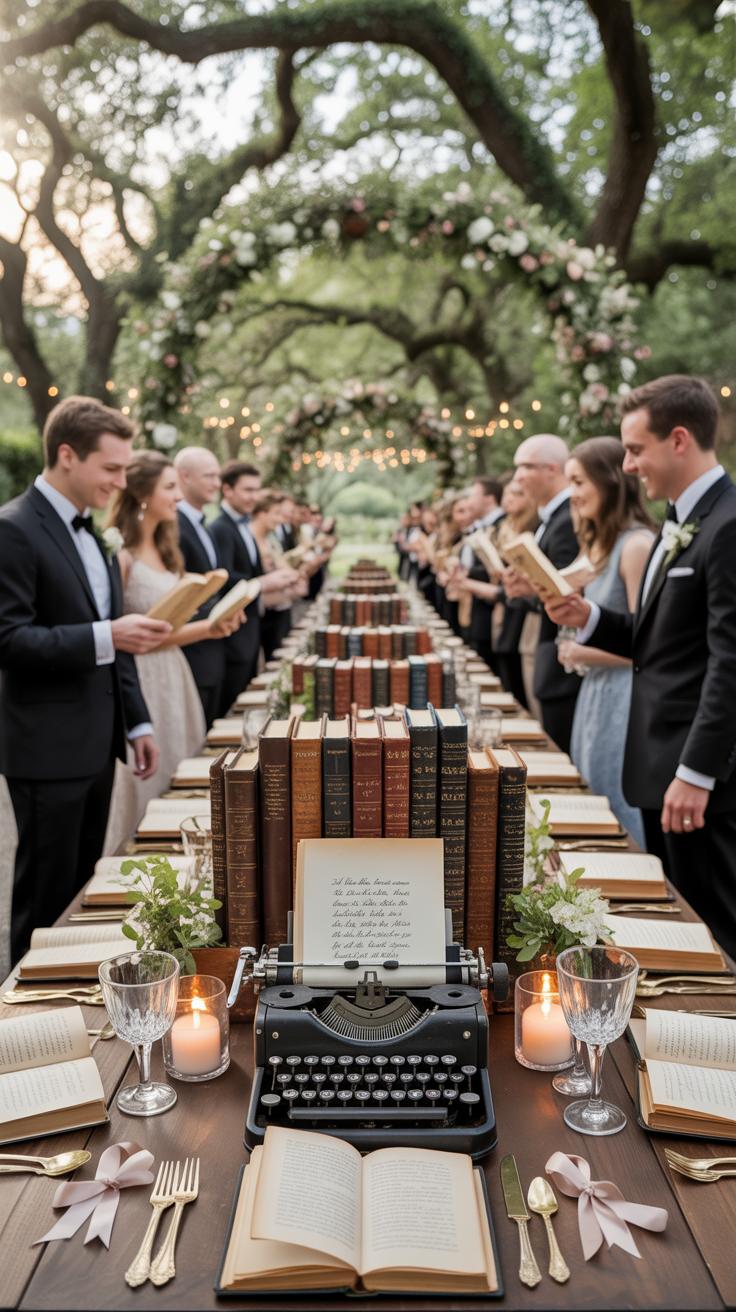
Ceremony scripts benefit from structured literary integration. Use specific passages from authors like Jane Austen or Victor Hugo to ground your vows in historical context. Select texts that match your relationship dynamic. High fantasy quotes offer a different tone than Victorian era prose. Avoid overused lines. Choose deeply personal segments that reflect your values. This approach ensures the ceremony feels authentic rather than generic or overly sentimental.
Integrate literature into the physical ceremony space. Print quotes on floor runners or program fans. Use specific book titles to name your ceremony rows instead of numbers. This helps guests navigate the seating while reinforcing the theme. Ensure all text is legible and follows a consistent typeface. Using a typewriter font mirrors a classic publishing aesthetic. Consistency in these details builds a cohesive atmosphere from the first moment.
Book Inspired Wedding Favors That Guests Will Actually Treasure And Keep
Select favors with practical utility and high durability. Custom embossed bookmarks provide immediate value to readers. Use materials like leather, wood, or heavy cardstock to ensure longevity. Avoid flimsy paper that guests will discard. Personalized library cards or vintage bookplates also serve as unique tokens. These items act as functional tools for a guest’s own library. Quality materials reflect the importance of the occasion and the theme.
Blind date with a book packages offer a tactical way to clear inventory. Wrap used books in brown kraft paper to hide titles. Write the genre and three plot points on the front. This creates an interactive experience during the exit. Source these books from thrift stores or library sales to manage costs. This method reduces waste and provides guests with a meaningful object. Functional favors prevent clutter and reinforce the literary focus.
Planning Tips To Bring Your Library Wedding Vision Together Seamlessly
Working With Vendors Who Understand And Can Execute A Literary Wedding Theme
Select vendors who value preservation and quiet logistics. Library venues often feature fragile historical archives or rare wood shelving. Your florist must avoid high-moisture arrangements that could damage paper or cause mold. Ask for a portfolio that shows experience in heritage buildings. These spaces require specific lighting and setup constraints. Ensure your team understands that the venue itself is the primary decor piece and requires minimal interference.
Coordinate strictly with the site manager regarding load-in times and sound limits. Libraries usually have strict fire codes because of the paper volume. Your caterer must agree to a no-flame policy if the venue mandates it. High-quality vendors will propose battery-operated lighting and stable floral bases. They should prioritize the safety of the collection over aesthetic flare. Hire people who respect the archival nature of your specific literary environment.
Budgeting Smartly For A Library Wedding Without Sacrificing Atmosphere Or Detail
Allocate your budget toward high-impact tactile elements rather than excessive floral displays. Libraries already offer dense visual textures through rows of book spines and architectural woodwork. Spend money on quality stationery, wax seals, and letterpress printing. These items reflect the literary theme at a lower cost than large installations. Use functional items like vintage typewriters or card catalogs as focal points. This strategy saves money while reinforcing the aesthetic.
Save funds by utilizing the natural light and built-in furniture of the venue. Many libraries provide sturdy oak tables and chairs that fit the Dark Academia or Classical styles. You do not need to rent expensive linens when natural wood provides a better backdrop for a scholarly theme. Look for second-hand hardcover books at local sales for centerpieces. This reduces your decorating costs and aligns with the sustainable nature of a library environment.
Frequently Asked Questions

What are some creative ways to incorporate books into a wedding theme?
Embracing library wedding ideas allows you to weave your passion for literature into every detail. You can use vintage hardcovers as centerpieces, create a bouquet out of paper flowers made from recycled pages, or use library checkout cards as unique seating charts. By focusing on cozy textures and literary motifs, you transform a traditional ceremony into a narrative-driven celebration that reflects your shared story and personality.
How can I style a reception table to look like a library shelf?
To achieve this look, stack various antique books of different heights to create visual interest and dimension. Incorporate library wedding ideas like using miniature brass lamps, magnifying glasses, and dried greenery to mimic a quiet reading nook. Using classic wooden table numbers styled after Dewey Decimal system cards adds an authentic finishing touch that guides guests to their seats while maintaining the sophisticated, academic atmosphere of a grand library.
Can I host a library-inspired wedding without renting an expensive historical venue?
Absolutely! You can achieve a scholarly aesthetic in any space by bringing the library to you. Focus on renting tall wooden shelving units to serve as backdrops and sourcing affordable bulk books from thrift stores or estate sales. Using deep colors, warm lighting, and thoughtful paper goods preserves the charm of the theme without the high cost of a historic site, making these literary concepts accessible for any budget.