
Cultivating Creativity In Your Magic Learning Garden

Sensory Stimulation
Design your Magic Learning Garden to engage all five senses for maximum impact. Select plants like lamb’s ear for tactile softness and lavender for distinct fragrance. Proper School Garden Layout ensures students move between different zones without sensory overload. Use varied foliage colors to make Gardens For Kids visually striking and memorable. These choices direct student attention and improve memory retention during the learning process.
Tactile plants encourage hands on exploration in any Class Garden. Stiff grasses and fuzzy leaves create physical boundaries that students can feel and identify. This approach works well in a Backyard School where space is limited but impact must remain high. Strong herbal scents also help regulate student emotions in Outdoor Learning Areas. Sensory variety reduces stress and allows children to focus on their assigned botanical tasks.
Curriculum Integration
Use your Magic Learning Garden as a functional lab for core subjects. Students measure plant growth rates to apply mathematics in a real world setting. Biological concepts like photosynthesis and pollination become visible lessons in your School Garden Ideas. This hands on method reinforces classroom theory through direct observation. A well planned Outdoor School Design supports academic standards while keeping children active and engaged outdoors.
Environmental science thrives when students manage a living ecosystem. Use children’s garden ideas to demonstrate water cycles and soil health through composting programs. Teachers can track weather patterns and impact on crop yields for data analysis projects. This tactical approach turns a standard Garden Classroom into a high performance assessment tool. Every plant choice must serve a specific learning objective to justify the space and maintain educational value.

Designing The Perfect Garden Classroom Environment
Defining Learning Zones
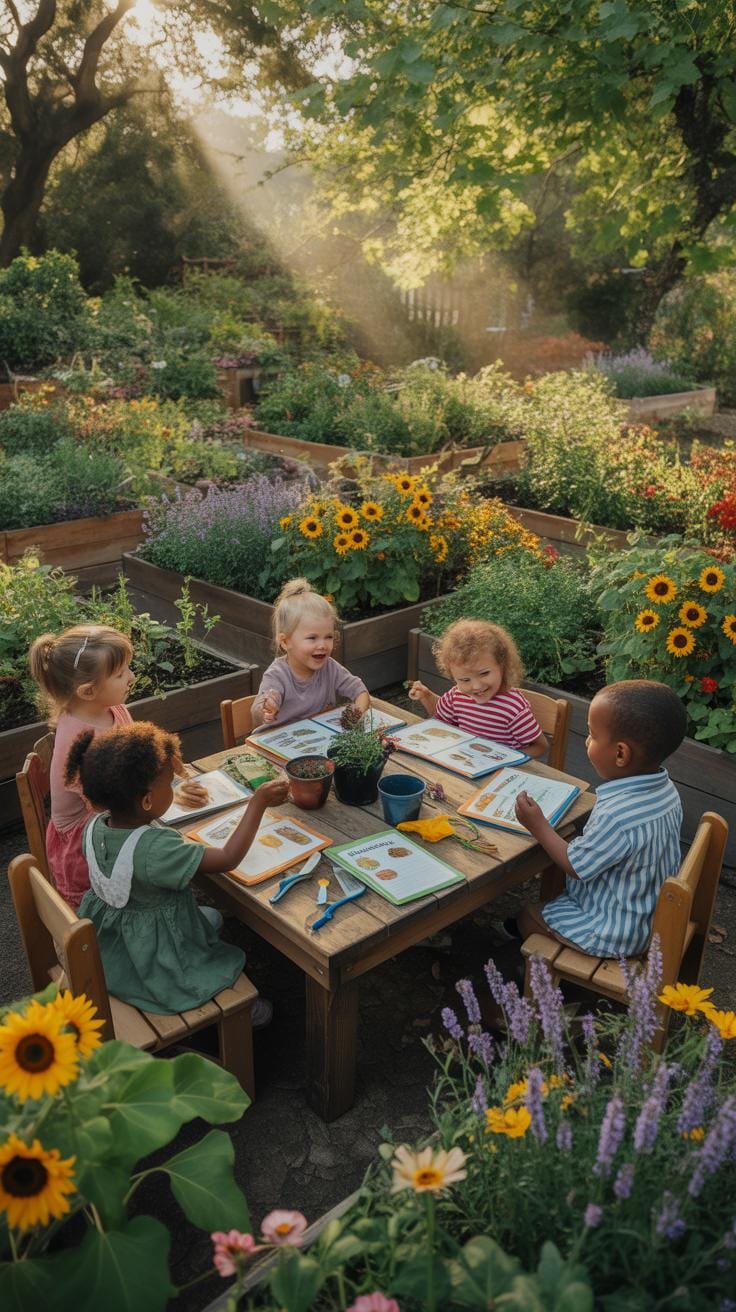
Establishing a functional School Garden Layout requires dividing the space into distinct areas. High-traffic zones for group demonstrations need hard standing or compacted gravel to prevent soil compaction. Position these active areas near the center to allow clear sightlines for teachers. This setup improves student management and ensures every child can see the lesson. Use natural barriers like low timber fences to separate these zones from quiet spaces.
Quiet zones support independent study and observation within the Class Garden. Place these areas at the periphery to minimize noise disruption from the main group. Use tall grasses or bamboo to create a sound buffer and sense of privacy. This intentional Outdoor School Design allows students to focus on individual tasks like journaling or sketching. Strategic placement of seating ensures these Outdoor Learning Areas remain productive and orderly throughout the school day.
Accessibility And Safety
Safety dictates every choice in an Outdoor School Design. You must select non-toxic plant species to prevent accidental poisoning or skin irritation. Avoid plants with thorns, serrated leaves, or caustic sap when brainstorming Gardens For Kids. Use rot-resistant hardwoods or recycled plastics for raised beds to eliminate the risk of chemical leaching into the soil. Ensure all structures are stable and lack sharp edges to prevent student injury.

An inclusive Childrens Garden Ideas plan must prioritize mobility. Build paths at least five feet wide to allow two wheelchairs to pass comfortably. Use firm, slip-resistant materials like pavers or stabilized crushed stone instead of loose mulch. This accessibility ensures a Backyard School remains open to all learners regardless of physical ability. Integrating these School Garden Ideas creates a reliable environment for long-term use and reduces the risk of accidents during lessons.
Optimizing Your School Garden Layout For Productivity
Sun And Water Access
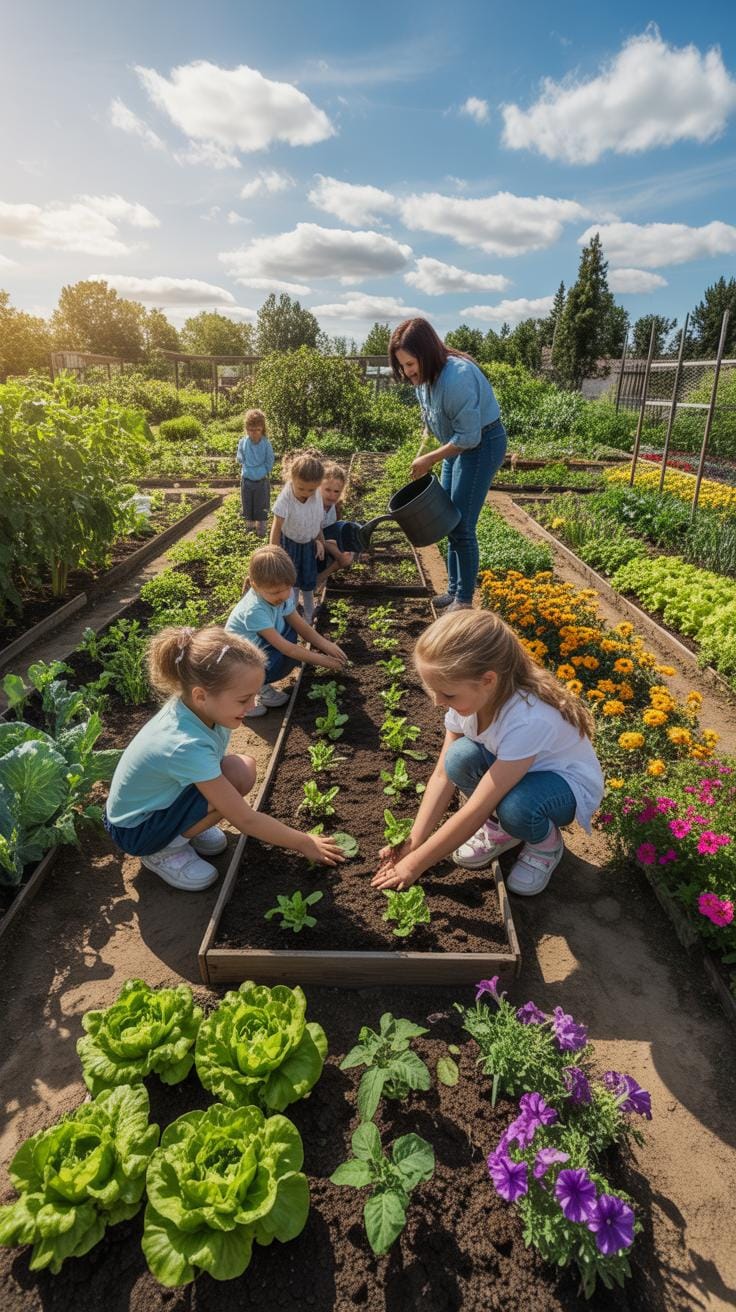
Strategic School Garden Layout requires placing high-demand crops in areas receiving six to eight hours of direct sunlight. Map the topography of your Class Garden to identify low spots where water pools. Avoid these areas for root crops to prevent rot. Place your most intensive vegetable beds closest to the primary water source. This reduces labor and ensures students can easily maintain the Gardens For Kids.
The Outdoor School Design must account for seasonal shadows cast by buildings or trees. Use a sun chart to plot light levels during the school year months. Install rain barrels or irrigation lines before building beds in your Outdoor Learning Areas. Proper site analysis prevents crop failure and minimizes wasted resources. A well-planned Backyard School garden uses its natural geography to move water efficiently to every plant.
Companion Planting Strategies
Effective School Garden Ideas use intercropping to maximize limited space and improve soil health. Pair heavy feeders like corn with nitrogen-fixing decorative beans. This method teaches students about nutrient cycling in a Garden Classroom. Deep-rooted plants break up soil for shallow-rooted neighbors. Use the Three Sisters technique as a historical model for your Childrens Garden Ideas. It demonstrates vertical layers and natural weed suppression.
Incorporate Magic Learning Garden principles by mixing aromatic herbs with vegetables to deter pests naturally. This biological control reduces the need for chemicals and keeps the environment safe for students. Distribute diverse species across your Outdoor Learning Areas to prevent monoculture diseases. Dense planting also shades the soil to retain moisture. Strategic spacing allows for high yields while keeping the overall School Garden Layout compact and manageable.
Innovative School Garden Ideas For All Seasons
Winter Interest And Evergreens
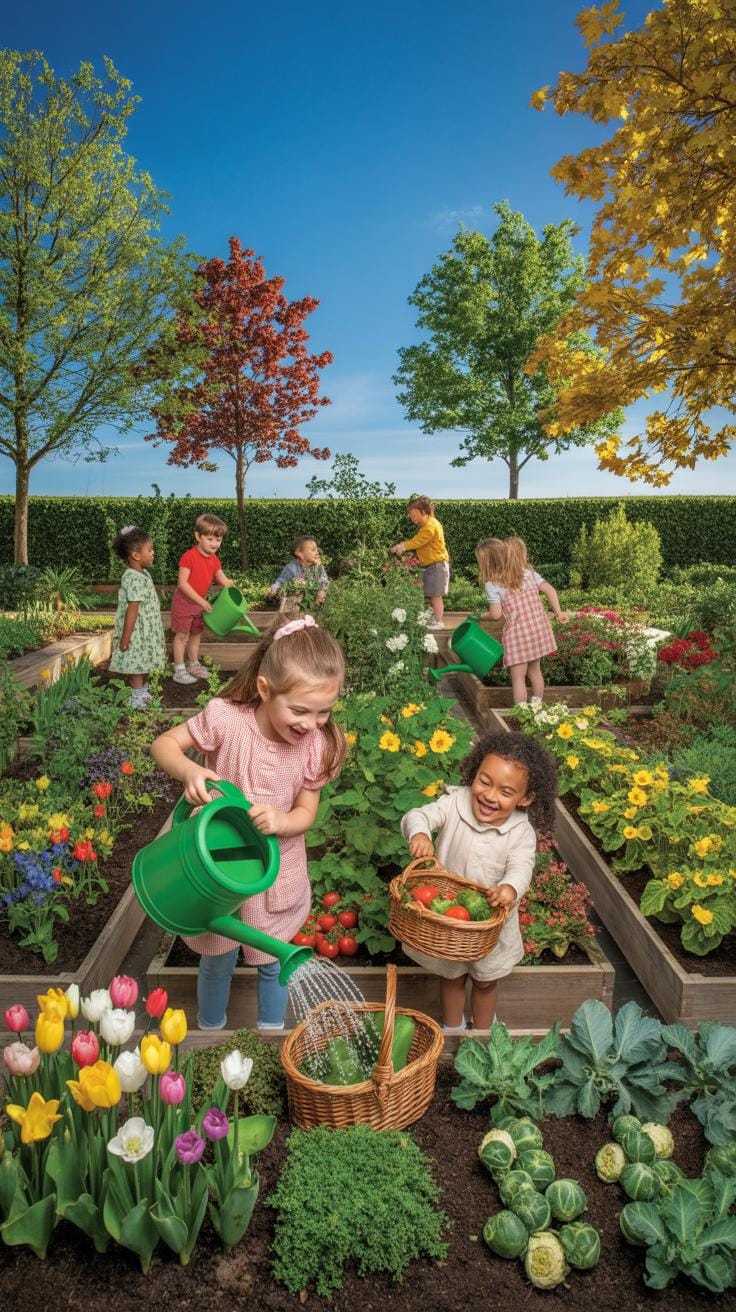
Effective Outdoor School Design requires plants that maintain structure when deciduous species go dormant. Evergreens like boxwood and holly provide a permanent framework for any Class Garden during the winter. These plants serve as living boundaries and windbreaks. They allow students to study biological resilience in freezing temperatures. Strategic School Garden Layout ensures the space remains functional and visually engaging for learners throughout the entire academic year.
Incorporate ornamental grasses to add motion and sound to Outdoor Learning Areas. Highbush blueberry stems turn bright red in winter to offer striking color. These features provide vital material for science observations when the Backyard School is covered in snow. Well-planned School Garden Ideas maximize the utility of every square foot. This approach ensures the Magic Learning Garden remains a primary site for active discovery regardless of the seasonal weather patterns.
Pollinator Waystations
Pollinator waystations are essential components of modern Gardens For Kids. These sections focus on native flowering plants that support local insect populations. Students track life cycles and observe the symbiotic relationship between plants and animals. This direct engagement makes the Outdoor School Design more than just a visual asset. It creates a functioning ecosystem that teaches children about biodiversity and the stability of our global food supply chains.

Building a dedicated pollinator zone provides hands-on opportunities in the Garden Classroom. Teachers use these spaces to explain how bees and butterflies facilitate seed production. Quality Childrens Garden Ideas involve using nectar-rich species like milkweed or coneflower. These choices ensure the Magic Learning Garden attracts measurable wildlife quickly. Precise planting schedules help maintain consistent blooms. This tactical planning ensures the Class Garden remains a source of high-impact biological study for every student.
Magical Childrens Garden Ideas To Spark Wonder
Enchanted Edibles To Grow
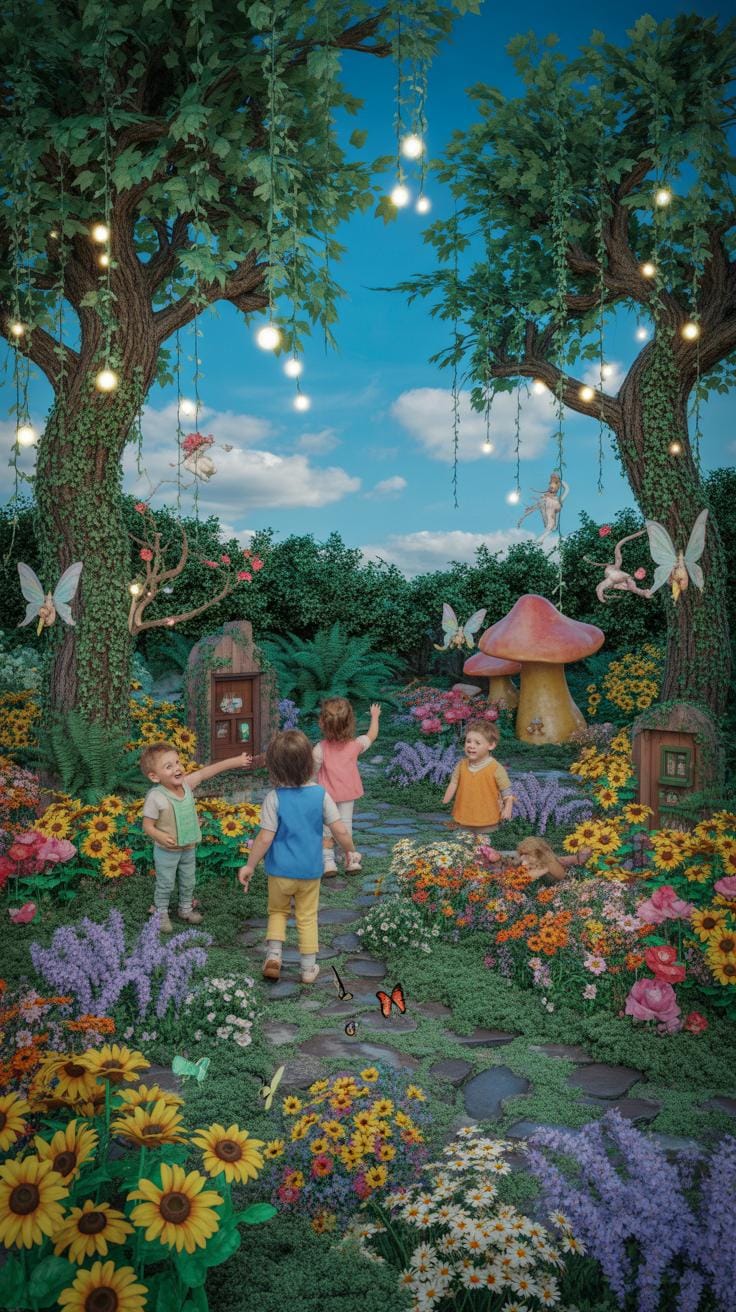
A Magic Learning Garden requires plants that challenge standard sensory expectations to engage students. Using specific species within your School Garden Layout teaches plant biology and genetic diversity through direct interaction. Select varieties that offer immediate visual or tactile feedback to maintain high engagement levels in your Garden Classroom. These choices transform a standard plot into a functional laboratory for young learners.
- Purple Carrots: These heirloom root vegetables provide a historical lesson on crop cultivation before the seventeenth century. Their dark exterior contrasts with a bright orange core, demonstrating how pigments like anthocyanin and beta-carotene exist within a single plant structure.
- Sunflowers: These tall annuals effectively demonstrate phototropism and rapid growth cycles in a Class Garden. Their large seed heads provide raw data for math lessons regarding Fibonacci sequences and yield significant biomass for late-season composting demonstrations.
- Snapdragons: These flowers utilize a unique zygomorphic structure that requires manual pressure to open. This physical mechanism teaches students about specialized pollination and floral anatomy while providing a durable plant for high-traffic Outdoor Learning Areas.
- Sensitive Mimosa: This plant exhibits rapid seismonastic movement by folding its leaves when touched. It serves as a primary tool for teaching plant defense mechanisms and electrical signaling without the need for complex laboratory equipment or expensive sensors.
- Swiss Chard: Varieties with multi-colored stems provide a visual spectrum that enhances any School Garden Ideas project. These plants are hardy and withstand varied climates, making them reliable for most Outdoor School Design plans that require consistent production throughout the academic year.
Integrating these species creates a high-impact Backyard School environment that rewards curiosity with tangible results. Use these crops to build a curriculum around botany, history, and nutrition. This tactical plant selection ensures your Gardens For Kids remain productive and educational. Proper spacing and labeling remain essential to manage student flow and protect the integrity of the growing zones during active lessons.
Interactive Garden Art
Visual and auditory elements reinforce the educational goals of any School Garden Layout by blending art with science. Students gain agency over their Outdoor Learning Areas when they contribute permanent installations like painted rocks or handmade chimes. These objects serve as durable landmarks that help define different zones within the Class Garden. Strategic placement of student work increases a sense of ownership and reduces instances of vandalism.

Functional art like DIY weather stations or sun dials provides real-time data for climate studies within your Childrens Garden Ideas. Use copper pipes, wood, and stone to ensure these tools survive seasonal changes in your Outdoor School Design. Measuring wind speed and shadow movement links physical movement to abstract scientific concepts. This approach turns a Backyard School into a multi-sensory environment that supports diverse learning styles through practical application.
Managing A Sustainable Class Garden Project
Student Ownership And Roles
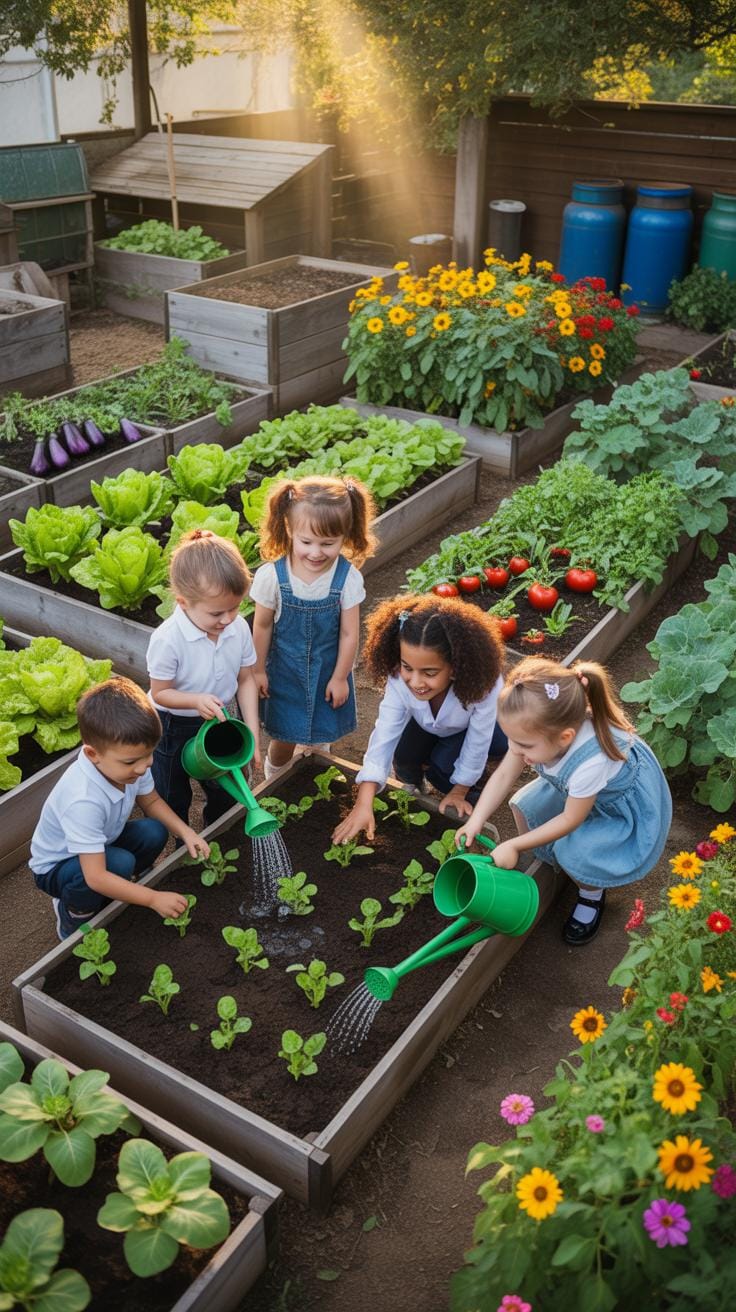
Assigning clear duties ensures the Class Garden survives beyond the first month. Create a rotation schedule for weeding, watering, and monitoring pests. This tactical approach prevents burnout and builds a sense of duty. Students must see themselves as managers, not just observers. This shift in mindset transforms Gardens For Kids from simple patches of dirt into active Outdoor Learning Areas where every child has a specific job.
Successful Childrens Garden Ideas rely on the precise execution of daily tasks. Use a simple School Garden Layout to mark zones for different student teams. These teams handle technical needs like checking soil moisture or recording growth data in their Backyard School logs. Consistent participation teaches accountability through direct action. Students who own their progress will protect the site. Empowered learners ensure the long term health of the Magic Learning Garden.
To plant a garden is to believe in tomorrow. Just as we nurture the soil, we cultivate the magic of learning within ourselves.
Composting And Waste Reduction
Soil health is the foundation of any School Garden Ideas project. Establish a three bin composting system to process cafeteria scraps and organic garden waste. This action teaches the nutrient cycle without using textbooks. A well planned Outdoor School Design includes space for these bins away from high traffic paths. Proper waste management reduces the disposal costs of the school while generating free fertilizer for the entire project.

Effective composting requires a balance of carbon and nitrogen materials. Integrate this process into your Garden Classroom by letting students monitor temperature and moisture levels. Turning the pile speeds up decomposition and aerates the organic matter. This hands on labor demonstrates how nature recycles energy. Use the finished compost to top dress beds across the site. Sustainable practices reduce reliance on external inputs and keep the project budget low.
Expanding Outdoor Learning Areas For Multi Sensory Play
Natural Building Materials
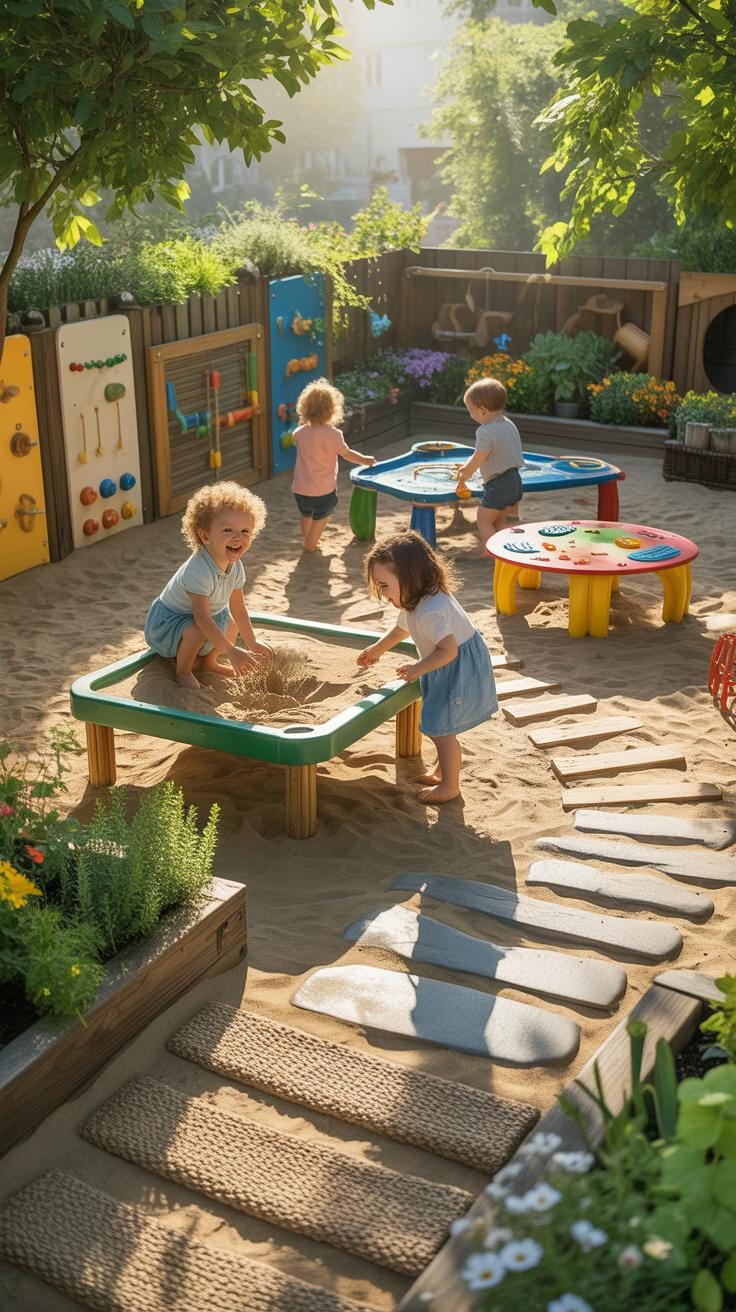
Install debarked cedar logs and limestone boulders to define your School Garden Layout. These materials offer high durability and low maintenance compared to plastic equipment. Use wood chips or organic mulch for surfacing to manage drainage and provide a soft landing zone for students. These elements create a Class Garden that withstands heavy daily use while supporting physical development through climbing and balancing exercises.
Designers often use tree stumps as tiered seating for a Backyard School or a simple Garden Classroom. Position these heavy items to frame the perimeter of established Outdoor Learning Areas. Effective School Garden Ideas prioritize raw materials to teach children about texture and weight. Use local stone to build low walls that double as raised beds or quiet seating for Gardens For Kids during instruction periods.
Wildlife Observation Blinds
Wildlife blinds turn a standard Outdoor School Design into a functional research station for students. Build these simple structures using reclaimed wood or woven willow branches to minimize environmental impact. Position blinds near water sources or native nectar plants to encourage frequent animal visits. This setup allows children to practice patience and data collection within their own Childrens Garden Ideas without disturbing the local ecosystem.
A successful Class Garden requires designated zones where human movement remains restricted or hidden. Use camouflaged panels or thick privacy hedges to create a screen between students and sensitive nesting sites. These blinds enhance any Garden Classroom by providing a realistic setting for biology lessons. Effective Outdoor Learning Areas use these tools to foster deep focus and improve observation skills while protecting the integrity of the natural habitat.
Transitioning To A Backyard School Setting
Small Scale Success
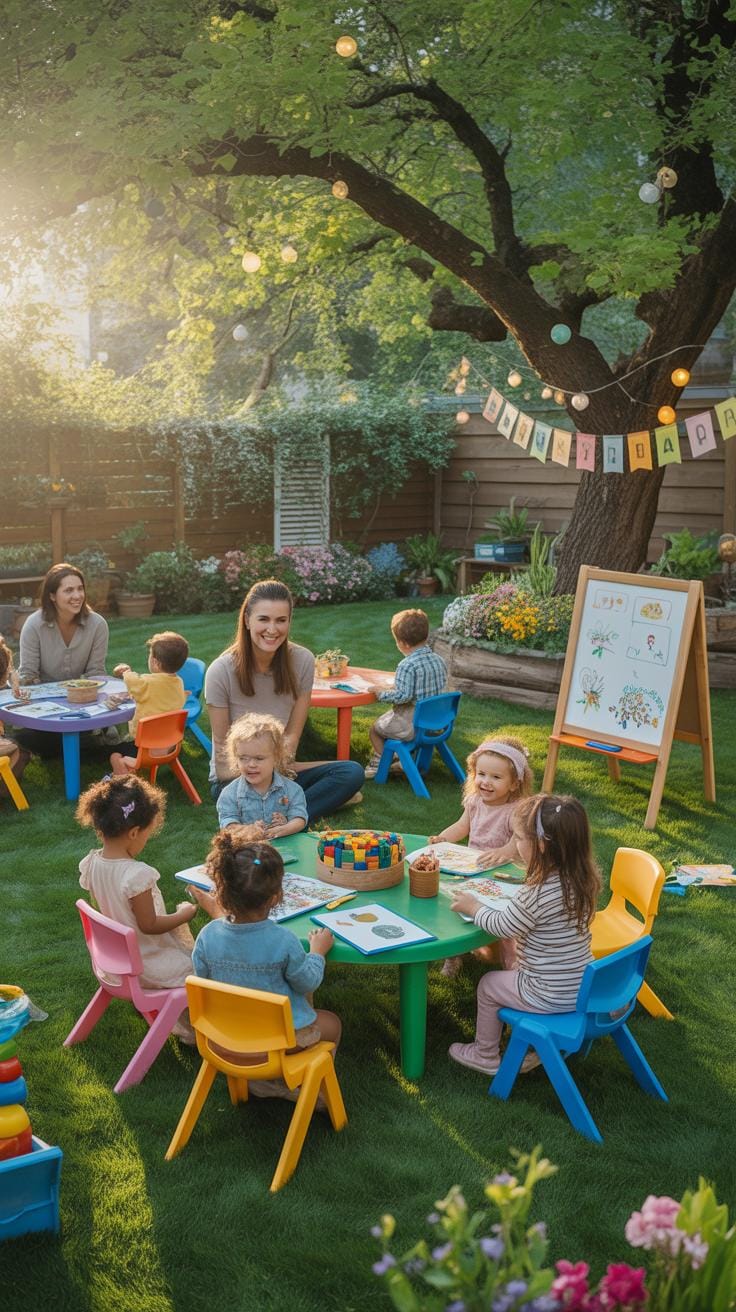
Conversion of residential plots into a functional Backyard School requires high density planting tactics. You must swap traditional rows for Outdoor School Design methods like intensive container gardening and tiered vertical planters. These systems maximize yield in tight footprints. Focus on hardy crops that tolerate handling. This shift allows a Magic Learning Garden to function without the expansive land found in a traditional agriculture program or a large Class Garden.
Precision builds the foundation for effective Gardens For Kids at home. Use square foot gardening to teach spatial awareness and resource management. This data driven approach mirrors a professional School Garden Layout on a micro level. Select modular beds that allow for easy reorganization as the curriculum changes. These Childrens Garden Ideas ensure that the physical space remains a flexible tool for teaching science and sustainability within limited urban environments.
Family Engagement Activities
Extending the Garden Classroom beyond school hours requires structured parental involvement. Plan monthly maintenance blocks where families execute heavy labor like mulching or irrigation repair. These events turn School Garden Ideas into community assets. Shared responsibility ensures the site survives summer breaks or long holidays. Use these sessions to demonstrate specific Outdoor Learning Areas to parents. This keeps the educational goals consistent between the home and the facility.
Host tactical harvest parties to close the production loop. Parents and students process raw produce into finished goods together. This practical application reinforces lessons learned in the Magic Learning Garden throughout the semester. Physical participation increases long term support for the program. Effective Gardens For Kids depend on this adult buy in. Community labor reduces your overhead costs and builds a sustainable base of volunteers for future expansion projects.
Principles Of Modern Outdoor School Design
Biophilic Design Elements
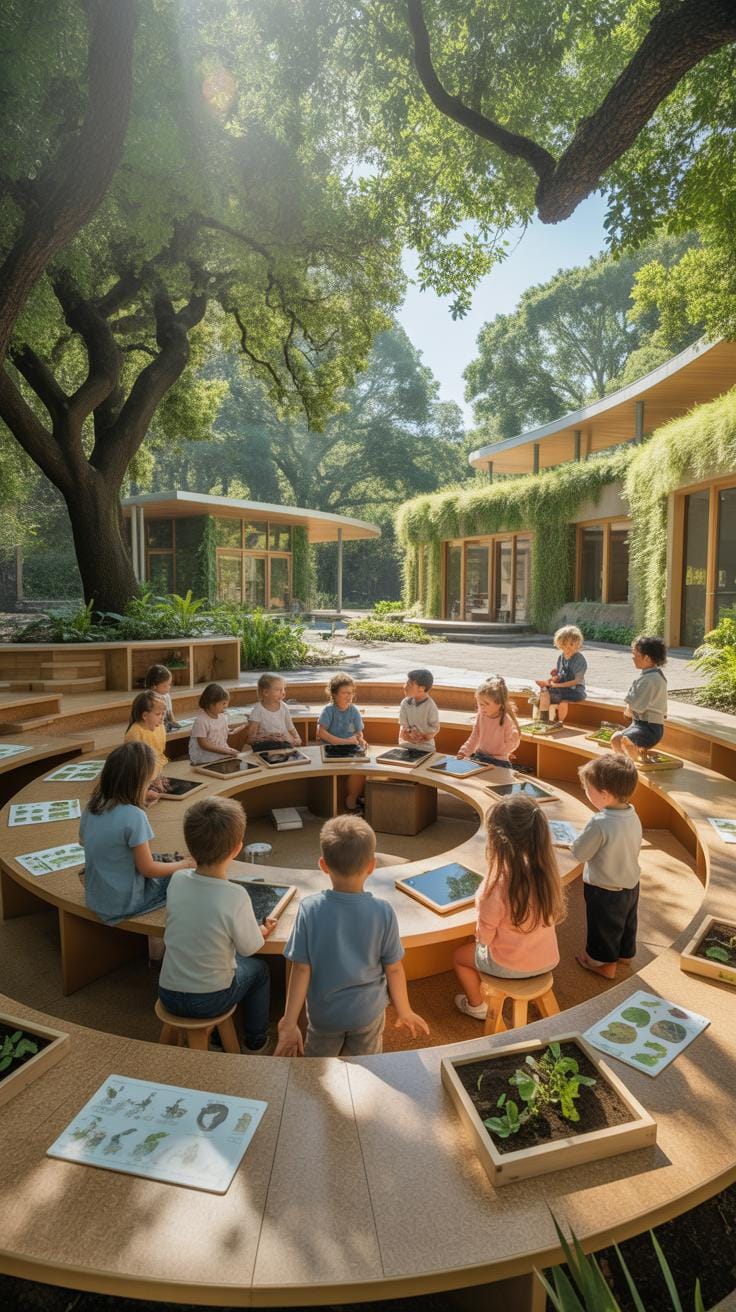
Modern Outdoor School Design uses nature to boost brain power. You must include natural light and water features to lower student stress. Organic shapes work better than sharp corners in a Class Garden. These elements mimic the real world and help kids focus on their lessons. Proper placement of trees provides shade and keeps the air cool for everyone in the Outdoor Learning Areas.
Biophilic principles turn a basic School Garden Layout into a high performance space. Flowing water masks city noise and helps students stay on task. Use local stone and wood to build seating that feels natural. These Childrens Garden Ideas improve mental health and cognitive speed. A well designed Magic Learning Garden uses biology to create a better environment for deep work and quiet study.
Flexible Infrastructure
A successful Garden Classroom requires mobile gear to stay useful. You need heavy duty casters on all storage bins and work tables. This allows teachers to change the space for large lectures or small group work. Static furniture limits what you can do in Backyard School settings. Fast transitions between activities save valuable instruction time and keep the energy high during every single session.
Versatile equipment is the backbone of smart School Garden Ideas. Use stackable chairs and folding benches to clear floor space when needed. Weatherproof bins keep tools safe and organized across all Gardens For Kids. This tactical approach ensures the physical space never dictates the lesson plan. Rapid reconfiguration makes any site more efficient and allows multiple classes to share the same footprint without logistical friction.
The Essential Guide To Gardens For Kids And Beginners
Top Low Maintenance Plants
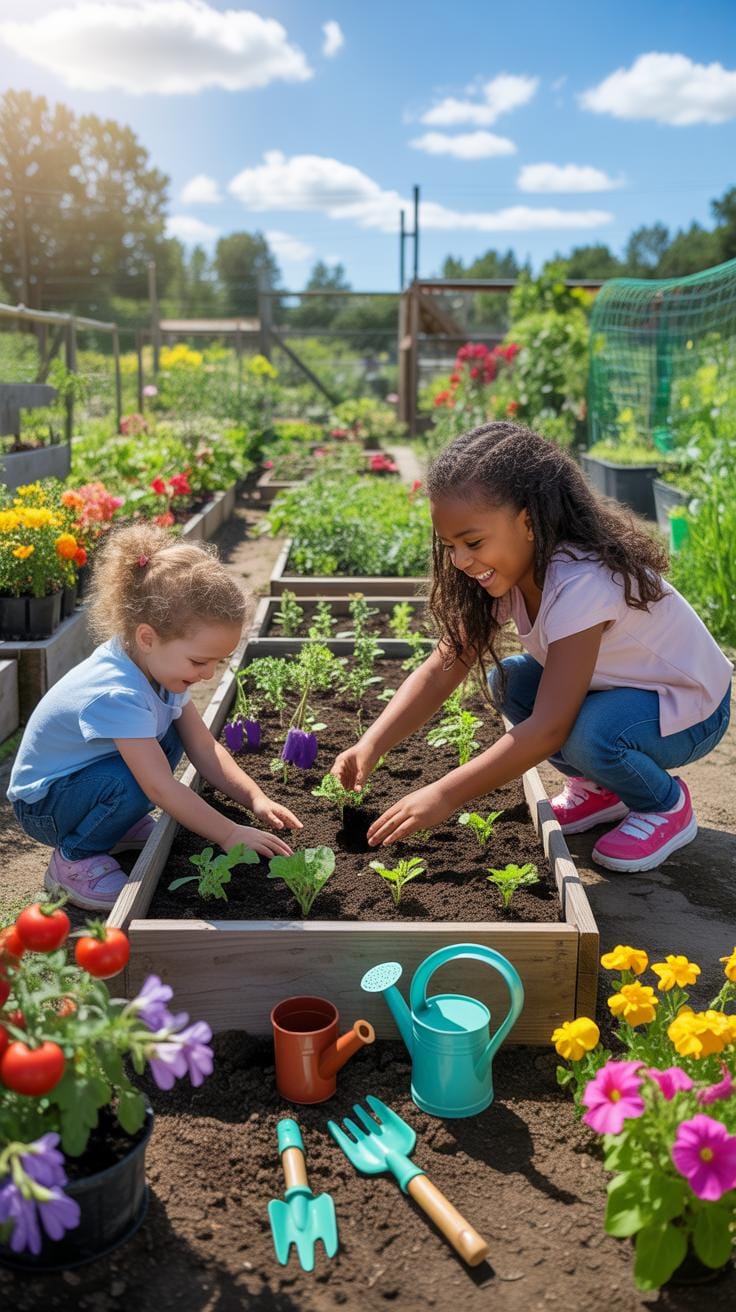
Building a successful Magic Learning Garden requires selecting species that survive neglect and harsh handling. High success rates keep students engaged in the Garden Classroom. You must choose plants with short life cycles or high resilience. These selections ensure that a School Garden Layout remains functional and visually productive throughout the academic year. Proper plant choice reduces maintenance costs and labor for the staff.
- Marigolds: These hardy flowers thrive in poor soil and resist most common pests. They provide immediate splashes of color for Childrens Garden Ideas. Use them to teach students about natural pest control and pollination cycles in a shared Class Garden.
- Radishes: These root vegetables mature in less than thirty days. This rapid growth provides instant gratification for young learners. They fit perfectly into any School Garden Ideas focused on quick harvests and soil health lessons in Outdoor Learning Areas.
- Mint: This herb grows aggressively and survives most clipping errors. Always plant it in pots to prevent it from overtaking your entire Outdoor School Design. It offers a strong sensory experience for students studying plant scents and essential oils.
- Zucchini: These plants produce large leaves and massive fruits that are easy to spot. They teach children about vertical spacing and the massive water requirements of squash. Use them to fill large gaps effectively in a standard Backyard School setup.
Strategic planting protects your investment in Outdoor School Design. Using a mix of flowers and edibles creates a balanced ecosystem that requires fewer chemical interventions. This approach makes the Class Garden a sustainable tool for long-term education. Always prioritize local hardiness zones when finalizing your species list to ensure the plants thrive in your specific geographic climate and soil conditions.
Introduction To Basic Botany
A functional Garden Classroom serves as a living laboratory for biological science. Students identify the primary structures of plants including roots, stems, leaves, and flowers. Interactive lessons involve digging up specimens to observe how roots anchor the plant and absorb nutrients. This hands-on approach simplifies complex concepts found in standard School Garden Ideas. Direct contact with soil and organic matter improves retention of botanical facts.
Instructors use a School Garden Layout to demonstrate the life cycle from seed to fruit. Children learn to dissect flowers to find the reproductive organs. This tactical method works well in Outdoor Learning Areas or a Backyard School setting. Observing these processes in a Class Garden builds a foundation for advanced environmental science. Tactical learning replaces abstract diagrams with physical reality to maximize the impact of your Gardens For Kids.
Frequently Asked Questions

What exactly is a magic learning garden for children?
A magic learning garden is an intentional outdoor space designed to spark curiosity and education through nature. By selecting plants with unique textures, rapid growth cycles, or interactive properties—like sensitive plants or giant sunflowers—you create a living classroom. This sensory-rich environment encourages kids to explore biological wonders firsthand, transforming a simple backyard plot into an enchanting world where science and imagination meet through hands-on discovery and play.
How do I choose the right plants to keep my magic learning garden engaging?
When selecting species for your magic learning garden, focus on sensory diversity and high-success rates. Incorporate “lamb’s ear” for its velvety leaves, snapdragons for their interactive flower “mouths,” and fast-growing beans to demonstrate the life cycle quickly. Aim for a mix of edible herbs and vibrant blooms to keep kids interested. Ensure you place labels with fun facts next to each plant to turn every watering session into a practical science lesson.
Can I build a botanical learning space if I have a small budget or limited yard space?
Absolutely! You don’t need a massive estate to foster a love for nature. A thrifty magic learning garden can thrive in recycled containers, old milk crates, or simple fabric pots on a sunny balcony. Start affordable by using seeds instead of mature starts and utilizing kitchen scraps like green onion bottoms or potato eyes. Vertical planters and hanging baskets are excellent, cost-effective ways to maximize your educational growing space without breaking the bank.