The Unseen Cost: Why Most Live Music Wedding Budgets Explode

Vendor Fees Stack Faster Than You Realize
You’re afraid you’ll look cheap. That fear is the entry point vendors exploit, and it’s why most couples blow their live band budget before the band even plays a note. The mechanism is simple: venues charge setup fees, bands charge travel surcharges, sound engineers charge rental premiums for equipment that already exists on site, and coordinators charge “planning fees” that are just markup on services already priced in.
Most advice says “get everything in writing.” That’s incomplete. You need to demand an itemized quote that separates the actual cost from the layer tax each vendor adds. A live band quoting $3,500 might include $800 in “coordination fees” and $400 in “sound rider charges” that your venue already covers. Ask each vendor to break down labor, materials, and surcharges separately. Then negotiate the surcharges away.
The Real Price Of Saying Yes To Expectations
People spend more money on weddings when they’re performing for an audience instead of celebrating for themselves. This follows basic behavioral economics: when your decision-making shifts from personal preference to social approval, spending becomes a proxy for status. You don’t actually need a DJ and a live band, a second cocktail hour, a full bar, uplighting, and monogrammed napkins. You need what you chose, not what Instagram suggests you should.
The emotional overhead compounds because you can’t see it. Couples add “just one more vendor” because someone mentioned it, or because a coordinator said it’s “standard,” or because you want to avoid the conversation where someone feels left out. Each addition costs money and planning energy. Start by listing what you genuinely want the band to do. Stick to it. Every deviation is a cost multiplier that belongs to someone else’s wedding, not yours.
The “Lean Crew” Protocol: Staffing Your Live Band Wedding Reception Smart

Do More With Fewer People
You’re worried a skeleton crew signals cheapness. That’s backwards. The real mechanism is leverage: fewer hands force intentional design, which reads as confidence, not constraint. Economics calls this “resource scarcity driving innovation”—apply it here by eliminating redundant roles and making each person’s job load-bearing rather than decorative. A four-person band plus two core staff beats a six-person band plus five support roles every time. Intention compresses cost without compressing value.
The common advice says hire a coordinator, a caterer, and a day-of planner separately. Skip that. One person wearing multiple hats—call them your production lead—manages timeline, vendor touchpoints, and on-site flow. They’re not a luxury. They’re the ROI protection on your ten-thousand-dollar investment. This person should have done at least three weddings before, understand how bands load in and sound-check, and know how to redirect a catering problem in real time without calling an emergency meeting.
How To Price A Band Without Leaving Money On The Table
Most couples ask bands for their “wedding rate” and take the first number. That number already includes markup for negotiation room you’re not claiming. Bands price by perceived demand and season. A Thursday in February moves differently than Saturday in June. Start with three questions: What does this band actually cost for a four-hour set on your specific date? What’s included in that cost—sound check, travel, break time? What happens if you book them for only three hours instead of four?
The second lever is direct comparison. Get written quotes from four bands in your market with identical specs: same date, same venue type, same set length, same technical requirements. Don’t ask for discounts yet. Once you see the range, you know where the middle sits. Then contact the band at the high end and ask what changes would bring them to the middle price. Often they’ll shift the date flexibility or reduce travel time rather than cut the rate. That’s a real negotiation, not a guess.
Leveraging Scarcity: Venues For A Low Cost Wedding

Unconventional Spaces Beat Venues Every Time
You want a venue that looks intentional, not like you settled. That’s the real fear here—that your guests clock the compromise. But here’s the mechanism: conventional wedding venues charge wedding prices because they’ve priced themselves into a category. They exist to sell weddings. Unconventional spaces don’t. A brewery, church basement, or state park pavilion doesn’t need to recoup overhead designed for bridal consultants and day-of coordinators.
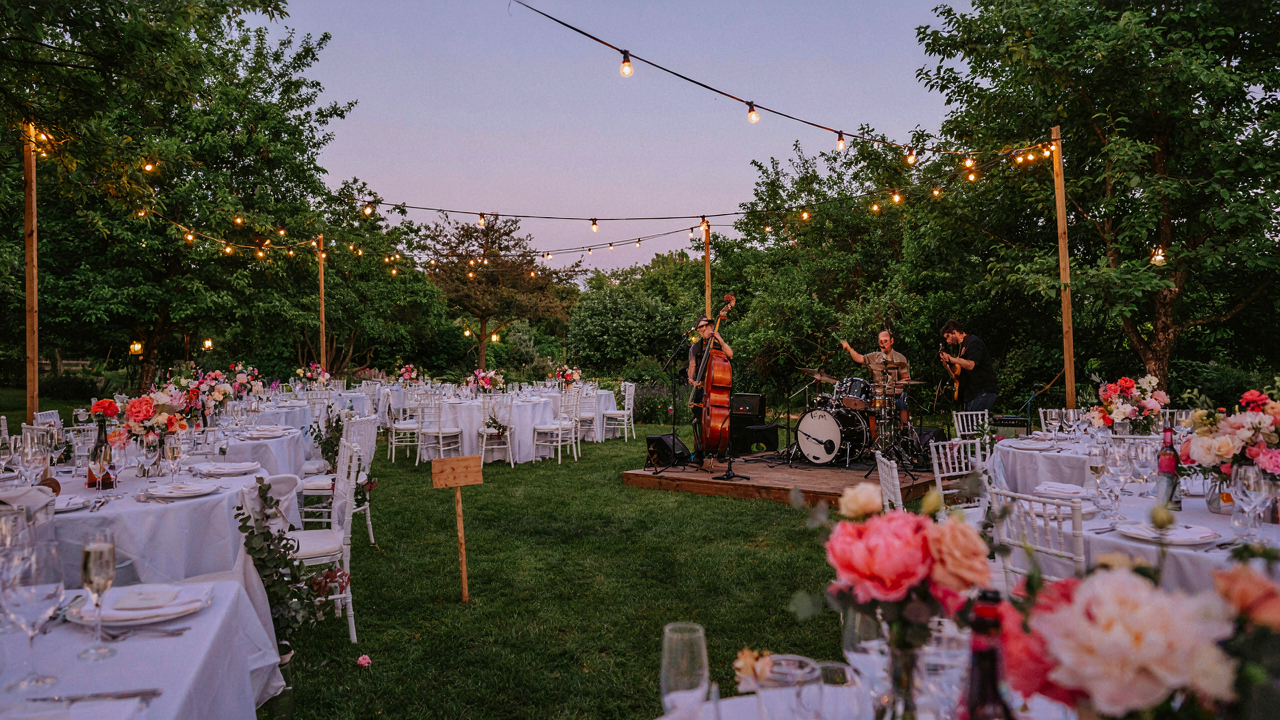
The economics are simple. A dedicated wedding venue in most markets runs 1,500 to 3,500 dollars for four hours. A brewery or community hall runs 300 to 800 dollars, sometimes free if you buy food and drink there. The difference is demand curve positioning, not quality of walls. You’re not paying for the space—you’re paying for the vendor’s ability to turn it into a wedding machine. Remove that positioning, and the price collapses. Scout spaces where the owner’s primary business isn’t weddings: farm properties, VFW halls, nonprofit community centers, historic homes open for events. Call the manager directly. Skip the wedding website. Mention your band and your budget in the first message. Response rate jumps when you signal you’re not a typical couple burning through comparison sites.
Booking Off Peak Shifts The Entire Economics
Friday and Sunday weddings aren’t worse—they’re cheaper because fewer people want them. This is pure supply and demand applied to calendar dates. Saturday commands a premium not because of superior lighting or magic in the air, but because demand compresses into that single day. Venues double their rates accordingly.
Book your wedding on a Friday evening or Sunday afternoon and negotiate harder. Venues have lower demand, so your 11,000 dollar total budget carries more leverage. A venue that charges 2,500 dollars on Saturday might charge 1,000 dollars on Friday. That’s a 1,500 dollar swing that goes directly to your live band fund. Winter and early spring—January through March—hit the same mechanism. Couple demand evaporates. Venues that booked solid in June have open dates and flexibility on price. Move your date four weeks and save 800 to 1,200 dollars on the venue alone. Call venues in the third week of January. They’re not booked. They will negotiate.
The “Guerilla Gig” Method: Booking An Outdoor Wedding Band Stage

Where To Find Hidden Venues
You want a location that feels intentional but costs nothing, because you’re terrified a backyard wedding looks cheap. The mechanism is simple: most outdoor spaces sit unused on weekends because owners never thought to monetize them. Parks require permits but charge little to nothing. Church grounds, brewery patios, farm properties, and community centers all have weekend availability. Call the property manager directly, not through a website. Explain you need three to four hours on a specific date. Most say yes because liability is their only concern, not revenue.
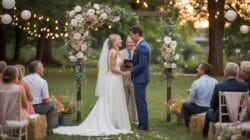
The real advantage is negotiation power. Unlike venues that package everything, you control timing, capacity, and access. You’re not paying for their staff, tables, or forced vendor lists. Scout locations in person during the proposed time slot. Confirm the stage area gets decent sight lines. Verify parking within a quarter mile. Ask about weather backup and electricity access before committing. Getting this right upfront kills a dozen problems on the day itself.
Building The Stage On Site
Everyone says DIY staging looks amateur, but that’s only true if you build it wrong. Borrow or rent a basic four by eight platform from a local events company, not a wedding vendor. Cost runs fifty to one hundred fifty dollars. Couple it with riser steps. Two by four lumber creates a frame. Plywood sheets cover the top. This takes four people ninety minutes and holds a five piece band. The platform needs to be two feet high minimum so the audience sees instruments and the band sees the crowd.
Sound doesn’t require a five thousand dollar PA system. A powered mixer with two twelve inch speakers and basic microphone stands handles a one hundred person crowd outdoors. Rent this for fifty to one hundred dollars for the weekend. Run cables underneath the stage, not across it. The band’s instruments go through the mixer. One person runs levels from a mixing table placed twenty feet back. The mechanism here is straightforward: outdoor sound travels. You need less power than an indoor venue because there are no walls trapping dead acoustics. Test the setup Friday evening before the wedding.
The “Value Chain” Restructure: Catering For A Wedding On A Small Budget

Stop Performing Abundance
You care about this because you’re terrified people will think you’re broke. The mechanism is simple: catering traditions exist to signal wealth, not to feed people well. Every tradition you inherit without questioning—the multiple courses, the plated service, the cocktail hour with passed appetizers—costs money specifically because it looks expensive. Break the signal, cut the cost.
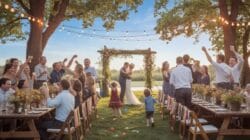
Most couples default to what they’ve seen at other weddings. That’s not strategy, that’s theater. A $11,000 wedding with a live band has zero budget for theater. You need to serve food that satisfies hunger and tastes good. Everything else is waste. Strip the meal down to its actual function: nourish your guests for three to four hours while they celebrate. Serve family-style. One protein, two sides, bread. Done.
Local Sourcing Cuts The Middleman
Buying from wholesale catering companies means paying markup for their logistics network, their storage, their delivery infrastructure. Buy directly from farms or local butchers, and you eliminate two or three layers of margin. This isn’t ideology. It’s economics. The farmer selling you vegetables at farmers market prices doesn’t need to feed a distribution system.
Call farms within 30 miles of your venue in the season before your wedding. Most will negotiate on bulk orders for events. A local farm selling you 80 pounds of seasonal vegetables costs 30 to 40 percent less than a catering company sourcing the same items. Ask if they’ll prep. Many will for a modest fee. You pay for ingredient cost plus modest labor, not catering markup. Build your menu around what’s in season during your wedding month, then lock in pricing three months prior.
The “Signal Vs. Noise” Principle For Your Live Band

Quality Over Headcount
You want a big band because you think it signals a real wedding. It doesn’t. Acoustic physics doesn’t care about your status anxiety. In signal processing, signal refers to the intended sound and noise refers to everything muddying it. A five-piece band in a 2,000-square-foot venue creates overlapping frequencies that cancel each other out. A three-piece band with proper placement and instrument choice cuts through every conversation.

Most couples get this backward. They assume more musicians equal more impact. A drummer, bass player, and lead guitarist positioned strategically will fill a room better than seven musicians fighting for the same acoustic space. The mechanism is simple: fewer instruments means each one occupies its own frequency range without collision. Your guests hear every note instead of sonic mush.
Song Selection As Architecture
Don’t waste a three-piece band playing fifteen songs nobody requested. Every song either builds momentum or kills it. Choose setlist songs that create a narrative arc: slow opener to set mood, two medium-tempo crowd pleasers, one uptempo moment that moves people, closing slow song. That’s your architecture.
The band plays six to eight songs total in a four-hour reception. Pick songs where the instrumentation works with three musicians, not against them. Acoustic guitars, bass lines you can hear clearly, drums that don’t need to compete for space. One well-executed cover of a song your parents recognize beats three muddled attempts at trending tracks. Your guests remember how they felt, not how many songs played.
Rebel Aesthetics: Decor That Doesn’t Break The Bank

Thrifted And DIY Tactics
You want decor that signals you have taste, not that you spent money. That’s the real motivation here. The mechanism is simple: thrifted goods and DIY labor collapse the price-to-visual-impact ratio because you’re paying for materials, not markup and retail margins. A gold-painted frame from a thrift store costs three dollars. The same frame new costs forty. The visual result is identical.
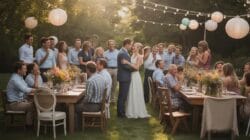
Start six weeks before the wedding. Hit thrift stores weekly, not randomly. You’re looking for multiples of one item: six matching vases, eight identical mason jars, four brass candlesticks. Mismatched single pieces look accidental. Multiples of found items look intentional. Paint them one color to unify them further. Buy spray paint in bulk from hardware stores, not craft shops. The savings compound when you’re treating thirty pieces.
Leverage Venue And Season
Natural light and existing landscape are free design elements most couples ignore. This borrows from environmental design thinking: you work with existing conditions rather than against them. An outdoor venue at golden hour needs almost nothing. An indoor venue with high ceilings needs less than one with low ceilings. Match your wedding date to seasonal blooms in your region. Spring weddings use what’s already growing. Summer weddings use abundant greenery. Fall weddings use foliage that costs nothing because it’s everywhere.
- Outdoor afternoon ceremonies: Sunlight replaces artificial lighting costs. Shadow patterns from trees become your backdrop. Requires zero decor intervention.
- Seasonal flowers and branches: Pick what grows locally in your wedding month. Branches in winter, tulips in spring, wildflowers in summer. Florists mark these up heavily; nature provides them free.
- Bare walls with high ceilings: Painted brick, wooden beams, or stone absorb visual space without decoration. Low ceilings need covering. High ceilings need nothing.
- Venue timing at sunset: Book your ceremony or reception to end at golden hour. The light does the aesthetic work. No uplighting rental necessary.
- Existing venue fixtures: Use the venue’s tables, chairs, or architectural features as your design foundation. Work inward from what’s there, not outward from empty space.
The protocol is direct: visit your venue at the exact time of day your event happens. Photograph it. Sit with the light for thirty minutes. What needs covering? What needs nothing? Build your decor list only around actual gaps, not assumed ones. This cuts waste and prevents spending on decoration that solves a problem you don’t have.
The Amplification Arc: Maximizing Your Live Band Wedding Impact

How Guest Flow Determines Band Impact
You’re worried people will stand around bored while the band plays, which means your $1500 to $2500 band investment tanks in perceived value. The real mechanism is choreography, not entertainment. Borrow from traffic engineering: guests flow where friction is lowest. Remove chairs from the dance floor before the first song. Position the bar perpendicular to the stage, not behind it. This forces lateral movement, not dead zones.

Most couples block sightlines by treating the venue like a restaurant. Band visibility matters more than table comfort at a 11k wedding. Place tables in a shallow arc facing the stage, not rows. Keep the dance floor visible from the bar and cocktail area. This single layout choice determines whether your band feels like the focal point or background music at a hotel function.
Moments That Make The Band Worth The Budget
The common advice is “let guests enjoy the music,” which is how you end up with polite applause and people checking their phones between songs. Memorable moments require structure. Coordinate three specific moments with your band leader before the day: the first dance timing, a 30-second surprise vocal moment mid-reception, and one call-and-response song that pulls reluctant dancers to the floor. These aren’t spontaneous. They’re placed stops in a sequence.
- First Dance Placement: Announce it 90 minutes into the reception, not immediately after dinner. Guests finish eating and drinking, conversation peaks, then you interrupt with something visual. The band gets full attention.
- Vocal Surprise: Brief your band to play one song featuring their best singer that differs from their setlist. A cover that lands unexpectedly creates the “we made the right choice” feeling that justifies the expense.
- Audience Participation Song: Select one call-and-response track where the band explicitly asks guests to clap or sing back. This breaks the performer-audience wall and forces participation, not passive listening.
- Transition Moment: Have the band play a 5-minute acoustic interlude during cake cutting. Quieter energy signals a shift, keeps momentum, and lets people hear each other talk while staying engaged.
- Closer Strategy: End with a song you know your crowd will recognize, not the band’s favorite. Play it while people are still sober enough to remember it, usually between 10 and 11 PM for a 6 PM start time.
The difference between a band that “played music” and one that “made the night” is whether you scheduled these moments or hoped they’d happen. Give your band leader a written timeline the morning of the wedding so they execute, not improvise.
Deconstructing The Dream Wedding Fallacy: A Real Live Band Experience

Society Doesn’t Own Your Ceremony
You’re worried people will judge you for not spending enough. That’s the real issue nobody names. The mechanism is simple: cultural narratives about weddings aren’t built on what makes a good marriage. They’re built on what sells magazines and keeps the wedding industry fed. A live band under an 11000 dollar budget forces you to strip away borrowed status and build something real instead.

The 50000 dollar wedding industry exists because it solved a problem for couples: complexity. Outsourcing everything feels safer than making decisions. But that outsourcing costs you agency and leaves you broke. A lean budget removes the option to hide behind vendor recommendations. You make actual choices about who performs, what matters, and why people gather.
The Performance Isn’t The Product
Economics calls this “value capture” and the live band is where most couples get it backwards. They think the value lives in the musician’s skill or the hour they play. Wrong. The value is in the presence of music during a specific moment your guests will remember. A competent three-piece band playing your first dance matters more than production quality. Your guests won’t remember the mixing console.
This is why budget constraints actually improve outcomes. A fifteen-hundred-dollar band that plays four hours straight creates more throughline memory than a five-thousand-dollar band that plays ninety minutes and leaves. The mechanism is pure: sustained presence over flashy performance. Your guests associate the entire reception with the continuity of live sound. That association costs less than people assume once you stop shopping for prestige.
Your Fear Of Being Perceived As Cheap Is The Only Real Constraint On Your Wedding

You can throw a real wedding with a live band for under eleven grand. The only thing stopping you is caring what people think about your budget. Call three local bands today and ask their off-season rates. You’ll find one. The couples spending fifty thousand dollars aren’t happier than you’ll be, they’re just better at pretending their debt was worth it.