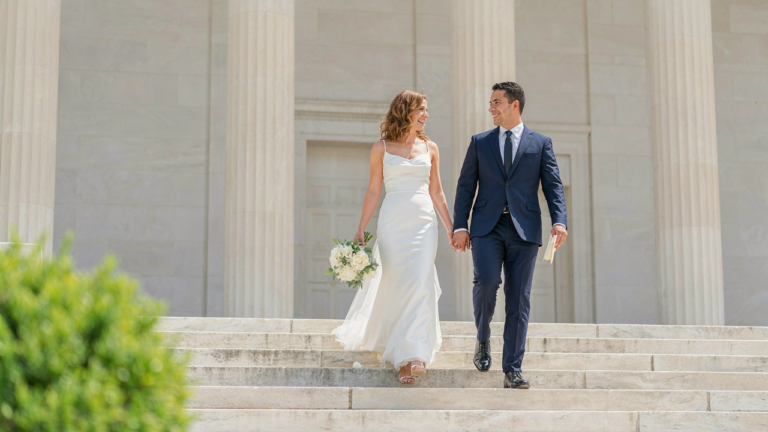
The Lisbon Elopement Blueprint: Beyond Tourist Traps

Where Real Lisbon Lives
You want proof that your elopement mattered, which means you need a location nobody else has. That’s the real mechanism here: scarcity breeds meaning. In economics, we call this artificial constraint. The couple who eloped at $4000 didn’t shoot in Belém or Sintra. They found neighborhoods where locals still live, where rent hasn’t tripled, where the light hits old azulejo tiles at angles tourists never see.
Alcântara, Marvila, and Campo de Ourique are the districts that work. These areas sit outside the Instagrammed loop but hold the visual weight Lisbon actually carries. Your photographer reaches these in 20 minutes by metro from the city center. The streets have texture. The backdrops cost nothing because nobody’s charging for them yet. This is where you spend your money: on the person holding the camera, not the location fee.
Timing Against The Crowd
Everyone says avoid summer, which is lazy advice. The real mechanic is density: too many bodies in frame, booked vendors, inflated rates. March through May and September through October give you weather that works and crowds that thin. Your photographer books faster. Your venue coordinator doesn’t need three months lead time. A small restaurant that seats 20 for dinner costs half what it does in July.
Book your elopement on a Wednesday or Thursday. Thursday specifically works because venues staff lighter and move faster. You’re not competing against 50 other bookings that week. Your florist finishes your bouquet in two hours instead of having it queued behind six others. This single choice cuts 300 to 500 dollars from your total spend through negotiation power alone.
Small Wedding Portugal: The De Commodification Principle

Experience Over Possession
You want permission to spend less and feel like you’re not settling. That’s the real driver here. The mechanism is simple: wedding culture has trained you to equate spending with commitment. More money equals more love. It’s backwards. In economics, commodification means converting something into a purchasable good. A $4,000 Portugal elopement de-commodifies the wedding itself by removing the price tag as the primary value signal. What remains is the actual experience: two people, a location, a moment. Nothing else scales the quality.

Most couples conflate cost with memory quality. They don’t. A $40,000 ballroom produces the same neural output as a $4,000 clifftop ceremony in Sintra—the only difference is debt and regret. Portugal’s advantage isn’t cheapness; it’s that the location does half the emotional work for you. Dramatic coastline, ancient architecture, golden light at dusk. You show up. The place handles the rest. Strip away the vendor markup, the flower arrangements, the seat covers, and you’re left with what actually matters: the commitment exchange and the shared experience of being somewhere meaningful together.
Signal Versus Substance
Everyone tells you a smaller wedding means fewer guests equals less “real.” They’re wrong, and here’s why: they’re confusing social proof (how many people witness it) with relational proof (how deeply you commit). You’re measuring value by the wrong metric. The real distinction between a $4,000 elopement and a $40,000 wedding isn’t quality—it’s audience size. One signals to 150 people. The other signals to two people and a photographer. Both are honest. One just costs less.
The substance question is tactical. A Portugal elopement forces you to identify what you actually want rather than what the wedding industry tells you to want. You book a specific location. You hire a photographer for a few hours. You arrange a meal. You handle logistics yourself instead of delegating to vendors who profit from complexity. The decision tree shrinks. Clarity increases. Spend $4,000 consciously on the experiences that matter, and you’ll remember them sharper than a $40,000 blur where you spent the day managing vendor timelines and greeting strangers.
The Portugal Wedding Inversion: What Not To Pay For

Cut The Ceremonial Theater
You want permission to believe a four-thousand-dollar wedding is legitimate. That’s the real question underneath this section. The mechanism is simple: Western weddings pyramid cost on visibility. A hundred guests see your flowers. Fifty see your venue. Three see your vows. You’re paying exponentially more for the same outcome. Portugal forces an inversion. You cut the audience and keep the marriage. That’s not sacrifice. That’s math.

The couple in this case hired a local officiant for 150 euros, skipped the rehearsal dinner, and held the ceremony at their rental property’s garden. No decorator. No event coordinator managing logistics. No vendor markup for coordinating other vendors. They paid for legality and presence. Everything else was theater tax.
Negotiate Vendor Minimums Before Commitment
Portugal’s wedding vendor market doesn’t operate on American volume assumptions. When a photographer quotes a four-hour minimum, that’s their actual cost structure, not negotiating room. The myth says you always have leverage. You don’t. You have leverage only when the vendor has availability and wants the booking enough to break their model. That happens in shoulder season, not peak. The couple booked in April and got vendors to negotiate minimums down because demand wasn’t filling their calendars.
Call vendors directly, not through booking sites. Ask what their actual floor is for a small wedding, not their standard package. One photographer cut their minimum from six hours to three when told it was a two-person elopement with no travel required. Another vendor dropped their service fee entirely when the couple committed to paying full price for their core offering. The protocol: state your budget first, ask if they work within it, then go silent and let them answer.
Elope In Portugal: The OODA Loop Of Logistics

Observe, Orient, Then Move
You want to believe a 4000 dollar elopement is mostly about finding deals. It’s not. It’s about speed. The real problem is that most couples spend months researching, changing their minds, second-guessing vendors, and burning through the budget on reversible decisions. The OODA loop comes from military strategy: Observe, Orient, Decide, Act. Boyd’s framework maps directly onto Portugal logistics. Your constraint is money, not time. Money gets spent fast by people who can’t decide.

The observation phase means booking a site visit or video call with one Portuguese venue. Not three. Not ten. One. You gather information on availability, weather windows, and what the venue actually includes versus what their website claims. You orient by talking to couples who eloped there in the last year. Then you decide the same day. This collapses the decision cycle from months to days. Couples at the 4000 dollar threshold don’t have the luxury of infinite deliberation.
When Local Conditions Force A Pivot
Agile planning isn’t a corporate buzzword here. It’s survival. The common advice tells couples to plan every detail months ahead. That advice is built for weddings with 150 guests and vendor coordination across multiple states. An elopement in Portugal with a 4000 dollar budget has different physics. Rain might shut down your beach ceremony. Your photographer might suggest moving to the cliff at sunset instead of sunrise. A restaurant might have a private dining room open that day that’s better than your original choice.
Build your plan with three decision points, not one. Day one: confirm the legal documents are filed and the officiant is confirmed. Day two: lock the location and photographer timing. Day three: finalize catering and transportation. Between each point, you gather new information from local sources: the venue coordinator, your photographer, the restaurant owner. They see conditions you don’t. You adapt the schedule based on what they observe. This prevents the 4000 dollar budget from getting trapped in a rigid plan that doesn’t account for what Portugal actually offers on your specific date.
Europe Elopement Destinations: The Portugal Anomaly

Why Portugal Breaks The Pricing Model
You want to believe your wedding doesn’t have to drain your savings. That’s the real thing driving this search. The mechanism is arbitrage: Portugal trades on euros while delivering experiences priced for a country with half the labor costs. A four-thousand-dollar elopement there isn’t a budget hack. It’s economic reality nobody in your home country talks about because it threatens the wedding industry’s pricing structure.

Portugal’s cost-to-experience ratio exists because the country sits between two markets. Western Europe commands premium prices. Eastern Europe fights on cost alone. Portugal delivers European quality, reliable infrastructure, and legal clarity at rates that collapse when you move the ceremony forty miles across a border. Your four thousand covers the venue, photographer, officiant, flowers, and dinner for two because the service providers don’t operate under the same wage pressure as destinations in Germany or France.
Where Value Actually Accumulates
The common advice says elopement is cheap because it’s small. Wrong. Elopement is cheap in Portugal because the entire supply chain costs less to operate. Economics, not romance, drives this. A Lisbon photographer charges fifteen hundred for a full day. That same work costs three times as much in Barcelona or Amsterdam. The difference isn’t quality. It’s market rate. Your four thousand survives because you’re buying into a labor market, not a luxury brand.
The real value accumulates in what stays off the vendor list. You skip the reception hall markup, the catering minimums, the mandatory coordinator tax that bloats budgets in established wedding markets. A small venue in the Douro Valley charges three hundred euros for an afternoon ceremony and celebration. In most European destinations, that same space runs eight hundred to twelve hundred. You’re not cutting corners. You’re removing the middle layers that do nothing but extract fees.
How To Plan A Wedding In Portugal: The Constraint System

Scarcity Forces Better Decisions
You want permission to spend more because you think money buys options. It doesn’t. Economics calls this “constraint optimization”—the mechanism where limited resources force you to eliminate waste and rank what actually matters. A four thousand dollar Portugal elopement isn’t a compromise. It’s a filter that kills every decision that doesn’t compound toward one outcome: a real ceremony with people you choose, in a place worth remembering.

The couples who spend fifty thousand dollars on weddings rarely spend more thoughtfully than couples who spend five. They just spend on different things—flowers instead of photography, venues instead of food. Constraints don’t limit you. They clarify you.
- Registry office ceremony: Portugal’s civil registration takes thirty minutes, costs under one hundred euros, and requires no religious affiliation. Schedule six weeks ahead. Requires passport and proof of residence or declaration of domicile.
- Guest logistics: Invite ten to fifteen people maximum. Each additional guest multiplies costs across dinner, transportation, and accommodation coordination. Portugal has cheap regional flights from most European hubs, which you can share via group booking links.
- Venue rental: Skip traditional wedding venues entirely. Private Airbnb homes in rural Algarve or Douro Valley cost thirty to sixty euros per night and fit twenty people. No venue markup, no mandatory catering contract.
- Food and drink: Order from local caterers or hire a private chef for the day. Costs forty to sixty euros per person. Portuguese wine costs three to eight euros per bottle wholesale. Buy direct from producers near your venue.
- Photography: Hire a local Portuguese photographer for four to eight hours at three hundred to six hundred euros total. They know light, locations, and logistics. Skip the engagement shoot and album markup entirely.
The goal isn’t to cheap out. It’s to spend on what creates the moment, not what performs it for an audience that won’t remember anyway.
Working Within Limits, Not Around Them
Most couples fight their budget. They cut details while keeping the structure intact—fewer flowers at the same venue, cheaper catering at a rental space that still costs two thousand. That’s accounting, not design. Real constraint design means rebuilding the entire system around what you can actually do.
A four thousand dollar elopement in Portugal works because you accept the shape of it: small group, simple logistics, one day, no ceremonies beyond vows. You don’t try to create a traditional wedding on a budget. You create a different thing entirely. That’s how you spend less and remember more. Start by choosing your core cost: ceremony officiant, venue, and food. Everything else scales down from there.
The Portugal Honeymoon: Beyond The Ceremony

Structuring Your Post Elopement Days
You want proof this wasn’t rushed or cheap. That’s the real fear underneath the question about what comes after the ceremony. The mechanism is simple: you separate the elopement event from the travel experience, which kills two problems at once. Most couples collapse them into one trip and end up exhausted, broke, or both. Instead, treat the ceremony as a 4-hour event and the honeymoon as its own distinct budget line.

Portugal’s geography forces this naturally. You can elope in the Douro Valley or coastal Algarve, then travel three to four hours to a completely different region without logistical chaos. This separation means you’re not compromising on either experience. The ceremony stays intimate and controlled. The travel stays exploratory and unrushed. You spend your time in each place instead of moving every two days.
Experiences That Don’t Drain The Budget
The common advice here is garbage: rent a car, eat at tourist restaurants, book every activity. That approach guarantees you’ll spend your 4000 dollars in ten days and return home depleted. Real cost efficiency in Portugal comes from understanding that the best experiences cost almost nothing because locals already built them. You’re not buying experiences. You’re accessing infrastructure that already exists.
Wine tastings in the Douro cost twenty to thirty dollars per person at established quintas, and you get three hours of education and product. Coastal hikes in the Algarve are free. Train rides between cities cost twelve to twenty dollars and are experiences themselves, not just transportation. Meals at non-tourist tascas run eight to twelve dollars for quality food. You’re not sacrificing quality. You’re eliminating the markup that comes from being recognized as a tourist paying for a story instead of a meal.
Lisbon Elopement Photography: The Minimalist Lens

When The Camera Stops Performing
You want the photographer to disappear so you look effortless. That’s the real fear underneath. Most couples hire photographers who stage moments instead of catch them, burning budget on setups that scream “this is a photo shoot.” The mechanism is simple: authentic moments cost less because they require fewer takes, no gear repositioning, and no artificial lighting rigs. You show up, you exist together, the photographer documents it. That’s the entire system.

Lisbon’s light does the heavy lifting for you. The city’s low-angle sun off the Tagus and warm stone in Alfama require minimal intervention. A photographer shooting authentically needs maybe four to five hours maximum, not eight. You pay for presence, not production value. Most $4000 elopement budgets allocate $800 to $1200 for photography. You hit that mark by rejecting the staged wedding industrial complex altogether.
Fewer Hours, Sharper Shots
Camera time isn’t measured in quantity of hours. It’s measured in what actually matters: the walk into City Hall, the vow exchange, the first unguarded laugh after. One photographer working four hours catches these moments better than two photographers working six. The constraint forces clarity. You eliminate ceremony filler and bad angles because you can’t afford to shoot everything.
Structure the timeline ruthlessly. Two hours before vows, one hour during, one hour after in a single location like Miradouro da Senhora do Monte or Terreiro do Paço. That’s your four-hour window. The photographer knows exactly when to frame, when to step back, when to capture the reaction before you even know to give it. Pre-shoot your location the day before so the photographer doesn’t waste minutes finding angles. Confirm all positions by phone the morning of the ceremony.
Small Wedding Portugal: Legalities And Red Tape Decoded

What Portugal Actually Requires From You
You’re worried about getting trapped in bureaucratic loops that eat your budget and timeline. Here’s the mechanism: Portugal has two separate legal systems for marriage—civil and religious—and they don’t talk to each other. The civil ceremony is what the state recognizes. You need that first, or nothing else counts. Most couples waste money on religious ceremonies without understanding they’ve solved zero legal problems.

Portugal requires both parties present, valid identification, proof of civil status (birth certificate, divorce decree if applicable), and proof of residency or declaration of intent to marry there. The process takes roughly ten to fifteen days from application to ceremony. You don’t need Portuguese citizenship or residency. The Conservatória (civil registry office) in your chosen municipality handles the paperwork. Timing matters because you can’t compress this: the law mandates a waiting period between application and the actual ceremony.
Documents That Actually Matter
The common advice says “get everything translated and notarized.” That’s incomplete. You need original documents or certified copies, and Portugal specifically recognizes Hague Apostille stamps, not generic notarization. An Apostille is a state-level certification that proves a document’s origin without requiring embassy involvement, saving you weeks and money.
Birth certificates, passports, and divorce decrees (if applicable) must be either originals or Apostille-certified copies. Get these before booking your Portugal date, not after. If you’re coming from outside the EU, contact the civil registry office in your target municipality via email first. They’ll tell you exactly what they need in their specific format. This single step prevents rejected paperwork and rescheduling costs.
Portugal Elopement: The 4000 Dollar Multiplier Effect

Where Every Euro Compounds
You want proof that you made the right choice without spending like everyone else. That’s the real question underneath this one. The mechanism is simple: Portugal’s cost structure doesn’t scale linearly with experience quality. A 150-euro dinner tastes as good as a 400-euro one. A photographer charging 800 euros delivers the same image as one charging 2000. The couple who spent 4000 dollars didn’t sacrifice the core moment. They eliminated the markup that comes from proximity to demand.
Economics calls this arbitrage. The gap between what something costs and what it’s worth exists because markets fragment by geography. Portugal’s Algarve or rural Douro region hasn’t been financialized the way Iceland or Santorini have. You get the venue, the light, the food, the documentation without the status tax baked into every line item. The 4000-dollar constraint forced radical prioritization. No 200-person guest list. No three-day itinerary of paid experiences. Just the ceremony, one meal, and a photographer who understood what mattered.
Precision Over Scale
The common advice here is backwards. Most elopement articles tell you to cut back on quality. Wrong. The real play is cutting back on quantity, then hyperinvesting in what remains. Eighty percent of that 4000 dollars went to four categories: legal paperwork handled by a local registrar, the photographer, one dinner, and accommodation. Everything else got zero dollars. No florals, no coordinator, no transportation premium, no day-of stress handler. The couple didn’t negotiate down. They negotiated out.
This is where the multiplier activates. A 900-euro photographer in Portugal is often trained to the same standard as a 2500-euro one in New York. The difference is market saturation and brand positioning, not capability. Same with the restaurant. A 120-euro meal cooked with intent in a smaller city outperforms a 280-euro meal in a tourist zone every time. The return comes from putting money only where it produces the experience you actually want, then letting everything else be disposable.
The Real Obstacle Isn’t The Budget; It’s Your Attachment To Unnecessary Complexity

Most people don’t elope for 4000 dollars because they can’t imagine it. They’ve built a mental prison where weddings demand debt, drama, and months of planning theater. This couple stripped it down. They picked a date. They booked a flight. They hired a photographer for six hours. Done. Your obstacle isn’t money. It’s the voice telling you things must be harder than they are. Reject that voice today by pricing one flight to Lisbon. Stop planning the wedding in your head and start pricing the one that actually exists.