The Intimacy Leverage Protocol For Your Living Room Wedding

Who Actually Gets Invited
You’re worried that a small guest list signals failure or cheapness. It doesn’t. It signals control. In economics, scarcity increases value. A living room wedding enforces scarcity by design. You cannot hide behind crowd noise or delegate attention. Every person in that room must matter enough to justify their physical presence in your home. The mechanism is simple: constraint forces intentionality.
The guest list becomes your first filter for signal versus noise. Remove anyone whose attendance you’re rationalizing. Remove obligation guests, networking plays, and people you invite out of fear of offense. What remains are people who actively choose to be present for your commitment, not people who showed up because they felt trapped by social convention. This distinction rewires the entire event’s energy.
Resonance Over Decoration
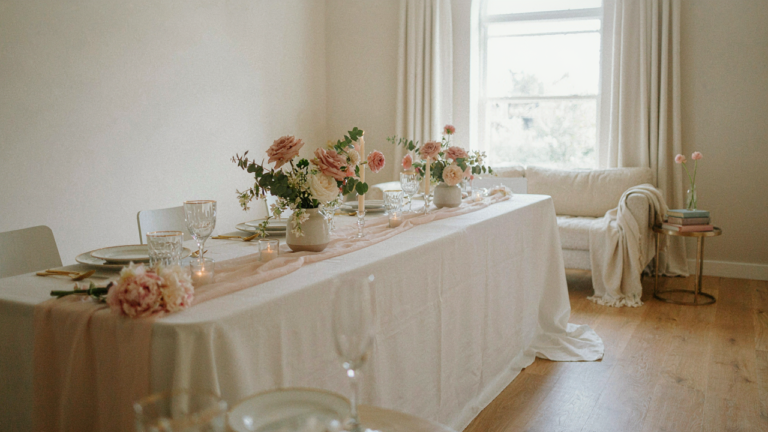
Everyone tells you to make a living room look like something else. They’re wrong. A living room wedding that pretends to be a ballroom is a living room wedding that admits defeat. The power lies in designing for emotional clarity, not visual distraction. Use the space’s existing architecture as your foundation. High ceilings, natural light, wood trim, fireplaces, and doorways already carry weight. You amplify them instead of covering them.
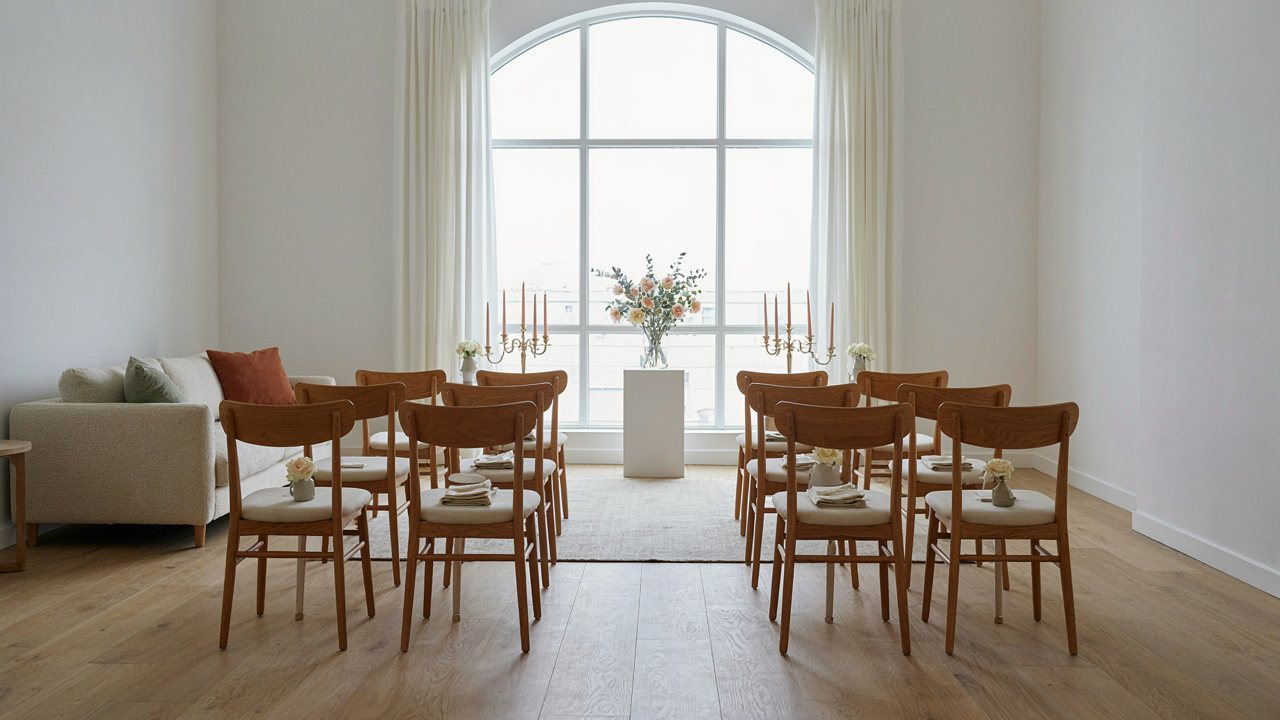
Resonance comes from removing visual noise, not adding it. A single focal point, minimal floral work, natural lighting through windows, and bare walls speak louder than rented backdrops ever will. The ceremony happens at human scale. Your guests sit close enough to hear vows without a microphone. They witness the actual moment, not a production of it. This proximity creates an unavoidable emotional transmission that no amount of uplighting can replicate. The action is the decoration.
Deconstructing “Decor”: Elevating Your Living Room Wedding Ceremony Decor

Light As The Invisible Boundary Setter
You want your living room to feel intentional, not like you’re getting married in your cousin’s furniture arrangement. Here’s the mechanism: light controls attention and emotion without anyone consciously noticing it happens. Architects use light as a wayfinding tool, and your ceremony needs the same logic. Strategic lighting creates invisible walls that direct where guests focus their eyes and where their nervous system settles.

Most people throw uplighting behind plants and call it done. Wrong move. You need layering: overhead dimming to reduce ambient chaos, focused light on your ceremony space (where you’ll actually stand), and warm accent light that fills dead zones where guests’ eyes would otherwise wander to clutter. Install dimmers before the ceremony. Test them at the exact time of day your event happens. Uncontrolled natural light will sabotage every other effort you make.
Where The Eye Lands First
The common advice is “decorate every surface.” That’s how you end up with a visually exhausting room that feels cluttered, not elegant. A focal point works through contrast and isolation, the same principle retail stores use to stop foot traffic at high-margin items. Your focal point needs to be the only thing competing for visual dominance in the room.
- Ceremony arch or altar: Position one statement piece directly behind where you’ll stand. It anchors the entire room’s visual hierarchy and prevents eyes from drifting to the TV or bookshelves.
- Fireplace mantel as secondary anchor: If your living room has one, use it as a secondary focal point with controlled styling, not as a dumping ground for random candles and flowers.
- Wall tapestry or fabric backdrop: Hang a single piece of fabric or textile behind your ceremony position to create visual separation. Keeps the space from feeling like a normal room.
- Intentional negative space: Leave 40 to 50 percent of visible wall and floor empty. Clutter multiplies when every corner holds decoration. Empty space reads as intentional.
- Single statement floral arrangement: One large, well-constructed arrangement beats five small ones scattered around. Place it at the ceremony focal point, not distributed throughout.
Everything else in the room should recede visually. That means your living room furniture stays, but it becomes background. Don’t fight the existing room, just control what dominates the sightline during the actual ceremony.
The Spatial Reframe: Maximizing Your Small House Wedding Decorations

What Empty Space Actually Does
You want permission to leave things bare. That’s the real motive here. Architecture borrowed the concept of negative space from painting, and the mechanism is identical: empty air becomes a design element itself, not a failure to fill. Your living room already has walls, a ceiling, and a floor. You don’t need to cover them.

The mistake most people make is treating a small ceremony space like it needs rescue through decoration. It doesn’t. A 12 by 14 foot room with minimal furniture and clean sight lines reads as intentional and calm. Furniture removal matters more than furniture addition. Move the couch to another room entirely, not to the side. This changes the room’s entire pressure.
Pieces That Perform Double Duty
Furniture that serves the ceremony and stays useful after it kills two problems at once: you solve the decor gap without buying disposable stuff. A simple wooden table works as both your ceremony backdrop and your cocktail station an hour later. Rental benches can be your ceremony seating and then repositioned as lounge furniture for the reception in the same room.
Plants in corners work as natural vertical lines that separate the ceremony zone from the rest of the space without blocking sight lines. A mirror leans against the wall behind where you stand, and it reflects light while making the room feel wider. These aren’t decorations pretending to be functional. They’re functional pieces that look deliberate. After the wedding, every item stays or goes to another use.
The Un Catering Guide: Food & Drink For Your Wedding In Living Room

Curated Bites, Not A Buffet Line
You’re worried people will judge you for not hiring a catering company. The real mechanism is this: a buffet in a living room creates logistical chaos and kills conversation. Your space is small. Movement matters more than abundance. Hand-pass appetizers or plated stations force intentional pacing and keep guests seated or clustered in conversation zones instead of migrating to a food line like they’re at a hotel ballroom.

Skip the standard advice about “easy finger foods.” Instead, build a menu around one or two proteins you can execute without a kitchen team. Roasted vegetables, cured meats, fresh bread, aged cheese. These hold temperature and don’t require constant replenishing. The constraint of your living room becomes an advantage: fewer items, higher execution quality, less waste. Guests notice the difference between thoughtful restraint and stretched resources.
Signature Drinks With Personal Narrative
The economics of wedding alcohol rewards specificity over variety. One well-made drink costs less per unit than stocking a full bar, and it anchors memory. Pick a drink tied to a real story about you both—the place you met, a shared obsession, a family recipe. The narrative is the mechanism that converts a beverage into a moment people retell. Pre-batch it in a pitcher so you’re not playing bartender all evening.
Non-alcoholic options should follow the same principle: one signature alternative with the same narrative weight. Not a generic water station. A house-made cordial, a specific tea blend, something that signals you considered guests beyond the drinking majority. Prepare both drinks in a side table setup near seating, not a separate bar. The goal is to keep the social center in the main room, not fragment your space into functional zones. Mix and portion everything before guests arrive.
Flow State Ceremony: Choreographing Your Living Room Ceremony Wedding Ideas

Seamless Transitions Between Moments
You want this to feel effortless because you’re terrified it will feel like a high school play. The real mechanism comes from theater, not wedding blogs: blocking is the planned movement and positioning of actors that eliminates dead air and confusion. In a living room ceremony, blocking is your rehearsed pathway from entrance to vows to exit, designed so no one stands around wondering what happens next.

Most couples skip this entirely and hope people figure it out. They don’t. You need to map the actual flow: where does the officiant stand before guests arrive? Which direction does the couple walk in? Where do witnesses or family members sit or stand during the exchange? A living room has walls that force sightlines into a narrow cone, so position your officiant closer to the center of the room, not against a wall, so everyone sees the ceremony equally. Mark these positions during your rehearsal and walk through the sequence twice minimum.
Conversation Replaces Performed Solemnity
Forced formality kills the intimacy that makes a living room ceremony worth having in the first place. Your guests didn’t choose a living room because they wanted theater; they chose it because they want proximity to you, not distance. The common advice says to write a tight script and stick to it. That’s incomplete. A tight script is the floor, not the ceiling.
Empower your officiant to acknowledge the room, react to real moments, and speak with you conversationally during the actual ceremony. This doesn’t mean abandoning structure; it means the officiant stays present instead of reciting. Ask your officiant to make eye contact with you both while speaking, pause for breath, and let silence exist when it fits. The ceremony becomes a real conversation between three people, not a performance for an audience. Rehearse how you’ll respond to questions or prompts so the exchange feels natural, not stilted.
Rejecting The Big Day Illusion: The Home Wedding Advantage

The Wedding Industry Extracts Money From Status Anxiety
You’re worried people will judge you for not spending enough. That’s the real issue here, and the wedding industry knows it. They’ve built a $76 billion machine around convincing you that venue size equals commitment level. It doesn’t. Economics calls this rent-seeking behavior: extracting value without creating it. A living room wedding eliminates the middleman markup entirely and forces you to compete on actual execution instead of venue prestige.

The mechanism is simple. Venues charge $3,000 to $15,000 for space you’ll occupy for four hours. That money doesn’t improve your ceremony or reception quality. It purchases permission to exist in a branded location. A living room charges nothing and demands everything from you: intentional design, guest flow planning, acoustic management, lighting. You stop buying status and start building experience. This shift alone redirects tens of thousands toward actual ceremony quality or eliminated debt.
Design Intention Replaces Decorative Theater
Most wedding advice treats a living room like a blank canvas to mask with flowers and fabric. Wrong. A home has existing architecture, proportions, and materials that a venue consultant would charge $2,000 to “design around.” Your living room already has bones. Use them. Midcentury modern interiors, exposed brick, built-in bookshelves, hardwood floors, large windows these become your design framework instead of obstacles you hide behind rental draping.
The real work is removing noise, not adding spectacle. Take down family photos two weeks prior. Clear side tables of remotes and books. Define the ceremony space with simple positioning: chairs facing a focal point, no elaborate arch required. The couple stands in front of existing architecture, not in front of a rented statement piece. This forces guests to focus on the actual event instead of scanning the room for production value. Your living room wedding reads as deliberate because it actually was.
Beyond The Lens: Capturing Your Indoor Wedding’s True Essence

The Unposed Moment Wins
You want proof the day mattered. Proof it wasn’t just logistics and performance. That’s why this matters to you. The mechanism is simple: posed shots document what you planned. Candid shots document what actually happened. A living room compounds this because it has no built-in theatrical framing. Your photographer can’t hide behind landscape or architecture. They have to work harder to find real moments in a compressed space.

Living rooms trap people in proximity. That forced closeness generates actual interaction instead of performative positioning. Your uncle doesn’t have room to stand awkwardly at the edge. Your best friend can’t drift into the background. The photographer shoots what emerges from constraint, not what they’ve choreographed. This is where the real emotional record lives.
Intimacy Over Instagram
Most wedding photography advice is backwards. It tells you to light for clarity and composition for balance. That works for magazine shoots. It fails for documenting intimacy in a room where eight people can see every face. The mechanism here comes from portraiture, not photojournalism: intimacy requires the camera to understand proximity over perfection. In a living room wedding, the photographer shoots tighter, closer, and accepts the messiness that comes with real proximity.
A hand on a shoulder mid-conversation tells more than a formal portrait. A moment of someone’s face during vows means more than their dress. The living room forces this choice because there’s nowhere to back up for a “safe” wide shot. Your photographer either leans into the claustrophobia and finds the genuine emotional beats, or they fight the space and produce generic images. Instruct your photographer to shoot at focal lengths between 35mm and 50mm, stay in the room during vows instead of positioning at a distance, and prioritize the micro-expressions nobody performs for.
The Post Ceremony Paradox: Extended Joy For Your Living Room Wedding

When The Ceremony Ends But The Gathering Doesn’t
You want the party to keep going without looking like you’re desperately clinging to the moment. The real mechanism here comes from environmental psychology: a living room wedding creates what researchers call “affordance,” meaning the space physically suggests certain behaviors. Your guests are already comfortable. They’re already seated. They already know where the bathroom is. You don’t restart social energy by moving people. You extend it by shifting what happens in the same room.

Most advice says to “transition seamlessly” or “keep the vibe alive.” That’s lazy. What actually works is removing the friction between ceremony mode and celebration mode. Don’t clear chairs and rearrange. Don’t announce a “reception” like you’re switching channels. Instead, keep people in place and change the activity in front of them. Bring food to where they sit. Play music at the volume that supports conversation, not performance. The living room’s constraint becomes its strength: nobody leaves because leaving means walking away from comfort.
Depth Over Distance Builds Real Connection
A living room naturally limits your guest count to people who matter. That constraint forces quality. Instead of working a hundred-person room where half the faces are obligations, you’re managing thirty to fifty people who chose to be there or were specifically invited. Proximity economics teaches us that repeated, close interaction builds trust faster than sparse contact with large groups. Your guests spend the entire evening in one room with the same people, not migrating through multiple spaces hunting for connection.
The post ceremony period becomes an extension of intimacy, not a separate event. Set up a refreshment station in one corner rather than having someone pass things around, which breaks conversation momentum. Let people refill drinks themselves. Keep food within arm’s reach. The goal isn’t service theater; it’s removing reasons for guests to disengage. When people stay in one functional living space and manage their own comfort, they stay present with each other. That’s the mechanism that actually extends joy: friction reduction in a contained environment.
The Real Obstacle Isn’t Your Living Room Size; It’s Your Fear Of Defying Expectations

Your living room wedding ceremony idea terrifies people because it violates the script they’ve been sold. You’re supposed to rent a venue, spend fifteen grand, and perform for an audience. Doing it differently means defending your choice repeatedly. But here’s what actually happens: people remember intimacy, not logistics. Today, text three people you’d want there and describe what that looks like. Stop asking permission to do weddings your way because the people who matter already understand.