The Un Wedding Manifesto: Rejecting The Industry Illusion

The Wedding Industry’s Actual Mechanism
You’re reading this because you’re afraid you’ll look cheap. That’s the real fear underneath the budget. The wedding industry doesn’t sell events—it sells the erasure of doubt about your social standing. Using borrowed language from economics, the industry manufactures artificial scarcity and status signaling. A homemade decor wedding under 8500 breaks this mechanism entirely because it signals something the industry can’t package: intentionality and control. When you make your own centerpieces, you’re not just saving money. You’re refusing the premise that your worth correlates to vendor invoice totals.
The industry’s model depends on you believing three lies: professionals must execute everything, more spending equals better outcomes, and shortcuts show in photographs. None of these are true. Homemade decor actually photographs better because it carries visual specificity—the exact opposite of generic. You’re not competing with other couples or fighting against market expectations. You’re building evidence that deliberate choices matter more than bulk-purchased status symbols. This shift is the entire game. Once you see it, the 8500 dollar budget becomes plenty.
Why Comparison Culture Empties Accounts
Status anxiety doesn’t come from wanting a nice event. It comes from watching other people’s curated highlight reels and building a false baseline. The mechanism here is simple: comparison creates perceived deficiency, and perceived deficiency drives spending to feel safe. Spending on decor you didn’t choose doesn’t actually make you feel safe—it just moves the goalposts. Someone else will have a more expensive flower arrangement. Someone else will have a fancier rental. The treadmill has no end because it’s not designed to end.
Homemade decor breaks this by shifting your measurement system from external validation to internal execution. You stop asking if your centerpieces look expensive and start asking if they reflect what you actually want the space to feel like. This is the operational difference between a 25000 dollar wedding with vendor regret and an 8500 dollar wedding with genuine ownership. You attend your own wedding instead of watching it happen. The cost difference isn’t in the flowers or candles. It’s in your willingness to stop playing the comparison game before you ever walk into a vendor showroom.
Homemade Decor: The Leverage Of Personal Investment

Pinterest Doesn’t Sell Your Story
You want homemade decor because you think it signals authenticity. The real mechanism is different: bought decor signals you had money. Homemade decor signals you had taste and intention. The gap between those two things is where actual style lives. Pinterest shows you what other people made. It doesn’t show you what worked because it matched the specific light in your venue, the actual dimensions of your tables, or the color of your partner’s eyes.

Most couples treat Pinterest as a source of ideas rather than a warning. They copy a gold geometric backdrop without asking why gold worked in that photo. Usually it worked because the photographer shot at golden hour, not because gold is universally correct. The move is to identify the principle underneath the image, then rebuild it for your constraints. A $8,500 budget forces this clarity. You can’t afford to execute someone else’s vision. You can only afford to execute yours.
Time Converts Into Multiplied Returns
Economics calls this comparative advantage. You have time before the wedding. You don’t have unlimited cash. The equation is simple: hours invested now equal dollars saved later. But the real leverage isn’t just cost reduction. Homemade centerpieces take eight hours to build. Bought centerpieces take thirty seconds to decide and three weeks to regret. The eight hours force you to commit to an aesthetic. Commitment builds coherence. Coherence is what makes a wedding look intentional instead of rented.
Most advice says “start early” without explaining the actual return. The return isn’t just lower cost. It’s the compounding effect of iteration. Build one prototype, identify what works, refine the process, then execute at scale. A couple making their own floral installations learns the structural limits of their materials by month two. They hit month three knowing exactly what holds weight and what doesn’t. Bought arrangements arrive the day before with zero iteration. Make your decor early enough to fail and rebuild.
The 3 Tiered Resource Allocation Protocol For Cheap DIY Wedding Ideas

Where Your Money Actually Goes
You’re reading this because you want to feel smart about saving money, not because you want a worse wedding. That’s the real tension. Here’s the mechanism: most couples waste the 8500 budget by spreading it thin across everything instead of stacking it deep in what guests actually experience. Food, venue, and attire consume 70 to 80 percent of a tight budget. These three categories determine whether people remember the day or forget it happened. Everything else is decoration around a frame that’s already broken or solid.

Your venue cost anchors everything downstream. A backyard, public park, or borrowed family property costs zero to fifty dollars. A rented hall runs 800 to 2500. That single decision determines how much capital remains for catering, which typically runs 15 to 35 dollars per person depending on the guest count and menu complexity. Attire for the couple runs 200 to 600 combined if you buy off-rack instead of custom. The math is not negotiable. If you start with a 1500 venue bill on an 8500 budget, you’ve already allocated 18 percent before a single plate exists.
Strategic Cuts And Smart Concentration
Consensus advice says to cut small things like favors, programs, and table linens. That’s incomplete. You cut anything that doesn’t directly touch a guest’s senses during the event itself. Printed programs disappear into pockets. Favors get left behind or used once. These items cost money for zero return on experience. Cut them to zero. But don’t cut the bar, the food quality, the sound system, or the seating comfort. Those four things generate the actual memory.
Smart concentration means one visual anchor done well beats five mediocre ones scattered around. A 400-dollar professional or semi-professional photographer captures the moments people reference for years. A 600-dollar catering upgrade from basic to good food changes the entire tone of the reception. A 300-dollar sound system rental ensures the ceremony and toasts actually reach people instead of getting muffled. The mechanism is simple: guests remember what they consume directly, not what surrounds them. Allocate accordingly, cut ruthlessly everywhere else, and the homemade decor becomes a supporting detail rather than the thing carrying the entire event on its back.
DIY Simple Wedding Centerpieces: Crafting Impact, Not Clutter

Minimalist Design Principles For Maximum Elegance
You want people to remember your wedding, not your decorations. That’s the real problem. The mechanism is constraint: forced simplicity exposes intention. When you remove excess, every element becomes visible. In design, this comes from the Bauhaus movement’s principle of form following function. Apply that here: a centerpiece serves one job—give guests something to look at that doesn’t block conversation. Everything else is waste.
Restraint compounds. One tall stem in a narrow vase beats five stems competing for attention. Three objects on a table beat twelve scattered around. The math is backward from what most people assume. You don’t get elegance by adding; you get it by removing until removal breaks the design. This is the actual mechanism behind “less is more,” not the phrase itself. Most DIY weddings fail because they treat centerpieces as sculpture opportunities instead of functional objects that happen to look good.
Materials Sourcing: Overlooked, Undervalued, Free
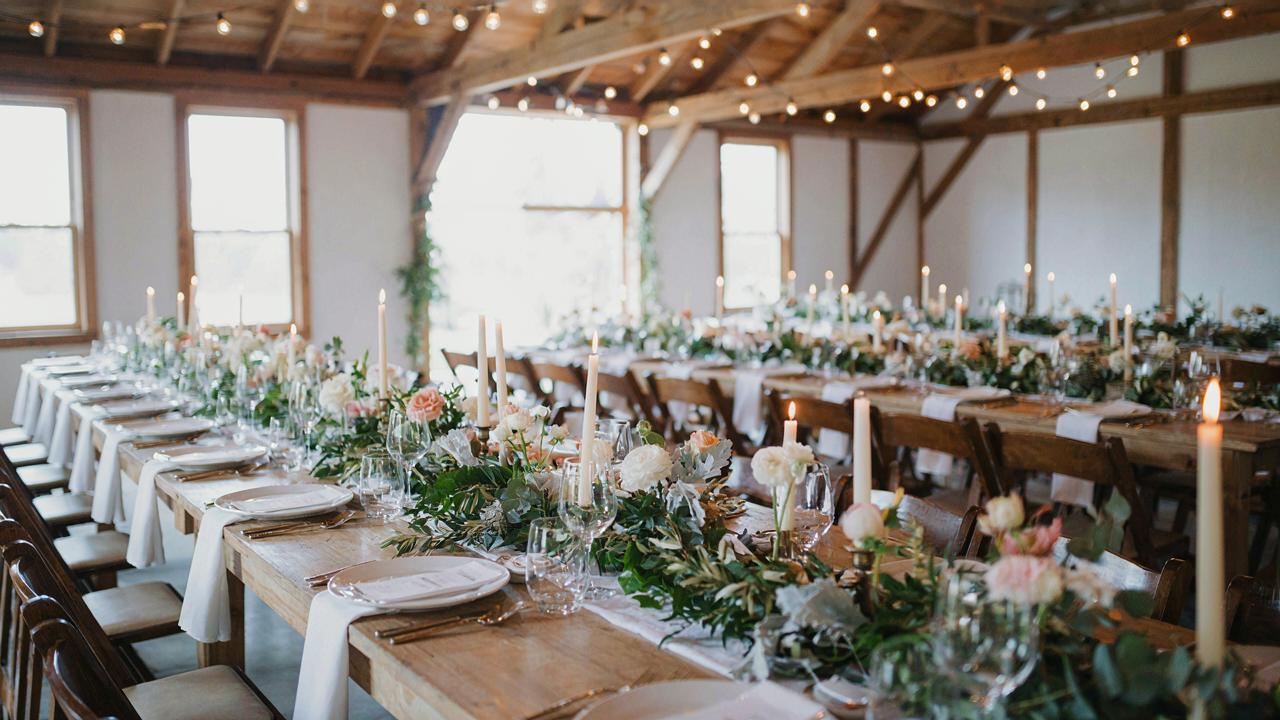
What people call “sourcing materials” is just friction they’re too lazy to remove. The real opportunity sits in seasonal abundance nobody bothers to harvest. Greenery from your yard or a friend’s property costs nothing and photographs better than florist filler because it’s alive and irregular. Branches, eucalyptus, local weeds that look intentional when arranged right—these replace material costs with time investment. Time is cheaper than money at an eight-thousand-dollar budget.
Your venue itself holds inventory. If you’re getting married near water, collect rocks. Near a farm, ask for corn husks and dried grasses. Near woods, take branches and moss. Most property owners allow harvesting if you ask. This isn’t cheap decoration thinking; it’s site-specific design thinking. You’re making centerpieces that belong to that place, not generic pieces that could sit anywhere. The cost stays at zero. The execution is: scout your venue location two weeks before the wedding and take photos of what grows there, then build your centerpiece template around what’s actually available.
The Scarcity Multiplier For Easy DIY Wedding Decor

When Limits Force Better Decisions
You want permission to spend less and still look intentional. Here’s the real mechanism: scarcity in biology forces organisms to allocate resources ruthlessly. Every calorie matters. Every second matters. The constraint eliminates waste. In weddings under 8500 dollars with homemade decor, your budget scarcity functions the same way. It kills filler. You stop buying ten mediocre things and make three exceptional ones instead. Constraint is the design filter most couples never access because they never needed it.

The couples who spend the most often waste the most because choice paralysis and abundance lead to clutter. Your 8500 dollar cap forces prioritization. You choose focal points. You choose materials that work hard. You choose techniques that actually compound visual impact instead of diluting it. This isn’t deprivation. It’s the opposite. Limited resources produce clarity. Your wedding ends up looking considered because you had to consider every element.
Finding The Work That Multiplies
The common advice says “DIY everything to save money.” Wrong. That’s deprivation thinking. The real opportunity is finding which decor elements produce disproportionate visual return on effort and materials. Some tasks multiply impact. Others just consume hours.
Focal point decor multiplies. A statement backdrop, a centerpiece design you repeat across tables, a lighting intervention in one key area. These dominate the visual space and cost far less than decorating every surface equally. Fabric draping, string lights positioned strategically, or a single floral arrangement styled large create anchors. Guests perceive these anchors as intentionality. Your budget concentrates where eyes naturally land. Secondary surfaces require minimal treatment because attention doesn’t focus there anyway. The mechanism is selective saturation. You saturate the spaces that matter and leave the rest spare.
DIY Wedding Seating & Layout: Engineering Intimacy, Not Just Rows

Unconventional Spaces Beat Banquet Halls
You want people to think your wedding felt expensive and intentional, not like you settled for a cheap venue. The real mechanism: constraint forces creativity. Banquet halls commoditize your event because they’re designed to fit any wedding identically. They’re interchangeable. A backyard, barn, or borrowed industrial space forces you to build the experience around the actual geometry, which makes guests feel like they landed somewhere real instead of somewhere generic.

Backyard weddings under 8500 dollars work because you eliminate the venue rental fee entirely, usually the largest single line item after catering. A barn costs 500 to 1500 dollars depending on region and season. A warehouse or studio in an emerging neighborhood runs similar rates. The constraint isn’t the space itself, it’s that you control the layout completely. You’re not fighting against premade table arrangements or fixed stage positions. You design flow first, then place tables and decor inside that flow, not the reverse.
How Guests Actually Move Through Space
Flow dynamics borrow from architecture and urban design: the concept of desire paths explains how people naturally navigate space without explicit direction. Your job isn’t to make rows of tables look nice. Your job is to map where guests enter, where they get food, where they sit, where they stand during toasts, and where they dance. Then you remove friction from those paths.
Most weddings fail at this mechanically: they put tables directly in the path between the bar and the dance floor, forcing guests to navigate a maze. You move tables 90 degrees. You position high-top cocktail tables near the entry so people naturally cluster there during the social hour, not awkwardly standing in an empty space. You put the food station perpendicular to seating, not inline with it. You create a clear lane from tables to dance floor. This isn’t decoration. This is the structure that determines whether your wedding feels alive or stilted. Mark entry points, food service, ceremony, and dance floor on paper before you buy a single decoration.
Wedding Attractions Beyond The DJ: Curated Experiences

Make Your Guests Do The Work
You want people to remember your wedding instead of scrolling through photos six months later. The mechanism is simple: participation locks memory in place better than observation ever will. Borrowed from behavioral psychology, engagement is the variable that determines retention. Most couples waste money on passive spectacle—a fog machine, an expensive photo booth nobody lines up for. The real move is building activities that require your guests to contribute something, even small effort. This costs almost nothing and creates actual stories.

Lawn games, a collaborative playlist station, or a guestbook alternative that demands creativity work because they flip the guest from consumer to participant. Set up cornhole on the lawn with homemade scoreboard. Build a station where people write advice cards or record voice messages on a phone. Run a simple trivia game about you as a couple, with a small prize. The investment is your time to set it up, not cash spent on vendors. Guests remember what they did, not what they watched happen.
Hire The Teenager With A Camera, Not The Studio
The wedding industry has trained you to believe local talent means expensive. That’s incomplete thinking. A skilled amateur with a real camera costs a fraction of a “professional package” and often shoots with more personality because they’re not beholden to a formula. Find the photography student at your local college or the semi-pro who shoots for passion, not just profit. Offer them a flat rate—three hundred to five hundred dollars—for four hours of coverage. They get portfolio work. You get authentic documentation at a fraction of the studio rate.
Same logic applies to live music or ambient entertainment. A local musician playing acoustic guitar for two hours costs less than a DJ’s hourly rate and creates a completely different atmosphere. A teenager who DJs school dances will handle your reception playlist for one-fifth what an “event DJ” charges. Interview them directly, look at their past work, and negotiate a flat fee instead of hourly rates with minimums. You remove the vendor markup entirely by going to the source. The mechanism is cutting out the middle layer of business infrastructure.
Easy Wedding DIY Decorations: The Power Of Repetition

Batch Production Cuts Time And Cost
You want to feel like you made something meaningful without spending weekends in a craft spiral. The real mechanism is this: repetition is production efficiency. You’re not making ten different centerpieces. You’re making one centerpiece ten times. This is how factories work, and it’s how you get a $8,500 wedding to look intentional instead of cobbled together.

Make one mason jar arrangement. Document every step. Replicate it exactly nine more times. The speed compounds because you’ve eliminated decision-making. Your hands know the motions. You stop second-guessing placement and proportions. Twenty identical candle holders cost less than twenty variations, and they create visual cohesion that screams intentional design. Batch production turns amateur effort into professional-looking output.
Focal Points Concentrate Budget Impact
Strategic placement isn’t about spreading decor evenly around the room. It’s about concentrating visual weight where people actually look. You have one entrance, one altar or ceremony backdrop, one head table. Fill those three zones with 70 percent of your decor budget. Leave the rest of the space sparse.
A guests’ eye goes to the front first, then the food, then the couple. Homemade garlands matter most behind where you stand. Repetitive elements on the head table matter. The far corner matters least. This is why venue choice matters at this budget: a smaller space makes your decor look abundant because people can see it all at once. In larger venues, the same decor gets swallowed. Concentrate your resources where they compound visibility.
DIY Decor Wedding: The Post Event Deconstruction Protocol

Reclaim Your Materials Before They Become Trash
You want to feel less guilty about the money you spent. Here’s the real mechanism: most couples never extract post-wedding value from their decor because they treat it as single-use inventory instead of capital. Economics calls this asset recovery—the systematic capture of residual value from a consumed good. Your centerpieces, backdrops, and installations aren’t decorations. They’re depreciating assets that lose value the moment the event ends.

The difference between a $8,500 wedding that costs $12,000 and one that costs $6,500 is ruthless material recovery. Sort everything into three categories before guests leave: reusable as-is, reusable with modification, and material-only. Pack it yourself instead of hiring breakdown crews. You know the inventory. Label boxes by future use, not by what it was. A floral arrangement becomes loose stems, foam, and wire within two hours of sorting.
- Wooden Frames and Structures: Disassemble tables, backdrop frames, and signage stands within hours. Store flat. These rebuild into new configurations or sell as repurposed materials to event planners and crafters online.
- Fabric Draping and Linens: Wash immediately while stains are fresh. Roll and store by color and size. Fabric stays valuable only if you preserve it properly. Mold and mildew destroy resale potential in weeks.
- Florals and Greenery: Strip flowers and foliage from arrangements while fresh. Dry them in a dark space or freeze them. Dried botanicals hold value for six to twelve months and resell to DIY decorators and florists seeking bulk stock.
- Candles, Votives, and Lighting: Reuse the vessels immediately or store them by type. Pillar candles you didn’t burn sell at 60-70% of retail. LED strings last indefinitely and hold their value across multiple events.
- Paper Goods and Signage: Save templates and printable designs in digital files. Cardstock, kraft paper, and acrylic signs reuse directly or become material for craft projects. The design files themselves become templates for future celebrations.
The timeline matters more than most people realize. Deconstruct within six hours of the last guest leaving. Moisture, dust, and temperature shifts degrade materials fast. Store everything in climate-controlled space—not a garage or basement. A $400 storage unit for six months costs less than the materials you’ll lose to humidity and pests.
The Waste Math Nobody Talks About
Most wedding advice treats waste as a moral failure. It’s not. It’s a math problem you can win. The real distinction isn’t between waste and no waste. It’s between visible waste you control versus invisible waste embedded in your supply chain. You can’t eliminate waste. You can redirect it.
Every centerpiece you rent generates waste you never see—transportation emissions, storage facility overhead, sanitization chemicals. Every decor item you buy new from a big box store carries manufacturing waste baked into the price. Homemade decor under $8,500 actually forces you to make fewer total items, which means fewer total inputs. Constraint creates efficiency. You use what you already own. You borrow what friends have. You buy only what fills genuine gaps. That discipline removes thousands in wasted spending before it happens. After the wedding, you pass materials to friends planning events within the next year. Track who gets what and ask them to do the same. This creates a closed loop where materials cycle through your community instead of landfills or storage units gathering dust.
Diy Wedding Decorations Table & Wedding Corner Ideas: Focal Points

Creating Zones Through Strategic Placement
You want people to feel like your wedding cost more than it did. That’s the real reason focal points matter. The mechanism is simple: human attention follows contrast and hierarchy. When you create distinct zones with different visual weights, your brain interprets that as intentional design rather than decoration scattered randomly around a room.
Zoning works because it breaks a space into territories, each with its own mood and purpose. The cocktail area feels different from the dinner space because you’ve given each one a visual anchor. This isn’t about buying more stuff. It’s about positioning what you already have so the eye lands on purpose, not on gaps. Use height variation, lighting shifts, or color clustering to mark each zone’s boundary without walls or expensive dividers.
Signature Statements With Found Objects
People push you toward store-bought centerpieces because they’re predictable and safe. They’re also invisible. Found objects force contrast because they’re unexpected. Economics calls this scarcity premium: things we find ourselves carry more perceived value than identical items we buy. A driftwood branch you collected costs nothing but reads as intentional in ways a floral filler never will.
The real work is editing, not gathering. Pull objects that share one element: color, texture, or origin. A table built from reclaimed materials, vintage bottles filled with local branches, old picture frames leaning against candles. Each element anchors itself by serving a function beyond decoration. That specificity is what makes people stop and look. Group your found objects by threes or fives, never twos or fours, because asymmetry reads as deliberate while pairs read as accident. This is your protocol: collect for two weeks, edit ruthlessly, place each piece where it creates a question before guests sit down.
The Real Obstacle Isn’t Your Budget; It’s Your Addiction To External Validation

You’ll spend eight grand on a wedding to impress people who won’t remember it in five years. The couples crushing this under budget? They stopped performing for their guest list and started building for their marriage. Your real competition isn’t other weddings. It’s your need to prove something to strangers. Pick one person whose opinion actually matters. Show them your vision today. Everyone else is noise.