Beyond The Beige: Why Most Potlucks Fail Socially

The Status Trap Of Mismatched Dishes
You’re worried people will judge you for bringing the wrong thing. That fear is real, and it shapes every potluck into a social hierarchy nobody admits exists. Potlucks operate like economic markets, not casual gatherings. Everyone brings what they think signals competence, which means the table fills with safe choices that clash instead of complement. A store-bought dessert next to homemade pasta next to gas station chips creates cognitive friction. Guests don’t consciously register the mismatch, but they feel the lack of intentionality.
The mechanism is simple: without coordination, everyone optimizes for personal risk, not collective experience. Someone brings a crock pot of chili because it’s hard to mess up. Someone else brings a cheese board because it looks effortless. A third person brings wings because they’re shareable. Nothing speaks the same language. The event feels scattered because it is. The solution isn’t better recipes. It’s constraint. Assign categories by the host before people choose, so each dish knows its role and arrives with purpose.
When Easy Becomes Invisible
The advice to “just bring something simple” is incomplete garbage. Simple doesn’t mean memorable. A bowl of chips disappears into the background because it requires nothing from you and offers nothing to guests. Boring food actually creates negative social momentum. People remember what stood out, and blandness stands out in the worst way because it signals no investment.
Branding applies here because every dish competes for mental real estate. A casserole from a box tastes like dozens of other casseroles. A casserole built around a specific ingredient or technique becomes a story people reference later. Bring a baked pasta with a herb oil you made, or a dip built on something unexpected. The work doesn’t increase much, but the recognition shifts entirely. When someone asks what you brought and remembers it three days later, you’ve crossed from potluck participant to contributor. Assign yourself one signature element per dish, then commit to making it obvious.
The Curated Contribution Protocol: Engagement Party Appetizers Reimagined

Assign Roles, Not Wishes
You want the food to look intentional because you’re afraid it won’t. The real mechanism is this: when you leave appetizer choices open, people converge on the same three items. You end up with five bowls of chips and nothing else. Close the variable. Assign specific appetizer categories to specific people instead of asking what they want to bring.

The difference between a potluck that feels curated and one that feels chaotic is specificity. Tell one person to bring a hot dip, another to bring a cheese board, another to bring vegetables and hummus. Be this direct in writing, not verbally. Written assignments stick because people can reference them. They also feel less like orders and more like their role in the event.
Prevent Ingredient Collision
Supply chain thinking applies here: you manage flow by controlling what enters the system at each point. Appetizers fail when three people bring shrimp, two bring spinach dip, and no one brings bread. Before you assign anything, create a simple intake form or group message that lists what you need and what people have already committed to.
Request one thing per person and confirm it in writing before the event. When someone says they’ll bring “something,” ask them to specify. If two people independently decide to bring caprese skewers, one of them has wasted time and money. The protocol is this: one assignment per person, one confirmation message, one check-in two days before. No ambiguity survives contact with that system.
The “Scarcity & Abundance” Principle For Engagement Party Food Ideas

High Value Offerings Beat Bulk Every Time
You want to look thoughtful without actually working harder. That’s the real reason you’re reading this. Here’s what economics tells us: treat your potluck contribution like supply and demand. Bring one exceptional dish in smaller quantity instead of a massive casserole nobody remembers. A killer appetizer, charcuterie board, or signature cocktail creates more perceived value than three pounds of pasta salad. Guests notice what stands out. They forget what fills space.

The math works against volume plays. Most potlucks drown in carbohydrate-heavy fillers because people default to “safe” and “filling.” You’re competing for attention in that noise. One refined contribution positions you differently. A single stellar dessert or cured meat board costs less labor than monitoring a slow cooker all day. Strategy beats effort here. Choose concentration over coverage.
The Scarcity Play Through Unique Contributions
Don’t assign yourself generic categories. That advice wastes the entire mechanism. Instead, own a contribution nobody else can replicate easily. Bring something that requires skill, regional sourcing, or a specific technique people recognize but rarely attempt. Homemade pâté, a regional specialty you grew up with, or a charcuterie board built around rare imports creates a moment at the table. Generic store-bought dips do not.
The play is this: scarcity forces conversation. Guests ask questions about unfamiliar food. That creates social proof and memory. Coordinate beforehand with the host to confirm your unique slot isn’t overlapped. One killer mezze platter beats twelve variations of the same potato salad. You’re not just feeding people. You’re creating a reference point they associate with you at the event.
Backyard Engagement Party Food: Logistics As A Force Multiplier

How Guests Move Through Space
You care about this because a crowded, chaotic food setup makes your event look poorly planned, and everyone notices. The real mechanism is traffic flow. Bottlenecks form when guests converge at a single point, forcing them to queue, wait, and abandon the space for conversation elsewhere. Smart spatial organization prevents this collapse.

Position your food stations in a loop, not a line. This lets guests enter from one side, move through without backing up, and exit naturally. Place the main table at the rear of your yard, secondary drinks or sides on a side table, and desserts near the seating area. This distributes foot traffic across the entire space rather than creating a single collision point. Guests flow through instead of stalling.
Hot And Cold Kept Separate By Design
Physics governs food safety, and you can borrow its logic to build what works: thermal zones. Instead of clustering all dishes together, create distinct temperature regions that maintain their own climate. A hot food zone stays isolated from cold foods to prevent cross-temperature degradation and condensation problems.
Set up your hot items on one table with a heat lamp or chafing dishes grouped together. Place cold items at least eight feet away on a separate surface with ice beneath serving trays. This physical separation means cold foods don’t absorb rising heat, and hot foods don’t lose temperature from nearby ice. Designate one cooler station for drinks, another for backup cold dishes. Each zone stays stable when isolated, so your food quality holds for the full event duration.
Fall Engagement Party Food: Seasonal Signaling, Not Just Flavors

Beyond Pumpkin Spice: Authentic Regional Ingredients
You care about this because you want to look intentional, not lazy. The mechanism is simple: people read food choices as signals about who you are and what you value. Fall ingredients aren’t trending because they taste better in September. They trend because scarcity creates perceived value, and regional authenticity beats mass-market convenience every time. Butternut squash from a farmer’s market reads different than canned pumpkin from a grocery shelf.

The real move is matching ingredients to your actual region, not what Instagram told you fall means. If you’re in the South, use muscadine grapes and pecans. If you’re in the Midwest, root vegetables and heirloom corn varieties matter. The point isn’t exotic—it’s specific. People notice when you source what actually grows near you instead of importing fall aesthetics from somewhere else.
Warmth And Comfort: The Psychological Mechanism
Psychology calls this “mood congruence”—your environment shapes emotional response before taste registers. Economics teaches the same principle differently: investment in warmth signals investment in the event itself. Slow-cooked meats, root vegetable gratins, and soup-based dishes don’t just warm stomachs. They signal preparation, intentionality, and genuine care. A room full of cold appetizers reads as transactional. Warm, hand-held food reads as an actual gathering.
The tactical step: require at least 50 percent of your potluck contributions to arrive hot and stay hot. Slow cookers, insulated containers, and timing matter more than dish complexity. Your guests will eat faster, stay longer, and remember the event as warm rather than formal. That shift from “nice party” to “genuine gathering” lives entirely in temperature and delivery method.
Engagement Party Recipes: The 80/20 Rule For Culinary Impact

Dishes That Travel Without Falling Apart
You’re worried people will judge your potluck contribution. The real fear is showing up with something that arrives broken, cold, or embarrassing. This is an operations problem, not a cooking one. Think of it through logistics: you need maximum impact with minimum failure points between your kitchen and the venue.

The mechanism is simple. Dishes that survive transport intact require structural integrity. Casseroles, baked pasta, dips with crackers, and grain-based salads hold their shape. Anything with layered components that separate or anything requiring precise plating fails the moment someone brakes hard on the highway. You’re not cooking for Instagram. You’re solving for arrival condition.
- Baked Ziti or Pasta Bake: Cooked pasta mixed with sauce and cheese, baked until set. Travels in a disposable aluminum container, reheats easily, stays cohesive. Feeds 8-12 people from one dish.
- Seven-Layer Dip: Beans, sour cream, guacamole, salsa, cheese, olives, green onions in distinct layers. Travels flat, requires no reheating, pairs with store-bought tortilla chips. No prep needed at venue.
- Caprese Salad Skewers: Cherry tomatoes, mozzarella balls, basil, and balsamic on toothpicks. Assembled in a shallow container, requires no utensil, prevents the soggy salad problem entirely.
- Slow Cooker Meatballs: Frozen meatballs simmered in sauce for hours. Transport in slow cooker on warm setting. Stays hot, requires zero plating, guests serve themselves.
- Brownies or Bar Cookies: Baked in a 9×13 pan, cut into squares, transported as-is. No frosting means no melting issues. High caloric density means guests eat less volume, stretching your contribution further.
Stop treating potluck food as an artistic statement. You’re filling a gap in the meal lineup. The dish that arrives intact and requires no assembly at the venue wins every time, regardless of complexity or originality.
Managing Dietary Requests Without Becoming A Short Order Cook
The mistake people make is treating dietary restrictions as special requests that demand custom recipes. This fragments your effort and creates resentment. The real play is delegating the responsibility back to the person with the restriction. You’re not their personal chef. You’re bringing one dish that works for most people. The system breaks when you try to solve for everyone.
Here’s how it works. When someone tells you they’re vegan, gluten-free, or avoiding sugar, you respond with one of two answers: “I’m bringing X, which won’t work for you, so feel free to bring something you can eat” or “I’m bringing a vegetable and hummus plate, which covers vegan.” You set the boundary in advance, not at the venue when you’re scrambling. If someone didn’t communicate a restriction before you finalized your dish, that’s their planning failure, not yours. The engagement host should collect dietary info from all guests weeks out and communicate it to potluck contributors. You follow that list only if it existed before you committed to your dish. Otherwise, you bring what you said you’d bring.
This approach saves time and prevents the awkward moment where someone eats half your dish before mentioning they’re allergic to something in it. You move the burden of accommodation to whoever made the restriction public. They know their needs. Let them solve for it. You contribute one solid dish that serves its intended audience and move on.

The “Food Spread Ideas” Illusion: Presentation Over Substance?

Color Blocking Beats Random Arrangement
You want people to think you have taste. That’s the real reason you’re reading this section. The mechanism is contrast: your brain registers organized color as intentional, even when the food itself is identical to a chaotic spread. Graphic design calls this “visual hierarchy.” Apply it to potluck platters by clustering foods by hue—reds together, whites together, greens separate. This takes zero extra effort and makes every dish read as deliberate.
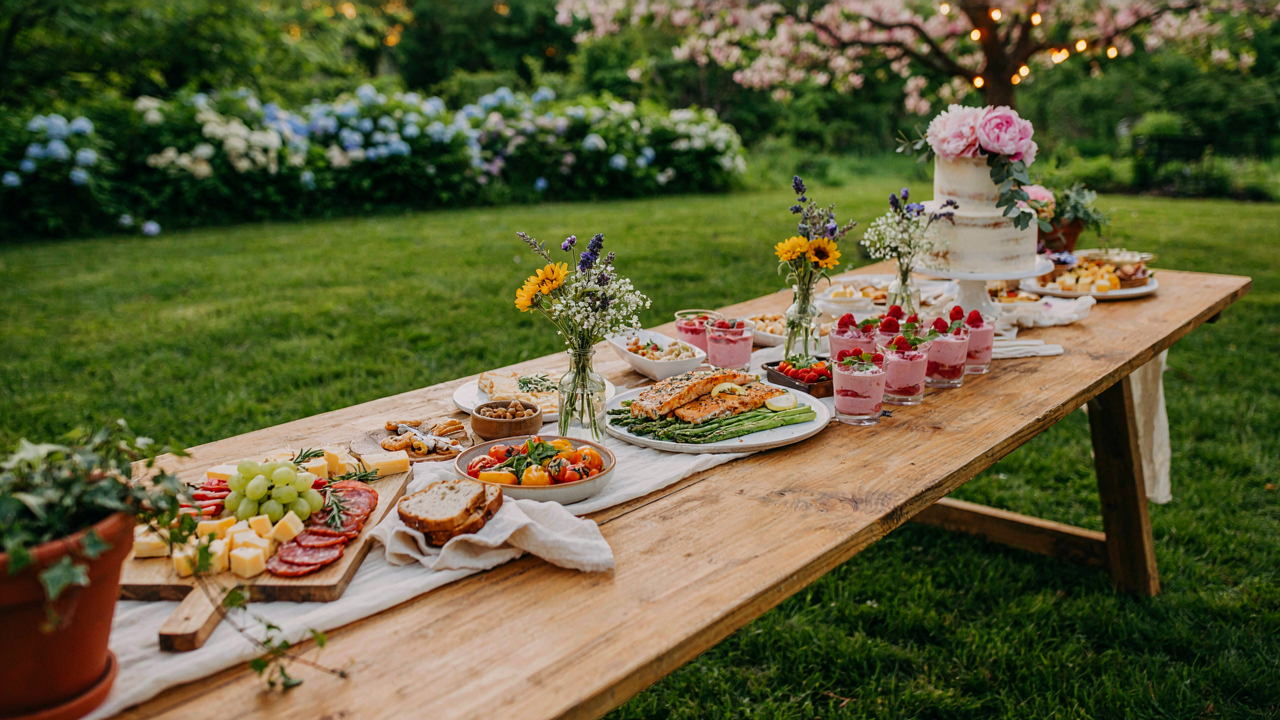
The trick works because the human eye reads grouped colors as a single unit before it reads individual items. White foods like mozzarella balls, crackers, and cauliflower form one visual block. Red tomatoes, berries, and peppers form another. This isn’t decoration—it’s information architecture applied to a table. Guests unconsciously trust organized spreads more than scattered ones, which means they eat more and remember the meal better. Arrange by color, not by dish type.
The Sequence That Guides Eating Patterns
Most potluck advice says “put hot foods here and cold foods there.” Wrong framing. What actually matters is the eating narrative: the progression that shapes how guests move through your spread and how long they stay engaged. Think of a film’s three-act structure applied to your table. Act one is entry—the first things people see and grab. Act two is exploration—items that reward a second look. Act three is closure—foods that satisfy without requiring a plate refresh.
Position lighter, smaller items at the table’s entry point. Chips, bread, vegetable sticks. These lower the commitment threshold for approaching. Mid-table, place items with flavor complexity or unexpected pairings—marinated meats, composed salads, dips with character. These make people pause and taste deliberately. Finish with substantive items: casseroles, mains, starches. This sequence keeps people at the spread longer because they’re following an invisible arc, not just grabbing whatever’s closest. The order of placement controls the order of consumption.

Engagement Party Appetizer Ideas: The Micro Experience Design

Individual Portions Beat Shared Bowls
You want people to think your engagement party was effortless. That’s the real reason this choice matters. The mechanism is simple: individual portions remove friction and broadcast control. Communal bowls require guests to navigate social math around portion size, utensil sharing, and cleanup anxiety. Individual appetizers eliminate that tax entirely. They move faster through a room. People grab without hesitation. The hygiene argument is secondary but real. Post-pandemic, guests notice. One person’s double-dip no longer contaminates the entire bowl.
Communal bowls create bottlenecks. People cluster around them. Conversations stall. With individual plates or pre-plated bites, guests circulate instead. The labor shifts too. Communal bowls demand constant refilling and monitoring. Individual portions sit stable. You set them out, move on. Assign one guest the simple task of replenishing the empty tray every thirty minutes. That’s the protocol. Specificity beats generalization.
Upgrades That Work Because They Violate Expectations
The common advice is to just add balsamic glaze or prosciutto to standard appetizers. That’s lazy. What actually works is contrast at the bite level. Think about it through industrial design: a well-made product surprises the user at the moment of interaction, not through marketing. Deviled eggs with miso instead of paprika. Crostini with whipped feta and hot honey instead of plain cheese. Meatballs glazed with soy and ginger instead of Swedish sauce.
The twist doesn’t need to be complicated. It needs to break the pattern the guest expected. Spicy cashews instead of salted. Beet hummus instead of chickpea. Cream cheese filling inside a jalapeño popper that tastes like a burger. The guest’s brain registers novelty. That moment registers as thoughtfulness. It costs the same to prepare. The difference is directional: toward specificity, away from defaults. Assign one person to execute each upgraded item so consistency matters.

The Real Currency: Engagement Party Food As Social Capital

When People Actually Show Up For The Food
You want to know why the food matters more than the decorations or the playlist. You’re afraid the event won’t feel important enough. Here’s the mechanism: in economics, we call this signaling. The potluck sends a signal about who you are and what you value. The food people contribute, and the effort they invest in preparation, broadcasts their actual relationship to the couple. Cheap frozen appetizers signal detachment. Homemade dishes signal investment.
The person who brings a three-hour braised dish didn’t do it because instructions told them to. They did it because the food itself became their vote of confidence in the relationship. When guests eat something someone actually made, they taste the decision to show up as more than a body in a room. That’s not sentimental. That’s structural. The potluck format removes the catering barrier and forces genuine participation. Everyone becomes a stakeholder, not a consumer.
The Architecture Of Collective Memory
Shared meals create anchors that stick longer than any other social gesture. Neuroscience would call this episodic memory formation, but potluck food does something more specific: it ties taste directly to presence and intention. When someone remembers your engagement party five years later, they’ll remember who brought what and what it tasted like. That specificity is the opposite of generic.
The protocol is simple but rarely executed correctly. Assign dishes by category during the signup phase, not by leaving it open. This prevents five casseroles and no vegetables. Request homemade items where possible, not store-bought. Include prep instructions so people understand the effort threshold. When guests taste a dish made by someone they know, they’re consuming relationship, not just calories. That’s what lingers.
The True Obstacle Isn’t The Food; It’s Your Fear Of Relinquishing Control

You don’t need a perfect menu. You need to stop micromanaging what your guests bring. The potluck thrives when you trust people to show up with something real instead of obsessing over gaps. Text three people today and assign them a category. Delegate. Watch what happens when you let go: the party becomes about people, not plating. Control kills connection.