The Perception Paradox: Why Nobody Cares What You Paid

Luxury Lives In The Gap Between Cost And Signal
You’re worried someone will know you didn’t spend enough. That’s the real fear here, and it’s why this section matters. The mechanism is simple: luxury isn’t a material property. It’s a cognitive anchor. In behavioral economics, anchoring describes how the first number you encounter shapes all future judgment. The price tag you saw anchors your perception of value. But the person looking at your earrings has no anchor. They only see the finished object.
The expensive-looking earring exploits this gap. It triggers the same visual cues your brain associates with high cost, but the actual price never enters the equation. Weight distribution, light reflection, finish quality, and proportion create those signals. None of these require premium materials. A well-designed cubic zirconia stone under proper lighting reads identical to diamond to the naked eye at arm’s length. The wearer’s confidence seals it. Doubt in your own choice broadcasts louder than any price tag ever could.
The Architecture Of Perceived Value
Don’t confuse material with perception. That’s the lazy read. A real expensive earring feels intentional in its construction, not expensive in its sourcing. Think of industrial design principles: form follows function, but also function follows constraint. When a designer works with a tight budget, they eliminate every redundant element. The result looks purposeful, not cheap. Budget earrings fail because they add too much: excessive embellishment, competing details, or obvious filler. Expensive-looking budget earrings subtract instead.
The visual hierarchy matters most. Your eye should land on one focal point, not scatter across the design. A single high-quality stone in a simple setting outreads ten mediocre stones in a cluttered mounting. Metal finish consistency signals manufacturing care. Tarnish, uneven plating, or visible seams read as cost-cutting. Smooth transitions, clean edges, and uniform coating read as precision. These aren’t expensive to achieve. They require discipline during design, not premium materials during production. When you buy, prioritize construction clarity over material name.
The Un Marketing Method: Avoiding Obvious Budget Tells

Material Red Flags That Kill The Illusion
You’re worried someone will clock your earrings as cheap. That fear is rational because most people can’t articulate what makes something look expensive, so they rely on instant material recognition. In economics, this is called a signal: material choice signals wealth or its absence faster than any design element can recover from it.
- Pot metal or mystery alloy: Tarnishes visibly within weeks. Real gold, silver, and platinum age gracefully or not at all. Pot metal oxidation screams disposable.
- Cubic zirconia under direct light: Sparkles too uniformly and bounces light like plastic. Real diamonds scatter light unevenly due to internal carbon variations and natural inclusions.
- Plated finishes: Gold or silver plating wears through at contact points (posts, backs, hinges) within months. Solid metal maintains finish integrity indefinitely.
- Hollow components: Lightweight earrings feel wrong in the hand and move with air pressure. Weight signals density and material integrity.
- Visible glue lines or epoxy joints: Expensive earrings are constructed, not assembled. Glue residue or visible gaps between components broadcast manufacturing shortcuts.

The mechanism is straightforward: your brain processes material before design. A badly made material choice poisons perception before the wearer even consciously notices. Eliminate these five first, and you’ve already cleared the largest hurdle. Everything else is refinement.
Design Details That Betray Cost Cutting
Bad advice says budget earrings just need to look minimalist. That’s incomplete. Minimalism works only when execution is precise. Sloppy minimalism looks cheap because there’s nowhere for the eye to hide.
The real tell is inconsistency in proportion and symmetry. Expensive earrings maintain perfect balance between left and right and never show tool marks or uneven finishing. Budget manufacturers cut corners on QA, so slight asymmetries, rough edges, or uneven stone settings become visible at close range. Stone settings should sit flush and level. Backs should be smooth. Posts should be perfectly straight. When these details waver, the entire piece reads as hastily made, regardless of material choice. The mechanism isn’t about what the earring is; it’s about whether someone bothered to verify it met a standard before it left the factory.
The Bridal Looks Architecture: Earrings As Support, Not Star

How Earrings Complement The Gown
You want earrings that prove you didn’t cheap out on the details, and that fear of being perceived as cutting corners drives most bad earring choices. The real mechanism is visual weight distribution. In architecture, load-bearing walls support the structure without drawing attention to themselves. Your earrings work the same way. They frame the face and anchor the neckline, but they should reinforce what the gown already communicates, not compete with it. A heavy, ornate earring on a minimalist sheath dress creates visual conflict. A delicate drop on a beaded ball gown gets swallowed. Budget earrings look expensive when they echo the gown’s design language without mimicking it.

Match material density to fabric texture. A silk charmeuse gown pairs with smooth, reflective metals and stones. A lace gown can carry more visual complexity because the lace already commands attention at the neckline. Budget metals like gold-plated brass and cubic zirconia look indistinguishable from precious metals at arm’s length when they’re shaped to complement, not dominate, your dress silhouette. The gown establishes the visual hierarchy. Earrings fill the remaining space strategically. This is why custom-fit earrings cost more but ready-made ones work fine if you choose based on what your specific gown needs, not what looks good on a model wearing a generic white dress.
Elevating The Ensemble Through Hair And Makeup
Most advice says “let your earrings shine” or “keep hair and makeup minimal.” Wrong. Those tactics leave earrings exposed and vulnerable to looking cheap. The real play is integration. Your hair, makeup, and earrings form a single visual unit that either coheres or fractures. When all three elements share a consistent level of finish and material quality, the eye reads them as one deliberate choice rather than three separate purchases.
If your makeup includes metallic eyeshadow, your earring metals should match that temperature. Warm gold makeup pairs with warm gold earrings. Cool silver makeup with cool silver earrings. If your hair is styled with precision, your earrings gain authority through proximity. Loose, undone hair drains definition from delicate earrings and makes them appear less intentional. Budget earrings gain credibility when paired with professional hair and makeup work because the surrounding execution signals that details matter.
The “Scarcity Principle” Protocol For Wedding Gold Earrings

Find What Mass Production Skipped
You want people to assume you paid three times what you actually did. That requires one mechanism: perceived scarcity. Economics calls this the scarcity principle—demand rises when supply shrinks or when an item appears limited. Budget earrings fail because they look mass-produced. You need designs that suggest someone chose them deliberately, not ordered them from a warehouse algorithm.

The gap between expensive and cheap earrings isn’t materials. It’s the number of times that exact design has been made. Mass retailers produce one style in thousands of units. Independent makers and boutique brands produce one style in dozens. When a guest sees your earrings, they should wonder where you found them, not assume you bought them at checkout. Hunt for designers who cap production runs or rotate collections seasonally.
The Limited Edition Signal
Scarcity works only if buyers sense it. A design that changes every season reads as deliberate curation. Brands that produce limited quantities openly state this—”200 pairs made” or “pre-order closes Friday.” This isn’t manipulation. It’s transparency that triggers the same psychology expensive jewelry uses. Your earrings don’t need to be objectively rare. They need to feel unavailable to most people.
Search for artisan marketplaces and independent goldsmiths who list production limits or show sell-out timelines on their sites. Etsy sellers with custom wait times and made-to-order models project exclusivity without the price tag. When you wear earrings someone had to wait for or hunt down, the perceived value compounds. That hesitation and effort translate to expense in the viewer’s mind. Order from makers whose queue is visible and whose pieces don’t restock.
Borrowed Brilliance: Applying Military Strategy To Accessorizing

Concentrate Impact, Not Spend
You care about this because you’re terrified people will clock you as cheap. Here’s the mechanism: military strategy calls this “economy of force.” It means deploy resources where they matter most, not everywhere. With budget wedding earrings, you concentrate visual impact in one specific zone instead of spreading weak effort across multiple pieces. A single high-impact earring catches the eye first and anchors perception of your entire look. The brain doesn’t calculate total spend. It registers dominance points. One sculpted, geometric, or gemstone-heavy earring does more work than two diluted pieces.

The mistake most people make is thinking they need to fill space or match a “complete look.” Wrong. A single statement earring with intentional weight, finish, or cut creates the illusion of investment. Drop earrings perform better than studs for this reason. They command vertical real estate and move with you, triggering repeated visual attention. Pair one strong earring with a minimal or neutral second piece, or wear a single dramatic drop. This isn’t about asymmetry being trendy. It’s about resource allocation. Your budget moves from two weak earrings to one that reads expensive because it dominates the frame.
Redirect Attention Where It’s Hardest To Fake
Misdirection works because the eye follows what moves and what breaks pattern. Budget earrings fail when they try to mimic expensive materials at scale. Cubic zirconia looks cheap when it covers a large surface because light behavior gives it away under scrutiny. But redirect attention to texture, shape, and movement instead of surface area, and perception shifts. An earring with intricate metalwork, architectural form, or deliberate asymmetry reads as intentional design rather than budget replica. The viewer’s brain interprets complexity as craft.
Material choice compounds this. Matte finishes hide certain flaws better than high polish. Textured surfaces scatter light in ways that obscure cheap stone setting. A brushed gold or hammered metal finish costs nothing more to produce but reads as deliberate, curated choice. Black onyx or matte gemstones paired with geometric cuts make budget materials feel editorial. The key is forcing attention onto the design itself, not the material quality. When someone can’t immediately identify what something is made of, they default to assuming the designer made a deliberate choice. That assumption is expensive-looking.
Investment In Illusion: Crafting Perceived Value For The Bride Earrings

Where The Eye Actually Lands First
You want people to think you spent more than you did. That’s the real reason you’re reading this. The mechanism is visual hierarchy: your brain processes information in order of contrast and placement, not total cost. Expensive earrings exploit this by concentrating visual weight in specific zones. Budget earrings that look expensive do the same thing. The difference isn’t material quality across the entire piece. It’s strategic placement of the elements that catch light and draw attention, leaving cheaper construction hidden where the eye never goes.
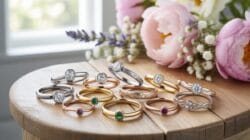
The face is a stage with zones of high and low visibility. The stone or focal point must sit where it commands attention immediately. The post and back, the parts hidden behind the ear or lost in hair, can be cheaper metal or simpler construction. Nobody inspects the back of an earring during a ceremony. They see the front. Build your budget there and nowhere else.
Refinement Through Constraint
The common advice says “go minimal.” That’s lazy. Real refinement isn’t about doing less. It’s about doing one thing perfectly and removing everything that competes with it. In graphic design, this principle is called negative space. With budget wedding earrings, negative space is your cost control. Empty air around a focal stone costs nothing but looks intentional.
A single pearl or stone with clean metal lines around it reads as sophisticated. Multiple stones scattered across the earring read as busy. Clean geometry reads as intentional. Random texture reads as filler. Choose one detail that matters, execute it with precision, and let the rest disappear. The earring that does one thing well beats the earring that tries to do everything. Order the piece from a jeweler who understands this constraint, not one who fills space to justify the price.
The Bridal Pearl Earrings Deception: Real Vs. Hyper Real

Spotting Faux Pearls That Convince
You want people to assume you spent three times what you actually did. That’s the real game here. The mechanism is simple: genuine pearls have surface imperfections that read as authenticity to the human eye, but most people can’t identify the difference because they’ve never held a real pearl. Faux pearls exploit this gap ruthlessly.
- Nacre coating thickness: Quality faux pearls use multiple layers of nacre (mother-of-pearl coating) applied to a shell or glass core. Cheap versions use one thin layer that flakes or yellows within months. Examine the earring post hole—if coating is visibly thin or chipped, reject it.
- Shell core versus glass: Shell cores (usually oyster shell) hold nacre better than glass because nacre naturally bonds to shell. Glass cores create a plastic feel and unrealistic weight distribution. Hold the earring—it should feel slightly substantial, not hollow.
- Surface luster variation: Real and quality faux pearls show subtle luster shifts across the surface. Cheap fakes have uniform, plastic-looking shine. Rotate the earring under light—legitimate pieces show depth and gentle light play, not a flat reflective gloss.
- Baroque imperfection: Genuine pearls have organic asymmetry. High-end faux pearls mimic this with intentional surface variation. Perfect spheres in jewelry under fifty dollars signal mass-produced mediocrity, not authenticity.
- Weight-to-size ratio: Faux pearls should feel weighted appropriately. If a pearl earring feels feather-light for its size, the core is too thin or hollow. Legitimate budget faux pearls use heavier cores so they move and sit correctly on the ear.

The post and back matter more than the pearl itself for budget pieces. If the earring post is surgical steel or titanium and the back is secure, the faux pearl can degrade over two years and nobody will notice because they won’t inspect the back of your ear during the ceremony. Spend on hardware, cut corners on the pearl’s longevity.
The Illusion Of Weight And Depth
Optics, not materials, determines whether people perceive expensive earrings. A faux pearl catches light differently depending on nacre density and core composition. Dense nacre diffuses light gradually—this is what reads as luxury. Thin nacre bounces light sharply back, creating the plastic gleam that screams budget.
The reason most advice fails here is it conflates “realistic appearance” with “expensive appearance.” They are not the same. A completely realistic cubic zirconia catches light like a diamond. A completely realistic faux pearl catches light like a real pearl. But expensive earrings use strategic light behavior—they hold light slightly longer before releasing it. This requires nacre thickness of at least two millimeters and a matte surface finish, not high-gloss. Request earrings with satin or matte nacre finish, not polished. Check the supplier’s product photos under natural light, not studio lighting. If the nacre looks wet or plastic-shiny in the photos, it will read cheap in person.
The Curated Collection: Building Your Wedding Accessories Jewelry Arsenal

What You’re Actually Afraid Of
You want permission to spend less and still look intentional. The real mechanism is this: expensive jewelry doesn’t broadcast cost through individual pieces. It broadcasts through restraint. A woman wearing five mismatched accessories looks uncertain about her aesthetic. A woman wearing three that work together looks like she knows something. Budget earrings become invisible when everything else proves you have taste.

The principle here is constraint from design thinking. In design, constraint forces prioritization. With a limited budget, you stop buying randomly and start buying strategically. Each piece must justify its presence. This is why wealthy people often look worse than disciplined people on smaller budgets. They fill space without editing it.
The Edit Before The Purchase
Stop buying accessories as isolated objects. Buy them as a system. This means you choose your earrings, necklace, bracelet, and rings together, not one at a time. When you evaluate each piece against the others, bad choices become obvious. A delicate chain clashes with chunky studs. Ornate earrings fight with statement rings. The tension kills the expensive look instantly.
Start with your earrings as the anchor. Build backward from there. If your earrings are subtle and geometric, your necklace should be either absent or equally minimal. If your earrings are textured or sculptural, your other pieces retreat into simplicity. One rule tightens everything: no two pieces compete for attention in the same outfit. When each piece knows its role, the entire collection reads as intentional, not desperate.
Your Real Obstacle Isn’t The Price Tag; It’s Mistaking Cost For Consequence In Your Bridal Looks

Most brides waste money because they confuse expensive with effective. You don’t need platinum. You need proportion, finish quality, and the right stone cut. Stop browsing everything and pick one trusted seller today. Spend thirty minutes comparing their bestsellers instead of six hours drowning in options. The earrings that photograph well aren’t the ones that cost the most. They’re the ones you actually wore with intention.