The Intentional Celebration Manifesto: Why “Budget” Is A Feature, Not A Flaw

Luxury Without The Price Tag
You’re worried people will judge you for not spending enough. Here’s the mechanism: luxury isn’t about the dollar amount. It’s about scarcity and control. Economics teaches us that value emerges when supply is constrained relative to demand. A home bachelorette party with intentional design beats a generic venue rental because you control every variable. The bride gets something she can’t buy at any price: a celebration built specifically for her, in a space that matters.
Most people confuse spending with generosity. They don’t. A two-hundred-dollar party at home where every detail reflects the bride’s actual interests outperforms a five-hundred-dollar event at a rented space where half the choices came from a dropdown menu. Intentionality signals respect more clearly than price tags do. The work you put in becomes visible. The bride feels it.
Memories Are Built, Not Purchased
The common advice is wrong: throwing money at an experience doesn’t guarantee it sticks. A research study in consumer psychology shows experiences become memories when they’re novel, emotionally connected, and involve active participation from attendees. A home party gives you all three. You’re not passively sitting in rented chairs watching a timer run down. You’re playing games someone designed for your group, eating food prepared with knowledge of who’s in the room, and talking in a place without the hum of background strangers.
Cheap doesn’t mean forgettable. It means efficient. You skip the markup, the generic playlist, the vendor’s standard package. What remains is what matters: genuine interaction between people who know each other. The bride remembers who showed up for her and what you did together, not what the venue charged by the hour. Build the party around one or two high-impact moments instead of stretching a big budget thin across many mediocre ones. That’s the protocol that works.
Low Key Bachelorette Party Ideas: Curating The Guest List For Impact

Quality Over Quantity Wins Every Time
You want people there who matter, not just bodies to justify the event. This is economics: you have a fixed budget and finite hours. Spreading both thin across too many people guarantees mediocrity. A small group that actually enjoys each other creates the conditions for real connection, which is what everyone remembers anyway. Most people confuse attendance with success.

Five people who laugh together beat twenty people making polite conversation. Small groups lower costs per person on food, drinks, and space. They eliminate the logistical nightmare of coordinating conflicting schedules. The bride spends actual time with each guest instead of working the room. When you invite fewer people, the event becomes about the people there, not the performance of hosting.
The Friction Of Saying No
Everyone tells you to invite “everyone close to her.” That’s lazy advice that creates the exact problem you’re trying to solve on a budget. Reality: some people drain energy, some complicate group dynamics, and some accept invitations they’ll later resent paying for. You avoid all three by making deliberate cuts upfront.
Ask yourself one question per person: will this person contribute to the bride’s actual enjoyment, or will managing them consume her attention? If the answer is unclear, they don’t make the cut. Frame the invite as “this is going to be small and intimate” rather than apologizing for the size. People respect clarity. Send invitations early so those invited feel genuinely chosen, and those not invited understand it wasn’t sudden.
The Experience Design Protocol: Beyond Generic Themes

Match Activities To Who She Actually Is
You want permission to skip the tired Pinterest templates without feeling like you’re doing it wrong. Here’s the mechanism: generic themes fail because they’re built for an imaginary bride, not the one in your living room. The principle comes from behavioral economics—constraint breeds specificity. Your budget forces you to eliminate noise and build activities around actual preferences instead of what “bachelorette parties are supposed to have.”

Start by listing three things the bride genuinely does in her free time. Not what sounds fun in theory. What does she actually choose? If she reads, design a literary game night. If she cooks, run a progressive dinner across rooms. If she’s competitive, build a tournament. The tighter you tie activities to her demonstrated behavior, the less you spend chasing novelty and the more the party feels intentional.
Moments Worth Documenting
Generic advice says “hire a photographer”—which defeats a home budget entirely. The real lever is friction. Lower it strategically. Set up one phone on a tripod in the best-lit room with a simple backdrop (white sheet works). Assign one person as the documented moment tracker during specific windows—not all night, which kills presence. This person captures the unplanned laughs, the sincere toasts, the details that matter to the bride.
The goal isn’t polished content. It’s proof that something specific happened. The bride will remember the party through these artifacts far longer than through the generic Instagram aesthetic everyone else has. Create a shared digital folder immediately after. Send photos to her within 24 hours. The mechanism is simple: people preserve what they can access easily and what feels uniquely theirs.
In Home Bachelorette Party Ideas: Leveraging Your Space Like A Strategist

Room By Room Transformation: Maximizing Existing Assets
You want to spend nothing and look like you spent everything. The real mechanism here is this: a budget party fails when it tries to hide its constraints instead of designing around them. Your home has dead zones—corners, hallways, unused rooms—that become assets the moment you assign them function instead of decoration.

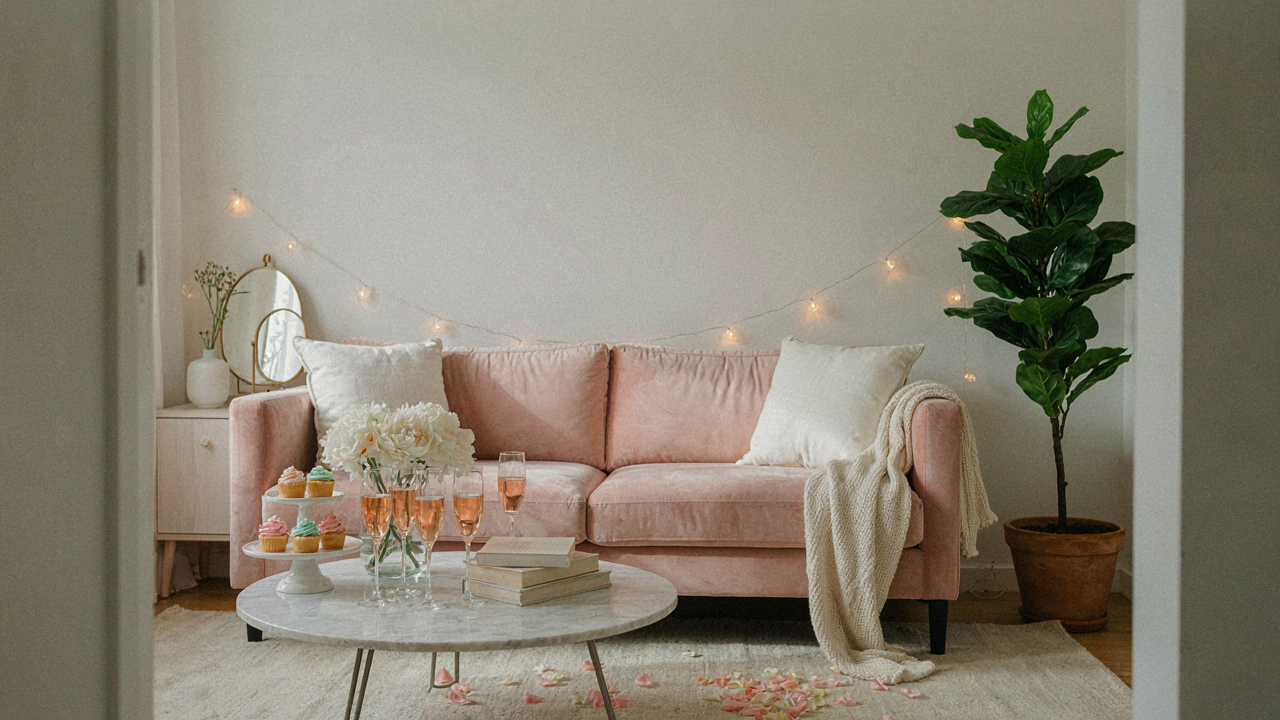
Start with inventory. Walk through your space and identify what already exists: a dining table becomes a cocktail station. A bedroom corner becomes a photo backdrop using a bedsheet and phone light. A bathroom becomes a lounge space with throw pillows. The constraint forces specificity. When you have limited square footage, every zone does one job well instead of trying to do everything mediocrely.
Flow And Function: Military Strategy For Party Layout
Military logistics borrowed one principle worth stealing: lines of supply determine operational success. In your home, foot traffic patterns determine whether guests cluster awkwardly or move naturally between zones. Map where people enter, where they drink, where they eat, where they gather to talk. Each transition should take five steps or fewer.
Bottle the bottlenecks. The kitchen is your choke point—if everyone needs a drink and only one person can reach the cooler, you’ve designed friction. Pull drinks into a secondary station in another room. The bathroom becomes another friction point; stage overflow seating nearby so people aren’t queuing in hallways. Every guest movement should feel intentional, not accidental.
Bachelorette Party At Home Ideas: DIY Decor That Doesn’t Look “DIY”

Simple Materials, Strategic Placement
You’re worried people will walk in and see “budget” instead of “intentional.” That fear is the real mechanism at work here. Constraint-based design is borrowed from industrial engineering: you remove options to force elegance. Instead of buying ten decorative items, you pick one material and deploy it obsessively. Repetition signals control.
- Kraft paper and string: Layer kraft paper as a table runner, then string it vertically across a wall corner. The monochromatic approach reads as deliberate minimalism, not shortage of budget.
- Metallic spray paint on thrift finds: Spray gold or copper on cheap vases, picture frames, or candle holders. The uniform finish makes mismatched items cohesive and intentional.
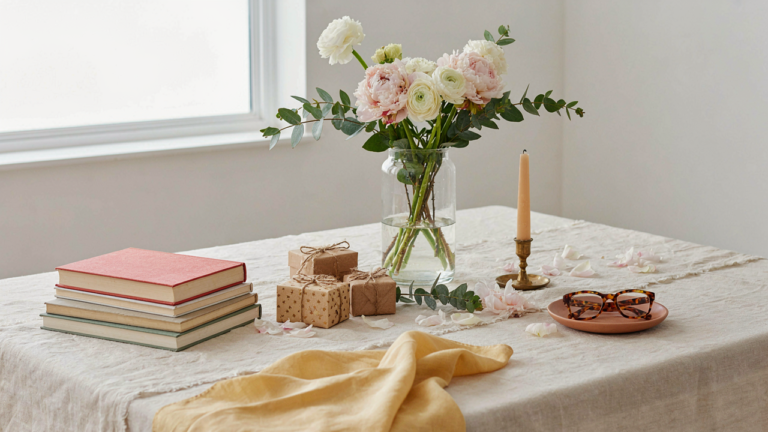
- Greenery from grocery store foliage: Buy eucalyptus or Italian ruscus by the bundle, arrange densely in mason jars. Botanical repetition suggests luxury florals without the cost.
- White or blush balloon clusters: Group balloons of one color in corners and above doorways instead of scattering them. Density and placement create visual weight that reads expensive.
- Linen or cotton fabric draping: Hang affordable fabric from the ceiling or walls using painter’s tape. Fabric softens a room faster than any decoration and costs less than twenty dollars.

The key is proximity and repetition, not variety. One material used ten times beats ten materials used once each. You’re not decorating around a constraint. You’re using constraint as your design language.
When Pinterest Expectations Collide With Reality
Most advice says “just make it work.” That’s incomplete. The real problem is comparing your three-hour setup against someone’s post-production edited photo that took weeks to stage. You’ll waste energy chasing an image instead of building an atmosphere.
Your job is not to recreate magazine spreads. Your job is to create one strong visual focal point per room. Pick the wall guests see when they walk in. Spend your decorating budget and effort there. Everything else can be minimal. One gorgeous backdrop with decent lighting beats scattered decorations everywhere.
The Culinary Alchemy Method: Food & Drink On A Budget

Shop The Perimeter First
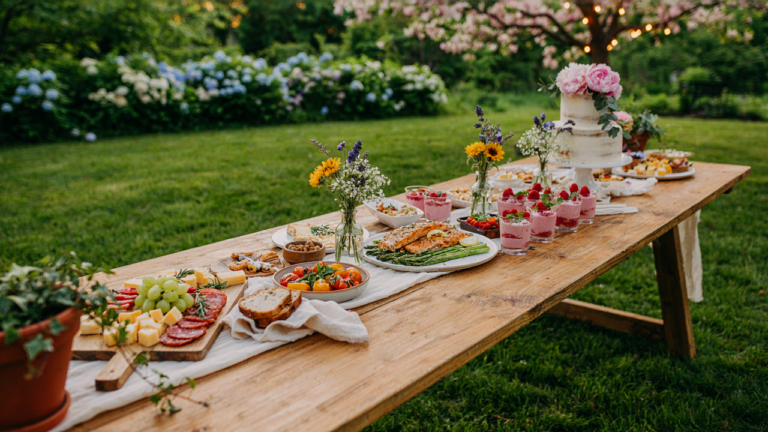
You want people to think you spent money you didn’t spend. That’s the real game here. The mechanism is simple: grocery stores arrange cheap, quality food on the outer edges and processed garbage in the middle aisles. Buy protein, produce, and dairy from the perimeter. Plan your menu backward from what’s on sale that week, not forward from what you imagine. Check the store’s weekly ad before you go in. This takes ten minutes and cuts your bill by 20 to 30 percent.

Bulk items and frozen vegetables cost less than fresh and taste identical in a cooked dish. Buy store brand everything. The markup on branded products is pure tax on your trust. Make a list and stick to it. Don’t improvise in the store. The people who overspend do it because they wander and react to what looks good, not what fits the budget. One trip, one list, one checkout.
Signature Drinks Beat Variety
Economics teaches us about leverage: doing one thing extremely well produces more return than doing many things adequately. Apply this to your drink strategy. Make one cocktail and one mocktail. Nail both. People remember a single drink they loved more than five forgettable options. A batch cocktail made beforehand tastes better than individual drinks made to order and costs less per person.
Use a base spirit that works in multiple drinks: vodka, tequila, or rum. Buy a handle instead of bottles. Citrus juice, simple syrup, and one premium ingredient create a category-defining drink. Make simple syrup at home by boiling equal parts sugar and water, then cooling it. A batch mocktail could be ginger ale, fresh lime, fresh mint, and a splash of grenadine. Prep everything in advance so you’re not working during the party.
Entertainment: Engaging Without Excessive Spending

Build Your Playlist Before The Night Starts
You’re worried people will judge the vibe if the music falls flat. That’s the real tension here. The mechanism is simple: sound shapes mood faster than any decoration or conversation ever will. A curated playlist removes the dead air that kills energy. Pre-built playlists on Spotify, Apple Music, or YouTube cost nothing and solve the entire problem before guests arrive. You control the pace, the tone, and the narrative arc of the night without hiring a DJ at three-figure rates.

Structure your playlist in three acts. Hour one should feel social and welcoming, with moderate energy that lets people talk. Hour two ramps up into the songs everyone knows but won’t sing along to ironically. Hour three is the final push with tracks that make people move. Download the playlist beforehand so you’re not dependent on internet speed mid-party. Plug your phone into a Bluetooth speaker and let it run. The entire entertainment framework for the night is already locked in before anyone walks through the door.
Personalized Games Beat Professional Entertainment Every Time
Common advice says hire entertainers or book activities. That’s lazy thinking dressed up as solutions. Entertainment economics teaches us that perceived value increases when the host demonstrates effort, not when someone external provides a service. Games you design around inside jokes and the bride’s history cost zero dollars and generate far more laughter than a rented performer reading generic scripts to strangers.
Build a game library before the party. Trivia about the couple’s relationship, never-have-I-ever specific to your friend group, or simple card games like Cards Against Humanity require only what you already own. Charades and Pictionary work with paper and pencils. Two-player competitive games keep rotating pairs engaged while others watch. The bride becomes the focal point naturally because the content orbits her, not because someone charged money to make it happen. Execute one structured game every ninety minutes to maintain momentum without feeling forced.
Small Intimate Bachelorette Party: The Gift Of Presence, Not Presents

What Actually Matters Here
You’re worried people will think a home party is cheap. Here’s what’s actually happening: you’re confusing the bride’s experience with the guests’ judgment, and that confusion kills the real value you could create. The mechanism is simple. Attention is the scarcest resource at any gathering. A crowded venue splits it into fragments. A small group at home concentrates it. The bride notices the difference immediately because she’s not competing for eyeline with forty strangers.

Gifts feel obligatory because retail taught us that ritual. Skip the gift exchange entirely. Replace it with one shared contribution to a memory that only happens in that room, at that moment. A photo booth setup you build together. A playlist each guest curates one song for. A handwritten note jar people fill before they leave. These cost almost nothing and create friction-free meaning. The bride walks away with evidence that people showed up for her, not for the social performance.
How Groups Build Shared Ownership
Borrow from systems thinking here: a collective contribution creates what engineers call distributed load. Instead of one person bearing the weight of execution or expense, multiple people hold pieces. One friend brings the alcohol. Another handles snacks. A third designs the playlist. A fourth sets up the space. The bride doesn’t stress about any single element failing because no single person is responsible for the whole apparatus.
Ask people directly for specific contributions two weeks out. Not open-ended offers to “help.” Name the thing. Assign the role. Send a Venmo link if costs split. This prevents the friction of multiple people showing up with the same item or nobody bringing anything crucial. Track responses in a simple shared doc. When each person knows their specific job, they own it. The result feels orchestrated without being orchestrated.
Easy Bachelorette Party Ideas: Delegate And Conquer Protocol

Assign Roles Before The Week Begins
You want this to feel effortless because you’re afraid hosting will expose you as disorganized. The real mechanism is this: you need command structure. Military operations use role clarity to compress decision-making. Apply the same principle here. Assign one person to drinks, one to food prep, one to music and games, one to setup and cleanup. Not suggestions. Assignments. Write them down and send them out five days before the party.

The bride shouldn’t manage anything. She shows up. People who care enough to attend should have explicit jobs that prevent the host from becoming a harried middleman between logistics and socializing. One person handling drinks means nobody stands around asking what to bring. One person managing games means you’re not scrambling at 6 PM deciding what to play. Clarity kills stress faster than any pep talk. Text each person their role today, not tomorrow.
Prepare Everything That Won’t Spoil
Most advice here is garbage: “prep what you can.” Too vague. Prep changes based on timing. Make your food list now. Note what holds for 48 hours refrigerated: cheese boards, veggie platters, dips, baked goods. Prep those two days out. Make your game setup list and arrange all physical items into labeled boxes. Test your music playlist. Clean bathrooms and common areas.
The goal is this: the morning of the party, you only handle items that must be fresh or hot. That’s it. Everything else sits ready. No scrambling for games you can’t find. No missing ingredients. No hunting for a speaker. The protocol is write down every task, mark when it gets done, and check it off. Execute the list, not the feeling.
The Post Party Deconstruction: Maximizing Value, Minimizing Waste

Clean Up Without Losing The Night
You want to avoid the guilt of leaving wreckage behind, but you’re also afraid the party will actually end if cleanup starts too early. The mechanism is simple: designate cleanup zones by task type, not by person, so the work happens in parallel and without announcing “the fun is over.”
Assign one person to dishes, one to floors, one to surfaces. Work starts thirty minutes before guests leave, not after. This prevents the energy crash that kills momentum and keeps the bride from feeling like she’s hosting a maid service. Containers go into one bin, decorations into another, bottles into a third. The bride doesn’t touch anything. This is the single most important rule you’ll implement tonight.
Decor That Doesn’t Die After One Use
Balloons, streamers, and paper garlands are consumption theater. They cost five dollars, serve one function, then go to landfill. Borrow or buy reusable decor instead: fabric bunting, wooden signs, string lights you already own or can rent. The economics principle of “return on repeated use” applies directly here. Every dollar spent on decor that works for multiple parties cuts your per-event cost by half.
Photograph every setup before breakdown. Store decor in labeled bins by category: lighting, fabric, signage. Take inventory of what worked visually and what didn’t. Next bachelorette party you plan, you skip the trial and error phase. The real value isn’t in the party itself, it’s in the system you build that makes the next one faster and cheaper.
The Real Obstacle Isn’t Your Budget; It’s Your Inability To Define Genuine Celebration Beyond Commercialized Ideals

You don’t need Instagram approval or a venue that costs what a car payment does. You need clarity on what actually matters to the bride. Text her right now. Ask what memory she wants to create, not what experience she thinks she should have. Most bachelorette parties fail because women chase someone else’s definition of fun instead of building their own. Stop borrowing other people’s celebrations and start owning yours. The budget party at home isn’t the compromise, it’s the real thing.