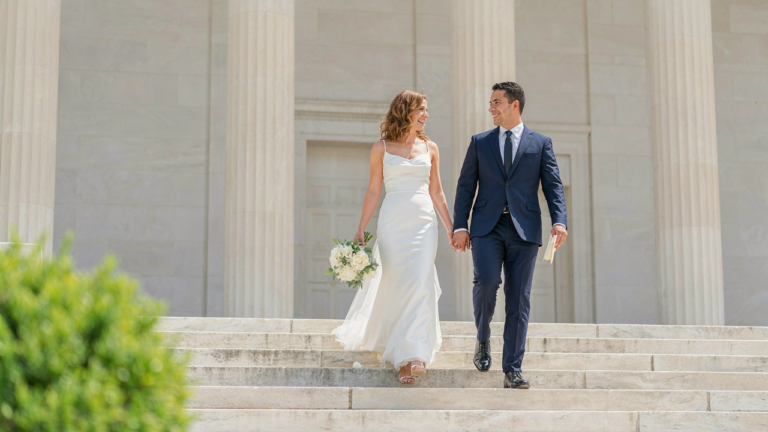
The Un Wedding Manifesto: Ditching The Industry’s Bullshit

The Wedding Industry Wants Your Fear
You care about this section because you’re afraid a cheap wedding signals low status. The mechanism is simple: the wedding industry built a trillion dollar apparatus by convincing you that spending more equals loving more. They did this by creating scarcity where none exists. A $3500 backyard wedding threatens their model because it proves their core premise false. The industry doesn’t sell weddings. It sells the belief that weddings require debt.
The proof is in their marketing language. Notice how they never say “we offer value.” They say “your special day deserves,” “you owe it to,” and “don’t you want to remember.” These phrases weaponize guilt and FOMO against rational spending. Venues charge $5000 for a space you can rent for $500 because they’ve convinced you the markup equals legitimacy. Florists charge $2000 for arrangements that cost $200 in materials because they’ve convinced you that price equals artistry. Once you see the mechanism, you can’t unsee it.
What Elegant Actually Means
Common advice says elegant means expensive materials, matched linens, and hired coordination. That’s marketing speaking, not design. Elegance in design terms comes from a principle called “reduction”: removing everything unnecessary until only the essential remains. In a backyard wedding, this means your constraints force elegance instead of preventing it. A $3500 budget eliminates the clutter that makes expensive weddings feel bloated.
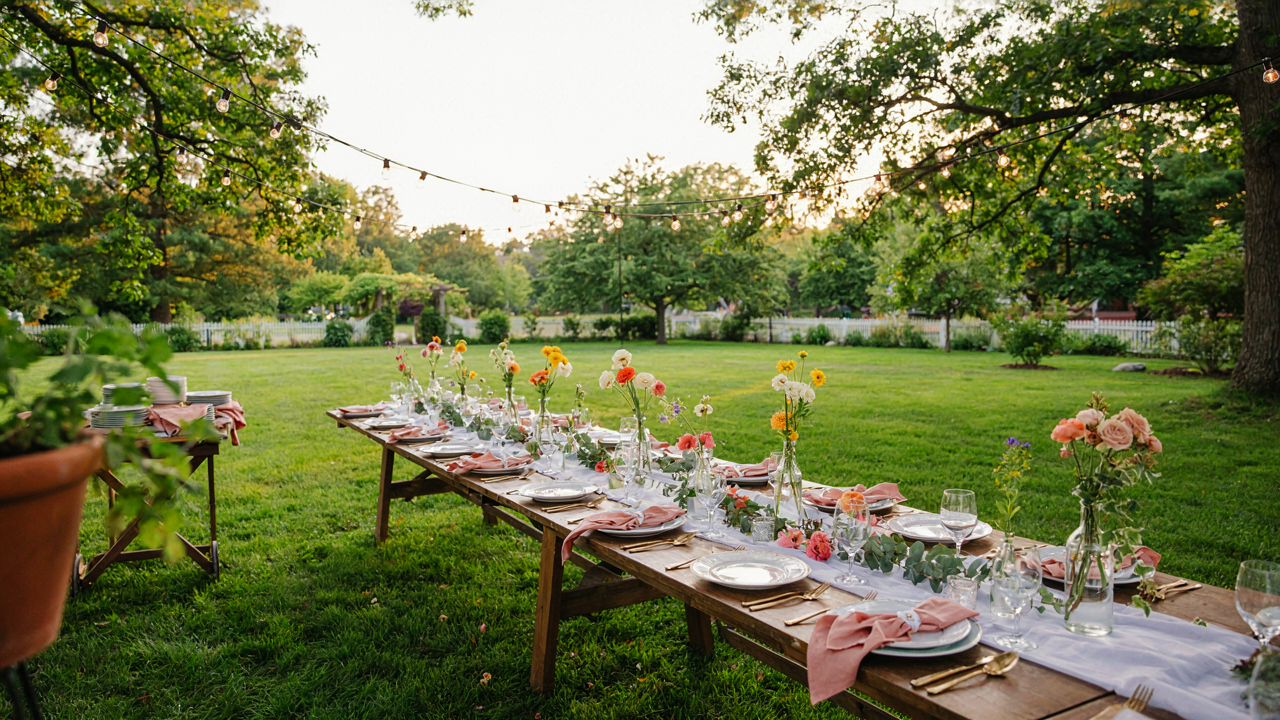
Real elegance shows in a few well-chosen elements executed cleanly. White string lights across a fence line. Mismatched vintage plates that tell a story instead of screaming “designer.” A single statement flower arrangement in the center of tables instead of five small ones. Tables with simple wooden tops and real chairs your family owns instead of rented plastic. Your backyard wedding becomes elegant precisely because you can’t afford to fill it with generic rental filler. You have to make intentional choices, and intention reads as sophistication every time.
The Brutal Math Of A Backyard Wedding Under $3500

Where The Money Actually Goes
You want to know if this is possible because you’re terrified you’ll spend $15k like everyone else and still feel broke. Here’s the mechanism: most couples don’t cut ruthlessly because they optimize for comfort instead of constraints. They trim $2k here and $3k there, which doesn’t work. You need to eliminate entire categories, not negotiate prices within them.
At $3500 with 75 people, you’re spending $47 per head. That’s your hard ceiling. Venue rental alone kills most budgets, so remove that variable entirely. Your backyard or a family member’s becomes free. Food costs roughly $12 to $18 per person for quality if you cook or buy wholesale. Alcohol runs $3 to $5 per person if you buy beer and wine only, no cocktails. Decorations should be $200 max. Photography is $400 to $600 for a single photographer or semi-professional. That leaves you $400 for miscellaneous: invitations, rentals you actually need, parking, permits if required locally.
Here’s where cuts actually happen:
- Venue: Your backyard or family land, zero cost. If you must rent, cap it at $300 and only for the parking or to avoid neighbor complaints. Most alternatives are cheaper or free.
- Catering: Cook yourself or hire two people for $15/hour to prep and serve. Bulk chicken, rice, and seasonal vegetables cost $8 to $12 per plate. Avoid plated service entirely.
- Alcohol: Costco or Sam’s Club beer and wine only. Two cases of beer, three bottles of wine per 25 people. Budget $150 to $200 total. No bar setup, no mixers, no premium spirits.
- Decorations: String lights ($40), flowers from a grocery store ($60), rented tables and chairs ($120 to $150). Skip custom signage and elaborate centerpieces. Nature does the heavy lifting.
- Photography: One photographer for 4 to 6 hours, $400 to $600. They shoot the ceremony and key moments only. No engagement session, no album, no prints. Digital files delivered after the wedding.
- Rentals and Logistics: Tent rental ($200 to $400 if weather is unpredictable), portable restroom if your home facilities can’t handle 75 people ($150 to $250). These two categories either make or break your budget.
The math breaks when you refuse to choose. You can’t have a plated dinner, an open bar, professional florals, and a videographer at $3500. Pick two, max. Most couples pick the wrong two because they chase status instead of joy. The people attending don’t remember the napkin color or whether your wine was from Napa. They remember the food was good, they didn’t stand around bored, and they felt wanted.
The Trap Of Cutting Corners On Essentials
The conventional advice says find “creative alternatives” and “DIY everything” to save money. That’s incomplete and misleading. You save money by not doing things at all, not by doing cheap versions of expensive things. A $50 DIY floral arrangement still eats time and materials. A bouquet from Trader Joe’s for $25 looks fine and costs less. Swapping what you do matters more than how cheaply you do it.
The false economy happens here: you eliminate the professional photographer to save $500 and spend 40 hours prepping DIY decorations that your guests don’t remember. You skip the tent rental to save $300, then rent space indoors at higher cost or risk rain destroying the day. You buy cheap folding chairs at $3 each instead of renting at $1.50 each, then store them in your garage for the next three years. Every corner cut creates a secondary cost or burden that wasn’t worth it.
The real move is brutal triage. Ask for each expense: does this prevent something bad, or does it add something nice? Only pay for the first type. Rain contingency matters. Adequate seating and tables matter. Food that won’t spoil matters. Everything else is negotiable. If you have a backyard with shade and good weather forecast, skip the tent entirely. If your bathroom accommodates 20 people comfortably, skip the port-a-potty. If you can feed people well on a budget, skip the $1200 caterer. Work backward from your $3500 total and ask what actually breaks the day, then protect those items first. Cut the rest to zero before you cut anything to half-price.
Your Home Backyard Wedding As A Minimum Viable Product

Start With What Actually Matters
You want permission to skip the stuff nobody remembers because you’re afraid people will judge you for it. Here’s the real mechanism: weddings fail not because they’re small, but because couples optimize for the wrong metric. Lean startup thinking applies directly here. In product development, an MVP strips everything except the core value proposition. Your core value: two people committing in front of witnesses who matter. Everything else is noise disguised as necessity.
The gatekeeping around weddings comes from an industry built to extract maximum spend, not from actual human needs. A three-thousand-dollar backyard wedding delivers the same legal and emotional outcome as a thirty-thousand-dollar event. You don’t need florals that took months to source. You don’t need a videographer capturing eight hours of footage nobody watches. You need food, shelter, witnesses, and a moment where you state your intention. Strip everything else and rebuild from there.
Cut The Friction, Keep The Signal
Everyone tells you to “prioritize what matters to you,” which is useless advice because it doesn’t show you what to cut. Better approach: identify the single thing that fails if you skip it, then build backwards. If your families won’t show without a dinner, you budget for food. If your partner needs music to feel like a real event, you budget for that. If neither matters, you don’t spend money pretending it does.
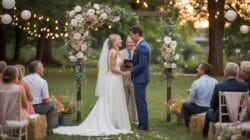
The rest of the budget goes toward removing friction, not adding spectacle. A DJ is friction removal if silence makes guests uncomfortable. Flowers are friction removal if bare walls stress your partner. Printed programs are friction removal if guests need to know when things happen. Once you separate signal from friction, you spend three thousand dollars on real problems instead of imaginary ones. Your protocol: list the three things that will make you regret this decision if they fail, then spend seventy percent of budget there.
DIY Backyard Wedding: The Leverage Economy

Your Network Is Your Actual Budget
You’re reading this section because you want permission to feel resourceful instead of broke. Here’s the mechanism: in economics, leverage means using borrowed resources to control assets. Your network is borrowed leverage. Every person in your life represents a skill, tool, or connection you don’t have to pay for. A friend who shoots photography, a relative with a truck, someone’s parent who caters. You stop seeing people as guests and start seeing them as force multipliers.
Most couples skip this step because asking feels transactional or awkward. It’s not. People want to contribute to weddings they care about. The real move is being specific about what you need instead of vague about “help.” Tell your dad you need his truck and 90 minutes to haul tables. Tell your friend who photographs that you want her eye for two hours during golden hour, nothing formal. Specificity makes contribution feel like participation, not charity. You activate leverage by naming exactly what you need, not by hoping someone offers.
Outsource Pain, Keep The Control
The common advice says to DIY everything or hire professionals for everything. Both are wrong. The real filter is this: outsource tasks that drain focus without building the day, keep what you can execute well in your available time. A couple with two free weekends before the wedding shouldn’t attempt elaborate floral installations or build a dance floor from scratch. They should handle what takes focused hours but doesn’t require specialized equipment or repeated skill.
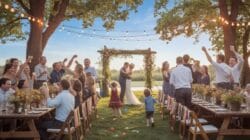
Food is the clearest example. Hiring a caterer for 75 people under 3500 dollars is mathematically impossible. But having one friend or family member prepare cold dishes or a simple protein in bulk, then you handle plating and setup, is executable. You save money, keep control of quality, and distribute the load so no one person shoulders the labor alone. The protocol is simple: identify your constraint first (time, skill, equipment), then decide what transfers to someone else’s expertise versus what you handle directly.
Small Backyard Wedding: The Intimacy Protocol

Why Smaller Guest Lists Actually Cost Less
You want permission to exclude people without feeling guilty. That’s the real tension here. But here’s the mechanism: every additional guest triggers a compounding cost structure. Catering per head scales linearly. Rentals scale by headcount thresholds. Logistics multiply. Borrow this from economics: diminishing returns. Your backyard wedding under 3500 dollars hits a hard ceiling around 50 people. Beyond that, you stop saving money and start managing a different event entirely.
The math is straightforward. Fifty guests at 50 dollars per person for food and drink equals 2500 dollars. That leaves 1000 for venue prep, flowers, music, and contingency. One hundred guests at the same rate doubles your food budget to 5000 dollars, blowing the entire plan. Most couples pretend they have no choice in guest size. They do. Controlling headcount is the single highest-leverage cost control mechanism available to you.
Creating Genuine Connection, Not Crowd Management
Most wedding advice treats intimacy as a feeling you engineer through ambiance and lighting. Wrong. Intimacy is a structural outcome of low guest density and clear interaction pathways. Your guests need physical and temporal space to actually talk to one another, not just stand near the food table in silence.

A 40-person backyard wedding allows you to host people in clusters of 8 to 10 without anyone feeling stranded. Conversations happen naturally because nobody’s competing for attention or navigating a maze. Set up three distinct zones: seating area, food station, and a small dance or activity space. You spend your energy on one or two meaningful interactions with each guest instead of working the room like a campaign manager. This structure requires zero additional budget and transforms how people experience your wedding.
Beautiful Backyards: Deception Through Design

Redirect Attention From What Matters
You want people to remember your wedding as beautiful, not as the backyard wedding you had to throw because you couldn’t afford the venue. That’s the real driver here, and it’s why focal points work. Borrow from architecture: negative space is the unused area that makes the occupied space feel intentional. Create one strong visual anchor that pulls the eye away from lawn edges, mismatched fencing, or bare spots. A decorated arch, a string light installation, or a table arrangement becomes the “designed” zone. Everything outside that zone becomes background, not scrutiny.
The mechanism is simple: humans fixate on novelty and contrast. A white wooden arch in an ordinary backyard isn’t just decoration. It’s a signal that says this space was prepared. It reframes the entire setting from “we’re having this here” to “we chose this here.” Position it where the camera naturally frames it, where the ceremony happens, or where people gather. You don’t need to disguise the whole yard. You need to own one corner so completely that it becomes the story. The rest stops mattering.
Flowers And Fabrics That Vanish After Use
Temporary decor costs nothing to remove, which is why it dominates low budget weddings. The common advice says “buy fake flowers and reuse them,” but that’s incomplete. Real flowers have a shelf life that works for you. Grocery store bulk flowers cost a fraction of florist pricing and last exactly long enough for a one-day event. Fabric draping costs twelve to forty dollars per yard. String lights from hardware stores run twenty to sixty dollars for a hundred feet. None of these items need to integrate into your life after Saturday.

The real play is buying things specifically because they’re disposable. Rent nothing. Buy cheap, use once, donate or discard. A table runner from a craft store costs three dollars. Tulle or muslin fabric stapled to fence posts creates visual boundaries and hides what’s behind them. Potted plants from a grocery store look arranged, cost less than cut flowers, and you give them away to guests at the end. This inverts the typical wedding math: instead of paying for longevity and reusability, you pay for volume and impact on a single day. The item doesn’t need to survive. Your memory of the day does.
Yard Wedding Logistical Warfare: Pre Mortem Planning

Disaster Scenarios You’re Actually Afraid Of
You want this section because you’re terrified of looking stupid in front of people who matter, and a wedding collapse does exactly that. The real mechanism here is borrowed from military strategy: a pre-mortem means you assume the event failed, then work backward to identify what broke it. This isn’t pessimism. It’s the only way to stop lying to yourself about what can actually go wrong.
Most backyard weddings fail not from one catastrophic event but from cascading small failures nobody planned for. You identify the failure points now, in writing, while your brain still works logically. Here’s what actually breaks under 3500 dollar weddings:
- Bathroom capacity: More than 40 people and you have one toilet. Guests queue for 20 minutes. Tension spreads like a stain. Rent a portable unit starting at 150 dollars or limit headcount ruthlessly.
- Parking chaos: Neighbors block driveways. Guests circle for 15 minutes. Your mother-in-law arrives to find no spot and blames you. Map the lot on paper. Assign spots. Tell people in advance.
- Food timing misalignment: Caterer arrives at 4pm. You said 3pm. Guests are already hungry. Food sits cold for an hour. Get everything in writing with specific arrival times, not ranges.
- Sound system failure: Microphone doesn’t work during vows. You improvise by yelling. Audio is distorted on videos. Test everything twice with actual venue acoustics 48 hours before.
- Guest count creep: 60 confirmed becomes 75 when people bring plus-ones you didn’t approve. You run out of chairs, plates, and food. Enforce the RSVP number with firmness now.
Write these down. Assign a specific person to each. Not “someone will handle parking.” Name them. Give them a role and a phone number for problems. Vagueness is where weddings die.
Contingencies That Actually Stick
Weather doesn’t care about your timeline, so stop pretending a tent is optional below 3500 dollars. A basic 20×20 tent rents for 200 to 400 dollars. Rain moves the entire event indoors or under cover in 30 minutes flat. Without a plan, you improvise in chaos while guests stand in mud.

Power failure is rare but brutal. If you’re using a sound system, battery-powered backup speakers exist for 60 to 100 dollars. Charge them fully the day before. Unplanned guests? You already capped RSVPs and enforced it. Extra people means less food per person, not a grace period. For unexpected weather swings, keep a second temperature plan ready: what happens if it’s 95 degrees instead of 75? Move the ceremony earlier. Provide water stations. Cut timeline by 30 minutes. Write the contingency, don’t just think it.
The Small Casual Wedding Ideas: The Cognitive Bias Shield

Social Pressure Is Economics, Not Etiquette
You care about this section because you’re afraid people will judge your wedding as cheap. That fear is the real cost, not the budget. Behavioral economics calls this “signaling”—the compulsion to broadcast status through consumption. Your backyard wedding under 3500 dollars triggers the opposite signal in your brain: perceived failure. The mechanism is simple: your brain conflates price with worth, so a low price feels like low value. This isn’t true, but the anxiety is real and it blocks decision-making.
The consensus advice says “ignore what others think.” That’s useless. People do judge. The real play is reframing who you’re signaling to. A backyard wedding signals intentionality, not poverty. It signals you chose experience over performance, intimacy over audience size. Your actual guests—the ones who matter—interpret this correctly. The people who don’t? They weren’t your audience anyway. Stop optimizing for their approval and the pressure evaporates. Invite only people who value your presence, not your production budget.
The Perfect Wedding Is A Moving Target
Your idea of a perfect wedding doesn’t exist as a fixed thing. It’s constructed by comparison to images you’ve absorbed: Pinterest boards, Instagram feeds, wedding magazines designed to sell you anxiety. Cognitive science calls this “anchoring bias”—your brain locks onto the first reference point and treats everything below it as inadequate. That anchor isn’t real. It’s marketing. A 3500 dollar backyard wedding can be genuinely memorable because memory isn’t built on expense. It’s built on attention, presence, and authenticity. Those cost nothing.

The actual mechanism: you decide what perfect means before you build it, not after you see someone else’s version. Define your wedding by what you want to feel and who you want in the room. Casual, relaxed, intimate, funny—these are real design constraints, not compromises. Work backward from those feelings into specifics: food that tastes good without hired catering, music that sets the mood without a DJ, decorations that reflect your actual aesthetic instead of rented neutrality. Once you stop chasing someone else’s perfect, execution becomes clear.
Beyond The Backyard: The Post Wedding Profit

Skills That Transfer To Revenue
You want to know if this whole thing was worth it beyond just saving money on one day. The real mechanism at play here is what economists call “human capital formation” – you’ve built transferable competencies that generate income in other contexts. You ran a logistics operation, managed vendors, solved design problems under constraints, and executed a multi-day project with zero budget slack. Those aren’t wedding skills. Those are business skills.
The DIY backyard wedding forces you to learn event coordination, basic accounting, vendor negotiation, and timeline management. You can’t hire someone to absorb the complexity, so you absorb it. That absorption becomes expertise. People pay for expertise. Whether you start a side business coordinating small events for friends, offer design consulting for others planning budget weddings, or apply those project management muscles to your day job, you’ve gained leverage you didn’t have before you started planning this wedding.
The Math Behind Staying Broke Versus Building Assets
The common advice says a cheap wedding saves you money. That’s incomplete. The real ROI isn’t what you didn’t spend. It’s what you can now generate. Someone who spends 3,500 dollars and learns nothing gets nothing back. Someone who spends 3,500 dollars, documents the process, and builds a service around it can recoup that investment ten times over within a year.
The DIY backyard wedding becomes an asset if you extract the knowledge and monetize it. Write a guide. Offer coordination services. Sell templates or timelines to other couples. Post the content publicly and build an audience. The wedding itself is one-time consumption. The skills and proof points are perpetual income. Track what worked, what failed, and what surprised you. That data becomes your first product. The conversion mechanism is simple: show others the before and after, then let them pay for the shortcut.
The Real Obstacle Isn’t Your Budget; It’s Your Addiction To External Validation

You don’t need more money. You need permission to stop caring what your Instagram followers think. The couples pulling off three thousand dollar weddings aren’t smarter or luckier. They decided their day mattered more than someone else’s opinion of it. That decision costs nothing and changes everything. Stop scrolling Pinterest today. Call three people you actually love and ask what they want to celebrate with you. The weddings people remember aren’t expensive. They’re honest.