The “Intimate Illusion” Fallacy: Backyard Pool Wedding With Pool

Small Scale, Big Logistical Traps
You want the wedding to feel exclusive without admitting you’re constrained by budget or space. Here’s the mechanism: small backyards with pools create false proximity. Everyone clusters near the water because it’s the only focal point. This feels intimate until you realize your guests are standing in a compressed grid, competing for sightlines and shade. Logistics don’t scale down linearly. A fifty-person wedding in a small space requires more coordination than a hundred-person wedding with proper zones.
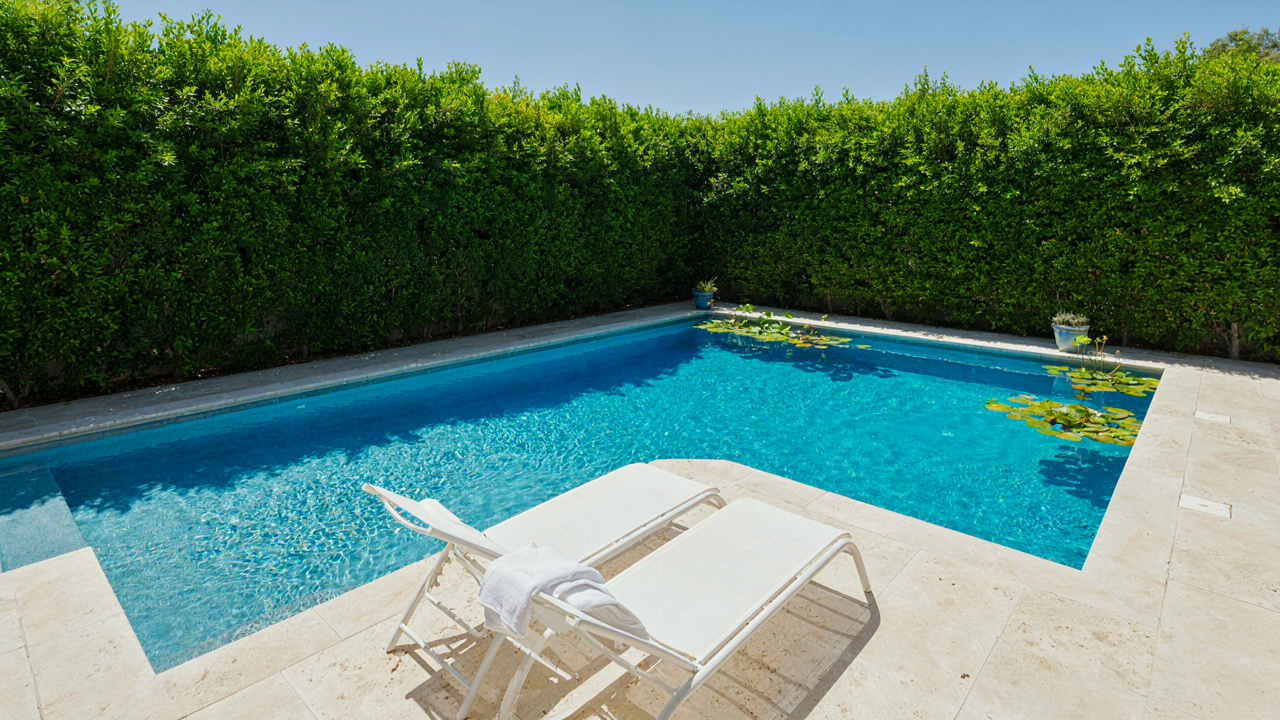
The pool itself becomes the problem, not the solution. You cannot use the entire yard for seating, circulation, or vendor stations because the water occupies the prime real estate. Bathrooms stay inside the house, creating bottlenecks during cocktail hour. Catering stations compete with lounge chairs for placement. Power access limits where you can position lighting or sound equipment. The smaller the yard, the more ruthless you must be about removing elements entirely, not just shrinking them.
Guest Experience Trumps Guest Count
Experience design from hospitality teaches us that perceived value depends on friction, not abundance. A guest with three clear paths to water, bathrooms, and food feels attended to. A guest forced to navigate congestion feels managed. Most backyard pool wedding advice tells you to “maximize your guest list” or “use vertical space creatively.” That’s advice from people without skin in the outcome. The real decision is whether you optimize for headcount or for the actual moment your guests spend in your yard.
Cut your guest list before you cut your vendor quality. Fewer people with proper bar service, temperature-controlled food, and accessible seating create memory. A crowded yard with a cooler of beer and folding tables creates resentment, even if you saved money. The pool’s edge is fixed. The number of people who can comfortably exist near water without entering it is also fixed. Define that number first, then build backward into your invitation list and site plan.
Beyond Fairy Lights: Pool Decoration For Impact, Not Distraction

Lighting That Signals, Not Decorates
You want the space to feel curated without looking like you tried too hard. That’s the real anxiety here. The mechanism is contrast: your eye moves toward light sources, so fewer of them, positioned strategically, command attention far more than scattered strings ever will.

Uplighting mounted at pool edge level creates depth by throwing light upward onto surrounding structures, trees, or architectural features. This isn’t decoration—it’s directional emphasis. Place these lights in pairs at opposite corners to frame the pool as the focal point rather than compete with it. Warm color temperature (2700K) reads as intentional restraint, not budget constraint.
Water Itself As The Centerpiece
Fountains and water jets borrow from landscape architecture’s principle of focal hierarchy: the eye settles on moving water before anything static. A single, well-positioned fountain or waterfall feature eliminates the need for competing visual elements around it.
Motion stops the nervous scanning that flat surfaces cause. A submersible fountain in the center draws attention downward, anchoring sightlines before guests even sit. Skip the colored lights in the pool water—they flatten the surface and read as theme-park cheap. Clear water with proper circulation and maintenance becomes the most sophisticated element you own.
The “Curated Comfort” Protocol For Backyard Pool Wedding Ideas

Conversation Geometry That Actually Works
You want people talking because silence feels like failure. That’s the real anxiety here. But most backyard pool weddings fail at seating because hosts treat it like a math problem instead of a psychology problem. The mechanism is simple: conversation requires proximity without obligation. Tight clusters of four to five chairs, angled slightly inward, force eye contact and make exit harder. Isolation kills talk. So does a crowd of eight around one table.

Position seating clusters ten to twelve feet from the pool. This distance lets people hear without shouting over water noise, and keeps the pool as visual backdrop instead of distraction. Use low-backed chairs so sightlines stay open across the yard. When someone sits down, they should see faces, not fence. This layout works because it removes the mental load of finding where to stand or whether they belong in a group.
Temperature Control Without Infrastructure Overkill
You don’t need a heating system or misters to solve this. That’s expensive nonsense vendors push. What you need is asymmetry: create warm zones and cool zones, then let guests migrate. The thermal principle here is the same one physics uses to explain convection—hot air rises, cool air sinks. In a backyard, this means shade placement controls temperature more than anything else. A six by eight foot shade sail on the south or west side drops ambient temperature by eight to fifteen degrees compared to full sun, depending on fabric density and time of day.
Position seating half in dappled shade, half in sun. Guests naturally sort themselves by comfort level without you managing it. For evening receptions, bring out standing heaters an hour before sunset. Position them behind seating areas, not in the center where they block views. Offer lightweight wraps or blankets on a side table, not stacked on chairs. Make the choice visible but optional. This removes the moment where someone shivers and regrets coming, which kills the entire atmosphere.
Culinary Command: Pool Dinner Party Strategy

Skip The Catering Trap
You want to look like you didn’t stress about this, which is exactly why you’re tempted to outsource the menu to someone else. That’s the real problem here: catering signals you gave up on the creative work, and guests notice that surrender. The mechanism is simple. Small backyard pool weddings live or die on perceived intimacy. Mass-produced plating kills it instantly.

Build your menu around three dishes you’ve cooked before. Cook two of them the day prior. Serve them family-style in bowls, not on individual plates. This removes the labor on event day, eliminates the pretense of fine dining that doesn’t fit a poolside setting, and lets guests feel like they’re part of something intentional rather than something you paid for. Skip the appetizer course entirely—serve snacks poolside during cocktail hour, then transition to one dinner course. The constraint forces clarity. You’ll spend less time in the kitchen and more time actually present.
Stations That Work Without Staffing
Most people design drink service wrong because they think about the bartender’s workflow instead of guest flow. In operations management, this is called reducing bottleneck friction. Apply it here: a bottleneck is any point where guests queue or wait. A self-service drink station eliminates the bartender role and removes the single point of failure.
- Cooler Station With Pre-Batched Cocktails: Mix a batch of margaritas, punch, or old fashioneds in a dispenser. Guests pour into ice-filled cups. No mixing required on-site, no waiting for drinks.
- Wine and Beer On Ice: Set two coolers at opposite corners of the pool area. Stock one with wine, one with beer. Guests grab their own. Reduces crowds at any single location.
- Water and Non-Alcoholic Station: Separate pitcher station with infused water, sparkling water, or lemonade. Takes pressure off your attention for guests who aren’t drinking alcohol.
- Spirits and Mixers For The Self-Directed: Pour spirits into labeled bottles. Line them up with tonic, soda, lime, bitters on a side table. Lets experienced drinkers build their own drinks without asking you.
- Glass and Ice Placement: Position glasses and ice buckets at the station entrance, not behind it. One guest grabbing ice shouldn’t block another guest from pouring a drink.
Set everything up 30 minutes before guests arrive. Test it yourself by pouring two drinks back-to-back. If you get stuck behind your own station, redesign the layout. Your job is to move through the party and stay visible, not manage a bar. The station runs itself or it fails.
The Flow State Layout: Optimizing Your Backyard Wedding Pool

Guest Movement Like A Logistics Problem
You want people to feel like the day unfolded naturally, but you’re actually afraid of the chaos that happens when 40 guests have no clear path from point A to point B. That fear is valid. Apply military movement doctrine: establish corridors, not open fields. Guests move along defined routes because friction disappears when they know where to go. A 15-foot bottleneck at the bathroom entrance kills momentum. Design entry, bar, seating, and pool access as a circuit, not a maze. Spacing prevents collision.

The constraint is your yard size. Most backyard weddings run 30 to 75 guests in 1,000 to 2,500 square feet. You have no room for wasted space or circular logic in pathways. Mark transitions with physical elements: stepping stones, planters, deck changes in elevation. People follow edges and boundaries naturally. A rope, low fence, or even a subtle grade shift redirects foot traffic without feeling restrictive. Test the route on foot before the wedding. Walk it three times in different directions. If you trip or hesitate, your guests will too.
Zones Create Permission Structures
Most backyard wedding advice says “make different areas for different activities” then stops there. That’s incomplete. What actually matters is that zones signal social permission. A clearly separated lounge zone with chairs tells introverts they can exist without joining the pool crowd. A distinct bar area means people have legitimate reason to cluster there. A dining zone justifies why guests sit down. Zones aren’t decorative. They’re behavioral architecture.
Physical separation matters more than you think. You don’t need walls. Use raised platforms, shade structures, or even furniture arrangement to define boundaries. A pergola marks the cocktail zone. A poolside section with lounge chairs creates the relaxation zone. A table cluster defines dining. The pool itself is already its own zone. Each zone needs clear entry and exit points so guests don’t feel trapped or confused about where they belong. Without zones, your small backyard becomes a single pressure cooker where 50 people compete for the same 500 square feet.
Sound Engineering Your Celebration: Backyard Pool Engagement Party Acoustics

Where Quiet Breaks Conversation
You want people to hear each other without shouting because silence makes you look cheap. The mechanism is simple: water reflects sound at odd angles, and hard surfaces around pools create dead zones and echo chambers. This isn’t opinion—it’s physics. Absorptive materials kill reflections. Hard pool decking, tile, and concrete bounce audio around until speech becomes noise. Most backyard hosts ignore this entirely, then wonder why guests cluster in one corner or retreat indoors.

Position yourself poolside before guests arrive and speak normally. If you hear yourself echo or bounce, you have a problem. Place outdoor rugs, fabric panels, or plants between seating zones to break the reflection cycle. Soft furnishings absorb sound rather than project it. This changes acoustics more than any speaker ever could.
Placement Over Volume
Most people buy a speaker and crank it. Wrong move. The real leverage is positioning: one speaker at low volume in the right spot beats three speakers at high volume in scattered positions. Speaker placement uses the principle of acoustic coverage—the idea that sound spreads in a predictable pattern from its source. For a small pool wedding, one strategically placed Bluetooth speaker at chest height, positioned 8 to 10 feet from the main seating area, reaches everyone without dominating the space.
Keep the speaker off the ground and away from hard surfaces. Concrete and tile amplify bass and create feedback loops. Mount it on a stable pole or platform at least three feet high. Test placement with actual guests before the event, not music blaring an hour before. Let one person sit in each zone—lounge area, pool edge, cocktail table—and confirm they hear conversation and music equally. Adjust speaker height or distance by one to two feet if any zone reports audio dominance.
Unseen Infrastructure: The Iceberg Principle For Pool Reception Wedding

Power Requirements And Circuit Distribution
You care about this because a blown breaker at sunset looks like incompetence, not bad luck. The mechanism is simple: a pool wedding demands 2-3 times the electrical load of a standard backyard gathering. This isn’t theoretical. A catering setup, string lights, sound system, and pool pumps running simultaneously create demand spikes your home’s existing circuit can’t handle. Most homeowners discover this during setup, not planning.

Calculate total wattage before rental day. Add up every device: caterer’s equipment (usually 3000-5000 watts), speaker system (500-2000 watts), LED lighting rig (1000-3000 watts), and whatever the pool requires for circulation and heating. A standard 100-amp residential panel allocates 20-30 amps to outdoor circuits. You’ll need a licensed electrician to run a temporary 50-amp subpanel or heavy-duty extension from your main box to the pool area, positioned behind or beside the pool deck. Install it 10-14 days before the event so the work passes inspection if your municipality requires it. Ground all outdoor circuits with GFCI protection. This protects guests from shock hazard and keeps you from liability exposure.
Hidden Waste And Discretionary Disposal
Event waste isn’t just trash. It’s the thing that makes a small wedding feel either controlled or chaotic the moment guests leave. You need designated zones for organic waste, recyclables, and general refuse, positioned where they’re functionally invisible. Most people place dumpsters or waste bags at the property’s edge. Smart move. Guests don’t see it. The mechanism is spatial separation.
Rent a 6-yard dumpster or coordinate with your caterer to handle food waste themselves. Keep three separate receptacles near the pool deck: composting (food scraps), recycling (cans, bottles, plates if compostable), and general trash. Line each with heavy-duty bags so breakdown happens fast. Assign one person, preferably a caterer staff member or vendor coordinator, to empty and replace bags every two hours during the reception. Position waste management away from the main sightline, typically along a side property line or behind a garage. This keeps the aesthetic intact and prevents guests from standing near odor or visual clutter during toasts or dancing.
The “Contingency Matrix”: Mitigating Risk For Pool Wedding Ideas

When Weather Turns Against You
You’re worried about looking unprepared in front of your guests, but that’s not the real problem. The real problem is that weather doesn’t care about your timeline. Treat this like military logistics: you need layered fallback positions, not hope. Rain stops most backyard pool weddings cold. Wind makes audio impossible and knocks over decorations. Heat exhausts guests and degrades food safety. Each demands a separate protocol, not a generic tent.

The contingency isn’t about predicting the forecast perfectly. It’s about positioning yourself to act fast when conditions shift. Scout your yard for natural wind breaks: fences, tree lines, structures on adjacent properties. Identify the highest point for water drainage if rain comes. Test how sunlight moves across your space at your wedding time on the same date two weeks prior. That data matters more than any weather app.
Emergency Protocol And On Site Personnel
You need actual people with actual training standing by, not just a first aid kit gathering dust in the garage. Water events demand different medical thinking than a typical small gathering. Someone needs to know CPR and pool-specific rescue mechanics. Someone else tracks who enters the water and when. Someone monitors guests for heat stress. This isn’t overthinking. It’s the difference between an incident and a tragedy.
- CPR-certified lifeguard or medical professional on site: At minimum, one person with current certification present during any water activity, stationed with clear sightlines to the pool area.
- First aid kit positioned at pool edge, not in the house: Stock it with aquatic-specific supplies: non-adherent gauze, antibiotic ointment, CPR face shield, tweezers for splinters, and hydrocortisone cream for irritation.
- Emergency contact list posted at entry and kitchen: Include guest medical info, nearest hospital, poison control, local fire department non-emergency line, and your homeowner’s insurance claim number.
- Designated water monitor during all pool activities: One person stays dry, watches continuously, uses a whistle for communication, and never steps away until the pool is cleared.
- Incident documentation log: Keep paper and pen at poolside to record any near-misses, minor injuries, or concerning behaviors for liability purposes and future reference.
Your yard becomes a high-touch environment the moment water is involved. Establish zones: deep water only for strong swimmers, shallow end for others, and a clear deck area with no running. Assign someone to enforce it. Keep your insurance agent’s number visible. Check your homeowner’s policy actually covers guest gatherings before the date arrives.
Beyond The Photo Op: Capturing Authentic Backyard Wedding Ideas With Pool

The Unposed Moment Wins
You want proof that your wedding happened. You think the answer is a photographer who stages every shot. It’s not. The mechanism here is simple: posed photos feel like documentation. Candid photos feel like memory. Your guests aren’t relaxing if they’re aware the camera exists. The pool environment makes this easier because people default to movement—swimming, walking to the water, sitting poolside. A photographer who shoots from the periphery, never calling attention, captures the actual experience instead of the performance of the experience.

The constraint of a small backyard actually works in your favor. Limited space means fewer angles to cover, which forces the photographer to position themselves strategically and stay put. This consistency breeds natural behavior. Guests forget the camera faster. You end up with genuine laughter at the shallow end, real conversations under the umbrellas, actual water play instead of posed dunking photos. These are the images you’ll return to in five years, not the perfectly lit couple shot that looks like every other wedding photo ever taken.
Available Light Beats Flash Every Time
Photographers trained in indoor venues default to artificial light and bounce flash. That’s wrong for a backyard pool wedding. Natural window light and bounce surfaces became standard practice in portrait photography decades ago because they produce dimension and depth that flash cannot replicate. Apply this principle to poolside: golden hour sunlight hits water and creates a reflective fill light that softens shadows on faces without equipment. You need zero additional gear if you time correctly.
Combine the sun’s natural position with simple reflective surfaces—white umbrellas, light-colored towels, even a white sheet positioned strategically—and you’ve engineered flattering light without looking staged. Dusk presents a different problem: you’ll need discrete, warm-toned artificial light, but position it off-camera and pointed at a ceiling or reflector, never directly at subjects. The setup takes five minutes. Instruct your photographer during the site visit to identify where golden hour falls relative to your pool deck, then build the timeline around that window. This determines where the ceremony sits, where cocktails happen, where the decisive moments will be properly lit without anyone thinking about lighting.
The “Exit Strategy”: Post Event Execution For Backyard Wedding With Pool

Vendor Breakdown And Clean Up Logistics
You care about this section because a messy aftermath kills the memory of what came before it. Here’s the mechanism: vendors treat breakdown like their last job of the day, not their first priority after you’ve paid them. Treat it like inventory control in supply chain management—assign ownership of each zone and verify completion before final payment. Your caterer owns the kitchen and food stations. The rental company owns tables, chairs, linens. The pool maintenance contractor owns water chemistry and deck safety. Write these zones on a checklist before the event starts, not after.
Build a two-hour window into your timeline where vendors know breakdown begins the moment the last guest leaves. Don’t wait until the next morning when your pool sits unmaintained or deck furniture collects dew. Pay 20 percent of vendor fees on hold until you walk through the property with photographic evidence that each zone meets your standard. One vendor representative should have final sign-off authority. This prevents the blame loop where the caterer thinks the rental company handled it and nobody actually did.
Guest Departure And Transportation Planning
Most wedding hosts ignore this and end up with ten people lingering at midnight because nobody planned their exit. Transportation logistics determine how fast your yard actually empties. Coordinate with guests 48 hours before about parking—tell them exactly which neighbors allow overflow parking or arrange a shuttle from a nearby lot if your driveway holds fewer than twenty vehicles. Guests who know their departure route leave faster and with less friction.
Schedule rideshare pickups in 30-minute blocks rather than all at once. Use your final verbal toast to confirm departure times aloud. If you have elderly guests or those who drank, assign one person to confirm they have safe rides locked in before 9 PM. This stops the 11 PM scramble where someone’s uncle is still deciding between Uber and staying over. Walk your driveway and street at sunset the day before to identify actual exit flow—tight driveways with cars parked on both sides create bottlenecks that force people to wait twenty minutes just to leave.
The Only Thing Holding You Back Isn’t Your Budget, It’s Your Willingness To Treat A Small Wedding Like A Grand Strategy

Most people think small weddings fail because they lack money. They don’t. They fail because couples treat them like scaled-down versions of big weddings instead of entirely different animals. Stop copying Pinterest boards. Stop chasing trends. Stop apologizing for your guest count. Your backyard pool wedding wins because it forces intimacy, forces intention, forces you to design something that actually reflects who you are. Pick one element today that matters to you most, then build everything else around that single decision. The size of your wedding determines nothing. Your willingness to design it intentionally determines everything.